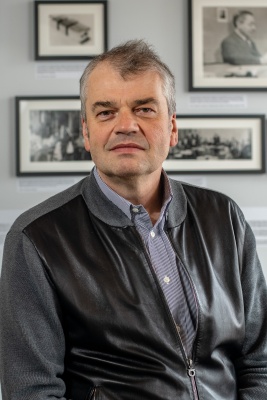
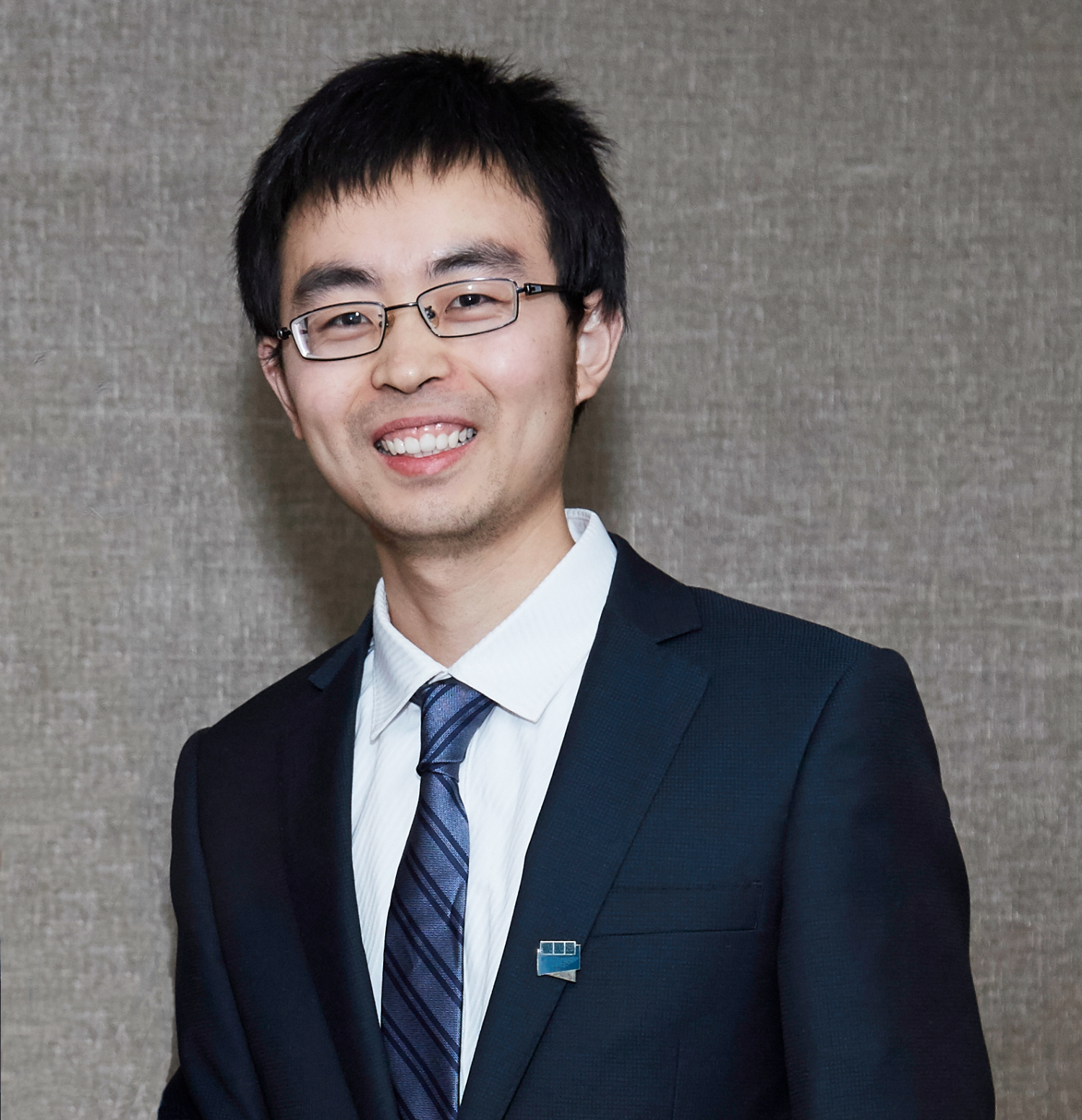
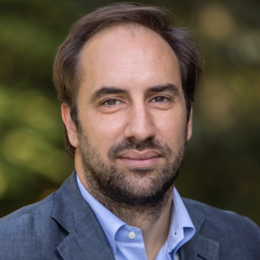
Dmitri N. Basov is the Higgins Professor of Physics at Columbia University, with a joint appointment as Professor of Physics at the University of California, San Diego. His research focuses on quantum materials, utilizing nano-optical techniques to investigate electronic phenomena and polaritonic systems. He leads the Basov Group at Columbia and has pioneered methods for imaging quantum materials at nanoscale resolutions. PhD in Physics, Lebedev Physics Institute (1991) Professor, Columbia University (2016–present) Professor, UC San Diego (2001–present) Postdoctoral Research, McMaster University (1992–1996) His work spans plasmonics , terahertz spectroscopy , and van der Waals heterostructures , with recent emphasis on polariton dynamics, superconductivity modulation, and moiré-driven electronic states. He employs cutting-edge tools like quantum scanning near-field optical microscopy (q-SNOM) and resonant inelastic X-ray scattering. Besides leading major grants such as the Gordon and Betty Moore Investigator award and Vannevar Bush Fellowship, Basov has received accolades like the National Academy of Sciences membership (2020), Ken Button Prize (2019), and Frank Isakson Prize (2012). His team explores novel quantum phases in 2D and topological materials.
Dr. Longji Cui is an Assistant Professor in the Thermo Fluid Sciences, Materials, and Micro/Nanoscale disciplines at the University of Colorado Boulder, affiliated with the Department of Mechanical Engineering within the College of Engineering and Applied Science. His laboratory focuses on high-precision instrumentation and computational techniques to explore energy transport, conversion, and dissipation at extreme scales, including scanning thermal microscopy, picowatt-resolution sensors, and nanophotonics. Lab Location: ECME 1B66F / ECME 108 Office Location: ECME 267B Research Interests: Dr. Cui's work spans thermal energy sciences, ultrahigh-resolution sensing, scanning probe microscopy, nano-optics, and quantum engineering. His interdisciplinary projects address critical challenges in sustainable energy systems, next-generation microelectronics, and advanced sensor technologies for high-performance applications. Notable contributions include innovations in thermophotovoltaic systems, molecular-scale thermal transport, and plasmonic light emission mechanisms. Recent publications emphasize near-field thermal radiation, quantized thermal transport in single-atom junctions, and enhanced energy conversion through nanoscale engineering. These studies bridge fundamental physics with practical applications in renewable energy and nanotechnology. Awards: 2025 CEAS Innovation & Entrepreneurship Fellow 2024 ASME Rising Star Award 2023 NSF CAREER Award 2023 CU Boulder Lab Venture Challenge Award His research group collaborates across disciplines to advance instrumentation for atomic-scale thermal measurements and develop novel materials for energy applications. Ongoing efforts include optimizing thermophotovoltaic devices and exploring hot-carrier dynamics in plasmonic systems.
University of Illinois Urbana-ChampaignUnited States
Tiffany M Jamann is an Associate Professor in Crop Sciences at the University of Illinois, where she holds the Monsanto Fellowship in Plant Breeding. Her research program focuses on understanding and improving disease resistance mechanisms in maize through integrated genetic, genomic, and phenotypic approaches. Dr. Jamann's work spans multiple disease systems with particular emphasis on foliar diseases such as Northern Leaf Blight and ear diseases like Gibberella ear rot. Her research interests include: Quantitative trait locus (QTL) mapping for disease resistance in maize Development of near-isogenic line populations for gene discovery Comparative studies of resistance mechanisms across different pathosystems Investigation of pattern-triggered immunity in maize Standardization of pathogen inoculation and disease rating methodologies Analysis of Dr. Jamann's recent publications (2023-2025) reveals a strategic integration of traditional plant breeding with cutting-edge genomic approaches. Her work demonstrates increasing use of comparative genomics and transcriptomics to identify host-specificity genes in pathogens while maintaining strong focus on practical breeding applications. A notable trend is her development of standardized methodologies for pathogen inoculation across multiple disease systems, enabling more reliable resistance evaluation. Monsanto Fellow in Plant Breeding Multiple publications featured in news outlets and academic discussions Active research with significant social media engagement (46 X users mentioning her work) Dr. Jamann's research program likely involves extensive collaboration with other plant pathologists and breeders, as evidenced by her numerous co-authored publications. Her work on multi-environment trials suggests substantial field research across different geographical locations. The development of specialized maize germplasm, including near-isogenic lines, indicates long-term investment in genetic resources for disease resistance research. Her laboratory maintains sophisticated capabilities for pathogen characterization, high-throughput phenotyping using fluorescence microscopy, and genetic mapping approaches. The emphasis on both fundamental plant-pathogen interactions and applied crop improvement demonstrates a research program that bridges basic science with practical agricultural outcomes.
Adam de la Zerda is an Associate Professor at Stanford University's Department of Structural Biology (School of Medicine) and Electrical Engineering (by courtesy). He develops advanced optical molecular imaging technologies combining nanoparticle contrast agents and adaptive OCT systems for cancer and ophthalmic disease research. Technion-Israel Institute of Technology (BSc, 2005) Stanford University (PhD, 2011) UC Berkeley (Postdoctoral Fellowship) Research Themes : Virtual biopsy using machine learning-enhanced OCT Gold nanorod-based molecular contrast agents Speckle noise reduction for cellular resolution Needle beam optical coherence tomography angiography His 15 most recent publications demonstrate technical innovations in: Metasurface optics for extended depth-of-field Spectral deconvolution of multiple contrast agents Speckle modulation for improved diagnostic clarity Noninvasive lymphatic system mapping Scientific Honors : Pew-Stewart Scholar for Cancer Research AFOSR Young Investigator NIH Early Independence Award Forbes 30 Under 30 (x2) Chan Zuckerberg BioHub Investigator His lab team has developed clinical prototypes including OcuBell Inc. 's ophthalmic imaging systems and Visby Medical 's diagnostic platforms. Current research spans from in vivo glycoprotein imaging to de novo biosensor development for real-time disease monitoring in awake animal models.
Renaud BACHELOT is a full Professor of Physics at the University of Technology of Troyes (UTT) since 1996. He leads the Light, Nanomaterials, and Nanotechnologies (L2n) laboratory and directs the Graduate School 'Nano-optics & Nanophotonics'. He holds adjunct professorships at the University of Paris-Saclay (LuMIn Lab) and Shanghai University (1000-talents Grant). His research focuses on nano-optics, plasmonics, and hybrid nanoplasmonics, with expertise in photopolymerization and plasmon-driven chemical processes. Education: PhD and graduate studies at Université Paris-Cité and ESPCI Paris Research Interests: BACHELOT’s work spans nanoscale light-matter interactions, including plasmonic nanostructures, photopolymerization-based fabrication, and applications in optical sensing and quantum photonics. His lab employs advanced techniques like near-field scanning optical microscopy (NSOM) and two-photon polymerization. Grants & Projects: ANR-PIA3 STRONG-NANO (2023-2026) ANR ADVANSPEC (2022-2025) International collaborations with NTU Singapore and Argonne National Lab Labs & Teams: Directs L2n (CNRS-UMR 7076) and collaborates across interdisciplinary platforms like InSyTE and LIST3N. His team develops novel hybrid materials and nanophotonic devices.
Benedikt Günther is a research scientist at the Technical University of Munich (TUM) working within the Chair of Biomedical Physics led by Prof. Dr. Franz Pfeiffer. His research focuses on the Munich Compact Light Source (MuCLS), a laboratory-scale inverse Compton X-ray source that provides synchrotron-like radiation for biomedical applications. Günther plays a key role in developing, optimizing, and characterizing this innovative technology, contributing to both its fundamental physics and practical medical applications. His primary research interests center around X-ray physics and imaging techniques, particularly laser enhancement cavities for inverse Compton X-ray sources, X-ray microscopy, dynamic phase-contrast imaging, and X-ray spectroscopy. Günther's work bridges fundamental physics with practical medical applications, developing instrumentation that brings synchrotron-quality imaging to conventional laboratory settings. His research has significant implications for improving medical diagnostics while making advanced imaging techniques more accessible. Analysis of Günther's publication record reveals a consistent focus on advancing compact X-ray source technology and its applications. His work demonstrates expertise in both theoretical modeling and experimental implementation, with publications spanning instrument development, imaging techniques, and specific medical applications. The research shows progression from fundamental source characterization to increasingly sophisticated biomedical applications, particularly in breast imaging, dental diagnostics, and materials science. 2019 Best Poster Award at the combined meeting of the 68th Denver X-ray Conference (DXC) & 25th International Congress on X-ray Optics and Microanalysis (ICXOM) for 'Full-Field Structured Illumination Super-Resolution X-ray Transmission Microscopy' Günther regularly presents his work at major international conferences including the International Particle Accelerator Conference, High-Brightness Sources and Light-driven Interactions Congress, and specialized X-ray imaging meetings. His research is conducted within the Munich Compact Light Source facility, a collaborative project involving physicists, engineers, and medical researchers working to develop laboratory-scale synchrotron technology for widespread biomedical use.
Swiss Federal Institute of Technology in LausanneSwitzerland
Anne-Sophie Chauvin is a Senior Lecturer and Researcher at École Polytechnique Fédérale de Lausanne (EPFL), School of Basic Sciences, within the Institute of Chemical Sciences and Engineering and the Supramolecular Chemistry Laboratory. She actively engages in supramolecular and inorganic chemistry, focusing on f-element (lanthanides and actinides) coordination polymers and luminescent bioprobes for biological and technological applications, including invisible inks and dye-sensitized solar cells. PhD in Bioinorganic Chemistry from University Paris V-René Descartes (thesis on Nitrile Hydratase mimetics) Postdoctoral work at University of Geneva on chiral alcohol configuration analysis Habilitation à Diriger des Recherches (HDR) from University René Descartes (2006) Her research spans Lanthanide and Actinide Chemistry , Luminescence , Coordination Polymers , Metallacages , and Photovoltaic Materials . Recent publications emphasize catalytic spiro stereocenter formation, actinide coordination polymers, and photoredox-enabled biomolecule functionalization. She has supervised PhD students including Andrei Andreichenko , Julien Andrès , Steve Comby , and Aurélien Willauer . Recognitions include Fellowship of the Royal Society of Chemistry (FRSC) and membership in the Swiss Chemical Society (SCS). Current roles include teaching General and Analytical Chemistry to first-year Pharmacy and Biology students at the University of Lausanne (UNIL), overseeing practical sessions, and serving on the EPFL School of Basic Sciences Faculty Council.
Rupert Huber is a Professor at the Department of Experimental and Applied Physics, University of Regensburg, where he has held a chair since 2010. His research focuses on ultrafast quantum phenomena, terahertz science, and lightwave electronics, with a strong emphasis on nanoscale imaging and quantum materials. He leads the Huber group, which has launched the ERC project 'Orbital Cinema' and produced numerous high-impact publications in journals like Nature and Nano Letters . Chair for Experimental and Applied Physics, University of Regensburg (2010–present) Emmy Noether Group Leader, University of Konstanz (2007–2010) Alexander von Humboldt Fellow, UC Berkeley/Lawrence Berkeley National Lab (2004–2006) His research explores terahertz spectroscopy , quantum materials , and ultrafast nanoscopy , often combining experimental innovation with theoretical insights. Recent work includes groundbreaking studies on exciton dynamics in van der Waals magnets and subcycle imaging of electron wave motion. The group’s publications frequently appear as coverstories in Nature Photonics and Nano Letters . Huber has received prestigious awards such as the Gottfried Wilhelm Leibniz Prize (2019) , ERC Starting Grant (2012) , and OSA Fellowship (2018) . He has supervised numerous Ph.D. and Master’s students, including recent awardees like Joshua Mornhinweg (faculty dissertation prize, 2024) and Josef Riepl (best tutor award, 2024).
Robert C. Dunn is a Professor in the Department of Chemistry at the University of Kansas, where he leads an active research group focused on developing novel optical and spectroscopic techniques for chemical and biological analysis. His laboratory specializes in single-molecule detection methods, high-resolution microscopy, and advanced capillary electrophoresis systems. Professor Dunn's research interests span analytical chemistry, biophysics, and nanotechnology. His group develops instrumentation including backscatter interferometry, near-field scanning optical microscopy, and scanning resonator microscopy to study biological systems at the nanoscale. Key research areas include membrane biophysics (investigating lipid domains and protein dynamics), nuclear pore complex function, and the development of ultrasensitive detection methods for clinical diagnostics and biochemical analysis. His recent publications demonstrate strong focus on miniaturized separation and detection platforms, particularly high-speed capillary electrophoresis systems integrated with novel optical detection schemes. Research trends show advancement towards point-of-care diagnostic tools, with innovations in refractive index sensing, femtoliter-volume detection, and label-free biosensing applications. Professor Dunn mentors graduate and undergraduate researchers in his group, with current students including Prabhavie Opallage (graduate student), Stanslaus M Kariuki (undergraduate), and Mei Ling Upp (undergraduate). His laboratory is developing new chemical analysis approaches using optical techniques including whispering gallery mode sensing, scanning resonator microscopy, and single-molecule fluorescence imaging.
Associate Professor Aydin Abar is a faculty member at the Institute of Archaeology, University of Innsbruck, where he has held the position of Associate Professor of Mining Archaeology and Resource Research since 2023. He concurrently serves as Spokesperson for the FZ HiMAT research center and sits on the Advisory Board of the Forum for Critical Archaeology. His academic credentials include: Doctorate from Ruhr University Bochum (2018) with thesis: "Beyond the Ecstasy of Copper. Crafting Dwellers in Early Bronze Age Oman" MA from Free University of Berlin (2008) with thesis: "Pottery Assemblage of Chale Ghar Mine 1, Veshnaveh, Iran" Studies in West Asian Archaeology, Prehistoric Archaeology, Iranian Studies, and Assyriology at Ruprecht-Karls University of Heidelberg, Free University of Berlin, and Humboldt University of Berlin (2001/02-2008) Abar's research integrates critical theoretical frameworks with empirical analysis of resource extraction practices across Bronze Age societies. His work spans Mining Archaeology, Archaeology of Alpine Regions, Critical Archaeology, History of Archaeological Ideas, and Archaeology of Work, with concentrated focus on Metal Ages in the Alps, Iranian Highlands, and Southeast Arabian Peninsula. Current projects include "Miners of the Lagorai Mountains" investigating Bronze Age mining in Trentino, Italy, and "Crossing alpine foodways and miningways" examining intersections between subsistence systems and mineral extraction routes. Analysis of his 2023-2025 publications reveals methodological innovation in traceology and material culture studies, particularly regarding Bronze Age mining technologies in the Southern Alps. His work consistently bridges microscopic artifact analysis with broader socio-economic interpretations, demonstrating how surface traces on tools and comparative grindstone studies illuminate labor organization and technological choices in ancient mining communities. Abar actively supervises master's and doctoral theses in mining archaeology and resource research for students focusing on Europe and West Asia. His research leadership extends through significant projects including the international Cherabad Saltmummy & Saltmine Project (2010-2013) and ongoing FZ HiMAT initiatives examining water management in Bronze Age Alpine mining. As Spokesperson of FZ HiMAT, he directs interdisciplinary research on historical mining archaeology and technology in the Alps, while his role with the Forum for Critical Archaeology advances decolonizing approaches in archaeological theory and practice. His recent workshop leadership at the 13th International Congress on the Archaeology of the Ancient Near East (2023) demonstrates commitment to critical discourse in the field.
Nabil Bassim is an Associate Professor in the Department of Materials Science and Engineering at McMaster University and serves as Scientific Director of the Canadian Centre for Electron Microscopy (CCEM). His research focuses on advanced electron microscopy techniques, ion microscopy, nanofabrication, and beam-sample interactions, applied to nanomaterials, 2D materials, and structural materials like concrete and alloys. He holds a B.S. in Mechanical Engineering from the University of South Florida, and M.Sc. and Ph.D. degrees from the University of Florida. Research interests include: Development of novel electron/ion microscopy techniques Nanomaterial synthesis and characterization Beam-induced damage and doping mechanisms Structural materials analysis Machine learning optimization for microscale processes Recent publications demonstrate strong focus on semiconductor characterization, nanomaterials synthesis, and advanced microscopy techniques. Article trends highlight innovative approaches to nanoscale analysis, materials for energy applications, and correlative microscopy methods. As Faculty Lead for McMaster Engineering's Aerospace and Defense Initiative, Dr. Bassim coordinates interdisciplinary research. He co-founded the FIB-SEM User Meeting and teaches graduate courses in electron/ion microscopy characterization techniques.
Anatoly Zayats is a Professor of Physics and Head of the Photonics & Nanotechnology Group at King's College London. He holds academic leadership roles as Co-Director of the Net Zero Centre, London Centre for Nanotechnology, and London Institute for Advanced Light Technologies. His research focuses on nanophotonics, plasmonics, metamaterials, and their applications in sensing, quantum technologies, and sustainable energy. He earned his PhD in 1989 from the Moscow Institute of Physics and Technology and previously served as Chair of Physics at Queen’s University Belfast. Education: PhD (1989) and MSc (1986) in Physics from the Moscow Institute of Physics and Technology. Research interests include nonlinear optics, ultrafast plasmonics, topological light quasiparticles, and plasmonic metamaterials. He has pioneered work on hot-electron dynamics, optical spin-orbit coupling, and structured waves. Key achievements include the Royal Society Wolfson Research Merit Award and fellowships from major scientific societies. His work bridges fundamental science and applications in fields like bio-sensing, quantum plasmonics, and renewable energy. He co-edits Advanced Photonics and leads multidisciplinary projects funded by EPSRC and the European Commission. Research highlights include large-area single-crystal gold films for nanophotonics, copper-based ENZ metamaterials, and topological optical skyrmions. He advises on UK national initiatives like the London Quantum Technology Cluster and MetaHUB.
Federica Spagnoli is an Associate Professor of Phoenician and Punic Archaeology at the Department of the Italian Institute of Oriental Studies (ISO), Faculty of Letters, Sapienza University of Rome. She teaches courses including "Archeologia fenicio-punica e del Mediterraneo," "The Phoenicians in Central Mediterranean," and "Pre-Classical Levant and Mediterranean." Her office is located in Building CU003, second floor, room 107 at Piazza Aldo Moro 5, Rome. Dr. Spagnoli obtained her PhD in Near Eastern Archaeology in 2008 under the supervision of Professors P. Matthiae and L. Nigro. She has been a member of the Rome "La Sapienza" Expedition to Motya since 2002, serving as supervisor of the ceramic Laboratory. Currently, she holds the position of RTDB in Phoenician and Punic Archaeology (L-OR/06). Her research focuses on Phoenician-Punic archaeology with particular emphasis on Mediterranean cultural interactions, religious practices, and material culture. Key areas of investigation include: Phoenician colonization in the central Mediterranean (Sicily, Sardinia, Malta, North Africa) Phoenician religious practices, particularly worship of Astarte Phoenician-Punic pottery technology and typology Mediterranean cultural interactions between Phoenicians and indigenous populations Sacred landscapes and coastal sanctuaries in the Mediterranean Environmental archaeology and human-environment interactions at Phoenician sites Dr. Spagnoli's recent scholarly output demonstrates a strong interdisciplinary approach, combining traditional archaeological methods with advanced scientific techniques. Her work increasingly incorporates archaeometric analyses, 3D documentation, and environmental studies to deepen understanding of Phoenician material culture, religious practices, and human-environment interactions. Key research sites include Motya in Sicily and Ras il-Wardija in Gozo, Malta, where she leads the Sapienza Archaeological Expedition. Her scholarly contributions span ceramic studies, religious archaeology, landscape studies, and archaeometry, reflecting the multifaceted nature of Phoenician-Punic studies in the contemporary academic landscape. Dr. Spagnoli actively supervises student theses and leads archaeological fieldwork, including the Sapienza Archaeological Expedition at Gozo - Ras il-Wardija Project. She also coordinates laboratory work, including ceramic analysis and digital documentation of archaeological finds. Her research team includes specialists in archaeobotany, archaeometry, digital documentation, and religious studies, reflecting the interdisciplinary nature of contemporary Mediterranean archaeology.
Dr. Jing Fu is an Associate Professor in the Department of Mechanical & Aerospace Engineering at Monash University. He holds a PhD in nano/microfabrication processes for biomedical applications from Pennsylvania State University (2008). His research focuses on nanoengineering tools, particularly Focused Ion Beam (FIB) technology for imaging and manipulating single cells. He is a principle scientist in collaborative projects with CSIRO MCN and Australian Synchrotron, exploring nanomaterial dynamics in immune cells. His expertise spans FIB/SEM/TEM, cryogenic environments, and multidisciplinary biomedical engineering. Education: M.Eng/Ph.D., Pennsylvania State University, USA (2008). Postdoctoral Fellowship at NIH (2008–2010). Joined Monash Faculty of Engineering in 2010. Research Interests: 3D visualization of HIV viral entry, compositional mapping of mammalian cells, and FIB-driven correlative imaging. Projects include '3D Cryo-FIBSEM Imaging Facility' (2015–2017) and 'Targeting NDM-producing superbugs' (2013–2015). Current collaborations involve tooth enamel evolution studies (2025–2028). Key Contributions: Over 90 publications, including work on graphene encapsulation for APT, ion beam fabrication of nanostructures, and polymyxin antibiotic efficacy. His research aligns with UN SDGs for health and innovation. Grants & Awards: ARC and NHMRC funding for projects on superbug targeting and imaging facilities. Active in multidisciplinary teams addressing biomedical challenges.
Stefano Bonetti is an Associate Professor in the Department of Physics at Stockholm University , leading the Ultrafast Condensed Matter Dynamics Group . His research focuses on manipulating quantum materials using terahertz (THz) and near-infrared laser fields to study spin dynamics and ultrafast phenomena at nanoscale and femtosecond timescales. PhD in Materials Physics (KTH Royal Institute of Technology, Sweden) MSc in Engineering Physics (KTH) BSc in Technical Physics (Politecnico di Milano, Italy) Recent research efforts involve time-resolved X-ray microscopy to visualize spin currents and magnetization dynamics, leveraging facilities like free-electron lasers. His work bridges experimental physics and applied materials science, aiming to enhance energy efficiency in data storage technologies by understanding ultrafast spin-lattice interactions . Key scientific awards and grants: ERC Starting Grant (2017-2021) Wallenberg Academy Fellow (2018-2023) VR's free grant (2019-2023) International Career Grant (COFUND) (2015-2019) He has contributed to developing THz-based techniques for magnetic control and authored foundational work on spin-wave solitons and nonlinear magnetoelastic coupling . His group collaborates internationally, utilizing advanced synchrotron and free-electron laser facilities.