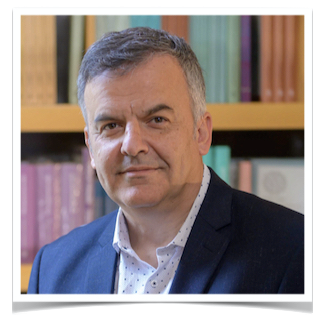
Evangelos Ioannidis is an Associate Professor at the Department of Statistics, School of Informatics and Statistics, Athens University of Economics and Business. Born in 1962, he holds a Mathematics PhD from the University of Heidelberg (1993) and has served in his current department since 1999, progressing from Lecturer (1999) to Assistant Professor (2007) and Associate Professor (2023). His expertise spans spectral analysis of time series , cointegration methods , and bootstrap applications in economic data analysis, with additional focus on Official Statistics and sampling techniques . University of Heidelberg: MMath (1987), PhD (1993) Researcher, University of Heidelberg (1987-1991) Visiting Researcher, University of Orsay, Paris Sud (1992-1993) OECD, Paris (1994-1998) National Institute of Labour (1999) His scientific contributions focus on time series econometrics, VAR model spectra, and R&D expenditure analysis. Recent work includes non-parametric spectral estimation and risk-based sampling methodology. He has collaborated with Eurostat on statistical projects (2012-2014). Current affiliations include the Athens University of Economics and Business , where he teaches and conducts research on economic time series analysis and statistical methods.
Athanasios G. Kanatas is a Professor at the Department of Digital Systems, University of Piraeus, Greece, and Director of the Telecommunication Systems Laboratory. He holds a Ph.D. in Mobile Satellite Communications from NTUA (1997), and has held roles such as Dean of the School of Information & Communication Technologies (2013–2017) and IEEE Communications Society Chairperson (1999). Education: Diploma in Electrical Engineering (NTUA, 1991), M.Sc. in Satellite Communication Engineering (University of Surrey, 1992), Ph.D. in Mobile Satellite Communications (NTUA, 1997). Research focuses on V2X communications, UAV-assisted networks, antenna design, stochastic geometry, and cybersecurity. He has published over 200 papers and authored 6 books, and leads projects in 5G/6G systems and integrated sensing-communication networks. His work includes pioneering contributions to aerial relay placement, fluid antenna systems, and hybrid beamforming techniques. He serves as Editor of IEEE Transactions on Wireless Communications, Associate Editor of IEEE Transactions on Antennas and Propagation, and is a Senior IEEE Member since 2002. Recent activities include extending the deadline for M.Sc. program applications and promoting internships for students. Labs/Teams: Directs the Telecommunication Systems Laboratory, collaborating on projects like ARGOS RFI monitoring and UAV corridor-assisted IoT networks. His research emphasizes practical implementation through prototyping and experimentation, with applications in aerospace, IoT, and intelligent transport systems.
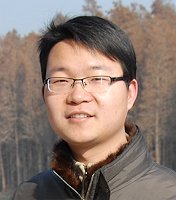
Dr. Zhenman Fang is an Associate Professor in the School of Engineering Science (Computer Engineering Option) and Associate Member in the School of Computing Science at Simon Fraser University, Canada. He founded and directs the HiAccel Lab, focusing on accelerator-rich architectures. His PhD (2014) is from Fudan University, China, with 15 months spent at the University of Minnesota. Prior to SFU, he was a Staff Software Engineer at Xilinx (2017-2019) and a postdoc at UCLA (2014-2017). His research spans: Hardware acceleration for ML, big data, genomics, and HPC FPGA-based customizable computing and near-data processing Compiler/runtime systems for heterogeneous platforms Performance/reliability optimization of accelerator-rich systems His recent publications (2024-2025) focus on FPGA acceleration for machine learning (e.g., on-device training, quantization), computational chemistry, image/video compression, database systems, and reconfigurable computing, demonstrating cross-domain applications of specialized hardware. Awards & Honors: Best Paper Awards: FPL 2024, MEMSYS 2017, TCAD 2019 Best Paper Nominations: ICCAD 2025, FCCM 2025, HPCA 2017, ISPASS 2018 SFU Research Excellence Horizon Award (2025) NSERC Alliance, CFI JELF, and Xilinx University Awards He advises 20+ PhD/Master's students in HiAccel Lab, focusing on accelerator design. Major grants include NSERC Alliance (2020) and CFI JELF (2019). The lab operates a 10-node cluster with FPGA/GPU infrastructure.
Prof. Dimitra-Theodora Kaklamani is a Professor at the School of Electrical and Computer Engineering (SCE) of the National Technical University of Athens (NTUA), where she has held roles including Lecturer (1995), Assistant Professor (2000), Associate Professor (2004), and Professor (2009). She specializes in microwave systems, wireless communications, and computational electromagnetism, with over 300 publications and a Springer book on computational techniques. Education: PhD in Electrical & Computer Engineering from NTUA (1992). Research Interests: Focus on microwave theory, antenna design, distributed processing, security, and machine learning applications in telecommunications. Her work includes developing software for modeling information transmission systems, coordinating EU projects, and advancing computational methods for electromagnetic applications. Key Contributions: Published extensively on MIMO systems, federated learning in 5G/6G networks, intelligent metasurfaces, and IoT security. Active in standardization efforts for DVB-T networks and wireless protocols. Labs/Teams: Involved in projects like inCASA (remote healthcare monitoring) and advanced antenna array optimization using stochastic algorithms. Collaborates on interdisciplinary initiatives blending machine learning with telecommunications.
Dimitris Angelakis is a full Professor of Quantum Physics and Quantum Computing at the School of Electrical and Computer Engineering (ECE) at the Technical University of Crete (TUC), where he has been a tenured faculty member since December 2007. He is currently on leave from TUC while maintaining his position. He also serves as a Visiting Professor at the Centre for Quantum Technologies (CQT) at the National University of Singapore (NUS). His professional roles include being the Greek representative in the Quantum Community Network (QCN) of the European Flagship in Quantum Technologies and a member of the National Council for Research Technology and Innovation of Greece since 2020. Angelakis completed his B.Sc. in Physics at the University of Crete (1993-1997), where he graduated 2nd in a class of 100 students. He earned his M.Sc. in Theoretical Physics with specialization in Atomic and Molecular Physics from the University of Crete (1997-1998), followed by a Ph.D. in Theoretical Quantum Optics from Imperial College London (1998-2002), supervised by Professor Sir Peter Knight FRS. His doctoral thesis received the 2002 Institute of Physics UK Quantum Electronics Theses Award. His research focuses on quantum simulation and computation, quantum machine learning and optimization, and applications of quantum computing to industrial problems. His group works on quantum technologies with a focus on implementations of quantum computation and quantum simulation with quantum optical systems, with research applicable to developing high-performance quantum processors and simulators and fundamental science in strongly correlated quantum systems. His recent work spans quantum algorithms for vehicle routing, quantum chemistry, nonlinear dynamics, and applications of topological data analysis to quantum physics. Angelakis has received numerous prestigious awards including the Google Quantum Innovation Award (2018), the Greek Ministry of Defense Distinguished Young Greek Scientist Award (2004), and the Institute of Physics UK Quantum Electronics and Photonics Thesis Prize (2002). He has served on editorial boards for European Physical Journal: Quantum Technology and Advanced Quantum Technology, and has been an evaluator for research proposals submitted to various European funding bodies. As an educator and mentor, Angelakis has supervised numerous PhD students including Chee Chong Hian (2024), Benjamin Tan (2023), Supanut Thanasilp (2022), and Jirawat Tangpanitanon (2019), among others. His group has secured significant research funding from collaborations with industry partners including Google, ExxonMobil, and Thales. His laboratory at CQT focuses on quantum computation and quantum simulation with near-term quantum devices for industry and business applications.
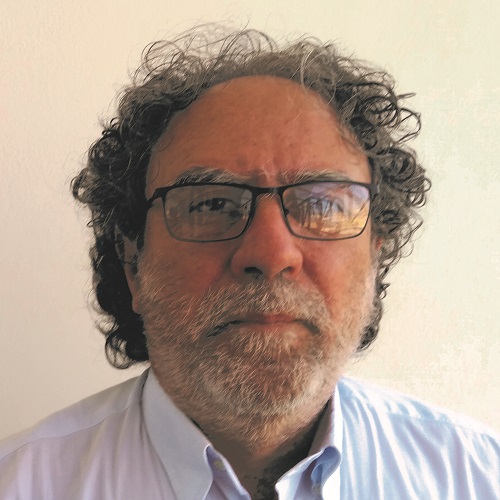
Vasilis Charmandaris is a Professor of Physics at the University of Crete and an Adjunct Research Professor at the European University Cyprus . He previously served as Director of the Institute of Astrophysics at the Foundation for Technology & Research (FORTH) and of the Skinakas Observatory , and was elected President of FORTH in March 2025. His research focuses on observational astrophysics, particularly extragalactic systems, active galactic nuclei (AGN), and star formation in infrared-bright galaxies. Education University of Crete Degree in Physics, Aristotle University of Thessaloniki (1989) Ph.D. in Astrophysics, Iowa State University (1995) Charmandaris’ work leverages JWST , Spitzer , and ALMA data to study the interplay between AGN, star formation, and the interstellar medium (ISM) in merging galaxies. His recent publications emphasize dust-obscured activity , molecular outflows , and high-redshift galaxy analogs , with a strong focus on PAH emission , gas dynamics , and feedback mechanisms . Scientific Awards Marie Curie Fellowship As a leader in observational astrophysics, Charmandaris has directed major research institutes and contributed to GOALS-JWST campaigns. His work spans galactic winds , cluster formation , and instrumentation development (e.g., CAFE tool ), with ongoing efforts in high-redshift galaxy mergers and cosmic feedback processes . Research Infrastructure Director, Skinakas Observatory (2019–2025) Director, Institute of Astrophysics at FORTH (2013–2018, 2019–2025) Principal Investigator on multiple JWST and ALMA programs
Vassilis Charmandaris is a Professor of Observational Astrophysics at the Department of Physics of the University of Crete. He has held significant leadership positions including Director of the Institute for Astronomy, Astrophysics, Space Applications and Remote Sensing (IAASARS) of the National Observatory of Athens (2013-2018), Director of the Institute of Astrophysics at FORTH (2019-2025), and since March 2025, Chairman of the Board of Directors of FORTH. His educational background includes undergraduate studies in Physics at the University of Thessaloniki (1989) followed by a PhD in Astrophysics from Iowa State University (1995). After his doctoral work, he held postdoctoral positions at CEA/DAPNIA in Paris and as a Marie Curie fellow at Paris Observatory before spending 5.5 years as a staff astronomer with the Spitzer Space Telescope group at Cornell University. Dr. Charmandaris is a leading researcher in observational astrophysics, with expertise in luminous infrared galaxies (LIRGs), galaxy evolution, star formation processes, and active galactic nuclei. He has been instrumental in major space telescope projects including the Spitzer Space Telescope's Infrared Spectrograph development and more recently the James Webb Space Telescope (JWST). His research frequently involves multi-wavelength observations of galaxy mergers and interactions to understand the physical processes driving extreme infrared luminosities. Analysis of his recent publications reveals a strong emphasis on JWST observations through the GOALS (Great Observatories All-sky LIRG Survey) project, examining star formation relations, molecular gas properties, and the interplay between active galactic nuclei and star formation in merging systems. His work spans observational techniques from mid-infrared spectroscopy to radio continuum imaging, uncovering the complex physical processes in these extreme environments. Marie Curie fellowship Dr. Charmandaris has coauthored 258 papers published in refereed journals which have received approximately 19,700 citations, with an h-index of 70 (source: NASA/ADS). His research has been supported by major international collaborations including the GOALS project, which utilizes data from multiple space-based observatories. He has received significant funding for his work on galaxy evolution and instrumentation development. He leads the GOALS project, a major international collaboration studying luminous infrared galaxies across multiple wavelengths, and has been involved with instrumentation development for space telescopes including the Spitzer Space Telescope's Infrared Spectrograph. His current research focuses on JWST observations of galaxy mergers, star formation processes, and the properties of the interstellar medium in extreme environments.
Vafeidis Antonios is a Professor at the School of Mineral Resources Engineering , Technical University of Crete, affiliated with the Applied Geophysics Laboratory and Mineral Detection & Identification Department. He specializes in geophysical methods for subsurface imaging, seismic wave propagation, and environmental applications. Research Interests His work focuses on: Simulation of seismic and electromagnetic wave propagation Multichannel surface wave analysis Geophysical signal processing Combined inversion of geophysical data 3D geological modeling for aquifers and archaeological sites Environmental applications including irrigation management and saltwater intrusion Projects & Grants Scientific Leader of DE.F.I.C.I.T. (2019–2022), Crete Region-funded irrigation decision system Lead Investigator for multiple geophysical projects at Souda Naval Base, Heraklion Airport site, and Chania Marinas Principal Researcher in EU-funded cultural heritage and hydrogeological projects Academic Contributions Teaches courses in applied geophysics, seismic methods, and field exercises. Collaborates on interdisciplinary research involving geophysics, hydrology, and archaeology.
Christos P. Tsekrekos serves as a Research Fellow at the Photonics Technology Laboratory within the Department of Informatics and Telecommunications at the National and Kapodistrian University of Athens, a position he has held since November 2011. His research focuses on advancing optical communication systems through innovations in multimode fiber transmission, radio-over-fiber technologies, and passive optical networks. His educational foundation includes: Bachelor's degree in Electrical and Computer Engineering from the National Technical University of Athens (2003) Ph.D. in Optical Communications from Eindhoven University of Technology, Netherlands (2008) Dr. Tsekrekos' research spans Optical Communications , Fiber Optics , Radio-over-Fiber (RoF) , and Passive Optical Networks (PON) , with pioneering contributions to mode group diversity multiplexing (MGDM) and the invention of mode-selective spatial filtering (MSSF) . His work bridges theoretical innovation with experimental validation in multimode fiber systems and integrated optical-wireless architectures. Analysis of his 15 most recent publications reveals a concentrated focus on reconfigurable optical-wireless convergence (2009-2011), featuring experimental demonstrations of millimeter-wave RoF/baseband integration and bandwidth expansion techniques for PONs. Key methodological themes include wavelength interleaving, polarization multiplexing, and MSSF-based impairment mitigation across multimode fiber systems. His research has been supported by the Japan Society for the Promotion of Science (JSPS) Global Center of Excellence program and European FP7 projects. As an active contributor to the Photonics Technology Laboratory, he maintains technical leadership in experimental photonics while serving as a reviewer for IEEE and OSA journals.
Mahmut Taylan Kandemir is a Professor in the Department of Computer Science at Pennsylvania State University. His research spans optimizing compilers, runtime systems, embedded systems, I/O, high-performance storage, and power-aware computing. He leads the Microsystems Design Lab and collaborates with institutions like Argonne National Lab, Microsoft, and Intel. Education: B.S. Computer Engineering, Istanbul Technical University (1988) M.S. Computer Engineering, Istanbul Technical University (1992) Ph.D. Computer Science, Syracuse University (1999) Research Focus: Dr. Kandemir's work integrates hardware-software co-design to address challenges in multi-core architectures, non-volatile memory systems, and energy efficiency. His recent projects explore 3D NAND flash optimization, near-data computing, and reliability in heterogeneous systems. Key themes include reducing data movement overhead, enhancing storage longevity, and developing compiler-directed solutions for emerging hardware. Publications: His articles frequently appear in premier venues (PLDI, ASPLOS, HPCA) and emphasize memory hierarchy optimization, security, and parallelism. Trends include hardware-assisted resilience, approximate concurrency, and energy-efficient VR streaming. Awards: Premier Research Award, Penn State Engineering Society (2017) IEEE Fellow NSF CAREER Award (2000) Best Paper Awards (IPDPS 2008, ICPADS 2006) Top ACM Digital Library Download (2006) Advising & Grants: He has graduated 32 Ph.D. and 20 master's students, with 15 Ph.D. and 5 master's students currently advised. His research is funded by NSF, DARPA, DOE, and industry partners. Active projects include: NSF/OAC: Re-Engineering Galaxy for Performance (2019-2023) NSF/SHF: 3D NAND Flash Optimization (2019-2022) NSF/SPX: Heterogeneous Intermittent Accelerators (2018-2022) Labs & Teams: Leads the Microsystems Design Lab, focusing on architecture-compiler co-design. Collaborates with the Storage Systems Research Center and heterogeneous computing groups at Penn State.
Vasileios Karakostas is an Assistant Professor at the Department of Informatics and Telecommunications, National and Kapodistrian University of Athens. He is a member of the Computer Architecture Lab and focuses on computer architecture, memory systems, and resource management. Previously, he was a postdoctoral researcher at the National Technical University of Athens' Computing Systems Lab. He holds a PhD in Computer Architecture from Universitat Politècnica de Catalunya and Barcelona Supercomputing Center. Education: Ph.D. in Computer Architecture, Universitat Politècnica de Catalunya (2016) M.Sc. in Computer Architecture, Networks, and Systems, UPC (2012) B.Eng. in Electrical and Computer Engineering, NTUA (2009) Research Interests: Memory systems (virtual memory, NVM) Hardware/OS interaction Resource management in data centers Parallel systems and serverless computing RISC-V architectures and cloud infrastructure Projects: Active in Horizon Europe projects Vitamin-V, Neuropuls, and REBECCA. Previously contributed to DAPHNE and ACTiCLOUD (EU H2020). Awards: 2024: Distinguished Artifact Award (ASPLOS) 2011: Best Paper Award (ICPE) Selected for IEEE Micro's Top Picks (2015, 2016) Teaching: Courses include Logic Design, Parallel Systems, and Large-scale Computing Systems at undergraduate and graduate levels. Labs/Teams: Leads research in the Computer Architecture Lab, collaborating on resilient architectures and cloud computing innovations.
Dimitrios Kosmopoulos serves as Professor in the Computer Engineering and Informatics Department at the University of Patras, Greece, with extensive experience across multiple academic institutions including National Technical University of Athens (NTUA), Rutgers University, and University of Texas at Arlington. His research bridges theoretical computer science with practical applications in accessibility, agriculture, and cultural heritage preservation. Education: B.Eng. in Electrical and Computer Engineering, National Technical University of Athens (1997) PhD in Electrical and Computer Engineering, National Technical University of Athens (2002) Professor Kosmopoulos' research integrates computer vision, machine learning, and signal processing to solve real-world problems. His primary focus areas include sign language recognition systems for museum accessibility, precision agriculture applications for crop monitoring and disease detection, and digital restoration of ancient scripts like Mycenaean Linear B. His methodological innovations frequently involve geometric analysis, time-series modeling, and multimodal data fusion techniques that advance both theoretical frameworks and practical implementations. Analysis of his recent publications (2023-2025) reveals three dominant research thrusts: accessibility technologies for deaf communities (particularly museum navigation systems), agricultural automation using computer vision (olive grading, tomato disease detection), and computational archaeology (Linear B tablet restoration). His work consistently employs cutting-edge approaches including geometric knowledge distillation, coupled learning architectures, and 3D motion analysis, demonstrating strong interdisciplinary connections between computer science, agriculture, and humanities. No scientific awards were documented in the provided source materials. While specific advising details and grant information were not explicitly stated, his leadership in projects like HealthSign (sign language healthcare systems) and MuseLearn (museum accessibility platforms) indicates substantial research funding and collaborative supervision activities spanning computer vision, robotics, and assistive technology domains. Professor Kosmopoulos operates within the Division of Hardware and Computer Architecture at the University of Patras, collaborating with the Computer Technology and Architecture Laboratory, VLSI Microelectronics Laboratory, Signals and Telecommunications Laboratory, and Computer Communications Networks Laboratory. His current research integrates these facilities to develop systems like the SignGuide project for museum tours and frameworks for early pest detection in greenhouse crops, emphasizing practical implementations of machine learning in constrained environments.
Professor Kanatas Athanasios is a distinguished faculty member at the Department of Digital Systems within the School of Information & Communication Technologies at the University of Piraeus. He currently serves as Director of the institutionalized Telecommunications Systems Laboratory and Director of the Postgraduate Program 'Digital Communications & Networks.' With a career spanning over three decades in telecommunications and wireless communications research, he has established himself as a leading academic in his field. Professor at Department of Digital Systems (2012-present) Associate Professor (2008-2012) Assistant Professor (2002-2008) Dean of School of Information & Communication Technologies (2013-2017) Member of University Senate (2008-2009, 2013-2017) Professor Kanatas received his Diploma in Electrical Engineering from the School of Computer Science and Engineering of the National Technical University of Athens in 1991, followed by an M.Sc. in Satellite Communication Engineering from the University of Surrey (UK) in 1992, and completed his PhD in Electrical Engineering from the National Technical University of Athens in 1997. His academic journey began with research positions at the National Research Foundation (1993-1994), SPACETEC Ltd as a technical project manager (1995), and researcher roles at the Mobile Radio Communications Laboratory and the Research University Institute of Communications and Computer Systems of the National Technical University of Athens. Professor Kanatas's research primarily focuses on satellite and wireless communications, with recent work increasingly exploring UAV-assisted networks, integrated sensing and communication systems, antenna design, and stochastic geometry applications in telecommunications. His research has evolved from traditional satellite communications toward cutting-edge areas including unmanned aerial vehicle networks, integrated sensing and communication systems, and advanced antenna technologies. The breadth of his work demonstrates a consistent trajectory from foundational communication theory toward increasingly complex and integrated wireless systems that address contemporary challenges in telecommunications. His extensive publication record shows a clear trend toward integrating sensing capabilities with communication systems, particularly through UAV networks. Recent work emphasizes stochastic geometry for network modeling, antenna array analysis in near-field scenarios, and energy-efficient communication protocols for IoT applications. The interdisciplinary nature of his research bridges traditional communication theory with emerging technologies, creating innovative solutions for next-generation wireless networks. Four best article awards at international conferences Senior Member of IEEE (since 2002) President of the Greek Chapter of IEEE Communications Society (1999) Elected representative for Region 15 in European Association on Antennas and Propagation (since 2021) Editor for IEEE Transactions on Wireless Communications, IEEE Transactions on Antennas & Propagation, and IEEE Communication Letters With over 200 publications in international scientific journals and conferences, and six books to his credit, Professor Kanatas has made substantial contributions to the field of telecommunications. His editorial roles with prestigious IEEE journals demonstrate his standing in the academic community. His leadership extends beyond research to academic administration, having served as Dean of the School of Information & Communication Technologies and as a member of the University Senate and Research Committee. As Director of the Telecommunications Systems Laboratory, Professor Kanatas leads a research team focused on cutting-edge telecommunications technologies. His laboratory serves as a hub for innovation in wireless communications, satellite systems, and emerging network architectures. The lab provides a collaborative environment for graduate students and researchers to explore the frontiers of communication technology, with particular emphasis on practical implementations and experimental validation of theoretical concepts.