معرفی
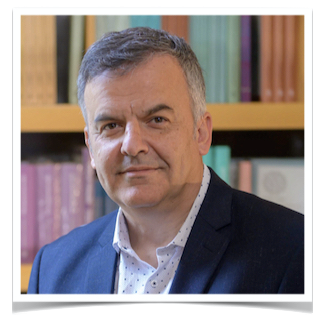
Vassilis Charmandaris is a Professor of Observational Astrophysics at the Department of Physics of the University of Crete. He has held significant leadership positions including Director of the Institute for Astronomy, Astrophysics, Space Applications and Remote Sensing (IAASARS) of the National Observatory of Athens (2013-2018), Director of the Institute of Astrophysics at FORTH (2019-2025), and since March 2025, Chairman of the Board of Directors of FORTH.
His educational background includes undergraduate studies in Physics at the University of Thessaloniki (1989) followed by a PhD in Astrophysics from Iowa State University (1995). After his doctoral work, he held postdoctoral positions at CEA/DAPNIA in Paris and as a Marie Curie fellow at Paris Observatory before spending 5.5 years as a staff astronomer with the Spitzer Space Telescope group at Cornell University.
Dr. Charmandaris is a leading researcher in observational astrophysics, with expertise in luminous infrared galaxies (LIRGs), galaxy evolution, star formation processes, and active galactic nuclei. He has been instrumental in major space telescope projects including the Spitzer Space Telescope's Infrared Spectrograph development and more recently the James Webb Space Telescope (JWST). His research frequently involves multi-wavelength observations of galaxy mergers and interactions to understand the physical processes driving extreme infrared luminosities.
Analysis of his recent publications reveals a strong emphasis on JWST observations through the GOALS (Great Observatories All-sky LIRG Survey) project, examining star formation relations, molecular gas properties, and the interplay between active galactic nuclei and star formation in merging systems. His work spans observational techniques from mid-infrared spectroscopy to radio continuum imaging, uncovering the complex physical processes in these extreme environments.
- Marie Curie fellowship
Dr. Charmandaris has coauthored 258 papers published in refereed journals which have received approximately 19,700 citations, with an h-index of 70 (source: NASA/ADS). His research has been supported by major international collaborations including the GOALS project, which utilizes data from multiple space-based observatories. He has received significant funding for his work on galaxy evolution and instrumentation development.
He leads the GOALS project, a major international collaboration studying luminous infrared galaxies across multiple wavelengths, and has been involved with instrumentation development for space telescopes including the Spitzer Space Telescope's Infrared Spectrograph. His current research focuses on JWST observations of galaxy mergers, star formation processes, and the properties of the interstellar medium in extreme environments.