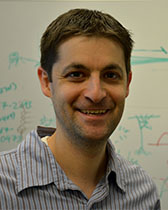
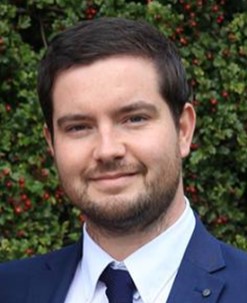
Daniel Dombeck is a Professor in the Department of Neurobiology at Northwestern University's Weinberg College of Arts & Sciences. He holds the Wender-Lewis Teaching and Research Professorship. His research focuses on optical dissection of neuronal circuits underlying mammalian navigation, combining novel optical and genetic techniques to study neural activity in mice within virtual reality environments. Dombeck earned his PhD in Neuroscience from Cornell University. Affiliations: Department of Neurobiology, Northwestern University Key Research Areas: Spatial navigation, systems neuroscience, neuronal population dynamics His work investigates how the brain encodes spatial and navigational information through cellular-resolution imaging of neuronal populations. Dombeck has developed advanced imaging tools for studying neural activity in awake, behaving mice, including VR systems and multiphoton microscopy techniques. Awards : McKnight Scholar Award (2015) Klingenstein Fellowship in Neuroscience (2011) Whitehall Foundation Research Grant (2011) His lab explores hippocampal and entorhinal cortex dynamics, dopamine signaling, and reward-driven spatial representations. Dombeck's research bridges molecular, cellular, and systems levels to understand neural circuit function in behavior and disease.
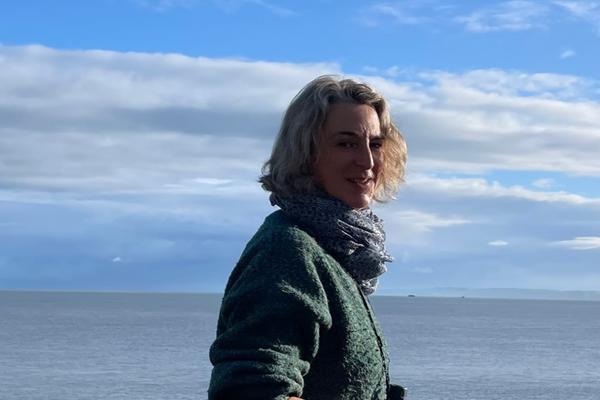
Theresa Burt De Perera is a Professor of Animal Behaviour and Associate Head of Department (People) at the University of Oxford. She is also a Tutorial Fellow at St John’s College. Her research focuses on spatial cognition mechanisms in animals, exploring how sensory information is processed for navigation. Key areas include the interplay between sensory systems, memory, and environmental learning. Research Interests: Her work combines theoretical and empirical approaches to study how animals perceive and navigate their habitats. Specific topics include sensory ecology, spatial learning, and the neural basis of navigation. Group Members: Supervises graduate students such as Alicja Rutkowska (Burt de Perera Lab), Anna Garcia (OxNav), and James Cordery (Newport Group). Collaborates with teams like the Newport Group and contributes to interdisciplinary initiatives like Schmidt AI in Science Fellowships. Contact: reachable via theresa.burt@biology.ox.ac.uk or +44 1865 277737.
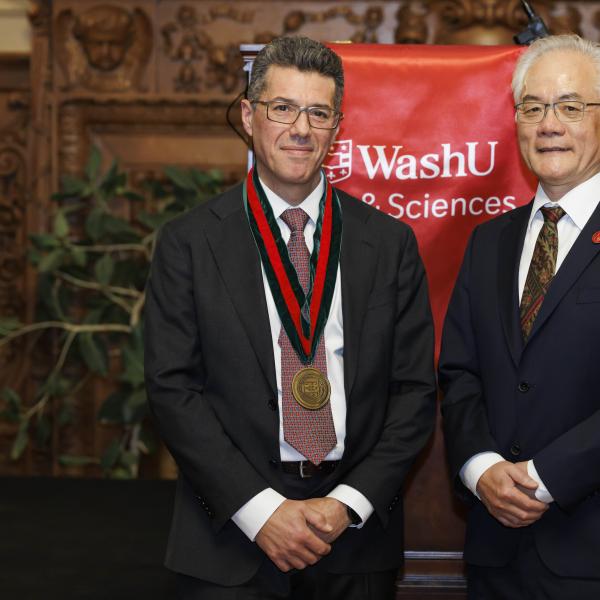
Jeffrey M. Zacks is the Chair and Professor of Psychological & Brain Sciences and the Edgar James Swift Professor in Arts & Sciences at Washington University in St. Louis. He also holds a professorship in Radiology. His research focuses on perception, memory, event cognition, and the brain's processing of film and media, with emphasis on aging and neurological disorders. Zacks uses behavioral tasks, neuroimaging, eye-tracking, and computational modeling in his work. He leads the Dynamic Cognition Laboratory, exploring temporal structure in everyday activities and spatial cognition. His academic journey includes a BA from Yale University and a PhD/MA from Stanford University. Education: PhD, Stanford University MA, Stanford University BA, Yale University Awards: Fellow of American Academy of Arts & Sciences Fellow of AAAS, APS, APA Mid-Career Award, Psychonomic Society Zacks' research interests span event perception, memory, spatial cognition, and the intersection of media with cognitive processes. His work addresses how cognitive functions change with aging, using innovative methodologies like the META stimulus set. He has authored/co-authored over 110 journal articles and books including Event Cognition and Flicker: Your Brain on Movies . His lab's recent studies highlight event segmentation's role in memory retention and spatial navigation. Grants and funding come from NSF, NIH, DARPA, and others. Zacks has leadership roles in the American Psychological Association and Psychonomic Society. His lab collaborates widely, advancing interdisciplinary insights into human cognition. Labs & Teams: The Dynamic Cognition Laboratory investigates temporal and spatial cognition through neuroimaging, behavioral experiments, and computational models. Projects explore how event structures shape memory and perception, with applications in media studies and aging research.
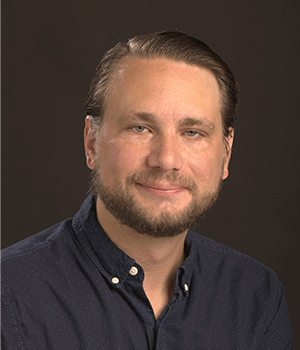
Matias Volonte is an Assistant Professor in the School of Computing at Clemson University and a faculty member in the Biomedical Data Science and Informatics (BDSI) program. He leads the Synthetic Personas Lab, focusing on human interaction with embodied conversational agents in extended reality (XR) environments across healthcare and education domains. His research bridges virtual reality technologies with applications in digital health interventions and cognitive modeling. Research interests include: Embodied Conversational Agents Cross-cultural and multilingual applications X Reality (VR/AR/MR) systems Eye tracking and visual attention analysis Healthcare and educational technology Recent work emphasizes: Demographic bias mitigation in virtual human design Behavior change interventions via AI-driven virtual coaches Trust dynamics in human-agent interactions Cognitive load and memory retention in multimodal VR environments No scientific awards are explicitly listed. His lab focuses on developing XR-based solutions for mental health, chronic pain management, and privacy education. Current projects investigate AI-driven virtual characters in collaborative tasks and medical simulation environments.
Theodore Constantine Dumas is an Associate Professor in the Department of Psychology at George Mason University. His research focuses on neural substrates of memory, neural and cognitive development, stress impacts on behavior, and real-time brain activity analysis. He holds a B.S. from the University of Connecticut (Physiology and Neurobiology/Psychology), and M.S. and Ph.D. from the University of Virginia (Neuroscience and Behavior). His postdoctoral training included NIH-funded fellowships at Stanford University (gene therapy for brain injury) and the University of Oregon (transgenic mice for learning studies). Education: B.S., University of Connecticut (Physiology and Neurobiology & Psychology) M.S. and Ph.D., University of Virginia (Neuroscience and Behavior) Research Interests: Dr. Dumas investigates late postnatal episodic memory development, synaptic transmission dynamics, stress effects on cognitive ability, and tardigrade models for memory studies. He also develops spatial navigation tracking apps and explores neural network activities in learning paradigms. Grants & Funding: His lab is supported by the Department of Defense, DARPA, NIH (NIA/NINDS), and the Alzheimer’s and Related Dementias Research Award Fund. Recent work includes projects on synaptic plasticity and neurotechnology. Awards & Recognition: While no personal awards are explicitly listed, his grants reflect sustained excellence in research. He delivers continuing education seminars nationally for healthcare professionals and is active in promoting neuroscience education at undergraduate and secondary school levels. Teaching & Mentorship: Teaches advanced courses like Synaptic Plasticity, Neurophysiology Lab, and Behavioral Chemistry. Mentors students through collaborative, hands-on research experiences emphasizing experimental design and problem-solving. Labs & Collaborations: Focuses on interdisciplinary projects integrating physiology, molecular biology, and computational neuroscience. Collaborates with engineers on neural interface technologies and behavioral neuroscientists on cognitive development studies.
Martin Wiener is an Associate Professor in Psychology at George Mason University. His research examines how the brain constructs dimensions of time and space using tools like fMRI, TMS, EEG, and psychophysics. Key applications include rhythm perception, navigation, and value processing. He directs the STAR Lab, focusing on multimodal neuroimaging techniques. His recent work reveals interactions between memory and time perception, neural mechanisms of temporal uncertainty, and sensorimotor influences on time judgments. Publications demonstrate expertise in meta-analyses, computational modeling, and clinical applications (e.g., ADHD). He teaches courses in statistics (PSYC 300) and brain stimulation methods (PSYC 892), and has supervised doctoral dissertations on time-numerosity interactions and movement parameters in timing.
Jerald Thomas is an Assistant Professor in the Department of Computer Science at the University of Wisconsin-Milwaukee's College of Engineering & Applied Science. He holds a BS from the University of Minnesota-Duluth, an MS from the University of Southern California, and a PhD from the University of Minnesota. His research focuses on enhancing immersive technologies, including natural locomotion in VR, 3D user interactions, VR-assisted therapy, and immersive collaboration systems. Research interests span virtual reality optimization, human-centered interaction design, and therapeutic applications of immersive technologies. Publications primarily explore redirected walking algorithms, collaborative VR frameworks, and user behavior in virtual environments, with recent work emphasizing spatial learning and communication modalities.
James Intriligator is Professor of the Practice in Human Factors Engineering and Director of Strategic Innovation at Tufts University's School of Engineering, Department of Mechanical Engineering. Previously, he was a pioneer in consumer psychology at Bangor University (UK), where he built the world's leading consumer psychology program over 13 years. In 2014, he was named a National Teaching Fellow (the highest teaching honor in the UK), and in 2016 joined Tufts to lead their Human Factors Engineering program, growing the undergraduate population by fifty percent and the graduate program from five to over 40 masters students. His educational background includes a Ph.D. in Cognitive Neuroscience from Harvard University (1997), an M.A. in Perceptual and Cognitive Psychology from Harvard (1992), and a B.A. from University of California, San Diego (1990). He completed postdoctoral research in neurology at Beth Israel Deaconess Medical Center. Intriligator's research spans human factors engineering, innovation, design thinking, AI-powered innovation and R&D, human-machine system design, robotics, machine learning, perception, and psychology. His work bridges academic research with practical applications, particularly in next-generation human-machine systems covering assistive and social robots, baggage scanners, VR systems, and military and medical devices. Since joining Tufts, he has secured substantial grant funding from agencies including the Department of Defense, National Science Foundation, Department of Homeland Security, and Federal Highway Administration for projects like TIDAS (Traffic Incident Detection and Analysis System), MIDAS (Multisensory Interactive Data Analysis System), and GRABS (Gesturally Responsive Action-Based System). His 15 most recent publications demonstrate a consistent focus on applying human factors principles to emerging technologies, with particular emphasis on virtual reality applications for pain management, AI ethics in human factors engineering, and innovative methods like 'Persona Multiplication' to avoid designed injustice. His work spans both theoretical contributions and practical implementations across military, medical, and transportation domains. National Teaching Fellow (highest teaching honor in the UK) Nominated for Tufts Distinction Award Shortlisted for Professor of the Year at Tufts Recipient of university-wide Teaching with Technology award Intriligator serves as Director of Strategic Innovation for the Department of Mechanical Engineering and has established Glider Innovations, a consultancy at the crossroads of artificial intelligence and human creativity. He has advised numerous PhD committees and mentored students through Laidlaw Scholar programs. His professional activities include leadership roles in the International Federation of National Teaching Fellows and membership in the Association for Research in Vision and Ophthalmology. Beyond academia, he works with global organizations and local social-enterprise groups, applying his expertise in innovation and human factors to address real-world challenges.
Dr. Katarzyna Bobrowicz is a Postdoctoral Researcher at the University of Luxembourg's Department of Behavioural and Cognitive Sciences. Her research examines cognitive development in early childhood, spatial cognition, problem-solving skills, and lifelong learning processes. Recent publications investigate educational relevance in information landscapes, 21st-century skill development, and cognitive processes in young children. Her work demonstrates the impact of play-based interventions on mental rotation abilities and the relationship between visuospatial memory and search strategies in preschoolers.
Magdalena Stawkowski is Assistant Professor in the Department of Anthropology at University of South Carolina, with affiliations at the Walker Institute for International Studies. Her research examines socio-cultural legacies of Soviet nuclear testing in Kazakhstan, focusing on health disparities, environmental governance, and human adaptation in irradiated environments. She holds a PhD from University of Colorado Boulder and has held research positions at Stanford University and Danish Institute for International Studies. Her work investigates how communities navigate health risks in radiation-affected zones, blending medical anthropology with science and technology studies. Research explores cognitive, behavioral, and neurobiological factors that contribute to OCD and related disorders. Stawkowski teaches courses including Humans Going Nuclear, Toxic Environments, and Medical Anthropology. She received the Soyuz Article Prize (2017) and ARHE Policy Brief Award (2023), and actively mentors graduate students in anthropology.
Baran Fakhri is a Term Lecturer in Sociology at Simon Fraser University (SFU) and a PhD candidate in Sociology. Their research focuses on Afghan migrants' clandestine migration journeys through ethnographic exploration of borders, illegality, and labor experiences. They teach courses on sociology, social movements, and special topics in sociology. Education: PhD candidate (Sociology): Simon Fraser University MA (Anthropology): University of Tehran Research Interests: Baran's work examines 'irregular' migration, refuge/asylum systems, border violence, and the temporal dimensions of forced migration. They investigate how migrants navigate legal and spatial boundaries, with a focus on memory and refugee subjectivity. Teaching: Recent courses include Introduction to Sociology, Social Movements, and Special Topics in Sociology during Summer 2025, with Social Movements also offered in Fall 2025.
Michael Craig is a cognitive neuroscientist at Northumbria University specializing in memory processes and their applications in healthy aging and neurological conditions. His research investigates how memory functions change across the lifespan and in Alzheimer's Disease, with particular focus on memory consolidation during rest periods. Dr. Craig's educational background includes a Psychology PhD (2016), Neurosciences MRes, and Biomedical Science BSc (Hons). He holds Chartered Membership of the British Psychological Society (CPsychol, 2020), indicating professional recognition of his expertise in psychological science. His research program examines how different post-learning conditions affect memory processing, with particular attention to spatial memory and navigation. Using electrophysiological methods including EEG brain activity recording, sensitive memory measures, neuropsychological tests, and virtual reality environments, his work bridges basic cognitive neuroscience with clinical applications. Analysis of his publication record reveals a consistent focus on memory consolidation during rest periods, with particular emphasis on how these processes differ in aging populations. His work demonstrates that wakeful rest significantly enhances spatial memory integration and can protect fine details of new memories, with implications for developing low-cost interventions for memory disorders. Dr. Craig currently supervises two PhD students investigating memory interventions for Alzheimer's Disease and memory challenges associated with neurodevelopmental conditions. His research has potential applications for developing diagnostic tools and non-pharmacological interventions for memory disorders. His research methodology combines behavioral testing with neurophysiological measures, creating a comprehensive approach to understanding memory systems. The progression of his work shows increasing focus on translational applications, particularly for age-related memory decline and neurodegenerative conditions.
Dr. George Sandamas is a Senior Lecturer in the Department of Psychology at Middlesex University, UK. His academic focus revolves around spatial cognition, virtual environments, and developmental psychology. He holds a PhD in Psychology from Middlesex University (2006), exploring spatial learning in virtual environments across age groups. His research interests emphasize spatial learning mechanisms in both virtual and real-world settings, particularly investigating how activity/passivity, age, gender, and interface familiarity influence spatial knowledge acquisition. He has extensively studied driver behavior in virtual urban spaces and cognitive processes during concurrent task performance. Key themes in his publications include spatial reconstruction accuracy in children, gender effects on distance perception in virtual spaces, and the transfer of spatial learning between virtual and real environments. His work bridges experimental psychology with applied contexts like human factors and technology design. Dr. Sandamas has collaborated with institutions and researchers in cognitive science and mental health, evidenced by publications in journals such as SAGE Open , Spatial Cognition & Computation , and Journal of Environmental Psychology . Over 748 views and 270 downloads of his research outputs highlight his academic impact.
Andrew Vardy is a Professor jointly appointed to the Faculty of Engineering and Applied Science and the Department of Computer Science at Memorial University of Newfoundland. He holds a B.Eng. in Electrical Engineering (Memorial), M.Sc. in Evolutionary and Adaptive Systems (University of Sussex), and PhD in Computer Science (Carleton University). His research explores swarm robotics, biologically inspired algorithms, autonomous navigation, and multi-robot systems. Key areas include visual homing, distributed construction, environmental sensing, and robotic simulation tools. He leads the Memorial University Bots Lab, developing applications for marine and terrestrial environments. Vardy teaches courses in autonomous robotics, computer programming, software design, and control systems. His publications emphasize computational complexity in swarm algorithms, reinforcement learning for coordination, and novel applications like drum accompaniment AI and marine urchin detection. Recent work integrates attention mechanisms, transformer networks, and edge computing paradigms.
Darlene Skinner is a Professor in the Department of Psychology at Memorial University of Newfoundland, affiliated with the Faculty of Science and the field of Behavioural Neuroscience. She holds a B.Sc.(Hons.) from Memorial University and a Ph.D. from the University of Toronto. Her research focuses on head direction cells and their role in spatial navigation, orientation, and neural networks in mammals. She investigates how disruptions in neural pathways (e.g., lesions, inactivation) affect spatial tasks requiring directional heading. Key research interests include spatial cognition, neural mechanisms of navigation, and the developmental hierarchy of spatial cells (head direction, place, grid). Her work emphasizes direction learning’s foundational role in spatial problem-solving. Recent studies explore the functional significance of head direction cells across brain regions like the postsubiculum, thalamus, and dorsal tegmental nucleus. Publications highlight experimental paradigms such as water T-mazes and foraging tasks to assess spatial learning. While no scientific awards are explicitly listed, her contributions advance models of navigation and spatial memory. Her lab’s findings bridge behavioral outcomes with neural circuitry, contributing to theoretical frameworks in spatial cognition.