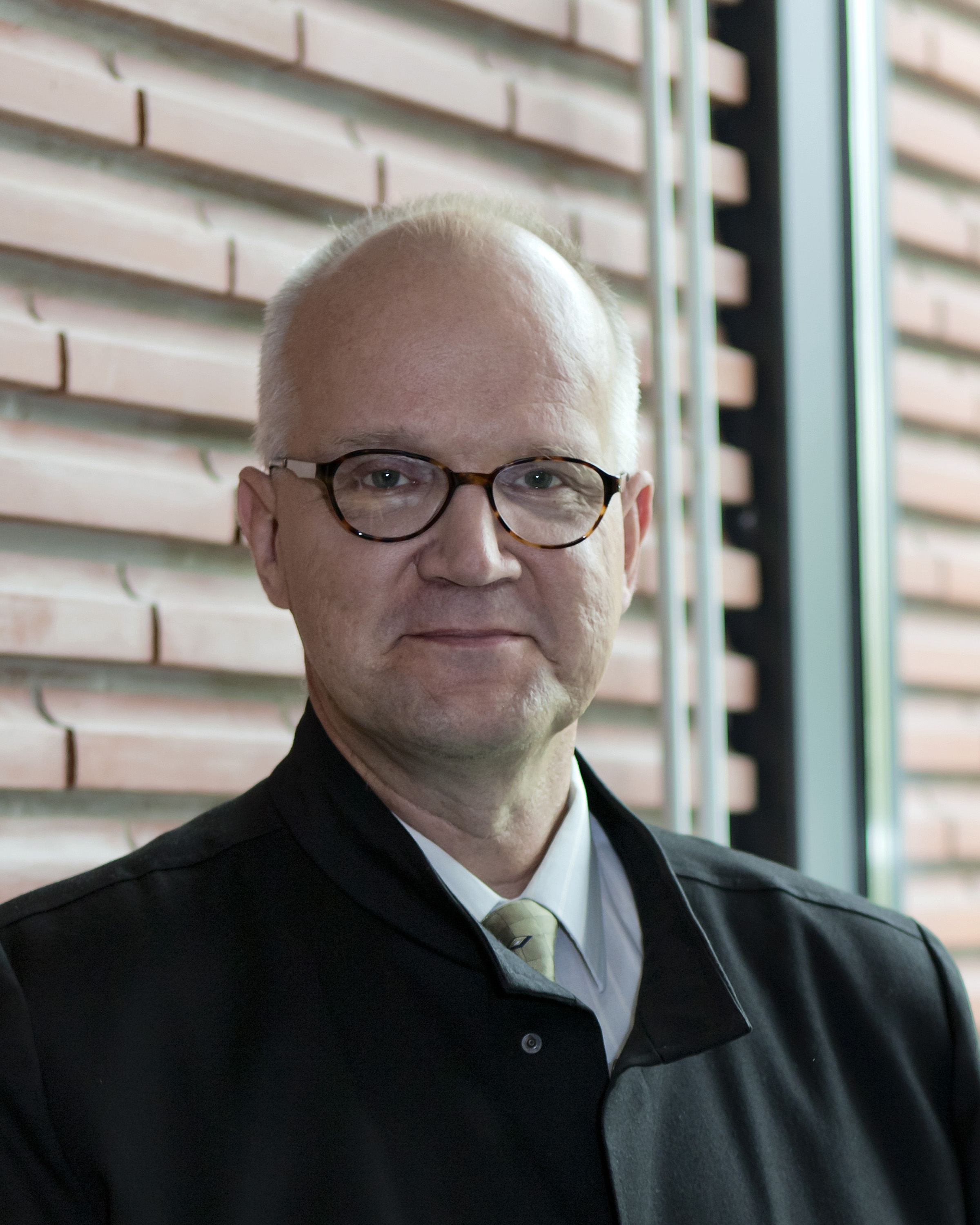
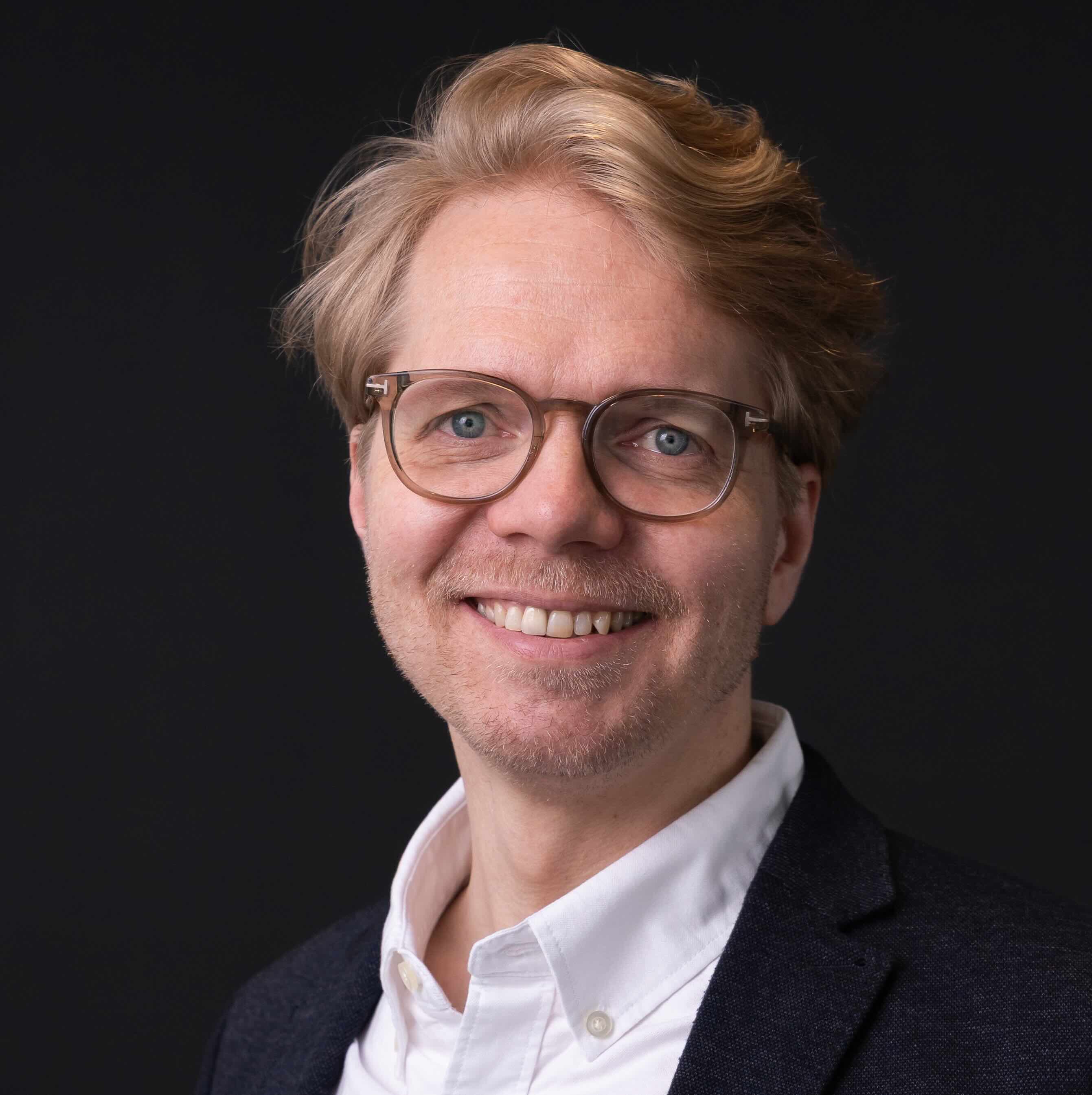
Eero Hyvönen is a Professor of Computer Science at Aalto University and Director of the Helsinki Centre for Digital Humanities (HELDIG) at the University of Helsinki. He leads the Semantic Computing Research Group (SeCo), specializing in Semantic Web technologies and applications. Hyvönen holds an Adjunct Professor title at the University of Helsinki's Department of Computer Science. His work focuses on developing national-level semantic web infrastructure, with applications in digital humanities, cultural heritage, and AI. He has published over 500 research articles and books, receiving numerous awards including the Decoration of Knight, First Class, of the Order of the White Rose of Finland (2018). Hyvönen chairs editorial boards of journals like Semantic Web and serves on committees for major conferences. His research spans semantic web technologies, linked open data, and AI applications in cultural heritage domains. Key projects include Sampo portals (e.g., LetterSampo, OperaSampo) for cultural data analysis, ParliamentSampo for parliamentary data, and FindSampo for archaeological finds. His work emphasizes interdisciplinary collaboration, integrating law, history, and computing through initiatives like FIN-CLARIAH. Hyvönen advises doctoral and master's students, notably Annastiina Ahola and Jouni Tuominen, who have won awards under his supervision. He directs research infrastructures, chairs international boards, and actively contributes to open data policies and standards development.
Hannele Mäkelä serves as an Associate Professor in the Department of Accounting within the Faculty of Management and Business at Tampere University. Her academic profile centers on critical examinations of accounting practices through the lens of sustainability, corporate social responsibility, and stakeholder engagement, with particular emphasis on socio-political dynamics and environmental considerations. Her primary research interests include Sustainability Accounting, Corporate Social Responsibility, Social Enterprises, Stakeholder Engagement, Environmental Accounting, and Sustainability Reporting. She investigates how traditional accounting frameworks can be expanded to address complex sustainability challenges, employing discourse analysis to critique the objectivity of materiality disclosures and exploring nature-inclusive stakeholder relationships in urban ecosystems. Her work consistently challenges ideological assumptions in corporate reporting while advocating for more inclusive and environmentally responsive accounting practices. Analysis of her 15 most recent publications (2018-2023) reveals a cohesive focus on urban ecosystem services, mining operations, and sustainability integration in accounting education. Key trends include the deconstruction of materiality illusions in sustainability reporting, critical assessments of responsible mining practices (notably at Talvivaara), and the exploration of accounting's role in social enterprises. Her research demonstrates a methodological preference for qualitative discourse analysis to uncover power dynamics in stakeholder engagement, with recurring themes of cultural sustainability in heritage sites and the socio-political nature of environmental accountability. While specific awards, grants, or student supervision details are absent from the provided materials, her extensive publication record in specialized journals like the Social and Environmental Accounting Journal underscores her active contribution to advancing critical perspectives in sustainability accounting. Her work shows strong institutional engagement through Tampere University's City Centre Campus, with practical implications for municipal reporting, mining industry accountability, and accounting curriculum development.
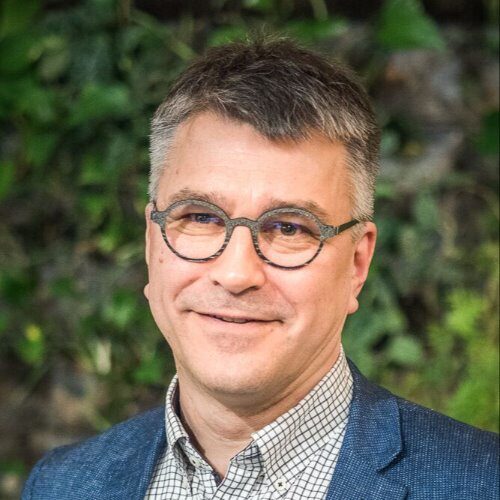
Sami Kurki is a Professor and Director at the Ruralia Institute in Seinäjoki and the Helsinki Institute of Sustainability Science (HELSUS) at the University of Helsinki. He specializes in sustainability science, rural entrepreneurship, environmental policy, and conservation conflicts. His work bridges interdisciplinary research with practical applications in food systems, wildlife management, and innovation ecosystems. Research interests include: Sustainable food systems and organic farming Rural business development and entrepreneurship Wildlife-human interactions (e.g., moose, wolves, forest grouse) Consumer behavior and prosocial status signaling Policy frameworks for sustainable land use Stigma management in emerging industries Recent publications focus on interdisciplinary collaboration (e.g., Ratkaisujen rajapinnoilla ), sustainable hunting tourism ( Sustainable Hunting Tourism ), and equitable transitions ( Oikeudenmukainen vihreä siirtymä ). His work emphasizes bridging academic knowledge with practical solutions for rural communities and policymakers. Awards : Artturi Leinonen Cultural Award (2011), Knight First Class of the Order of the Lion of Finland (2019). Active in ministerially funded projects (e.g., Development of Local Food Use ), supervises doctoral programs in Environmental Sciences and Renewable Resources. Leads initiatives like the Innovative Strategies for Public Catering project across the Baltic Sea region. Lab/teams: HELSUS, Ruralia Institute, and collaborative networks in sustainable food systems and rural innovation.
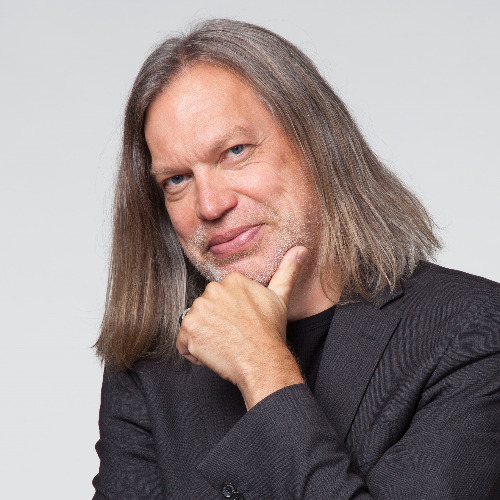
Monica Tennberg serves as Research Professor at the University of Lapland's Arctic Centre and holds a Professor II position at The Arctic University of Norway since 2016. She leads the Sustainable Naturecultures and Multispecies Future (SuMu) thematic network under the University of the Arctic and contributes to the Critical Arctic Studies research team. Her research employs critical theoretical frameworks to examine: Power dynamics and governmentality in European Arctic governance Environmentality and human-nature entanglements Indigenous peoples' rights within sustainable development Everyday adaptation practices to climate change Recent publications reveal a methodological shift toward ethnographic studies of Arctic weather interactions, emphasizing how infrastructure limitations shape community resilience. Her work bridges political ecology with multispecies perspectives, particularly examining reindeer herding communities and Baltic Sea biopolitics. Major recognition includes: Knight, First Class of the Order of the White Rose of Finland (2018) Current research is funded by: POST-Bothnia: Post-anthropocentric water relations in the Bothnian Bay (2023-2027, Principal Investigator) ArMo: Low-carbon Arctic mobilities solutions (2022, Principal Investigator) TriArc: Arctic governance triangle analysis (2016-2020, Collaborative Investigator) Tennberg actively mentors graduate researchers and coordinates international collaborations through the UArctic Critical Arctic Studies network, organizing conferences that address emerging challenges in Arctic resource governance and climate security.
Lappeenranta-Lahti University of Technology LUTFinland
Laura Albareda is a Full Professor of Sustainable Business and Entrepreneurship at LUT Business School, LUT University, Finland. She previously served as Assistant Professor at Deusto Business School (2011–2017) and remains a Visiting Professor there. Her research lies at the intersection of sustainable business, circular economy, and institutional governance, with a focus on collective action and polycentric systems. Her research interests include sustainable business models, corporate social responsibility (CSR), commons organizing (commoning), traceability, and sustainability-oriented innovation. She explores how businesses can regenerate natural ecosystems, particularly through collective stakeholder initiatives in sectors like mining, bioeconomy, and electric mobility. Her work integrates institutional theory and dynamic capabilities to analyze systemic change toward sustainability. The most recent articles reflect a strong trend in studying sustainability transitions through governance, innovation, and stakeholder networks. Key themes include circular economy as collective action, traceability in supply chains, democratic quality in multi-stakeholder governance, and dynamic capabilities for sustainability innovation. Her research spans disciplines such as business ethics, industrial marketing, technological forecasting, and cleaner production, highlighting interdisciplinary engagement. Dexter Award Best International Paper (2019) Best Business Ethics Paper (2019) at the Academy of Management Annual Meeting Distinguished Winner of Responsible Research in Management Award (2023) Laura leads the Academy of Finland-funded project ‘Action4Commons’ (2022–2025) on business and biodiversity in circular economy systems. She is also a principal researcher in EU Horizon Europe projects RELIEF and REINFORCE on sustainable mobility and circular battery models, and PRIMED on bioeconomy living labs. She advises and collaborates with multiple research teams and platforms, including SCI-MAT at LUT University, where she leads research on sustainable and circular business models and value chains. She is actively involved in academic service, including peer reviewing for journals such as Journal of Business Ethics and Humanistic Management Journal . Her work combines theoretical rigor with practical impact, aiming to transform business toward planetary and social well-being.
Christopher Raymond is a Professor of Sustainability Science at the University of Helsinki, where he is based at the Ecosystems and Environment Research Program within the Helsinki Institute of Sustainability Science (HELSUS). He is also affiliated with the Department of Economics at the University of Helsinki and leads the transdisciplinary Human-Nature Transformations Research Group. Raymond serves as Executive Director of the International Association of Society and Natural Resources and Director of the Enabling Multispecies Transitions of Cities and Regions (MUST) Strategic Research Council Project. His research group hosts over 15 researchers committed to "Transforming human-nature relationships for a just, healthy and sustainable future." PhD in Philosophy, University of South Australia (2012) BAppSc (Honours) in Environmental Management, University of South Australia (2005) Guest Professor, Swedish University of Agricultural Sciences (2019-2021) Professor Raymond's research focuses on conceptualizing and assessing the diverse values of nature and finding new ways to embed them into sustainability transformations. His work examines innovative approaches to represent and engage diverse communities (including other species) in nature-based solutions planning in urban areas. He has authored seminal works on Senses of place, socio-cultural valuation of Ecosystem services, and served as Coordinating Lead Author of the IPBES Values Assessment, where his team co-created "an inclusive typology of values for navigating Transformations towards a just and sustainable future." His research contributes significantly to urban and regional planning, biodiversity conservation, restoration planning, Sustainability science, and human geography. Raymond's recent publications demonstrate a strong focus on multispecies justice, urban nature-based solutions, and the integration of diverse values into sustainability governance. His work increasingly examines the temporal dimensions of urban green infrastructure, the role of listening in interdisciplinary scholarship, and the application of role-playing for justice awareness in educational contexts. A consistent theme across his recent work is the exploration of how to better incorporate relational values and justice considerations into environmental policy and planning, particularly in urban contexts where climate, biodiversity, and human health intersect. World's Most Cited Scholar (2019) World's Most Cited Scholar (2020) Professor Raymond serves as Supervisor in the Doctoral Programme in Interdisciplinary Environmental Sciences and has supervised Master's theses for students including Juulia Lehtinen and Anna Ahdekivi. His research is supported by numerous grants including GREEN TALENT (2025-2029), GoGreenNext (2024-2028), MUST (2023-2026), and CO CARBON (2023-2026) projects. These projects focus on urban sustainability transitions, carbon sequestration in urban green infrastructure, and multispecies justice in nature-based solutions. Raymond leads the Human-Nature Transformations Research Group, which actively engages in the Helsinki Institute of Sustainability Science (HELSUS) and carries out research through collaborative projects including MUST, Transformative Cities, RECONNECT, GO GREEN NEXT, GREEN TALENT and SusTra Doctoral Pilot. The group utilizes acoustic recorders for long-term socio-ecological monitoring across Finland as part of their research infrastructure.
Rauno Sairinen is Professor of Environmental Policy at the University of Eastern Finland's Department of History and Geography, Faculty of Social Sciences and Business Administration. He directs the RESOURCE research community focused on sustainable resource societies and serves as Adjunct Professor at the University of Queensland's Centre for Social Responsibility in Mining. His work spans environmental governance, mining sustainability, and social impact assessment, leading 36 projects and currently serving as Work Package leader in EU-funded initiatives like GOVERMAT, IMP@CT, and CORE. Research Groups: CEMMS (Center for Social Science Mining Research), Global Development, SOBIO (Social Science Bioeconomy Research Network), Environmental Culture Research Network Current Projects: MILESTONE (2022-2026), SUMET (2024-2027) His research integrates mining governance, circular economy transitions, and social sustainability. Recent publications examine critical raw materials in electric vehicles, small-scale mining in post-conflict regions, and industrial heritage transformations. Key themes include stakeholder engagement, policy harmonization, and sustainable resource extraction frameworks. Sairinen's 15 most recent articles (2024-2018) span environmental policy, mining governance, and social sustainability. Topics include battery metal recycling, bioeconomy transitions, and cultural heritage preservation, with methodologies ranging from case studies to transdisciplinary reviews. He has collaborated with researchers across Finland, Australia, and Europe, focusing on policy development for responsible mining. Current affiliations include the Geological Survey of Finland's Board (2017-2019) and leadership in academic networks addressing sustainability transitions.
Arto O. Salonen is a Professor of Social Pedagogy with a focus on sustainable well-being at the University of Eastern Finland. He leads the SISU consortium and the Sustainability Transformations Doctoral Education Pilot , while also serving as an Adjunct Professor at the University of Helsinki, Finnish National Defence University, and the University of Eastern Finland. His work bridges social pedagogy, sustainability science, and societal transformation, particularly through the lenses of consumerism, digitalization, and planetary citizenship. Research Focus: Social change, sustainability transformations, climate crisis education, and the cultural dynamics of consumerism. Key Projects: Sustainability transformation from the margins , Heritage in working life , and Shared autonomous mobility . Labs/Teams: RESOURCE Research Community, Finnish Expert Panel for Sustainable Development, and interdisciplinary consortia.
Viola Tuulia Hakkarainen is a Researcher at the Helsinki Institute of Sustainability Science (HELSUS) and the Natural Resources Institute Finland (Luke) , specializing in interdisciplinary environmental research. She serves as a Supervisor for the Doctoral Programme in Interdisciplinary Environmental Sciences and a Visiting scholar in the Ecosystems and Environment Research Programme at the University of Helsinki. Her research focuses on entanglements between knowledge and action in sustainability science, exploring reflexivity , governance frameworks , and educational transformations . Key thematic areas include urban biodiversity governance , social-ecological systems , and online sustainability education . Recent publications analyze reflexive methodologies (2025), urban biodiversity action spaces (2025), and place-mobility integration in environmental governance (2024). She participates in international collaborations like the RECONNECT project (2023-2026) funded by the European Commission and the Finnish Academy. Her professional activities include organizing the Mistra Sport and Outdoors-RECONNECT workshop (2024) and presenting on value shifts in sustainability education (2023). Contact: viola.hakkarainen@helsinki.fi
Sanna Hast is a Visiting Professor at the Faculty of Social Sciences, University of Lapland. Her research focuses on sociology with an emphasis on natural resource management, environmental policy, and social conflicts arising from resource extraction projects. She holds a Doctoral Thesis from the University of Lapland (2021) and has published extensively on topics such as mining impacts, reindeer herding, sustainable tourism, and environmental regulation in Arctic regions. Education: Doctoral Thesis (2021): University of Lapland Research Interests: Hast’s work examines the intersection of environmental policies, indigenous livelihoods, and industrial development. Her studies address challenges such as balancing mining activities with traditional practices like reindeer herding, mitigating socio-environmental impacts of resource extraction, and fostering socially sustainable development in Lapland. She analyzes conflicts over land use, policy frameworks for environmental compliance, and community engagement strategies. Grants & Collaborations: Her research often involves cross-disciplinary collaborations, including studies on Arctic resource governance and mining’s socio-cultural implications. While specific grants are not detailed in the provided text, her publications reflect sustained engagement with these themes through institutional support. Labs/Teams: Though not explicitly mentioned, her work aligns with environmental sociology and policy research groups at the University of Lapland, focusing on Northern Finland’s unique challenges and opportunities.
Matti Sarvimäki is an Associate Professor of Economics at Aalto University School of Business and the Helsinki Graduate School of Economics (Helsinki GSE). He serves as co-Principal Investigator of the Education for the Future Flagship Center and holds a part-time position as Associate Research Professor at the VATT Institute for Economic Research. Additionally, he is an Invited Researcher at J-PAL, a Research Fellow at IZA, and an External Research Fellow at CReAM. His primary research interests span labor economics, migration, education, social mobility, international trade, and household finance. Sarvimäki frequently engages in multidisciplinary collaborations that bridge economics with other social sciences and policy fields. His work often utilizes historical data and natural experiments to examine long-term economic and social phenomena. Sarvimäki's publications demonstrate a consistent focus on migration and integration policies, with particular attention to immigrant labor market outcomes, educational attainment, and intergenerational effects. His research employs rigorous empirical methods including randomized controlled trials, natural experiments, and longitudinal analysis. Notable themes across his work include the long-term effects of historical events, habit formation in economic behavior, and the evaluation of social policies. Teacher of the Year, Department of Economics (Jan 2018) Teacher of the Year, Aalto University Business Students Association (KY) (Jan 2021) As an educator, Sarvimäki has taught courses including Principles of Economics, History of Economic Growth and Crises, Principles of Empirical Analysis, Integration of Immigrants, Labor Economics, and International Economics. His educational background includes a PhD from the Helsinki School of Economics (2009), with postdoctoral experience at the London School of Economics and visiting positions at MIT and University College London.
Ranja Hautamäki serves as Associate Professor in Landscape Architecture at Aalto University's Department of Architecture, specializing in sustainable landscape planning and society. Her research bridges academic theory with municipal policy implementation, focusing on nature-based solutions for climate change, biodiversity loss, and urban well-being through green infrastructure development. Her research interests center on planning practices and discourses in landscape architecture, examining how societal conceptions of nature translate into material landscapes. Key areas include climate-adaptive urban greening, carbon-neutral city development, biodiversity conservation in compact cities, and the political dimensions of nature-based solutions. She investigates tensions between ecological imperatives and urban densification through critical analysis of municipal climate action plans and EU environmental legislation. Recent publications reveal strong thematic trends: 75% address urban green infrastructure for climate mitigation/adaptation, with growing emphasis on policy implementation (EU Nature Restoration Law), carbon accounting methodologies, and socio-ecological tradeoffs in dense urban environments. Her interdisciplinary work spans environmental science, planning theory, and political ecology. Lappset scholarship (2025) Puutarhaliiton Golden Badge (2022) Vuolteentori Environmental Structure of the Year (2018) Väitöskirjapalkinto Doctoral Dissertation Prize (2016) Maisema-arkkitehtuuriteko Landscape Architecture Achievement (2016) As thesis supervisor, Hautamäki has guided award-winning master's research including Anni-Mari Anttola's LAPPSET-prize work on Helsinki's grassland networks. Her funded projects focus on green infrastructure for climate adaptation, with recent grants supporting carbon sequestration studies in urban residential yards and EU policy impact assessments. She actively collaborates with municipal planners through projects translating academic research into practical tools like the Green Factor methodology.
Katri Aarnio is a Researcher at the Environmental and Marine Biology department, Faculty of Natural Sciences and Engineering, Åbo Akademi University. Her work focuses on marine ecology , particularly invasive species , food web dynamics , and trophic niche plasticity . Research Themes : Trophic Position, Non-indigenous Species, Food Web Structure Key Systems : Baltic Sea, Coastal Ecosystems Her recent publications analyze round goby invasions, stable isotope ratios in marine consumers, and environmental drivers of benthic community dynamics. Collaborations include researchers like Emma Bonsdorff and Mats Nordström. Scientific contributions span ecological monitoring , habitat disturbance , and trait-based food web analysis . She has co-authored datasets on macrofaunal communities and algal epifauna .
Niko Soininen is Professor of Environmental Law at the University of Eastern Finland's Law School and a leading researcher at the Center for Climate Change, Energy and Environmental Law (CCEEL). His work focuses on the intersection of law, sustainability transitions, and complex systems, with specializations in water law, marine environmental law, and adaptive governance frameworks. Primary Affiliation: University of Eastern Finland, Law School Research Groups: CCEEL, Sustainability Law, Water and Marine Environmental Law Key Projects: RELIEF (2023-2026), SusHydro (2020-2024) His research synthesizes legal theory with practical governance challenges, particularly in: Sustainability law and transformation Hydropower and offshore wind regulation Marine spatial planning Legal interpretation in environmental contexts Resilience of legal systems His recent publications analyze the tension between renewable energy expansion and ecological protection in EU law, with a focus on hydropower's legal trade-offs (2024), adaptive governance models (2023), and water-security frameworks (2023). He has contributed extensively to journals like Environmental Innovation and Societal Transitions , Transnational Environmental Law , and Science of the Total Environment .
Riikka Tapaninaho is a University Instructor at Tampere University's Faculty of Management and Business, specializing in Business Studies. Her work bridges academic research and practical application in sustainable value creation and stakeholder relationships. Research Focus: She contributes to projects like Business to Nature (B2N) and CICAT2025 Circular Economy Catalysts , exploring how businesses align with sustainability goals. Her research group, RESPMAN , investigates stakeholder dynamics in sustainable transitions. Teaching: Courses include Sidosryhmäteoria ja -johtaminen (Stakeholder Theory and Management) and Henkilöstöjohtamisen ajankohtaisia teemoja (Current Themes in Personnel Management). Her pedagogy integrates sustainability into business practices. Contact: riikka.tapaninaho@tuni.fi