معرفی
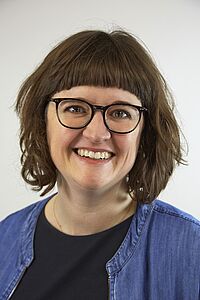
Ranja Hautamäki serves as Associate Professor in Landscape Architecture at Aalto University's Department of Architecture, specializing in sustainable landscape planning and society. Her research bridges academic theory with municipal policy implementation, focusing on nature-based solutions for climate change, biodiversity loss, and urban well-being through green infrastructure development.
Her research interests center on planning practices and discourses in landscape architecture, examining how societal conceptions of nature translate into material landscapes. Key areas include climate-adaptive urban greening, carbon-neutral city development, biodiversity conservation in compact cities, and the political dimensions of nature-based solutions. She investigates tensions between ecological imperatives and urban densification through critical analysis of municipal climate action plans and EU environmental legislation.
Recent publications reveal strong thematic trends: 75% address urban green infrastructure for climate mitigation/adaptation, with growing emphasis on policy implementation (EU Nature Restoration Law), carbon accounting methodologies, and socio-ecological tradeoffs in dense urban environments. Her interdisciplinary work spans environmental science, planning theory, and political ecology.
- Lappset scholarship (2025)
- Puutarhaliiton Golden Badge (2022)
- Vuolteentori Environmental Structure of the Year (2018)
- Väitöskirjapalkinto Doctoral Dissertation Prize (2016)
- Maisema-arkkitehtuuriteko Landscape Architecture Achievement (2016)
As thesis supervisor, Hautamäki has guided award-winning master's research including Anni-Mari Anttola's LAPPSET-prize work on Helsinki's grassland networks. Her funded projects focus on green infrastructure for climate adaptation, with recent grants supporting carbon sequestration studies in urban residential yards and EU policy impact assessments. She actively collaborates with municipal planners through projects translating academic research into practical tools like the Green Factor methodology.