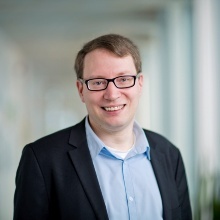
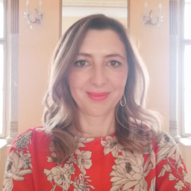
Steffen Becker is a Professor at the University of Stuttgart's Faculty of Computer Science, Electrical Engineering and Information Technology, affiliated with the Institute for Software Engineering's Software Quality and Architecture group. His work focuses on software engineering, cloud systems, model-driven engineering, and cybersecurity. He leads research in architectural modeling tools like Slingshot, GUI testing frameworks (ViMoTest), and hardware security analysis. Recent studies explore AI integration in testing, education, and automotive systems (CARISMA). Research interests include elasticity modeling, self-adaptive systems, and educational technology. His 2025 publications address issues like end-user hardware comprehension, FPGA security, and LLM-driven test generation. Notable tools developed include the Slingshot Simulator for cloud-native systems and Gropius for cross-component issue management. Becker contributes to both theoretical advancements and practical implementations in software quality, security, and cloud infrastructure. Key Areas: Software Architecture, Cyber-Physical Systems, Testing, Reverse Engineering Tool Developments: ViMoTest, Slingshot, Gropius Education Focus: Online programming pedagogy and curriculum innovation His work bridges foundational research with industry applications, addressing challenges in automotive computing, cloud elasticity, and human-centric security awareness. Recent efforts emphasize explainable hardware (XHW) and AI's role in qualitative analysis automation.
Lars Kirkhusmo Pharo is a Professor of Religion and Ethics at Nord University since 2018. He holds appointments as Research Associate at Harvard University (2009), Research Partner at Max-Planck-Institut für Wissenschaftsgeschichte (2015), and Affiliated Scholar at the University of Oslo's Faculty of Theology (2017). His research focuses on languages, literacy, semiotics, and the history of ideas in the Americas and Europe, with a particular emphasis on indigenous knowledge systems, applied ethics, and political structures of indigenous peoples. Pharo's work bridges disciplines including anthropology, religious studies, and historical linguistics. He explores topics such as Mesoamerican calendrical systems, indigenous political philosophies (e.g., the Haudenosaunee Confederacy), and the ethical debates of colonial encounters like the Valladolid Council (1550–1551). His publications analyze concepts of human dignity, missionary translation politics, and the sociopolitical role of ritual practices in pre-Columbian societies. Key Research Themes : Indigenous legal and political systems Cultural translation and semiotics Colonial ethics and human rights Mesoamerican ritual and time philosophy Recent Publications Trends : Focus on autochthonous Latin American religions (2023) Analysis of indigenous concepts of freedom and governance (2014–2019) Interdisciplinary studies on colonial linguistic and religious policies His collaborative work includes co-authoring studies on Sami demographics (2023) and contributing to encyclopedic entries on missionary organizations like Wycliffe Bible Translators (2020). While no awards are explicitly listed, his extensive academic network reflects international recognition in his fields.
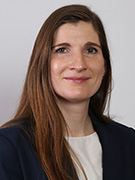
Prof. Dr. Barbara Sophie Hänel-Faulhaber is a Professor at the University of Hamburg’s Faculty of Education , specializing in German Sign Language (DGS) and audiopedagogy . Her research focuses on language acquisition and processing in DGS , particularly among deaf children and inclusive educational settings . She leads the Deafness, Language and Learning Lab (D2L) and contributes to the faculty’s core research area Literacy in Diversity Settings . Education: Dr. phil. in Sign Languages (University of Hamburg, 1999–2003) Magister Artium in Sign Languages, Linguistics (University of Hamburg, 1996–1999) Double Degree in Deaf Education, Elementary Education (LMU Munich, 1992–1996) Her work examines bimodal-bilingual education , iconicity in early sign learning , and structural conditions in inclusive daycare centers . She develops diagnostic tools like the DGS-Version of MBK 0 for assessing numerical competencies in deaf children. Current projects include Coactivation of Difference (2023–2026) and Sign4Inclusion (Math) (2023–2024). Scientific Awards: Institutional Prize for German Language 2023 Heinrich Böll Stiftung Promotionsstipendium (1999–2003) Wilhelm-Stiftung Post Doc Fellowship (2005) She collaborates with institutions like the Institute of German Sign Language and Deaf Communication and the Graduate School Martha Muchow , with recent publications spanning sign language diagnostics , inclusive pedagogy , and cross-modal literacy studies .
Károli Gáspár University of the Reformed ChurchHungary
Miklos Peti is an Associate Professor in the Department of English Literatures and Cultures at the Institute of English Studies, Faculty of Humanities and Social Sciences, Károli Gáspár Reformed University in Budapest, Hungary. With a PhD in English literature from the University of Szeged (2007), his academic career spans multiple institutions including the University of Pécs and József Attila High School. His scholarly work focuses on the intersections between early modern English literature, classical reception, and Milton studies, with particular expertise in the reception of Greek epic and lyric in Renaissance literature. PhD (2007) : English literature, 'Homeric interpretations in 16th–17th century English literature' from University of Szeged MA (2002) : Ancient Greek from University of Szeged MA (2001) : Comparative literature from University of Szeged MA (1998) : English language and literature from University of Szeged Peti's research centers on early modern English literature with a special focus on the reception of classical works, particularly Greek epic and lyric poetry, in 16th-17th century England. His scholarship explores Milton's engagement with classical traditions, examining how Homeric elements were transformed in Paradise Lost and other works. He investigates textual criticism through the lens of hypertextuality and orality-literacy transitions, while also examining Milton's reception in various historical periods including the Augustan age and modernism. His work bridges literary analysis with cultural history, particularly regarding how classical traditions were transmitted and transformed across centuries. Analysis of Peti's recent publications reveals a consistent focus on Milton studies, particularly examining Paradise Lost through multiple lenses including classical reception, translation history, and performance studies. His work demonstrates growing interest in Cold War-era Milton reception in Eastern Europe, as seen in his 2022 book 'Paradise from behind the Iron Curtain.' The publications show interdisciplinary connections between literary studies, theater history, and cultural politics, with increasing attention to Hungarian contexts of literary reception. His scholarship combines close textual analysis with broader cultural and historical frameworks. Publication of the year KRE BTK (2020) Instructor of the Year KRE BTK (2019) 3rd place, youth performance competition (2013) ESSE Bursary (2014, 2017, 2020) Peti has served as an opponent in doctoral defenses for dissertations including 'The 1608 King Lear Quarto in Context' (2010) and 'Protean Vicissitude and Milton's Paradise Lost' (2012). His research has been supported by significant grants including the János Bolyai Research Scholarship (2011-2014) and the OTKA-funded project for the critical edition of the Hungarian translation of Paradise Lost (2012-2016). He has coordinated international research projects, including a joint initiative between the University of Hull and University of Szeged (2000-2001), demonstrating his capacity for collaborative scholarship across national boundaries. As a member of the editorial board for The AnaChronisT , Peti contributes to academic publishing in English studies. His professional affiliations include the Hungarian Society for the Study of English (HUSSE), Milton Society of America, Hungarian Society of Ancient Studies, and Renaissance Society of America, reflecting the interdisciplinary nature of his work. He has organized significant academic events, notably the 'Milton Through the Centuries' international conference in 2008, and has presented his research at numerous international venues across Europe and North America.
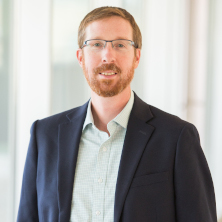
Juho Leinonen is an Academy Research Fellow at Aalto University's Department of Computer Science, Finland, specializing in AI-enhanced computing education. His work focuses on leveraging large language models (LLMs) to transform programming instruction through personalized learning analytics and educational technology. Education Background: PhD in Computer Science, University of Helsinki (2019) Docent (Adjunct Professor) in Computer Science, University of Helsinki Postdoctoral research at The University of Auckland, Aalto University, and University of Helsinki Research Focus: Leinonen's work centers on three interconnected pillars: (1) developing fine-grained learning analytics to decode student programming behavior; (2) applying LLMs to create adaptive educational tools for diverse learners; and (3) implementing learnersourcing strategies for scalable resource generation. His research particularly addresses challenges in multilingual programming education and responsible AI integration, with emphasis on non-native English speakers and novice programmers. Publication Trends: Recent publications (2024-2025) reveal a concentrated exploration of generative AI in computing education, with 85% focused on LLM applications. Key themes include synthetic data generation for educational research, multilingual prompting systems, and ethical frameworks for AI feedback. His work demonstrates both practical implementations (e.g., autocompletion quizzes) and critical analyses of AI limitations in educational contexts. Awards & Recognition: ACE2024 Best Paper Award for LLM-generated worked examples study UKICER 2023 Best Paper Award for achievement goals research ACE 2023 Best Practitioner Paper ICER 2022 Best Paper Award for programming exercise generation SIGCSE TS 2022 Best Paper in Computing Education Research ACE 2021 Best Paper Award for contextualized problem descriptions Research Leadership: As principal investigator of the Academy of Finland-funded project 'Advanced Student Modeling and Tailored LLMs for Personalized Learning', Leinonen supervises PhD students and postdocs while leading international collaborations with institutions including The University of Auckland and University of Helsinki. His grant portfolio focuses on ethical AI deployment in education and cross-cultural computing pedagogy. Collaborative Networks: He maintains active partnerships with leading computing education researchers like Paul Denny (Auckland), Arto Hellas (Aalto), and Andrew Luxton-Reilly (Auckland), evidenced by 90% co-authored publications. His work appears consistently in top venues including ACM SIGCSE, ICER, and ACE conferences.
Dr. Sibel Tatar is an Associate Professor at the Department of Foreign Language Education, Faculty of Education, Boğaziçi University. She has been teaching there since 2003, following her PhD in Language Education from Indiana University (2003) and B.A. in Translation and Interpretation from Hacettepe University (1997). Her research focuses on foreign language teacher cognition, TESOL methodologies, and non-native speaking professionals in education. Her educational background includes a PhD specialization in Language Education from Indiana University, emphasizing teacher development and intercultural communication. Her work spans over two decades, with a strong emphasis on qualitative research in language education contexts. Research interests include teacher identity, pre-service training, and the impact of native speakerism on educational policies. Her recent studies explore transformative learning through virtual exchange programs (COIL projects) and critical reflection techniques for teacher candidates. Dr. Tatar has received multiple awards from Boğaziçi University and grants for projects on teacher feedback mechanisms, technology integration, and EFL hiring practices. She has supervised numerous PhD theses and co-authored over 20 journal articles and book chapters. Her professional service includes roles on the Awards Committee and Financial Aid Interviews Committee at Boğaziçi University, reflecting her commitment to educational equity. She has also contributed to international conferences and editorial work, including the EUROSLA Yearbook.
Dr. Sweeney Windchief is a Professor in the Department of Education at Montana State University, affiliated with the College of Education, Health & Human Development. His work focuses on Indigenous Methodologies, Critical Race Theory in Education, and leadership in tribal colleges and universities (TCUs). He holds a Ed.D. from the University of Utah (2011), M.A. from University of Montana (2004), and B.S. from University of Central Oklahoma (2001). Research interests include racial equity in higher education, Indigenous knowledge systems, and STEM education access for Native American students. He teaches courses like Indigenous Methodologies in Education Research, Critical Race Theory, and Law & Policy in Higher Education. Recent scholarship emphasizes integrating Indigenous knowledge into STEM fields, mentorship programs for Indigenous graduate students, and culturally responsive pedagogy. His work has been published in journals such as AlterNative: An International Journal of Indigenous Peoples and International Journal of Multicultural Education . Award-winning educator, Dr. Windchief has received accolades including the President’s Excellence in Teaching Award (2020) and Outstanding Faculty for Scholarship (2017). He actively contributes to academic service through roles like AERA Distinguished Mentor (2015-2018) and grant reviewer for National Science Foundation initiatives. Key engagement includes designing programs like the Indigenous Mentoring Program in STEM and collaborating on NSF-funded projects to improve diversity in engineering education. His research bridges traditional knowledge systems with contemporary academic practices, advocating for bicultural accountability in education.
Sean Harvey, Ph.D., is an Associate Professor of History at Seton Hall University's Department of History, part of the College of Arts & Sciences. His research focuses on early American history, the transatlantic world, and Native American studies. He is currently completing a book manuscript titled Albert Gallatin, Genevan: An Atlantic History of Capital and American Colonialism , examining Gallatin's role in U.S. political economy and Indigenous dispossession. His first book, Native Tongues: Colonialism and Race from Encounter to the Reservation , analyzed how language studies shaped colonial policies. Education: PhD in History from the College of William and Mary (2009). Teaching includes courses on colonial America, Native American history, and the early republic. Professional roles include editorial board membership with Commonplace: The Journal of Early American Life and advisory roles with the McNeil Center for Early American Studies. Research interests span colonial language dynamics, racial ideologies, and the intersections of capitalism and imperialism. Awards include Seton Hall's 2015 College of Arts & Sciences Researcher of the Year and the 2011 Ralph D. Gray Article Prize.
Sigrid Johanna Håheim Ørevik is an Associate Professor at the Department of Foreign Languages , University of Bergen. Her work focuses on multimodal text analysis in English education, genre theory, and assessment frameworks. Position: Associate Professor Email: sigrid.orevik@uib.no Research Groups: POTENT – Post-Truth English Teaching Research interests include: Multimodal pedagogies Genre patterns in EAL materials Assessment of student multimodal texts Digital learning resources Vocational English teaching Recent publications (2021–2025) explore: Multimodal design principles Agency in semiotic work Curriculum coherence challenges Remediation of digital resources Long-term genre stability in exams She contributes to the POTENT research group and collaborates internationally on multimodal English learning projects.
Lev Michael is a Professor of Linguistics at the University of California, Berkeley, in the Department of Linguistics within the College of Letters and Science. His research focuses on anthropological linguistics, typology, and the documentation and description of Amazonian languages, particularly in Peru. He is actively engaged in fieldwork, language revitalization, and the study of South American historical and contact linguistics. Research Interests: Lev Michael's work spans a wide range of topics in linguistic anthropology and descriptive linguistics. He specializes in the documentation of endangered Amazonian languages such as Iquito and Nanti, examining grammatical phenomena like evidentiality, negation, and subject-verb agreement. His research integrates fieldwork with computational methods, particularly in phylogenetic classification of language families like Tupí-Guaraní and Arawakan. He is deeply committed to language revitalization and community-based lexicography, contributing to school dictionaries and literacy materials. Recent Research Trends: His recent publications (2017–2022) reflect a strong emphasis on lexicography, computational phylogenetics, and the sociocultural dimensions of language use. Articles span from dictionary compilation to Bayesian modeling of language evolution, demonstrating a unique blend of traditional fieldwork and cutting-edge quantitative analysis. There is a consistent focus on Arawakan and Tukanoan languages, evidentiality, poetic structure in oral traditions, and the historical relationships among South American language families. Scientific Contributions: Co-developer of lexicographic resources for Iquito and other endangered languages Pioneer in applying computational phylogenetics to South American language classification Contributor to the understanding of evidentiality and reported speech in Amazonian languages Advocate for language revalorization and community-led documentation Advising and Grants: While specific students and funded grants are not listed in the provided text, Lev Michael frequently collaborates with students and community members on documentation projects. His extensive co-authorship with scholars like Christine Beier and Jaime Pacaya Inuma suggests a collaborative, team-based research model involving students, local speakers, and interdisciplinary partners. His work likely involves external funding given the scale of fieldwork and publication output, though specific grants are not mentioned. Labs and Research Teams: Lev Michael is associated with the Fieldwork and Language Documentation group and the Language and Social Context faculty at UC Berkeley. His collaborative projects involve multidisciplinary teams including linguists, anthropologists, and native speaker consultants, particularly from Peruvian Amazonian communities. He contributes to digital language archiving and lexicography using tools like FLEx (FieldWorks Language Explorer), indicating involvement in computational language documentation initiatives.
Christoph Schroeder is a Professor for German as a Second and Foreign Language at the Institute for Germanistics, University of Potsdam. He serves as a corresponding member of the Institute for Migration Research and Intercultural Studies (IMIS) and has held visiting professorships at the University of Cyprus (2004) and Istanbul Bilgi University (2005). His work bridges linguistics, migration studies, and multilingual education. Education: Habilitation in Linguistics (University of Osnabrück, 2004); Promotion (PhD) in Germanistics (University of Bremen, 1995). Key Affiliations: IMIS, Center of Migration Studies (Istanbul Bilgi University), Arbeitsgebiet DaZ/DaF (University of Potsdam). Research Interests focus on language contact, contrastive linguistics, and multilingualism in schools. His work examines orthographic challenges in German-Turkish language contact, secondary predication in Turkish, and strategies for supporting students with non-German native languages through multilingual education frameworks. Notable Projects include leading the Volkswagen Foundation-funded project "Schriftspracherwerb in der Organisation Schule unter den Bedingungen von Migration und Mehrsprachigkeit" (2007-2012), which explored literacy acquisition in multilingual schools across Germany, Turkey, and Cyprus. His editorial roles include co-editing Essener Linguistische Skripte and serving on the editorial board of Language Typology and Universals (STUF) . Publications span contrastive linguistics, language typology, and migration-related educational challenges. Recent work analyzes orthographic systems in language contact scenarios, adverbial modification in Turkish, and article systems across European languages. His research often integrates sociolinguistic and typological perspectives. Professional Memberships: Association of Linguistic Typology (ALT) Deutsche Gesellschaft für Sprachwissenschaft (DGfS) Deutsche Gesellschaft für Fremdsprachenforschung (DGFF)
Massimo Scaglioni is a Full Professor of Media History at the Catholic University of the Sacred Heart in Milan, affiliated with the Faculty of Foreign Languages and Department of Communication and Performing Arts. He concurrently serves as a Lecturer in Transmedia Narratives and Television Communication at Università della Svizzera italiana (USI) in Lugano. Scaglioni directs research at Ce.R.T.A. (Research Centre for Television and Audiovisual Media) and leads the "Fare Tv" Master program at ALMED, while contributing to editorial boards of "View," "Comunicazioni Sociali," "Bianco e Nero," and "Series" journals. His research centers on institutional, economic, and social media history with emphasis on Italian radio and television within international contexts. He pioneers historical methodology application to audiovisual sources, analyzes technological-cultural convergence phenomena, and investigates transmedia narratives. His television text analysis specializes in American and European serial forms, while audience studies explore measurable viewership patterns, fandom dynamics, and evolving spectatorship practices in digital environments. Scaglioni's conference presentations from 2004-2011 reveal consistent engagement with Italian media history, public service broadcasting evolution, and audience behavior transformations. His work demonstrates how media institutions negotiate technological convergence, with recurring themes of national identity construction through broadcasting, transmedia storytelling frameworks, and the tension between traditional broadcaster control and participatory audience practices in digital convergence. As Didactic Director of ALMED's "Fare Tv" Master program, Scaglioni shapes graduate curricula in television analysis and management. His 2012 visiting professorship at Carleton University was funded by the Centre for European Studies - European Union Centre for Excellence grant, supporting transatlantic academic exchange in European media studies. Scaglioni's research leadership manifests through Ce.R.T.A. at Università Cattolica, which investigates television's historical and contemporary evolution, and the "Fare Tv" Master program that trains media professionals in television production, management, and communication strategies within Italy's dynamic broadcasting landscape.
Renáta Pavlová, PhD is a Lecturer for Slovak language at the Institute of Slavic Linguistics and Cultural Studies, Faculty of Humanities, University of Regensburg since September 2020. Previously, she served as a Scientific Assistant at Constantine the Philosopher University in Nitra (2017-2020) and as a Slovak Language Lecturer at the Slavic Institute, University of Cologne (2016-2013). Her academic journey includes completing her PhD at Constantine the Philosopher University in Nitra in 2011 with a dissertation on 'Slovak as a Foreign Language.' Dr. Pavlová's educational background includes: Studies in Slovak Language and Literature – German Language and Literature at Constantine the Philosopher University, Nitra (1998-2003) PhD in Slovak as a Foreign Language from Constantine the Philosopher University, Nitra (2011) Dr. Pavlová's research focuses on three interconnected areas: Slovak as a foreign language with emphasis on linguodidactic aspects, machine translation between German and Slovak, and the development of reading comprehension in foreign language learning. Her work in linguodidactics examines effective teaching methodologies for Slovak language acquisition, while her machine translation research analyzes error patterns and quality assessment. The reading comprehension strand investigates intervention programs for developing literacy skills in both native and foreign language contexts, with applications across primary and secondary education levels. Her recent publications demonstrate a consistent focus on the intersection of language learning, technology, and literacy development. The trend shows increasing attention to machine translation quality assessment, particularly examining morphosyntactic and lexical errors in German-Slovak translation. Her work also reveals a strong commitment to practical applications, with numerous publications on language testing, certification (particularly ECL exams), and intervention programs for reading comprehension. The collaborative nature of her research is evident through multiple co-authored works with colleagues across various institutions. Dr. Pavlová has been involved in several significant research projects including VEGA projects on reading comprehension development (2019, 2017), APVV projects on machine translation error classification (2018), and KEGA projects on language preparation (2019). She also contributed to international initiatives like EUROPODIANS (2009) for developing online Slovak courses and EURONOUNCE (2009) analyzing Slovak pronunciation by German speakers. As an educator, Dr. Pavlová teaches various Slovak language courses at University of Regensburg, including Slovak I, Slovak III (general and translation-specific), Slovak Conversation, and specialized seminars on Machine Translation. She actively participates in cultural outreach, having recently attended events with the Slovak Ambassador and the President of the Slovak Republic, demonstrating her role in promoting Slovak language and culture internationally.
Yasemin Bayyurt is a **Professor** in the **Department of Foreign Language Education** at **Boğaziçi University**, Istanbul. She holds a Ph.D. in English-Linguistics Research from Lancaster University (1997). Her academic leadership roles include serving as **Dean of the Faculty of Education (2020–2022)** and **Head of the Department of Foreign Language Education (2006–2012)**. She specializes in **Applied Linguistics**, with a focus on English as a Lingua Franca (ELF), English Medium Instruction (EMI), and sociolinguistics. **Education**: Ph.D., Lancaster University, 1997 (English-Linguistics) M.A., Lancaster University, 1992 (Language Studies) B.A., Boğaziçi University, 1989 (Foreign Language Education) **Research Interests**: Sociolinguistics (multilingualism, linguistic landscape, ELF) Second/Foreign Language Pedagogy (CLIL, disciplinary literacies) Technology in Education (blended learning, mobile-assisted language learning) Neurolinguistics (recent focus on neurotechnology in language teaching) Global Englishes (World Englishes, EIL) **Awards**: Multiple awards including Boğaziçi University Academic Support Award (2009–2014), TÜBİTAK Career Projects support (2005–2009), and international grants (e.g., Erasmus+ projects). **Grants/Projects**: Coordinated major projects including the ENRICH Erasmus+ initiative (ELF-aware teacher education) and M-LARG (mobile learning for at-risk youth). She leads research on EMI practices in Turkish higher education and ELF pedagogy. **Labs/Teams**: Active in the **Boğaziçi University English Language Education Policies Commission** and international networks like the **COST Action CA21114 (CLIL Network)**.
Ingrid Piller is a distinguished academic and Professor of Applied Linguistics at Macquarie University in Sydney. She has held international appointments at institutions in Germany, Switzerland, the UAE, and the U.S. Her research focuses on intercultural communication, multilingualism, and linguistic diversity, emphasizing social justice and equity. She is a Fellow of the Australian Academy of the Humanities and recipient of the 2018 Anneliese Maier Research Award. She previously served as Executive Director of the Adult Migrant English Program Research Centre (AMEP RC) at Macquarie University. Piller is editor-in-chief of the journal Multilingua and founder of the sociolinguistics portal Language on the Move , which hosts research blogs and podcasts. Her influential books include Linguistic Diversity and Social Justice (2016) and Intercultural Communication (2011), recognized with major awards. Her research interests span sociolinguistics, migration-related language issues, and the role of language in education and global contexts. She advocates for multilingualism in public and academic spaces, challenging monolingual norms. Recent work addresses linguistic challenges in crisis communication, such as during the pandemic, and the ethical dimensions of English dominance in academia. Piller leads initiatives like the Alexander-von-Humboldt-Professorship-funded project on linguistic diversity and social participation. She supervises doctoral and postdoctoral researchers, fostering collaborative networks in sociolinguistics. Awards highlight her contributions to advancing understanding of language’s societal role. Her professional activities include editorial roles, conference organizing, and public engagement through media. She critiques language policies that marginalize non-dominant languages and promotes inclusive practices in education and governance.