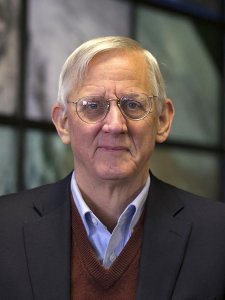
William Brune is a Distinguished Professor in the Department of Meteorology and Atmospheric Science within the College of Earth and Mineral Sciences at Pennsylvania State University. His research laboratory is located in 617 Walker Building, University Park, PA. Brune maintains an active research program focused on atmospheric chemical processes, with particular emphasis on hydroxyl radical chemistry and its implications for air quality and pollution dynamics. Brune's research interests center on atmospheric/air chemistry, specifically using advanced laser techniques to measure hydrogen oxides (HOx) and analyze their critical roles in global air pollution. His work investigates oxidation processes in various environments including thunderstorms, tropical troposphere, and urban settings like South Korea. Key research themes include lightning chemistry , tropospheric ozone formation , atmospheric cleaning mechanisms , and measurement of hydroxyl radicals through innovative instrumentation. Recent publications demonstrate significant contributions to understanding how electrical discharges on natural and artificial surfaces generate prodigious amounts of hydrogen oxides. His scientific output reveals consistent contributions to atmospheric chemistry through high-impact publications in journals such as Proceedings of the National Academy of Sciences , Atmospheric Chemistry and Physics , and Journal of Geophysical Research . Current research trends show increasing focus on instrument validation, lightning-atmosphere interactions, and field campaign data analysis from international collaborations. Brune actively mentors graduate students including J.M. Jenkins, D.O. Miller, P.J. McFarland, and G.A. Olson who appear as co-authors on multiple publications. He serves as Principal Investigator for research projects related to air quality and atmospheric chemistry, with funding supporting field campaigns and instrument development. His work has practical implications for understanding natural air purification processes and improving atmospheric chemistry models.