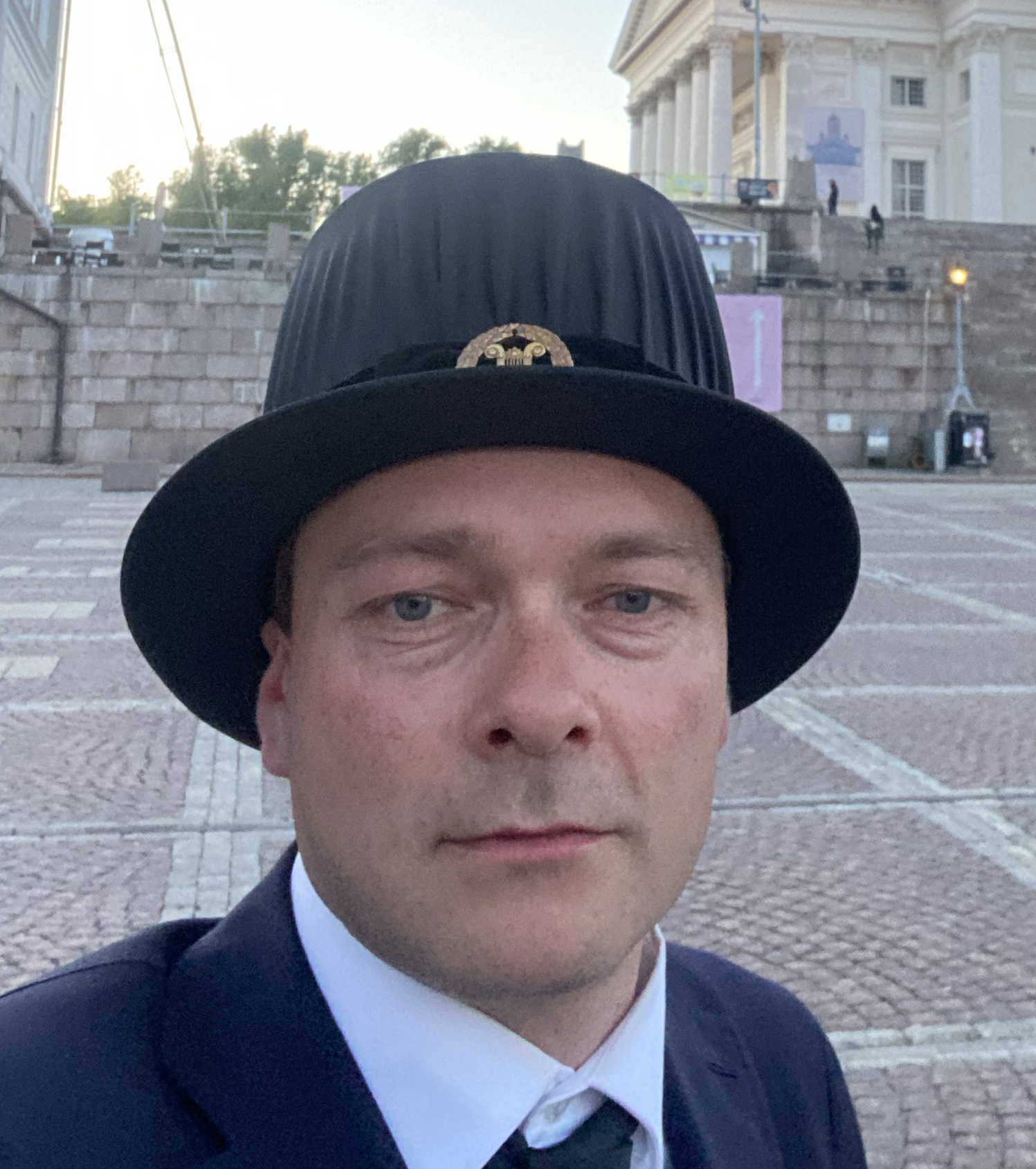
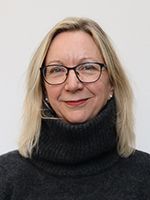
Panu Savolainen is an Assistant Professor in the Department of Architecture at Aalto University. His work bridges architectural history, urban studies, and heritage conservation, with a focus on medieval structures, suburban identities, and historical timber innovations. PI of projects: 'La cathédrale engloutie' (2024–2028), 'Deciphering roofs' (2020–2025), 'Lähiöpride' (2021–2022), and 'Argumenta, Fostering modern Heritage' (2021–2022) Recipient of State Award for Public Information (2025), History Book of the Year (2024), and Teacher of the Year (2021) Research Interests: Panu Savolainen specializes in architectural history, urban studies, and heritage. His work explores historical timber structures, medieval archaeology, and suburban environments. He integrates historical analysis with modern design principles, emphasizing cultural memory and sustainable practices. Publication Trends: His recent articles focus on Nordic architecture, historical reconstruction, and urban evolution. Themes include 18th-century domestic spaces, 20th-century suburban identities, and medieval building techniques. He frequently collaborates on topics like forest integration in design and carbon-neutral construction. Scientific Awards: State Award for Public Information (2025) History Book of the Year (2024) Nominee for Tieto-Finlandia Prize (2024) Teacher of the Year, Aalto (2021) Kritiikin punnukset (2021)
Dave Miranda is an Associate Professor in the Department of Psychology at the University of Ottawa, Faculty of Social Sciences. His research focuses on the psychological role of music in adolescent development, particularly in relation to personality, mental health, and cultural identity. Research Interests: Psychology of Music Adolescent Development Developmental Psychopathology Personality Traits Cultural Diversity Cyberpsychology Emotion Regulation His work explores how music functions as a tool for emotion regulation, identity formation, and cultural understanding among youth. He investigates music’s role in coping with internalizing symptoms and reducing cultural prejudice, often using interdisciplinary approaches that combine psychology, musicology, and cultural studies. The recent trend in his publications shows a strong emphasis on empirical and meta-analytic studies, particularly examining neuroticism, music listening behaviors, and cross-cultural musical influences. His research spans journals such as Musicae Scientiae and Psychology of Aesthetics, Creativity, and the Arts , reflecting a blend of experimental and theoretical inquiry. Scientific Awards: No awards listed in the provided text. Advising and Grants: No students or advisees mentioned. No grants or funding sources specified in the text. Labs and Teams: No specific lab or research team is mentioned in the provided information.
Romit Bhandari is a Senior Lecturer in the Department of Law, Justice and Policing at the University of East London (UEL), affiliated with the Royal Docks School of Business and Law. His work focuses on forced migration, postcolonialism, and international refugee/human rights law. He holds an LLB, Diploma in German Law, LLM in Public International Law, and a PhD in International Law. Education: LLB Law with German Law Diploma in German Law LLM Public International Law PhD in International Law Romit’s research examines how powerful states use legal frameworks to contain refugees while promoting humanitarian narratives. His first book analyzed this dynamic, and his current project, Rethinking the Foundations of Refugee Law (co-authored with Satvinder Juss), challenges conventional refugee law paradigms. He has contributed to the Solicitors Journal , New Law Journal , and The Conversation . He serves as a UN Migration Network Hub expert (2021–present), International Journal of Refugee Law reviewer, and has consulted for the BBC and Africa-focused policy organizations. Teaching includes UEL’s LLB, LLM General, LLM Human Rights Advocacy, and LLM International Law programs. His professional experience spans Coventry University, King’s College London, the University of Essex, and Birkbeck University, including roles as Deputy Director of Essex’s Human Rights Summer School and Research Associate at King’s College London.
Ida Zilio-Grandi is an Associate Professor in the Department of Asian and North African Studies at Ca' Foscari University of Venice, where she specializes in Arabic Language and Literature (SSD L/OR-12). She also holds teaching responsibilities in Islamic Thought and Theology (SSD L/OR-10) and has been actively involved in multiple interdisciplinary programs, including Master’s degrees in Interfaith Dialogue, Islamic Philosophy, and Mediterranean Studies. From 2019 to 2023, she served as Director of the Italian Cultural Institute in Abu Dhabi under the Ministry of Foreign Affairs, reflecting her deep engagement with cultural diplomacy. Education Graduated in Oriental Languages and Literatures (Arabic) from Ca' Foscari University of Venice. PhD in “Studies on the Middle East and the Maghreb from the founding of Islam to the Present day” at the University of Naples “L’Orientale”. Research Interests Her scholarly work centers on Quranic studies, Islamic ethics, and Arabic literature. She investigates religious figures in the Quran (e.g., Mary, Cain, Pharaoh, Jonah), Islamic moral concepts such as gratitude (šukr), patience (ṣabr), tolerance, and mercy, and the ethical dimensions of employment, speech, and hospitality. Her research draws on classical exegesis, adab literature, and contemporary Islamic thought, bridging historical analysis with modern applications. She also explores interfaith dialogue, particularly between Islam, Christianity, and Judaism, and cultural relations between the Islamic world and the West. Publication Trends Her recent publications (2020–2025) reflect a sustained focus on Islamic virtues, ethics, and Quranic interpretation. These include monographs on the moral life of Muslims, studies on Sufism in the UAE, Abraham’s legacy, and environmental ethics in Islam. Her work combines rigorous philological analysis with philosophical insight, often published in high-impact journals and academic volumes. Scientific Service and Recognition Member of the “Committee for Islam in Italy” at the Ministry of Interior (since 2015). Member of the Scientific Committee of the “Dialogue méditerranéen sur la modernité et le religieux” at Collège des Bernardins, Paris. Sits on the editorial boards of Annali di Ca’ Foscari , Islamo-Christiana , and L’opera Comune . Invited Researcher at the Pontificio Istituto di Studi Arabi e d’Islamistica (PISAI), Rome (since 2017). Advising, Grants, and Leadership She has coordinated several Master’s programs at Ca' Foscari, including the LM “Languages, Economies and Societies of Asia and Mediterranean Africa (LEISAAM)” and the international LM “MIM – Crossing the Mediterranean.” She is the Erasmus+ Coordinator for partnerships with the University of Jordan and Mohammed V University in Rabat. She led the research project The Languages of the Absolute (2011–2015), funded by Ca' Foscari University. Though no formal students are listed, her mentorship is evident through her academic leadership and editorial roles. Labs and Research Groups She is affiliated with several research centers, including the Ca' Foscari Center for Studies on Human Rights (CESTUDIR), the Center for Contemporary Middle East Studies (CEM), and the Religion, Law and Economy in the Mediterranean Area Center (REDESM). She is also a member of the Arab-Christian Research Group (GRAC) and the Lay Association for Biblical Culture “Biblia.”
Deborah Boehm, Ph.D., is a Foundation Professor of Gender, Race, and Identity and Anthropology at the University of Nevada, Reno, where she also serves as Graduate Director for the Gender, Race, and Identity Program. Her research explores intersections between immigration, gender, family dynamics, and state control mechanisms, with a focus on transnational Mexican communities. Education: Ph.D. in Anthropology from the University of New Mexico Her work examines: Gendered family relations in immigration contexts Transnational youth experiences 21st-century immigration control systems Detention and deportation practices Borderlands studies Intersectionality in migration narratives Recent research trends include analyzing spaces of invisibility in immigration detention and collaborative studies on undocumented migrant children categorized as 'unaccompanied' by the U.S. government. Scientific Awards & Fellowships: American Council of Learned Societies Fellowship Fulbright-Garcia Robles Award School for Advanced Research residency University of Arizona School of Anthropology residency Center for the Study of Law and Society (UC Berkeley) residency
Professor Murray Phillips is a Senior Lecturer at the School of Human Movement and Nutrition Sciences , University of Queensland , specializing in the historical and contemporary dimensions of sport . He has held academic roles at the Universities of Canberra, South Australia, and Queensland, joining UQ in 2000. His research spans sport history , Indigenous sport , digital history , and socio-cultural analyses of sport . Education: PhD in Sport History (University of Queensland, 1992) Key Research Areas: Sport and war, gender in sport, rugby league history, sport coaching, Indigenous public history, and sport-related brain trauma. His recent work focuses on brain trauma in sport , including editing the 2025 book Head in the Game , and analyzing Indigenous sport history in Cherbourg and Torres Strait. He has secured funding from the Australian Research Council, Australian Sports Commission, and other institutions. Professor Phillips is also a prominent editor and reviewer for journals like Sporting Traditions and Journal of Football Studies .
Donnacha M. Dennehy is a Professor of Music at Princeton University and Director of the Princeton Sound Kitchen. Previously a tenured lecturer at Trinity College Dublin, he was appointed a Global Scholar at Princeton University in Autumn 2012 and joined the music faculty in 2014. Dennehy founded Crash Ensemble, Ireland's renowned new music group, in 1997 after returning to Ireland from studies in the USA, France, and Holland. Dennehy's research interests focus on contemporary composition with particular emphasis on opera, experimental music theatre, overtone series exploration, and ensemble music. His work bridges traditional composition with innovative approaches to sound and performance, often incorporating elements of Irish musical tradition within contemporary frameworks. He has developed a distinctive compositional voice that has earned him international recognition. His compositions have been performed at major festivals and venues worldwide including the Edinburgh International Festival, Royal Opera House London, Carnegie Hall New York, The Barbican London, and many others. Dennehy's work shows consistent exploration of narrative structures within contemporary classical music, with a particular interest in collaborations across artistic disciplines including theatre, visual arts, and literature. Scientific Awards: Elected to Aosdána (Ireland's Academy of Creative Artists), 2005 Fulbright Scholarship Irish Times Theatre Award for best opera (for The Last Hotel), 2015 International Rostrum of Composers 'recommended' for Crane, 2010 Dennehy has received numerous commissions from prestigious organizations including Carnegie Hall, Wigmore Hall, Metropolitan Museum of Art, BBC, and RTE National Symphony Orchestra. His collaborations extend to renowned artists including Dawn Upshaw, Kronos Quartet, and writers Colm Tóibín and Enda Walsh. As Director of Princeton Sound Kitchen, he leads an ensemble dedicated to innovative contemporary music performance and creation. Dennehy's work with Crash Ensemble has been particularly influential in the new music scene, with their 2011 Nonesuch release of his music, Grá agus Bás, named by NPR as one of its '50 favorite albums' of 2011. His teaching at Princeton includes courses in composition, instrumentation, and music theory through performance.
Enrico Maria Ariemma is an Associate Professor at the Department of Humanities (DIPSUM) of the University of Salerno. He specializes in Latin literature with particular focus on Latin epic poetry , Flavian literature , and classical reception studies , working extensively on authors like Silius Italicus, Seneca, and Catullus. His research often explores military narratives , intertextuality , and ethical concepts in antiquity . His academic work features in publications such as Brill's Companion to Silius Italicus , and Lexis , with recent contributions on topics like "Tra vino e fuoco" (2023) analyzing mythological topos in Silius' Punica , and "Contare i baci" (2022) examining Catullus' intersection with mathematical thinking. He has also contributed to conference proceedings on epic-historical synthesis and war representation in Senecan tragedy . Ariemma participates in international academic networks, including co-organizing the 2019 "Ritorno al futuro" conference on Silius Italicus. He maintains an active research agenda with publications in Humanitas , Thaumazein , and Pan , while his teaching focuses on Latin language and literature and Latin didactics . His office is located at the University of Salerno’s Fisciano Campus, Building B, Room 027.
Li Guo is a Professor of Arabic Language and Literature at the University of Notre Dame, serving as Interim Chair of the Department of Classics. His research bridges medieval Arabic historiography, shadow play traditions, and socioeconomic documentation from Islamicate port cities. Ph.D., Yale University (1994) Research focuses on: Historical analysis of Mamluk-era texts Evolution of Arabic shadow theater 13th-century Red Sea commercial networks Popular poetry in Islamic cultural contexts Notable scholarly trends include interdisciplinary approaches merging literary analysis with archaeological evidence and performance studies. Scientific recognition: IIM Prize for Research (2015) Research supported by prestigious fellowships from: American Research Center in Egypt (1998-1999, 2014-2015) American Council of Learned Societies (2002-2003) National Endowment for the Humanities (2008-2009)
Suzy Kim is an Associate Professor of Korean History in the Department of Asian Languages and Cultures at Rutgers University–New Brunswick, within the School of Arts and Sciences. Her research focuses on modern Korean history, particularly North Korea, with interdisciplinary engagement in gender studies, social and cultural history, oral history, and social theory. She is the author of two major books and serves as senior editor of positions: asia critique and on the editorial boards of Journal of Korean Studies and Yŏsŏng kwa yŏksa (Women and History). She is also an active public scholar and human rights advocate. Ph.D., University of Chicago M.A., University of Chicago B.A., University of California, Los Angeles Her research interests span modern Korean history, the global Cold War, transnational feminisms, gender and sexuality, comparative revolutions, visual cultures, and environmental humanities. She critically examines North Korean society through the lenses of everyday life, mass mobilization, and gendered subject formation. Her work bridges academic rigor with public advocacy, emphasizing social justice and peace in Korea. The 15 most recent publications reflect a sustained scholarly engagement with North Korea’s social and cultural history, particularly focusing on gender, revolution, memory, and transnational connections. Her articles appear in leading journals such as Gender & History , Comparative Studies in Society and History , and positions: asia critique . Thematically, her work explores the intersections of state ideology, personal agency, and global Cold War dynamics, often challenging dominant narratives about North Korea through nuanced historical analysis. Fulbright, 2020-2021 National Endowment for the Humanities, 2016 James B. Palais Book Prize, 2015 Kim has advised and mentored students in Korean studies, gender studies, and history, though specific names are not listed. She has received significant research funding, including from the Fulbright Program and NEH. She previously served as a visiting professor at Boston College and has worked with human rights organizations such as Amnesty International USA, Truth Foundation, and Women Cross DMZ. Her public scholarship emphasizes dialogue, peacebuilding, and ethical representation of North Korea. She is actively involved in academic communities, serving on professional boards including the American Historical Association, Association for Asian Studies, and National Women’s Studies Association. Her editorial leadership in positions: asia critique and other journals underscores her role in shaping critical discourse in Asian studies. She teaches courses such as Global East Asia, Gender and Social Change in Korea, and North Korea in the Socialist and Post-Socialist Worlds.
Liam O’Loughlin is an Associate Professor in the Department of English at Capital University, where he researches postcolonial literatures, environmental humanities, and cultural studies. His current project examines disaster representations in contemporary South Asian fiction. He holds a PhD in Critical and Cultural Studies from the University of Pittsburgh and a BA in English from the University of Maryland. His research intersects postcolonial theory, environmental criticism, and media studies, with a focus on: Industrial/environmental disasters in literature Global Black and South Asian cultural relationships Institutional critiques of academic fields Documentary film and anti-colonial narratives His publications consistently explore postcolonial disaster narratives, institutional power structures, and transnational solidarity, with recent work emphasizing South Asian-Black diasporic connections and ecological crises. Thematically, articles engage with trauma, representation politics, and decolonial theory across literary and visual media. Professor O’Loughlin co-edits scholarly collections, including a special issue of South Asian Review on disaster representations. He teaches courses spanning Postcolonial/Global Literatures, Literature and the Environment, and Academic Composition.
Elisabeth Oxfeldt is a Professor of Scandinavian Literature at the University of Oslo's Faculty of Humanities, Department of Literature, Area Studies and European Languages. Specializing in Danish and Norwegian literature from the 19th to 21st centuries, she examines cultural narratives through postcolonial and orientalist frameworks with particular focus on guilt discourse in Nordic contexts. Her educational background includes a Ph.D. in Scandinavian Literature from U.C. Berkeley (2002), M.A. in Scandinavian Literature (1996), and B.A. in French Literature (1988). This interdisciplinary foundation informs her transnational approach to Nordic literary studies. Oxfeldt's research centers on Scandinavian narratives of guilt and privilege within globalization, exploring how Orientalism, postcolonialism, and (post)nationalism manifest in literature and visual media. Her work critically engages with Hans Christian Andersen adaptations, war literature, travelogues, and literary activism, revealing tensions between Nordic self-perception as egalitarian societies and historical complicity in colonial structures. She frequently analyzes word-image relationships and adaptation processes across media. Publication trends show sustained engagement with postcolonial critique since her 2005 monograph Nordic Orientalism , evolving toward contemporary analyses of activist voices and guilt narratives. Recent edited volumes address literary rights struggles (2024) and ecological perspectives in Nordic literature (2023), demonstrating expanding interdisciplinary scope while maintaining core focus on representation and power dynamics. Awards and honors: Member of Det Danske Akademi (The Danish Academy) Advising and grants information was not specified in source materials, though her leadership of major research projects suggests significant supervisory and funding acquisition activities. Teaching responsibilities include courses on Nordic literature after 1800, Norwegian world literature, and literary activism. Oxfeldt co-leads the DINO (Diversity in Nordic Literature) research group and previously participated in ECODISTURB. Her current projects include 'Scandinavian Narratives of Guilt and Privilege in an Age of Globalization' (ScanGuilt) and 'Norwegian Romantic Nationalisms' (NORN), examining historical and contemporary constructions of Scandinavian identity through literary lenses.
Dr. Rennan Lemos is a Teaching Associate in Egyptian Archaeology and Affiliated Lecturer at the University of Cambridge's Department of Archaeology, with additional affiliation as a College Research Associate at Emmanuel College. His academic work focuses on the complex dynamics of Egyptian colonialism in ancient Nubia, particularly during the New Kingdom period. Dr. Lemos specializes in material culture analysis, examining how objects served as tools for negotiating identity, power, and social structure in colonial contexts. His research challenges traditional narratives of 'Egyptianization' by revealing the nuanced, bidirectional nature of cultural interactions between Egyptians and Nubians. He integrates archaeological theory with scientific analysis, employing methods like lead isotope analysis and organic residue characterization to study ancient trade networks and ritual practices. His recent publications (2023-2024) demonstrate a clear trend toward bridging postcolonial theory with empirical archaeological evidence. Many articles examine how material culture functioned in colonial settings, with particular attention to funerary practices, artistic representations, and supply chains. His work increasingly focuses on 'decolonizing' archaeological practice while maintaining rigorous scientific approaches to understanding ancient cultural interactions. Dr. Lemos's research has significantly contributed to understanding how Egyptian-style objects were adopted, adapted, and reinterpreted in Nubian communities. His theoretical work, particularly 'Can We Decolonize the Ancient Past? Bridging Postcolonial and Decolonial Theory in Sudanese and Nubian Archaeology' (2022), has been influential in reshaping scholarly approaches to ancient colonial dynamics.
Sylvia Chassaing is a Lecturer in contemporary Russian literature and translation at the National Institute of Oriental Languages and Civilizations (INALCO) in Paris, France. She is affiliated with the CREE (Centre de Recherches Euro-Asiennes) research team and specializes in Slavic languages and literature, with a particular focus on Russian studies. Her work bridges literary analysis, cultural studies, and political commentary on contemporary Russian society. Chassaing's research interests span multiple interconnected fields including sociocriticism, gender studies, and ecocriticism as applied to Russian literature. She focuses particularly on Extremely Contemporary Russian Literature (2010s-2020s), examining how writers and literary institutions navigate power structures in Putin's Russia. Her work explores themes of trauma narratives, feminist publishing movements, literary activism (such as the #Tikhiypiket silent protest movement), and ecocritical readings of Russian texts. She also investigates the relationship between art and politics in post-Soviet public space, including Moscow Actionism. Her scholarly output reveals a consistent engagement with the intersection of literature, politics, and social movements in contemporary Russia. Chassaing frequently analyzes how Russian writers respond to political pressures, with particular attention to gender dynamics and ecological concerns. Her work demonstrates how literary forms become vehicles for political expression and resistance in contexts of censorship and authoritarianism. Co-organized international conference 'Being a writer under Putin' (2024) Co-directed Russian-French translation seminars (2019-2021) Co-founded SAMPIZDAT publishing house for Russian underground literature Translator of contemporary Russian writers including Daria Serenko and Boris Khersonskij Chassaing actively contributes to research evaluation for journals including Revue Slovo and Slavica Occitania, demonstrating her standing within the academic community focused on Slavic studies and contemporary literature.
Nathan MacDonald is a Lecturer in Hebrew Bible at the University of Cambridge , with prior academic roles at the University of St Andrews and University of Göttingen . He is a Co-Investigator for the The Book and the Sword project, focusing on the Bible's role during the Great War, and serves as Managing Editor of the Journal of the Bible and Its Reception . University Lecturer in Hebrew Bible, University of Cambridge (2013–present) Lecturer/Reader in Old Testament, University of St Andrews (2001–2009) Research Team Leader, University of Göttingen (2009–2013) Research Interests include the Pentateuch , Biblical Warfare Texts , and History of Israelite Religion . His work explores how ancient texts were interpreted and applied to theological and social contexts, particularly through dietary laws, priestly authority, and ritual innovation. Recent Publications address Pentateuchal models, scribal practices, and the intersection of biblical scholarship with historical events like World War I. Key themes include ritual criticism , prophetic literature , and Levitical/Deuteronomic traditions . Academic Leadership : As Managing Editor of the Journal of the Bible and Its Reception , he bridges modern and ancient biblical studies, contributing to projects like The Book and the Sword and collaborating on workshops addressing biblical memory and warfare.