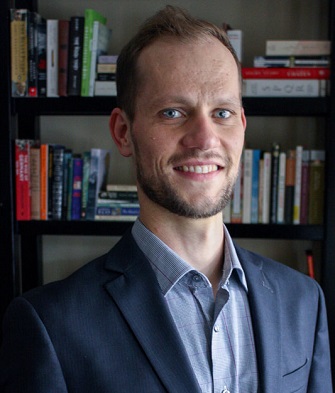
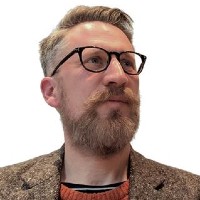
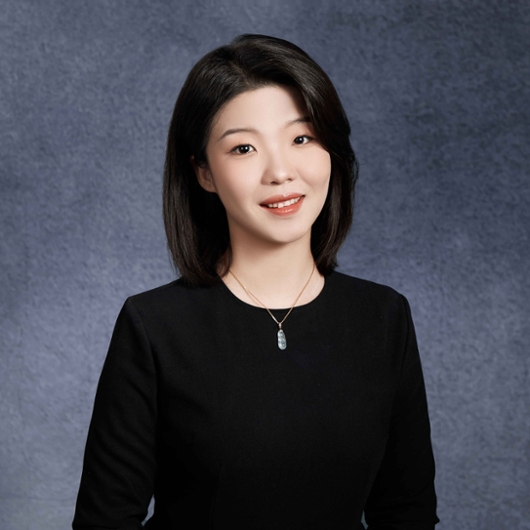
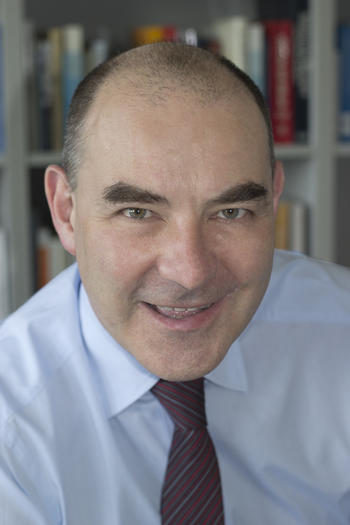
Dr. Christian Morgner is a Senior Lecturer in Cultural and Creative Industries at the Sheffield University Management School. He holds a PhD and MA, with expertise in complexity studies, relational sociology, and cultural networks. His research focuses on: Global cultural processes and innovation Diversity and inclusivity in creative industries Network analysis in urban informal settlements Dementia care through arts interventions Media events and translation dynamics Recent publications analyze cultural transformations in Santiago de Chile, relational creativity in Olympic ceremonies, and digital heritage politics in China. He has secured grants including the Rutherford Fellowship and Japanese Society for the Promotion of Science funding. Scientific awards include: Rutherford Fellowship Japanese Society for the Promotion of Science Postdoctoral Research Fellowship He supervises PhD students and teaches modules on critical theories in cultural and creative industries, marketing, and branding.
Fedor Dokshin is an Assistant Professor in the Department of Sociology at the University of Toronto, Downtown Toronto (St. George) campus. His research bridges computational social science with environmental and political sociology, focusing on energy transitions, partisan dynamics, and social network structures. Key research areas include racial and income disparities in solar photovoltaic adoption, policy feedback mechanisms in renewable energy programs, and partisan influences on environmental decision-making. Fields of Study: Computational and Quantitative Methods, Environmental Sociology, Political Sociology, Social Networks Areas of Interest: Computational social science, Energy and the environment, Political polarization Research Trends: Dokshin's publications reveal a focus on energy justice, behavioral diffusion models, and political polarization. His work combines computational methods with environmental policy analysis, examining how socioeconomic factors and partisan identities shape renewable energy adoption. Articles demonstrate geographic heterogeneity in opposition to extraction projects, digital discourse analysis techniques, and institutional dynamics affecting scholarly knowledge production. Methodological Emphasis: Utilizes large-scale data analysis, spatial modeling, and automated textual analysis to explore energy-environment-society intersections. Research highlights the tension between technical solutions and social equity in energy transitions, with recurring themes of policy design, public engagement, and networked political behavior.
Professor Joseph Wood is a Professor of Visual Analytics at City St George's, University of London, where he serves as a founding member of the giCentre. His academic career spans over three decades, with continuous contributions to Geographic Information Science and visualization since 1990. He previously served as Head of Department for Computer Science at City University between 2014 and 2017. Professor Wood's educational background includes a PhD in Geographical Information Science from the University of Leicester (1996), an MSc in the same field from the University of Leicester (1990), and a BSc in Physical Geography & Geology from the University of Sheffield (1989). His academic progression shows steady advancement from Research Scholar at the University of Leicester (1990-1992) through various lecturer and senior positions to his current professorship. His research interests center on visual analytics and data visualization, with particular expertise in geographic information science and terrain analysis. Professor Wood has developed innovative methods bridging GI Science, Data Visualization, and education domains. His specific interests include narrative of visual analytic design, computational thinking in pedagogy, and novel visualization design for geographic data. His work demonstrates a consistent focus on making complex spatial data understandable through innovative visualization techniques. Analysis of Professor Wood's recent publications reveals a strong emphasis on practical applications of visualization techniques across diverse domains including transportation, epidemiology, sports analytics, and historical migration patterns. His work shows an evolution from foundational geographic information science toward broader applications in visual analytics, with increasing focus on narrative structures, responsive design, and accessibility considerations in visualization. The interdisciplinary nature of his research is evident in collaborations spanning computer science, geography, urban planning, and public health domains. Professor Wood has been actively involved in the academic community, serving on organizing and program committees for major international conferences including IEEE Infovis and VAST, Eurovis, GIScience, Spatial Accuracy, and Geomorphometry. His contributions to the field have been recognized through invitations to deliver keynote talks at prestigious venues ranging from GeoComputation to TEDx, where he presented on topics such as visualizing movement behavior of cyclists. As an advisor, Professor Wood has supervised numerous PhD and Master's students, with current supervision of Julia Crossley (Student conceptualisation of abstraction in computer science) and Jude Nzemeke (Understanding student misconception in recursive algorithmic thinking). His extensive supervision history includes completed PhDs on topics ranging from cycling behavior to spatio-social relations in photographic archives. His academic leadership extends to software development, with contributions to tools like litvis, elm-vega/el-vegalite, giCentre Utils, handy, and LandSerf GIS. Professor Wood is an active member of professional organizations including IEEE (2007-present), Association of Computing Machinery (ACM) (2007-present), and Association of Geographic Information (AGI) (1997-present), demonstrating his commitment to interdisciplinary collaboration across computer science and geographic information domains.
Shaun Murray serves as Associate Professor at The Bartlett School of Architecture, University College London, and Senior Lecturer at the University of Greenwich. He directs ENIAtype, a transdisciplinary architecture practice founded in 2011, and has been Editor-in-Chief of the international peer-reviewed journal Design Ecologies since 2010. At UCL, he also serves as Director of Admissions for the Architecture MArch program and oversees admissions processes for this highly competitive course. University College London, The Bartlett School of Architecture (current) University of Greenwich, School of Design (current) Carleton University, Ottawa (Visiting Professor 2017-2019) University of Kent (Senior Lecturer 2012-2016) Plymouth University (Director of Creative Design and Technology 2007-2011) Dr. Murray's research centers on architectural design through ecological thinking, with particular emphasis on drawing methodologies, landscape ecology, and surrealism in architecture. His work explores the agency of architectural communication methods, field theory relations, and non-linear design approaches that challenge conventional architectural practice. He investigates how ecological thinking can transform design processes and outcomes, particularly through mapping and choreographies that connect architecture with geological and material dynamics. His publication record reveals consistent engagement with ecological design frameworks and theoretical explorations of architectural practice. The articles demonstrate evolving focus from foundational theoretical work on telluric architecture (2012) through explorations of colonial impacts on landscape (2020) to recent investigations of power dynamics in architectural systems (2024). A strong thread connects his work to drawing as both methodology and outcome, with increasing attention to ecological systems thinking and transdisciplinary approaches across his career. Senior Fellow in Higher Education teaching qualification (SFHEA) 2024 Fellow in Teaching and Learning Support in Higher Education 2022 Dr. Murray has successfully supervised two PhD candidates to completion (Alan Pottinger and Georgios Loizos) and numerous MArch thesis students. His supervisory approach emphasizes ecological thinking and transdisciplinary methodologies, reflected in thesis topics ranging from surrealism in photography to posthuman architectural theory. He actively promotes diversity and inclusivity in architectural education through his admissions leadership and curriculum development work, with particular focus on enhancing student employability through innovative pedagogical approaches. He co-founded and participates in the Drawing Architecture Group (2019-present), an international research network connecting architects, theorists, and curators from US, Canada, and Europe. This group has produced multiple publications and exhibitions, with upcoming shows scheduled for New York at A83 Gallery in 2025. He also maintains involvement with the Planetary Collegium and AVATAR research group, contributing to transdisciplinary architectural research that bridges technology, ecology, and design practice.
Luisa Signorelli serves as Senior Tutor in the Department of English Language and Literature at University College London, teaching undergraduate and postgraduate courses across English literature, narrative studies, and early modern literature. Her instructional responsibilities include leading seminars for modules like Critical Commentary and Analysis, Narrative Texts, and Shakespeare's London summer school, with teaching activities scheduled through 2025. Her research centers on British and Irish literature with specialized focus on Shakespearean studies (particularly Ophelia's representation) and eighteenth-century literary anthologies, while extending into communication and media studies through analysis of popular culture and digital humanities. Current projects examine gendered virtue ethics in historical contexts and Western cultural hegemony in contemporary media narratives. Signorelli's publications reveal a methodological bridge between traditional literary scholarship and modern cultural critique, consistently interrogating canon formation and recontextualization processes across historical periods. Her work demonstrates particular expertise in tracing the evolution of literary figures through anthologization practices and analyzing video game narratives as cultural artifacts. Her scholarly recognition includes: Postgraduate Bursary from Society for Theatre Research (2025) Associate Fellow of the Higher Education Academy (2024) Funds for Women Graduates (2024) Postgraduate Bursary from British Society for Eighteenth-Century Studies (2024) Caroline Spurgeon Academic Award (2023) Honourary Life Member of Rete Italiana degli Allievi delle Scuole di Studi Superiori Italiane (2022) Through roles as seminar leader and conference coordinator for events like 'Close Reading in the Digital Age' (2024), Signorelli mentors students across multiple degree programs while advancing interdisciplinary approaches to literary studies. Her teaching portfolio demonstrates sustained engagement with canonical texts from Paradise Lost to The Mill on the Floss, contextualized through contemporary theoretical frameworks.
Yingdan Lu is an Assistant Professor in the Department of Communication Studies at Northwestern University's School of Communication. She serves as Director of the Computational Media and Politics Lab, co-director of the Computational Multimodal Communication Lab, and is core faculty in Northwestern's Media, Technology, and Society (MTS) and Technology and Social Behavior (TSB) PhD programs. She is also affiliated with the Center for Communication & Public Policy and the Center for Human-Computer Interaction + Design. Her educational background includes a Ph.D. in Communication from Stanford University (2023), where she also earned a Ph.D. minor in Political Science and an M.A. in East Asian Studies. She received her B.A. in Journalism and Communication from Tsinghua University. Dr. Lu's research centers on digital technology, political communication, and authoritarian politics, with two primary focus areas: the role of digital technologies in authoritarian politics, and multimodal communication across different contexts. Her work employs computational and qualitative methods to examine how authoritarian governments use digital media and AI to maintain rule, and how individuals experience technology in different media environments. As a computational social scientist, she advances methods for analyzing multimodal data (images, videos), cross-lingual digital communication, and mixed-method research. Her publications reveal a consistent focus on digital authoritarianism, particularly Chinese state propaganda on social media platforms, multimodal communication analysis, and information manipulation. Her work spans interdisciplinary outlets including Political Communication, New Media & Society, International Journal of Press/Politics, and Proceedings of the National Academy of Sciences. Dr. Lu's research has received funding from the National Science Foundation, Brown Institute for Media Innovation, and the Stanford Institute for Human-Centered Artificial Intelligence. She is the founder of COMputation Island ("计传岛"), a WeChat-based platform serving over 10,000 Mandarin-speaking scholars in computational communication research. She leads the Computational Media and Politics Lab and co-directs the Computational Multimodal Communication Lab, where she develops innovative frameworks for analyzing multimodal data and promotes mixed-method approaches to computational social science research.
Prof. Bernadette Nadya Jaworsky is a Professor at the Department of Sociology, Faculty of Social Studies, Masaryk University in Brno, Czechia. Her research focuses on cultural sociology, migration studies, and the intersection of digital technologies with social practices. She leads projects such as People Like Us? A Reverse Sociology of Migration in Czechia (Czech Science Foundation, 2023–2025) and contributes to critical analyses of migration, racialization, and civil sphere dynamics. Her recent work examines geopolitical imaginaries, ethnoracial othering, and meaning-making among marginalized migrant populations. Key Research Themes: Digital sociology and migration Civil sphere theory and symbolic boundaries Postcolonial and decolonial approaches to migration Public perception of migration in Czechia Recent Publications: 2025: Geopolitical imaginaries of migration in Czechia 2024: Ethnoracial othering in Czech civil sphere 2023: Critical cultural sociology of migration monograph
Oliver Janz is Professor of Modern History at the Department of History and Cultural Studies at Free University of Berlin, where he has been teaching since 2007. He previously served as Dean of the Department from 2017-2021 and has held visiting professorships at institutions including the German Historical Institute in Rome, University of Bern, and University of Trient. His academic leadership extends to editorial roles for multiple book series and journals focusing on modern Italian history, transnational history, and World War I studies. Doctorate (1991): Freie Universität Berlin - History of Protestant clergy in Prussia 1850-1914 (summa cum laude) Magister Artium (1985): Freie Universität Berlin - History Studies (1978-1985): History, Philosophy and Sociology at University of Heidelberg, Bielefeld, and Freie Universität Berlin Professor Janz specializes in several interconnected research areas that examine European history through transnational and comparative lenses. His primary focus is on the history of World War I, particularly examining commemoration practices, the cult of fallen soldiers, and the war's transnational dimensions. He has extensively researched the history of the European bourgeoisie, nation and nationalism in Europe, and the intersection of family, gender, and political identity. His work on Italian history spans from the Risorgimento through the Fascist period, with particular attention to religious and cultural dimensions of political movements. Janz is a leading scholar in transnational history methodology, exploring how historical phenomena transcend national boundaries and how comparative approaches can illuminate shared European experiences. Janz's scholarly output demonstrates a consistent focus on memory, commemoration, and the cultural dimensions of warfare, particularly World War I. His work reveals how societies process collective trauma through rituals, monuments, and narratives that intertwine religious, familial, and national identities. The international encyclopedia project 1914-1918-online represents a significant contribution to digital humanities, creating a global platform for understanding the war's multifaceted impacts. His research increasingly examines the digital representation of historical memory, bridging traditional scholarship with contemporary digital culture. Research fellowship from the DFG (2000-2004): "The Cult of the Fallen: Soldiers in Italy during the First World War" DAAD Fellowship (1996): "Exchange of Young Scholars between Italy and Germany" Fellow of the FAZIT-Stiftung (1990) Maison des Sciences de l'Homme Fellowship (1985) Fellowship Grant from the "Studienstiftung des Deutschen Volkes" (1979-1985) Professor Janz has supervised numerous master's students at Freie Universität Berlin, with thesis topics spanning European history from the 19th century to the contemporary period. His students have examined subjects including war commemoration, gender history, colonial encounters, and political movements across Europe. As editor of the "1914-1918-online" International Encyclopedia of the First World War, he has coordinated significant international research funding. His leadership extends to multiple research projects including Collaborative EuropeaN Digital/Archival Infrastructure (CENDARI), Making War, Mapping Europe, and studies on German Soldiers and the Ottoman Empire. Janz leads the research team focused on World War I studies at the Friedrich-Meinecke-Institut, which includes multiple researchers working on the 1914-1918-online encyclopedia project. His team collaborates with international partners across Europe and beyond, creating a network of scholars dedicated to transnational approaches to war history. The research group maintains strong connections with institutions including the German Historical Institute in Rome and participates in the Berlin Program for Advanced German and European Studies.
Stuart E. Middleton is a Professor in the Electronics and Computer Science (ECS) department at the University of Southampton, where he has been employed since 2003. His research bridges artificial intelligence with practical applications in social science, mental health, and security domains. He leads multiple research projects funded by DTP and CISDnS CDT, focusing on multimodal natural language processing and large language models for social good applications. Professor Middleton's research interests center on Natural Language Processing, Large Language Models, and Human-in-the-loop AI systems. His work spans mental health applications (particularly suicide risk detection and mood change analysis), social media analysis for crisis mapping, geoparsing for location extraction, and argument mining in political discourse. He has developed numerous open-source NLP projects and datasets including CPIQA for climate science, ConversationMoC for mental health monitoring, and M-Arg for multimodal argument mining. His research demonstrates how AI can effectively support human decision-making in critical domains like mental healthcare, defense applications, and crisis management. His recent publications reveal a strong trend toward applying LLMs to high-impact societal challenges, particularly in mental health monitoring and climate science verification. He has pioneered methods for detecting suicidal ideation in social media, identifying moments of mood change, and developing context-aware question answering for climate papers. His work consistently emphasizes the importance of human oversight in AI systems, with numerous publications on responsible AI, regulation, and human-in-the-loop approaches. Ranked 1st in ECAL-2024 shared task on suicidal ideation detection Ranked 1st in NAACL-2022 shared task on suicide risk and mood change classification Winner of 'best paper' award at WWW2002 Semantic Web Workshop Professor Middleton actively supervises PhD students through multiple funded projects including 'Multimodal Natural Language Processing for Computational Social Science', 'Large Language Models for Military Veteran Mental Health', and 'Large Language Models for Human/AI Information Foraging to Combat Digital Human Trafficking into Terrorism'. He has secured significant funding from UKRI, DSTL, and other sources to support his research in responsible AI applications. He organizes major workshops including the RAI UK Workshops on Responsible AI for Mental Health and AIUK workshops on AI for Data Rescue and Defense applications. His research group maintains numerous GitHub repositories with open-source NLP tools and datasets that have been widely adopted by the research community.
Ana Ros Matturro is an Associate Professor in the Department of Romance Languages and Literatures at Binghamton University, where she has been a faculty member since 2008. She also holds a Courtesy Title with the Translation Research and Instruction Program (TRIP). Her academic work focuses on the Southern Cone of Latin America, particularly examining how collective memory of dictatorial pasts has been formed and transmitted across generations. Dr. Ros Matturro's educational background includes: Ph.D. in Romance Languages and Literatures from the University of Michigan, Ann Arbor (2008) B.A. in Literary Studies from the College of Humanities and Education, University of Uruguay, Montevideo (2000) B.A. in Secondary Education Literature Teaching from Instituto de Profesores Artigas, Montevideo, Uruguay (1999) Her research centers on post-dictatorial societies in Latin America, with particular emphasis on the construction and transmission of collective memory, civil-military relations, and individual responsibility in oppressive systems. She examines how obedience and resistance function in both authoritarian and democratic contexts, analyzing the complex ways in which historical trauma shapes contemporary social relations. Her work bridges literature, cinema, political science, and memory studies to provide nuanced understandings of how societies process and learn from traumatic pasts. Dr. Ros Matturro's scholarly output reveals a consistent focus on how artistic and cultural productions contribute to collective memory formation in post-dictatorship contexts. Her work increasingly examines perpetrator perspectives and the complexities of complicity, showing how these elements shape transitional justice processes. Rather than focusing solely on victims' narratives, her research explores the gray areas of political participation and the ways ordinary citizens navigate authoritarian regimes. Her notable recognitions include: Provost's Individual Development Award from Binghamton University (2024, 2015) College Finish Line Grant from Binghamton University for advancing her second book project (2022) Harpur Dean's Conference Funds for co-organizing the symposium "The Military Industrial Complex in the Americas" at John Jay College of Criminal Justice (2020) Fellowship at the Institute for Advanced Studies in the Humanities (2011, 2010) In 2022, Dr. Ros founded GIMUR, a collaborative research group of female academics from different countries and disciplines who study the formation and transmission of collective memory in Uruguay. Her work has been supported by multiple grants that have enabled her to advance her research on civil-military relations in post-dictatorship Chile and Uruguay, as well as to organize academic symposia that bring together scholars from across the Americas to examine the legacy of authoritarian regimes. Dr. Ros Matturro maintains active scholarly relationships with researchers across Latin America, the United States, and Europe who are examining similar phenomena in other post-conflict contexts. Her interdisciplinary approach creates comparative frameworks that deepen our understanding of how memory functions across different cultural and political landscapes, with particular attention to the connections between historical analysis and contemporary social issues.
Magnus Rodell is a Lecturer in the history of ideas at Södertörn University, Department of History and Contemporary Studies. He has taught courses ranging from early Christian philosophy to contemporary cultural theory, including roles at the international Master's program EuroCulture (2002-2009) and the Teacher Training Program with intercultural focus. Education: PhD in History of Ideas from Uppsala University (2002) Research Focus: Monumental culture, collective memory, material culture, nation-building, and border studies through historical and contemporary lenses Notable Contributions: Analysis of spatial turn in cultural studies, media's role in commemorative practices, and border-making processes His work bridges historical analysis with modern cultural representations, particularly examining how physical monuments and media interact in shaping national identity and memory.
Rebecca Wittmann is an Associate Professor of History in the Department of Historical Studies at the University of Toronto Mississauga. Her research focuses on the Holocaust and postwar Germany, trials of Nazi perpetrators and terrorists, and German legal history. Her educational background includes: PhD in History, University of Toronto (specializing in Modern Europe, Germany, and the Holocaust) Professor Wittmann's research centers on the Holocaust and its aftermath in postwar Germany, with particular emphasis on the trials of Nazi perpetrators and terrorists. She examines how the German legal system confronted the crimes of the Nazi regime and the challenges of prosecuting individuals within a bureaucratic machinery of destruction. Her work also explores the role of survivor testimony and the construction of historical narratives in legal settings. Professor Wittmann's scholarly output demonstrates a consistent focus on the intersection of law and history in the context of Nazi crimes and their aftermath. Her articles, published in leading journals such as German History and Central European History , analyze the complexities of the Frankfurt Auschwitz Trial and other postwar trials, exploring themes of legal accountability, historical memory, and the challenges of narrating the Holocaust within judicial frameworks. Her research also extends to comparative studies of terrorism trials and the process of Vergangenheitsbewältigung (coming to terms with the past) in divided Germany. Her contributions to the field have been recognized with several prestigious awards, including: Fraenkel Prize in Contemporary History for her book Beyond Justice: The Auschwitz Trial Fellowship from the Alexander von Humboldt Foundation Fellowship from the Social Sciences and Humanities Research Council of Canada (SSHRC) Fellowship from the United States Holocaust Memorial Museum Fellowship from the DAAD (German Academic Exchange Service) Professor Wittmann has received significant research support through fellowships from major institutions, as listed above. While the text does not enumerate her current graduate students, as an Associate Professor in the Department of Historical Studies, she is actively involved in supervising graduate research in her areas of expertise.
Dr. Shatarupa Thakurta Roy is an Associate Professor in the Department of Humanities and Social Sciences at the Indian Institute of Technology Kanpur (IIT Kanpur). She teaches courses in Art Appreciation, Design Theory, Visual Communication, and History of Art, and collaborates with IIT Kanpur's Design Programme. She holds a Ph.D. in Design from IIT Guwahati (2014), an M.F.A. (1999), and a B.F.A. (1997) from Kala Bhavana, Visva Bharati Santiniketan. Her research explores Visual Culture , Indian Folk and Minor Art , Graphic Design , and Design Theory , with fieldwork focusing on narrative folk paintings across Eastern India. She emphasizes cultural sustainability, visual storytelling, and interdisciplinary design methodologies. Her publications (2011–2022) span art theory, data visualization, HCI, and cultural preservation, reflecting trends in cross-disciplinary innovation , social impact design , and digital heritage conservation . She frequently integrates cognitive psychology, new materialism, and postcolonial perspectives. Awards & Honors: Best Paper Award, NaCoMM 2011 National Scholarship Scheme, Government of India (1997–1998) Mentorship Award for 'Toycathon 2021' (designing educational board game 'CheMystery') Advising & Grants: She has supervised 15+ Ph.D. and 35+ M.Des. theses. Funded projects include an MHRD grant (2016) for assistive interfaces for dyslexic children and a Doordarshan collaboration (2022) on sustainable farming documentaries. Administration: She has served as Warden, DPGC Convener, and lab in-charge at IIT Kanpur. She also edits academic journals and chairs conferences on art and design.
Jason Nelson is a Professor of Digital Culture in the Department of Linguistic, Literary and Aesthetic Studies at the University of Bergen, Norway. He is a creator of digital poems and fictions, builder of surrealist and politically focused art games and digital creatures. His work is exhibited widely in galleries and journals around the globe at FILE, ACM, LEA, ISEA, SIGGRAPH, ELO and numerous other venues. Nelson serves on organizational boards including the Australia Council Literature Board and the Electronic Literature Organization. Nelson's research focuses on the intersection of digital technology, creative writing, and artistic expression. He explores how AI and machine learning can be harnessed for creative purposes, developing new forms of digital literature and interactive art. His work often involves building expansive visual worlds through collaborative AI processes, creating interactive digital poetry, and developing novel approaches to digital narrative. Nelson's research spans digital humanities, electronic literature, AI-generated art, and interactive media, with particular emphasis on how these technologies transform creative processes and experiences. Over the past decade, Nelson's work has increasingly focused on the creative potential of AI technologies, especially in the areas of text-to-image generation and multimodal authorship. His projects often blend game engines with poetic expression, creating immersive experiences that challenge traditional boundaries between human and machine creativity. Recent works explore themes of multispecies futures, time perception, and the transformation of physical spaces through augmented reality. Nelson has received numerous scientific awards and fellowships including: Fulbright Fellowship at the University of Bergen Moore Fellowship at the National University of Ireland Winner of the Digital Writing Prize, Queensland Literary Awards (15,000 AUD) Winner of the Woollahra Library Digital Poetry Prize (5,000 AUD) Runner-Up Prize at the Videomedeja digital art exhibition Finalist for the Turn-on Literature Prize Finalist for the Queensland Literary Awards, Digital Writing Category Multiple finalist nominations for the New Media Writing Prize Nelson actively participates in academic advising and has secured significant research funding, including a 125,000 AUD grant from the Australia Council of the Arts, Literature Board for his project "Cube Cryptext and Nomencluster," which was recognized as the world's largest interactive art-game. His work "Nine Billion Branches" received multiple awards including the Digital Writing Prize from the Queensland Literary Awards. He has also received a 75,000 NOK grant for the "Flood Mosaic Artwork" project featured in the Floodlines Exhibition at the State Library of Queensland. Nelson is affiliated with the Center for Digital Narrative at the University of Bergen, where he collaborates with researchers like Scott Robert Rettberg and Alinta Krauth. Together they form EphemerLab, exploring new creative processes that move beyond simple "ask and generate" AI methods. Their work involves stitching together hundreds of individual image fragments and components into cohesive visual and narrative concepts, pushing the boundaries of what's possible with current AI technologies.
Megan R. Luke is a Professor of Art History at the University of Tübingen (since July 2023), affiliated with the Institute of Art History within the Faculty of Humanities. She is currently on research leave for the summer semester 2025. Previously, she held tenured positions as Associate Professor (2017-2023) and Assistant Professor (2011-2017) at the University of Southern California. Her academic journey includes a Harper-Schmidt Postdoctoral Fellowship at the University of Chicago (2009-2011). Education includes: Ph.D. in History of Art and Architecture, Harvard University (2009) A.M. in History of Art and Architecture, Harvard University (2004) B.A. in History of Art and Architecture, Yale University (1999) Her research explores interdisciplinary intersections in modern visual culture, focusing on: 19th-20th century art and architecture , particularly through theoretical frameworks of historiography and visual studies Photography and facsimile reproduction as tools for redefining artistic authenticity and spatial representation Abstraction, collage, and spatial arts in avant-garde movements, with emphasis on exile contexts Film and material culture in relation to collective memory and artistic practice Publications demonstrate a consistent focus on sculpture’s relationship with photography, examining how mechanical reproduction transforms artistic perception. Recent works analyze temporality in German modernism, mass reproduction in digital contexts, and interdisciplinary dialogues between visual media. Her scholarship frequently engages with artists like Kurt Schwitters, Hans Arp, and Jackson Pollock. Awards and fellowships include: William C. Seitz Senior Fellowship at the National Gallery of Art (2022-2023) Alexander von Humboldt Fellowship for Experienced Researchers (2017-2018) ACLS Collaborative Research Fellowship (2013-2015) Fulbright Grant (2006-2007) Andrew W. Mellon Fellowship (2002-2003) She directs the NEH-funded project "Images Out of Time: Visual and Material Culture in a Digital Age" (2022-2025) and served on the Executive Committee of USC’s Visual Studies Research Institute (2011-2023). Her curatorial background includes the Mongan Fellowship at Harvard Art Museums.