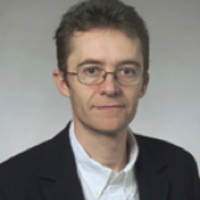
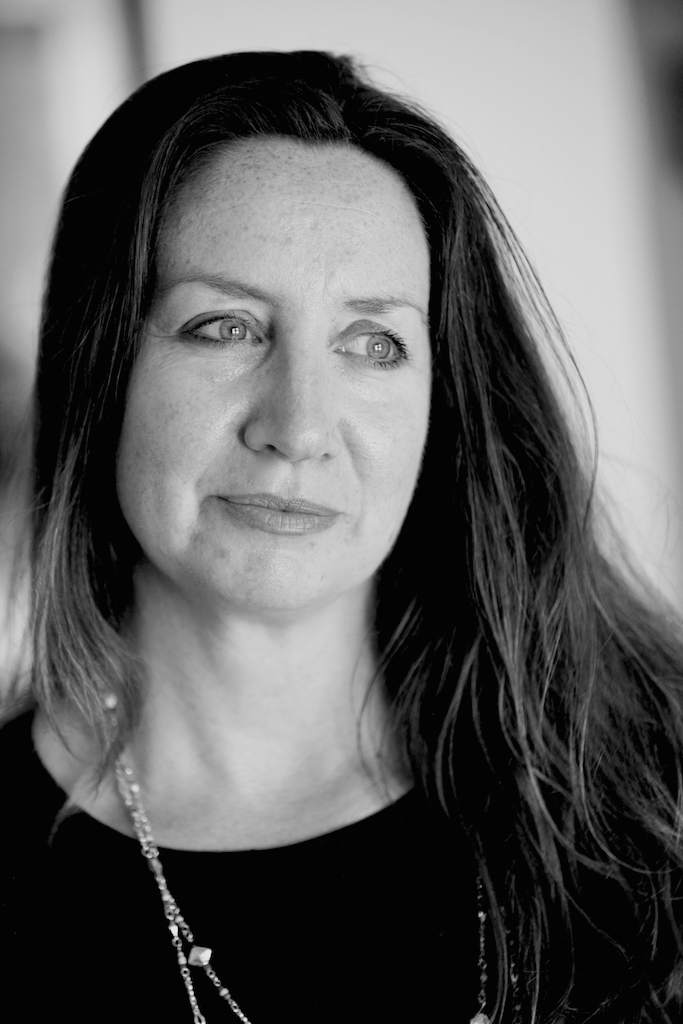
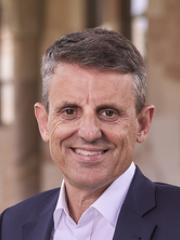
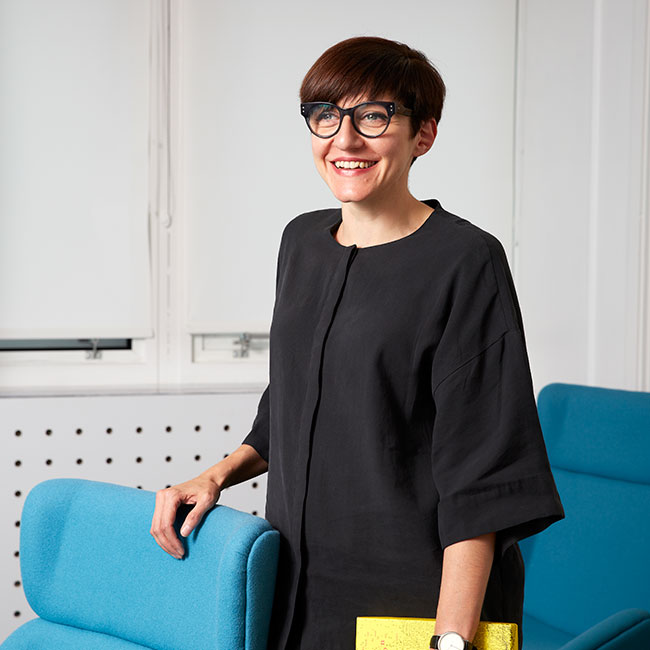
Eric Rebillard is the Avalon Foundation Professor in the Humanities at Cornell University, affiliated with the College of Arts and Sciences and departments/programs including Classics, History, Archaeology, Jewish Studies, Medieval Studies, and Religious Studies . His work bridges historical analysis with archaeological and literary approaches to Late Antiquity and early Christianity. Education: PhD in Classics from the Sorbonne (1993) Former affiliations: French CNRS (1996-2003), École française de Rome Research focuses on religious practices in Late Antiquity , particularly early Christian martyr narratives, burial customs, and the social dynamics of religious identity . His scholarship challenges conventional narratives about the exclusivity of Christian communities and emphasizes the fluidity of religious self-identification. Publications span monographs, edited volumes, and translated papers, with recurring themes of Roman Empire , Augustine of Hippo , and funerary archaeology . Key article trends include analysis of martyr texts , material culture , Augustinian theology , and Christianization processes in the Latin West. Awards include a Guggenheim Fellowship (2020-21) for his project on the triumph of Christianity. Grants supported interdisciplinary collaborations, such as the OpenURL citation project with Cornell University Library (2009).
Shaun Murray serves as Associate Professor at The Bartlett School of Architecture, University College London, and Senior Lecturer at the University of Greenwich. He directs ENIAtype, a transdisciplinary architecture practice founded in 2011, and has been Editor-in-Chief of the international peer-reviewed journal Design Ecologies since 2010. At UCL, he also serves as Director of Admissions for the Architecture MArch program and oversees admissions processes for this highly competitive course. University College London, The Bartlett School of Architecture (current) University of Greenwich, School of Design (current) Carleton University, Ottawa (Visiting Professor 2017-2019) University of Kent (Senior Lecturer 2012-2016) Plymouth University (Director of Creative Design and Technology 2007-2011) Dr. Murray's research centers on architectural design through ecological thinking, with particular emphasis on drawing methodologies, landscape ecology, and surrealism in architecture. His work explores the agency of architectural communication methods, field theory relations, and non-linear design approaches that challenge conventional architectural practice. He investigates how ecological thinking can transform design processes and outcomes, particularly through mapping and choreographies that connect architecture with geological and material dynamics. His publication record reveals consistent engagement with ecological design frameworks and theoretical explorations of architectural practice. The articles demonstrate evolving focus from foundational theoretical work on telluric architecture (2012) through explorations of colonial impacts on landscape (2020) to recent investigations of power dynamics in architectural systems (2024). A strong thread connects his work to drawing as both methodology and outcome, with increasing attention to ecological systems thinking and transdisciplinary approaches across his career. Senior Fellow in Higher Education teaching qualification (SFHEA) 2024 Fellow in Teaching and Learning Support in Higher Education 2022 Dr. Murray has successfully supervised two PhD candidates to completion (Alan Pottinger and Georgios Loizos) and numerous MArch thesis students. His supervisory approach emphasizes ecological thinking and transdisciplinary methodologies, reflected in thesis topics ranging from surrealism in photography to posthuman architectural theory. He actively promotes diversity and inclusivity in architectural education through his admissions leadership and curriculum development work, with particular focus on enhancing student employability through innovative pedagogical approaches. He co-founded and participates in the Drawing Architecture Group (2019-present), an international research network connecting architects, theorists, and curators from US, Canada, and Europe. This group has produced multiple publications and exhibitions, with upcoming shows scheduled for New York at A83 Gallery in 2025. He also maintains involvement with the Planetary Collegium and AVATAR research group, contributing to transdisciplinary architectural research that bridges technology, ecology, and design practice.
Luisa Signorelli serves as Senior Tutor in the Department of English Language and Literature at University College London, teaching undergraduate and postgraduate courses across English literature, narrative studies, and early modern literature. Her instructional responsibilities include leading seminars for modules like Critical Commentary and Analysis, Narrative Texts, and Shakespeare's London summer school, with teaching activities scheduled through 2025. Her research centers on British and Irish literature with specialized focus on Shakespearean studies (particularly Ophelia's representation) and eighteenth-century literary anthologies, while extending into communication and media studies through analysis of popular culture and digital humanities. Current projects examine gendered virtue ethics in historical contexts and Western cultural hegemony in contemporary media narratives. Signorelli's publications reveal a methodological bridge between traditional literary scholarship and modern cultural critique, consistently interrogating canon formation and recontextualization processes across historical periods. Her work demonstrates particular expertise in tracing the evolution of literary figures through anthologization practices and analyzing video game narratives as cultural artifacts. Her scholarly recognition includes: Postgraduate Bursary from Society for Theatre Research (2025) Associate Fellow of the Higher Education Academy (2024) Funds for Women Graduates (2024) Postgraduate Bursary from British Society for Eighteenth-Century Studies (2024) Caroline Spurgeon Academic Award (2023) Honourary Life Member of Rete Italiana degli Allievi delle Scuole di Studi Superiori Italiane (2022) Through roles as seminar leader and conference coordinator for events like 'Close Reading in the Digital Age' (2024), Signorelli mentors students across multiple degree programs while advancing interdisciplinary approaches to literary studies. Her teaching portfolio demonstrates sustained engagement with canonical texts from Paradise Lost to The Mill on the Floss, contextualized through contemporary theoretical frameworks.
Karl Heinz Schneider serves as an Associate Professor at the Historical Seminar within the Faculty of Philosophy at Leibniz University Hannover. His academic career includes significant administrative roles such as Dean of Studies of the Faculty of Philosophy (2007-2010) and Scientific Director of the Center for Teacher Education (2010-2012). With an office in Building 1146, Space B221 at Im Moore 21, 30167 Hanover, he maintains active engagement in both teaching and research activities at the university. Dr. Schneider's educational journey began with studies in history and German at Hanover, where he completed his state examination in 1977. He earned his doctorate in 1981 and achieved habilitation in 1997 for modern and contemporary history with special emphasis on regional history. His early career included work in adult education from 1981-1991, followed by research positions including a project on "Schaumburg in Industrialization" (1991-1994) and appointment as Research Associate for Applied Regional History at the University of Hanover since 1994. Professor Schneider's research spans multiple interconnected fields of historical inquiry. His primary focus lies in agricultural history of the late 18th through 20th centuries, with particular attention to regional industrialization processes in central Lower Saxony. He has made significant contributions to gender history, especially regarding women's roles in rural settings, and maintains active interest in transport history with emphasis on railway development. His innovative approach includes examining the use of internet technologies for historical research methodologies. His work consistently demonstrates how regional history intersects with broader national and international historical narratives. Analysis of his recent scholarly output reveals a consistent focus on regional German history, particularly concerning Lower Saxony and Schaumburg. His publications demonstrate expertise in agrarian reforms, village development patterns, and industrialization processes at the regional level. The temporal scope of his work ranges from the 18th century through contemporary history, with particular strength in late 19th and 20th century developments. His methodological approach combines traditional archival research with innovative perspectives on gender, migration, and regional economic development. Schneider maintains active membership in numerous scholarly organizations that reflect his diverse research interests: Historical Commission for Lower Saxony and Bremen Working Group for Economic and Social History Working Group on the History of Lower Saxony (since 1945) Historical Working Group for Schaumburg Working Group for Agricultural History History Department of the Lower Saxony Homeland Association Regional History Working Group at the University of Hanover Working group "Village and Rural Areas" at the University of Hanover Throughout his career, Professor Schneider has demonstrated commitment to both academic scholarship and practical historical education. His early work in adult education for local historians in Lower Saxony established foundations for his later academic career. He has supervised numerous research projects on regional history and contributed significantly to teacher education through his directorship of the Center for Teacher Education. His scholarly approach bridges academic research with practical applications in historical education and regional development initiatives. Professor Schneider's research activities are closely connected to several collaborative initiatives at Leibniz University Hannover. His work with the Regional History Working Group and the "Village and Rural Areas" working group demonstrates his commitment to interdisciplinary research approaches. These teams bring together historians, geographers, and social scientists to examine regional development patterns from multiple perspectives. His involvement with the Working Group for Agricultural History connects his research to broader scholarly conversations about rural transformation across Europe.
Daniel Perrin is Professor and Dean at the Zurich University of Applied Sciences (ZHAW) School of Applied Linguistics . His research focuses on text linguistics , methodology of applied linguistics , media communication , and transdisciplinary research . He has contributed extensively to understanding text production in journalistic and professional contexts, emphasizing the interplay between language, media, and sociocultural practices. Network Memberships: AILA (International Association of Applied Linguistics), Swiss Academy of Humanities and Social Sciences (SAHSS), Swiss Association for Applied Linguistics, SACM (Swiss Academy of Communication and Media Research) ORCID ID: 0000-0001-5477-849X Perrin's work spans media linguistics , financial communication , multilingualism , and narrative structures in journalism . His recent articles explore phenomena like serendipity in newswriting and transdisciplinary approaches to text production . He has led projects such as " Modeling Writing Phases " and " Professionalizing the Swissnex Website " under Swiss National Science Foundation grants. Key Publications: Authored/edited books like Medienlinguistik (3rd ed.), Doing Applied Linguistics , and The Routledge Handbook of Language and Media . His methodology often combines progression analysis , ethnographic observation , and multimodal studies to investigate real-world writing and translation processes.
Anna Weinstein is an Associate Professor of Screenwriting in the Department of English at Kennesaw State University, where she coordinates the Graduate Certificate in Screen & Television Writing. She is a core faculty member in the Master of Arts in Professional Writing program and an affiliated faculty member in the Gender and Women's Studies program. Her educational background includes an M.F.A. in Creative Writing & Writing for the Performing Arts from the University of California, Riverside, and a B.A. in Speech Communication from the University of North Carolina, Chapel Hill. Anna's research focuses on screenwriting, women's representation in film and television, and industry studies. Her creative work includes developing a limited series on Georgian author Lillian E. Smith and adapting 'The Jack Tales' for film. She frequently explores contributions of women both in front of and behind the camera, advancing critical discourse on gender in media. Analysis of her recent publications reveals a consistent emphasis on female-driven narratives and global women directors. Her work predominantly features interviews with filmmakers and critical analyses of women's roles in cinema history, highlighting diverse voices and underscoring her commitment to documenting underrepresented perspectives in screenwriting and media studies. Anna Weinstein serves as Secretary for the Screenwriting Research Network (2022-2024) and Co-chair of the Film Area for the Popular Culture Association (2021-present). As Coordinator of the Graduate Certificate program, she mentors students in screenwriting and professional writing, fostering next-generation media creators through curriculum development and personalized guidance.
Megan R. Luke is a Professor of Art History at the University of Tübingen (since July 2023), affiliated with the Institute of Art History within the Faculty of Humanities. She is currently on research leave for the summer semester 2025. Previously, she held tenured positions as Associate Professor (2017-2023) and Assistant Professor (2011-2017) at the University of Southern California. Her academic journey includes a Harper-Schmidt Postdoctoral Fellowship at the University of Chicago (2009-2011). Education includes: Ph.D. in History of Art and Architecture, Harvard University (2009) A.M. in History of Art and Architecture, Harvard University (2004) B.A. in History of Art and Architecture, Yale University (1999) Her research explores interdisciplinary intersections in modern visual culture, focusing on: 19th-20th century art and architecture , particularly through theoretical frameworks of historiography and visual studies Photography and facsimile reproduction as tools for redefining artistic authenticity and spatial representation Abstraction, collage, and spatial arts in avant-garde movements, with emphasis on exile contexts Film and material culture in relation to collective memory and artistic practice Publications demonstrate a consistent focus on sculpture’s relationship with photography, examining how mechanical reproduction transforms artistic perception. Recent works analyze temporality in German modernism, mass reproduction in digital contexts, and interdisciplinary dialogues between visual media. Her scholarship frequently engages with artists like Kurt Schwitters, Hans Arp, and Jackson Pollock. Awards and fellowships include: William C. Seitz Senior Fellowship at the National Gallery of Art (2022-2023) Alexander von Humboldt Fellowship for Experienced Researchers (2017-2018) ACLS Collaborative Research Fellowship (2013-2015) Fulbright Grant (2006-2007) Andrew W. Mellon Fellowship (2002-2003) She directs the NEH-funded project "Images Out of Time: Visual and Material Culture in a Digital Age" (2022-2025) and served on the Executive Committee of USC’s Visual Studies Research Institute (2011-2023). Her curatorial background includes the Mongan Fellowship at Harvard Art Museums.
Paula Schneider serves as Teacher for Special Tasks at the University of Art and Design Offenbach am Main , heading their book and paper workshop since 2020. She studied Book Art at Burg Giebichenstein Halle (2013-2019) and previously taught at Bezalel Academy (2017-2020). Her work bridges bookbinding , literary experimentation , and archival research through installations, artist books, and public interventions. Education : 2019: Diploma in Book Art, Burg Giebichenstein University of Halle Teaching : 2020–present: Lecturer for special tasks at HfG Offenbach 2017–2020: Annual courses at Bezalel Academy for Arts and Design, Jerusalem Screen printing tutor during studies Her artistic research explores narrative structures , time perception , and memory systems through works like Inner Monologue (2018) and Mio Mnemotop (2021). Recent projects include Night Frost (2024) examining textual accumulation and Cloudburst Working on the Textberg (2024) using mining metaphors for textual analysis. She examines book formats (e.g., leporello, monotypes, screen printing) to interrogate knowledge preservation (Rabaraababaraba, 2015) and urban observation (Praise of the Gate, 2023). Notable exhibitions include Because We Are Young (2021) analyzing GDR industrial history and Between (2019) at Halle/Leipzig Airport, which required mobile audience engagement with audio pieces about airport soundscapes. Her works have been featured in Text3 and Spin n errei tours. Contact: schneider@hfg-offenbach.de | Workshop: +49 69.80059-245 | Office: +49 69.80059-106
Keith E Byerman is a Professor in the English Department of the College of Arts & Sciences at Indiana State University, where he has been a faculty member since 1986. His scholarly work focuses on African American literature and culture, with particular emphasis on race, gender, and historical representation across multiple literary periods. His educational background includes a BA from Anderson College and a PhD in English from Purdue University (1978), following prior teaching positions at the University of Texas, University of Vienna, and Columbus College. Byerman's research demonstrates deep engagement with African American literary traditions, examining mixed-race identity in Chesnutt and Gaines, lynching narratives in Wideman and Forrest, and gender dynamics in McCullers' work. His scholarship bridges 18th-century foundations with contemporary postmodern explorations, consistently interrogating how literature processes historical trauma and constructs racial identity. His publication trends reveal sustained focus on African American short fiction and author studies, with recent work analyzing Ellison's narrative techniques and Wideman's experimental storytelling. The interdisciplinary nature of his research connects literary analysis with critical race theory, gender studies, and historical scholarship. Awards and honors include: Darwin Turner Scholarship Award, African American Literature and Culture Society (2019) Theodore Dreiser Distinguished Research and Creativity Award, Indiana State University (2014) Sylvia Rendell Award for Scholarship, Charles Chesnutt Association (2008) First-Year Experience Teaching Award, ISU Residential Life (2008) Theodore Dreiser Research/Creativity Award, Indiana State University (2004) Byerman has secured significant external funding including a $196,000 NEH grant for 'Ernest Gaines and the Southern Experience' (2016), Japan Foundation support for comparative African American studies, and multiple ISU research grants. His grant work frequently explores transnational perspectives on race, particularly US-Japan academic collaborations. University service includes chairing the Joseph S. Schick Committee (1989-2025) and serving as Interim Department Director (2014-2015). He maintains active community engagement through board memberships with Farrington Renaissance CDC and Friends of Historic Allen Chapel, while continuing scholarly contributions as a peer reviewer for major academic presses and journals.
Associate Professor Antony Moulis is a faculty member at the University of Queensland's School of Architecture, Design and Planning, where he also serves as Deputy Head of School. He holds a Bachelor of Design Studies and a Bachelor degree from UQ. His research focuses on productive cities, urban retrofit, and global architectural knowledge transfer, with notable contributions to books like House, Precinct, Territory (2023) and Le Corbusier in the Antipodes (2021). He collaborates with industry on projects addressing micro-urban resilience, energy transitions, and cross-cultural architectural exchanges. Research interests include urban infill housing strategies, architectural techniques from the 20th to 21st century, and the global influence of figures like Le Corbusier. He led UQ's participation in the Water Sensitive Cities CRC, focusing on green infrastructure and urban intensification. Awards include the 2025 Architecture Australia Prize for Unbuilt Work and multiple Queensland Architecture Awards for collaborative designs like the Blue Bower and One Room Tower. His work spans academic and professional journals, with over 50 articles and 4 books. He has supervised numerous research projects and contributed to exhibitions at venues like the Seoul Biennale. Moulis is a past President of the Society of Architectural Historians, Australia and New Zealand (SAHANZ), and actively engages in architectural historiography and design pedagogy.
Prof Barbara Lipietz is a Professor of Urban Development Planning at the Development Planning Unit, University College London (UCL), and serves as Vice Dean International of The Bartlett Faculty of the Built Environment. Her roles include leading the MSc Urban Development Planning program and directing academic internationalization efforts at The Bartlett. Her research focuses on urban equity, trans-local solidarity networks, and participatory urban planning practices, with a strong emphasis on the Global South. Key areas include housing rights, displacement dynamics in Nigeria, climate resilience, and co-production of knowledge for just urban futures. She critiques neoliberal urban development models and advocates for marginalized communities' inclusion in decision-making processes. Her work spans multiple continents, engaging with organizations like the Asian Coalition for Housing Rights and contributing to international frameworks such as the Sendai Guidelines for Disaster Resilient Urban Planning. She frequently publishes in peer-reviewed journals and policy platforms, emphasizing actionable research to bridge academic and activist agendas. Notable contributions include theoretical explorations of 'just cities,' critiques of 'world-class city' narratives, and analyses of urban transformations post-Arab Spring. Her pedagogical approach emphasizes experiential learning and partnerships with grassroots organizations.
Andrew Flinn is an Associate Professor in the Department of Information Studies at University College London (UCL), serving as Vice Dean for Postgraduate Research and Faculty Graduate Tutor in the Faculty of Arts and Humanities. He teaches on the Archives and Records Management MA programme and has been at UCL since 2002. His research focuses on radical public history, independent archives, community heritage projects, oral history, and the intersection of digital technologies with cultural memory. Flinn holds a PhD from the University of Manchester (1999), an MA from the University of Liverpool (1989), and a BA from the University of Manchester (1987). Key research projects include the AHRC-funded 'Dig Where You Stand' (2012–2013), examining community heritage collaboration, and 'Community Archives and Identities' (2008–2010), exploring heritage initiatives by UK minority groups. He previously held roles as an archivist at the National Museum of Labour History and research officer on the ESRC-funded Communists in British Society project. His work emphasizes participatory approaches, digital archiving, and social justice, with publications addressing oral history methodologies, digital infrastructure challenges, and the role of archives in activism. Flinn has collaborated internationally, including as an Allan Smith Visiting Scholar at Simmons College (2011). He actively engages in grant reviews, academic supervision, and outreach, advocating for open government data and ethical recordkeeping practices. Recent research highlights include co-designing the Sloane Lab (2023–2024), advancing frameworks for person-centred recordkeeping in child welfare (2022), and critiquing digital heritage processes through feminist and critical heritage lenses (2020).
Professor Alice Bell is a Professor of English Language and Literature at Sheffield Hallam University, affiliated with the Sheffield Creative Industries Institute, Humanities Research Centre, and Culture and Creativity Research Institute. She holds a BA, MSc, PGcertHE, and PhD. Her work focuses on digital fiction, narratology, and stylistics, with a particular emphasis on how digital technologies shape narrative forms and reader engagement. Her research explores stylistics, literary-linguistics, and narratology, with a focus on born-digital fiction such as hypertext, app-based stories, and VR narratives. Key areas include interactivity in digital environments, cognitive processing of digital texts, and ontological boundaries between fiction and reality. She has led major projects like the AHRC-funded Reading Digital Fiction (2014-2017) and collaborates on preservation initiatives like the Digital Fiction Curios project. Recent work examines postdigital themes, empirical reader responses in VR fiction, and the interplay between fact and fiction in contemporary narratives. These studies often bridge narrative theory, cognitive poetics, and digital media analysis. Professor Bell has secured significant funding, including a £349,957 AHRC/DFG grant (2023) as PI for Reading Post-Postmodernist Fictions of the Digital . She supervises postgraduate students in areas like cognitive poetics, digital fiction, and experimental writing, including projects such as Alternate Realities: Possible Worlds Theory and Counterfactual Historical Fiction and ‘Digesting Creepypasta’: A Genre Analysis of Social Media Horror Fiction . Her collaborations include work with the One-to-One Development Trust on digital preservation and co-editing projects like Possible Worlds Theory and Contemporary Narratology (2019) and a special issue on fact-fiction dynamics in the European Journal of English Studies .
Robert Stock is an Associate Professor for Cultures of Knowledge at the Department of Cultural History and Theory at Humboldt University Berlin. He is also the Principal Investigator (PI) in the cluster of excellence "Matters of Activity. Image Space Material" . His research focuses on cultures of knowledge, digital media and disability, museum accessibility, Luso-African cultural decolonization processes, and environmental humanities. He completed his PhD in 2017 at Justus Liebig University Giessen, exploring cultural decolonization and documentaries between Mozambique and Portugal. As a postdoc, he worked at the University of Konstanz in the project "Media and Participation" . Robert Stock collaborates extensively with international institutions, including Jagiellonian University (Krakow) and the University of São Paulo, on projects like "Multi-species homemaking in toxic coastal zones" . He co-edited Techniques of Hearing (2022) and has published widely on disability activism, urban mobility, and material agency. He organizes interdisciplinary events such as the STS HUB 2025 conference and the Symbiotic Futures symposium, emphasizing collaborative and critical approaches to contemporary challenges. Education: PhD in Cultural Studies, Justus Liebig University Giessen, 2017 Postdoctoral Research at University of Konstanz Research Interests: His work bridges cultural theory, disability studies, and environmental humanities. Notable themes include: Accessibility in digital and physical spaces More-than-human material agency (e.g., symbiotic wood, paraffin pollution) Critical approaches to technology and decolonial methodologies Grants & Projects: Leads the "Matters of Activity" cluster and collaborates on EU-funded initiatives. Recent projects include: COIL (Collaborative Online International Learning) programs on mangroves and toxic zones Exhibitions like Symbiotic Wood and Vegetal Companions Public engagement through workshops and film screenings Labs/Teams: Coordinates the Network Dis/Ability and Digital Media and mentors researchers like Rahel Kesselring. His team includes collaborators such as Karola Dierichs and Claudia Mareis in interdisciplinary material studies.
Univ.-Prof. Robert Rollinger is a full professor at the University of Innsbruck’s Department of Ancient History and Oriental Studies. He holds academic degrees from the Leopold-Franzens-Universität Innsbruck, including a M.A. (1989), PhD (1993), and Habilitation (1999). His research focuses on the interconnections between the Aegean and Ancient Near East, Achaemenid history, and global historiography. Rollinger has held prestigious positions such as editor of journals like Nikephoros and Ancient History Bulletin , and is a member of institutions including the Academia Europaea and the Austrian Academy of Sciences. Research Interests Contacts between Aegean and Near Eastern worlds Ancient Near Eastern historiography Empire studies (especially Achaemenid Persia) Global and entangled history approaches Awards Dr. Seibert-Preis (1995) Preis des Fürstentums Liechtenstein (1998) Wissenschaftspreis des Österreichischen Olympischen Comités (1999) Ausonius-Preis (2023) He leads major projects like the NAWA Chair on Achaemenid-Roman empire comparisons and chairs the Austrian Academy’s “Transformation Processes and Empire” commission. His work emphasizes cross-cultural connections and imperial legacies in antiquity.