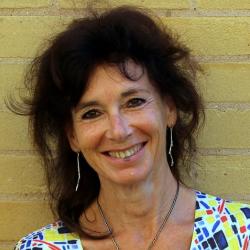
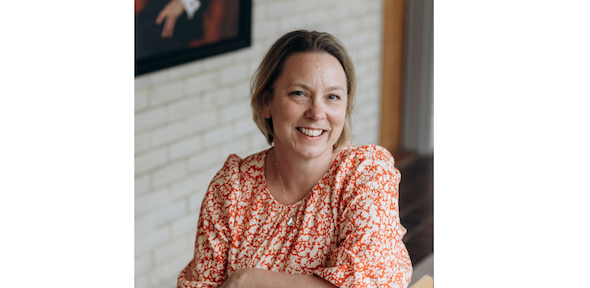
Dr. Caroline Howe is an Associate Professor in Environmental Social Science at Imperial College London , affiliated with the Centre for Environmental Policy under the Faculty of Natural Sciences . She serves as Vice President of the British Ecological Society and Deputy Programme Director for Imperial’s MSc in Environmental Technology. Dr. Howe co-founded Imperial College’s Network of Excellence in Women’s Health and contributes to the Global Development Hub as an Advisory Board Member. Research Focus: Interdisciplinary exploration of people-nature relationships, equity and justice in biodiversity and ecosystem services, urban health, and sustainable development. Labs: Leads the Transdisciplinary Centre for Nature and People (TCNP) , a global team advancing nature-based solutions. Scientific Contributions: Key author on IPBES assessments and ESPA textbook. Her work spans climate mitigation, sustainable food systems, and postcolonial narratives in conservation. Scientific Awards: Athena SWAN Bronze (departmental leadership). Education and Advocacy: Champions gender/diversity through EDI initiatives and co-leads the MSc in Environmental Technology program.
Dick Stegewerns is an Associate Professor in Japanese Studies at the University of Oslo. His research spans the political, intellectual, and diplomatic history of modern Japan, with a focus on East Asia's international relations, war memory, and cultural identity. He also explores Japanese cinema and popular culture, including sake's historical significance. Research Interests: Nationalism, regionalism, Japanese film studies, food studies, and transnational cultural perspectives. Current Projects: Monographs on Japanese self-perception, collaborative research on postwar Japanese cinema, sake globalization, and visualization of history in media. Publications cover topics like East-West civilization discourse, postwar war films, sake industry dynamics, and Hiroshima's transnational memory. His work integrates film studies, history, and cultural analysis.
Prof. Dr. Jan Eckel is a Professor of Modern and Contemporary History at the University of Freiburg . His academic career includes prior professorships at the University of Tübingen (2016-2021) and the University of Cologne (2015-2016). He researches human rights history , transnational politics , and globalization discourses since the late 19th century. Research Focus: Interactions between state/non-state actors, Cold War dynamics, decolonization, and ethical governance frameworks. Grant Involvement: DFG-funded projects, including SFB 923 sub-project on globalization narratives (1990s-2000s). His 15 most recent publications analyze globalization discourses, human rights evolution, and transnational conflict resolution, with keywords spanning 20th-Century History , Political Science , and Conflict Studies . Scientific Awards include the 2024 Opus Magnum Scholarship and multiple honors for historical analysis excellence. He advises seven doctoral students in contemporary history and globalization studies.
Øyvind Gjerstad is an Associate Professor of French Linguistics in the Department of Foreign Languages at the University of Bergen. His academic work focuses on the intersection of language, narrative, and climate change discourse, with particular emphasis on comparative analyses between French and Norwegian contexts. As a core member of the LINGCLIM research group (Language, Climate and Lifestyle), he contributes to interdisciplinary investigations of how linguistic structures shape public understanding of environmental issues. Gjerstad's research interests center on linguistic polyphony, narrative analysis, and discourse structures as applied to climate communication. His work examines how narratives about climate change are constructed linguistically, how different voices are represented in climate discourse, and how narrative frameworks influence public perception and willingness to act. He has developed methodological approaches that combine narrative analysis with polyphonic theory to reveal complex storylines in climate-related texts, particularly focusing on how negation, reported speech, and rhetorical devices function in climate communication. His publication record demonstrates consistent scholarly output examining climate narratives across various text genres including political documents, media coverage, and public surveys. Recent work has increasingly focused on the combination of narrative and polyphonic analysis ('polynarrativity') to uncover intersecting storylines in climate discourse. His research spans both descriptive analyses of existing narratives and explorations of how normative narratives might be constructed to motivate climate action. Gjerstad has supervised graduate students, including Taran Marie Hoel Stabell's Master's thesis on French temporal prepositions. His research has been supported by funding from the Research Council of Norway (projects 220654 and 301103), indicating sustained institutional support for his work on climate discourse analysis. He actively participates in academic conferences across Europe, presenting his findings to both linguistics and climate studies audiences. As part of the LINGCLIM research group, Gjerstad collaborates closely with Kjersti Fløttum and other colleagues on projects examining how language shapes climate perceptions and actions. His work bridges theoretical linguistics with practical applications in climate communication, contributing to interdisciplinary efforts to understand and address the climate crisis through the lens of language and narrative.
Sara Schaefer, MD, MHS, FAAN is an Associate Professor of Neurology at Yale School of Medicine, where she serves as Program Director for the Movement Disorders Fellowship and Adult Neurology Residency Program Director. She specializes in treating patients with movement disorders including Parkinson's disease, tremors, chorea, dystonia, and Huntington's disease, and evaluates patients for deep brain stimulation surgery. Dr. Schaefer is also deeply involved in medical education innovation, having designed interactive video-based curricula used worldwide. Dr. Schaefer's educational background includes: ScB from Brown University (2007) MD from The Ohio State University College of Medicine (2012) Internship in Medicine at Yale-New Haven Hospital (2013) Residency in Neurology at Yale-New Haven Hospital (2016) Chief Residency in Neurology at Yale-New Haven Hospital (2016) MHS with focus on medical education from Yale University (2019) Dr. Schaefer's primary research interests center on movement disorders and medical education. She has a particular focus on developing innovative educational tools for neurology training, including video-based curricula and podcasts. Her work aims to improve how movement disorders are taught to medical students, residents, and practicing physicians, with the goal of reducing diagnostic delays and improving patient care. She has designed an interactive, video-based online training curriculum in movement disorders that is used by learners worldwide and co-founded the MDS podcast. She also founded The Grey Matter Project, a virtual high school neuroscience club engaging students globally. Dr. Schaefer's scholarly work demonstrates a clear trajectory from clinical research in movement disorders toward an increasing focus on medical education innovation. While her early publications addressed specific movement disorder conditions and treatments, her more recent work centers on educational methodology, curriculum development, and assessment in neurology training. Her research bridges clinical neurology with educational science, creating practical tools that have been implemented across multiple institutions. Dr. Schaefer has received numerous honors and awards for her work: Fellowship Director of the Year from American Academy of Neurology (2025) Burton A. Sandok Visiting Professor of Neurologic Education from Mayo Clinic Department of Neurology (2024) Attending of the Year from Yale Department of Neurology (2023) Education Innovation Poster Award at Yale Medical Education Day (2018) Creative Expression of Human Values in Neurology award from American Academy of Neurology (2016) Alpha Omega Alpha Honor Medical Society (2012) Gold Humanism Honor Society (2012) As an educator and program director, Dr. Schaefer has mentored numerous neurology residents and fellows. She serves as co-founder and deputy editor of the MDS podcast, launched in January 2019, and founder and producer of the Neurology Nuts and Bolts: Constructing your Career podcast, launched in February 2022. She is the Movement Disorders Section Head of the Annual Academy of Neurology Resident In-Service Training Examination (RITE) Committee and CME editor for the Movement Disorders Journal. Her educational initiatives have received institutional support through Yale's educational infrastructure, though specific grant funding isn't detailed in the provided text. Dr. Schaefer founded The Grey Matter Project, a virtual high school neuroscience club that engages students worldwide with lectures, career panels, and projects related to neurology. She is also actively involved with the Movement Disorders Society Education Committee and has contributed to developing educational resources through this professional organization.
Todd S. Berzon is the Peter M. Small Associate Professor of Religion and Chair of the Department of Religion at Bowdoin College. He is a scholar of late antiquity, early Christianity, and the theory and method in religious studies, with a focus on how ancient religious communities negotiated identity and difference. His educational background includes a PhD, MPhil, and MA from Columbia University, and BA degrees from both the University of Oxford and Columbia University. His training reflects a deep engagement with classical and religious texts. Berzon's research explores how Jews and Christians in late antiquity used language, law, and discourse to define orthodoxy and heresy. He is particularly interested in heresiology as a form of ethnography and the construction of religious identity. His current project, Holy Tongues: The Materiality of Language in the Religious World of Late Antiquity , examines how sacred language functioned as a marker of piety and exclusion. His teaching includes courses on the Hebrew Bible, New Testament, gender and sexuality in early Christianity, and human sacrifice. His publications reveal a strong focus on boundary-making in early Christian discourse, especially through figures like Epiphanius of Salamis and Irenaeus of Lyons. The articles span topics such as rhetorical construction of communities, sexual morality, and cosmogony, indicating a broad yet cohesive research agenda rooted in textual and discursive analysis. Berzon actively contributes to scholarly discourse through reviews in respected venues like Bryn Mawr Classical Review and Marginalia Review of Books . While no formal awards are listed, his publication record in top journals reflects scholarly recognition. He advises students in religious studies and has published a major monograph, Classifying Christians: Ethnography, Heresiology, and the Limits of Knowledge in Late Antiquity (University of California Press, 2016), which synthesizes many of his core themes. Though specific grants are not mentioned, his ongoing research suggests sustained academic support. He is also engaged in collaborative academic conversations through edited volumes and interdisciplinary forums. Berzon is affiliated with the Department of Religion in the College of Liberal Arts at Bowdoin College, where he contributes to curriculum development and departmental leadership as Chair.
Alison Liebling is Professor of Criminology and Criminal Justice at the University of Cambridge and Director of the Institute of Criminology’s Prisons Research Centre. Her work focuses on prison quality, moral performance, and staff-prisoner dynamics. Current Leverhulme Major Research Fellowship (2020-2023) on moral rules in prison Fellow of the British Academy Research Interests: Prison moral climate and legitimacy Comparative studies of public/private sector prisons Trauma-informed practices and rehabilitation programs Prison officer roles and professional discretion Key Publications: Prisons and their Moral Performance (2004, OUP) The Effects of Imprisonment (2005, Willan Publishing) Legitimacy and Criminal Justice (2013, OUP) Crime, Justice and Social Order (2022, OUP) Scientific Contributions: Developed international moral climate survey tool Co-editor of the Oxford Handbook of Criminology Evaluated therapeutic interventions like music and reading programs
Dr. Hamish Ford is a Senior Lecturer in Screen and Cultural Studies within the School of Humanities, Creative Industries, and Social Sciences at the University of Newcastle, Australia. He serves as the discipline liaison for Screen and Cultural Studies and has held significant leadership roles including Deputy Head of School: Teaching and Learning (2020-2023) and Program Convenor for the Bachelor of Arts (2016-2019). PhD, University of New South Wales Bachelor of Arts (Honours), University of Western Sydney Dr. Ford is globally recognized for his expertise in post-war European modernist cinema and the relationship between film and 20th Century European philosophy. His research spans cinematic time and negativity, cinema and postcolonialism, and the intersection of European philosophy with film studies. He has published extensively on Ingmar Bergman, Ousmane Sembène, and Jean-Luc Godard, with his 2012 book Post-War Modernist Cinema and Philosophy: Confronting Negativity and Time receiving significant acclaim. His current research focuses on Bergman studies, with two major projects underway: co-editing The Companion to Ingmar Bergman (2024) and authoring History, Power, and Negation in Ingmar Bergman's 1960s Chamber Film Series (2025). Analysis of Dr. Ford's recent publications reveals a consistent focus on European modernist cinema, particularly Bergman's work, alongside growing attention to postcolonial and world cinema. His scholarship demonstrates strong interdisciplinary connections between film studies, philosophy, and cultural theory, with recurring themes of negativity, time, and historical representation. The geographic scope of his research has expanded from primarily European cinema to include significant work on African, Iranian, and East Asian cinema. Co-editing The Companion to Ingmar Bergman (2024), featuring 32 essays from leading Bergman scholars worldwide Sole-authored book History, Power, and Negation in Ingmar Bergman's 1960s Chamber Film Series (2025) Multiple refereed journal articles on Ousmane Sembène's Moolaadé and Jacques Rivette's Out 1 Editorial work on a special journal issue about the global reception of Ingmar Bergman's cinema Dr. Ford has successfully supervised six PhD students to completion and currently supervises four more. His grant funding totals $28,700 across nine grants from 2008-2016, primarily supporting conference travel and research projects on film modernism. He has been instrumental in developing the University of Newcastle's Bachelor of Arts Online program, creating and teaching three screen studies courses on the FutureLearn platform. His teaching consistently receives high student satisfaction scores, well above school and university averages, with multiple nominations for 'best lecturer' awards.
Professor Miranda Griffin is a medieval French literature scholar at the University of Cambridge, affiliated with the Faculty of Modern and Medieval Languages and Linguistics and Murray Edwards College. Her research focuses on landscape representation, manuscript culture, and ecocritical approaches to medieval texts. Professor of Medieval French Literature Fellow at Murray Edwards College Researcher in medieval manuscript studies and ecocriticism Contributor to BBC Radio 4's In Our Time Her work explores medieval theories of temporality, text-image relationships in manuscripts, and the intersection of gender studies with literary analysis. She has published extensively on Ovid's influence, metamorphosis themes, and bestiary studies. Recent research highlights include analyses of medieval ecologies, spatial narratives, and manuscript materiality. Her contributions span academic publications, educational outreach, and media collaborations like the Netflix documentary on fabulous beasts. Professor Griffin supervises PhD students in medieval French literature and actively participates in academic societies and teaching initiatives within the Faculty.
Associate Professor David Smith is a Senior Lecturer in American Politics and Foreign Policy at the University of Sydney, jointly appointed between the United States Studies Centre and the School of Social and Political Sciences. Dr. Smith earned his BA from the University of Sydney and his PhD from the University of Michigan. His academic journey has positioned him as a leading expert in American politics with a distinctive Australian perspective. Dr. Smith's research focuses on the intersection of religion and politics, American and comparative political development, collective violence, and theories of the state. His work often examines how religious identity shapes political behavior and policy outcomes, with particular attention to the American context. His comparative approach extends to examining Australian politics through the lens of American political development, creating a unique transnational perspective that informs both fields. His recent publications demonstrate a strong trend toward examining the relationship between identity politics, religious values, and public policy. He has made significant contributions to understanding vaccine policy acceptance across political spectrums, the role of religion in foreign policy decisions, and the dynamics of racism and anti-racism in contemporary politics. His research bridges theoretical political science with practical policy implications, particularly in the areas of public health communication and international relations ethics. Dr. Smith has supervised several graduate students including Anastasiya BYESYEDINA working on "The Re-construction of Ukrainian Identity During Revolutions" and Yiyang XU researching "Rationality and Beauty in International Politics." He is currently leading an Australian Research Council Discovery Project titled "The ideologies and practices of anti-racism in Australia" alongside colleagues Soutphommasane T and Park J.
Professor Emma Murphy is a leading scholar in the School of Government and International Affairs at Durham University , holding the Chair of Political Economy . She is also a Senior Fellow in the Global Policy Institute and a member of the Institute for Middle Eastern and Islamic Studies . Her research focuses on the political economy of the Middle East and North Africa , with particular emphasis on ICTs, youth policy, food security, economic liberalization, and Arab-Israeli relations . Recent work explores youth exclusion and inclusion in the MENA region, Africa, and Europe, and gendered transport systems in African cities. Her publications (2025-2009) span gendered mobility practices , ICTs and democratization , economic reforms in Tunisia, and youth activism across the Mediterranean. She co-edits the journal Mediterranean Politics (IF 0.722) and has served on the HEFCE Research Excellence Framework Sub-Panel . Honors : Fellow of the Royal Society of Arts and Manufacturing (FRSA) Academician of the Academy of Social Sciences (ACSS) International Election Observer, Tunisia (2011) Doctoral students supervised include Abdullah Al-Maani and Saleh Albulayhi. Her work intersects with social policy, gender studies, and urban mobility , with recent projects analyzing COVID-19 impacts on youth .
Annie Tindley is Professor of British and Irish Rural History and Head of the School of History, Classics and Archaeology at Newcastle University. She has held academic positions at the University of Aberdeen, Glasgow Caledonian University, and the University of Dundee. MA (2001), MSc by Research (2002), PhD (2006) in History, University of Edinburgh Annie specializes in the history and contemporary legacies of land and environmental issues, focusing on landownership (private, state, and community), land reform, and interdisciplinary approaches to rural history. Her work bridges the Scottish, Irish, British, and imperial contexts from the mid-18th to the 21st century, engaging with environmental history, historical geography, and policy impact. Annie’s recent publications emphasize interdisciplinary collaboration, linking land history to ecological studies, community decision-making, and heritage conservation. Her research integrates archival analysis with modern policy frameworks, addressing topics like river management, healthcare history, and the role of design in imperial contexts. Fellow of the Royal Historical Society Annie has secured funding from AHRC, NERC, and the Wellcome Trust for collaborative projects. She mentors early-career researchers and doctoral students, advocating for research-led teaching and innovative interdisciplinary modules. She co-edits Rural History and founded the Scotland's Land book series, while serving in leadership roles for historical and heritage organizations. Her work engages community landowners, heritage groups, and policymakers, centering historical narratives in future decision-making. She leads the AHRC-funded Connected Treescapes project and the Land Decisions network.
Basil Germond is a Professor of International Security at Lancaster University's School of Global Affairs , where he co-directs the interdisciplinary research institute Security Lancaster . He also holds a Visiting Fellowship at the Royal Navy Strategic Studies Centre and is affiliated with the Centre for War and Diplomacy and the ESRC Centre for Corpus Approaches to Social Science (CASS) . Education: PhD in International Relations (Graduate Institute of International Studies, Geneva), MA in History and International Politics, BA in International Relations (interdisciplinary 4-year degree). Leadership: Co-Director of Security Lancaster, former Faculty Leadership Team member (2018-2022), and ESRC NWSSDTP Institutional Politics Pathway Lead. His research bridges International Relations , Maritime Security , Geopolitics , and Corpus Linguistics , focusing on the evolving concept of seapower , maritime strategy , and climate-maritime security interactions. He works on UK Defence , Black Sea dynamics , and the representation of the sea in policy and media. Recent publications analyze the Strait of Hormuz crisis, Black Sea ceasefire implications, and climate security intersections. His work appears in Marine Policy , The Geographical Journal , and Science of the Total Environment , reflecting his cross-disciplinary approach. Scientific awards include Senior Fellow of the Higher Education Academy (SFHEA) and Fellow of the Royal Geographical Society (FRGS). He has advised House of Commons , House of Lords , and EU Council , with research cited in IPCC Sixth Assessment Report . PhD Supervision: Completed projects on maritime strategy , EU security policy , and climate-maritime interactions . Currently supervises 4 students in maritime security and outer space security .
Prof. Dr. Christopher Markiewicz is a leading scholar in Ottoman and Islamic Studies at Ghent University's Department of Languages and Cultures (affiliated with the Department of History). He previously held positions as Associate Professor at University of Birmingham and Junior Research Fellow at Exeter College, University of Oxford. His research centers on the political, social, and intellectual history of the Ottoman Empire (15th-17th centuries), with special emphasis on state formation, diplomatic cultures, and the interplay between Islamic law and governance. Education PhD in Near Eastern Languages & Civilizations, University of Chicago (2015) Magna cum laude dissertation award from Middle East Studies Association (2016) His scholarship explores the transition from medieval Islamic political fragmentation to early modern imperial consolidation , focusing on how Persian émigrés shaped Ottoman sovereignty and diplomatic practices. Current research investigates pious endowments (waqf) through an ERC Starting Grant (2023-2028) , analyzing their role in Ottoman state-building. Scientific contributions include: Winner of Malcolm H. Kerr Dissertation Award (2016) Principal Investigator for Islamic Endowments project Series Editor for The Ottoman Empire and the World (I.B. Tauris) Trustee of EJW Gibb Memorial Trust Member of British Institute at Ankara committees His 2023-2024 teaching includes courses on Middle East politics and global historical developments. Publications reveal evolving research from waqf taxation controversies to diplomatic gift-giving protocols, with consistent focus on cross-cultural exchange and historiographical evolution.
Nathan Fisk is an Assistant Professor at the University of South Florida College of Education , specializing in cybersecurity education . His research bridges educational theory with cybersecurity practice, focusing on behavioral aspects, policy analysis, and socio-technical systems. Key research themes include: Understanding user motivations for adopting cybersecurity practices Designing privacy-preserving data collection methods Examining economic stressors' impact on online scam susceptibility Critiquing digital inequality in medical fundraising platforms His recent work explores AI-driven cybersecurity awareness campaigns and anti-oppressive pedagogies in online learning environments. Scientific Awards : EAGER grant (2021) for SaTC AI-Cybersecurity research Contact: fisk@usf.edu