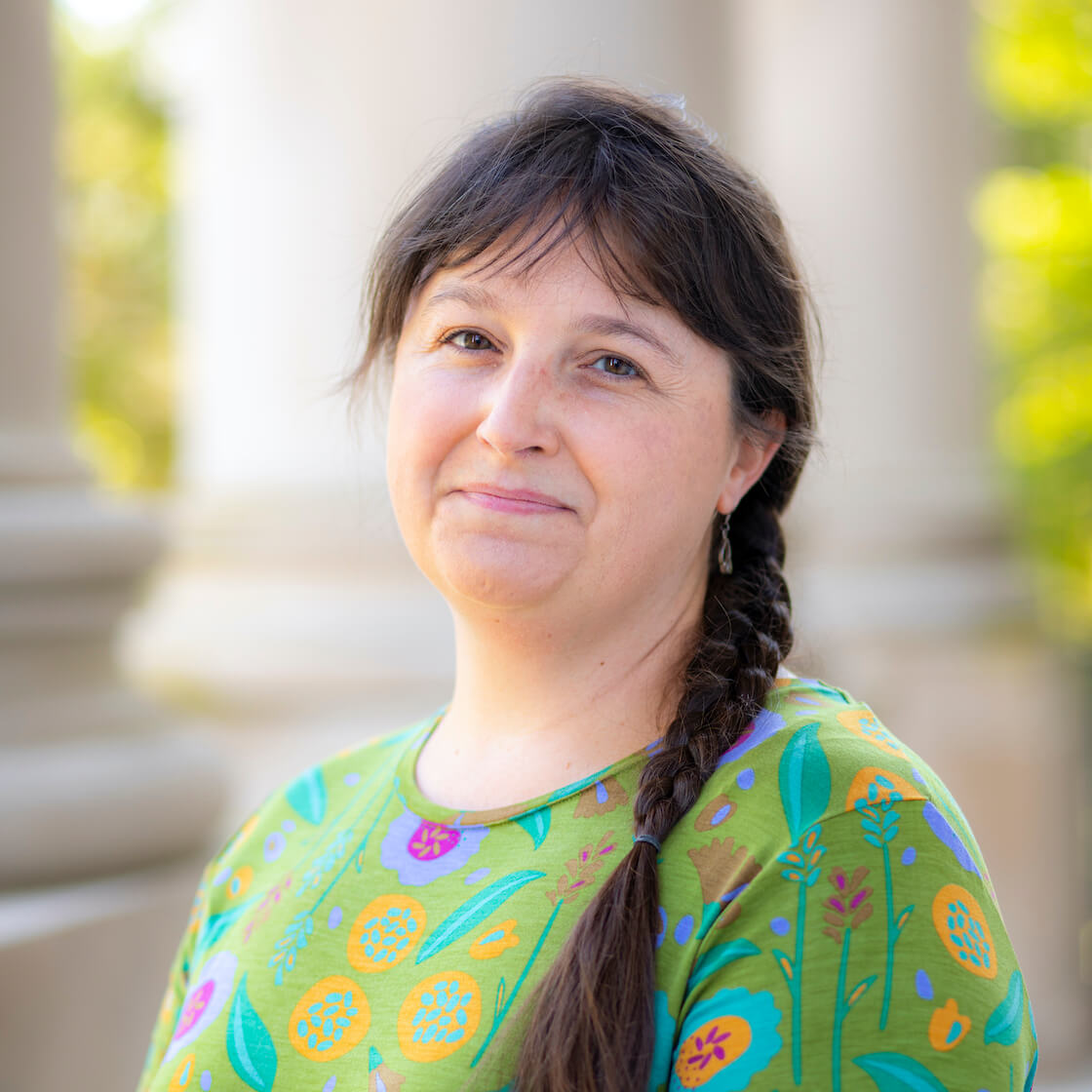
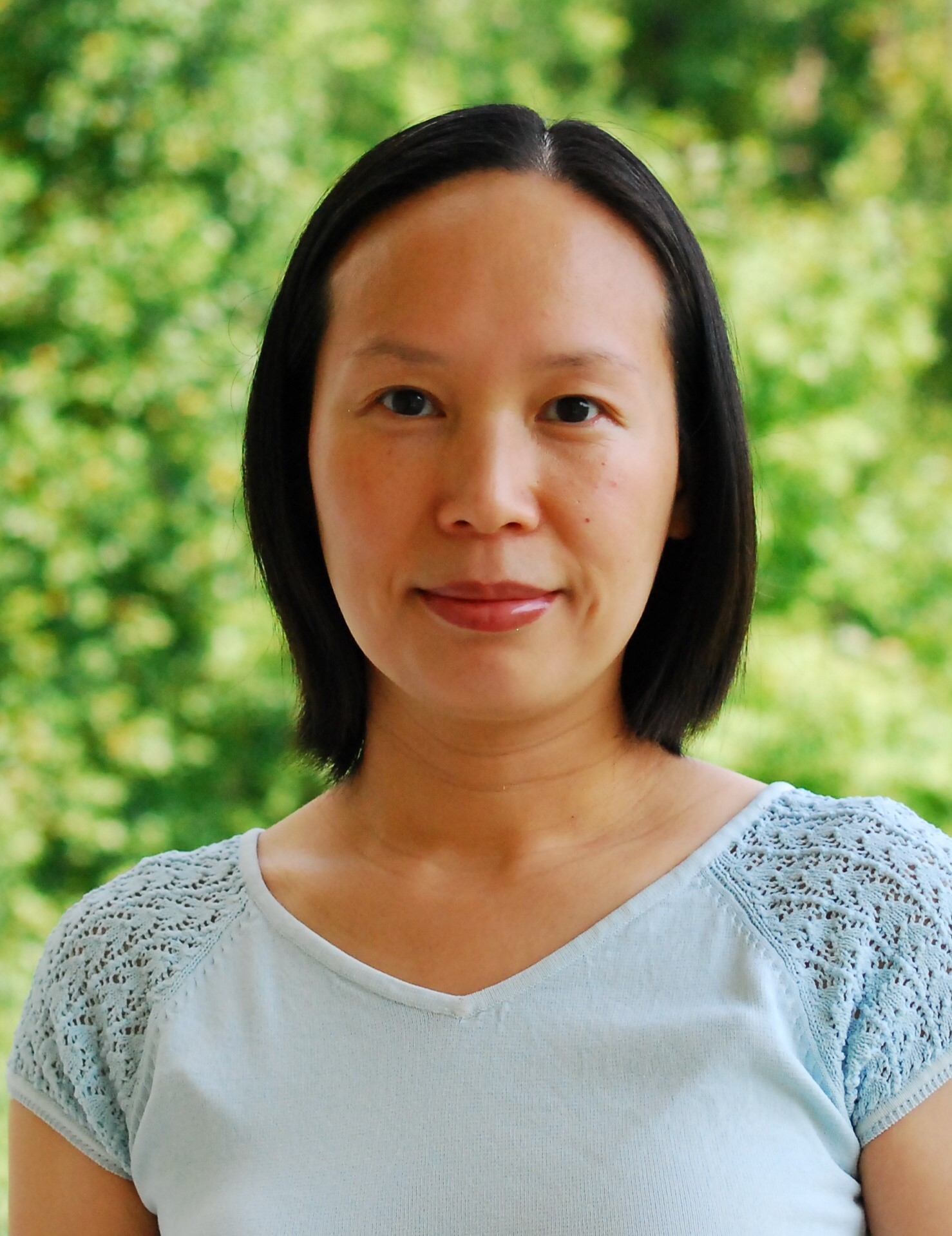
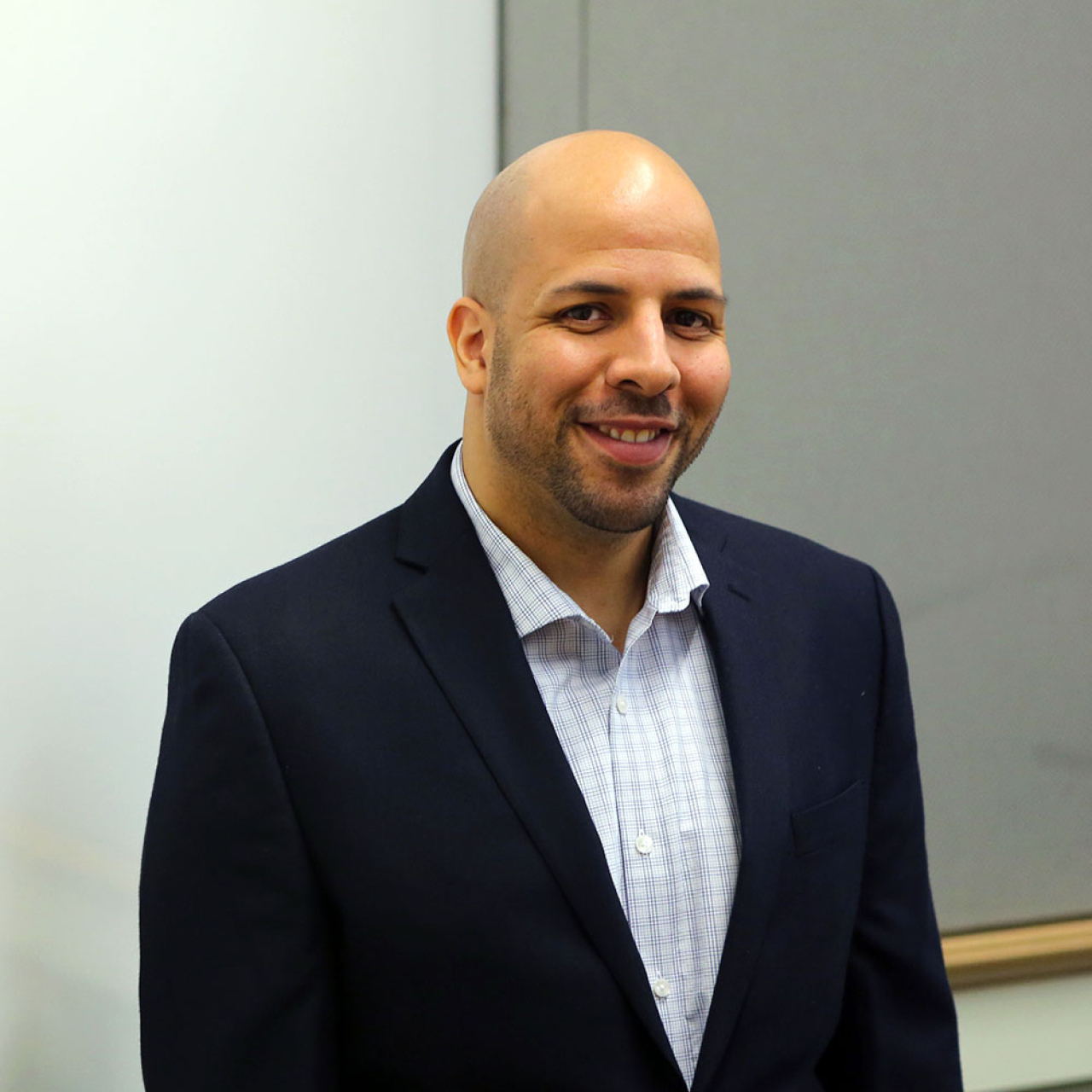
Dr. Cheryl Collier is a Professor and Dean of the Faculty of Arts, Humanities and Social Sciences at the University of Windsor, appointed since July 2021. She holds a position in the Department of Political Science with research expertise in gender-based violence in political contexts, Canadian social policy, and feminist institutionalism. Her research examines: Violence against women in politics (VAWIP) #MeToo movement impacts on political institutions Comparative legislative harassment policies Media representations of gender-based violence Intersectional approaches to policy analysis Recent publications form a comprehensive analysis of gender-based violence in Canadian politics, including social media harassment, mainstream media coverage, institutional responses, and policy solutions. Her work employs comparative frameworks analyzing Canada alongside the UK and other democracies.
Professor Pamela Davidson is a distinguished scholar of Russian Literature at University College London's School of Slavonic and East European Studies (SSEES). With over four decades of academic experience, she has held various leadership positions including Head of the Russian Department (2003-2006), Head of Teaching and Graduate Tutor (2012-2014), and currently serves as Admissions Tutor for Languages & Cultures programmes. Her scholarly work has significantly shaped the field of Russian literary studies, particularly in areas of Russian Symbolism, literary prophecy, and the interaction between religion and culture. Doctor of Philosophy, University of Oxford, 1984 Undergraduate studies in Russian, French and Italian, Newnham College, Cambridge Professor Davidson's research spans several interconnected areas within Russian and comparative literature. Her work on the "construction and dynamics of literary tradition" examines how Russian writers positioned themselves within broader cultural and historical contexts. She has made significant contributions to understanding "the interaction of religion and culture," particularly through her edited volume "Russian Literature and Its Demons," which opened up new interdisciplinary research avenues. Her long-standing interest in "Silver Age poetry" has focused extensively on Viacheslav Ivanov, whose work she has studied through multiple lenses including his engagement with Dante and classical antiquity. Most notably, she has developed an extensive body of work on "the representation of the writer as prophet in Russia," tracing this tradition from its biblical and classical roots through to the Soviet period. Professor Davidson's recent publications reveal a consistent focus on the prophetic dimension of Russian literature, with particular attention to Viacheslav Ivanov and Fedor Glinka. Her scholarship demonstrates a sophisticated interweaving of literary analysis, religious studies, and cultural history. Over the past decade, her work has increasingly examined how Russian writers engaged with biblical and classical traditions, often reinterpreting them within specifically Russian contexts. The recurring themes across her publications include the tension between Athens and Jerusalem in Russian thought, the role of the writer as moral authority, and the complex relationship between religious tradition and literary innovation. Her comparative approach frequently bridges Russian literature with Western European intellectual traditions, revealing unexpected connections and influences. Travelling Junior Research Fellowship at Queen's College Leverhulme Research Fellowship (2019-2021) Director of the CEELBAS Centre for Doctoral Training (2020-2021) Member of the AHRC Peer Review College of Assessors (2003-2007) As an academic mentor, Professor Davidson has supervised numerous doctoral students in Russian literature and thought, with particular expertise in 19th and early 20th century literature, Silver Age poetry, and comparative literature. Her leadership roles have included serving as Graduate Tutor and Chair of BA and MA Examination Boards at SSEES. In terms of research funding, she has successfully secured competitive grants including the Leverhulme Research Fellowship that supported her recent work on literary prophecy. Her collaborative projects have often involved international partnerships, particularly with Russian academic institutions including the Institute of Russian Literature (IRLI) in St Petersburg. Professor Davidson has also contributed to major scholarly initiatives such as the 12-volume academic edition of Ivanov's collected works. While Professor Davidson's work is primarily in humanities rather than laboratory-based research, she has been instrumental in building academic networks and collaborative projects. She served as Director of the CEELBAS Centre for Doctoral Training, liaising with the Arts and Humanities Research Council (AHRC) and consortium members at Cambridge, Manchester and Oxford. Her long-standing collaboration with the St Petersburg Institute of Russian Literature has been particularly significant, resulting in the completion of the first comprehensive bibliography of Viacheslav Ivanov's works. Professor Davidson has also been active in the international scholarly community through her membership on the Board of Directors of the Foundation "Centro Studi e Ricerche Vjacheslav Ivanov" in Rome.
Professor Mark Petticrew is Professor of Public Health Evaluation at the London School of Hygiene & Tropical Medicine (LSHTM), where he is based in the Faculty of Public Health and Policy within the Public Health - Environments and Society department. He serves as Director of the NIHR Public Health Policy Research Unit and is an active member of the Commercial Determinants Research Group (CDRG) at LSHTM, which conducts research on the products and strategies of tobacco, alcohol, gambling, food, opioid and other industries. His work is also affiliated with the Centre for Evaluation and the Centre for Maternal Adolescent Reproductive & Child Health. Professor Petticrew's research primarily focuses on the Commercial Determinants of Health (CDOH), examining how corporate practices influence public health outcomes and policy. His work explores evidence-based policymaking approaches and public health evaluation methodologies, with particular emphasis on how unhealthy commodity industries shape scientific research and policy development. He investigates industry tactics including misinformation campaigns, marketing strategies, and political influence operations that affect population health. His research often employs systems perspectives to understand the complex interactions between commercial interests and public health outcomes. His extensive publication record demonstrates a strong focus on analyzing industry influence across multiple sectors. Recent work examines alcohol industry marketing tactics, tobacco industry narratives around e-cigarettes, gambling industry practices, and food industry strategies. He has developed frameworks for understanding corporate political activity and has contributed to methodological approaches for evaluating complex public health interventions. His research frequently appears in high-impact public health journals and informs policy development at national and international levels. Professor Petticrew has secured significant research funding from major organizations including the National Institute for Health Research (NIHR), UK Research and Innovation (UKRI), Wellcome Trust, and Medical Research Council. His current projects include "Countermarketing against the products and activities of unhealthy commodity industries: effectiveness mechanisms and inequalities" and the "NIHR PRP Public Health Research Policy Unit 2024-2029." He has led or contributed to numerous completed research grants examining population interventions, complex interventions, mental health, and policy research units. As Director of the NIHR Public Health Policy Research Unit, Professor Petticrew plays a key leadership role in translating research into policy. He has contributed to important policy discussions around alcohol marketing restrictions, as evidenced by his co-authorship of the influential 2024 BMJ Global Health commentary "Normative value of 'best buys' and the case of bans on alcohol marketing," which argued for comprehensive bans on alcohol marketing as an effective public health intervention. His work supports evidence-based policymaking in contested areas where commercial interests may conflict with public health goals.
Maryanne A. Rhett serves as Professor and Chair of the Department of History and Anthropology at Monmouth University, where her scholarship bridges modern Middle Eastern and Islamic history with popular culture, nationalism, and world history through the lens of comics and graphic narratives. She actively shapes historical pedagogy as Director of the Graduate Program in History and through leadership roles in the World History Association. Her educational foundation includes: Ph.D. from Washington State University Dr. Rhett's research examines how sequential art mediates cultural discourse, particularly in representations of Islam, nationalist movements, and global historical events. She investigates the pedagogical power of comics in world history education while analyzing Orientalist tropes and migration narratives across visual media. Her work consistently connects academic historiography with public engagement through accessible formats. Her publication trajectory reveals evolving scholarly focus: early work established foundational analysis of Islamic representation in comics (2012-2014), followed by pedagogical applications in world history classrooms (2007, 2013), and recent expansion into migration narratives and contemporary superhero discourse (2021). This progression demonstrates increasing interdisciplinary reach while maintaining core commitments to postcolonial theory and visual cultural analysis. Dr. Rhett mentors graduate students as Director of the History Master's Program, supervising theses and comprehensive exams annually. Her administrative leadership extends to departmental chair duties and active participation in the Monmouth University Biennial Conference on Race, though specific grant funding details remain unmentioned in available records. Professional engagement includes ongoing service as Secretary (2013–present) and Program Chair (2009–present) for the World History Association, reflecting sustained commitment to global historical scholarship and pedagogy.
Allison Goodman serves as a Professor specializing in visual design disciplines with expertise spanning graphic and product design fields. Her research and teaching interests include: Graphic Design Product Design Information Design Communication Design Visual Thinking Narrative Design Professor Goodman teaches multiple sections of Communication Design courses focusing on information and context across different departments (GPRT, ILL, IXD), along with specialized courses in Information Design, Visual Thinking, and Narrative & Scale. Her course load demonstrates comprehensive coverage of design principles from foundational to advanced levels. She actively contributes to design education through courses including ID Graphics, Information Design, Visual Thinking 1, and advanced Communication Design sequences, indicating strong engagement with contemporary design methodologies and pedagogical approaches.
Xiaoli Nan is a Professor of Communication Science and Director of the Center for Health and Risk Communication at the University of Maryland-College Park. She is affiliated with the Department of Behavioral and Community Health, the Joint Institute for Food Safety and Applied Nutrition, and the Marlene and Stewart Greenebaum Comprehensive Cancer Center's Population Science Program. Education: Ph.D. from University of Minnesota Teaching: Health communication, persuasion, media effects, quantitative methods Research Focus: Persuasion science, health communication, misinformation, advertising Her research examines how persuasive communication influences beliefs and behaviors, particularly in public health contexts such as vaccination, pandemics, food safety, and cancer prevention. She has secured over $8.5 million in grants from NIH, NSF, FDA, and other agencies. Her work integrates communication theory with behavioral interventions to address health disparities and improve risk messaging. Recent publications analyze trends in COVID-19 communication , vaccine hesitancy , narrative persuasion , and temporal framing effects . Her experimental studies explore strategies like self-affirmation and norm-based messaging to reduce defensive responses and enhance health campaign efficacy. Awards : Mayhew Derryberry Award (2018), Lewis Donohew Outstanding Health Communication Scholar (2020), NCA Outstanding Health Communication Scholar (2022) Editorial Roles : Senior Editor for Health Communication (2018–present), Editorial Board member of Human Communication Research and Communication Research Professional Leadership : Former Vice-Chair/Chair of NCA Health Communication Division, AEJMC committee roles
Dr. Thalia R Goldstein is an Associate Professor in the Department of Applied Developmental Psychology at George Mason University (GMU). She directs the PLAY Lab and co-directs the National Endowment for the Arts Research Lab (MasonARC). Her research focuses on children’s social-emotional development through pretend play, theater, and imaginative activities. Dr. Goldstein holds a Ph.D. in Developmental Psychology from Boston College (2010), with postdoctoral training at Yale University (2010–2012) and a prior faculty role at Pace University (2013–2017). Her education includes a BA from Cornell University (2002), MA (2007), and Ph.D. (2010) from Boston College. Research grants include funding from the National Science Foundation, National Endowment for the Arts, and the John Templeton Foundation. She serves on editorial boards for journals like Psychology of Aesthetics, Creativity, and the Arts and is an APA Division 10 Fellow. Current research explores topics such as the impact of theater education on empathy, longitudinal learning in acting, children’s understanding of fictional characters like Santa Claus, and adult engagement in pretend activities. Her book Why Theatre Education Matters (2024) synthesizes findings on arts’ cognitive and social benefits. Key awards include a 2019 poster award at the Cognitive Science Society conference. Dr. Goldstein advises students on projects involving dance, video games, and moral understanding in pretend play. She teaches courses on developmental psychology, creativity, and social-emotional learning. Her work bridges developmental science and the arts, with media features in The New York Times , NPR, and the National Endowment for the Arts podcast. Labs: PLAY Lab (playlab.gmu.edu), Mason Arts Research Center (MasonARC). Office: David J. King Hall DK3055.
Shawn Miller is a Lecturer in Philosophy at the University of California, Davis, where he also earned his PhD. His work focuses on philosophy of biology, science studies, and ethical inquiries. He maintains a prominent resource at philbio.net , curating a comprehensive reading list for philosophy of biology graduate programs. His research interests include functional analysis in biology, evolutionary theory critiques, and scientific methodology. He has contributed to debates around adaptationism, gene-environment interaction, and feminist approaches in science. Miller's published works appear in Anarchist Review of Books , The Montréal Review , and Crack the Spine . His 2016 article ' There is No Future Tree ' explores temporal ontology, while recent publications reflect interdisciplinary engagement with anarchist thought and cultural critique. He has maintained active involvement in journalism, writing for outlets like Sacramento News & Review and The Pacific Sun , often blending philosophical perspectives with social commentary. His creative writing includes poetic reflections on existence and ethical decision-making.
Eric Soto-Shed serves as Lecturer on Education and Director of the Harvard Teacher Fellows Program at the Harvard Graduate School of Education (HGSE). With a 25-year career in education, he has held significant leadership roles including founding director of Harvard's teacher residency program, director of Secondary History/Social Studies Education at Brown University, and teacher educator positions at Stanford and NYU. He earned his Ph.D. from Stanford University in 2013 and previously taught social studies in New York City for 8 years, which deeply informs his commitment to supporting youth from underserved communities. At HGSE, he co-chairs the foundational course 'How People Learn' and teaches curriculum design and instructional methods for history and civic education. Soto-Shed's research centers on promoting inquiry and equity in K-12 history, civics, and social studies education. He co-leads the Civics Thinking Project, which develops research-based civics assessments and curriculum. His work emphasizes balancing the study of oppression with resistance and joy in historical narratives to provide students with a more complete understanding of human experiences. His recent publications explore comprehensive approaches to teaching Black history, civics education, and methods for combatting hate through historical understanding. These works demonstrate his advocacy for year-round Black history education that incorporates competing ideologies and joyful narratives alongside the study of oppression. Grants from the Library of Congress to train educators to teach with primary sources Board member of Self-Evident Education, a nonprofit using multimedia curriculum to educate about race and racism history As a consultant, Soto-Shed works with school districts to develop social studies curriculum and conducts professional development workshops focusing on historical inquiry, teaching controversial issues, and accessibility. His approach combines rigorous academic research with practical classroom applications, making his work valuable to both scholars and practitioners in education.
Judith Noorman is an Associate Professor of Early Modern Art History at the University of Amsterdam, Faculty of Humanities, Department of Art History. She serves as Director of the Amsterdam Centre for Studies in Early Modernity and leads the Dutch Research Council (NWO) project "The Female Impact" (2021-2026), which examines women's influence on the seventeenth-century art market. Dr. Noorman's research focuses on Early Modern Art History with particular emphasis on the Dutch Golden Age. Her work explores the intersection of art, gender, and economics in 17th century Netherlands, examining how women participated in and influenced the art market. She investigates household consumption patterns, religious practices under Protestant dominance, and the daily lives of women during this period, bringing new perspectives to traditional art historical narratives that have relied heavily on male accounts. Her work with Maria van Nesse's memory book reveals how an unmarried, wealthy Catholic woman from Alkmaar meticulously recorded expenses and personal events from 1623 to 1646, offering unprecedented insights into women's experiences. Her publications have established significant new directions in the field. Her 2022 book on Maria van Nesse has been praised as "a goldmine for anyone who studies seventeenth-century sources" by Gen.magazine and described as an "unbelievable" privilege to read by Lieve Declerck. Her 2020 monograph on Jacob van Loo has been recognized for its contribution to understanding Amsterdam academy practice and the theoretical frameworks guiding 17th century Dutch painters. As Director of the Amsterdam Centre for Studies in Early Modernity, she has organized the influential Object Colloquia Series, which has shaped contemporary research in early modern studies. Her leadership in this center and her NWO-funded project represent substantial contributions to scholarly infrastructure in her field. Dr. Noorman's research methodology combines meticulous archival research with innovative interpretations of historical sources, creating a more comprehensive understanding of how art functioned within 17th century Dutch society. By focusing on women's experiences and contributions, she is helping to reshape our understanding of the Dutch Golden Age beyond traditional male-centered narratives.
Prof. Dr. rer. nat. Rasha Abdel Rahman is a leading figure in Neurocognitive Psychology at the Institute of Psychology, Humboldt-Universität zu Berlin . Her research bridges the domains of language production , visual perception , and semantic memory organization , with particular emphasis on electrophysiological mechanisms (EEG) and emotional influences on cognitive processing. Habilitation in Psychology (2008), Ph.D. in Psychology (summa cum laude, 2001), and M.S. in Psychology (1997) from Humboldt-Universität Since 2010: Heisenberg Professor of Neurocognitive Psychology 2009: Heisenberg Fellow Her research interests focus on: Language production mechanisms Interface between vision, semantics, and language Functional organization of semantic memory Attentional and emotional modulation of perception Face and object perception dynamics Mental imagery processes The laboratory employs behavioral and electrophysiological (EEG) methods to investigate how knowledge shapes perception and language processing. Recent studies examine: Emotional content's impact on social judgment AI-generated face perception Art perception influenced by artist morality Trustworthiness effects in visual consciousness Selected scientific awards include: Heisenberg-Fellowship (DFG, 2008) Heinz Heckhausen Junior Scientist Award (DGPs, 2002)
Assoc. Prof. Dr. Ali Şükrü Özbay currently serves as an Associate Professor at Karadeniz Technical University's Faculty of Arts, Department of English Language and Literature. He earned his PhD and MA in Applied Linguistics from Karadeniz Technical University and holds a BA in English Language and Literature from Ankara University. Education : PhD (2015) and MA (2004) from Karadeniz Technical University; BA (1996) from Ankara University Dr. Özbay's research focuses on Corpus Linguistics , Learner Corpora , Academic Writing , Translation Studies , and Language Pedagogy . His work investigates lexical bundles, support verb constructions, and pragmatic markers through computational corpus analysis. Recent publications analyze four-word recurrent expressions in educational technology contexts, collocational priming in Turkish EFL learners' mental lexicon, and semantic prosody of intensifiers in academic corpora. He supervises theses on data-driven learning applications and corpus-based teaching materials. Dr. Özbay has held managerial roles including Deputy Head of Department (2019–present) and Assistant Coordinator for Erasmus+ programs (2017–2021). He actively participates in international conferences and has published in journals like Turkish Studies , Australian Journal of Applied Linguistics , and Hacettepe Eğitim Dergisi .
Paul L. Harris is the Victor S. Thomas Professor of Education at Harvard University's Graduate School of Education. He holds a D.Phil. from Oxford University (1971) and specializes in cognitive, emotional, and imaginative development in children. His research examines how children evaluate testimony about domains like history, science, and religion, focusing on their trust in others' claims versus firsthand observation. Key publications include *Trusting What You're Told: How Children Learn from Others* (2012, Harvard UP), exploring children's reliance on testimony. His work spans developmental psychology, epistemology, and cultural learning. He has served on editorial boards for journals like *Child Development* and is a Fellow of the British Academy. Notable awards include the 2017 APS Mentor Award and the 2009 William Thierry Preyer Award. He is affiliated with the British Academy, the Norwegian Academy of Science and Letters, and the Max-Planck-Institut für Evolutionäre Anthropologie. Currently retired from advising doctoral students, he remains active in research and publishing. Education: D.Phil. in Psychology, Oxford University (1971) Research Themes: Testimonial learning, imagination's role in cognition, moral development, cross-cultural emotional understanding Recent Work: Investigating children's skepticism of adult claims, the impact of religion on belief systems, and the development of empirical reasoning Grants & Fellowships: Recipient of the Guggenheim Fellowship (2005) and Fellow of the Center for Advanced Study in the Behavioral Sciences (1992). Collaborates with institutions like the Living Laboratory® for museum-based research.
Raphaël Baroni is an Associate Professor of Teaching French as a Foreign Language at the School of French as a Foreign Language (EFLE), Faculty of Arts, University of Lausanne (UNIL). He has held this position since August 1, 2011, and has been actively involved in research and academic collaboration since 2005. He previously taught at the University of Michigan and conducted research at the Center for Research on Arts and Language (EHESS-CNRS) in Paris. His research centers on narratology, particularly narrative tension, plot dynamics, focalization, and transmedial storytelling, with a strong emphasis on the didactic applications of narrative theory in language learning. He aims to develop a general narrative theory while exploring its role as a reflective and pedagogical tool in French language acquisition. His work bridges literary theory, cognitive narratology, and language pedagogy. The recent scholarly output shows a consistent focus on narrative theory, especially in graphic narratives and transmedia contexts. His publications explore narrative pacing, segmentation, immersion, and the teaching of narrative concepts. There is a clear trend toward interdisciplinary research, connecting narratology with media studies, education, and cognitive science. Raphaël Baroni founded the French-speaking Narratology Network (RRN) and co-founded the Research Group on Language Biographies (GReBL) to strengthen interdisciplinary collaboration among Francophone scholars. These initiatives reflect his commitment to building academic communities around narrative studies. He has not received any scientific awards mentioned in the source material, and no information is available about advising students or securing research grants. His work is primarily theoretical and pedagogical, with a strong publication record in narratology and French language education.
H. Scott Asay is an Associate Professor of Accounting at the Tippie College of Business, University of Iowa, where he holds the Tippie Children Professorship in Accounting and serves as Director of the RSM Institute of Accounting Education and Research. He received his PhD and MS from Cornell University's Samuel Curtis Johnson Graduate School of Management. Research Interests: His research focuses on financial accounting, disclosure practices, and the judgment and decision-making processes of managers and investors. He investigates how narrative disclosures, presentation formats, and information environments influence financial reporting and investor behavior. His work often employs experimental methods to test behavioral theories in accounting contexts. The recent publications of H. Scott Asay span top journals such as The Accounting Review , Journal of Accounting and Economics , and Journal of Management Accounting Research . The articles reflect a consistent theme in behavioral accounting, with strong emphasis on disclosure format, investor cognition, managerial communication, and information asymmetry. Key trends include the psychological effects of numerical precision, platform design on investor perception, and strategic use of language in financial reporting. Scientific Awards & Honors: Outstanding Reviewer Award - Contemporary Accounting Research, 2024 Midyear Meeting Connecting to Practice Award - American Accounting Association, FARS, 2024 ABO Outstanding Service Award - American Accounting Association, 2021 David and Lois Gardner Faculty Award for Mid-Career Excellence - Tippie College of Business, 2020 Doctoral Fellowship - Deloitte Foundation, 2012 Advising and Service: While no formal advisees are listed, he frequently collaborates with junior researchers and PhD students. He has held significant editorial roles, serving on the boards of Contemporary Accounting Research , The Accounting Review , and Journal of Financial Reporting , indicating strong engagement with the academic community and mentorship through peer review. Labs and Research Centers: As Director of the RSM Institute of Accounting Education and Research, he leads initiatives focused on advancing accounting education and supporting empirical and experimental research in accounting. This role underscores his commitment to academic development and institutional leadership in the accounting discipline.