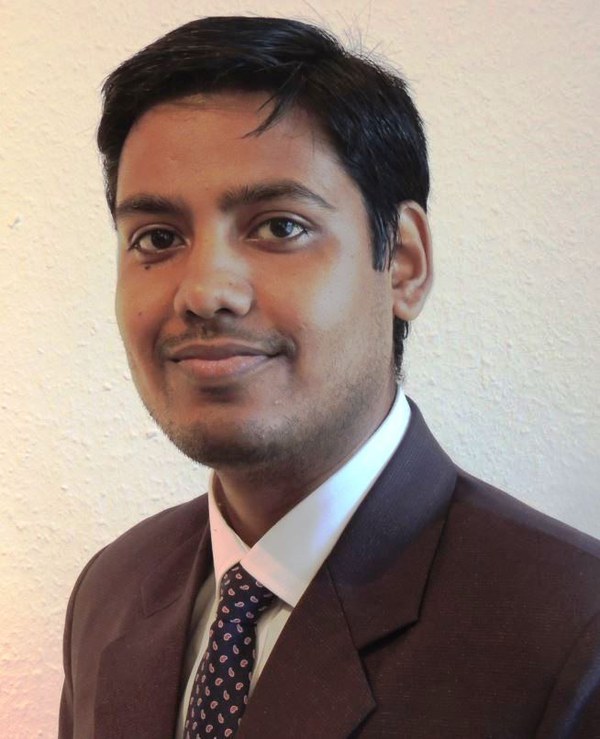
Dr. Vaibhav Vibhu is an Acting Team Leader in Material Development for Solid Oxide Cells (SOCs) at Forschungszentrum Jülich, Germany. He works at the Institute of Energy Technologies (IET), within the Fundamentals of Electrochemistry (IET-1) department, focusing on advanced electrochemical systems for energy conversion. Institution: Forschungszentrum Jülich Department: Fundamentals of Electrochemistry (IET-1) Academic Rank: Researcher His research concentrates on solid oxide electrolysis cells (SOECs) and fuel/electrode materials, including Ni-free alternatives (e.g., praseodymium/gadolinium-doped ceria), oxygen electrode development , and degradation analysis under industrial conditions. He explores seawater utilization and CO2 electrolysis for sustainable hydrogen production. Recent publications highlight innovations in perovskite-based electrodes , in situ transmission electron microscopy for catalytic mechanisms, and LSM electrode performance under multispecies electrolysis. His work bridges materials science , electrochemical stability , and industrial scalability .
Dr Selda Ozkan is a Research Fellow at the School of Chemistry, University of St Andrews. Her work focuses on advanced materials for energy conversion and biomedical applications, particularly involving titanium dioxide (TiO₂) nanotube arrays and perovskite oxides. She investigates nanotube spacing effects on cell behavior, catalyst design for fuel cells, and photocatalytic hydrogen generation. Her research bridges material engineering, electrochemistry, and nanotechnology to enhance energy storage systems and biomedical devices. Ozkan has contributed to optimizing nanomaterial architectures for applications in supercapacitors, dye-sensitized solar cells, and bone tissue engineering. Key research interests include studying how nanotube geometry influences electrochemical performance, developing novel catalysts for oxygen reduction reactions, and exploring biomaterial surface interactions with macrophages and osteoblasts. Her interdisciplinary approach integrates synthesis, characterization, and application testing to advance sustainable energy solutions and regenerative medicine. Publications highlight innovations in spaced TiO₂ nanotube arrays for high-performance supercapacitors, platinum nanoparticle exsolution from perovskite oxides for fuel cells, and biocompatibility studies of nanotopographies. These contributions underscore her expertise in functional nanomaterials for both energy and biomedical domains.
Professor Stephen Skinner is a Professor at Imperial College London's Department of Materials within the Faculty of Engineering. He holds the CeresPower/RAEng Research Chair in Electrochemical Devices for a Zero Carbon Economy since 2021. His research focuses on advanced materials for energy technologies, particularly solid oxide fuel cells, high-temperature electrolysers, and proton-conducting oxides. Collaborations span European, Canadian, and Japanese institutions, notably through projects like Hermes (proton transport studies) and Epistore (hydrogen production in thin-film cells). Skinner leads the Skinner Research Group, emphasizing in-situ characterization using neutron/synchrotron techniques and structural-electrochemical property correlations. He is affiliated with the Energy Futures Lab and Institute for Molecular Science and Engineering. Notable recognitions include Fellowships from the Royal Society of Edinburgh, Royal Society of Chemistry, and professional engineering bodies. Key grants include EPSRC-JSPS collaborations and EU-funded initiatives. His work addresses interfaces in sodium nickel chloride batteries and exsolution-derived catalysts. Recent research highlights include designing low-temperature solid-state electrochemical cells and robotic fabrication advancements for clean energy systems.
Dr Dragos Neagu is a Research Fellow at Newcastle University , specializing in advanced materials for energy and environmental applications. His work focuses on perovskite membranes , exsolution mechanisms , and catalytic nanoparticle engineering , particularly for greenhouse gas conversion and hydrogen production. Key research themes include: Designing Fe-based and Ni-based perovskite catalysts for high-selectivity CO2 reduction Exploring exsolution-infiltration hybrid strategies to enhance redox stability and methane conversion Investigating alumina coatings to mitigate sulfur poisoning in membrane systems Developing single-pore visualization techniques for membrane permeation analysis Advancing bimetallic nanoparticle synthesis for CO oxidation and syngas generation His publications (2017-2024) demonstrate expertise in solid oxide electrochemistry, nanoparticle engineering, and carbon capture technologies, often collaborating with Professor Ian Metcalfe and colleagues on projects involving reverse water-gas shift , CO2 co-electrolysis , and low-temperature methane conversion .
Iga Szpunar is an Assistant Professor at the Institute of Nanotechnology and Materials Engineering, Gdańsk University of Technology, Faculty of Electronics, Telecommunications, and Informatics. Her research focuses on advanced materials for electrochemical applications, particularly proton ceramic electrochemical cells (PCECs) and mixed-conducting oxides. Key Research Areas: Perovskite oxides, protonic conductivity, thermochemical expansion, oxide nanoparticle exsolution, and defect chemistry. Collaborations: Active partnerships with researchers like R. Strandbakke, M. Gazda, and J. M. Serra. Publications: Contributions to Acta Materialia , Journal of Materials Chemistry A , and Dalton Transactions on material properties for energy technologies. Email: iga.szpunar@pg.edu.pl Her work addresses critical challenges in energy storage and conversion, including stability under high-pressure steam and nanoparticle engineering for enhanced electrochemical performance.
Dr. Jun Mei is a Lecturer in Materials Science at Queensland University of Technology, working within the Centre for Materials Science. His research focuses on the design and synthesis of advanced nanomaterials for energy conversion and storage devices, with particular emphasis on addressing current energy and environmental challenges through innovative materials solutions. PhD in Materials Science from Queensland University of Technology (2019) Associate Lecturer in Materials Science at QUT Investigator in Centre for Materials Science Member of Australian Smart Energy Council Member of Australian Nanotechnology Network Dr. Mei's research interests span advanced materials science with a strong focus on sustainable energy solutions. He specializes in two-dimensional materials, battery design, and energy storage technologies, particularly focusing on how nanomaterial design can address the current energy and environment crisis. His work aims to bridge knowledge gaps in advanced two-dimensional materials and energy storage fields while developing practical battery design solutions to meet sustainable energy demands. Analysis of Dr. Mei's recent publications reveals a strong trend toward developing novel 2D/2D heterostructures for energy applications, with particular emphasis on battery technologies, electrocatalysis, and sustainable materials. His research spans fundamental materials science to practical applications, with many papers appearing in high-impact journals like Advanced Materials and Energy Storage Materials. Notably, two of his papers have been selected as ESI Highly Cited Papers and two highlighted as Frontispiece in Advanced Materials. 2019 Outstanding Doctoral Thesis Award at QUT Higher Achiever HDR Student recognition Membership in Australian Smart Energy Council Membership in Australian Nanotechnology Network Membership in The Minerals, Metals & Materials Society (USA) Dr. Mei serves on the editorial boards of seven journals, including three Q1 SCI-indexed journals such as Frontiers in Energy Research and Heliyon, and acts as a reviewer for over ten SCI-indexed journals. His research has attracted significant attention, with 23 SCI-indexed papers and one book chapter to his name, including 18 as first author. He has been instrumental in mentoring students and fostering research collaborations within the Centre for Materials Science, particularly through his role as assistant leader in the Smart Oxide Group. Within QUT's Centre for Materials Science, Dr. Mei actively explores cross-disciplinary collaboration opportunities with fundamental research expertise to strengthen relationships between academic and industrial communities. His work bridges fundamental research with practical applications, contributing to Australia's growing expertise in sustainable materials science and energy technologies through innovative materials design for energy conversion and storage devices.
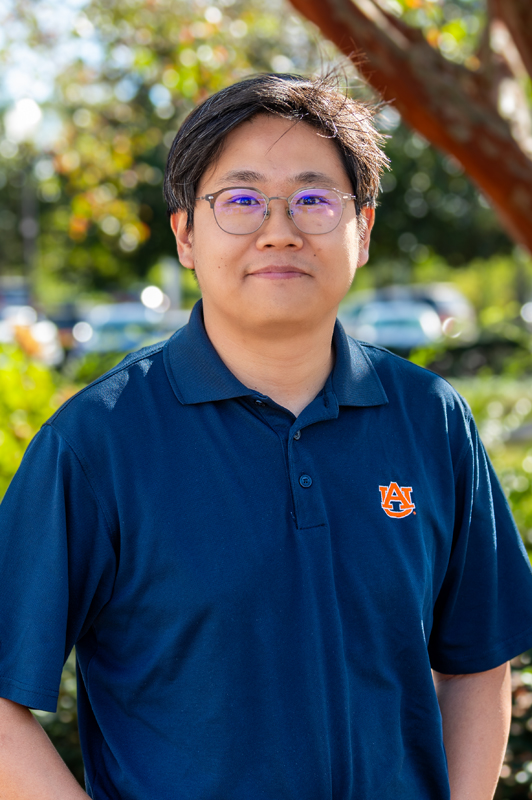
Tae-Sik Oh is an Associate Professor in the Department of Chemical Engineering at Auburn University's Samuel Ginn College of Engineering, where he conducts research in energy and environmental applications. His educational background includes: Ph.D. in Materials Science from the California Institute of Technology M.S. in Materials Science from the California Institute of Technology M.S. in Materials Science and Engineering from Seoul National University B.S. in Materials Science and Engineering from Seoul National University Dr. Oh's research spans heterogeneous catalysis , CO2 capture and utilization , membrane reactors , and electrochemical systems . His group investigates solid-gas, solid-liquid, and solid-solid interface phenomena to develop solutions for carbon management, renewable energy, and environmental remediation. Key areas include filtration membranes, fuel cells, and thermoelectric materials, with a strong emphasis on translating fundamental science into practical applications. Analysis of his recent publications (2023-2025) reveals a strong focus on carbon capture technologies (e.g., calcium-based sorbents), catalytic processes for biomass conversion , and advanced materials for environmental remediation (particularly PFAS destruction). His work increasingly integrates electrochemical methods and nanomaterials engineering to address energy and sustainability challenges. His scientific recognition includes: KIChE President Young Investigator Award Dr. Oh participates in significant collaborative research initiatives, including a $1.88 million DOE project targeting carbon dioxide reduction in pulp and paper mills (as part of Zhihua Jiang's team) and hydrogen energy research aimed at greenhouse gas reduction. His group actively mentors students and secures funding for cutting-edge projects in sustainable engineering. The Oh Research Group maintains an active laboratory focused on interfacial phenomena, with capabilities in catalyst synthesis, membrane development, and electrochemical characterization. They regularly present findings at major conferences like AIChE and collaborate across disciplines to tackle real-world energy and environmental problems.
Liyuan Fan is a Senior Lecturer in the Department of Chemical Engineering at James Cook University. His research focuses on renewable energy systems, fuel cell technology, biomass gasification, and materials investigations. He has secured significant grants including the European Horizon 2020 and Bill-Melinda Gates Foundation grants, and has led interdisciplinary projects in Europe and Australia. Education: Not explicitly listed but inferred through professional experience in Australian, Asian, and European institutions. Teaching: Expertise in science and engineering subjects, including advising on exchange study programs. Research: Specializes in mathematical modeling for fuel cells, gas cleaning technology, and electrochemical systems. His work emphasizes sustainable energy solutions and material innovation. Recent publications highlight advancements in electrocatalyst design, solid oxide fuel cell optimization, and gasification systems. Collaborations span industry and academic partners across multiple continents. Grant funding and project leadership demonstrate expertise in translating research into practical energy solutions. Supervision of undergraduate, master’s, and PhD students underscores his commitment to training the next generation of engineers and scientists.
Dr. Xiangling Yue is a Rutherford Fellow and Researcher at the School of Chemistry, University of St Andrews. Her work focuses on energy materials and engineering in solid oxide cells (SOCs), including fuel cells, CO₂ electrolysis, and green hydrogen production. She holds a M.Eng. (2009) and Ph.D. (2014) from the Dalian Institute of Chemical Physics, Chinese Academy of Sciences, under Prof. John Irvine’s supervision. Her research emphasizes exsolution materials, nanomaterial optimization via high-temperature electrolysis, and advanced characterization techniques. Key research areas include: solid oxide fuel cells (SOFCs), solid oxide electrolysis cells (SOECs), ceramic processing, and electrochemical material design. Her projects involve developing alternative cathodes and fuel electrodes, enhancing CO₂ electrolysis efficiency, and exploring nanomaterial applications. She has secured an EPSRC UKRI Innovation Fellowship (2018) to advance independent research. Education: M.Eng., Dalian Institute of Chemical Physics, Chinese Academy of Sciences (2009) Ph.D., Dalian Institute of Chemical Physics, Chinese Academy of Sciences (2014) Her publications highlight advancements in nanoparticle exsolution, electrode materials, and electrolyte compatibility. Awards include the prestigious Rutherford Fellowship, underscoring her contributions to sustainable energy technologies.
Jonathan Polfus is an Associate Professor at the Department of Chemistry, University of Oslo. His research focuses on Materials Science, Solid State Ionics, and Electrochemistry, particularly exploring defect chemistry, proton conductors, and energy conversion technologies. He holds a PhD from the University of Oslo (2012) and has been a Visiting Researcher at MIT (2017) and a Research Scientist at SINTEF (2012–2021). His work investigates advanced materials for applications in proton ceramic electrochemical cells, hydrogen storage, and solid-state batteries. He teaches courses on materials science (MENA1001) and inorganic chemistry (KJM1121). Education: PhD in Chemistry, University of Oslo (2009–2012) Research Stay at Kyoto University (2012) His research interests include the design of ceramic membranes, exsolution of nanoparticles, and understanding grain boundary phenomena in energy-related materials. He has received the Yara Birkeland Award in Chemistry (2013). His lab contributes to projects like SOLARIS and COMICON, focusing on sustainable energy technologies. Key publications highlight advancements in oxygen exchange kinetics, hydride ion diffusion, and defect engineering in materials like BaZrO₃ and perovskites. Collaborations span institutions such as MIT, Kyoto University, and Kyoto University, addressing challenges in proton conductivity and electrochemical interfaces.
Dr Evangelos Papaioannou is a Research Fellow at Newcastle University specializing in membrane technology and catalysis for carbon capture and energy applications. His work focuses on developing advanced materials, particularly molten-carbonate membranes and exsolution-based catalysts, for efficient gas separation and conversion processes. His research spans Membrane Technology , Carbon Capture , Catalysis , Materials Science , Chemical Engineering , and Energy Materials . He has pioneered innovations in CO 2 separation membranes, including tuning ionic/electronic conducting phases in molten-carbonate systems and applying freeze-cast ceramic supports to enhance permeability. His catalysis research leverages exsolution techniques to create nanoparticle catalysts on perovskite oxides for reactions like NO x reduction and hydrogen production. Analysis of his 2021-2025 publications reveals a dominant focus on enhancing CO 2 permeability/selectivity through novel membrane architectures and developing exsolved nanoparticle catalysts. Key trends include room-temperature plasma exsolution, non-PGM catalysts for diesel emission control, and humidity-driven direct air capture systems, demonstrating strong interdisciplinary collaboration with Professor Ian Metcalfe's group. Scientific awards: None mentioned in the provided text. Advising and grants: No information available regarding student supervision or research funding in the provided text. Labs and teams: Dr Papaioannou operates within Newcastle University's energy materials research ecosystem, primarily collaborating with Professor Ian Metcalfe's group on membrane and catalysis projects. His work involves specialized facilities for membrane fabrication, plasma exsolution, and gas permeation testing, though specific lab names are not disclosed in the source material.
Marios Ioannidis serves as Department Chair and Professor specializing in transport phenomena within porous materials. His research bridges fundamental pore-scale processes with macroscopic engineering applications across energy, environmental, and materials science domains. Education: Dipl. Eng. from University of Patras, Greece PhD from University of Waterloo His research focuses on pore-scale transport mechanisms in complex porous systems. Key areas include characterization of vuggy carbonate reservoirs using multi-scale experimental probes (NMR, SEM, mercury porosimetry), modeling of NAPL dissolution dynamics in contaminated aquifers, and optimization of gas diffusion layers for PEM fuel cells. His work integrates stochastic microstructure modeling with experimental validation to predict macroscopic properties like capillary pressure and mass transfer rates. Analysis of his 15 most recent publications (2004-2015) reveals consistent emphasis on porous media characterization techniques and multi-scale transport modeling . Dominant themes include fuel cell water management (22% of articles), NAPL remediation (27%), and microstructure reconstruction (33%), with strong methodological focus on pore network simulations and multi-modal experimental validation. No scientific awards were documented in the provided materials. His collaborative research involves extensive experimental work using glass micromodels, NMR relaxometry, and pore-network simulations. Current projects address gas bubble nucleation in supersaturated solutions, surfactant-enhanced contaminant dissolution, and capillary properties of fuel cell components, with applications in hydrocarbon recovery and clean energy systems.
Dr. Christian Lenser is a researcher at Forschungszentrum Jülich GmbH, affiliated with the Institute of Energy Materials and Devices (IMD) and the Materials Synthesis and Manufacturing Processes (IMD-2) department. His work focuses on high-temperature fuel and electrolysis cells, particularly material development for oxygen ion conductors. He has contributed extensively to the understanding of solid oxide cell (SOC) materials, including degradation mechanisms and advanced fabrication techniques. Institution: Forschungszentrum Jülich GmbH Department: Materials Synthesis and Manufacturing Processes (IMD-2) Research interests include: Solid Oxide Fuel and Electrolysis Cells (SOFCs/SOECs) High-Temperature Ceramic Materials Electro-Chemo-Mechanical Coupling Metal Exsolution and Nanoparticle Engineering Interdiffusion in Multi-Layer Electrolytes Coating Technologies for Fuel Cell Components Recent publications highlight trends in: Developing durable coatings for interconnects Modeling oxygen chemical potential distribution Understanding microstructural degradation Advancing rapid sintering and screen-printing techniques Investigating bio-syngas-induced degradation Optimizing phase stability in perovskite electrodes
John Irvine is a Professor in Inorganic Chemistry at the University of St Andrews, where he is affiliated with the School of Chemistry, Institute of Engineering, Centre for Clean Energy Research, Centre for Energy Ethics, and Centre for Designer Quantum Materials. His research focuses on the development and characterization of inorganic materials with applications in energy technology, bridging solid state chemistry, condensed matter physics, and ceramics. His educational background includes: B.Sc. in Chemical Physics from the University of Edinburgh D.Phil. from the University of Ulster Professor Irvine's research interests span solid state chemistry , condensed matter physics , and ceramics , with a particular focus on developing new inorganic solids with electrochemical, electrical, and magnetic properties. His work investigates the relationships between stoichiometry, structure, and electronic/ionic transport properties, with the goal of optimizing materials for energy applications. He has developed expertise in solid state electrochemistry, electronic conductors (particularly superconductors), structural chemistry, and high temperature electrochemistry. Analysis of his recent publications reveals a strong focus on energy materials, particularly for battery technologies and fuel cells. His work spans lithium-ion conductors, sodium-ion battery materials, hydrogen storage, and catalytic processes for energy conversion. A notable trend is the development of novel synthesis techniques for creating advanced materials with precisely controlled properties. Professor Irvine has received numerous scientific awards, including: Commander of the Order of the British Empire (15 Jun 2024) 2023 Industry-Academia Collaboration Prize 1000Plan Professorship (2016) 100 Foreign experts in Fujian Province (2016) Beilby Medal from RSC, SCI, IOM (1999) Professor Irvine leads a research group of 15 working in Solid State Chemistry and Electrochemistry. He has supervised 43 research students and has secured significant funding through various projects including EXSOTHyC (Exsolution-Based Nanoparticles for Lowest Cost Green Hydrogen via Electrolysis), ECOLEFINS, UK NATIONAL CLEAN MARITIME RESEARCH HUB, ENSIGN, and UK-HyRES. His research has strong industrial collaborations with organizations including DERA, Tioxide, BG plc, Rolls Royce, Japan Storage Batteries, and Nissan. His laboratory at St Andrews boasts excellent facilities for Solid State Chemistry and Electrochemistry research, including a state-of-the-art Stoe powder X-ray diffractometer, Phillips diffractometers, TGA/DTA facility, Solartron impedance analyser, atmosphere-controlled tube furnaces, muffle furnaces, electrocatalytic testing rig, transmission electron microscopy, and high pressure synthesis facility.
Dr. Linsey Seitz is an Assistant Professor in the Department of Chemical and Biological Engineering at Northwestern University, affiliated with the Segal Design Institute. Her research focuses on electrochemical catalysts for sustainable energy applications. Ph.D. and M.S. in Chemical Engineering from Stanford University (Palo Alto, CA) B.S. in Chemical Engineering from Michigan State University (East Lansing, MI) Dr. Seitz's work investigates electrochemical materials for energy conversion and environmental remediation. Key areas include: Oxygen evolution catalysts for water splitting CO2 reduction electrochemistry Hydrogen production systems Electrochemical reactor design Catalyst stability and degradation mechanisms Nanoparticle exsolution for electrode fabrication Recent publications (2024-2025) demonstrate her focus on iridium oxide dynamics, perovskite catalysts, and novel electrochemical approaches for: Hydrogen peroxide production Cyclohexene oxidation Carbon dioxide reduction systems Catalyst durability in acidic media Notable scientific award: Helmholtz Post-doctoral Fellowship at Karlsruhe Institute of Technology