معرفی
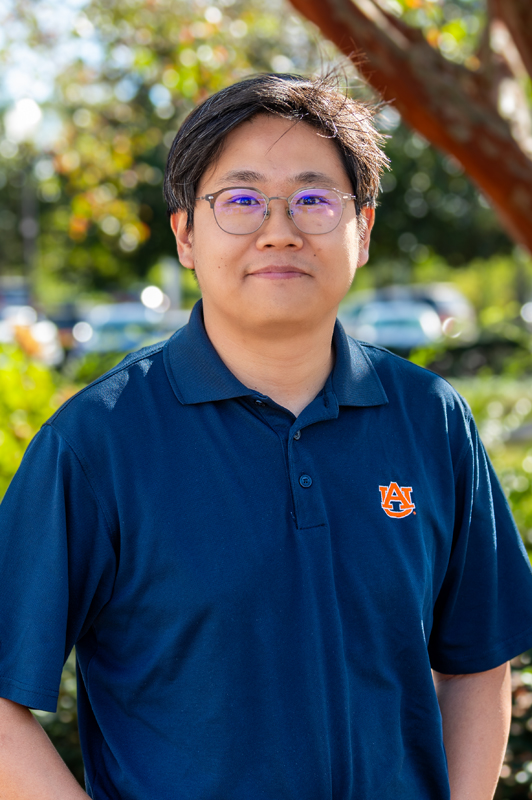
Tae-Sik Oh is an Associate Professor in the Department of Chemical Engineering at Auburn University's Samuel Ginn College of Engineering, where he conducts research in energy and environmental applications.
His educational background includes:
- Ph.D. in Materials Science from the California Institute of Technology
- M.S. in Materials Science from the California Institute of Technology
- M.S. in Materials Science and Engineering from Seoul National University
- B.S. in Materials Science and Engineering from Seoul National University
Dr. Oh's research spans heterogeneous catalysis, CO2 capture and utilization, membrane reactors, and electrochemical systems. His group investigates solid-gas, solid-liquid, and solid-solid interface phenomena to develop solutions for carbon management, renewable energy, and environmental remediation. Key areas include filtration membranes, fuel cells, and thermoelectric materials, with a strong emphasis on translating fundamental science into practical applications.
Analysis of his recent publications (2023-2025) reveals a strong focus on carbon capture technologies (e.g., calcium-based sorbents), catalytic processes for biomass conversion, and advanced materials for environmental remediation (particularly PFAS destruction). His work increasingly integrates electrochemical methods and nanomaterials engineering to address energy and sustainability challenges.
His scientific recognition includes:
- KIChE President Young Investigator Award
Dr. Oh participates in significant collaborative research initiatives, including a $1.88 million DOE project targeting carbon dioxide reduction in pulp and paper mills (as part of Zhihua Jiang's team) and hydrogen energy research aimed at greenhouse gas reduction. His group actively mentors students and secures funding for cutting-edge projects in sustainable engineering.
The Oh Research Group maintains an active laboratory focused on interfacial phenomena, with capabilities in catalyst synthesis, membrane development, and electrochemical characterization. They regularly present findings at major conferences like AIChE and collaborate across disciplines to tackle real-world energy and environmental problems.