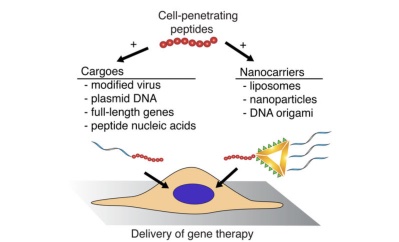
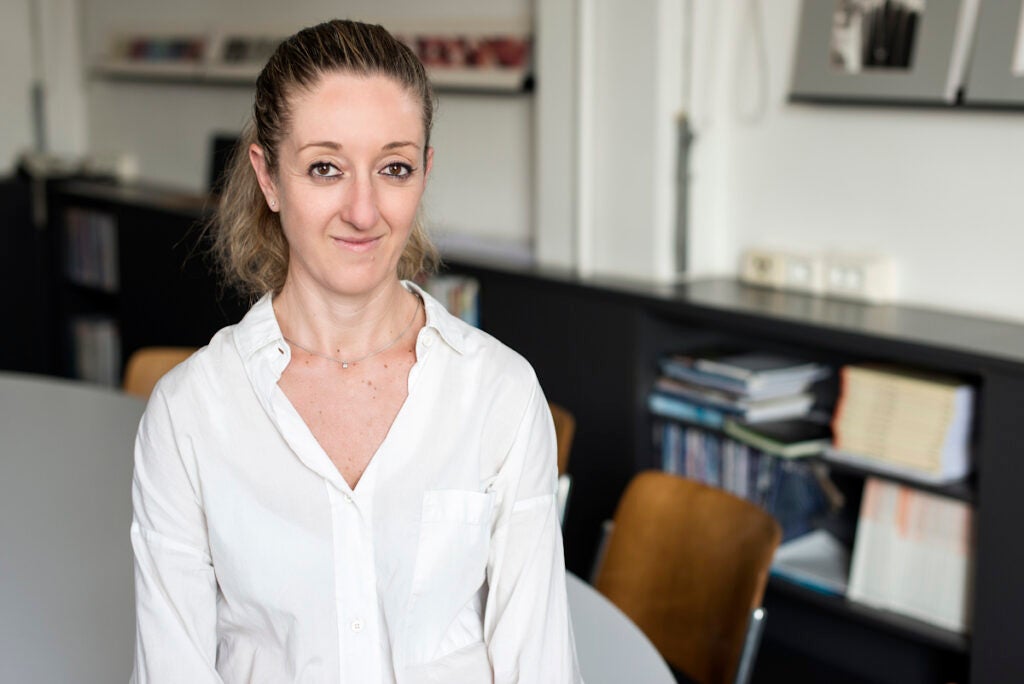
Dr. Ester Polo Tobajas is a Ramón y Cajal contract researcher at the University of Santiago de Compostela (USC), affiliated with the Department of Organic Chemistry and the Research Center in Biological Chemistry and Molecular Materials (CIQUS). Her work bridges organic chemistry and biomedical applications through nanotechnology. Education: PhD in Chemistry (2013) from the University of Zaragoza Supervisors: Dr. María Pilar Pina Iritia, Dr. María Valeria Grazú Bonavía Her research focuses on: Engineering nanocarriers for intracellular delivery Functionalization of metal-organic frameworks (MOFs) Thrombolytic therapies for ischemic stroke Biomolecular corona characterization Plasmonic nanoparticle applications Recent publications highlight biomedical trends in: MOF-based drug delivery systems Cell membrane-cloaked nanocarriers Thrombolytic nanotechnologies Photothermal therapy platforms Gold nanocluster synthesis She collaborates with interdisciplinary teams including: BioNanoTools Group (CIQUS) Colloid and Polymer Physics Group (GFCP) Nonlinear Physics Group (GFNL)
Rebecca Taylor is a Professor in the Department of Mechanical Engineering at Carnegie Mellon University's College of Engineering, with courtesy appointments in Biomedical Engineering and Electrical and Computer Engineering. Her research spans DNA nanotechnology, advanced manufacturing, and bio-inspired micro/nanosystems, focusing on integrating self-assembly with top-down microfabrication. 2013 Ph.D. in Mechanical Engineering (minor in Bioengineering), Stanford University 2010 MS in Mechanical Engineering, Stanford University 2001 BS in Mechanical Engineering with Robotics Certificate, Princeton University Her research centers on: (1) DNA nanotechnology for molecular and cellular mechanobiology (AFOSR YIP, NIH R21), (2) bio-inspired materials using gammaPNA (NSF CAREER), and (3) biomanufacturing with DNA robotics. She also develops workforce training tools like voice assistants for skill mastery. Recent publications highlight DNA microswimmers, compliance in colloidal assemblies, and generative design for origami nanostructures. Awards include the NSF CAREER Award and Ansys Career Development Chair. She advises interdisciplinary students and leads the Microsystems and Mechanobiology Lab, collaborating with Biomedical Engineering, Chemistry, and Cardiovascular Medicine teams. NSF CAREER Award Ansys Career Development Chair Lab members include postdocs (Grace Rohaley, Sarah Weintraub), Ph.D. students (Taryn Imamura, Vismaya Walawalkar), and undergraduates (Irene Yap). She teaches courses like Nanoscale Manufacturing Using Structural DNA Nanotechnology and Modern Manufacturing in Steeltown , emphasizing design and automation.
Artem Bakulin is an Associate Professor in the Department of Chemistry at Imperial College London, within the Faculty of Natural Sciences. His research focuses on ultrafast laser spectroscopy to study molecular-scale dynamics in organic optoelectronic materials, including plastic solar cells, flexible transistors, and quantum-dot photodetectors. He leads the Ultrafast Optoelectronics Group, affiliated with the Centre for Processable Electronics, Energy Futures Lab, and Quantum Engineering initiatives. Bakulin holds a PhD from the University of Groningen (2009) and prestigious fellowships such as the Royal Society University Research Fellowship and ERC Starting Grant. His awards include the RSC Marlow Award (2018) and the Leverhulme Trust Philip Leverhulme Prize (2019). His work spans fields like condensed matter physics, optical physics, and materials engineering, with a focus on advancing nanoscale optoelectronics and energy materials. Education: BSc (2005) from Lomonosov Moscow State University, PhD (2009) from University of Groningen. Key career milestones include NWO Rubicon and Veni fellowships (2010–2012), Royal Society funding (2014), and Imperial College appointment (2016). Research interests include charge-transport in proteins, ultrafast transistor switching, and single-molecule spectroscopy. His lab actively recruits students/postdocs exploring nanoscale physics and materials science intersections.
Dr. Kun Wang is an Assistant Professor of Physics in the College of Arts & Sciences at the University of Miami, with a secondary role in Chemistry. His research focuses on nanoscale optoelectronics, quantum transport, and energy conversion at the atomic and molecular levels. He leads the Wang Research Group, which explores interdisciplinary areas including physics, chemistry, biology, and engineering. Notable achievements include developing the world's most conductive molecules, highlighted in JACS and multiple media outlets. His work has received awards such as the UM Provost's Research Award and NSF Graduate Fellowship support. Dr. Wang actively engages in outreach, organizing events like Physics Fun for public education and mentoring students through programs like the Young Scholar Initiative. His lab has moved to UM since 2023 and collaborates globally on topics like Kagome superconductors and molecular-scale energy devices. Recent highlights include JACS cover articles and invited talks at international conferences. His academic contributions span over 50 publications, with focuses on molecular junctions, nanodevices, and sustainable energy materials. He serves on journal editorial boards and has secured funding from NSF and DOE.
Aaron Wade is an Associate Professor in the Department of Physics at the University of West Florida, part of the Hal Marcus College of Science and Engineering. His work bridges experimental condensed matter physics and innovative physics education research. He is actively involved in teaching, research, and STEM outreach. Education: Ph.D. in Physics, Florida State University B.S. in Physics, University of West Florida Research Interests: Aaron Wade's research spans two major areas. In experimental physics , he investigates quantum cascade lasers, 2D monolayer films using Langmuir-Blodgett techniques, and nano-device characterization through optical and electrical methods. In physics education research (PER) , he focuses on optimizing student learning through active engagement strategies, implementing the SCALE-UP teaching model, and reducing student aversion to STEM. His outreach includes founding the Future Physicists of Florida and the West Florida Chapter of Women in Science, and creating the Discovery Spot for hands-on STEM+C learning. Publication Trends: His publications reflect a dual focus on advanced optoelectronic devices and pedagogical innovation. Key themes include quantum cascade lasers under magnetic fields, valence band engineering, and student-centered teaching methodologies. His work appears in journals such as Nature Photonics , Physical Review A/B , Applied Physics Letters , and Journal of Computing Sciences in Colleges , indicating strong interdisciplinary impact across physics, engineering, and education. Scientific Awards and Recognition: No specific awards listed in the text. Advising and Grants: While no formal list of advisees or funded grants is provided, Dr. Wade mentors students through undergraduate research and leads several educational initiatives. He has developed and implemented curricular innovations and outreach programs with measurable community impact. His leadership in founding interdisciplinary STEM organizations suggests active engagement in grant-writing and collaborative academic projects. Labs and Teams: Dr. Wade leads research involving nano-device fabrication via spin-coating, thermal deposition, and Langmuir-Blodgett techniques. Samples are characterized using XRD, dielectric measurements, transport studies, and optical spectroscopy. He collaborates with colleagues from FSU and FAMU through the Future Physicists of Florida initiative and runs the Discovery Spot program for K-12 STEM engagement.
Dr. Laurin Ostermann is a Senior Scientist at the Institute of Theoretical Physics within the University of Innsbruck , specializing in quantum optics and atomic physics. He leads research in cavity quantum electrodynamics, focusing on collective radiation phenomena like subradiance and superradiance. His work integrates theoretical modeling with experimental applications in quantum metrology, optical lattice clocks, and nanophotonics. Active since at least 2012, he has contributed to breakthroughs in time-bin entanglement, quantum emitter arrays, and protected-state spectroscopy. Research Interests: Quantum Optics: Exploring collective radiation effects in atomic ensembles and nanostructured systems. Atomic Physics: Developing precision measurement techniques using clock atoms and Ramsey interferometry. Nanophotonics: Designing coherent light sources and energy transfer mechanisms in quantum emitter arrays. Key Contributions: His 2025 work on self-ordering clock atom ensembles demonstrated novel cooling and lasing mechanisms. Recent studies (2024) advanced temperature-enhanced quantum metrology and waveguide-based excitation transport. The 2018 QuantumOptics.jl framework has become a standard tool for simulating open quantum systems. Labs & Teams: Leads the Cavity Quantum Electrodynamics group, collaborating on projects ranging from superradiant lasers to nanoscale coherent light sources. Maintains a personal research portal at ostermann.ws .
Juan Fraire is a researcher affiliated with the Smart Nano-Bio-Devices group, focusing on the intersection of nanotechnology and biomedical engineering. His work emphasizes the development of innovative photoporation techniques for cell engineering, magnetic nanomotors for therapeutic applications, and plasmonic nanomaterials for biosensing and imaging. Key research areas include: Photoporation using polydopamine and graphene quantum dots Magnetic and enzymatic nanomotors for drug delivery Plasmonic probes in biosensors and cellular imaging Photothermal mechanisms for biofilm and vitreous opacity treatments Recent publications highlight his contributions to engineering NK cell therapies, enhancing macromolecule diffusion in viscous media, and developing nanoscale tools for intracellular delivery. His studies span applications in cancer immunotherapy, wound healing, and ophthalmology.
Professor Justin Cooper-White is Head of School and Professor of Bioengineering at the School of Chemical Engineering, University of Queensland. He holds affiliate appointments at the Australian Institute for Bioengineering and Nanotechnology (AIBN) and serves as Director of the Australian National Fabrication Facility-Queensland Node, Research Director of the Herston Biofabrication Institute, and co-Director of the Australian Organoid Facility. His leadership extends to past presidencies of the Australasian Society for Biomaterials and Tissue Engineering and Australian Society of Rheology. Cooper-White's research focuses on decoding microenvironmental cues governing stem cell behavior and tissue genesis, with emphasis on aging-related tissue dysfunction. His team develops innovative biomicrodevices, engineered surfaces, and advanced scaffolds for regenerative applications. Key research domains include: Smart biomaterials for tissue engineering Mechanotransduction signaling pathways Stem cell niche engineering Microfluidic platforms for high-throughput screening Nanoparticle-based tissue rejuvenation His publication portfolio demonstrates strong interdisciplinary integration across biomedical engineering, materials science, and computational biology. Recent work emphasizes multiscale tissue modeling, stem cell reprogramming, organoid systems, and advanced biomaterial characterization. Biomechanics and mechanobiology emerge as unifying themes, with significant focus on spinal disorders and cardiovascular aging. Awards and recognitions include: Fellowship in the International Union of Societies for Biomaterials Science and Engineering Fellowship in the Queensland Academy of Arts and Sciences CSIRO Office of the Chief Executive Science Leader Visiting Professorships at ETH Zurich and Politecnico di Milano He has secured over $57M in competitive funding, including ARC Discovery Projects and NHMRC grants. Current doctoral supervision spans regenerative engineering, stem cell biomanufacturing, and neural tissue regeneration. He leads international collaborations with institutions including MIT, Stanford, ETH Zurich, and Max Planck Institute, while maintaining industry partnerships with Unilever, Nestle, and Syngenta. As Editor-in-Chief of APL Bioengineering, Cooper-White shapes publication standards in the field. His laboratory develops transformative technologies including patented microbioreactor arrays and tissue engineering scaffolds commercialized through Australian and US ventures.
Prof. Björn Sothmann is a Principal Investigator at the Collaborative Research Centre 1242, affiliated with the University of Duisburg-Essen. He leads the project A02 Charge Carrier Dynamics in Nanostructures , focusing on quantum transport and condensed matter physics. His research explores quantum dynamics in nanoscale systems, including superconductors, quantum dots, and thermoelectrics. Key interests include: Nonequilibrium electron dynamics in heterostructures Superconductor-quantum dot hybrids Floquet engineering in time-periodic systems Full counting statistics and quantum coherence His 15 most recent publications (2017–2024) reveal a consistent focus on quantum transport, superconductivity, and nanostructure dynamics. Predominant themes include real-time quantum measurements, pair-amplitude dynamics in hybrid systems, and advanced statistical methods like Lee-Yang zeros and factorial cumulants.
Yamuna Krishnan is the Louis Block Professor of Chemistry at the University of Chicago, where she leads innovative research at the intersection of chemistry, biology, and nanotechnology. Her work focuses on developing DNA-based nanodevices for quantitative chemical imaging of living systems, with particular emphasis on mapping the chemical composition of cellular organelles. Dr. Krishnan's research interests center on understanding how the lumenal chemical composition of organelles—optimized over evolutionary timescales—impacts organelle function, cell physiology, and ultimately organism behavior. Her lab has pioneered several groundbreaking DNA nanodevices including CalipHluor for calcium measurement in acidic organelles, Clensor for chloride ion measurement, and z-cHOClate for measuring pH and hypochlorous acid levels in phagosomes. Her recent work published in Science Advances (2024) identified the protein responsible for calcium entry into lysosomes, a discovery with significant implications for understanding and potentially treating neurodegenerative disorders like Parkinson's and ALS. The Krishnan lab's publications span diverse areas including organelle-specific ion dynamics, DNA nanotechnology applications, and quantitative chemical imaging methodologies. Major Scientific Awards: Infosys Prize in Physical Sciences (2017) Shanti Swarup Bhatnagar Award, Chemical Sciences (2013) Cell's 40 under 40: next generation of thinkers in biology (2014) Innovator of the Year, Association of Women in Science, Chicago (2016) Scientific Innovations Award from the Brain Research Foundation (2015) Dr. Krishnan mentors a diverse team of graduate students, postdocs, and technicians working across multiple model systems including C. elegans , zebrafish, and mammalian cells. Her lab has received funding from prestigious sources including the National Institutes of Health, Human Frontier Science Program, and Ono Pharma Foundation. The Krishnan Lab is part of the Gordon Center for Integrative Science at the University of Chicago, where they continue to push the boundaries of quantitative chemical imaging in living systems.
Dr. Nick Reynolds is a Vice Chancellor’s Senior Research Fellow at RMIT University's School of Science , focusing on interdisciplinary research in self-assembled nanomaterials. His work spans tissue engineering, regenerative medicine, biosensing, and understanding amyloid-related disease mechanisms. He collaborates with MedTech industry partners, clinicians, and government agencies to translate fundamental research into commercial therapies and devices, including partnerships with CELLINK for bioprinting applications. PhD in Chemistry & Biology (University of Sheffield, 2009) Previous roles at University of Zurich, CSIRO, Swinburne University, La Trobe University Research interests include: Self-Assembling Biomolecules Protein Aggregation in Viral Infections (e.g., SARS-CoV-2, influenza) Bioprintable Smart Bioinks Piezoelectric and Photonic Peptide Materials 3D Cell Culture Systems Recent publications highlight his expertise in: Engineering cross-α amyloid structures for piezoelectric applications Developing self-healing bioinks with tunable stiffness Investigating SARS-CoV-2 amyloid polymorphs and neurotoxicity Designing mechano-responsive biopolymers for cell recovery Scientific awards include: Swiss National Science Foundation Fellow (2012–2015) Nicholas Hoogenraad Fellow at La Trobe University (2019–2025) Dr. Reynolds leads an ARC Discovery Project (DP250101215) on viral protein aggregation and contributes to the ARC Research Hub MOBIUS (IH240100013) as a co-chief investigator. His lab explores applications in cartilage regeneration, neural tissue engineering, and point-of-use biosensor development.
Rosa Di Felice is a Professor of Physics and Astronomy and Quantitative and Computational Biology at the University of Southern California. Her career spans prestigious roles at institutions including CNR-NANO Institute (Modena, Italy) and Xerox Palo Alto Research Laboratory. She specializes in computational methods bridging quantum physics and biology. PhD in Physics, University of Rome Tor Vergata (1992-1995) BSc/MSc in Physics, University of Rome Tor Vergata (Summa cum Laude, 1986-1992) Her research focuses on quantum computing for biological systems , DNA-based nanodevices , and protein-surface interactions . She has pioneered studies on charge transfer in DNA, CRISPR/Cas9 dynamics, and quantum nanomaterials using molecular dynamics and density functional theory. Recent publications highlight quantum algorithms for corrosion inhibition , electrostatics in CRISPR complexes , and topology-driven charge transport in G-quadruplexes . Her work integrates quantum computing , molecular modeling , and nano-bio interfaces . She contributes to scientific leadership as Associate Editor for European Physical Journal B and Scientific Reports , and has organized workshops on quantum computing and DNA nanotechnology.
Djalal Benyahia is a researcher affiliated with the Faculty of Advanced Technologies and Chemistry at the Military University of Technology in Warsaw. His work focuses on advanced semiconductor materials and optoelectronic devices for infrared and terahertz applications. While specific educational details are not provided in the scraped text, his research output and collaborations demonstrate expertise in molecular beam epitaxy (MBE) growth, superlattice structures, and infrared detector optimization. Research Interests : Applied Physics, Material Science, Infrared Technology, Semiconductor Physics, Optoelectronics, Nanotechnology, Photonics, Electronic Engineering. Key Trends : Recent publications emphasize quantum dot infrared photodetectors, THz photoconductive antennas, type-II superlattice optimization, and surface passivation techniques for high-operating-temperature (HOT) detectors.
Vincent Noireaux is a Professor at the School of Physics and Astronomy at the University of Minnesota, Twin Cities. His research bridges biological physics and synthetic biology to develop cell-free transcription-translation systems and synthetic cell platforms . Current projects funded by the National Science Foundation and Department of Energy Collaborates with institutions in Israel, Romania, and Washington Expertise: Synthetic biology , cell-free systems , genetic circuits Research Focus : Develops quantitative models for in vitro gene expression and constructs synthetic cells using self-assembling systems . Key areas include biophysics , bioengineering , and biomanufacturing . Email: noireaux@umn.edu
Blanca Lapizco-Encinas is a Professor in the Department of Biomedical Engineering at the Kate Gleason College of Engineering, Rochester Institute of Technology (RIT). She holds a BS and MS from Instituto Tecnologico de Sonora (Mexico) and a Ph.D. from the University of Cincinnati. Her research focuses on microfluidic technologies for particle and cell manipulation, particularly using dielectrophoresis and electrokinetic methods. Dr. Lapizco-Encinas received her educational training at: BS, MS: Instituto Tecnologico de Sonora (Mexico) Ph.D.: University of Cincinnati Her primary research interests center around microfluidic devices for biomedical applications, with a particular focus on insulator-based dielectrophoresis (iDEP) for particle and cell separation. She has made significant contributions to the development of techniques for rapid pathogen detection, electrokinetic characterization of biological cells, and creation of electrokinetic libraries for cell identification. Her work spans fundamental research on electrokinetic phenomena to practical applications in medical diagnostics and environmental monitoring. Dr. Lapizco-Encinas has pioneered methods for separating and analyzing microorganisms, proteins, and nanoparticles using microfluidic platforms, with applications ranging from antibiotic resistance detection to cancer cell analysis. Dr. Lapizco-Encinas' publication record demonstrates a consistent focus on advancing dielectrophoresis techniques for biomedical applications. Her recent work (2019-2020) shows a strong emphasis on developing practical devices for pathogen detection, particularly for E. coli and other bacteria in bodily fluids. She has also expanded her research into creating comprehensive electrokinetic characterization libraries for biological cells and exploring three-dimensional microstructures for enhanced particle manipulation. Her publications frequently appear in high-impact journals like Analytical Chemistry, ACS Applied Materials & Interfaces, and Electrophoresis, where she also serves as an editor. Dr. Lapizco-Encinas has received numerous scientific awards and recognitions: National Science Foundation Grant for Development of Dielectrophoresis Chromatography (2017) Tomas Hirschfeld Scholar Award from FACSS (2016) First place in AES/BioMicrofluidics Art in Science competition (2016) Multiple cover features in the Journal Electrophoresis (2016) First and second place awards in undergraduate poster competitions (2015-2016) Multiple travel grants for students to attend scientific conferences Dr. Lapizco-Encinas actively mentors students at various levels, with numerous undergraduate and graduate students co-authoring publications with her. She has secured significant research funding, including an NSF grant for developing dielectrophoresis chromatography techniques. Her laboratory focuses on building microfluidic devices for biomedical applications, particularly for rapid pathogen detection and analysis. Current projects include developing techniques to distinguish antibiotic-resistant cells and improving lab-on-chip devices for clinical diagnostics, as highlighted in recent news articles from 2024-2025.