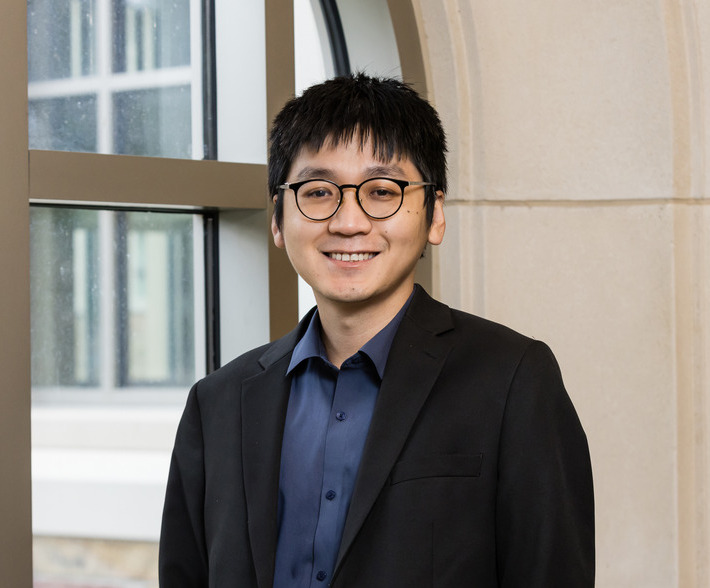
Jing Jiang is a prominent researcher at Singapore Management University, specializing in Natural Language Processing (NLP), Computational Linguistics, and Artificial Intelligence. His work spans diverse areas including Vision-Language Models, Machine Translation, Knowledge Graph Reasoning, Sentiment Analysis, and Social Media Discourse Modeling. Key contributions include frameworks for consistent client simulation in mental health counseling and counterfactual contrastive prefix-tuning for many-class classification. He has pioneered methods in zero-shot VQA with interpretable reasoning graphs , cross-lingual understanding with universal syntax , and modularized zero-shot architectures . His research often combines theoretical insights with practical implementations, as seen in works on stereotypical bias in vision-language models (VLStereoSet), tensorized self-attention for dependency modeling, and collaborative relation-augmented attention for knowledge graph completion. Jing Jiang's collaborations span global experts in NLP and AI, with co-authors from institutions like SMU, Waseda University, and Microsoft Research.
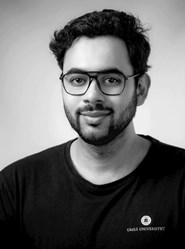
Arka Ghosh is a doctoral student and knowledge engineer at Umeå University , Department of Computing Science. He is affiliated with the AI for Data Management research group led by Prof. Dr. Diego Calvanese. Research focus: Virtual Knowledge Graphs (VKGs), heterogeneous data integration, and management of geospatial/raster data Email: arka.ghosh@umu.se Research Areas: Ontology-based data access (OBDA), semantic querying with SPARQL and NLP, Description Logic formalisms, raster/vector data processing, and temporal-spatial data modeling. Publications: Recent work presented at RuleML+RR 2024 and 2023 conferences includes extending VKG systems to handle large-scale satellite raster data and reformulating queries across heterogeneous data sources.
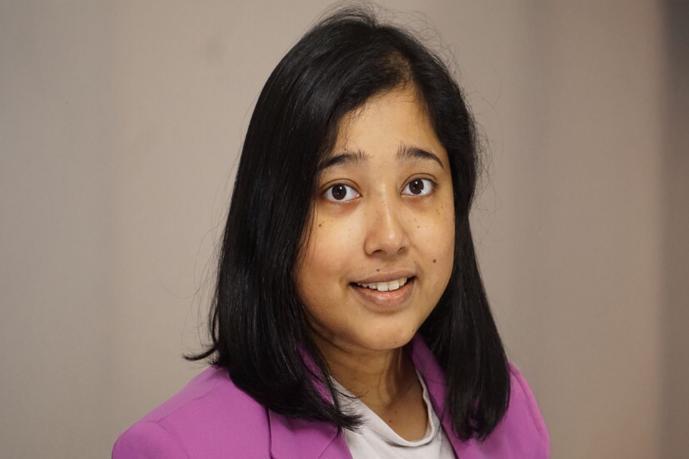
Dr. Procheta Sen is a Lecturer in Computer Science at the University of Liverpool's Faculty of Science and Engineering, Department of Computer Science, where she joined in 2022 as part of the Natural Language Processing research group. Her work focuses on developing transparent, fair, and accessible AI language models through explainability research. She earned her PhD from Dublin City University, Ireland (2021) under supervisor Gareth J.F. Jones, with affiliation at ADAPT Centre Ireland. Prior to Liverpool, she conducted postdoctoral research with Emine Yilmaz in University College London's Web Intelligence Group. Dr. Sen's research spans three explainability categories: post-hoc methods (feature attribution, counterfactuals), mechanistic interpretability (neural network circuit mapping), and intrinsic interpretability (human-readable model design). She targets diverse end-users including clinicians, legal experts, and laypersons, with applications in bias mitigation and socially responsible AI systems. Her work bridges Natural Language Processing, Machine Learning, and Information Retrieval to address real-world challenges in transparency and equity. Analysis of her 2023-2025 publications reveals dominant trends in LLM bias analysis, legal document processing, and adaptive conversational systems. Key themes include mechanistic interpretability for bias detection, retrieval-augmented generation for dialogue systems, and multilingual knowledge extraction—demonstrating consistent focus on making AI both technically robust and socially beneficial across domains like law and finance. Dr. Sen actively advises PhD student Lingfang Li (AAAI 2025 accepted work) and emphasizes compassionate talent development. Her open-source research has been deployed in legal sector applications, and she organizes the annual NLP for Social Good symposium fostering interdisciplinary collaboration for responsible AI. She leads initiatives including the 2025 virtual NLP for Social Good Symposium and collaborates with institutions like Nokia Bell Labs Cambridge, maintaining active research momentum in transparent AI systems.
Lorraine Li is an Assistant Professor in the Department of Computer Science at the University of Pittsburgh, affiliated with the Interdisciplinary Science Program (ISP) and the School of Computing and Information. She holds a PhD from the University of Massachusetts Amherst (2022) and conducted postdoctoral research at AI2's Mosaic team. Her work focuses on NLP, machine learning, and socially responsible AI systems. Education: PhD in Computer Science (UMass Amherst, 2022) Research explores evaluation frameworks for commonsense knowledge, model interpretability, and ethical AI applications in domains like education and law. Key interests include probabilistic models, long-tail reasoning, and geographic robustness in LLMs. Recent publications address confirmation bias in reasoning chains (ACL 2025), geographically diverse prompting (CVPR 2024), and uncommon scenario reasoning (NAACL 2024). She co-organized the AAAI 2024 Make symposium and serves on committees for ACL, EMNLP, and NAACL. Grants: Pitt Cyber funding (2024) Lab: Pitt NLP Seminar group
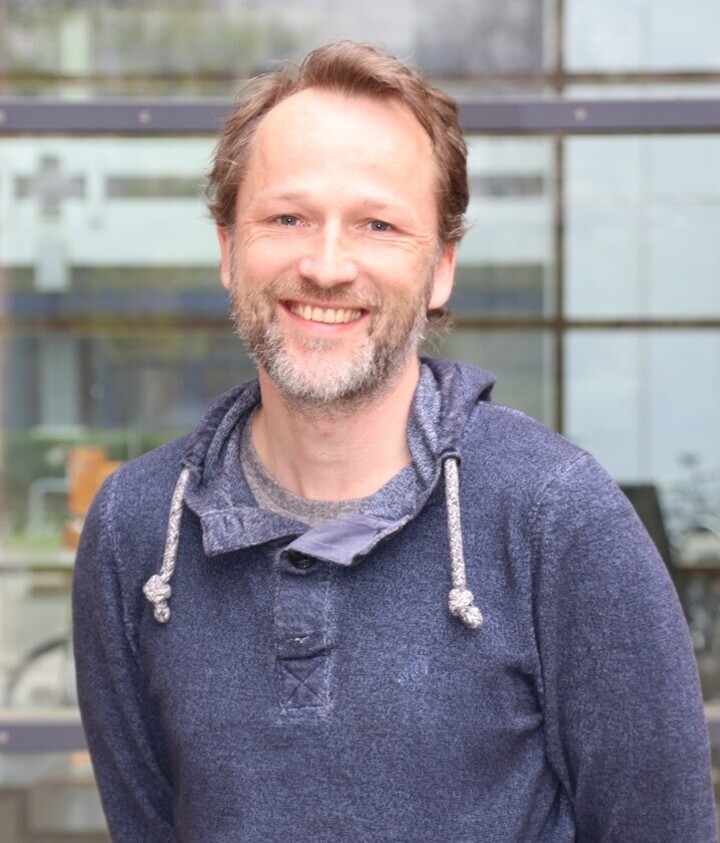
Christian Meilicke is a Researcher at the Data and Web Science Group (DWS) within the School of Business Informatics and Mathematics at the University of Mannheim. His work focuses on artificial intelligence, ontology matching, and knowledge graph completion, with recent contributions to rule-based methods and their applications in business process modeling. He is heavily involved in teaching, coordinating courses such as 'Modeling Business Processes' and 'Artificial Intelligence.' His research interests include the integration of open and structured knowledge, probabilistic reasoning frameworks, and improving the efficiency of knowledge base systems. He has explored topics like inductive logic programming, automated debugging of ontologies, and the use of Markov Logic Networks for root cause analysis in IT systems. In terms of trends, his recent publications emphasize combining symbolic rule-based approaches with machine learning for knowledge graph tasks, such as activity recommendation and link prediction. He also investigates explainability in embeddings and temporal forecasting in knowledge graphs. His work often bridges theoretical advancements with practical applications in business informatics and data integration. No scientific awards have been explicitly mentioned. Christian has advised no formal students listed here but has contributed to teaching and mentoring through his courses and tutorials. His research and teaching are closely tied to the DWS Group, which focuses on data-centric AI and semantic technologies.
Professor Francesca Toni is a Professor in Computational Logic at the Department of Computing, Faculty of Engineering at Imperial College London. She leads research in Artificial Intelligence, focusing on explainable AI (XAI), argumentation theory, and neuro-symbolic systems. Her affiliations include the Centre for eXplainable AI (XAI), Argumentation-based Deep Interactive eXplanations (ADIX), and the Human-Like Computing initiative. Her work integrates computational logic with machine learning to develop interpretable models for healthcare, robotics, and decision support systems. Recent research emphasizes conflict analysis in neural networks, argumentative ensembling, and object-centric learning frameworks. Her research interests span AI ethics, formal argumentation, and the integration of symbolic reasoning with deep learning. Key contributions include neuro-argumentative learning architectures, benchmarking explainability methods (XAI-Units), and frameworks for robust recourse in model multiplicity scenarios. She actively explores applications in biomedical fraud detection (Pub-Guard-LLM) and personalized decision support via gradual bipolar argumentation. Her publications highlight trends in explainable AI, with a focus on visual debates, counterfactual explanations, and causal structure learning. She has pioneered systems like ProtoArgNet for interpretable image classification and DR-HAI for dialectical reconciliation in human-AI interactions. Her work bridges theoretical foundations (e.g., ABA semantics) with real-world applications in healthcare and legal reasoning. Notable projects include ROAD2H—an open-source XAI approach for managing comorbidities—and Cafe for conflict-aware feature explanations. She has contributed to legal AI systems (LawGIBA) and causal discovery methods. Current efforts focus on neuro-argumentative machine learning and object-centric representation learning.
Bo Hui is an Assistant Professor of Computer Science at The University of Tulsa's College of Engineering & Computer Science. He received his Ph.D. in Computer Science and Software Engineering from Auburn University in 2023 and earned his B.S. in Computer Science from Xi'an Jiaotong University in 2013. Prior to his Ph.D., he worked as a senior software engineer in the industry. Education: Ph.D., Computer Science and Technology, Auburn University, 2023 B.S., Computer Science and Technology, Xi'an Jiaotong University, 2013 Dr. Hui's research focuses on data mining and machine learning, particularly in designing machine learning methods for complex real-world data while addressing social concerns such as privacy in AI. His work spans multiple application domains including traffic prediction, social recommendation systems, and biological data analysis. He has made significant contributions to graph neural networks, knowledge graph unlearning, and federated learning systems. Dr. Hui's publication record demonstrates a strong focus on machine unlearning (the 'right to be forgotten' in AI models), graph neural networks, and traffic prediction systems. His work bridges theoretical machine learning with practical applications, with a growing emphasis on privacy-preserving AI techniques. He frequently publishes in top-tier venues including ICCV, ICLR, KDD, and AAAI. Awards and Honors: NSF award #2348177 for machine unlearning research AAAI student scholarship award Dr. Hui currently advises two Ph.D. students (Ruimeng Ye and Yang Xiao) who began their studies in Fall 2024. His research is supported by an NSF grant (#2348177) focused on machine unlearning. He has served as a reviewer for major conferences including ICLR, AAAI, KDD, CVPR, ACL, and EMNLP. His teaching includes Data Mining (2024 Spring) and Interaction Design (2023 Fall). His research group appears to focus on data mining and machine learning with applications to real-world problems requiring privacy-aware solutions.
Vasanth Sarathy is a Research Assistant Professor of Computer Science at Tufts University, specializing in the intersection of Artificial Intelligence and Natural Language Processing. His work combines neuro-symbolic machine learning techniques with social and cognitive sciences to develop socially-competent and safe AI systems. Education: Ph.D. in Computer Science and Cognitive Science, Tufts University (2020) Juris Doctor (J.D.), Boston University School of Law (2010) M.S. in Electrical Engineering and Computer Science, MIT (2005) B.S. in Electrical Engineering, University of Arkansas (2003) His research spans three interconnected themes: Social NLP, Reasoning with Social Norms, and Sense-making and Problem-Solving. Through Social NLP, he develops computational methods to uncover patterns in human social behavior using qualitative texts. His work on Reasoning with Social Norms focuses on building AI architectures that can understand and apply social norms in reasoning and language interpretation. His Sense-making research explores how humans and AI systems simplify complex worlds for efficient problem-solving. His recent publications demonstrate a growing trend toward integrating Large Language Models with symbolic reasoning for more trustworthy AI. His work spans applications including automated writing assistance, intelligent tutoring, fact-checking, social media content moderation, and embodied social robots. His research shows particular strength in developing methods that combine neural and symbolic approaches to address complex social reasoning tasks that neither approach could solve alone. Previously, Dr. Sarathy worked as a Senior Researcher of AI at Smart Information Flow Technologies, collaborating with the U.S. Department of Defense and Intelligence Community. Before his AI career, he practiced intellectual property law at Ropes and Gray for nearly a decade. His unique interdisciplinary background bridges technology, law, and cognitive science. He advises students in AI, NLP, and cognitive systems, with research supported by grants from DARPA and other government agencies. His work has applications in human-robot interaction, social media analysis, and educational technologies. Outside academia, he creates single-panel cartoons, practices martial arts, plays chess, and designs puzzle video games. His interdisciplinary journey from law to AI has been featured in a BU Law article.
Guher Gorgun is a Professor affiliated with the Faculty of Education at the University of Alberta, holding a role in the Dean’s Office. Their research focuses on educational measurement, psychometrics, and learning analytics, with a strong emphasis on leveraging machine learning and natural language processing for advancing assessment design and analysis. Key contributions include work on adaptive testing frameworks, automated question generation, and anomaly detection in educational data. Research interests span test-taking engagement dynamics , non-cognitive skill measurement , and data-driven approaches to formative assessment . Recent studies explore the intersection of AI and educational assessment, including LLM applications for item generation and bias mitigation in predictive models. They have published extensively on topics like response time modeling, Bayesian knowledge tracing, and the psychometric evaluation of cross-cultural instruments. Publications highlight innovation in digital assessment analytics, such as behavioral engagement modeling and sequential process analysis. While no formal awards are listed, their prolific output reflects significant contributions to the field of educational measurement. Advising and grant details are not explicitly mentioned, but their research collaborations likely involve interdisciplinary teams focused on educational technology and data science.
Thomas Arnold is a Postdoctoral researcher at Technische Universität Darmstadt, specializing in Digital Responsibility, Natural Language Processing, and Machine Learning. His work focuses on developing automated tools for measuring corporate digital responsibility activities and detecting machine-generated text across multiple domains and languages. He actively participates in initiatives like Semeval tasks and has contributed to frameworks like M4 and M4gt-bench for evaluating black-box text generation systems. His research spans advanced motif analysis in text-induced networks, hierarchical data summarization, and privacy-preserving text rewriting (DP-rewrite). Notable projects include QUEST, an educational tool leveraging engaging storytelling for interactive quizzes, and EmpiriST, a robust tokenization and POS-tagging system for diverse text genres. Publications highlight trends in ethical AI, corporate strategy evaluation, and cross-domain NLP challenges. Recent work emphasizes transparency in AI systems and the intersection of digital ethics with corporate governance. He is affiliated with TU Darmstadt's Department of Computer Science (implied through research focus) and maintains professional profiles on LinkedIn. No specific awards or grants are listed in the provided data.
VG Vinod Vydiswaran is an Assistant Professor in the Department of Learning Health Sciences at the University of Michigan Medical School. He holds a PhD from the University of Illinois at Urbana-Champaign and an MTech from the Indian Institute of Technology Bombay. His research focuses on medical and health informatics, particularly analyzing medical information in clinical notes and online portals. Key areas include information trustworthiness, text mining, natural language processing, and machine learning applications in healthcare. Education: PhD, Computer Science, University of Illinois at Urbana-Champaign (2007-2012) MTech, Indian Institute of Technology Bombay (2002-2004) Bachelor of Engineering, Computer Engineering, Vishwakarma Institute of Technology, Pune (1998-2002) Research Interests: His work spans information trustworthiness, medical NLP, health informatics, and machine learning. Current emphasis is on analyzing medical information exchange between clinicians and patients via electronic health records and online platforms. Recent trends in publications include health vocabulary mining from community forums, trust propagation frameworks, and scenario-based news analysis. Awards: Best Paper Award at COMAD 2005 Second Prize in KDD Cup 2003 (Task 2) Outstanding Teaching Assistant Award (2011) CS Graduate Ambassador (2010-2011) Grants & Advising: Active in interdisciplinary collaborations involving health data mining. Taught SI 671 (Data Mining) in 2015. Served on program committees for AAAI, CIKM, AMIA, and others. Labs & Teams: Part of the Foreseer group at the School of Information, focusing on health informatics applications. Collaborates with Medical School faculty and industry partners like Microsoft Research and Palo Alto Research Center.
Dr. Cornelia Caragea is the Robert V. Kenyon Professor in the Department of Computer Science at the University of Illinois at Chicago (UIC), College of Engineering. She holds a Ph.D. in Computer Science from Iowa State University. As a Program Director at the National Science Foundation , she bridges academic research with national funding priorities. UIC Affiliation: Department of Computer Science, College of Engineering NSF Role: Program Director (current) Education: Ph.D., Computer Science, Iowa State University Her research spans artificial intelligence, machine learning, and natural language processing , focusing on semi-supervised learning, data cartography, and emotion/stance detection in social media. Applications include privacy prediction for images , disaster response systems , and scientific document analysis. She pioneered datasets like SciNLI, GunStance, and EZ-STANCE, while developing techniques such as Beam Tree Recursion and JointMatch. Recent publications emphasize semi-supervised frameworks for NLP tasks, multimodal disaster tweet classification , and large vision-language model evaluations . Collaborations with students like Seo Yeon Park, Jishnu Ray Chowdhury, and Chenye Zhao highlight her expertise in domain adaptation and calibrated knowledge distillation . She actively recruits PhD students for research assistantships in NLP, info retrieval, and machine learning. Her work has appeared in top venues including ACL, EMNLP, NeurIPS, and CVPR.
Dr. Xin Xia is a Postdoctoral Research Fellow at the School of Electrical Engineering and Computer Science, University of Queensland. His research focuses on advancing machine learning techniques, particularly in the domain of recommender systems, with an emphasis on on-device deployment, graph-based learning, and self-supervised methods. He has contributed to optimizing recommendation systems for edge computing environments and improving their efficiency in resource-constrained settings. Key research areas include: On-device recommendation systems and edge AI Graph neural networks for recommendation Self-supervised learning and contrastive techniques Efficient model optimization and knowledge distillation His publications analyze trends such as transitioning cloud-based systems to on-device applications, reducing communication overhead in distributed models, and simplifying graph contrastive learning frameworks. These contributions highlight his expertise in bridging theoretical advancements with practical, deployable solutions. Dr. Xia’s work has been presented at top-tier conferences such as SIGIR, CIKM, and AAAI, reflecting the academic rigor and industry relevance of his research.
Dr. Jacob Foster is a Professor of Sociology at the University of California, Los Angeles (UCLA). He is a founding co-Director of the Diverse Intelligences Summer Institute and an External Professor at the Santa Fe Institute. His research focuses on computational sociology, cultural evolution, and the intersection of cognition, culture, and computation. He holds a BS in Physics from Duke University and a PhD in Physics from the University of Calgary, with postdoctoral training at the University of Chicago. His work integrates computational methods with qualitative insights to study collective intelligence, the dynamics of ideas, and the co-construction of culture and cognition. Notable contributions include applying machine learning to analyze cultural meanings in text and modeling the evolution of scientific ideas. He has published in top journals like Science , American Sociological Review , and Proceedings of the National Academy of Sciences . Key awards include the NeurIPS 2021 Best Paper Award and the 2016 Star-Nelkin Paper Award. His research has been supported by the Institute for Advanced Study and the Santa Fe Institute. He is currently writing a book on knowledge as an emergent property of complex adaptive systems and leads initiatives to foster interdisciplinary collaboration in the study of intelligence.
Yangming Li is a Research Fellow at the Department of Applied Mathematics and Theoretical Physics (DAMTP) at the University of Cambridge, affiliated with the Cambridge Image Analysis research group. His work bridges applied mathematics, theoretical physics, and machine learning, with a focus on developing innovative models for image analysis, generative processes, and natural language understanding. Research interests include Fourier Neural Operators, diffusion models, generative adversarial networks (GANs), and their applications in solving complex problems across scientific computing and data-driven domains. His recent contributions explore operator learning for PDEs, robust diffusion models under noisy conditions, and adversarial attacks in text watermarking systems. Publications highlight advancements in operator-based neural networks, risk-sensitive generative modeling, and domain-aware NLP frameworks. His methodologies emphasize mathematical rigor while addressing practical challenges like missing data and model expressivity limitations. Active collaborations span interdisciplinary teams at DAMTP and the broader University of Cambridge research community.