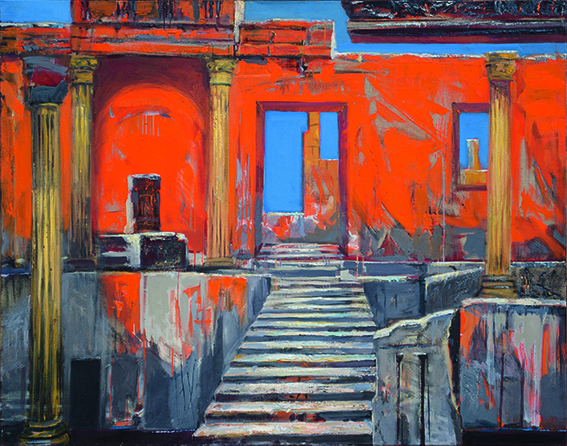
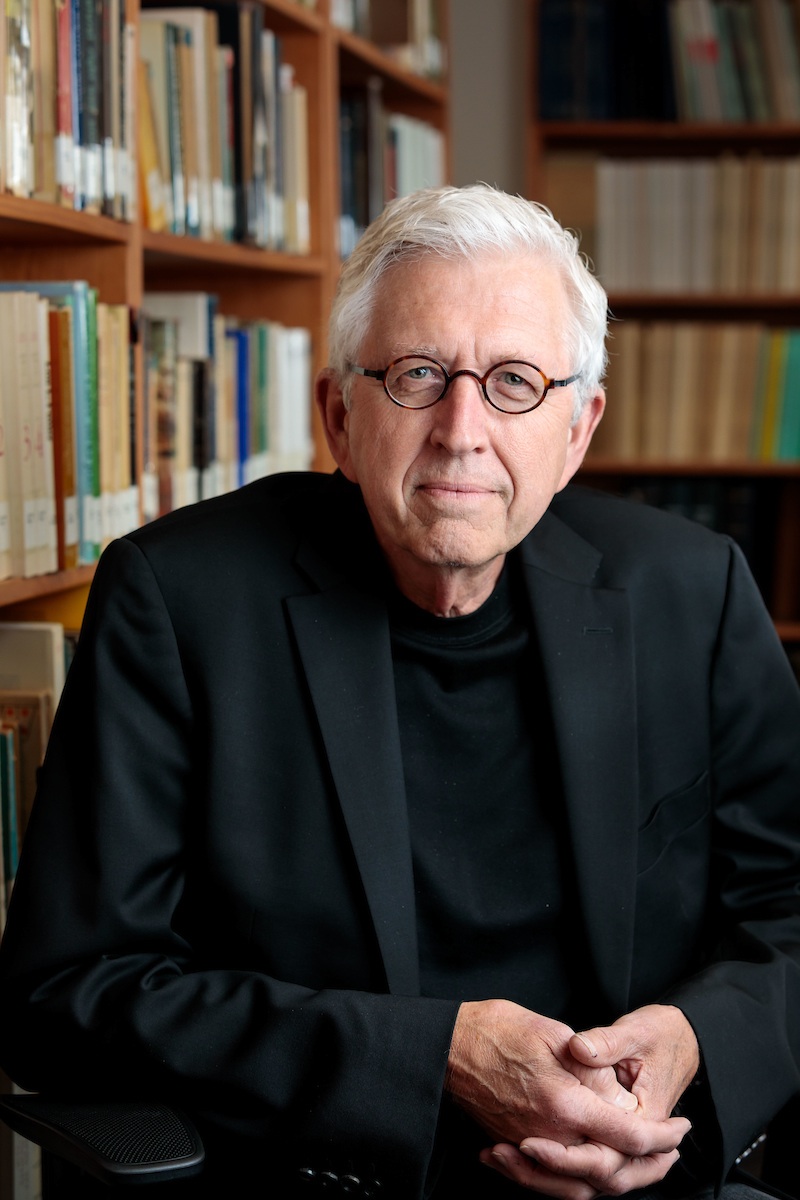
Marek Przybył is a full professor at the University of Arts in Poznań's Faculty of Painting and Head of the 11th Painting Workshop. With a career spanning decades, he explores existential themes through painting series like 'Metamorphoses of Stones' and 'Labyrinths of Loneliness' using traditional media. Born: Poznań, 1961 Education: Academy of Fine Arts in Poznań (1987) Current Role: Professor and workshop leader Contact: marek.przybyl@uap.edu.pl His work combines oil painting, egg tempera, and gouache to examine human existence, cultural stereotypes, and symbolic landscapes. Recent projects focus on comparative analysis of Polish and Spanish art education systems. Notable series include: 'Imaginary Portrait of Francis Bacon', 'Water Elements', 'Islands', and 'Policlinico'. His works are preserved in major Polish museums and international private collections.
Thi Thanh Phuong Nguyen-Pochan is a Lecturer at UCO Laval, serving as Head of the 3rd Year Information-Communication Degree program and Minor in Journalism and Editorial Production. She holds research affiliations with the Humanities and Societies Research Center (CHUS), the Center for Studies on Media, Technologies and Internationalization (Paris 8 University), and the Southeast Asia Center (EHESS). Her research focuses on media anthropology, revolutionary journalism in Vietnam, and digital media governance. She actively participates in international networks like the ASEAN-China Norms project and has contributed to numerous peer-reviewed publications and conference presentations. Her academic qualifications include a Doctorate in Information and Communication Sciences (2017, Paris 8 University) and qualifications in both Communication Sciences (Section 71) and Oriental Languages (Section 15). Teaching responsibilities include courses on communication theory, media sociology, and research methodology. Key research themes include the interplay of nationalism and media, surveillance of digital spaces, and the role of religiosity in public discourse. Her recent work examines controversies surrounding legal reforms in Vietnam and the intersection of gender with sacred practices. She has published extensively in journals like Études de Communication and Moussons , and serves as a reviewer for interdisciplinary studies on Southeast Asia. Her research activities include organizing academic seminars and contributing to collaborative projects on Vietnamese media ecology and civil society dynamics. She maintains an active presence in both French and international academic communities through conference presentations and editorial contributions.
Arthur B. Markman is the Annabel Irion Worsham Centennial Professor of Psychology and Senior Vice Provost for Academic Affairs at The University of Texas at Austin. He holds dual appointments in Marketing and the Human Dimensions of Organizations (HDO) program. His roles include overseeing undergraduate and graduate academic programs, continuing education, and custom programs for nontraditional students. Markman earned a B.S. in Cognitive Science from Brown University (1988) and a Ph.D. in Psychology from the University of Illinois (1992). Before his current role, he was an Assistant Professor at Columbia University (1992–1997) and directed the HDO program (2011–2018). He previously served as Executive Director of the IC2 Institute, focusing on economic development in small communities. His research spans similarity and analogy processing, decision-making, consumer behavior, and knowledge representation. He emphasizes how motivational factors shape cognition and leadership. Markman has authored over 150 scholarly works and popular books like Smart Thinking and Smart Change , which translate cognitive science for general audiences. He co-hosts the podcast Two Guys on Your Head and contributes to outlets like Fast Company and Psychology Today. His awards and recognitions are not explicitly listed, but his prolific publication record and leadership roles reflect significant scholarly and institutional impact. Markman’s work bridges academic research with practical applications in business, education, and organizational behavior.
Jeannette Taylor is Associate Professor in the Department of Political Science and International Relations at The University of Western Australia's School of Social Sciences. Her research focuses on improving public institution administration through three interconnected streams: public sector integrity, human resource management, and performance governance, with significant contributions to UN Sustainable Development Goals. Education: Bachelor of Applied Science (BAppSc) from Curtin University Master of Business Administration (MBA) from Murdoch University Doctor of Philosophy (PhD) from Murdoch University Taylor's research examines whistleblowing behaviors in response to corruption (cronyism, conflict of interest), public servant motivation under institutional policies, and develops governance indicators measuring public institutions' protection of common good, procedural fairness, and staff support. Her work bridges theoretical frameworks with practical policy applications across multiple governmental contexts. Recent publications (2021-2022) reveal interdisciplinary trends spanning bureaucratic gaming analysis, organizational change in public services, comparative Asian policy learning, and Italian vaccination governance. These works demonstrate methodological diversity from quantitative performance measurement to qualitative case studies, consistently addressing core challenges in public administration and policy implementation. Scientific Awards: 2020 Sam Richardson Award (awarded July 26, 2021), generating significant academic and media attention with coverage in 13 news outlets and 8 social media discussions Taylor has supervised 5 graduate research students and secured funding for 4 major projects including international collaborations on performance information utilization (University of Canberra, 2014), organizational citizenship behavior (UWA, 2013), water-sensitive city governance (CRC, 2012-2016), and Asia-Pacific government productivity (ANZSOG, 2011). She actively collaborates through international research teams developing public governance indicators and maintains strong networks across Australia, Europe, and Asia, as evidenced by co-authored publications on Italian health policy and China-Vietnam comparative studies.
Brian Rathbun is a Professor and Munk Chair in Global Affairs at the University of Toronto’s Munk School of Global Affairs & Public Policy, with cross-appointments in Political Science and Psychology. His research integrates political, social, evolutionary, and moral psychology into international relations, addressing questions about rationality, morality, and ideology in foreign policy. He holds a Ph.D. from UC Berkeley (2002) and previously taught at the University of Southern California. Rathbun’s work focuses on moral foundations of international politics, including how ethics shape diplomacy, populism, and global security. His books include *Diplomacy’s Value* (2014), *Reasoning of State* (2019), and *Right and Wronged in International Relations* (2024), which have won major awards in the field. His research spans public opinion on cybersecurity, populism, and historical case studies like Nazi Germany’s foreign policy. He is a recipient of the USC Parents Association Teaching Award (2009) and the ISA Distinguished Scholar designation (2019). His interdisciplinary approach employs surveys, experiments, and archival studies to explore how domestic ideologies influence international strategy. Rathbun’s current projects examine moral revolutions in international relations, the psychological underpinnings of populism, and the role of trust in multilateral institutions. His work bridges theoretical innovation with empirical rigor, challenging traditional realist paradigms.
Professor Elizabeth Yardley is a Professor of Criminology at Birmingham City University, where she focuses on understanding violence, homicide, and criminal behavior. Her work challenges societal myths around crime and emphasizes the importance of evidence-based research to inform criminal justice practices. She is particularly known for her analyses of femicides, media's role in shaping perceptions of crime, and the dynamics of serial murder. Her research combines interdisciplinary approaches, including feminist theory, ethnographic methods, and sociopolitical critiques. Her research interests span homicide analysis, technology-facilitated abuse, and the impact of media on public understanding of crime. She has contributed to textbooks such as Making Sense of Homicide and Serial Killing , which are foundational to criminology education. Her projects often highlight the intersection of gender, technology, and violence, as seen in her analysis of 'sex games gone wrong' femicides and the political economy of domestic abuse. Professor Yardley’s work extends to prison rehabilitation through arts-based mentorship programs, documented in studies like The Arts, Rehabilitation or Both? . Her research also critiques the portrayal of domestic abuse in celebrity cases, emphasizing media accountability. She has published widely on true crime podcasts, arguing they reflect broader societal anxieties under late capitalism. Her articles and books collectively address systemic issues in criminal justice, including the need for reform in prisons, the black market, and responses to technological threats. By engaging with both academic and public audiences, her scholarship bridges theory and practice to foster safer communities.
Mark Innes is a Lecturer in Education Leadership at the Manchester Institute of Education (MIE) and Associate Director for Research Ethics in the School of Environment, Education and Development (SEED) at the University of Manchester. His research focuses on education leadership, policy, and teacher professional development, with a particular emphasis on multi-academy trusts (MATs) and the micro-politics of policy enactment. He is affiliated with the Critical Education Leadership and Policy (CELP) and Teacher Education and Professional Learning (TEPL) research groups within MIE. His doctoral thesis, The Micro-Politics of Policy Enactment in a Multi-Academy Trust , explored how school leaders develop policies within MATs, yielding eight peer-reviewed publications. Current research includes a 2025 project reimagining leadership and teacher development in schools and MATs, analyzing National Professional Qualifications (NPQs), and advocating for equitable educational policies. He critiques the marketization of teacher development and its impact on professional autonomy. In external roles, Innes serves as Convener of the Organisational Reform research interest group at BELMAS, highlighting privatization in state education. He is an Editorial Board Member for the International Studies in the Sociology of Education and has reviewed for journals like the Oxford Review of Education and British Journal of Educational Studies. Past roles include external examining and panel membership for multiple universities, alongside consultancy in learning technology and leadership development. Innes actively engages with professional organizations, presenting at BERA and BELMAS conferences and contributing blogs. His work aligns with UN SDG 4 (Quality Education) by addressing systemic inequities and advocating for public accountability in education.
Professor Maria Woźniakiewicz-Dziadosz, PhD, is a distinguished academic at the Maria Curie-Skłodowska University (UMCS), where she has held the title of Professor since 1999 and became a full professor in 2004. Affiliated with the Faculty of Philology and the Department of Literary Theory and Anthropology, she is renowned for her expertise in 19th- and 20th-century Polish literature, literary theory, and narrative structures. M.A. in Polish Philology (UMCS, 1963) PhD (UMCS, 1972) under Prof. Maria Żmigrodzka Habilitation (UMCS, 1987) on Politics and Romantic Novel Structures Her research spans literary theory , focusing on drama, theme, musicality of texts, mimetic fiction, and the evolution of novel forms. She has explored autobiography, epistolary literature , and contemporary narrative trends , particularly “the margins of the novel form.” Her work often intersects with historical context , analyzing how ideology, culture, and communication shape literary works. The articles she has published reflect her deep engagement with literary communication , narrative innovation , and theoretical frameworks . Key themes include the role of musical elements in storytelling, thematic organization of texts, and the evolution of literary forms from Romanticism to postmodernism. She has also contributed to Slavic studies, comparative literature, and the analysis of epistolary pastiche. Her scientific distinctions include multiple Awards of the Ministry of Science and Higher Education and the prestigious Gold Cross of Merit in 1984. These accolades highlight her impact on Polish literary scholarship. Supervised 9 PhD theses on topics like ideological novel forms, apocryphal literature, and myth-making in post-war fantasy (2001–2015) Editorial roles with journals like Slavica and Annales UMCS
Anastasia Sergeeva is a Senior Lecturer at the University of Bath in the Department of Management, Strategy & Organisation. She actively supervises doctoral students and conducts interdisciplinary research at the intersection of Entrepreneurship, Strategy, and Organization Theory. PhD in Management, University of Navarra (2020) Her research focuses on interpretative understandings of entrepreneurial reasoning, value-laden organizing, and institutional persistence. Using American Pragmatism as a philosophical foundation, she explores how personal and organizational values shape innovation processes and strategic decision-making. Recent publications analyze topics like value-driven business model innovation (Magnum Photos case), crisis management through mythopoeic legacy relations, and pragmatist approaches to theorizing. Her work frequently addresses the intersection of ethics, innovation, and organizational dynamics. Anastasia engages in academic service through conference presentations, peer review activities, and visiting researcher appointments. She has presented at EURAM Conference 2024, INFORMS Organization Science Winter Conference 2024, and delivered guest lectures at Vrije Universiteit Amsterdam.
Dietmar Rübel is Professor and Chair of Art History at the Academy of Fine Arts Munich, where he leads research in modern and contemporary art, materiality, and exhibition theory. He previously held professorial positions at the Dresden Academy of Fine Arts, demonstrating a sustained academic trajectory in German art institutions. His research centers on the interplay between art theory and practice, particularly in modern and contemporary contexts. Key areas include the history and theory of sculpture, materiality and things, art around 1800, photography, and the curatorial as a scholarly practice. He explores subcultural expressions, film and media art, and the techno-aesthetics of artistic production. Rübel's recent publications and curated exhibitions reflect a deep engagement with figures like Hanne Darboven, Sigmar Polke, and Caspar David Friedrich. His work emphasizes the material dimensions of art, the politics of exhibition-making, and the fluid boundaries between artistic media. He frequently collaborates with Petra Lange-Berndt on interdisciplinary projects bridging art history, curation, and critical theory. Rübel has curated major exhibitions at institutions including the Hamburger Kunsthalle, the National Gallery in Berlin, and the MAK in Vienna. He is the author and editor of numerous influential volumes on materiality, post-pop art, and exhibition history, published by Hatje Cantz, Sternberg Press, and Verlag der Buchhandlung Walther König. He has delivered lectures widely across German and international universities and museums, including the Warburg Institute, the Getty Research Institute, and the Kunsthalle Düsseldorf. His academic contributions span decades, with consistent output in journals, exhibition catalogs, and edited volumes, affirming his role as a leading voice in contemporary art historiography.
John Hart is a Professor in the Department of Communication at Hawaii Pacific University, within the College of Liberal Arts. He holds a Ph.D. in Communication Studies from the University of Kansas and has a distinguished career bridging academia, media, and public policy. His expertise spans communication, media criticism, popular culture, and debate theory. Educational Background: Ph.D. in Communication Studies, University of Kansas M.A. in Speech Communication, University of Houston B.A. in Speech Communication and History, Boston College Dr. Hart's research focuses on myth in popular culture, particularly how narratives shape American identity and public policy. He has testified before the U.S. Senate and the National Park Service on the cultural implications of naming national monuments. His scholarly work intersects with media, history, and education, and he has contributed to national conversations through appearances on the History Channel and participation in Pearl Harbor anniversary symposiums. His creative and scholarly output includes co-editing Advanced Debate , a foundational text in debate education, and authoring works that have earned literary recognition, including the Lawrence A. Frost Literary Award and a Spur Award nomination. He has also produced educational music CDs with Grammy winner Daniel Ho, used by the U.S. State Department for cultural outreach. Scientific Awards and Honors: CLIO Award for station IDs (only Hawaii professor to receive this) Lawrence A. Frost Literary Award Nominee, Robert M. Utley Western History Award Nominee, Western Writers of America Spur Award (2009) Dr. Hart has served as a debate coach for national championship teams, authored numerous debate handbooks, and continues to act as a media critic for political campaigns. His students have collaborated with the National Parks Service and the USS Arizona Museum Association on educational projects, including outreach materials and redesigning memorial admission tickets. He teaches courses in persuasion, argumentation, public speaking, radio broadcasting, media criticism, and speechwriting. He maintains strong industry connections, having worked in major radio and record companies and collaborated with artists like Stevie Ray Vaughan. His interdisciplinary approach integrates media, history, and education, making him a unique figure in communication studies.
Robert B. Pippin is the Evelyn Stefansson Nef Distinguished Service Professor in the Committee on Social Thought, the Department of Philosophy, and the College at the University of Chicago. He is a leading scholar in modern German philosophy, with major contributions to the understanding of Kant, Hegel, and their implications for contemporary thought. His work bridges philosophy, literature, and film, making him a central figure in interdisciplinary humanities. University of Chicago – Committee on Social Thought Department of Philosophy The College His research interests focus on German Idealism, especially Kant and Hegel, with extensions into political philosophy, aesthetics, theories of self-consciousness, and the philosophy of modernity. He has pioneered the philosophical analysis of film, particularly American cinema, including Westerns and film noir, showing how cinematic narratives engage deep philosophical questions about agency, fate, and self-knowledge. The recent articles reflect a sustained engagement with Hegel’s logic and metaphysics, the philosophical dimensions of modern art and film, and the intersections of literature and moral philosophy. His publications demonstrate a consistent focus on the ways in which art and narrative can embody philosophical insight, especially in the context of modernity. Notable scientific awards include: Mellon Distinguished Achievement Award in the Humanities Fellow of the American Academy of Arts and Sciences Fellow of the American Philosophical Society Fellow of the German National Academy of Sciences Leopoldina Pippin has advised numerous students and is frequently invited to speak at major academic institutions worldwide. He has delivered lectures at Yale, Harvard, Stanford, Princeton, and international universities in Europe and Asia. His work is supported by prestigious fellowships and academic networks, and he is actively involved in ongoing research projects on Hegel, modernism, and cinematic philosophy. He has led seminars and workshops on topics ranging from neurophilosophy to the philosophy of education. He is affiliated with several research initiatives and intellectual communities, including the John U. Nef Committee on Social Thought and the Department of Philosophy at the University of Chicago. His public lectures and writings demonstrate a commitment to making complex philosophical ideas accessible and relevant to broader cultural discussions.
Eoghain Meakin is a Lecturer in Games Design at Ulster University's Belfast School of Art, specializing in narrative and storytelling strategies in interactive media. His work bridges game design principles with innovative applications in theatre and virtual production, contributing to projects like the industry-facing VR research lab ViRAL. Education: BA in English Language and Literature, MA in Film His research explores the intersection of digital storytelling , virtual reality , and theatrical innovation , focusing on how interactive media constructs meaning through narrative frameworks. Recent projects demonstrate his commitment to advancing virtual production pipelines for hybrid digital-physical performances. Meakin actively collaborates with theatre companies and technology teams to develop immersive experiences, exemplified by the Aurora: A Modern Myth performances and his involvement in the AHRC-funded Green Transition Ecosystem project. He also contributes to academic discourse through conference presentations and publications. As a member of the Writer’s Guild of Ireland and Project Protean , he promotes innovation in digital performing arts while maintaining strong industry connections through teaching roles at institutions like Technological University Dublin and Pulse College Dublin prior to his current position.
Professor Robert Klementowski, affiliated with the University of Wrocław and its Faculty of Historical and Pedagogical Sciences , specializes in 20th Century History , Atomic Science History , and Anthropology of Memory . His work bridges Political History and Cultural Anthropology , focusing on the Security Apparatus of Communist Poland , Utopianism , and Graphic Design History . Research Themes : Security services, economic transformations, memory politics, and cultural narratives in Eastern Europe. Notable Contributions : Analysis of uranium mining's societal impact, institutional culture of secret services, and utopian elements in European civilization. Scientific Outputs (2016-2020) reveal consistent engagement with repressive structures , post-war economic challenges , and symbolism in memory politics . He serves on editorial boards and contributes to Polish Economic History Society initiatives.
Magdalena Krysińska-Kałużna is a Professor at the University of Wrocław, affiliated with the Faculty of Historical and Pedagogical Sciences and the Institute of Ethnology and Cultural Anthropology. Her work bridges legal anthropology, human rights, and cultural conflict, with a focus on Indigenous communities in Latin America and the Roma diaspora. Legal Anthropology Human Rights Cultural Violence Indigenous Rights Latin American Studies Her recent peer-reviewed publications explore themes such as customary law, cultural hybridization, and the interplay between Indigenous traditions and statutory legal systems. Notable projects include coordinating international grants on neighborhood mapping, sustainable agriculture, and Jewish heritage in Konin. She is a member of the European Association of Social Anthropologists, the Commission on Legal Pluralism, and other academic organizations. Jewish Konin (2022–2023) Neighborhood - My Place on the Map (2020–2022) Sustainable Agriculture in Eastern Greater Poland (2019) Citizen Budget Monitoring (2013–2014) Her teaching includes courses on Indigenous peoples, human rights, and ethnographic research methods.