

Michael A Osborne is Professor of Machine Learning at the University of Oxford and leads the Bayesian Exploration Lab . He serves as Director of the EPSRC Centre for Doctoral Training in Autonomous Intelligent Machines and Systems and co-directs the Oxford Martin AI Governance Initiative. His research focuses on Bayesian optimization, Gaussian processes, and probabilistic numerics with applications in quantum devices, battery modeling, and AI governance. Key Positions: Professor of Machine Learning, University of Oxford Official Fellow, Exeter College Co-founder of Mind Foundry Lead Researcher, Oxford Martin Programme on Technology and Employment Research Themes: Probabilistic modeling for quantum systems Uncertainty quantification in energy storage AI safety and societal impact analysis Automated experimental design Quantum device calibration Probabilistic numerical methods Technical Contributions: Bridging reality gap in quantum devices Efficient Bayesian quadrature techniques Personalized neurostimulation algorithms Automated measurement protocols Quantum-classical hybrid ML
جستوجوی استاد و پژوهشگر
استاد راهنما، استاد دانشگاه یا پژوهشگر مناسب برای مسیر پژوهشیتان را پیدا کنید و با او ارتباط بگیرید.
نمایش ۱-۱۵ از ۳۳ استاد راهنما
اطلاعات این پروفایلها از صفحات عمومی دانشگاهها جمعآوری شده و ممکن است بهروز نباشد.
Brad Knoxمشاهده پروفایل
دانشیار
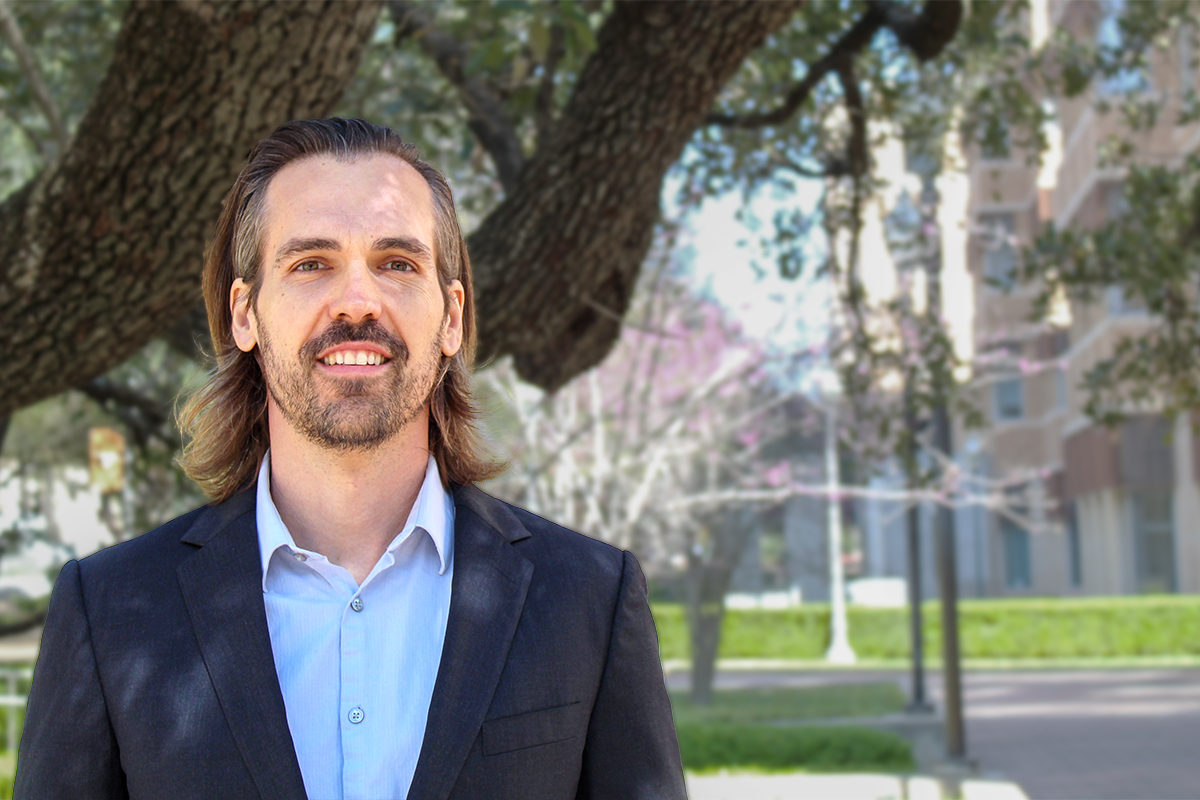
Brad Knox is a Research Associate Professor in the Department of Computer Science at the University of Texas at Austin . His work bridges machine learning, human-computer interaction, and computational cognitive science, with a focus on developing systems that learn from human feedback. Key research areas: Reinforcement Learning, Human-AI Interaction, Reward Design, Autonomous Systems Notable contributions: TAMER framework for human-guided learning, empirical studies on reward misdesign, and human preference modeling for autonomous agents Research Trends : His recent work (2023-2025) emphasizes reward alignment, safety in autonomous systems, and preference-based learning frameworks. Earlier studies (2012-2020) established foundational methods for integrating human feedback into reinforcement learning architectures and exploring behavioral signatures in decision-making. Scientific Honors : Bert Kay Dissertation Award (2013) Victor Lesser Distinguished Dissertation Award (IFAAMAS, Runner-up, 2013) NSF SBIR Grant (PI, 2016) NSF Graduate Research Fellowship (2008-2011) IEEE Intelligent Systems AI 10 to Watch (2013) Teaching & Leadership : Knox served as Principal Lecturer for MIT's Interactive Machine Learning course (2013) and held organizational roles at major conferences including Reinforcement Learning Conference (Scheduling Chair, 2025) and RLDM workshop (Co-chair, 2022).
Florian Zettelmeyer is the Nancy L. Ertle Professor of Marketing at Northwestern University's Kellogg School of Management and Faculty Director of the Program on Data Analytics at Kellogg. He also serves as a senior science leader at Amazon, leading the Advertising Economics organization. His research focuses on marketing analytics, digital advertising, and the economic implications of artificial intelligence in business. PhD in Management Science from MIT (1996) Vordiplom in Business Engineering from University of Karlsruhe (1992) MS in Economics from University of Warwick (1991) Professor Zettelmeyer specializes in analyzing how analytics and AI transform firms, with notable work on advertising measurement, pricing strategies, and consumer decision-making in automotive markets. His publications span journals like Marketing Science, Management Science, and American Economic Review, emphasizing empirical validation through field experiments. He has received prestigious awards including the John D.C. Little Award (twice), Sales SIG Excellence in Research Award, and multiple teaching honors such as the Sidney J. Levy Teaching Award and L. G. Lavengood Outstanding Professor of the Year Award. His research frequently appears in top-tier journals and working paper series.
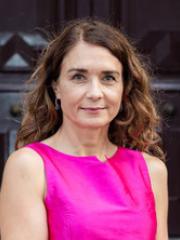
Associate Professor Sergeja Slapnicar is a faculty member at the UQ Business School , The University of Queensland. Her work focuses on financial quantification of cyber risk , cyber risk governance , and security assurance . She also engages in experimental accounting research examining behavioral aspects of risk and performance management. As a passionate educator , she has received multiple teaching awards including the 2022 UQ Business Teaching Excellence Award , 2023 UQ Citation for Outstanding Contribution to Student Learning , and 2024 Australian Citation for Outstanding Contributions to Student Learning . Her industry experience includes serving on boards of a European systemic bank , pharmaceutical corporation , and audit committees in Slovenia. Her recent publications focus on: Cyber risk quantification (2025 studies in Australasian Journal of Information Systems and Computers and Security ) Cyber governance (2024-2023 works on ISACA Journal and International Journal of Accounting Information Systems ) Behavioral accounting (2022-2021 studies in Journal of Management Control and Behavioral Research in Accounting ) Scientific awards: 2022 Teaching Excellence Award (UQ Business, Economics and Law Faculty) 2023 UQ Citation for Outstanding Contribution to Student Learning 2024 Australian Citation for Outstanding Contributions to Student Learning She supervises PhD students in: Cybersecurity risk management (Principal Advisor) Business intelligence and decision biases (Associate Advisor)
Tara Javidi holds the Jerzy (George) Lewak Endowed Chair and is a Professor in the Department of Electrical and Computer Engineering and Halicioglu Data Science at the University of California San Diego (UCSD). She leads multiple initiatives, including serving as Founding CTO of KavAI, Co-Director of the Center for Machine Intelligence, Computing and Security, and Co-Principal Investigator (CoPI) of the NSF AI Institute TILOS. Her research focuses on stochastic analysis, design, and control of information systems, emphasizing active learning, decentralized optimization, and wireless networks. Key areas include information acquisition/utilization, stochastic control, and AI-driven communication solutions. Her work bridges theoretical foundations and practical implementations, such as drone systems for information gathering (via detecdrone.ucsd.edu) and optical data center networking. Notable contributions include end-to-end scheduling for all-optical data centers and hybrid wireless-optical architectures. Javidi is an IEEE Fellow and has received significant grants, including leading UCSD’s Schmidt AI in Science Postdoctoral Fellowship program. She actively collaborates with industry and academia, with a focus on next-generation wireless networks and decentralized systems. Education: Ph.D. in Electrical Engineering (implied from title). Affiliations: IEEE Journal of Selected Areas in Information Theory (Editor-in-Chief), CALIT2, CNS, and TILOS. Grants: NSF AI Institute TILOS ($20M over 5 years), Schmidt AI Fellowship program. Her research group emphasizes both theoretical rigor (e.g., sequential hypothesis testing) and practical testing, with applications in service drones, cognitive networks, and federated learning. Recent articles highlight advancements in optical networking, secure communication, and distributed learning protocols. Awards: IEEE Fellow, Jerzy Lewak Chair. Labs/Teams: Center for Machine Intelligence, TILOS Institute, KavAI, and UCSD’s AI in Science initiatives.
Paul Healeyمشاهده پروفایل
دانشیار بالینی
Clinical Associate Professor Paul Healey is a prominent academic at the University of Sydney's Clinical Ophthalmology & Eye Health department. He holds advanced qualifications including MBBS(Hons), MMed (Clin. Epidemiology), PhD, and FRANZCO. His primary affiliation is with Westmead Clinical School where he focuses on glaucoma research and clinical practice. Research Interests: Ophthalmology & Ophthalmic Surgery Epidemiology of Eye Diseases Diagnostic Test Evaluation Screening Methodologies Cell Biology Applications in Glaucoma Publications Highlight: Dr. Healey has authored over 200 peer-reviewed articles focusing on glaucoma genetics, polygenic risk scoring, and clinical outcomes. Key contributions include defining polygenic risk's role in glaucoma diagnosis and treatment escalation, and advancing understanding of myopic glaucoma progression through retinal imaging studies. Professional Contributions: Serves as co-editor for major glaucoma textbooks including Glaucoma Screening (2008) and Fast Facts: Glaucoma (2010). Active in clinical trials like the Glaucoma Initial Treatment Study comparing laser vs medication therapies. Current Focus: Leveraging genomic data to personalize glaucoma management and improving diagnostic accuracy through advanced imaging techniques.

Vaibhav Srivastava is an Associate Professor in the Electrical and Computer Engineering Department at Michigan State University (MSU), with affiliations in Mechanical Engineering and the Cognitive Science Program. He holds a Ph.D. and M.A. from the University of California, Santa Barbara, and a BTech from the Indian Institute of Technology Bombay. His research focuses on Cyber-Physical Human Systems, including networked multi-agent systems, mathematical neuroscience, and autonomous robotics. He has held leadership roles in conferences like the American Control Conference and serves as an Associate Editor for the ASME Journal of Dynamical Systems and IEEE Open Journal of Control Systems. Education: Ph.D. in Mechanical Engineering, University of California, Santa Barbara (2012) M.A. in Statistics, University of California, Santa Barbara (2012) M.S. in Mechanical Engineering, University of California, Santa Barbara (2011) BTech in Mechanical Engineering, Indian Institute of Technology Bombay (2007) Research Interests: Prof. Srivastava’s work bridges human decision-making with engineering systems, emphasizing mixed human-robot teams, networked systems, and mathematical models of neural processes. His projects address challenges in autonomous vehicles, surveillance strategies, and collaborative robotics, supported by grants from NSF, ONR, and the Army Research Office. Recent Trends in Articles: His publications explore adaptive control strategies for UAVs, trust-aware autonomy, and multi-fidelity models for human-robot collaboration. Key themes include robust trajectory estimation, impedance tuning, and epidemic modeling in networked environments. Awards: Best Student Paper Award (coauthor), European Control Conference 2014 Grants & Advising: He has secured funding for projects on data-driven control and human-in-the-loop systems. His advising includes contributions to robotics and control theory, with a focus on interdisciplinary approaches combining cognitive science and engineering. Labs/Teams: Engaged in collaborative efforts across MSU’s College of Engineering, focusing on soft robotics, decision-making algorithms, and autonomy in dynamic environments.
- Myopia Development and Control
- Choroidal Thickness and Eye Growth
- Optical Coherence Tomography
- +۵ مورد دیگر
Scott A. Read is a Professor in the School of Optometry at Queensland University of Technology's Faculty of Health. He is a leading researcher in the field of myopia development and control, with extensive expertise in ocular biometry, choroidal thickness measurements, and optical coherence tomography applications. His work bridges basic vision science and clinical optometry, focusing on understanding the mechanisms of eye growth and developing strategies for myopia management. Dr. Read's research program centers on myopia development and control, with particular emphasis on choroidal thickness dynamics, ocular biometry changes during visual tasks, and the effects of light exposure on eye growth. His work reveals that the choroid plays a critical role as an optical signal transducer in eye growth regulation, with significant diurnal variations and responses to visual stimuli. He has extensively documented how myopic defocus, accommodation, and light exposure patterns influence choroidal thickness and axial elongation in children and young adults. His research has established important links between outdoor light exposure and reduced myopia progression, contributing significantly to evidence-based myopia control strategies. Analysis of Dr. Read's recent publications shows a strong focus on advanced imaging techniques, particularly optical coherence tomography and its applications in measuring choroidal thickness, vascular changes, and biomechanical properties of the eye. His work increasingly incorporates artificial intelligence methods for image analysis while maintaining a strong clinical orientation toward understanding myopia mechanisms and developing effective control strategies. His research spans from fundamental investigations of visual processing pathways to clinical trials of myopia control interventions like atropine therapy. Dr. Read has been instrumental in several major collaborative efforts, including the International Myopia Institute reports that have shaped global understanding of myopia mechanisms and control strategies. His work has been foundational in establishing the choroid's role as a key tissue in eye growth regulation and myopia development. Through his laboratory at QUT, Dr. Read mentors numerous PhD students and early-career researchers, fostering the next generation of vision scientists. His research team employs a multidisciplinary approach combining optometry, ophthalmology, biomedical engineering, and data science to address critical questions in myopia research. Current projects focus on understanding the mechanisms of atropine's myopia control effects, developing advanced imaging biomarkers for myopia progression, and investigating the impact of modern visual environments on eye development.
- Ophthalmic Optics
- Visual Optics
- Myopia Research
- +۳ مورد دیگر
Professor David Atchison is a distinguished academic at Queensland University of Technology (QUT), affiliated with the School of Optometry and Vision Science within the Faculty of Health. He holds a Professorship and has been a leading figure in visual optics research for over 35 years. His academic qualifications include a Doctor of Science (QUT), PhD (University of Melbourne), and advanced optometry degrees. Research Focus: Ophthalmic optics, myopia progression mechanisms, retinal shape analysis, and color vision. Key Contributions: Over 230 journal publications, 2 books, and significant grants from ARC and NHMRC. Awards: HB Collin Medal (2014), Glenn F. Fry Award (2011), and Fellowships from major optical societies. Teaching: Leads courses in optometry, including OPB353/453 (Ophthalmic Optics) and OPN164 (Research Methods). Research Interests: Explores the interplay between eye optics and visual performance, design of corrective lenses, and color vision deficiencies. Current projects include longitudinal studies on myopia progression in children and advanced imaging techniques for retinal morphology analysis.
Roger Liمشاهده پروفایل
دانشیار
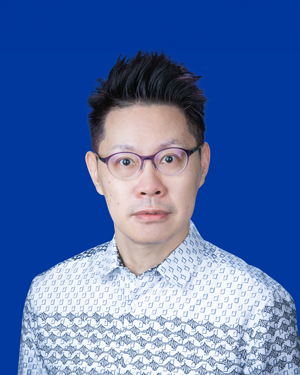
Roger Li is an Associate Professor at the College of Optometry, Nova Southeastern University (NSUCO) , where he leads the Vision Enhancement Laboratory as Principal Investigator. His research focuses on clinical vision science, including amblyopia, myopic control, and neuroplasticity of the visual brain. He holds a Ph.D. from the Hong Kong Polytechnic University School of Optometry and has held prior roles at the University of California-Berkeley and University of Houston. His work has been supported by grants from institutions like the National Eye Institute and Research to Prevent Blindness (RPB). Notably, he received the prestigious Walt and Lilly Disney Award for Amblyopia Research in 2022 for pioneering studies on reversing amblyopia using 3D video games. His research team has produced over 17 travel grants and 8 honor theses since 2014. Research Focus: Amblyopia treatment, spatial vision, aging eye, and retinal imaging Grants: RPB Disney Award, National Eye Institute, NSU President's Grant Editorial Roles: Editorial Board member for Frontiers in Neuroscience , Scientific Reports , and others Leadership: NSU Faculty Research Advisory Council member, MS Clinical Vision Science thesis mentor Li’s lab actively recruits undergraduate/graduate research assistants and students interested in optometry and vision science. For inquiries, contact wli@nova.edu .
Ou Jihongمشاهده پروفایل
دانشیار
Ou Jihong serves as Associate Professor of Operations Management at Cheung Kong Graduate School of Business (CKGSB), bringing extensive global academic experience from prior appointments at National University of Singapore Business School, University of Cambridge, University of California at Los Angeles, and University of Illinois. His research bridges theoretical operations research with practical applications in China's logistics industry. His educational background includes a PhD from Massachusetts Institute of Technology. Research interests span Analytics for Managers, Business Process Management, Production/Inventory Systems, Queuing Analysis and Control, Statistics, Stochastic Modeling and Analysis, and Supply Chain Management, with particular expertise in applied research on China's third-party logistics sector. Professor Ou's publication record demonstrates significant contributions to top-tier journals including Management Science and Operations Research , focusing on optimization of production systems, inventory control, queuing networks, and revenue management. His work consistently addresses real-world operational challenges through rigorous mathematical modeling. His scientific contributions include expertise in conducting industry surveys within China's logistics ecosystem and developing computational approaches for complex operational problems. Professor Ou maintains active engagement with industry through his research on supply chain dynamics and operational efficiency in emerging markets.
- Control Theory
- Game Theory
- Machine Learning
- +۴ مورد دیگر
Muhammad Umar B Niazi is a Marie-Curie Postdoctoral Fellow at both KTH Royal Institute of Technology and Massachusetts Institute of Technology , working under the guidance of Karl H. Johansson and Munther Dahleh respectively. Holding a Ph.D. in Automatic Control Engineering from Université Grenoble Alpes, Niazi's research spans secure monitoring of cyber-physical systems and dynamic incentive design for sociotechnical systems . Education : Ph.D. (Grenoble INP, 2021); M.Sc. & B.Sc. (Bilkent University, COMSATS) Research Directions : Secure estimation against cyberattacks in transportation networks and epidemic models Physics-informed learning for observer design in nonlinear systems Eco-driving incentives using Stackelberg game theory Aggregated monitoring of large-scale systems Scientific Contributions : 2025 publications on distributed observers and reachability analysis 2024 work on incentive mechanisms and sensor fault detection 2023 developments in physics-informed epidemic control 2022-2019 foundational work on network observability and opinion dynamics Awards : Marie-Curie Postdoctoral Fellowship (2022-2025) Best Student Paper Finalist, European Control Conference 2019 Niazi's interdisciplinary work combines control theory , game theory , and machine learning to address resilience in transportation, epidemic monitoring, and social network dynamics. His methods integrate theoretical rigor with practical implementations through tools like SUMO simulations and physics-informed neural networks.
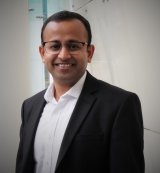
- Myopia Research
- Glaucoma
- Ophthalmology
- +۳ مورد دیگر
Sayantan Biswas is a Lecturer in Optometry at Aston University within the College of Health and Life Sciences. His research focuses on myopia progression, glaucoma in myopia, and therapeutic applications of light. He holds a PhD from the Chinese University of Hong Kong and completed postdoctoral training at the Singapore Eye Research Institute. **Education**: - BSc and MPhil in Optometry (Elite School of Optometry) - PhD in Ophthalmology and Visual Sciences (Chinese University of Hong Kong) - Postdoctoral Fellowship (Singapore Eye Research Institute) **Research Interests**: Myopia control, myopia-glaucoma associations, ocular biometry, and light-based interventions. His work includes developing normative databases for OCT analysis and studying retinal degeneration models. **Awards**: Best Oral Presentation (2024), ARVO Foundation Travel Grants (2021–2024), and international recognition for contributions to vision science. **Advising**: Supervising five PhD students and multiple undergraduates. Active in grant reviews and editorial roles for journals like *Investigative Ophthalmology and Visual Science*.
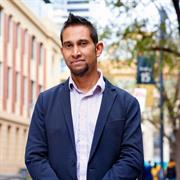
John Thangarajah is a Professor in AI and Director of Research at the Center for Industrial AI Research & Innovation (CIAIRI) at RMIT University, Melbourne. He leads research directions, academic partnerships, and industry collaborations, focusing on applied research with over $4M in government/industry funding. His expertise spans Autonomous Systems, Knowledge-Based Reasoning, and Agent-Based Modelling. He holds awards including the 2020 Vice Chancellor’s Leadership Award for fostering collaboration in Computer Science and the 2017 AAMAS Best Paper Blue Sky Track. Education: Extensive background in CS/IT education, transformed first-year Computer Science curricula to hands-on experiential learning. Research: Specializes in AI-driven smart systems, human-machine teams, and multi-agent systems. Member of IFAAMAS board. Publications: Over 147 peer-reviewed works in AI, including advancements in explainable agents, reinforcement learning, and medical imaging applications. Awards: Recognized for innovation in AI (Telstra 2011), demonstration excellence (2005), and leadership in academia. Grants: Secured significant funding from DST Group and industry partners, emphasizing practical impact. His lab focuses on AI applications in security, resilience, and industrial innovation through CIAIRI and the Security & Resilience Hub.
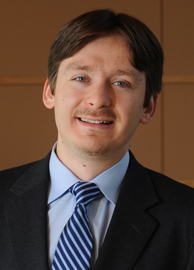
N. Bora Keskinمشاهده پروفایل
دانشیار
N. Bora Keskin serves as Associate Professor of Business Administration at Duke University's Fuqua School of Business, specializing in data-driven optimization for dynamic pricing, revenue management, and operational systems. His work bridges theoretical operations research with practical applications in evolving market environments. His research focuses on developing machine learning and statistical methods for pricing under demand uncertainty, with emphasis on perishable inventory, platform operations, and service management. Current investigations include blockchain-enabled supply chain transparency, smart meter-based electricity pricing, and multi-agent learning in competitive markets, demonstrating consistent innovation in integrating high-dimensional data with classical optimization frameworks. Recent publications reveal a trajectory toward interdisciplinary applications, combining reinforcement learning with stochastic modeling to address challenges like reference price effects, information asymmetry in insurance, and congestion in two-sided platforms. Key themes involve personalization, nonstationary demand learning, and incentive design in complex systems. Dr. Keskin's scientific contributions have been recognized with prestigious awards including: Winner, MSOM Young Scholar Prize (2024) Winner, Lanchester Prize (2019) Winner, Triangle Impact Challenge (2021) Markov Lecture Discussant, INFORMS Applied Probability Society (2023) Multiple best paper awards across INFORMS conferences (2020-2024) While specific doctoral student mentorship details and grant funding information are not provided in available materials, his collaborative research spans institutions including Chicago Booth and UNSW, with works featured in Duke Fuqua Insights and INFORMS publications. No dedicated research labs or teams are explicitly referenced in the source text.