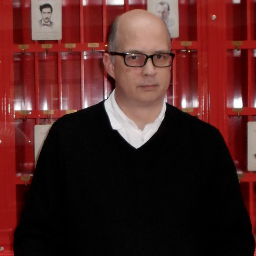
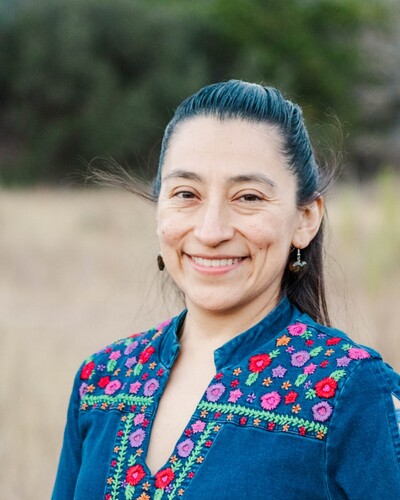
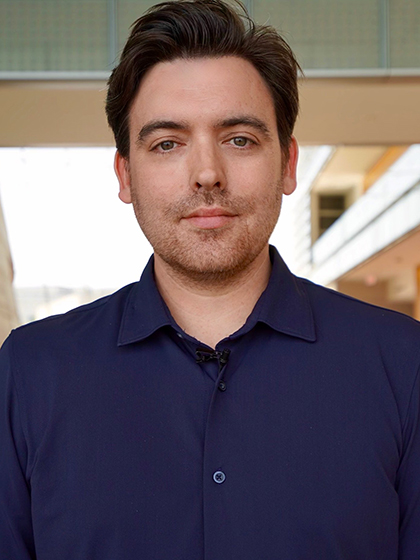
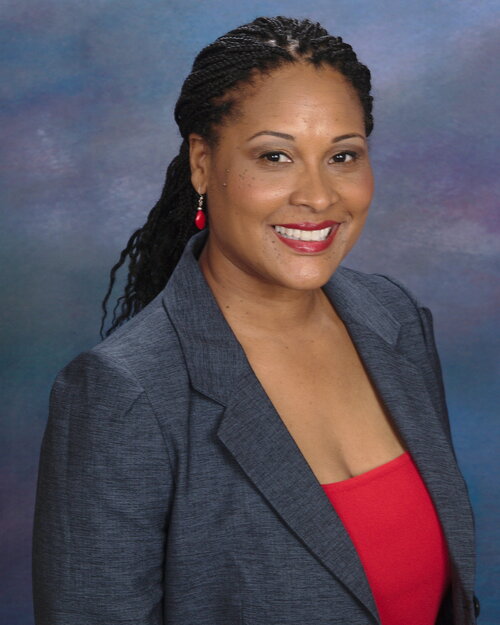
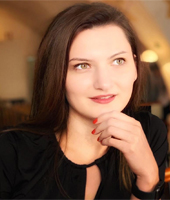
Professor Caroline Rae at Cardiff University is a leading scholar in 20th-century French music , with a focus on composers like Debussy, Messiaen, Jolivet, and Boulez. She also specializes in the musical writings of Alejo Carpentier and Franco-Latin American cultural interactions . Her research combines archival studies, performance practice, and pianism. Education : DPhil (Oxford), MA (Oxon), Dipl. Mus (Hanover), ARCM Her research projects include monographs on André Jolivet and Debussy’s Préludes , supported by the British Academy and AHRC . Recent publications span books on Carpentier, Debussy, and Stravinsky’s reception in France. As Co-Director of CFMR , she has organized international symposia with institutions like the Institut Français and Paul Sacher Foundation . Scientific awards include the Chevalier de l'Ordre des Arts et des Lettres (2018), Cardiff University Research Fellowship (2018-2019), and a French Government Scholarship (1982-1983). She has served on juries for the BBC Young Musician Competition and Wales International Piano Competition . As a pianist , she studied under Dame Fanny Waterman , Yvonne Loriod-Messiaen , and Karl-Heinz Kämmerling , and performs lecture-recitals linking her research. She has advised orchestras like the Philharmonia Orchestra and BBC National Orchestra of Wales on festival programming.
Pauline Lemaigre-Gaffier is a Lecturer in Modern History at the University of Versailles Saint-Quentin-en-Yvelines (UVSQ), affiliated with the Institute of Cultural and International Studies (IECI) and the Department of History. She co-leads the VoCriPat project (2023–present) and participates in the DIM PAMIR committee (2022–present) and ANR ACADEC project (2022–present). Her research focuses on European court societies (festivals, ceremonies, urban interactions) Cultural history (material culture, documentary writings) Political history (public finance, administrative practices) Economic history (privileges and businesses) Heritage sciences Her 15 most recent publications explore topics like archival practices in early modern Europe French court administration of the arts economic networks of privileged enterprises royal household logistics spanning 2015–2024, with upcoming works on economic history and heritage sciences in 2025. She has received the Benabou Prize (2012) and was a Thiers Foundation scholarship holder (2009–2010) . Her career includes editorial roles at Entre-Temps (2021–2023) and educational management for the 'Music, Performance, and Heritage' degree (2014–2016). She collaborates with institutions like the Centre de recherche du Château de Versailles and the Heritage Sciences Foundation.
Warren Buckland is a Reader in Film Studies at Oxford Brookes University's School of Arts. He holds a PhD in Film Studies from the University of East Anglia (1993) and previously studied photography at Derby (1987). Research: Film semiotics, cognitive film theory, narrative theory (puzzle films), digital humanities, independent American cinema Professional Roles: Editor of New Review of Film and Television Studies (2003-2016), editorial board member for Signata and book series Thinking Cinema and Hollywood Studio System His article trends analyze: Impossible storyworlds in Hollywood blockbusters Stylometric approaches to independent cinema Semiotic structures in music videos Epistemological foundations of film criticism Cognitive dimensions of cinematic rhetoric Contemporary auteur theory applications Awards: British Academy Post-Doctoral Fellowship (1994) Senior Research Fellow at Freie Universität Berlin (2016) As an educator, he supervises: PhD theses on film style, philosophy, puzzle films MA dissertations on Hollywood, digital humanities BA/MA film theory and research methods
Dr. Martha Sidury Christiansen is a Professor of Applied Linguistics/TESOL at the University of Texas at San Antonio , where she serves in the College of Education and Human Development . She is the Principal Investigator of Project RESPETO , a NSF-funded initiative exploring racial equity in engineering education. Her work spans sociolinguistics, digital literacies, and raciolinguistic analysis, with a focus on transnational multilingual communities. Born in Veracruz, Mexico Ph.D. in Foreign/Second Language Education (Ohio State University, 2013) M.A. in English Composition (Indiana University, 2007) B.A. in English Language Teaching (Universidad Veracruzana, 2002) Her research examines how transnational youth navigate digital spaces through multiliteracies , challenges Western academic writing norms via Mexican decolonial methodologies , and investigates raciolinguistic intersections in identity formation. The 15 most recent publications reveal a strong focus on digital communication , transnationalism , and critical pedagogy across journals like TESOL Quarterly and Language@Internet . 2023-2025: Expanding raciolinguistic frameworks in digital contexts 2021-2022: Analyzing multimodal identity construction 2019-2020: Exploring Mexican bilinguals' online language use She has received multiple honors including ACUE Fellow (2023), Fulbright Scholar (2017), and Faculty Leadership Fellow (2021-2022). Her presentations at conferences like ICOLLITE and DDVM Lab highlight her expertise in critical sociolinguistic awareness and digital discourse analysis . Dr. Christiansen actively consults for nonprofits on linguistic equity and multilingual education .
Daniel Shanahan is an Associate Professor at the Bienen School of Music , Northwestern University , where he coordinates the Music Theory and Cognition program and directs the Music Cognition Lab. He holds a PhD from the University of Dublin, Trinity College. His research integrates music-analytic, computational, and experimental methodologies to investigate cognitive and communicative constraints in music. Key themes include corpus studies, music and emotion, oral transmission of musical traditions, computational analysis of jazz and folk music , and the application of machine learning and generative AI to musicology. Shanahan has served as co-editor of Empirical Musicology Review (2016–2022) and sits on editorial boards of multiple journals. His work appears in Music Perception , The Journal of New Music Research , Musicae Scientiae , and Frontiers in Psychology , with chapters in Routledge Companions and the Oxford Handbook of Music and Corpus Studies . Recent projects include an NSF grant studying sound's impact on learning (2023) and co-editing the Oxford Handbook . He currently serves as treasurer for the Society for Music Perception and Cognition . Mentorship Award (Society for Music Perception and Cognition, 2024) Outstanding Multi-Author Collection Award (Society for Music Theory, 2023) Distinguished Scholar Award (Ohio State University) Rising Faculty Research & Undergraduate Teaching Awards (Louisiana State University) His publications demonstrate expertise in music cognition, computational analysis, emotional expression, and oral/embodied transmission , with trends showing interdisciplinary applications of AI and cross-cultural studies. Shanahan's mentorship emphasizes student well-being, empathetic guidance, and fostering academic potential . He has hosted global open lab meetings during the pandemic and cultivated mentees who now contribute to service roles in academic committees.
Eleanor Seaton is a Professor in the Department of Psychology at the University of Illinois at Urbana-Champaign, affiliated with the College of Liberal Arts & Sciences. With ancestral roots in the Mississippi Delta and a background rooted in Chicago's Southside, Dr. Seaton’s research explores the intersection of racism, mental health, and developmental outcomes among Black American youth. Education: BA in Psychology (University of Illinois at Urbana-Champaign), MA in Social-Organizational Psychology (Teachers College, Columbia University), Ph.D. in Developmental Psychology (Temple University) Postdoctoral Training: Program for Research on Black Americans at the University of Michigan Her interdisciplinary work integrates developmental psychology, social psychology, public health, and Black feminist theories, employing quantitative, qualitative, and mixed-method approaches. She also investigates how racism-related experiences contribute to systemic societal disparities. Dr. Seaton previously co-hosted the television segment Break it Down on AZ PBS, discussing racism’s societal impact. In her personal time, she enjoys journaling, travel, baking, shopping, reading, movies, and dancing to Chicago-style house music.
Paul Richards is a Research Foundation Professor of Music and head of the composition and theory area at the University of Florida since 1999. He previously served as Visiting Professor at Florida State University (2016) and taught at Baylor University and the University of Texas at Austin. His academic roles include teaching courses in composition, music theory, and orchestration, along with supervising graduate students. He earned a DMA in Composition from the University of Texas at Austin and degrees from the University of Arizona. Education: Doctor of Musical Arts (DMA), Composition, University of Texas at Austin, 1998 Master of Music (MM), Theory and Composition, University of Arizona, 1993 Bachelor of Music (BM), Theory and Composition, University of Arizona, 1991 Research Interests: Richards’ work spans orchestral, vocal, chamber, and theatrical compositions, including operas and wind ensemble pieces. His style blends eclectic influences—from Jewish sacred music to modernist techniques—resulting in works praised for their "strong melodic gift" and innovative orchestration. Commissions have come from prestigious organizations like the Florida Orchestra, Boston Brass, and White Snake Projects. Awards and Recognition: Recipient of numerous international composition prizes, including the St. Mary’s College/Kaplan Foundation Commission Competition and Second Prize in the International Horn Society Composition Competition University of Florida Research Foundation Professorship (2017–2020, 2010–2013) Finalist in the National Opera Association’s Dominic Argento Chamber Opera Competition (2023) Advising and Grants: Richards has advised over 40 graduate students and chaired multiple PhD committees. His grants include support from the University of Florida and the Research Foundation. He has also served as a mentor in composer-in-residence programs, including the Jacksonville Symphony Orchestra’s Fresh Ink Competition. Labs and Collaborations: He co-founded the Florida Contemporary Music Festival (2013–2018), fostering collaboration between composers and performers. His work integrates interdisciplinary projects, such as music for dance and film, and he actively collaborates with choreographers and theater artists.
Rudolf Lutz (*1951) is a Swiss musician, conductor, and composer renowned for his work in sacred music and historical performance practice. He received an honorary doctorate from the Faculty of Theology at the University of Zurich in 2021, recognizing his contributions to performing and disseminating Johann Sebastian Bach's vocal works, including founding the J.S. Bach Foundation and directing its ensemble since 2006. Lutz has taught improvisation at the Schola Cantorum Basiliensis, bass continuo at the Basel University of Music, and oratorio studies at the Zurich University of Music. Research & Artistic Contributions Rudolf Lutz's work focuses on the intersection of music and theology, particularly through the complete performance and innovative interpretation of Bach's sacred compositions. His initiatives include the Bachpedia platform, livestreamed performances during the pandemic, and dialogues with theologians and literary figures. He has also composed original works like the Christmas Oratorio in English style and a cantata for Luther's commemoration. Honors Culture Prize of the Canton of St. Gallen (2006) STAB Prize (2015) Swiss Culture Prize (2019) Member of the Board of the New Bach Society (since 2016)
Dr. Gan Sheuo Hui serves as Lecturer in Animation at LASALLE College of the Arts, Singapore, with extensive international engagement through visiting positions at National University of Singapore (NUS), Kyoto Seika University, and the Sainsbury Institute for the Study of Japanese Arts and Cultures. Her academic profile bridges Japanese animation scholarship with Southeast Asian cultural contexts through fieldwork-driven research. Her educational qualifications include: PhD in Human and Environmental Studies from Kyoto University, Japan Master of Communication (Screen Studies) from University of Science Malaysia Bachelor of Communication (Film Studies) from University of Science Malaysia Dr. Gan's research examines Japanese anime, manga, and popular culture through lenses of authorship, censorship, and cultural hybridity, with particular focus on transnational adaptations in Southeast Asia. She integrates theoretical frameworks with empirical fieldwork involving creators, curators, and fans across Asia and the West, emphasizing practical production aspects alongside critical analysis. Her interdisciplinary approach connects film studies, media theory, and cultural anthropology. Her scholarly trajectory reveals consistent exploration of animation aesthetics (especially limited/selective animation), historical evolution of Japanese animation, and hybrid cultural forms in Southeast Asia. Key thematic threads include re-evaluating animation techniques beyond Western paradigms, analyzing global anime circulation, and documenting local adaptations of manga in Malaysia. This body of work demonstrates strong methodological integration of archival research, industry analysis, and ethnographic observation. Scientific recognition includes: Two-year Japan Society for the Promotion of Science (JSPS) Grant for postdoctoral research on Japanese anime history Sainsbury Institute for the Study of Japanese Arts and Cultures Fellowship Dr. Gan has secured competitive research funding including the JSPS grant, and maintains active international collaboration through invited lectures at institutions like Sorbonne, Tokyo University, and Keio University across 20+ countries. Her teaching innovations include NUS modules incorporating Japan-based field studies, reflecting her commitment to experiential learning in Japanese visual culture. While specific student advising isn't detailed, her pedagogy emphasizes creator-fan industry ecosystems. Her research network spans the Archive Center for Anime Studies (Niigata University), Kyoto Seika University's Manga Department, and global symposia, facilitating cross-institutional knowledge exchange on animation history and contemporary media practices.
Jennifer Beavers, Ph.D. , is an Associate Professor of Music Theory at the University of Texas at San Antonio (UTSA) in the College of Liberal and Fine Arts. Her research intersects early twentieth-century music analysis, timbre/orchestration studies, and music theory pedagogy, with a focus on Maurice Ravel’s compositions and curriculum innovation. Awarded Faculty Mentor Award for Undergraduate Research (2019) Co-founder of UTSA Music Theory Club initiatives Active presenter at Society for Music Theory , American Musicological Society , and College Music Society conferences Research Themes : Analytical approaches to Ravel’s neurological decline, timbre as structural marker, flipped pedagogy, and interdisciplinary collaborations. Her publications span journals like Music Theory Online and Indiana Theory Review , emphasizing timbral transformations and pedagogical innovation. Scientific Awards : Faculty Mentor Award for Undergraduate Research (2019) Teaching Contributions : Courses include Aural Skills , Basic Skills , 20th-Century Analysis , and graduate Research Methods . Her pedagogical research addresses improvisation, pitch-matching, and AP curriculum alignment.
Professor Andrew Klevan is a leading scholar in film aesthetics and close cinematic analysis, holding a professorial position at the University of Oxford's Faculty of English and serving as a Non-tutorial Fellow at St Anne's College. His work focuses on film form, performance, critical methodology, and pedagogy, advocating for detailed close analysis as a core practice in film studies. Research interests include the interplay between film medium and narrative structure, particularly exploring 'undramatic' forms that capture mundane experiences. He has authored monographs on film performance (e.g., Barbara Stanwyck studies), aesthetic evaluation frameworks, and the philosophy of film criticism. Recent work critiques theoretical approaches in film studies and develops 'ordinary language film studies' to emphasize practical criticism over abstract theory. Publications span over two decades, with notable contributions to journals like Movie , Film-Philosophy , and Aesthetic Investigations . His edited collection The Language and Style of Film Criticism (with Alex Clayton) remains influential in critical discourse. Teaching focuses on advanced film analysis and methodology. No formal academic awards are listed, though his contributions to film scholarship are widely recognized. He supervises Master’s and DPhil students in film studies, emphasizing close textual analysis and critical writing. His academic affiliations include the St Anne's College community and the broader Oxford film studies network.
Andrew Huddleston is Professor of Philosophy and Director of the Centre for Research in Post-Kantian Philosophy at the University of Warwick. He previously taught at Birkbeck College, University of London and Exeter College, Oxford. He holds a PhD from Princeton University. His research focuses on post-Kantian philosophy (Nietzsche, German Idealism, Romanticism) and intersects with aesthetics, social philosophy, and ethics. His 2019 monograph, Nietzsche on the Decadence and Flourishing of Culture , challenges individualist interpretations of Nietzsche, arguing for a more socially-oriented understanding of cultural flourishing. Current work explores the 'Religion of Art' concept in European thought, examining art's role as a religious substitute in a secular age. Education: BA from Brown University and Pembroke College, Cambridge; PhD from Princeton University (supervised by Alexander Nehamas). Research trends in recent articles emphasize Nietzschean moral psychology (ressentiment), narratives of cultural decadence, and the interplay between aesthetics and existential concerns. His work also engages with Adorno's critical theory and Hegel's philosophy of comedy. Editorial roles include serving as Book Reviews Editor for European Journal of Philosophy , Editorial Board member of British Journal for the History of Philosophy , and area editor for Ergo . He is also Treasurer of the Royal Musical Association Music & Philosophy Study Group. Teaching responsibilities include modules on Nietzsche's Beyond Good and Evil , the 'Religion of Art' in post-Kantian philosophy, and convening the MA in Continental Philosophy.
Olga Vechtomova is a Professor at the University of Waterloo, affiliated with the Information Systems research group and specializing in Search Engines and Natural Language Processing. Her work bridges computational creativity, multimodal systems, and AI-driven text generation. She leads projects like LyricJam , a real-time lyric generation system for live music, and explores applications in dynamic story generation, hate speech detection, and low-resource summarization. Her research emphasizes ethical AI, creative technologies, and leveraging large language models for diverse tasks. Research interests include natural language processing, machine learning, and multimodal interaction. Recent work focuses on artistic inspiration modeling, stylized text generation, and improving NLP efficiency through semi-supervised learning and distillation techniques. Her contributions span over 60 papers since 2000, with a strong emphasis on foundational NLP challenges and real-world applications. She collaborates on systems like Promptmix for model distillation and LyricJam sonic for music-audio lyric generation.
Jonathan Cannon is an Assistant Professor in the Department of Psychology, Neuroscience & Behaviour at McMaster University's Faculty of Science. His research focuses on timing and rhythm in perception and action, with particular interest in timing-related neural dynamics in the basal ganglia, cerebellum, and supplementary motor area. His work combines mathematical modeling with experimental approaches to understand the neural basis of rhythm perception and production. Dr. Cannon's research interests span timing and rhythm perception , neural dynamics , dynamical systems theory , Bayesian cognition , neural oscillations , and autism research . His approach centers on formulating and simulating neurophysiological and cognitive models, drawing on dynamical systems theory and Bayesian cognitive frameworks. His work incorporates psychophysics, EEG experiments, and collaborations with experimentalists to investigate how the brain processes rhythmic information. Analysis of his recent publications reveals a strong focus on the intersection of rhythm perception, motor control, and autism spectrum disorder. His work demonstrates how beat perception co-opts motor neurophysiology, with particular attention to predictive processes in rhythmic cognition. His research shows reduced precision of motor and perceptual rhythmic timing in autistic adults, while also finding intact sequence learning abilities in certain contexts. Dr. Cannon teaches advanced courses including Machine Learning Methods for Brain Modelling and Neural Data Analysis (PSYCH 734), Computational Models in Neuroscience (NEUROSCI 3MN3), and Neuroscience Seminars. His teaching reflects his interdisciplinary approach that bridges mathematics, neuroscience, and cognitive science. Beyond his academic work, Dr. Cannon is an active musician who performs on violin and guitar, particularly in klezmer and folk music contexts. He has also demonstrated entrepreneurial spirit through founding Flying Leap Games and developing the storytelling game 'Wing It,' which successfully crowdfunded and reached numerous retailers.
Alexandra BELIBOU is a PhD Lecturer at the Department of Music Performance and Pedagogy, Faculty of Music, Transilvania University of Brașov. Her work bridges musicology with modern interdisciplinary approaches, focusing on music education technology, therapeutic applications, and 20th-century compositional analysis. She holds a prominent position in advancing digital pedagogy through software integration. Research Interests: Music therapy methodologies emphasizing pluralistic approaches in clinical settings AI applications in music composition and education Analysis of 20th-century composers like Schoenberg, Reich, and Pärt Cultural studies of folk music traditions (e.g., Irish dance music, Romanian psalmic liturgy) Publications Trends: Recent work explores pandemic-era musician well-being, AI-assisted composition tools, and the intersection of music with medicine/physics. Earlier research delves deeply into psalmic text settings across centuries, minimalist techniques, and numerical symbolism in atonal music. Her teaching and research emphasize bridging traditional musicology with emerging technologies, as seen in proposals for software-based creativity workshops and interdisciplinary curricula.