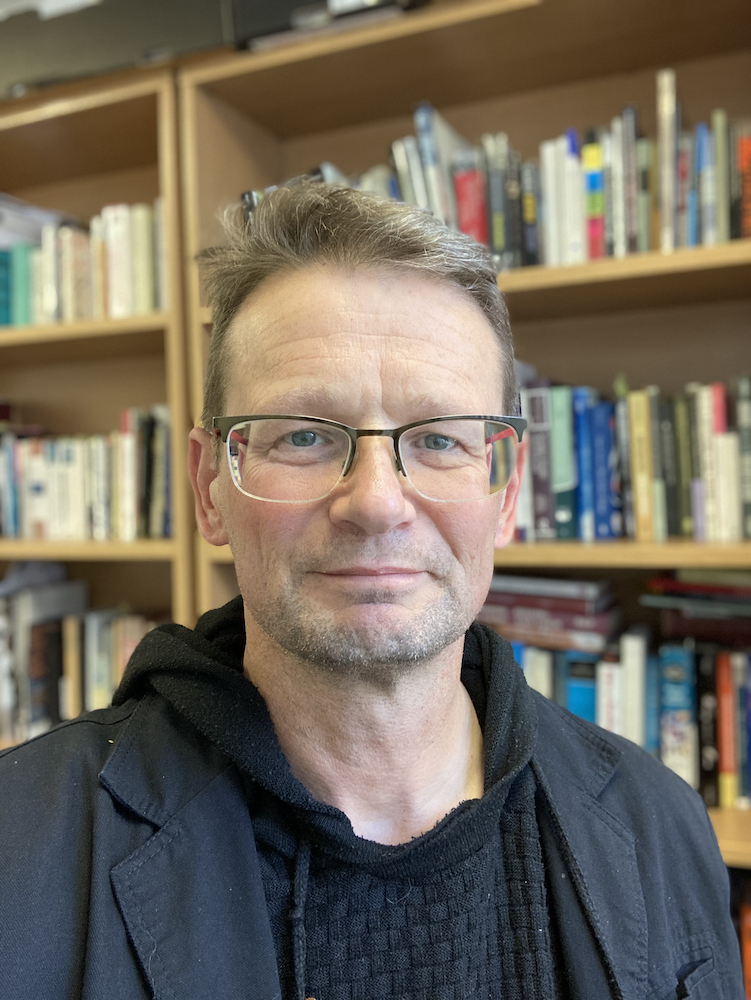
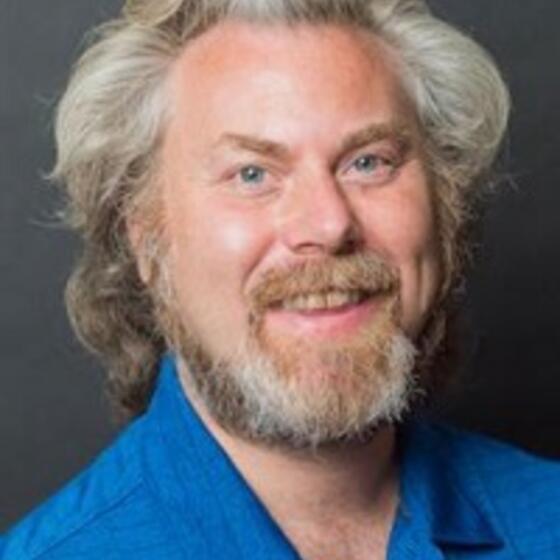
Juha Ojala is a Professor of Music Performance Research at the DocMus Doctoral School within the Sibelius Academy of the University of the Arts Helsinki, Finland. His research focuses on music performance practices, compositional processes, pedagogical approaches in music education, and the cognitive dimensions of musical perception and signification. He holds a central role in advancing interdisciplinary studies at the intersection of musicology, performance studies, and educational theory. Current research emphasizes how performers interpret and communicate musical meaning through embodied practices and how listeners cognitively process these artistic expressions. No specific grants, awards, or student advisement details are documented in the provided text. The DocMus affiliation indicates involvement in training doctoral candidates in music-related research disciplines.
Rachel Devorah Wood Rome is an Assistant Professor in the Electronic Production and Design (EPD) department at Berklee College of Music, where she teaches creative coding, live coding, and music technology. Her work bridges electronic music, improvisation, and critical theory, with a focus on sonic cyberfeminism, archival practices, and the social meanings of sound and space. Ph.D. in Music Composition and Computer Technologies, University of Virginia (2018) M.L.I.S., San José State University (2017) M.A. in Music Composition, Mills College (2013) B.Mus. in Horn Performance, CUNY Queens College (2007) Her research explores superhuman prolongation, opaque complexity, and the re-signification of archaic tools in sonic media. She values machines for their patience and memory, and her creative practice emphasizes critical agency in technology design and use. She performs under the name 'mehetabel' when using archival materials in improvised electronic music. The most recent publications and performances reflect a deep engagement with AI and music, live coding, feminist media theory, and spatialized sound. Her works often involve real-time data processing, generative systems, and collaborative improvisation, situating sound within broader social, political, and technological contexts. Ruth Anderson Installation Prize (IAWM) New Music USA Grant Fellowships from MIT OpenDocLab, Adrian Piper Foundation, Ina GRM, New Museum, and Jefferson Scholars Foundation Residencies at EMS Stockholm, STEIM Amsterdam, MassMoCA, and Cove Park Rome advises emerging artists in electronic music and creative coding, many of whom have gone on to establish their own practices. She is also active in academic service, including curriculum development, faculty governance, and labor organizing as a Councilor for the Berklee Faculty Union. She leads initiatives in DEI, sound design, and coding pedagogy within the EPD department. She has been involved in interdisciplinary collaborations with artists, technologists, and institutions worldwide, presenting work in galleries, festivals, and academic conferences across North America, Europe, and Asia. Her leadership extends to nonprofit arts organizations, where she has served as Executive Director and grantwriter.
Anna Wójcikowska is an Assistant Professor at the Lodz University of Music , specializing in 20th-century musical avant-garde and experimental music. She is also a practicing member of the Artur Rubinstein Łódź Philharmonic Choir and the 'Vivid Singers' chamber choir. Education M.A. in Music Theory (with distinction), Academy of Music in Łódź (2016) Ph.D. in Musicology (with distinction), Academy of Music in Łódź (2023) Her research focuses on avant-garde influences in contemporary composition, performance perspectives in modernist music, and interdisciplinary approaches to musical education. She has presented at international conferences like the 15th International Congress on Musical Signification in Barcelona and published in journals including Interdisciplinary Studies in Musicology and Contexts of Musical Education . Scientific Awards MARSHAL OF THE ŁÓDŹ VOIVODESHIP AWARD Nominated for 'Primus in artibus' award Wójcikowska actively promotes music through journalism (contributing to Ruch Muzyczny , Glissando , and Meakultura ) and public speaking, including collaborations with the Łódź Philharmonic's 'Colors of Poland' Traveling Festival.
Ben Curry is a Lecturer in Music at the University of Birmingham, specializing in musical meaning, semiotics, and analytical methodologies. He holds a PhD in Musicology from Cardiff University (2011), an MA in Film and TV Composition from the University of Bristol (2003), and a first degree in Music from Cardiff University (1996). Prior to Birmingham, he taught at Cardiff University, Bath Spa University, Canterbury Christchurch University, and the University of Kent. Beyond academia, he operated as a multimedia composer under 'Big Ear Productions' from 2002–2008, blending creative practice with scholarly research. His work bridges philosophical inquiry (e.g., Charles Peirce, Wittgenstein) and empirical musicology, focusing on late eighteenth-century music, blues traditions, and popular music aesthetics. Research interests include the semiotics of musical meaning, the philosophical underpinnings of music analysis, and the socio-cultural contexts of blues and popular music. His contributions span peer-reviewed articles, conference presentations (e.g., Royal Musical Association, Society for Music Analysis), and interdisciplinary collaborations. He actively supervises PhD projects exploring music and meaning, jazz, film music, and eighteenth-century composition. Recent work examines biosemiotic approaches to Caribbean music and the interplay between catchiness and groove in popular music. Curry’s activities include organizing academic conferences, serving on editorial boards, and engaging in public musicology initiatives. His scholarship emphasizes dialogue between theory and practice, reflecting his dual background in composition and academic research.
Dr hab. Małgorzata Gamrat is an Associate Professor at the Department of Religious Monody and Polyphony Research , Institute of Art Sciences , Faculty of Humanities , John Paul II Catholic University of Lublin (KUL), Poland. She is an internationally recognised scholar specialising in the interrelations between music and literature, with particular emphasis on the works of Franz Liszt, Hector Berlioz and Honoré de Balzac. Her habilitation (2017, University of Warsaw) and joint Ph.D. (2012, Jagiellonian University & École Pratique des Hautes Études, Paris) underpin a prolific research portfolio that spans Romantic music history, semiotics of music, and interdisciplinary studies. Education & Affiliations Ph.D. co-tutelle, Jagiellonian University & École Pratique des Hautes Études, Paris (2012) Habilitation, University of Warsaw (2017) M.A., Université Toulouse II Le Mirail (2007) M.A., Academy of Music in Bydgoszcz (2008) Research Focus Dr Gamrat’s work is situated at the intersection of musicology , literary studies and semiotics . She explores how nineteenth-century composers engaged with contemporary poetry and how literary figures reflected on music, creating a rich intermedial dialogue . Key topics include: Piano and vocal music of Franz Liszt, including genre hybridization and transcriptions Hector Berlioz’s dramatic symphonies and their literary subtexts Honoré de Balzac’s musical aesthetics and collaborative networks Polish composers in the interwar Parisian milieu (e.g., Tansman, Paderewski) Methodologies of musical semiotics and intertextual analysis Recent Publication Trends Since 2020, her articles have increasingly integrated semiotic theory with close analytical readings , addressing questions of meaning , intertextuality and translation between artistic media. Contributions appear in leading journals such as Annee Balzacienne , Czas Kultury , Nottingham French Studies and World Futures , reflecting a trajectory from archival/documentary work toward philosophical and methodological reflection. Scientific Awards & Honours Elected Fellow, International Communicology Institute, Washington, DC (2023) University Laurel “Father Idzi Radziszewski Award” – 1st Degree, KUL (2024) University of Warsaw “Clio” III Degree Award (2017) Prize of the Polish Composers’ Union for the monograph on Liszt’s piano music (2015) Research Grants & Leadership Principal Investigator, NCN FUGA: “Franz Liszt's Songs for Voice and Piano...” (2013–2016) Co-investigator, NCN OPUS: “Presence of Polish Music in Interwar Paris” (2017–2020) Vice-coordinator, Czech-Polish Forum Grant: “Joseph von Eichendorff...” (2018) Member, Scientific Committee, 16th World Congress of Semiotics, Warsaw (2023) Editorial & Scholarly Service Dr Gamrat sits on the editorial boards of Musicology Papers and Roczniki Humanistyczne , and is a peer reviewer for Muzyka , Teoria Muzyki , Studia Chopinowskie , Res Facta Nova , among others. She co-organised the international conferences “40 Years of Musical Semiotics” (2023) and “Zola’s Legacies” (2021).
John P Meyers serves as Associate Professor in the Department of African American Studies at the University of Illinois, where his research interrogates the complex relationship between popular music and historical memory. His scholarly profile demonstrates sustained engagement with musical practices that negotiate cultural heritage, identity, and temporal consciousness across diverse genres. His primary research domains include: Historical Consciousness in Popular Music Tribute Band Phenomenology Jazz Fusion and Signification Hip-Hop Autobiographical Practices Rock Music Nostalgia Mechanisms Media-Driven Historical Revisionism Analysis of his publication trajectory reveals a methodological throughline examining how musical forms become vessels for historical engagement. The 2024 monograph "Same Old Song" represents the culmination of this inquiry, building upon earlier empirical studies of tribute bands and jazz fusion. His work consistently bridges ethnomusicological analysis with critical race theory and cultural studies frameworks. Professional recognition includes: Richard Waterman Junior Scholar Prize (2015) from the Society for Ethnomusicology While his fingerprint analysis confirms dominant specialization in Popular Music (100%) and Tribute Bands (85%), the absence of explicit information regarding graduate student mentorship, research grants, or laboratory affiliations prevents comprehensive assessment of his academic ecosystem beyond published scholarship.
Karl Braunschweig is an Associate Professor of Theory at Wayne State University , specializing in intersections between tonal music practice and historical theory, with emphasis on language concepts and aesthetics. He has contributed to journals like Music Theory Spectrum and Journal of Music Theory , and serves on the editorial board for Intégral . Education: B.A., St. Olaf College (1991) M.M., University of Michigan (1993) Ph.D., University of Michigan (1997) Certifications from Mannes Institute (2002, 2010) His research examines how grammar, rhetoric, and representation shape musical understanding. Current projects include a book on melody and form through historical signification and a study of dissonance in tonal theory. Recent publications highlight his focus on phrase expansion , dissonance treatment , and Enlightenment aesthetics . His teaching includes graduate seminars on History of Theory and Twentieth-Century Analysis . Braunschweig has advised M.M. theses on topics spanning Bach , Mahler , Stravinsky , film soundtracks , and Arabic-European music theory intersections . He previously taught at the University of Michigan as a Visiting Assistant Professor (2005).
Amanda Howell is a Senior Lecturer at the School of Humanities, Languages and Social Science , Griffith University. Her research and teaching focus on gender, genre, and screen aesthetics within sociohistorical frameworks, particularly examining 'body genres' like horror, action, and musicals in 21st-century cinema and television. Education: PhD (1996), MA (1989), BA Highest Honours (1985) Key Research Themes: Female monsters in horror, historical imagination in screen media, music's role in constructing masculinity, gothic and science fiction genres, feminist approaches to transmedia storytelling Grants: Denmark Independent Research Fund (2018-21), Griffith University Internal Grants (2015-17, 2005-06) Collaborations: Co-edited special issues and book collections with scholars like Stephanie Green and Linnie Blake Her recent work includes the co-authored monograph Monstrous Possibilities (2022) and co-edited Hallucinatory Histories (2024), which analyze horror's intersection with gender, trauma, and historical critique. She actively supervises PhD candidates exploring topics such as Queer Cinema , transmedia fandoms , and screen horror's cultural work . Scientific Awards: None explicitly listed in the provided text.
Benjamin De Cleen is a Professor at Vrije Universiteit Brussel (VUB), affiliated with the Faculty of Economic and Social Sciences and the ECHO Research Group. He specializes in discourse theory, populism, nationalism, and far-right political communication. His work examines how far-right parties construct 'the people' and 'the elite' through discursive strategies, with a focus on Flemish politics, media dynamics, and transnational movements. He leads major research projects on topics like gender politics in far-right engagement, migration discourse, and pseudo-journalistic communication. Notable contributions include analyzing the Vlaams Belang's use of farmer symbolism and the interplay of nationalism and populism. De Cleen has been awarded the Political Studies Harrison Prize (2025) and has extensive media engagement, including interviews on digital culture, populism, and far-right strategies. His research spans over 127 publications, with recent work emphasizing rural politics, transnational far-right networks, and the role of discourse in shaping political realities.
Isabelle Perreault is a Professor in the Department of Criminology within the Faculty of Social Sciences at the University of Ottawa. She serves as Co-director of the research axis "Biopolitical Issues and Minority Groups" at CIRCEM (Centre for Interdisciplinary Research on Citizenship and Minorities) and is an affiliated researcher at the Centre d'histoire des régulations sociales (CHRS) at UQAM. Her institutional roles include co-leading the Quebec Suicide and Mood Disorders Research Network (2020-2024) and co-researching the Historical Sociology of Suicide in Quebec project (2014-present). Her educational background includes: Ph.D. in History, University of Ottawa (2009) M.A. in History and Feminist Studies, Université du Québec à Montréal (2003) B.A. in History, Université du Québec à Rimouski (1999) Perreault's research centers on biopolitics and necropolitics in criminological contexts, with specific focus on suicide history (1763-present), unclaimed bodies, and minority group experiences within medical, judicial, and police institutions. Her work critically examines Canadian biopolitics through archival traces related to assisted suicide, abortion, sterilization, and non-procreative sexual practices, with particular attention to francophone minorities and marginalized populations. Methodologically grounded in qualitative approaches and archival research, her scholarship bridges criminology, history, and cultural studies. Analysis of her recent publications reveals strong thematic continuity in historical criminology and biopolitical analysis. Over half examine archival materials from Quebec's Saint-Jean-de-Dieu psychiatric hospital (1873-1973), while recurring motifs include suicide documentation, postmortem photography, and the intersection of music with historical narrative. Her 2021-2025 output demonstrates expanding interdisciplinary reach into visual studies, musicology, and performance theory while maintaining core criminological focus on power structures and marginalized experiences. Perreault actively supervises graduate research through doctoral seminars (CRM 8500) and methodology courses (CRM 8510), directing specialized instruction in biopolitical criminology (CRM 4710) and advanced research methods (CRM 6780). Her current sabbatical reflects ongoing commitment to major research projects rather than teaching obligations. Her laboratory work centers on CIRCEM's research axis where she leads archival analysis of biopolitical traces, developing methodological frameworks for interpreting historical documents related to suicide, mental health, and minority experiences. This includes digital archive construction and ethical management of sensitive historical materials, particularly regarding unclaimed bodies and psychiatric records.
Professor Nicholas Reyland is the Head of Undergraduate Programmes at the Royal Northern College of Music (RNCM), leading curriculum development and academic supervision. He holds a PhD, MMus, and BMus (Hons) from Surrey University, the Royal College of Music, and Cardiff University. His research focuses on film/TV music and sound design, Polish music (particularly Witold Lutosławski), and 20th-century music analysis. Key projects include the AHRC-funded Lutosławski’s Worlds and co-editing The Palgrave Handbook of Music and Sound in Peak TV . Education: PhD (Musicology), MMus, BMus (Cardiff/Surrey/Royal College of Music) Research Areas: Screen music studies, Polish musical identity, trauma in music, narrative analysis He co-edits Music, Sound, and the Moving Image and has contributed to major journals like Music Analysis and Music & Letters . Awards include the 2007 Westrup Prize and Society of Music Theory nominations. Professional activities include keynote lectures at Cornell University, Fryderyk Chopin Institute, and BBC Radio 3 collaborations. He supervises PhD students in screen music, Polish music, and analysis methodologies.
Marlon Moore serves as Associate Professor and Director of the Africana Studies Program at the University of Miami's College of Arts and Sciences. His research explores intersections of African American culture, gender, sexuality, and literature, with foci on popular culture analysis, queer theory, and literary criticism. Research Focus: Moore's scholarship examines representations of Black identity in cultural artifacts, with specific attention to: 1) LGBTQ+ narratives in African American literature and media; 2) Cultural signification of Black icons; 3) Health disparities and military medicine; 4) Biopolitics in scientific narratives like the HeLa cells controversy. His work bridges literary analysis, film studies, and medical humanities. Publications: Moore's extensive publication record includes literary and cultural critiques of works by Alice Walker, Langston Hughes, and James Baldwin, alongside analyses of films like Mississippi Damned . His 2022 work on Luther Vandross explores cultural longing in African American popular culture, while earlier articles investigate themes ranging from nonmonogamy in The Color Purple to HIV narratives in military contexts.
Michael Szekely is an Associate Professor - Instructional at Temple University's College of Liberal Arts , with expertise in aesthetics , philosophy of music and improvisation , existentialism , and poststructuralist theory . PhD holder with extensive teaching in Liberal Studies and Intellectual Heritage programs Expertise spans critical theory, surrealist aesthetics, and music's philosophical dimensions Active researcher with publications in journals like Jazz Perspectives and Contemporary Aesthetics Practicing musician in multiple experimental ensembles including Unseen Rain and The Alternate View Trained jazz drummer under Jackie McLean and studied with Milford Graves His scholarly work intersects Deleuze and Guattari's philosophy with music video subversion, as seen in his Rhizomes publication "Music of a Witch's Line: Deleuze and Guattari, and Music Video Shreds" (2018). Current research explores musical ontology through poststructuralist lenses, with forthcoming work on event theory (2024). As a performer, he engages in collective improvisation across genres from psychedelic folk rock to electronics and voice projects, while maintaining academic rigor in analyzing Frankfurt School critical theory and Barthes' semiology in musical contexts.
Professor Nicholas McKay serves as the Director of the London College of Music (LCM) at the University of West London since 2019. Previously, he held leadership roles at Canterbury Christ Church University (2013–2019) as Head of the School of Music & Performing Arts and Head of the University Graduate School, and at Sussex University (1998–2013) as Head of the Music Department and Director of Student Support. His career began at Durham University (1994–1998), where he served as Associate Tutor in Music and Resident College Tutor for St. John’s College. Education: PhD in Stravinsky & Music Semiotics (Durham University, 1993–1998) MA in Twentieth-Century Music (Durham University, 1993–1998) BA (Hons) in Music & Philosophy (Essex University, 1990–1993) Research Interests: Professor McKay’s work focuses on music semiotics, Stravinsky’s compositions, opera, music theatre, and analytical approaches to musical interpretation. He has directed major international conferences, including the Royal Musical Association Annual Conference ‘Horizons’ (2011) and the International Congress on Musical Signification 13 (2016). Affiliations: Member of the International Advisory Board at the Academy of Cultural Heritages (Helsinki and Athens) Associate Editor of the Journal of Music and Meaning Labs/Teams: As Director of LCM, he oversees the college’s academic and creative programs, fostering interdisciplinary research and performance initiatives in music and performing arts.
Agnes Löfgren is an Associate Professor at the Department of Culture and Society (IKOS), Linköping University, where she conducts research in linguistic and multimodal interaction within cultural contexts. She is affiliated with the Division of Language, Culture and Interaction (SKI) and contributes to the Language and Culture research environment. Research Interests: Her work primarily explores how people use language, voice, and body in real-time coordination, especially in artistic settings like opera rehearsals. Key areas include non-lexical vocalizations (e.g., 'ugh', 'aargh'), depictions, intersubjectivity, and the interplay between song and speech. Her research bridges linguistics, semiotics, and performing arts, emphasizing embodied and multimodal aspects of communication. The recent publications show a consistent focus on vocal and bodily practices in collaborative and performative settings, particularly in opera. These works highlight how syntax, prosody, and physical gestures are suspended or transformed during depiction, contributing to theories of interaction and cognition. No scientific awards listed Advising and Grants: Information about students, advisees, or funded grants is not available in the provided texts. Labs and Teams: Agnes is part of the Language and Culture research environment at Linköping University, focusing on interdisciplinary research at the intersection of language, interaction, and culture. She leads and participates in projects such as Non-lexical Vocalizations , which investigates vocal coordination in real-time collaborative activities.