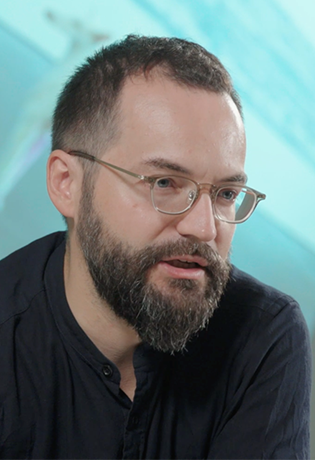
Rebecca Herissone is Professor of Musicology at the University of Manchester and a leading scholar in early modern English music. She co-edits the peer-reviewed journal Music & Letters and serves on editorial boards for the Purcell Society, Musica Britannica, and the Complete Works of John Eccles. Her research focuses on seventeenth-century creativity, material culture, and the ontological dimensions of music notation. Key research areas: Early Modern Music, Creativity, Source Study, Notation, Reception Major awards: Diana McVeagh Prize (2015), Westrup Prize (2007) Her recent work includes digital humanities projects on music preservation and critical editions of Purcell's operas. She has pioneered interdisciplinary approaches connecting musicology with drama, art, and literature, and currently leads research on Purcell's posthumous reception in the eighteenth and nineteenth centuries. Her teaching spans music historiography, performance practices, and advanced source analysis.
Blair Hoxby is Professor of English at Stanford University's School of Humanities and Sciences, where he has taught since 2007. Previously, he served as Associate Professor of History and Literature at Harvard University (2005-2007) and Associate Professor of English at Yale University (2003-2005), where he began as Assistant Professor in 1998. His academic journey includes a Ph.D. in English from Yale University (1998), an M.Phil. in English Studies from the University of Oxford (1990), and an A.B. in English and American Literature and Language from Harvard University (1988). Hoxby's research focuses on literature and culture from 1500 to 1800, with particular emphasis on tragedy theory, Milton studies, and the intersection of literature and economics. His notable works include What Was Tragedy? Theory and the Early Modern Canon (2015) and Mammon's Music: Literature and Economics in the Age of Milton (2002). He argues that early modern tragedy differed significantly from contemporary understandings of the genre, with passions rather than deeds or character serving as the keys to early modern tragic performance. Hoxby's recent scholarly output reveals a consistent engagement with early modern theatrical practices, particularly tragedy and opera. His work demonstrates sophisticated interdisciplinary approaches, connecting literary analysis with historical context, economic theory, and performance studies. He has made significant contributions to understanding how commercial culture shaped literary production and how theatrical conventions evolved across national boundaries in Europe. Scientific Awards and Honors Internal Fellow, Stanford Humanities Center (2009-2010) Morse Fellowship, Juilliard School (2001-2002) Samuel and Ronnie Heyman Prize, Yale University (2001) John Addison Porter Prize, Yale University (1999) Rhodes Scholarship, University of Oxford (1988-1990) Hoxby has supervised numerous doctoral students and served in various administrative roles at Stanford, including Director of Undergraduate Studies (2011-2014) and Director of Graduate Admissions (2008-2011). His teaching portfolio includes courses on English poetry from the Renaissance to Romanticism, tragedy and tragic theory from Aristotle to the present, theater history, and performance theory. Currently, he teaches courses such as Court Theater from Shakespeare to Mozart and Introduction to English II: From Milton to the Romantics . Hoxby maintains active scholarly engagement through committee memberships, including the Executive Committee of the Milton Society of America (2009-2013) and service as a referee for major academic presses including Oxford University Press and the University of Pennsylvania Press.
Timothy Hampton is a Professor of French and Comparative Literature at the University of California, Berkeley , and serves as Director of the Doreen B. Townsend Center for the Humanities . He was previously the Director of the Designated Emphasis in Renaissance and Early Modern Studies and co-chairs the Democracy, Free Speech, and Values study group. His research explores intersections of literature and politics , poetry and song , and the history of emotion and diplomacy in Renaissance and early modern periods. Recent projects include a 2022 France-Berkeley Fund grant on poetry translation and a Diebold Foundation grant for interdisciplinary cultural studies. Notable publications include Bob Dylan: How the Songs Work (2019) and Cheerfulness: A Literary and Cultural History (2022). Upcoming works address premodern colonialism and American education through memoir and cultural critique. His scholarship appears in MLN , Critical Inquiry , and public venues like Salon and Aeon/Psyche .
Heidi R. Lewis is the David and Lucile Packard Professor of Feminist & Gender Studies at Colorado College. She serves as President of the National Women's Studies Association (2023-25) and Editor-in-Chief of the Oxford Bibliography in Women's & Gender Studies. Her research focuses on Black Feminisms, Hip Hop discourse, and Critical Media Studies, with a current project challenging narratives around Mumble Rap's authenticity. Lewis holds a Ph.D. in American Studies from Purdue University and has taught interdisciplinary courses including Hip Hop & Feminism and Critical Media Studies. Education: Ph.D., American Studies, Purdue University (2011) M.A., English Literature, Ohio University (2005) B.A., English Studies, Robert Morris University (2003) Research Interests: Lewis interrogates intersections of race, gender, and media through projects like her forthcoming book on Mumble Rap and a documentary on her experiences during the crack cocaine epidemic. She employs discourse analysis to challenge dominant narratives in Hip Hop and feminist theory, emphasizing marginalized voices and transnational collaborations. Service & Leadership: As Director of Feminist & Gender Studies, Lewis secured funding for new faculty lines, student programs, and community partnerships. Nationally, she co-created the #FemSTEMSymposium to bridge feminist inquiry and STEM fields. Her service prioritizes equity, including roles on promotion committees and external reviews for academic centers. Community Engagement: Lewis collaborates with organizations like the Kampagne für Opfer Rassistischer Polizeigewalt and the U.S. Olympic Committee. Her work extends beyond academia through public talks, media contributions, and initiatives like the Marsha P. Johnson Professorship.
Charles Athanasopoulos is an Assistant Professor of African American and African Studies & English at The Ohio State University. His research focuses on intersections of Black rhetorics, media, and culture, with expertise in The Black Radical Tradition, Rhetorical Theory, and Cultural Critique. He earned his Ph.D. in Rhetoric & Communication from the University of Pittsburgh. His work analyzes racial progress, public symbols, and post/Ferguson America through lenses of iconoclasm and critical race theory. Education: Ph.D., Rhetoric & Communication, University of Pittsburgh. Research interests span Black American and Diasporic Cinema, Afro-Caribbean and Greek-Roma identity critiques. He has published in venues like Lateral: The Journal of the Cultural Studies Association and Western Journal of Communication. His 2024 book Black Iconoclasm explores dismantling racial symbols in public discourse. Recent articles address Fanonian thought, anti-racist campus rhetoric, and transnational Blackness studies. His publications critically engage with visual activism, film analysis, and decolonial theories. Current projects include studies on sonic rhetorics in Black women’s music and global race discourses in Mediterranean contexts.
Dr. Damien Charrieras is an Associate Professor at the School of Creative Media , City University of Hong Kong, where he serves as Program Leader for the Master of Art in Creative Media and deputy program leader for the PhD in Creative Media. His work bridges cultural studies, new media theory, and the intersection of financial technologies with artistic practices through the ACIM Laboratory for Interventions in Speculative Finance . Doctoral research on digital artists' trajectories in Montreal FRQSC Postdoctoral Fellowship at McGill University Research spans game engine design , datafication of creativity , blockchain in art , and post-anthropocentric creative processes . With over HK$3.14M in grants as Principal Investigator, he explores situated digital creativity in urban contexts, critical worldbuilding pedagogy , and the mediation of technical systems in cultural production. His publications in Cities , Organized Sound , and Human Relations analyze the reconfiguration of artistic practices through software infrastructures and automation paradigms. Scientific awards include: FRQSC Postdoctoral Fellowship
Eric Wilkinson is a Research Fellow in the Department of Philosophy at the University of British Columbia and previously served as a Visiting Assistant Professor at the University of Wisconsin-Milwaukee. He holds a PhD from McGill University and earned MAs in Political Science (York University) and Philosophy (University of Toronto). His research focuses on meta-ethics, normative ethics, political philosophy, and the history of philosophy, with notable work on Indigenous philosophy, multicultural nationhood, and logical rationalism. He is a Vanier Scholar and has contributed to debates on Canadian national identity, public policy, and the intersection of gender and historical philosophy. His teaching interests align with his research, emphasizing ethics, meta-ethics, and political philosophy. Education: PhD in Philosophy, McGill University MA in Political Science, York University MA in Philosophy, University of Toronto BA/BSc, University of Ottawa Research Highlights: Reconstructing Indigenous philosophical thought through oral traditions and European records. Advocating for multicultural nationhood as a cohesive framework for diverse societies. Exploring logical rationalism as a foundational theory in epistemology. Awards: Vanier Scholar (McGill University). Publications: Featured articles include work on Mersenne’s music theory, Anscombe’s philosophy of law, and the pragmatics of art ontology. Wilkinson’s work bridges academic philosophy with public engagement, as seen in his advocacy for accessible philosophy and potential interest in public office.
Andrew Gordon is Professor of Renaissance Literature and Culture in the School of Language, Literature, Music and Visual Culture at the University of Aberdeen. He is Co-Director of the Centre for Early Modern Studies and serves as REF co-lead for English, demonstrating active leadership in research and academic governance. BA from University of Nebraska-Lincoln (UNL) MA from University of Sussex PhD from Queen Mary's, University of London His research centers on early modern literature and culture, with a focus on textual transmission , letter-writing , cultural memory , and material texts . He explores how literature interacts with cultural practices, especially in early modern London. His current project, Renaissance Cultures of the Foot , innovatively examines the cultural and literary significance of the foot, drawing on anthropological perspectives to analyze embodied experience in print and manuscript culture. The recent scholarly articles and books reflect a strong trend in interdisciplinary humanities, combining literary analysis with historical, material, and gender studies. His work frequently engages with manuscript culture, epistolary networks, and the social functions of memory, particularly in post-Reformation England. His scientific recognition includes the Hunter-Caldwell award for directing The Correspondence of Robert Beale . Hunter-Caldwell award He actively supervises graduate research and welcomes PhD students in areas related to early modern texts, cultural mobility, memory, and community. While specific grants are not listed, his funded project indicates successful grant acquisition. He has also engaged in creative collaborations with theatre professionals, bridging academic research with performance. Andrew Gordon is a central figure in Aberdeen’s Centre for Early Modern Studies, contributing to an interdisciplinary research environment that fosters collaboration across historical periods and methodological approaches.
Vicente Cervera Salinas is a Professor of Spanish Literature at the University of Murcia, affiliated with the Faculty of Arts and Humanities and the Department of Spanish Literature, Literary Theory and Comparative Literature. He has been a full professor since 2004 and specializes in Latin American literature, intertextuality, and literary theory. His research interests include: Spanish and Latin American Literature Comparative Literature and Intertextuality Poetry and the Essay as Literary Genres Classical Mythology and its Modern Reinterpretations Aesthetic Criticism and Cultural Memory Philosophical Dimensions in Literature His scholarly and creative work reflects deep engagement with figures like Jorge Luis Borges, Dante Alighieri, and George Santayana. His publications span poetry, critical essays, and editorial projects, often exploring the intersections between literature, philosophy, and cultural identity. The themes across his recent articles reveal a consistent focus on myth, authorship, and transatlantic literary traditions, particularly in Hispanic contexts. He has received recognition including the Second Prize in the America Poetry Prize (1993). He co-directs the journal Cartaphilus: Revista de investigación y crítica estética and has directed the Humanities Classroom at the University of Murcia. He served as president of the Association of Hispanic American Literary Studies (2014–2018). He has supervised at least one doctoral thesis and has been a visiting professor at institutions in Havana, San José (Costa Rica), Buenos Aires, and Vienna. His academic leadership includes editing multi-volume works on literary figures and movements, contributing significantly to the study of Hispanic intellectual and aesthetic traditions. He leads the research group Plural Scriptures: Intertextuality and Interdisciplinarity , continuing to influence both literary scholarship and creative writing in Spain and Latin America.
Prof. Dr. Isabelle Stauffer holds the Professorship for Modern German Literature at the Catholic University of Eichstätt-Ingolstadt , where she also serves as Vice Dean of the Faculty of Languages and Literature and Deputy Director of the Center for Religion, Church, and Society in Change (ZRKG) . She co-leads the ZRKG Research Field III on "Religiosity in Contemporary Transformation Processes" and examines intersections of literature with gender/queer studies , postcolonial theory , and cultural history of gallantry . Studied at University of Zurich and Humboldt University Berlin Doctorate (2006) and Habilitation (2015) from Johannes Gutenberg University Mainz Previously held positions at Goethe University Frankfurt, Philipps University Marburg, and Saarland University Her research spans early modern to contemporary German literature , with specializations in intermediality (film, digital media), epistolary culture , and dandyism/fashion history . Current projects include organizing the 2025 IVG congress panel "Figures of Crisis – Crisis of the Figure" and editing the complete works of Aurora von Königsmarck. She has published extensively on topics including: Postcolonial transformations in early modern texts Religious discourse in contemporary literature Intermedia reflexivity in digital age narratives Queer performativity in historical and modern contexts Translation as cultural transfer mechanism Surface aesthetics in cinema and art
Morna O'Neill is a Professor and Department Chair at Wake Forest University, specializing in Eighteenth- and Nineteenth-Century European Art, with a focus on the intersection of art, design, and politics in Britain. Her research redefines traditional hierarchies between fine and decorative arts through a political lens. Research Interests: Art History, British Art, Arts and Crafts Movement, Political Art, Colonial Art, Domestic Interiors, Museum Studies. Key Publications include monographs on Walter Crane and Hugh Lane, and articles exploring topics such as socialist symbolism in decorative arts, imperial narratives in Victorian print culture, and the role of domestic spaces in art history. Her work has been recognized with the Historians of British Art Book Prize. Projects: Co-founder of the digital humanities initiative Home Subjects , which investigates the domestic display of art in Britain (1715–1914), supported by a National Endowment for the Humanities grant. She co-chaired the 2015 College Art Association conference session on private art display. Scientific Awards: Historians of British Art Book Prize for Best Book before 1900 (2011).
Richard Walsh is Professor in the Department of English and Related Literature at the University of York, where he leads the Interdisciplinary Centre for Narrative Studies and founded the British and Irish Association for Narrative Studies. His research bridges literary theory, cognitive science, and complex systems, examining narrative as a fundamental mode of human cognition. His research focuses on three interconnected domains: The rhetorical theory of fictionality and its cultural manifestations Interdisciplinary approaches to narrative cognition and sensemaking Complexity science applications to narrative structures across media This work extends to innovative fiction, digital narratives, and cross-cultural storytelling. Analysis of Walsh's recent publications reveals strong emphasis on narrative cognition, interdisciplinary methodologies, and emerging topics in AI storytelling. Thematic clusters include: Foundational studies in fictionality and rhetorical frameworks Complexity theory applications to narrative dynamics Interdisciplinary intersections with cognitive science and digital media His scholarly recognition includes the distinguished Institute of Advanced Study Research Fellowship at Durham University (2016) Walsh directs multiple research groups including the Narrative and Complex Systems Group (NarCS) and supervises doctoral projects on narrative theory. He leads collaborative initiatives like the RIDERS project on emergent narrative and the Threshold Worlds project on dream cognition.
Lina Britto is an Associate Professor of History at Northwestern University, specializing in modern Latin America and the Caribbean. Her research examines drug smuggling networks in Colombia and their intersections with U.S. Cold War policies. She co-edited two interdisciplinary volumes on Colombian history ( Histories of Solitude and Histories of Perplexity , 2024), and authored Marijuana Boom (2020), which received an honor from Colombia's National Book Awards. Affiliated with Latin American and Caribbean Studies and Science in Human Culture programs, Britto also contributes to Colombia’s Historical Commission of the Armed Conflict. Her teaching spans courses on drug history, Latin American contemporary history, and oral history. Research interests include transnational drug networks, Cold War dynamics, and U.S.-Latin American relations. Current projects explore transnational marijuana trafficking linking Colombia, Jamaica, and Florida in the 1970s-80s.
Warren Buckland is a Reader in Film Studies at Oxford Brookes University's School of Arts. He holds a PhD in Film Studies from the University of East Anglia (1993) and previously studied photography at Derby (1987). Research: Film semiotics, cognitive film theory, narrative theory (puzzle films), digital humanities, independent American cinema Professional Roles: Editor of New Review of Film and Television Studies (2003-2016), editorial board member for Signata and book series Thinking Cinema and Hollywood Studio System His article trends analyze: Impossible storyworlds in Hollywood blockbusters Stylometric approaches to independent cinema Semiotic structures in music videos Epistemological foundations of film criticism Cognitive dimensions of cinematic rhetoric Contemporary auteur theory applications Awards: British Academy Post-Doctoral Fellowship (1994) Senior Research Fellow at Freie Universität Berlin (2016) As an educator, he supervises: PhD theses on film style, philosophy, puzzle films MA dissertations on Hollywood, digital humanities BA/MA film theory and research methods
Wendy Laura Belcher is a Professor of African literature at Princeton University, holding a joint appointment in the Department of African American Studies and the Department of Comparative Literature. She specializes in early African literature, medieval studies, and postcolonial thought, with a focus on Ethiopian and Ghanaian intellectual traditions. Her work bridges global literary history and decolonial critique, emphasizing Africa’s role in shaping global cultural narratives. Belcher earned her PhD in English Literature from UCLA, alongside MA degrees in African Studies and Urban Planning, and a BA in English Literature from Mount Holyoke College. Her research includes groundbreaking translations of Ethiopian texts, such as The Life and Struggles of Our Mother Walatta Petros , and projects like the Princeton Ethiopian Miracles of Mary (PEMM) digital humanities initiative, supported by NEH grants. Her research interests span African literature’s global influence, early African philosophical texts, and the Kebra Nagast ’s impact on modern movements like Rastafarianism. She co-leads the Black Queen of Sheba project, exploring medieval African ideas in global culture. Belcher is also renowned for her best-selling guide Writing Your Journal Article in Twelve Weeks , aiding academics worldwide in publishing success. Belcher’s awards include the Fulbright Scholarship, SSEMW’s Best Scholarly Edition award, and the Paul Hair Award. Her work appears in journals like Eighteenth-Century Fiction and Research in African Literatures , with peer-reviewed chapters in volumes on African Christian biography and global medievalism. She collaborates with scholars like Michael Kleiner and Ralph Lee on translations and digital humanities projects. Her teaching and research challenge Eurocentric narratives, emphasizing Africa’s rich textual heritage and its contributions to global literature.