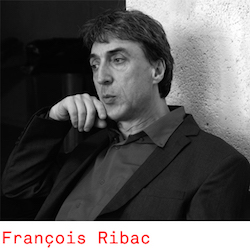
François Ribac is a Professor at the Faculty of Letters and Philosophy, University of Burgundy. His research explores the intersection of popular music, performing arts, technology history, and cultural prescription with a strong focus on Anthropocene impacts. He holds a Habilitation (HDR) from Sorbonne University and has authored significant works including the book Performing Arts and Music in the Anthropocene (2024). Research interests span cultural policy analysis, digital transformations in music, and ecological dimensions of artistic practice. Key themes include: Cultural democratization and institutional critique Technology-mediated performance practices Ecomusicology and sustainable arts Historical epistemology of sound His publications demonstrate consistent engagement with Anthropocene challenges through interdisciplinary lenses, particularly examining how digital platforms reconfigure music consumption and how performance arts respond to ecological crises. Recent work critically assesses cultural management models and sustainability frameworks.
Christophe Ayrault is a Researcher at Le Mans University, specializing in the active control of musical instruments at the Laboratory of Acoustics (LAUM). His work focuses on using electro-acoustic systems to manipulate sound radiation and directivity in brass instruments without altering their traditional playability. Research Interests: Physics of musical instruments, active control systems, electroacoustics, and interdisciplinary applications of acoustics in arts and education. Scientific Contributions: Development of active mutes for trombones, optimization of loudspeaker-based control systems, and exploration of radiation impedance in brass instruments. Collaborative Work: Engages in multidisciplinary projects like the Scientific Concerts of Ophonius, integrating acoustics with artistic expression and pedagogical innovation.
Thomas Jean-Hugh is a Professor and Teacher-Researcher at Le Mans Université , affiliated with the Laboratoire d’Acoustique de l’Université du Mans (LAUM) , a leading research institute in acoustics in France. His role involves both teaching and active research in acoustic imaging, signal processing, and structural acoustics. Education PhD in Acoustics and Signal Processing (exact institution and year not specified in text) Research Interests Thomas Jean-Hugh’s research focuses on acoustic source localization and imaging , particularly through the use of microphone arrays , beamforming , and inverse problem solving . His work spans: Acoustic holography for non-stationary and confined sources UAV acoustic detection and tracking using sparse sensor arrays Vibro-acoustic diagnostics for automotive and naval structures Speech processing in meeting environments using distant microphone arrays Non-destructive testing using acoustic emission and imaging techniques Research Trends His recent publications (2022–2025) reveal a strong focus on machine learning-enhanced acoustic imaging , real-time UAV detection , and robust speech processing . He integrates genetic algorithms , Bayesian regularization , and circular harmonics into acoustic array processing, with applications in autonomous systems , marine biology , and automotive acoustics . Scientific Contributions Over 70 peer-reviewed publications in journals and conferences Active supervision of PhD students and postdocs in acoustics and signal processing Participation in international conferences such as Interspeech , ICSV , GRETSI , and ICA Collaborations & Labs He collaborates extensively within LAUM and with external partners including CNRS , ISCA , and international research groups. His lab work involves experimental acoustics , sensor array design , and real-time signal processing .
Aurélien Dumont is Professor of Contemporary Instrumental & Vocal Composition at Conservatoire National Supérieur Musique et Danse de Lyon (CNSMD Lyon) . His work bridges music, literature, and philosophy, often collaborating with poets like Dominique Quélen and philosophers like Dorian Astor . Education: While not explicitly stated, his role as a professor at CNSMD Lyon and collaborations with PSL University researchers imply advanced academic training in musicology and composition. Dumont explores narrativité in music, inspired by literary figures like Antoine Volodine and François Jullien. His compositions deconstruct musical forms, focusing on altérité (alterity) to create tension and new meanings. He integrates rock culture (e.g., Pink Floyd), spectral music, and Japanese Noh theatre influences. His recent works include the 2023 article Pratiques de la décoïncidence , discussing strategies to disrupt artistic norms, and the 2022 interview D'un lyrisme à l'autre , detailing his approach to lyricism and parody. Dumont’s 2020 article in Revue de Sciences Humaines examines the interplay of memory and reality in opera. Scientific collaborations include the SACRe laboratory at Paris Sciences & Lettres University, reflecting his engagement with interdisciplinary research. His pedagogical projects, like Centimes for the Théâtre de Cornouaille, aim to make contemporary music accessible through interactive concert formats.
Paul FRANÇOIS is an Associate Professor in the Department of Letters, Languages and Ancient Civilizations at the University of Toulouse-Jean Jaurès, Faculty of Letters, Philosophy and Music. He also serves as a CNRS Research Engineer at the Laboratory of Medieval and Modern Archaeology in the Mediterranean (LA3M). His academic career spans over three decades, having joined the university in 1989 after completing his doctorate in Latin studies under the supervision of Paul JAL in 1987. His research interests bridge classical scholarship with cutting-edge digital methodologies. Initially focused on Latin paleography, critical editions of historical texts, and Roman history (particularly the mid-Republican period), his work has increasingly incorporated digital reconstruction techniques. He has developed expertise in virtual reality applications for historical and archaeological research, with notable projects focusing on the Saint-Germain Fair theaters, Egyptian archaeological sites including Kôm Abou Billou and the Eastern Desert gold mining operations, and various architectural reconstructions. His recent publications reveal a strong trend toward interdisciplinary work combining traditional humanities with digital technologies. His research spans from ancient Roman history to 18th-century theater architecture, all approached through the lens of digital reconstruction. He has developed specialized methodologies for 'retro-architecture' and virtual reconstruction of historical spaces, with particular attention to how these techniques can enhance both research and public dissemination of historical knowledge. As a member of the PLH-CRATA research team, he contributes to projects that integrate textual analysis with material culture studies. His work on the Eastern Desert of Egypt demonstrates how remote sensing and digital reconstruction can illuminate previously undocumented aspects of medieval gold mining operations. He has supervised numerous digital reconstruction projects and has been instrumental in developing tools like SPIRIDON for Mediterranean ceramicology. His work demonstrates a consistent commitment to creating digital infrastructure that serves both scholarly research and public engagement with historical and archaeological materials.
Augustin Ernoult is a Junior Research Scientist affiliated with the Lutheries-Acoustic-Music (LAM) team at Sorbonne University's Institute Jean le Rond d'Alembert and Inria Paris. His research focuses on linking the geometric design of wind instruments to their acoustic properties using numerical models and optimization algorithms. Notable projects include the development of the Openwind software and collaborations with manufacturers like Buffet Crampon and Humeau Factory. Education: PhD in Musical Acoustics from Université Pierre et Marie Curie (2016), supervised by Benoît Fabre. His work emphasizes the study of flute-like instruments, bassoon acoustics, and the impact of instrument geometry on sound production. Research Interests: Wind instrument acoustics, numerical methods in musicology, instrument design optimization, and comparative studies between French and German bassoons. His recent work explores the muffler effects of tonehole chimneys on bassoon sound quality, as detailed in a 2023 Journal of the Acoustical Society of America publication. Labs/Teams: Active member of LAM team and Inria's Makutu research group. Engages in academic-industrial partnerships to translate research into practical tools for instrument manufacturers.
Gaël Richard is a Professor at Télécom Paris, part of the Institut polytechnique de Paris. He leads the Signal, Statistics and Learning (S²A) research group within the LTCI laboratory and is the Executive Director of Hi! Paris, a hub for AI and data science. His primary research focuses on audio signal processing, including speech synthesis, source separation, and non-negative matrix factorization techniques. He has contributed significantly to applications in automotive and music industries, and his work has been recognized with the 2020 IMT-Académie des Sciences Grand Prix and a 2022 ERC Advanced Grant for the HI-Audio project. Education and Career: Gaël Richard transitioned from classical music to applied mathematics, earning a PhD in speech synthesis. His academic journey blends technical expertise with creative problem-solving, leading to impactful contributions in machine learning and audio technologies. Research Interests: His work spans machine learning for audio signals, including speech synthesis, sound separation, and music information retrieval. He emphasizes reproducibility, publishing tools like YAAFE and databases widely used in the field. Key Projects: The HI-Audio project explores AI-driven audio processing, while his ERC grant supports advancements in hybrid deep learning for audio. He co-supervises PhD students in areas like intelligibility in noisy environments and EEG-based source separation. Awards and Recognition: In addition to major grants and the IMT-Académie des Sciences prize, his work on source separation and audio indexing has earned international acclaim. He actively contributes to academic conferences and serves on editorial boards. Labs and Teams: He leads the S²A team at LTCI, fostering collaborations between academia and industry partners like Thales and Deezer. His research bridges theoretical advancements with practical applications in audio technology.
Xavier Moreau is a Professor at University of Bordeaux, affiliated with the IMS (Integration, Material to System) Laboratory, a joint research unit involving University of Bordeaux, Institut Polytechnique de Bordeaux, and CNRS. He works within the Automatic Control research group and is a key member of the CRONE team, specializing in fractional-order control systems and their applications. His research interests focus on Control Systems Engineering , particularly Fractional-Order Calculus applications, Vehicle Dynamics and Control , and Automatic Control Systems . Dr. Moreau's work bridges theoretical control theory with practical applications in automotive systems, acoustics, and electromechanical devices. His research demonstrates how fractional calculus can enhance traditional control approaches, particularly through the CRONE methodology which provides superior robustness and performance in complex systems. Dr. Moreau's publications reveal a consistent focus on applying control theory to real-world problems, with particular emphasis on vehicle guidance systems, headlight leveling mechanisms, suspension control, and even musical instrument acoustics. His work on the CRONE controller represents a significant contribution to control engineering, offering alternatives to traditional PID controllers with improved performance characteristics. His scientific contributions span multiple domains including Automotive Engineering, Control Theory, Fractional Calculus, and Acoustics. Dr. Moreau has collaborated extensively with industry partners including Groupe PSA (now Stellantis), demonstrating the practical relevance of his research to automotive applications. While specific advising information isn't provided in the available materials, Dr. Moreau's extensive publication record suggests active mentorship of graduate students and researchers within the IMS laboratory. His work has contributed to advancements in vehicle safety systems, driver assistance technologies, and precision control mechanisms. Dr. Moreau's research laboratory environment includes the CRONE team within the Automatic Control group at IMS, which appears to maintain strong connections with both academic and industrial partners in the automotive sector. His work demonstrates the integration of theoretical control concepts with practical engineering solutions for real-world applications.
Hyacinthe Ravet is Professor of sociomusicology at the Faculty of Arts, Sorbonne University, and a senior researcher at the Institute for Research in Musicology (IReMus, UMR 8223). Since January 2018 she also serves as Vice-Dean for Equality and Anti-Discrimination at the Faculty of Arts. Education & Academic Posts Professor, Faculty of Arts, Sorbonne University Researcher, IReMus (Institut de Recherche en Musicologie, UMR 8223) Vice-Dean for Equality and Anti-Discrimination, Faculty of Arts, Sorbonne University (2018–present) Research Focus Her work lies at the intersection of sociology and musicology, concentrating on: Gender relations in musical and artistic professions, with sustained attention to female conductors and composers. Sociology of orchestras , examining interactions, negotiations and cooperation within symphonic ensembles. Creative processes in music-making, combining ethnographic observation with sociological theory. Music mediation , including the design and evaluation of programs that broaden public engagement with music. Research Leadership & Projects Co-head, “Institutional and Social Frameworks” team, IReMus (with Louisa Martin-Chevalier since 2020). Director, ANR project “Prodige – Research program on orchestras, discrimination and gender” (2018–2023). Co-director, “Alcoll – Analyzing the collective in musical creation processes” (Sorbonne Universités Emergence program, 2017–2018). Founding co-director, CReIM (Interdisciplinary Research Circle on Female Musicians). Director, journal Travail, genre et sociétés (CNRS – La Découverte) since 2017. Scientific Awards & Recognition While no single competitive award is listed, her extensive record of invited keynotes, scientific‐committee memberships and international conference organization attests to significant scholarly recognition in sociomusicology and gender studies. Teaching & Mentoring Created and directs the Master’s degree “Music Mediation” in collaboration with Sorbonne Nouvelle University. Regular courses: Sociomusicology, sociology of music, theories of sociology of the arts, music mediation, sociology of music education, research methodology. Organizer of an ongoing doctoral & post-doctoral seminar in sociomusicology at Sorbonne University (since 2016). Laboratories & Teams She carries out her research within IReMus (mixed research unit 8223), co-leading the “Institutional and Social Frameworks” team and actively participating in the international MAGE network (Labour Market and Gender).
Louise CONDI is a Lecturer at the Sorbonne University 's School of Music and Musicology, specializing in interdisciplinary research at the intersection of Musicology , Acoustics , and Organology . Her work focuses on sympathetic string instruments from the 17th to 18th centuries , with a particular emphasis on the nyckelharpa and its cultural transmission. Doctorat en Musique et Musicologie et Ingénierie mécanique (2023), Sorbonne Université Master Recherche en Ethnomusicologie, mention Très Bien (2019), Sorbonne Université Licence en Musique et Musicologie et Sciences et Technologie (2017), Sorbonne Université Her research integrates historical studies , acoustic modeling , and instrumental conservation , supported by collaborations with the Musée de la Musique , Collegium Musicæ , and Institut Jean Le Rond d'Alembert . She has published extensively on the Galpin Society Journal and presented at international conferences including CFA Marseille and CIMCIM London . Louise received the Prix du Mozarteum de France (2024) and research grants from the Maison Française d'Oxford and Erasmus+ . She actively mentors interdisciplinary projects and contributes to academic governance as a student representative in Sorbonne University's administrative bodies.
Laurianne Perzo is a Doctor of French Language and Literature and a Temporary Teaching and Research Associate (ATER) at the University of Lille INSPÉ. She is a member of the Textes et Cultures Research Center (EA 4028) at the University of Artois and the Théodile-CIREL Didactics Research Team (EA4354) at the University of Lille. Her work bridges contemporary dramatic writing, theatre education, and cultural mediation for youth. PhD in French Language and Literature, University of Artois Master in Contemporary Art Practice and Pedagogy, University of Lille Maîtrise in Aesthetics, Arts, and Sociology of Culture, University of Metz Her research explores the interplay between ethics and aesthetics in contemporary youth theatre, focusing on how dramatic works address social, political, and intimate issues while fostering educational skills. She analyzes cultural objects like theatre texts and albums, emphasizing their role in developing competencies outlined in French educational guidelines. Perzo’s publications and presentations highlight themes such as resilience aesthetics, social issue representation, and Brechtian influences in youth theatre. She has organized international colloquia on disability representation and contributed to interdisciplinary seminars on migration narratives and theatrical improvisation. As an educator, she supervises Master’s theses on topics like gender stereotypes, poetry teaching, and cultural mediation, and designs curricula integrating dramaturgy and French language didactics. She collaborates with institutions like the Charles Perrault International Institute and ASSITEJ-France.
Florence Levé is a full Professor in Computer Science at the University of Picardy Jules Verne within the College of Sciences. She is affiliated with multiple research teams including MIS (Modeling, Information, Systems) Amiens, SDMA Team, and Algomus Team, while associated with CRIStAL (UMR 9189). Her research focuses on the intersection of computer science, music information retrieval, and computational modeling of musical structures. Key Institutions: University of Picardy Jules Verne, CRIStAL Research Themes: Musical texture analysis, rhythm processing, human-AI co-creation in music Research Interests span computational modeling of musical structures, symbolic music processing, and interdisciplinary applications in neuroscience and digital humanities. Her recent work explores rhythmic complexity across cortical and subcortical auditory areas, texture annotation in classical compositions, and algorithmic orchestration techniques. Publications Trends show sustained focus on computational approaches to musical texture and rhythm. Key areas include symbolic music analysis (Mozart, Corelli), AI-assisted composition, and mathematical modeling of auditory processing across species. Collaborative work with researchers in neuroscience, musicology, and sound engineering reveals multidisciplinary scope. Research Networks include collaborations with: Mathieu Giraud (Computational Musicology) Fabrice Wallois (Neuroscience Applications) Christophe d'Alessandro (Organ Acoustics) Laboratory Affiliations : MIS (Modeling, Information, Systems) Amiens SDMA Team Algomus Team Associated with CRIStAL (UMR 9189 CNRS)
Iván López Cabello is a Lecturer in Hispanic Studies at the University of Western Brittany, France, affiliated with the Heritage and Creation in Text and Image research laboratory (HCTI, EA 4249). He teaches courses in Spanish civilization, art history, and language across various undergraduate and graduate programs including LLCER (Languages, Literatures, and Foreign Civilizations), LEA (Languages, Economics, and Management), and MEEF (Master's in Education). His academic appointments include serving as co-responsible for the MEEF Master's program in Spanish, coordinator of Erasmus exchanges with the University of Cadiz, and member of the Faculty Council. Faculty of Arts and Humanities, University of Western Brittany Heritage and Creation in Text and Image research laboratory (HCTI, EA 4249) López Cabello specializes in contemporary Spanish history and literature, with particular expertise in the Spanish Republican exile of 1939, the democratic transition period in Spain, democratic memory movements, and 20th century Spanish literature focusing on José Bergamín. His research examines historical press, memory politics, and the intellectual history of Spain during Franco's regime and the transition to democracy. He has developed significant expertise in the work of José Bergamín, a prominent Spanish intellectual who lived in exile and returned during Spain's democratic transition. His scholarly output demonstrates consistent engagement with Spanish Republican exile narratives, the intellectual resistance during Franco's dictatorship, and the complex memory politics of Spain's democratic transition. His publications reveal a methodological approach combining intellectual history, literary analysis, and cultural studies to examine how Spanish intellectuals navigated exile, censorship, and political change. López Cabello has supervised academic projects and directed several international conferences focused on Spanish Republican exile and memory studies. He has been instrumental in organizing academic events such as the international colloquium "Republican Spaniards Exiled During World War II: Forced Labor and Resistance" and "Spanish Exile in Brittany: 80th Anniversary of the Arrival of the First Refugees." His academic leadership extends to coordinating Erasmus exchanges with Spanish institutions and serving in various administrative roles within his faculty. López Cabello is actively involved in research teams focused on Spanish exile history and contemporary Spanish literature. He collaborates with scholars across Europe on projects examining Republican exile networks and memory studies. His work with the HCTI research laboratory has produced significant collaborative publications on forced labor of Spanish Republicans during World War II.
Jean-Pierre Dalmont is a Researcher at the Institute of Acoustics of Le Mans University. His work bridges the experimental and theoretical domains of Waveguides and the Physics of Musical Instruments , focusing on wind instruments and harmonic resonators. Specialist in saxophone waveguide modeling (staircase cones, analogous to bowed string models) Developed acoustic impedance sensors (with CTTM) and non-linear measurement methods for reed instruments Active in scientific outreach: Ask project, Acoustic MOOC for Musicians , and CISM Summer School in Italy His research explores Non-linear Acoustics in musical contexts, Metrology for instrument validation, and Elastic Waves in complex media. Publications span Acta Acustica and Forum Acusticum , addressing topics like ghost notes in brass, pedal note harmonics, and educational clarinet innovations. Collaborations include CTTM, LAUM, and European acoustics networks.
Joachim Golliard is an associated researcher at Le Mans Université's Institute of Acoustics. His work focuses on acoustics, particularly wave propagation in complex media, aeroacoustics, and experimental characterization of acoustic liners under flow conditions. He contributes to transversal axes including nonlinear acoustics and metamaterials. Primary Affiliation: Institute of Acoustics, Le Mans Université Research Topics: Flow-induced acoustics, sound propagation in ducts, experimental facilities Collaborations: Yves Aurégan, Thomas Humbert, Gwenael Gabard, Jean-Christophe Le Roux His recent publications explore shear flow effects in 2D ducts, multimodal characterization of liners, and experimental validation of acoustic-structure interactions in corrugated geometries. Articles analyze wave propagation dynamics, impedance eduction techniques, and flow-acoustic coupling mechanisms. He actively participates in international conferences like AIAA/CEAS Aeroacoustics and contributes to the MAINE Flow experimental facility development for advanced acoustic testing under representative flow conditions.