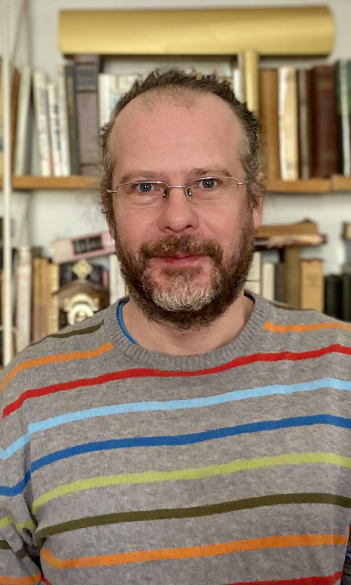
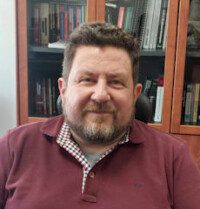
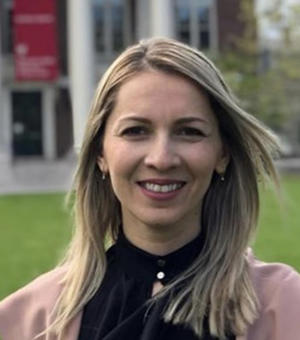
Prof. Steve Mann is a tenured full professor at the University of Toronto in the Department of Electrical and Computer Engineering , Faculty of Applied Science and Engineering. He is also the Director of the EyeTap Personal Imaging (ePi) Lab and the FL_UI_D Laboratory , while serving as Chief Scientist for both the Rotman School of Management's CD Lab and Meta . Education: PhD from MIT (1997) As the inventor of wearable computing , Mann's research spans augmented reality (EyeTap) , high dynamic range (HDR) imaging , comparametric equations , and humanistic intelligence (HI) . He pioneered inventrepreneurship education and developed the hydraulophone , an instrument based on absement theory. His recent work includes the 2025 IEEE Consumer Electronics Award and 2024 Lifeboat Foundation Guardian Award , recognizing contributions to wearable tech and humanity. Scientific achievements include over 200 publications , patents , and media exhibits at institutions like MoMA and the Smithsonian. Scientific Awards: 2025 IEEE Consumer Electronics Award 2024 Lifeboat Foundation Guardian Award 2004 Leonardo Award for Excellence Coram International Sustainable Design Award (First Place) Advising and Innovation: Co-founded over $1B in tech ventures with students, integrating invention and entrepreneurship into academia. His labs explore fluid-based musical instruments and privacy-enhancing wearables . Labs & Teams: Leads the ePi Lab and FL_UI_D Lab , focusing on wearable imaging, mediated reality, and reverse kinematics in fluidic musical systems.
Fernando A Meza is a Professor in the School of Music at the University of Minnesota . His work spans composition, performance, and curation, with a focus on contemporary and classical music practices. Contact: mezax001@umn.edu Role: Professor (Music) University: University of Minnesota School: School of Music Email: mezax001@umn.edu Meza's research interests center on: Multidisciplinary musical composition Percussion ensemble innovation Interpretation of classical works Latin American musical traditions Sonic installation art Contemporary performance practices His creative output trends (1986-2011) include: 18 total research outputs Emphasis on non-textual formats (performances, exhibitions) Major 2011 works: 'Tres Piezas Costarricences' (book) and 'New York Tryptich' (premiere) 2009 contributions to percussion festivals and Stravinsky interpretations 2008 exploration of sound design principles Early career publications starting in 1986
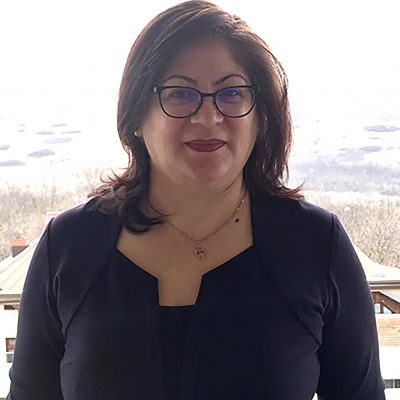
Richárd Papp is a current Associate Professor at the Department of Cultural Anthropology , Eötvös Loránd University , with concurrent roles as Director of the Institute of Social Relations . His academic work bridges cultural anthropology, ethnic studies, and religious anthropology. Primary affiliation: Department of Cultural Anthropology Administrative role: Director of Institute of Social Relations Research focus: Holocaust memory, Jewish identity, interethnic dynamics Over decades, Papp has explored transgenerational trauma and cultural identity across Central Europe. His publications span ethnographic humor studies, religious communities in Vojvodina, and memory frameworks. Recent interdisciplinary collaborations include underwater robotics applications, suggesting methodological diversification. His academic awards remain unlisted in available materials, but his 200+ publications reflect sustained scholarly output. Papp's work integrates fieldwork-based anthropology with emerging technologies for cultural preservation.
Stephen Crawford is a Professor of Music History and Director of Percussion Studies at the University of Mary Hardin-Baylor's College of Visual and Performing Arts. With 23 years of service, he combines academic instruction with practical performance experience. Bachelor of Arts in Music Education (Minot State University) Master of Music (University of Northern Iowa) Doctor of Musical Arts in Conducting/Music History (University of Missouri-Kansas City Conservatory of Music) His research focuses on Music History , World Music , and Percussion Composition , with international fieldwork in Indonesia, Czech Republic, Russia, and Peru. His compositions have gained global recognition, performed across 17+ countries. Mr. Crawford's scholarly work includes 10 original compositions and 4 journal publications analyzing diverse musical traditions from Aztec instrumentation to European bell systems, reflecting his expertise in historical and cross-cultural musicology. Recipient of Albert Nelson Marquis Lifetime Achievement Award Two-time UMHB Faculty Award winner (Teaching & Scholarship) Past President of Texas Chapter of Percussive Arts Society As principal timpanist with Temple Symphony Orchestra and conductor of UMHB Percussion Ensemble, he bridges academic and professional performance realms while maintaining active roles in international music clinics and research.
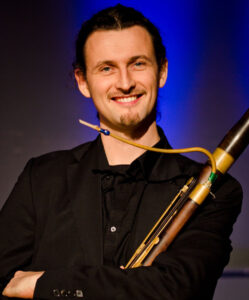
Tomasz Wesołowski is a Lecturer at the Ignacy Jan Paderewski Academy of Music in Poznań , specializing in Historical Performance Practice with a focus on historical bassoon. Born in 1980 in Gdańsk, he graduated with distinction in 2004 from the Gdańsk Academy of Music and earned his Ph.D. in 2023 from Poznań. Artistic Expertise: Specializes in Baroque and Classical-era music, playing historical bassoon. Academic Leadership: Founded initiatives like Oboeband Poznań and Gdańska Scena Barokowa to promote early music. Global Collaborations: Performs with ensembles like Les Musiciens du Louvre , Capella Cracoviensis , and B’rock Orchestra . Research Trends span historical bassoon techniques, Baroque opera/oratorio, and Polish musical heritage. His recordings (40+ albums) with labels like Brilliant Classics and Pentatone showcase collaborations with conductors Marc Minkowski , René Jacobs , and Cecilia Bartoli . Scientific Awards: Mayor of Gdańsk Scholarship Fondazione Marco Fodella Grant Teaching & Outreach: Lectures at Varmia Musica Academia (Poland) and Oficina de Musica de Curitiba (Brazil), while leading workshops globally.
Joakim Andén-Pantera is an Associate Professor in the Division of Probability, Mathematical Physics and Statistics at the Department of Mathematics, KTH Royal Institute of Technology. His research spans signal processing, statistical data analysis, and machine learning with applications in cryo-electron microscopy, biomedical signal analysis, and audio classification. His educational background includes advanced training in mathematics and signal processing leading to his current academic position. Though specific degree details aren't provided in the text, his research profile indicates deep expertise in mathematical methods for signal representation. Professor Andén-Pantera's work focuses on developing mathematical frameworks that extract discriminative information from signals while remaining invariant to irrelevant variations like translation, frequency-shifting, and noise. His research bridges theoretical mathematics with practical applications across multiple domains: Developing wavelet scattering transforms for robust signal representation Applying these techniques to cryo-EM for molecular structure analysis Creating methods for audio and music classification through time-frequency analysis Designing algorithms for biomedical signal processing, particularly ECG analysis Contributing to computational methods for cosmological parameter estimation His publication record shows consistent contributions in both theoretical signal processing and practical implementations. The research trajectory demonstrates increasing sophistication in applying scattering transforms and deep learning to diverse signal processing challenges across biology, medicine, and acoustics. Notable scientific recognition includes: Best Paper Award (2nd Place) at IEEE International Workshop on Machine Learning for Signal Processing (2015) Best Paper Award (1st Place) at International Conference on Digital Audio Effects (2012) Best Paper Award at IPDPS for cuFINUFFT implementation Professor Andén-Pantera advises graduate students on degree projects in financial mathematics, mathematical statistics, and engineering mathematics. His research group develops computational tools including ASPIRE for cryo-EM and Kymatio for wavelet scattering transforms. He teaches courses in Applied Statistics, Probability Theory, and Statistical Learning at KTH. He leads the development of several influential open-source software projects that have become standard tools in their respective fields, with Kymatio particularly gaining widespread adoption across multiple research communities.
Chen Jia is a Lecturer at Tongji University's School of Art and Media. He holds a Master's degree in French horn from Mainz Conservatory of Music and Mannheim State Conservatory of Music, studying under renowned professors such as Xiaoming Han and Hermann Baumann. He has served as principal horn in multiple orchestras and co-founded the Tongji University Music Boat Woodwind Quintet. Education: Master's in French Horn (Mainz Conservatory, Mannheim State Conservatory) Professional Affiliations: Member of Mannheim Blech ensemble, Principal Horn for multiple orchestras His research interests include music education and orchestral performance, though his recent publications focus on computational fluid dynamics, electrohydrodynamics, and microfluidics. Key topics include lattice Boltzmann modeling, viscoelastic fluid dynamics, and electrohydrodynamic flow control. Scientific contributions span interdisciplinary domains, with work on physics-informed neural networks for microfluidic systems and polymer 3D printing challenges. Collaborative projects involve international ensembles and computational simulations.
Jonas Schmid is a researcher affiliated with the Technical University of Munich (TUM) , specifically within the Chair of Acoustics of Mobile Systems . His work bridges computational methods with acoustic engineering, leveraging advanced statistical and machine learning techniques. Email: jonas.m.schmid@tum.de Office: Room 5505.01.534, Boltzmannstr. 15, 85748 Garching bei München Research Focus: Schmid's research centers on: Bayesian inference in acoustic modeling Generative design of acoustic metamaterials Sound field reconstruction techniques Interactive educational simulations for acoustics Integration of machine learning in noise control Visualization of musical instrument acoustics Publication Trends: Recent works demonstrate expertise at the intersection of computational acoustics and machine learning. Key areas include metamaterial design (2021, 2022), Bayesian inference applications (2021-2023), and development of interactive acoustic simulations (2019-2021). Subfields span noise control, room acoustics, and educational technology.
Dr. Viorica Vasilache serves as a Scientific Researcher II at the Interdisciplinary Department of Sciences, ARHEOINVEST Center of Alexandru Ioan Cuza University (UAIC), specializing in cultural heritage conservation through advanced scientific methodologies. With over 25 years of dedicated research, she directs analytical efforts at the Laboratory for Scientific Investigation and Conservation of Cultural Heritage, employing techniques such as SEM-EDX, micro-FTIR, and derivatography to authenticate artifacts and develop preservation protocols. Her research spans cultural heritage conservation , archaeological materials analysis , and environmental science applications , with a recent focus on integrating artificial intelligence for forgery detection. Key projects include interdisciplinary studies of prehistoric pottery, authentication of artworks by Rembrandt and Magritte, and analysis of historical musical instruments, reflecting her commitment to bridging scientific rigor with cultural stewardship. Publication trends reveal growing emphasis on AI-driven authentication frameworks and sustainable conservation materials, particularly in textile dye extraction and salt-related environmental research. Vasilache has mentored 25 doctoral students (23 Romanian, 2 international) and contributed to over 20 national research initiatives, including Romania's participation in EUROINVENT innovation exhibitions. As secretary of the International Journal of Conservation Science (ISI-indexed), she advances scholarly discourse in heritage conservation while leading component projects in salt-related environmental and therapeutic research. Her laboratory maintains cutting-edge capabilities in non-invasive analysis, supporting ongoing collaborations with international institutions for artifact authentication and preservation.
Prof. Dr. Saskia Bender holds a W3 professorship in Educational Science with a focus on social participation, school inclusion and counseling at the Faculty of Education, University of Bielefeld. She also serves as Dean of the Faculty of Education and participates in multiple university committees including the Faculty Conference (FaKo) and Structure, Budget, Personnel Committee (StruKo). Her work extends to the Institute for Interdisciplinary Conflict and Violence Research and the Bielefeld School of Education (BiSEd). Dr. Bender's research focuses on social participation in the context of integration challenges of modern societies , reconstructive school, teaching and inclusion research , reconstructive professional and counseling research , educational casuistry and casuistry in teacher training , and cultural education and cultural school development . Her work critically examines inclusion-exclusion dynamics, power structures in educational settings, and the implementation of inclusive practices in schools. Analysis of her recent publications reveals a strong emphasis on the paradoxes of inclusion, where practices intended to promote inclusion often create new forms of exclusion. Her research employs reconstructive methodologies to uncover hidden mechanisms in educational settings, particularly focusing on counseling practices, teacher training, and cultural education in rural contexts. She examines how ambiguity is managed in cooperative educational settings and how social participation is negotiated in contemporary schools. Dr. Bender has served as project leader for 'Matching Relationships of Cultural Education Networks and Culture(s) in Rural Areas in the Context of Social Participation (PaKKT)' and has been instrumental in developing approaches to cultural education in non-urban settings. Her work consistently bridges theoretical frameworks with practical educational applications.
Dr. Christine HATTE is a Researcher at the Laboratory of Climate and Environmental Sciences (LSCE), a joint research unit of the French Alternative Energies and Atomic Energy Commission (CEA), National Center for Scientific Research (CNRS), and University of Versailles Saint-Quentin-en-Yvelines (UVSQ) in Gif-sur-Yvette, France. Since April 2020, she has served as Head of the 14C Dating Laboratory at LSCE, building on her extensive experience in radiocarbon dating and isotopic geochemistry that spans over 25 years since joining LSCE in 1994. Her educational background includes a Habilitation to Direct Research from the University of Versailles-Saint-Quentin (2008), a Doctorate in Geology from the University of Paris XI (2000), a DEA in Geology and Sedimentary Geochemistry from the University of Paris XI (1996), and a Diploma in Chemical Engineering from ENS Chimie Rennes (1993). Dr. HATTE's research focuses on the current carbon cycle, soil sciences, permafrost dynamics, paleoclimatology, and 14C geochronology . Her methodological approaches include organic isotopic geochemistry, terrestrial vegetation modeling (BIOME4), and advanced statistical tools . She has developed expertise in applying radiocarbon dating techniques to diverse fields ranging from climate science to cultural heritage preservation. Her recent publications demonstrate a strong focus on Arctic permafrost systems, soil carbon dynamics, and innovative applications of radiocarbon dating . A significant portion of her work examines greenhouse gas emissions from thermokarst lakes in Siberia, carbon sequestration in soils, and the development of new methodologies for radiocarbon analysis. Her interdisciplinary approach bridges climate science, archaeology, and environmental chemistry with multiple international collaborations. Dr. HATTE holds several prestigious positions including: Associate Editor of the Radiocarbon Journal (since 2012) CEA Senior Expert (since 2007) Chair of the CEA working group on the 4‰ initiative (since 2017) Member of the CNRS Research Infrastructure for Geochemistry (REGEF) (since 2018) She actively mentors graduate students and has supervised several doctoral candidates including Marie-Gabrielle Durier (focusing on musical instrument dating), Lara Hughes-Allen (studying greenhouse gases in Siberian permafrost), Rana Jreich (statistical approaches to soil carbon dynamics), and Marwa Tifafi (multi-scale soil carbon modeling). Her research has been supported by multiple funding agencies including CEA-DRF, ANR, and ParisSaclay. Dr. HATTE leads the 14C Dating Laboratory at LSCE, which serves as a critical resource for radiocarbon analysis in climate science, archaeology, and environmental studies. The laboratory participates in international collaborations and has contributed to major projects examining carbon cycling in permafrost regions, soil carbon sequestration potential, and innovative dating applications for cultural heritage preservation.
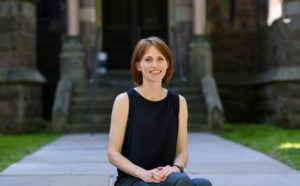
Jamie L. Reuland serves as Assistant Professor of Music at Princeton University's Department of Music within the School of Arts and Humanities. She is also an associated faculty member at the Seeger Center for Hellenic Studies and in the Program of Medieval Studies. Previously, she held the position of Elias Boudinot Bicentennial Preceptor from 2019-2022 and taught at Stanford University as a Mellon Fellow in the Humanities. Dr. Reuland earned her B.A. from Dickinson College, followed by an M.A. and Ph.D. from Princeton University. Her academic journey reflects a deep commitment to medieval music studies, particularly focusing on the Mediterranean world. Her research centers on the intellectual, aesthetic, and political history of medieval music, with particular emphasis on the intersections between musical texts, material culture, and political life in the late-medieval Mediterranean. She approaches historical and theoretical questions through musical performance and practice, exploring how music functions as both metaphor for and constitutive element of political life. Her work spans Venetian music history, medieval song traditions, music notation, liturgical drama, and the relationship between music and visual culture. Her publications reveal a consistent focus on how music shaped and was shaped by political formations, particularly in Venice's Mediterranean empire. Her scholarship demonstrates expertise in musical paleography, manuscript studies, and interdisciplinary approaches that connect music with art history, political theory, and cultural anthropology. She has made significant contributions to understanding how musical practices informed civic identity, religious ritual, and political representation in the medieval world. Andrew W. Mellon Foundation Fellowship American Council of Learned Societies Fellowship Fulbright Foundation in Greece Fellowship Medieval Academy of America Fellowship Gladys Krieble Delmas Foundation Grant At Princeton, Dr. Reuland co-founded LUDUS, an interdisciplinary working group devoted to the study of the Middle Ages in its live, plastic, and time-bound dimensions. Through LUDUS, she regularly hosts scholars, performers, and practitioners of historical art forms. Her teaching reflects her research interests, with courses on the history of choral music, musical paleography and notation, music and art, music and fiction, music in the global Middle Ages, medieval music drama, music and the environment, Hildegard of Bingen, the twelfth century, and trecento song. She approaches historical questions through musical performance and practice, creating a distinctive pedagogical method that bridges scholarship and performance. Her office environment reflects her scholarly approach, featuring heavy musicological reference works alongside poetry collections and historical artifacts that connect music with broader cultural practices. She maintains an active research agenda that includes projects on musical fragments, bells, relics, earthquakes, and Josquin des Prez, alongside her primary work on medieval song and political representation.
Mitianoudis Nikolaos serves as a Professor in the Department of Electronics and Information Systems Technology at Democritus University of Thrace, where he leads research in audio and video processing within the Electrical Circuits, Signal and Image Processing Laboratory. His work bridges statistical signal processing with modern machine learning techniques for real-world applications. Education: Diploma in Electrical and Computer Engineering, Aristotle University of Thessaloniki (1998) MSc in Communications and Signal Processing, Imperial College London (2000) PhD in Audio Source Separation, Queen Mary University of London (2004) His research spans Machine Learning , Statistical Signal Processing , and Deep Learning with specialized focus on audio source separation, image fusion, and machine hearing/vision systems. Current projects include environmental sensing with backscatter radio networks (BLASE), 3D structure estimation (F3SME), and cultural heritage digitization (TEXTaiLES), demonstrating interdisciplinary applications from healthcare to cultural preservation. Analysis of his recent publications (2019-2024) reveals a decisive shift toward neural network architectures, particularly transformer models and multi-resolution U-Nets, applied to audio separation and image processing challenges. His work consistently addresses noise robustness in real-world scenarios while advancing theoretical frameworks for underdetermined systems. As Principal Investigator for the F3SME project and Scientific Associate on multiple EU-funded initiatives, he has secured significant research funding. His teaching portfolio includes core undergraduate courses in Electrical Circuits II and Digital Signal Processing, plus graduate-level Signal and Image Coding. The Electrical Circuits, Signal and Image Processing Laboratory serves as his primary research base, focusing on practical implementations of theoretical signal processing concepts through collaborations with Imperial College London and industry partners like General Dynamics UK.
Professor Tuna Şare Ağtürk holds the position of Professor of Classical Art and Archaeology at Çanakkale Onsekiz Mart University (Türkiye). He also serves as a Departmental Lecturer at the Ioannou Centre for Classical and Byzantine Studies, University of Oxford. His academic journey includes fellowships at Harvard University’s Radcliffe Institute (2018–2019) and the University of Oxford (2019–2021), and research positions at NYU’s Institute of Fine Arts (2013–2014). Since 2015, he has directed the Nicomedia-Çukurbağ Excavation, yielding groundbreaking discoveries of Tetrarchic-era imperial complexes. Education: BA in Archaeology and History of Art from Bilkent University (Türkiye), MA and PhD in Art History from Rutgers University (USA). His PhD dissertation explored dress and identity in Western Anatolia’s arts from the Archaic to Roman periods. Research focuses on ancient Greek/Roman art and archaeology in Asia Minor, especially cross-cultural interactions, imperial iconography, and material hybridity. Key themes include Tetrarchic imagery, ancient polychromy, and Anatolian cultural identity. His excavations at Nicomedia revealed a major imperial complex with preserved marble friezes and statues from Diocletian’s era. Publications span monographs (e.g., the award-winning 2021 book on Nicomedia’s painted reliefs) and peer-reviewed articles on topics like Etruscan-Anatolian fashion links, archaeological fingerprint analysis, and Lycian tomb reliefs. His work bridges material culture analysis with broader cultural and political narratives. Recipient of the 2023 AIA James R. Wiseman Book Award for his monograph on Nicomedia’s reliefs. Active in archaeological preservation and has pioneered forensic approaches to studying ancient artifacts. Leads international teams in fieldwork, conservation, and interdisciplinary research projects.
Dr. Zahra Shahbazi serves as Adjunct Professor of Mechanical Engineering at Manhattan College, where she chairs the Council for Faculty Affairs (CFA). She teaches core engineering courses including Finite Element Analysis, Robotics, and Mechanical Design while maintaining active research collaborations with ASME and NSF. Her leadership extends to conference organization as former ASME IDETC-DEC chair and NSF grant reviewer. Her educational background includes: B.S. in Mechanical Engineering, University of Tehran M.S. in Biomechanical Engineering, Amirkabir University Ph.D. in Mechanical Engineering, University of Connecticut Graduate Certificate in College Instruction, University of Connecticut Shahbazi's research integrates computational mechanics with biological systems, focusing on protein molecular modeling, robotics kinematics, and machine learning applications. Her work bridges nano-bio mechanical systems with practical engineering solutions in additive manufacturing and nondestructive testing. Recent publications demonstrate strong interdisciplinary trends combining microscopy, AI-driven image analysis, and biomechanical simulation across materials science and biomedical domains. Her scientific recognition includes multiple NSF fellowships for nanotechnology institutes and summer workshops, plus University of Connecticut honors for graduate research excellence. Notable awards span Materiomics engineering, cancer nanotechnology, and negotiation skills development through ASME conferences. Shahbazi secures significant research funding including $639,778 NSF Campus Cyberinfrastructure grant (2023) and $579,896 NSF S-STEM scholarship initiative. She mentors students through engineering ambassador programs and develops K-12 STEM curricula via ASEE collaborations. Her laboratory work centers on micro-CT imaging, finite element simulation, and additive manufacturing for both biological structures and antique instrument restoration.