Dr. Deirdre Nic Mhathúna is a Professor at Dublin City University's Fiontar & Scoil na Gaeilge. Her research focuses on 18th-century Irish poetry, manuscript studies, and the works of Piaras Feiritéar. She holds leadership roles in Studia Hibernica and Chumann Merriman . She earned a BA in Irish and German from Trinity College Dublin and a PhD from University College Cork. Her research explores post-classical Irish manuscript culture, the poetry of Piaras Feiritéar, and the cultural heritage of Corca Dhuibhne. Recent work includes analyses of scribal transmission, accentual verse development, and the influence of place on literary expression. She has contributed to major publications like the Cambridge History of Irish Poetry and edited volumes such as Ar an Imeall i Lár an Domhain . Her articles span topics from Jacobitism to the Great Famine, Peig Sayers' life narratives, and the enduring legacy of Piaras Feiritéar. She frequently presents at international conferences, including the American Conference for Irish Studies and the Ó Thrácht go Twitter seminar series. No scientific awards are listed, but her editorial and collaborative roles highlight her contributions to Irish literary preservation and scholarly networks. Her work bridges historical and modern contexts, emphasizing cultural continuity and the interplay between oral tradition and written text. Her research often intersects with regional identity, religious thought, and transnational literary connections.
Danuta Mirka is a Professor at Northwestern University's Bienen School of Music in the Department of Music Theory and Cognition. She holds the Harry N. and Ruth F. Wyatt Chair in Music Theory and has been recognized with major awards for her scholarship. PhD in Musicology from University of Helsinki Senior Fulbright Fellow at Indiana University Humboldt Fellow and DFG Research Fellow at University of Freiburg Leverhulme Trust Research Fellow at University of Southampton Her research synthesizes historical music theory with contemporary cognitive approaches, focusing on metric manipulations in Haydn/Mozart, sonoristic structuralism in Penderecki, and topic theory in eighteenth-century music. She has developed analytical frameworks for textural and timbral systems in avant-garde compositions. Key trends across her publications include: cross-disciplinary application of semiotics and fuzzy logic to music analysis; systematic studies of cadential structures in Classical-era works; and innovative methodologies for analyzing non-traditional instrumental techniques. Her article on Penderecki's sonoristic style introduced groundbreaking concepts of six-dimensional textural analysis. Society for Music Theory Citation of Special Merit (2015) Wallace Berry Award (2011) Marjorie Weston Emerson Award (2023) Roland Jackson Award (2017) Mirka has edited major reference works and served on editorial boards of leading journals. Her scholarship bridges Polish avant-garde traditions with Western analytical methodologies.
Demmy Verbeke serves as Senior Lecturer in Open Research at KU Leuven's Faculty of Arts while simultaneously holding leadership positions within KU Leuven Libraries. He heads Artes, the department responsible for collections and services for Humanities and Social Sciences, contributing to the strategic leadership of KU Leuven Libraries as a whole through his membership on the management team. Verbeke earned his PhD in Linguistics and Literature: Latin and Greek from KU Leuven in 2005 with a dissertation on Latin letters and poems in 16th-century music editions. Prior to joining the library in 2012, he worked as a project manager in the heritage sector and as a postdoctoral researcher focusing on Renaissance humanism in the Low Countries and British Isles, multilingualism, book history, and the classical tradition. His research centers on scholarly communication and digital scholarship in the humanities, with particular emphasis on non-profit and community-driven forms of academic publishing. Verbeke's work explores how libraries can adapt to evolving scholarly communication models while maintaining equitable access to knowledge. He investigates the role of academic libraries in supporting open science infrastructure and sustainable publishing models that serve scholarly communities rather than commercial interests. Analysis of his recent publications reveals a consistent focus on transformative library practices, open access funding models, and the evolving role of academic libraries in scholarly communication. His work spans theoretical examinations of open scholarship principles and practical implementations of fair open access initiatives, with growing attention to cybersecurity challenges facing digital library infrastructure. Verbeke actively contributes to open science governance as a member of KU Leuven's Open Science Task Force, coordinator of the Open Science working group on scholarly publishing futures, and co-manager of the KU Leuven Fund for Fair Open Access. He serves on national and international advisory boards including Open Library of Humanities and Open Book Collective, demonstrating significant influence in shaping open access infrastructure. As head of Artes, he leads library services specifically tailored to humanities scholars while advancing digital scholarship initiatives. His dual appointment uniquely positions him to bridge library practice and academic research, fostering collaborations between library professionals and humanities scholars to develop innovative research support services that address the specific needs of humanities scholarship in the digital age.
Jason Smith is a Postdoctoral Scholar at Northwestern University , affiliated with the Interactive Audio Lab . He earned his PhD in Music Technology from the Georgia Institute of Technology . Research Focus Human-AI collaboration in creative domains Interactive music systems AI-driven accessibility solutions Creative autonomy and neural audio generation Recommender systems for music libraries Publication Trends His work spans 2019–2025, emphasizing AI applications in music education, accessibility (especially for blind/visually impaired users), and immersive environments like AI holodecks. Key methodologies include co-design, hybrid recommendation algorithms, and automated creativity assessment. Lab Affiliation He contributes to the Interactive Audio Lab, exploring intersections of sound, code, and AI.
Nicholas Ross serves as Professor and Department Chair in the Department of Music at Otterbein University, maintaining an active international performance career with recitals at prestigious venues including St. Martin’s-in-the-Field and St. John’s Smith Square in London, the Field Room in Dublin, and the Engelse Kerk in Amsterdam. His academic credentials include: DMA in Piano Performance from Rice University UM in Piano Performance (MMus equivalent) from ArtEz, Netherlands DipTCL from Trinity College of Music, London Ingenieur (MSc equivalent) from Twente University, Netherlands Ross's research centers on the mathematical foundations of musical composition, specifically proportional structures and the golden ratio in works by Mozart, Debussy, and Bartók. His scholarly presentations at international conferences in Lancaster and Krakow bridge analytical musicology with mathematical theory, while his artistic output includes multiple critically acclaimed recordings exploring both classical repertoire and contemporary compositions like Arthur Honegger's chamber works. His publication profile demonstrates consistent interdisciplinary exploration at the intersection of performance practice and structural analysis, with scholarly output focused on quantitative approaches to musical form and artistic recordings showcasing technical mastery across diverse stylistic periods. Major honors recognize his dual excellence as performer and scholar: Faculty Fellowship from Sweet Briar College (2008-2009) Anthony Lindsay Prize for Pianoforte Playing (1993) John Longmire Prize in Debussy competition (1994) John Ireland Prize for Accompanists (1994) MehrooJeejeeboyPrize for Pianoforte Playing (1995) Alec Rowley Memorial Prize (1996) Elisabeth Schumann Prize for Lieder (1996) Robert Meyer-ESU Prize enabling Aspen Music Festival residency (1995) As Department Chair, Ross oversees curriculum development while teaching Applied Piano, Music Theory sequences, and specialized seminars including Music and Ideology. His Sweet Briar College Faculty Fellowship supported advanced research in music-mathematics relationships, though no major external grants are documented. Student mentorship focuses on performance pedagogy within undergraduate programs. No dedicated research laboratories or performance ensembles under his direct leadership are specified in available materials, though his collaborative recording projects indicate ongoing artistic partnerships.
Dmitri Tymoczko is a Professor of Music at Princeton University, where he has taught composition and theory since 2002. His work bridges the gap between academic music theory and contemporary composition, creating a unique interdisciplinary approach that has earned him recognition as a leading figure in modern music scholarship and creation. Tymoczko's research interests focus on the geometric modeling of musical structures, polystylistic composition that draws from genres spanning Renaissance to rock, and the mathematical foundations of tonality. His theoretical work explores how harmonic structures can be represented geometrically, revealing fundamental patterns that connect diverse musical traditions. He approaches composition as 'a logical deduction from absurd premises,' blending rigorous structural thinking with playful musical exploration. His scholarly publications and compositions reveal a consistent interest in the intersection of mathematical precision and expressive freedom. The articles demonstrate expertise across music theory, composition, and the cognitive aspects of musical perception, with recurring themes of geometric modeling, tonal structure, and genre hybridization. His work often challenges traditional boundaries between academic and popular music forms. Guggenheim fellowship Rhodes Scholarship Leonard Bernstein fellowship from Tanglewood Fellowship from the Radcliffe Institute for Advanced Study Block lectureship from the Society for Industrial and Applied Mathematics First music-theory article published in Science magazine Tymoczko maintains an active performance career alongside his academic work, with his compositions performed by leading ensembles including the Brentano Quartet, Newspeak, and Roomful of Teeth. His teaching integrates theoretical insights with practical composition, fostering a generation of musicians who understand music's structural foundations while embracing creative freedom. He has developed innovative tools like the musical programming language 'arca' to explore new compositional possibilities.
Alexei Yurchak is a Professor in the Department of Anthropology at the University of California, Berkeley. His research focuses on Soviet and post-Soviet societies, with particular attention to cultural practices, political transformations, and the intersection of history and anthropology. He is renowned for his work on late socialism, the collapse of the USSR, and the cultural legacies of Soviet ideology. Yurchak’s scholarship bridges anthropology, history, and political theory, exploring themes such as parody, memory, and the paradoxes of power in authoritarian systems. Key contributions include his book Everything Was Forever, Until It Was No More: The Last Soviet Generation , which examines the cultural identity of the final generation raised under Soviet rule. His research also delves into post-Soviet Russia’s political dynamics, ethnographic analyses of systemic change, and the role of cultural forms like music, art, and media in shaping societal narratives. His articles span topics from Soviet music culture and the aesthetics of parody to contemporary Russian politics. He critiques the interplay between ideology and everyday life, emphasizing how cultural practices reveal deeper political and social structures. Yurchak’s interdisciplinary approach has positioned him as a leading scholar in postsocialist studies and critical anthropology.
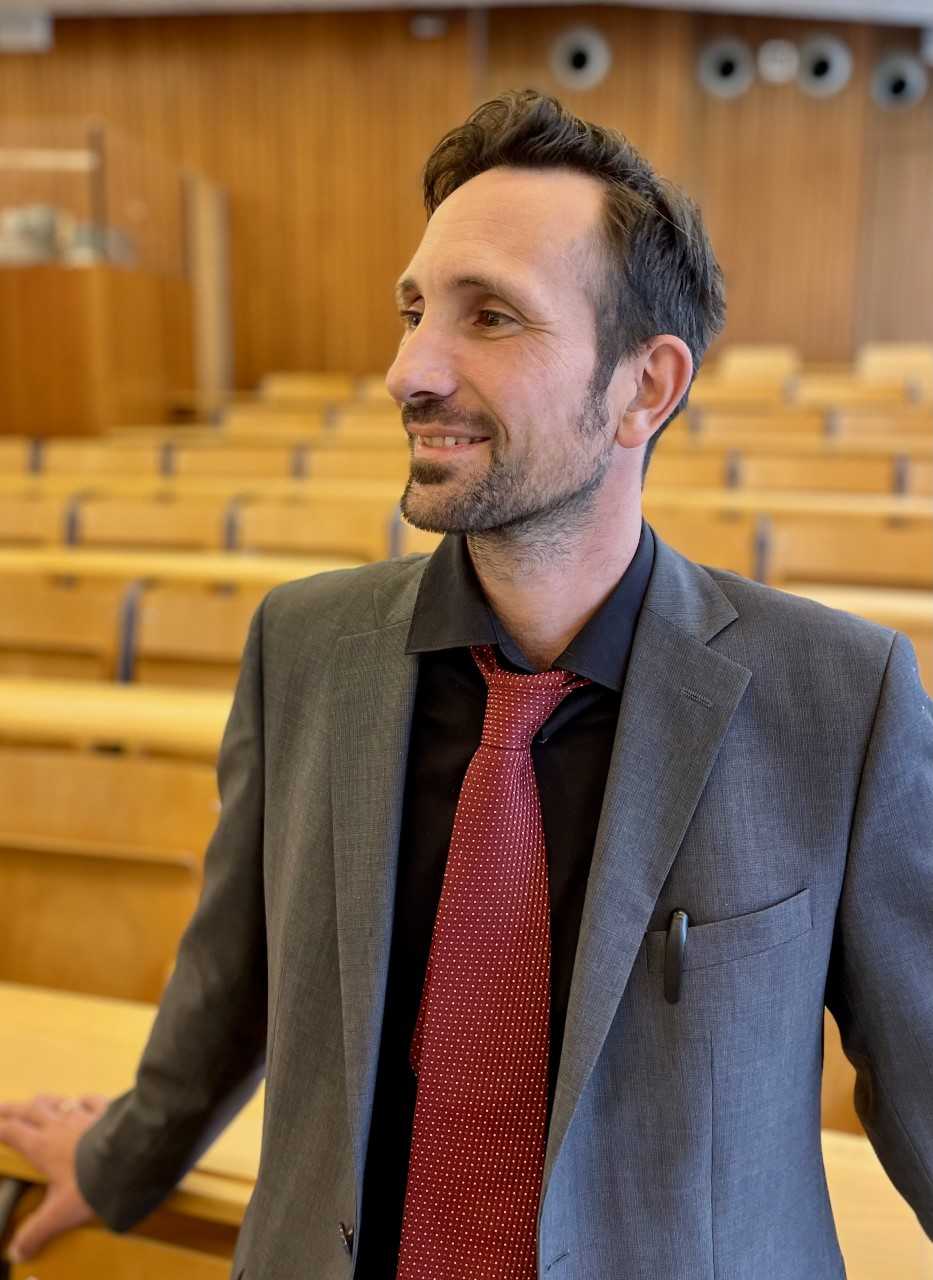
Konstantin Voigt, Professor of Musicology II , serves at the University of Würzburg within the Faculty of Philosophy and Institute of Music Research. His research spans medieval Latin song traditions, music theory, notation systems, and digital humanities applications. He also explores 20th-century composers like Arnold Schoenberg and the reception of medieval music in popular culture. Current: Chair of Musicology II, University of Würzburg (2024–) Previous: Tenure-track Professor, University of Freiburg (2020–2024) Education: PhD (Würzburg), MA (Erlangen-Nürnberg), Musicology & Art History Voigt's research bridges premodern music history with digital methodologies, focusing on: Medieval Latin song structures (9th–13th centuries) Development of musical notation and visualization Digital editions as tools for manuscript analysis Intermedial relationships in postmodern composition Stefan George’s poetry in Schoenberg’s works His recent publications analyze scribal practices in Paris 1139 manuscripts and digital approaches to monophonic music. He co-leads the Weave Lead project on French music reception in Central Europe before 1350 and contributes to the Corpus monodicum digital edition. Collaborations include PD Dr. Hana Vlhova-Wörner (Prague) and institutions like the Schola Cantorum Basiliensis.
Kass Banning is an Associate Professor at the Cinema Studies Institute , University of Toronto. Her research interrogates aesthetics, screen alterity, and minor cinema movements across diasporic, Indigenous, and queer contexts. She contributes to critical discourses on cultural translation, transnational analytics, and affect theory. Teaching areas: Critical race theory, migratory aesthetics, documentary media, and moving image installations Co-founded journals: CineAction , Borderlines Current projects: Co-leading the Image/Movement/Sound quadrant for the Andrew W. Mellon Foundation-funded Aesthetic Education: A South-North Dialogue Her scholarship spans Canadian women's cinema , Black British cinema , and collaborations with artists like John Akomfrah and Isaac Julien . She serves on the executive of the Film Studies Association of Canada .
Dr. Derek Nystrom is an Associate Professor in Cultural Studies at McGill University's Faculty of Arts, specializing in Film & Television, Critical Theory, and 20th-Century American Cinema. His research focuses on class representation in cinema, particularly exploring precarity, labor dynamics, and ideological narratives in Hollywood films. He holds a Ph.D. from the University of Virginia and previously taught at Skidmore College and the University of Virginia. Current research includes a book project on 1930s Hollywood as a precursor to cinematic precarity. Notable works include Hard Hats, Rednecks, and Macho Men: Class in 1970s American Cinema (2009) and critical essays on films like Up in the Air and Hail, Caesar! . His analyses frequently intersect with broader socio-economic themes, such as neoliberalism, masculinity, and cultural identity. Publications span academic journals like Radical History Review and Iowa Journal of Cultural Studies , as well as platforms like the Los Angeles Review of Books . His work bridges historical film analysis with contemporary critical theory, emphasizing the role of cinema in reflecting and shaping cultural anxieties.
Stacy E. Wolf is Professor of Theater in the Lewis Center for the Arts and the Effron Center for the Study of America at Princeton University, where she also serves as Director of Fellowships and Founding Director of the Program in Music Theater. She will serve as Acting Chair of the Lewis Center for the Arts in fall 2025. Wolf is one of America's foremost scholars on musical theatre, with extensive publications exploring gender, sexuality, and American culture through the lens of musical performance. Wolf's educational background includes a B.A. in English from Yale University, an M.A. in Drama from the University of Virginia, and a Ph.D. in Theater from the University of Wisconsin-Madison. Her academic journey has positioned her at the forefront of musical theatre scholarship, where she has helped establish this field as a legitimate area of academic study. Her research interests focus on musical theatre as a cultural phenomenon , particularly examining gender and sexuality in the American musical , feminist approaches to performance , and the relationship between musical theatre and American history . Wolf investigates how musicals both shape and are shaped by larger cultural forces, challenging assumptions about musical theatre as merely entertainment rather than serious art. She explores the pleasure principle in musical theatre while analyzing its political and social dimensions, examining how this commercial art form can simultaneously be cutting-edge and culturally significant. Wolf's publications reveal a consistent focus on feminist perspectives in musical theatre history , with particular attention to how women and LGBTQ+ communities engage with and reinterpret musicals . Her work spans from historical analysis of Broadway classics to contemporary examinations of how musicals function in community settings beyond professional theatre. Recent scholarship increasingly addresses diversity and inclusion in musical theatre , examining how productions in educational settings can empower students of color and create pathways for greater representation on professional stages. Guggenheim Fellow (2017) President's Award for Distinguished Teaching (2017) 2024 Distinguished Scholar by the American Society for Theatre Research Two Bogliasco Fellowships As an educator, Wolf has mentored numerous students including Abigail Jean-Baptiste, with whom she collaborated on the course 'Sondheim's Musicals and the Making of America.' Her teaching philosophy emphasizes the integration of theory and practice, encouraging students to see no separation between art-making and scholarship. Wolf has received significant grant support for her research, including the prestigious Guggenheim Fellowship that enabled deep exploration of musical theatre's cultural impact across America. Wolf is actively involved in Princeton's artistic community as a faculty fellow at Wilson College and academic fellow for the women's basketball team. She regularly participates in student productions, attending rehearsals and leading talkbacks. Her current research includes a book on feminist approaches to musical theatre (co-written with Paige Allen) and an article examining composer Jeanine Tesori's contributions to the field.
Olaf Möller serves as an Adjunct Professor in the Department of Film at Aalto University, specializing in global cinema analysis and film criticism. His research encompasses: Film Studies Cinema History European & Mexican Popular Cinema Philosophical Film Theory Critical Aesthetics Ethical Dimensions of Filmmaking Möller investigates cultural representation, spectacle theory, and the intersection of film with life philosophy through diverse cinematic traditions. Analysis of his 2021-2023 publications reveals consistent engagement with Finnish film criticism (in Filmihullu), international festival coverage (Berlinale), and cross-cultural studies. Key thematic threads include dilettantism in art, cyclical time concepts, ethical character studies, and the political dimensions of popular cinema across European and Latin American contexts. No scientific awards, student advisement records, or laboratory affiliations were documented in the source materials.
Gregory Nagy is the Francis Jones Professor of Classical Greek Literature and Professor of Comparative Literature at Harvard University. He serves as Director of the Center for Hellenic Studies and oversees HarvardX MOOCs, engaging over 181,000 learners globally. His work bridges archaic Greek literature, oral traditions, and comparative metrics. Research Focus: Archaic Greek poetry, oral-formulaic theory, Indo-European metrics Publications: 15+ monographs including Ancient Greek Heroes, Athletes, Poetry (2024) and Masterpieces of Metonymy (2015) His scholarship reveals patterns in epic transmission, emphasizing performance's role in Homeric text stabilization. He pioneered the "24 Hours" methodology for analyzing heroic narratives across media. Scientific Awards: Goodwin Award of Merit (1982) for The Best of the Achaeans Nagy's HarvardX MOOC and mentorship initiatives have transformed classical education, creating intergenerational networks. He co-edited the digital Festschrift Donum Natalicium (2012) celebrating his 70th birthday.
David Brodbeck is a Professor in the Department of Music at the University of California, Irvine. His research and teaching focus on Central European music and musical culture during the long nineteenth century, as well as rock music. He has published extensively on composers such as Schubert, Mendelssohn, and Brahms, exploring connections between biography and musical analysis, and has extended his scholarship to intertextuality in rock recordings by the Beatles and the Beach Boys. Ph.D., University of Pennsylvania (1984) Previous faculty: University of Pittsburgh, University of Southern California His research spans from technical analysis of Brahms's symphonic and chamber works to broader social questions, including antisemitism in Wagnerian circles, cosmopolitan patriotism in Austro-Hungarian music, and the role of Heimat in Goldmark's compositions. His forthcoming monograph Brahms Patriotic and Political (2025) continues this political and cultural exploration. His publications have garnered significant recognition, including the Virgil Thomson Award for Outstanding Book in Music Criticism and the American Musicological Society's Award for Excellence in Jewish Studies and Music. He has also received fellowships from the National Endowment for the Humanities, the Alexander von Humboldt Foundation, and grants from the American Council of Learned Societies and the American Philosophical Society. Brodbeck's work bridges historical, analytical, and cultural methodologies, with a focus on music's intersection with politics and identity. He has served as President of the American Brahms Society, underscoring his leadership in Brahms scholarship.
Donna Gallo is an Assistant Professor of Music Education at the University of Illinois Urbana-Champaign (UIUC), School of Music. She previously held faculty positions at Westminster Choir College, where she coordinated the Kodály Certification program, and taught K-6 general/choral music in Fairfax County Public Schools (VA) and Simsbury Public Schools (CT). Gallo’s academic background includes a Ph.D. from Northwestern University, an MME from Silver Lake College, a BME from Indiana University, and training at the Kodály Institute in Hungary, where she received the International Kodály Society Scholarship . Her research focuses on: Inservice teacher learning through collaborative professional development structures. Creative music-making and the integration of popular music practices in elementary education. Community partnerships as critical experiences for preservice teacher training. Quantitative research methodologies in music education. Educational equity through culturally responsive teaching and service learning. Teaching strategies for neurodivergent and physically divergent students. Gallo has secured grants for professional development programs and community partnerships with local music educators and school districts. Notably, she collaborated with the School of Music and College of Engineering on a UIUC grant to address systemic racism and social injustice. She has published in leading journals such as the Journal of Research in Music Education , Music Education Research , and International Journal of Music Education , and authored book chapters in The Routledge Companion to Creativities in Music Education and Toward Equity in School Music . Scientific Awards: International Kodály Society Scholarship (Kodály Institute, Hungary). In advising and grants, Gallo emphasizes culturally responsive teaching and first-year teacher support through service learning. Her work bridges music education with interdisciplinary initiatives, leveraging technology and partnerships to drive equity-focused innovation. She is actively involved in editorial roles, including past editor of AOSA Echo (2012–2016) and current editorial board member of the Music Educators Journal . Her collaborations span the UIUC School of Music and College of Engineering, as well as local schools and community artist mentors. Gallo’s efforts aim to transform music education through inclusive curricula, technology integration, and systemic change.