معرفی
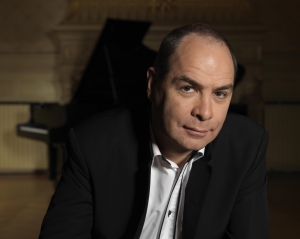
Nicholas Ross serves as Professor and Department Chair in the Department of Music at Otterbein University, maintaining an active international performance career with recitals at prestigious venues including St. Martin’s-in-the-Field and St. John’s Smith Square in London, the Field Room in Dublin, and the Engelse Kerk in Amsterdam.
His academic credentials include:
- DMA in Piano Performance from Rice University
- UM in Piano Performance (MMus equivalent) from ArtEz, Netherlands
- DipTCL from Trinity College of Music, London
- Ingenieur (MSc equivalent) from Twente University, Netherlands
Ross's research centers on the mathematical foundations of musical composition, specifically proportional structures and the golden ratio in works by Mozart, Debussy, and Bartók. His scholarly presentations at international conferences in Lancaster and Krakow bridge analytical musicology with mathematical theory, while his artistic output includes multiple critically acclaimed recordings exploring both classical repertoire and contemporary compositions like Arthur Honegger's chamber works.
His publication profile demonstrates consistent interdisciplinary exploration at the intersection of performance practice and structural analysis, with scholarly output focused on quantitative approaches to musical form and artistic recordings showcasing technical mastery across diverse stylistic periods.
Major honors recognize his dual excellence as performer and scholar:
- Faculty Fellowship from Sweet Briar College (2008-2009)
- Anthony Lindsay Prize for Pianoforte Playing (1993)
- John Longmire Prize in Debussy competition (1994)
- John Ireland Prize for Accompanists (1994)
- MehrooJeejeeboyPrize for Pianoforte Playing (1995)
- Alec Rowley Memorial Prize (1996)
- Elisabeth Schumann Prize for Lieder (1996)
- Robert Meyer-ESU Prize enabling Aspen Music Festival residency (1995)
As Department Chair, Ross oversees curriculum development while teaching Applied Piano, Music Theory sequences, and specialized seminars including Music and Ideology. His Sweet Briar College Faculty Fellowship supported advanced research in music-mathematics relationships, though no major external grants are documented. Student mentorship focuses on performance pedagogy within undergraduate programs.
No dedicated research laboratories or performance ensembles under his direct leadership are specified in available materials, though his collaborative recording projects indicate ongoing artistic partnerships.