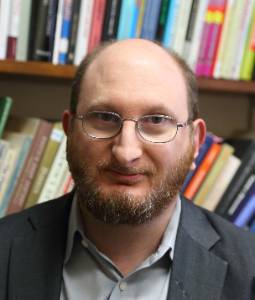
Joseph A. November is an Associate Professor in the Department of History at the University of South Carolina, affiliated with the McCausland College of Arts and Sciences. His research focuses on the history of biomedical computing, distributed computing, and the intersection of technology and medicine. He holds a Ph.D. from Princeton University (2006), an M.A. from the University of Chicago (2002), and a B.A. from Hamilton College (1997). His work includes the award-winning book Biomedical Computing: Digitizing Life in the United States (2012), which explores the co-development of biomedicine and computing technologies. Current projects include Revolutions@home , examining distributed computing in protein folding research, and a biography of computing pioneer Robert S. Ledley. He has received grants from the NSF, NIH, and the Charles Babbage Institute. Teaching interests span the history of science and technology, including courses on the history of medicine, digital humanities, and the role of games in historical education. He actively contributes to professional organizations like SHOT and the History of Science Society. Awards include the Computer History Museum Prize (2013) and the National Institutes of Health DeWitt Stetten Fellowship (2007-2008). His research bridges historical analysis with contemporary issues in technology and biomedical ethics.
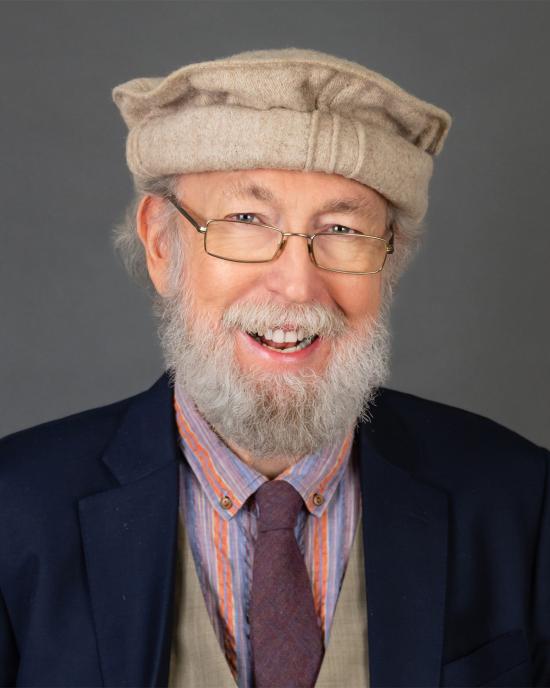
Michael R. Dove is the Margaret K. Musser Professor of Social Ecology and Professor of Anthropology at Yale University, where he also serves as Curator of Anthropology at the Peabody Museum and Co-Coordinator of the Combined YSE/Anthropology Doctoral Program. With over forty years of research experience, his work focuses on environmental anthropology, particularly the environmental relations of local communities in South and Southeast Asia. Dove earned his B.A. from Northwestern University and his M.A. and Ph.D. from Stanford University. His academic journey has spanned decades of field research in Asia, including more than a dozen years conducting long-term studies on human ecology in Borneo and Java, developing government research capacity in Indonesia, and advising the Pakistan Forest Service on social forestry policies. Professor Dove's research interests encompass the anthropology of climate change, cultural and political aspects of natural hazards and disasters, indigenous environmental knowledge and practice, environmental institutions and movements, history of environment-related sciences, and multispecies ethnography. His work often examines how local environmental systems interact with national and global markets, politics, and ideologies, with a focus on problematizing orthodox approaches to conservation and development. He has made significant contributions to understanding human-environment relations through both theoretical frameworks and practical applications. Dove's recent scholarly output demonstrates a progression toward more integrated approaches to environmental challenges, blending historical perspectives with contemporary issues. His publications increasingly focus on the intersections of climate change, social justice, and indigenous knowledge systems, while maintaining his longstanding interest in Southeast Asian environmental relations. The work shows a growing emphasis on post-humanist approaches and multispecies ethnography, reflecting broader trends in environmental anthropology while maintaining his distinctive focus on political ecology and institutional analysis. As an educator, Professor Dove has supervised numerous doctoral and master's students, many of whom have gone on to win research awards and secure prestigious positions. He organizes separate research labs for doctoral students from Yale School of the Environment and other departments, as well as for joint YSE/Anthropology doctoral students. His advisees typically conduct international research and have excellent records of obtaining research support both within and beyond Yale. The Dove Lab at Yale School of the Environment serves as a hub for environmental anthropology research, focusing on topics including natural resource management, property rights, power struggles, household energy transitions, and human-wildlife interactions. The lab fosters a collaborative environment with 30-50 students working on related issues each year, characterized by supportive peer dynamics rather than competition. It also contributes to policy and social change through its research and the work of its alumni.
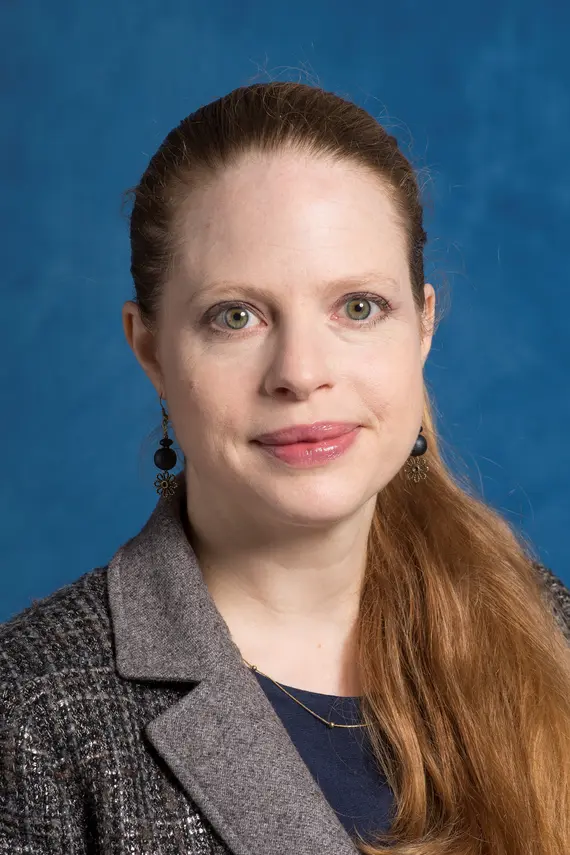
Professor Isto Huvila is a leading scholar at Uppsala University's Department of ABM (Archives, Libraries, and Museums) within the Faculty of Humanities. His academic profile spans information science, digital humanities, and cultural heritage studies with a distinctive focus on documentation practices and information management across diverse contexts. His research interests encompass: Information and knowledge management Social and participatory information practices Documentation and paradata theory Digital humanities and archaeological information systems Health information and e-health services Open data and research data management Recent scholarly output reveals a strong trajectory toward understanding information practices across multiple domains. A significant portion of his work examines paradata in archaeological contexts through the CAPTURE project, investigating how documentation of data creation processes can enhance research transparency and data reuse. He also conducts extensive research on digital inclusion among older adults and immigrant populations regarding e-health services, analyzing both experiences and expectations of these user groups. Professor Huvila publishes in high-impact journals including Journal of Documentation, Information Research, Journal of the Association for Information Science and Technology, and Journal of Medical Internet Research. His interdisciplinary approach connects information science with archaeology, health informatics, and digital humanities, yielding practical insights for improving documentation standards, research data management, and e-health service design. His 2025 book 'Paradata: Documenting Data Creation, Curation and Use' represents a major contribution to the field, alongside influential review articles like 'Trends in information behavior research, 2016-2022' in the Annual Review of Information Science and Technology. His work bridges theoretical and practical concerns in information science, making substantive contributions to both academic knowledge and real-world applications in cultural heritage institutions and healthcare information systems.
Prof. Dr. Mona Hess is a Full Professor and Chairholder of the Chair of Digital Heritage Technologies at Otto-Friedrich-Universität Bamberg , Germany. She directs the M.Sc. Digital Technologies in Heritage Conservation program and serves as Vice-Speaker at the Centre for Heritage Conservation Studies and Technologies (KDWT) . Her work bridges digital documentation, 3D imaging, and heritage conservation, with a focus on cultural landscapes, historic timber, and artifact preservation. Education : Dipl.-Ing. in Architecture (TUM), M.A. in Heritage Conservation (University of Bamberg), Ph.D. in 3D Imaging Metrology for Cultural Heritage (University College London, 2015) Her research spans 3D laser scanning, photogrammetry, SLAM-based recording , and digital twin environments , particularly for structural monitoring, museum artifacts, and historic gardens. She leads projects like VirScan3D (virtual laser scanner simulator) and 3DPetrie (UCL Petrie Museum 3D models) and collaborates on international initiatives such as the British Museum War Canoe digital repatriation. Recent publications emphasize automated defect analysis in timber, multi-modal imaging for ceiling art, and linked open data in heritage. She has contributed to CIPA ICOMOS as an expert member and will chair their Education and Dissemination Commission (2024). Scientific Awards : Fellow of the UK Higher Education Academy (2016), Associate Fellow of the Higher Education Academy (2014) She teaches courses in Digital Object Recording , 3D Spatial Data Modeling , and Science Communication , and organizes international summer schools on heritage monitoring. Her lab, the Chair of Digital Heritage Technologies , collaborates with institutions in Italy, Spain, and the UK, focusing on interdisciplinary innovation in heritage conservation.
Pieter Desmet serves as Professor of Design for Experience at Delft University of Technology's Faculty of Industrial Design Engineering, specifically within the Department of Human-Centered Design. He directs the Delft Institute of Positive Design, focusing on advancing knowledge for designing human flourishing. His research centers on emotional design mechanisms, particularly how product design evokes emotions and contributes to individual and community well-being. Key interests include Positive Design frameworks, mood-regulation interventions, AI-emotion alignment, and multisensory experiences in packaging and museum contexts. Recent work explores liminal spaces in exhibits, autoethnography ethics, and group mood dynamics in workplaces. Analysis of his 275+ publications reveals consistent focus on emotional design theory with expanding applications in AI, healthcare, and sustainability. His work bridges academic research with practical design tools for emotional well-being. No scientific awards are documented in the provided materials. Desmet actively supervises doctoral candidates (evidenced by PhD thesis datasets) and secures research grants through institutional collaborations. His leadership in organizing major conferences like IASDR 2023 and Design & Emotion events demonstrates significant academic influence. He leads the Delft Institute of Positive Design research group, which investigates user experience aspects through interdisciplinary projects integrating psychology, design, and technology.
Oliver Grau is a Chair Professor for Image Science and a leading figure in Media Art research, affiliated with Hong Kong Baptist University (Academy of Visual Arts, Distinguished Fellow since 2023) and Danube University Krems (Chair Professor for Image Science from 2005–2022). He founded the Archive for Digital Art (ADA) and the international MediaArtHistories Conference Series , with key roles at institutions across Germany, Austria, and Australia. His work bridges art, science, and technology, focusing on immersive images, digital heritage, and emotion research. Key Positions: Director of ADA (since 2000), Founding Director of MediaArtHistories Conference Series (since 2005), PI for high-resolution digitization of the Goettweig Graphic Print Collection (2005–2017). Research Grants: Funded by DFG, Austrian Science Fund, Australian Research Council, VW Foundation (total 8.3 Mio EUR), and Erasmus+ Joint Master program (5.4 Mio EUR). Research Interests: Grau’s scholarship spans the history of media art, telepresence, artificial life, emotion research, and digital humanities. His work emphasizes the evolution of immersive visual experiences from historical art forms to digital media, integrating theoretical and practical approaches. Article Trends: His recent publications focus on digital art’s sociopolitical dimensions, archiving challenges in the digital era, and cross-disciplinary methodologies. Themes include media art conservation, web-based tools for digital humanities, and the intersection of artistic expression with contemporary global issues like climate change and surveillance. Scientific Awards: Distinguished Fellow at Hong Kong Baptist University (2023) Science Award of Lower Austria (2019) Honorary Doctorate from University of Oradea (2014) Invitations to G-20 summit, Olympic Games, and international symposia Labs & Teams: He leads the Archive for Digital Art, managing a global team of 28 staff, and co-founded the Erasmus+ Joint Master in Media Arts Cultures. His projects emphasize collaborative archiving tools (e.g., Web 2.0/3.0 archives) and large-scale digitization initiatives.
Yavuz Köse is a University Professor of Turkology at the Department of Near Eastern Studies, Faculty of Philology and Cultural Studies, University of Vienna. He currently serves as Head of the Institute of Oriental Studies (since June 2024) and previously as Deputy Head (October 2022-June 2024). Before joining the University of Vienna in 2019, he was W3 Acting Professor for Turkology at the Asia-Africa Institute of the University of Hamburg (2010-2018). His educational background includes a Master of Arts in History and Culture of the Near East as well as Turkology, Psychology and Economics from Ludwig Maximilian University of Munich (2001). Professor Köse's research focuses on social, economic and consumer history of the Ottoman Empire and Turkey, environmental and tourism history, history of science, and migration and workers' history. His work examines Ottoman social structures, economic transformations, cultural heritage, and identity formation, with particular attention to urban contexts and cross-cultural interactions. His recent publications show a strong emphasis on Ottoman social history, with particular attention to conversion narratives, cultural exchanges, and urban economic structures. The 2025 edited volume Becoming Ottoman represents a significant contribution to understanding identity formation in the Ottoman Empire. Among his notable recognitions is the Emerald Literati Award (2020) Professor Köse has supervised numerous doctoral students at both the University of Vienna and University of Hamburg, with research topics spanning cultural heritage in Turkey, migration histories, women's work and property, and Ottoman economic history. He has secured significant research funding including projects funded by FWF, DFG, and VolkswagenStiftung, such as the current 'Lebensmittelhändler von Istanbul' project examining Istanbul grocers as urban actors in supply chains. He is actively involved in academic leadership, serving as Head of the Institute of Oriental Studies and Deputy Spokesperson of the Doctoral School for Philological and Cultural Studies. He co-founded and serves as Editor-in-Chief of the Diyâr. Journal for Ottoman, Turkish and Middle Eastern Studies and is a member of numerous scholarly organizations including the Society for Armenian Studies and the Society for Turkology, Ottoman Studies and Turkey Research.
Vazira Fazila-Yacoobali Zamindar serves as Associate Professor of History at Brown University, specializing in modern South Asia, decolonization, and visual archives. Her interdisciplinary work bridges historical scholarship with contemporary art and public engagement, notably through her acclaimed book The Long Partition and the Making of Modern South Asia (2007). Her educational background includes a PhD from Columbia University (2003), MA from the University of Michigan Ann Arbor (1997), and BA from Wellesley College (1992). As Director of Brown's South Asian Studies Program (2012-2016), she co-organized the Brown-Harvard Pakistani Film Festivals and founded the Theory from the South reading group. Zamindar's research critically examines decolonization, displacement, and statelessness through visual and oral histories. Current projects include a graphic novel collaboration with Sarnath Banerjee on Gandhi and Abdul Ghaffar Khan (supported by the Salomon Research Grant) and the Anticolonial solo exhibition at Karachi's Canvas Gallery (2023), exploring anticolonial resistance on the Indo-Afghan border. Her publications reveal evolving interdisciplinary trends: early works focus on Partition refugees and borders, while recent scholarship (2020-2023) emphasizes repair, statelessness architectures, and secularism in South Asian art. Recurring themes include border politics, visual culture, and decolonial methodologies across historical and contemporary contexts. Scientific recognition includes: National Endowment for the Humanities Fellowship (2009-10) Fulbright Research Scholar (2008-9) Richard B. Salomon Faculty Research Award (2022-23) Visiting Fellow at FU Berlin's Center for Affective Societies (2020-21) She actively engages public scholarship through collaborations with Primary Source, RISD Museum, Lahore Museum, and media appearances on BBC Radio's Museum of Lost Objects . Her teaching portfolio includes courses like Resisting Empire: Gandhi and the Making of Modern South Asia and Art History from the South , reflecting commitment to decolonial pedagogy. Zamindar co-leads the Decolonial Initiative on Migration of Objects and People and continues developing her graphic novel project while expanding the Art History from the South series through collaborations with scholars like Tapati Guha-Thakurta.
Dr Elizabeth Hallam is an Associate Professor in Visual, Material, and Museum Anthropology at the University of Oxford's School of Anthropology & Museum Ethnography. She holds additional roles as a Research Affiliate at the Pitt Rivers Museum, Fellow of St Peter's College, and Director of the Interdisciplinary Studies in Cultural Anthropology (ISCA). Her research focuses on the anthropology of the body, death, material and visual cultures, human anatomy, and three-dimensional models in medical education. She is also the Editor of the Journal of the Royal Anthropological Institute and has curated exhibitions such as 'Designing Bodies: Models of Human Anatomy from 1945 to Now'. Her academic journey includes a BA and PhD from the University of Kent, followed by positions at the University of Sussex and Aberdeen University. She has authored/co-authored influential works like Anatomy Museum: Death and the Body Displayed (2016), which won the Wellcome Medal. Her current projects explore museums of anatomy, 3D modeling in anthropology, and collaborative art practices. Key research themes include death and memorializing processes, the role of material culture in knowledge production, and interdisciplinary studies on creativity and improvisation. She advises four DPhil students and has been involved in ARC-funded projects on cemetery futures and postmortem practices. Awards: Wellcome Medal for Anthropology as Applied to Medical Problems (2016) Grants: Projects funded by the Australian Research Council, Henry Moore Foundation, and Royal College of Surgeons Labs/Teams: Collaborations with University of Melbourne and curatorial networks in Europe/USA
Troy Duster is the Chancellor’s Professor at the University of California, Berkeley, and a Senior Fellow at the Warren Institute on Law and Social Policy. He holds a Ph.D. in Sociology from Northwestern University (1962), an M.A. from UCLA (1959), and a B.S. in Journalism from Northwestern (1957). His career includes roles as Silver Professor at New York University (1999–2012) and Professor at UC Berkeley (1979–99), alongside leadership positions such as Director of the Institute for the Study of Social Change (1979–1997) and Chair of the Sociology Department (1985–88). Research Interests focus on the intersection of race, genetics, criminal justice, and science policy. Key areas include the social consequences of genetic research, the ethics of DNA databases, and the historical and cultural dimensions of race. His work critiques how scientific advancements like genetic testing and forensic databases perpetuate racial disparities. Publications span over five decades, with notable works such as Backdoor to Eugenics (2003) and Whitewashing Race (2003). His articles address topics like the misuse of genetic data, the implications of the Human Genome Project, and the sociological challenges posed by behavioral genetics. Awards include the DuBois-Johnson-Frazier Award (2001) and a Guggenheim Fellowship (1971–72). He has advised institutions like the National Institutes of Health on ethical issues in genetics and contributed to public debates through media appearances and museum collaborations. Professional Contributions include over 20 years on advisory boards for organizations like the National Advisory Council for the Human Genome Research and the American Sociological Association. His work bridges academia and public policy, advocating for equitable science practices and social justice.
Kathryn Lanouette is an Assistant Professor of Learning Sciences and Science Education at William & Mary’s School of Education. She holds faculty affiliate appointments in the Arts & Sciences (ENSP, IIC). Her research explores place-based pedagogies, emerging technologies, and their roles in fostering joyful, ethical science and data science learning for K-8 students. She collaborates with schools, museums, and youth-serving organizations to design curricula and outdoor learning experiences. Education: Ph.D. in Learning Sciences and Human Development, University of California, Berkeley (2017) M.A. in Museum and Childhood Education, Bank Street Graduate School of Education B.A. in Politics, Oberlin College Research Interests: Lanouette focuses on intersections between emotion, place, and data literacy, emphasizing participatory approaches to environmental and socio-ecological education. Her work bridges theory and practice, advocating for equitable, interdisciplinary STEM+ curricula that connect students to local ecosystems and global challenges. Recent Trends in Publications: Her articles emphasize participatory methodologies (e.g., digital mapping, data storytelling), socio-political dimensions of learning, and ethical frameworks for data science education. Recent work highlights collaborations between educators and community organizations to co-create knowledge about climate change and socio-ecological systems. Awards: Outstanding Short Paper Award (2025), International Society of the Learning Sciences NSF-funded ‘Writing Data Stories’ postdoctoral research (2017–2020) Teaching & Mentorship: Lanouette teaches courses on education research, science pedagogy, and applied conservation sciences. She mentors students through interdisciplinary projects, such as the NSF-funded ‘Writing Data Stories’ initiative and NOAA’s Teacher at Sea program. Labs/Teams: Collaborations include partnerships with UC Berkeley’s Science Education Lab, museums, and K-12 schools to develop place-responsive curricula and community-driven data projects.
Cees B.M. van Riel is a visiting professor in the Department of Business-Society Management at Rotterdam School of Management (RSM), Erasmus University. He previously served as a professor of corporate communication and is a globally recognized expert in reputation management, employee alignment, and corporate branding. His research focuses on corporate communication , organizational identity , employee alignment , and industry reputation . He investigates how organizations build and maintain strong reputations through strategic internal and external communication, particularly during periods of change or crisis. His work bridges academic theory and practical application, influencing both scholarly discourse and corporate practice. His recent publications, including a 2023 article on museum-corporate sponsorships, demonstrate a sustained engagement with themes of mutual value creation, stakeholder management, and reputation dynamics. His body of work consistently addresses reputation management , organizational change , impression management , and corporate branding across diverse sectors. Editor-in-Chief of Corporate Reputation Review Founder of the Reputation Forum The Netherlands (RfN) Founding Director of RSM's International Executive Master Programme in Corporate Communication Co-founder of the Reputation Institute Professor van Riel has supervised numerous academic works and has led major educational initiatives. He has been actively involved in global reputation rankings, including the Forbes-published Annual Reputation Institute Study. His consultancy work with multinational corporations such as ING, Philips, and Shell underscores his impact beyond academia. He has also held editorial and speaking roles, contributing significantly to the dissemination of management knowledge. He is central to a research network focused on corporate communication and reputation, with collaborations spanning multiple countries and institutions. His leadership in founding academic programs and professional forums highlights his role in shaping the field.
Prof. Dr. Manja Stephan is a Professor for Transregional Central Asian Studies with a focus on Islam and Migration at the Institute of Asian and African Studies (IAAW) at Humboldt University of Berlin since May 2020. She also serves as Project Director of the Berlin Graduate School Muslim Cultures and Societies (BGSMCS) since 2011. Previously, she was a Junior Professor for Cross-Sectional Issues of Islam in Asian and African Societies at the same institution from 2010 to 2020. Her educational background includes a Doctorate from Martin Luther University Halle/Wittenberg (2009), preceded by doctoral studies at the Max Planck Institute for Social Anthropology (2007-2003) and Ruhr University Bochum (2005-2002). She earned her MA in Ethnology and Central Asian Studies from Humboldt University, Free University of Berlin, and University of Leipzig in 2002. Prof. Stephan's research focuses on the anthropology of transregional Islam, Muslim mobilities and religious geographies, and transregional Central Asia and Gulf Studies (particularly Tajikistan, Uzbekistan, Kyrgyzstan, and the United Arab Emirates). Her work also examines Muslim professionalism, religious economies, material religion, and cultural heritage policies. Her current research projects include 'Women's Pathways to Professionalization in Muslim Asia' (funded by DFG) and 'De:Link // Re:Link' (funded by BMBF), which explore gender, religious knowledge, and transregional connections in Muslim Asia. Her scholarly work demonstrates a consistent focus on translocal Muslim networks connecting Central Asia and the Gulf region, particularly examining how Tajik migrants navigate religious, economic, and social landscapes across these regions. A significant strand of her research investigates women's professionalization within Muslim contexts, highlighting how religious knowledge intersects with gender and economic mobility. Principal Investigator at the Berlin Graduate School for Muslim Cultures and Societies (BGSMCS) Member of the European Association of Social Anthropologists (EASA) Member of the American Association of Anthropologists (AAA) Member of the Central and West Asia and Diasporas Research Network (CWADRN) Member of the German University Association (DHV) Prof. Stephan has supervised numerous theses and dissertations, with a particular focus on transregional Central Asian studies and Muslim cultures. Her current research projects, funded by the German Research Foundation (DFG) and the German Federal Ministry for Education and Research (BMBF), support graduate students and early-career researchers working on Muslim Asia and transregional connections. She has organized multiple academic events including workshops, lecture series, and summer schools focused on Muslim women's professionalization, cultural heritage in Central Asia, and transregional studies. She leads the ANOR Central Asian Studies Book Series published by DeGruyter and has organized numerous academic events including the Berlin Transregional Talks lecture series and workshops on museums as cultural infrastructures in Central Eurasia.
Cornelia Betsch serves as Director of the Institute for Planetary Health Behaviour (IPB) at the University of Erfurt, where she holds a professorship in Health Communication within the Faculty of Philosophy. She is responsible for the Master's program in Health Communication through the Department of Media and Communication Studies and leads the Health Communication Working Group at the Bernhard Nocht Institute for Tropical Medicine in Hamburg as an external position. Her interdisciplinary work bridges behavioral science, psychology, and public health to address critical global challenges. Habilitation (2006), University of Erfurt: 'The role of risk perception and risk communication in prevention decisions – the example of vaccination decisions' PhD (Dr. phil., summa cum laude, 2006), University of Heidelberg: 'Preference for intuition and deliberation– measurement and consequences of affect- and cognition based decision making' Diplom in Psychology (2002), University of Heidelberg Betsch's research focuses on understanding health and planetary health behaviors, particularly examining vaccination behavior, prudent antibiotic use, and climate-friendly actions. Her work extends globally, with investigations in various African countries on vaccination and antibiotic practices. She pioneered the influential COVID-19 Snapshot Monitoring (COSMO) and subsequently developed the Planetary Health Action Survey (PACE), large-scale studies that regularly track public knowledge, risk perception, protective behaviors, and trust during crises. Her research emphasizes applying behavioral and cultural insights to design effective policy frameworks and explanatory communication that promotes positive health behaviors. The 15 most recent articles showcase Betsch's research evolution toward integrating behavioral science with planetary health, climate action, and vaccine communication. Her work increasingly examines the psychological foundations of climate behavior while maintaining her established expertise in vaccine hesitancy and antimicrobial resistance. Recent publications demonstrate methodological diversity, including systematic reviews, meta-analyses, survey experiments, and large-scale monitoring datasets that bridge academic research with practical policy applications. German Psychology Prize (2021) Thuringian Research Prize (2022) Betsch has secured research funding from independent research organizations, ministries, and foundations to support her work on health communication and planetary health behavior. She serves as a scientific advisor to multiple organizations including the WHO Technical Advisory Group on Behavioral and Cultural Insights, Science Media Center Germany, and Museum für Naturkunde Berlin. At the Bernhard Nocht Institute for Tropical Medicine, she established the WHO Collaborating Center for Behavioral Research in Global Health, demonstrating her commitment to translating research into global health practice. Her engagement extends to policy advising, having served on the Corona Expert Council of the Federal Chancellery during the pandemic. As Director of the Institute for Planetary Health Behaviour, Betsch leads an interdisciplinary team applying social and behavioral science perspectives to planetary health and the climate crisis. The institute serves as a hub for research, education, and science communication at the intersection of human health and environmental sustainability. Her work through the IPB emphasizes Open Science principles and aims to understand the comprehensive factors influencing climate-friendly behavior to identify effective intervention points for policy development.
London School of Economics and Political Science (LSE)United Kingdom
Michael W. Scott is a Professor of Anthropology at the London School of Economics and Political Science (LSE). His primary research focuses on Oceania, particularly Melanesia, with a theoretical emphasis on anthropological ontology, cosmology, and wonder studies. He has conducted extensive fieldwork in the Solomon Islands since 1992, focusing on the Arosi people and their poly-ontological cosmology. His work explores human-nonhuman relations, indigenous Christianities, and the interplay between Euro-American and Melanesian ontological frameworks. Education: PhD from the University of Chicago, influenced by mentors like Marshall Sahlins and Marilyn Strathern. He co-organizes the Melanesia Research Seminar at the British Museum. His major publication, The Severed Snake , examines Arosi matrilineages and place-making. Current projects include a comparative study of wonder as an ontological instrument and analysis of relationalist assumptions in ontology debates. Key interests include poly-ontology, ontological transformation, and the re-enchantment of modernity. His research challenges monolithic views of Melanesian sociality, proposing instead a nuanced engagement with diverse cosmological frameworks. Though no formal grants or labs are explicitly listed, his work intersects with LSE's broader anthropological research initiatives.