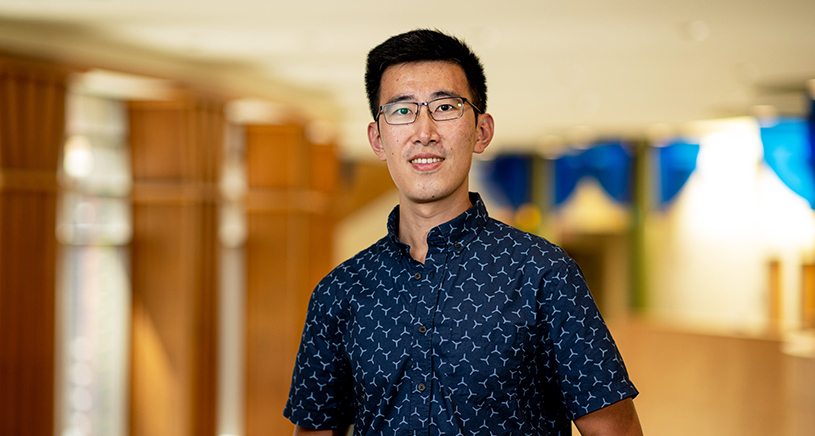
Jaesang Sung is an Assistant Professor at Northern Arizona University in the Department of Economics, Finance, and Accounting. His research focuses on the intersection of health economics, public policy, and behavioral economics, with an emphasis on the socioeconomic determinants of health outcomes and policy responses to public health crises. His work explores key issues such as the effects of school closures and driving restrictions on pandemic transmission, the relationship between income inequality and health disparities, and the impact of tobacco regulations on body weight among youth. His methodological contributions include the development of spatial factor analysis techniques for measuring human development and suicide risk indices. Recent publications analyze the behavioral impacts of lockdowns (2024), the effects of Tobacco 21 laws (2024), and longitudinal studies on mental health and economic deprivation. Collaborations with Qiu, Q., Davis, W., and Tchernis, R. highlight interdisciplinary approaches to public health challenges.
Belen Martin-Barragan is a Reader in Management Science at the University of Edinburgh Business School , with a focus on the Department of Management Science and Business Economics . Her research bridges Machine Learning and Mathematical Programming , emphasizing Explainable Artificial Intelligence (XAI) and applications in Operational Research , including classification , clustering , inventory management , and routing optimization . Her work includes developing interpretable machine learning models for credit scoring, healthcare data, and sustainable logistics. She has led EPSRC-funded projects on Optimisation Models for Interpretable Analytics and contributed to journals like European Journal of Operational Research , Risk Analysis , and Computers and Operations Research . Key methodologies involve Mixed-Integer Linear Programming , Support Vector Machines , and stochastic dynamic programming . Her research fingerprint spans Machine Learning (97%), Mathematical Programming (75%), and Optimization Algorithms (20%). She has been a Research Champion and Deputy Director of Research (Ethics and Integrity) at the Business School, with affiliations to the Credit Research Centre and Edinburgh Strategic Resilience Initiative .
Charles Ichoku is a Professor and Director of GESTAR II at the University of Maryland, Baltimore County (UMBC) in the Department of Geography & Environmental Systems. His work focuses on Earth Observation, Climatology, Wildfire Emissions, Atmospheric Composition, and Water Cycle Dynamics in Africa and globally. Ph.D. in Remote Sensing and Environmental Science, Sorbonne Universités – Pierre et Marie Curie, Paris, France (1993) His research spans wildfire monitoring, smoke aerosol emissions, African climate impacts on hydrology, and satellite-based aerosol characterization. Recent trends in his publications highlight fire radiative power, PM2.5 health effects, and intercomparison of emission datasets. He collaborates with NASA, universities, and international teams on projects like FireX-AQ and global aerosol modeling. His lab, GESTAR II, integrates satellite data with ground observations for environmental validation.
Mariaclelia Di Serio is a Full Professor of Medical Statistics (MEDS-24/A) at Vita-Salute San Raffaele University, Milan. She has held this permanent position since 2007 and served as Associate Professor at the same institution from 2005-2015. Since 2005, she has directed the University Centre for Statistics in Biomedical Sciences (CUSSB) at San Raffaele Science Park. International collaborations with institutions in Norway, Netherlands, Switzerland, Australia, Israel, and UK Executive Committee member of the International Biometric Society (2023-2026) Corresponding Member of Istituto Lombardo Accademia di Scienze e Lettere (2020-present) Her research focuses on Bayesian networks for complex disorders, longitudinal data modeling in oncology/virology, and bioinformatics for genomic analysis. She pioneered methods for competing risks dependence structures and Simpson paradox in survival analysis. Recent publications examine gene therapy safety , joint latent class models for clinical subgroups, and network-based approaches to healthcare data sharing. She contributes to statistical methodology for COVID-19 prognosis and platform trials in biomedical research. 2016: Awarded Nature Communications publication for HIV replication modeling 2015: Elected President of International Biometric Society (Italian region) As a tenured educator since 1998, she teaches Biostatistics at the Faculty of Medicine and contributes to multidisciplinary research in medical data science and public health .
Zach Agioutantis is the Foundation Professor and Department Chair of Mining Engineering at the University of Kentucky's Stanley and Karen Pigman College of Engineering. He has held academic positions at the Technical University of Crete, Greece, from 1989 to 2014, including roles as Professor, Director of the Rock Mechanics Lab, and various faculty ranks. PhD, Mining and Minerals Engineering, Virginia Tech (1987) MSc, Mining and Minerals Engineering, Virginia Tech (1984) Diploma, Mining and Metallurgical Engineering, National Technical University of Athens (1982) His research spans Rock Mechanics, Geomechanics, Subsidence Engineering, Data Management, and Sustainable Mining . Recent work focuses on blast vibration modeling, groundwater flow simulation, and transitioning from open-pit to underground mining. He has pioneered LiDAR navigation in underground openings and developed software tools for mine design. Zach's 15 most recent publications (2025–2024) address dynamic subsidence prediction, coal pillar stability, autonomous mining systems, and environmental impacts of longwall mining. Key subfields include Blast Fragmentation , Geohazard Assessment , and Mine Automation . He has directed the Rock Mechanics Lab at Technical University of Crete and contributed to software development projects like Analysis of Coal Pillar Stability (ACPS). His work integrates machine learning and numerical modeling for methane gas forecasting and structural safety in mines.
Eduardo Izquierdo Torres is an Associate Professor in the Department of Electrical and Computer Engineering at Rose-Hulman Institute of Technology. His academic work bridges multiple disciplines including Artificial Intelligence, Cognitive Science, Neuroscience, Robotics, and Electrical and Computer Engineering, contributing to the excellence of education at Rose-Hulman through his highly interdisciplinary approach. Dr. Izquierdo received his academic degrees from prestigious institutions: Ph.D. in Computer Science and AI (2008) from the Centre for Computational Neuroscience and Robotics at the University of Sussex, Brighton, UK Master of Science in Intelligent Systems (2004) from the University of Sussex, Brighton, UK Bachelor of Science in Computer Engineering (2002) from Universidad Simon Bolivar, Venezuela Dr. Izquierdo's research focuses on understanding intelligence in living organisms and developing artificial systems with similar robustness, flexibility, and adaptivity. His work spans Evolutionary and Adaptive Systems, including Evolutionary Robotics, Cognitive Science, Artificial Life, Evolutionary Computation, Morphological Computation, Embodied Intelligence, Evolutionary Hardware, Neuromorphic Engineering, BioRobotics, NeuroRobotics, and Biologically-Inspired Artificial Intelligence. He takes an integrated approach, studying how behavior arises from the interaction between brains, bodies, and environments through computational models of complete brain-body-environment systems. His recent publications demonstrate a strong trend toward understanding social interaction, neural plasticity, and multifunctional neural circuits, particularly using C. elegans as a model organism. His work combines computational neuroscience with artificial life principles to explore how complex behaviors emerge from neural circuits, with applications in robotics and artificial intelligence. Many of his recent papers focus on perceptual crossing, central pattern generation, and the role of homeostatic plasticity in neural networks. Dr. Izquierdo has received significant recognition for his research: NSF CAREER award: "From connectome to behavior: computational models of multifunctional neural circuits in C. elegans" (2019-2025), $882,772.00 as PI NSF Workshop grant: "Functional logic of neural circuits: diamonds in the rough" (Part 2, 2022-2023), $50,000.00 as Co-PI NSF Workshop grant: "Functional logic of neural circuits: diamonds in the rough" (Part 1, 2021-2022), $50,000.00 as Co-PI NSF Supplemental grant: "Reinforcement learning in dynamical recurrent neural networks" (2021), $50,683.00 as PI Winner of the 2021 ISAL (International Society of Artificial Life) Outstanding Student Paper Award Dr. Izquierdo has advised numerous graduate students, including PhD candidates Lindsay Stolting, Zachary Laborde, Andrew Claros, Josh Nunley, and Haily Merritt, as well as postdoctoral researchers Dr. Madhavun Candadai and Dr. Jason Yoder. His research has been consistently supported by multiple NSF grants totaling over $1.5 million, demonstrating the significance and impact of his work in computational neuroscience and bio-inspired AI. His grants have focused on understanding neural circuits in C. elegans, reinforcement learning in neural networks, and computational models of behavior. Dr. Izquierdo leads a research group focused on computational neuroethology and bio-inspired AI, with collaborative projects involving researchers from multiple institutions. His lab develops computational models of brain-body-environment systems, with particular expertise in neuromechanical models of C. elegans. He has created numerous open-source software tools for analysis and simulation, including packages for information theoretic analysis, connectome exploration, and neuromechanical modeling. His collaborative work with researchers like Dr. Erick Olivares, Prof. Randall Beer, and others has produced significant advances in understanding how neural circuits generate behavior.
Nada Sissouno is a Professor of Mathematics and Didactics of Mathematics at the Faculty of Electrical Engineering, Media and Informatics at Amberg-Weiden University of Applied Sciences since November 2023. She also serves as Vice Dean and Co-head of the Competence Center Grundlagen (CCG). Additionally, she maintains a position as a guest researcher at the Research Group: Applied and Numerical Analysis and Optimization and Data Analysis at the Technical University of Munich (TUM). Her educational background includes a Doctorate in Mathematics (Dr. rer. nat.) from TU Darmstadt (2007-2011) and a Diplom in Mathematics with a minor in psychology from TU Darmstadt (2000-2007). She has completed further education as a Diversity Manager in 2021 and holds certificates in teaching in higher education from the Bavarian Universities (2014-2016). Professor Sissouno's research focuses on mathematical methods in signal and image processing, data science, dynamical systems, numerical simulation, and approximation theory. Her work particularly emphasizes spline functions on domains, wavelets and frames, and evidence-based development of teaching methodologies. Her recent publications demonstrate strong expertise in mathematical imaging, phase retrieval problems, and approximation theory, with applications spanning ptychographic imaging, variational inpainting methods, and structural sparsity in multiple measurements. Her collaborative research bridges theoretical mathematics with practical applications in signal processing and image analysis, with a particular focus on developing robust numerical algorithms for complex data analysis problems. She has published in prestigious journals including Advances in Computational Mathematics, Journal of Fourier Analysis and Applications, IEEE Transactions on Signal Processing, and Inverse Problems. Referentin für Talentmanagement & Diversity at TUM (2022-2023) Deputy spokesperson of Research Associates' Council of the TUM (2019-2023) Gender equality officer of Department of Mathematics (2019-2022) Professor Sissouno teaches mathematics courses for engineering and computer science students, with a focus on making mathematical concepts accessible and relevant to practical applications. She has been involved in teacher training and the evidence-based development of teaching methodologies, demonstrating her commitment to both research excellence and educational innovation.
Fahmida Rahman, Ph.D., is an Assistant Teaching Professor in the Department of Civil and Environmental Engineering at Rowan University's Henry M. Rowan College of Engineering. Her expertise lies in transportation engineering with focuses on safety, traffic operations, and data-driven solutions. She holds a Ph.D. from the University of Kentucky (2022), where she developed speed-based Safety Performance Functions (SPFs) for rural highways and applied machine learning for safety assessment. Education: Ph.D., Civil Engineering, University of Kentucky (2022) M.S., Civil Engineering, University of Kentucky (2019) B.S., Civil Engineering, Bangladesh University of Engineering and Technology (2016) Research Interests: Transportation safety engineering, traffic operation optimization, congestion management, big data analysis, and Intelligent Transportation Systems (ITS). She has contributed to tools like the Kentucky Road User Cost and Travel Time Savings models for the Kentucky Transportation Cabinet (KYTC). Professional Contributions: Developed SPF models using speed data, applied machine learning for crash prediction, and pioneered third-party data integration for congestion performance metrics. Her work bridges theoretical models with real-world transportation challenges. Affiliations: Member of ASCE, SWE, and ITE professional organizations.
Olaf Dimigen is a tenured Assistant Professor of Experimental Psychology at the University of Groningen, Netherlands. Previously, he held a visiting professorship for Biological Psychology at Humboldt University Berlin (2018-2022) and conducted research at the Max Planck Institute for Human Development. His research focuses on understanding how the brain integrates eye movements with visual perception and cognition, leveraging EEG/eye-tracking co-registration and advanced signal analysis techniques. Key affiliations: Faculty of Behavioural and Social Sciences, Department of Experimental Psychology Education: PhD in Psychology from Humboldt University Berlin (2014) Research interests include: Neural mechanisms of active vision Fixation-related potentials (FRPs) and microsaccade-related activity EEG artifact correction and deconvolution modeling Cross-linguistic reading processes Development of open-source analysis tools (EYE-EEG, UNFOLD, OPTICAT) Selected contributions: Pioneered methods for analyzing temporally overlapping EEG signals using deconvolution (UNFOLD toolbox) Optimized ICA-based ocular artifact removal for free viewing EEG (OPTICAT method) Discovered cognitive modulation of microsaccade-related potentials as attention markers His work bridges cognitive psychology, neuroscience, and computational methods, with applications in language processing, scene perception, and cultural neuroscience.
Dr. Emmanuel Prempain is an Associate Professor at the School of Engineering, University of Leicester. His research focuses on control systems, convex optimization, and their applications in aerospace systems such as helicopters, re-entry vehicles, and UAVs. He specializes in robust control methodologies like gain scheduling, fixed-order synthesis, and Linear Matrix Inequality (LMI) frameworks. Recent work emphasizes energy-efficient control strategies for robotic arms and quadrotor UAVs, leveraging iterative learning control (ILC) and hybrid optimization algorithms. His contributions include model predictive control (MPC) designs for nonlinear systems and fault-tolerant switched control for multivariable systems. Key Technologies: Robust control, MPC, ILC, UAV control, aerospace systems Applications: Autopilot design, robotic trajectory tracking, energy optimization Dr. Prempain has developed a 2DoF Twin Rotor MIMO system for educational and research purposes, demonstrating practical applications of advanced control theories. His publications span over two decades, reflecting a sustained commitment to advancing control system methodologies.
Andrea Cini is a postdoc researcher affiliated with the Graph Machine Learning Group and the Dalle Molle Institute for Artificial Intelligence (IDSIA USI-SUPSI) at the University of Lugano (USI). He also holds a position as a SNSF postdoc fellow at the University of Oxford under Prof. Michael Bronstein, focusing on machine learning for time series forecasting and graph processing. His research integrates graph deep learning methodologies with spatiotemporal dynamics, emphasizing applications in healthcare, energy systems, and intelligent systems. Education: PhD in Computer Science and Engineering (USI, 2020), supervised by Prof. Cesare Alippi MSc and BSc in Computer Science and Engineering (Politecnico di Milano) Visiting researcher at Imperial College London (Prof. Danilo Mandic) Research interests span graph neural networks , time series forecasting , and spatiotemporal data processing . His work has introduced influential methods such as the Torch Spatiotemporal library, and has been recognized with a best paper award. Recent publications emphasize applications in relational conformal prediction, hierarchical forecasting, and energy grid optimization. Awards include the Best Paper Award for contributions to graph-based forecasting methodologies. Current projects are funded by the Swiss National Science Foundation, exploring graph-based reinforcement learning and spatiotemporal modeling at the University of Oxford. Collaborations include affiliations with the Northernmost Graph Machine Learning group at UiT the Arctic University of Norway. His research bridges theoretical advancements and industrial applications in fields like healthcare dynamics prediction and smart grid optimization.
Gen Li, PhD, is an Associate Professor in the Department of Biostatistics at the University of Michigan School of Public Health. He holds a PhD from the University of North Carolina at Chapel Hill (2015) and a BS from Beijing Normal University (2010). His research focuses on developing statistical methods for complex biomedical data, including high-dimensional data, tensor arrays, and multi-omics studies. Key interests include dimension reduction, predictive modeling, network analysis, and data integration in genomics, microbiome, and multi-omics contexts. His work has been supported by NIH grants and recognized through awards like the John G. Searle Assistant Professorship (2021). Education: PhD in Statistics, University of North Carolina at Chapel Hill, 2015 BS in Mathematical Sciences, Beijing Normal University, 2010 Research Interests: Low-rank models, tensor analysis, network analysis, longitudinal omics data, microbiome analysis, and data integration. His projects include developing methods for differential analysis of longitudinal omics data, network estimation for multi-omics, and nonlinear regression for microbiome data. Awards: John G. Searle Assistant Professorship (University of Michigan, 2021) Sigma Xi Inductee (2019) Sanford Bolton Faculty Scholar (Columbia, 2018) Calderone Junior Faculty Award (Columbia, 2016) Advising & Grants: Dr. Li’s NIH-funded research emphasizes multi-omics integration and microbiome-driven health studies. His grants support collaborations in cancer, chronic disease, and pediatric health. He advises students on statistical methods for biomedical data analysis. Labs/Teams: Active in the University of Michigan’s Biostatistics Research Group and collaborates with multi-disciplinary teams in genomics and public health.
Sebastian Otte is a Professor at the Institute for Robotics and Cognitive Systems at the University of Lübeck, where he leads the Adaptive AI research group. Prior to this, he was a postdoctoral researcher and substitute professor at the University of Tübingen, contributing significantly to the Cognitive Modeling and Distributed Intelligence groups. University of Lübeck, Professor (since 2023) University of Tübingen, Postdoc and Substitute Professor (2016–2023) Centrum Wiskunde & Informatica (CWI), Humboldt Fellow (2022–2023) His research focuses on recurrent and spiking neural networks, bio-inspired computing, efficient learning, and adaptive AI systems. He explores how neural models can perform online learning, handle multiple time scales, and solve complex cognitive tasks such as binding, prediction, and motor control. His work bridges machine learning with cognitive science and robotics. The recent publications show a strong trend toward physics-informed neural networks, finite volume methods for PDE modeling, and explainable AI via counterfactual reasoning. His work integrates deep learning with scientific computing, emphasizing robust, interpretable, and efficient models for real-world applications. Scientific awards include: Best Paper Award at ICANN 2019 Humboldt Research Fellowship Editor's Highlight in Water Resources Research He has supervised over 70 bachelor’s and master’s theses and actively mentors students in areas such as spiking neural networks, reservoir computing, and robotics. His teaching includes core computer science and advanced neural network courses. He has been involved in research projects with industry partners like Daimler AG and Mercedes-Benz AG. Otte leads the Adaptive AI research group, which focuses on developing next-generation AI systems that learn efficiently, adapt dynamically, and model complex cognitive and physical processes using biologically inspired architectures.
Xibin Zhang is a Professor in the Department of Econometrics and Business Statistics at Monash Business School, Monash University, Australia. He has been a faculty member since 2004, progressing from Lecturer to full Professor in 2021, and has established a strong research profile in econometrics and applied statistics. Educational Background: PhD in Econometrics, Monash University, Australia Doctoral Degree in Systems Engineering, Tianjin University, China MSc in Probability and Statistics, Nankai University, China BSc in Mathematical Statistics, Nankai University, China Research Interests: Professor Zhang’s research focuses on advanced econometric methodologies, including Bayesian inference, semiparametric and nonparametric estimation, panel data models, and hypothesis testing. His work extends into financial econometrics, actuarial studies, and energy economics, with a strong emphasis on empirical applications related to climate policy, energy transition, and economic sustainability. He applies sophisticated statistical techniques to real-world data, contributing to both methodological development and policy-relevant insights. Publication Trends: His recent publications (2019–2025) reveal a consistent focus on nonparametric and Bayesian methods in econometrics, with applications in energy economics, stochastic frontier analysis, and financial modeling. He frequently publishes in top-tier journals such as Journal of Econometrics , Energy Economics , and Economic Modelling , often in collaboration with leading researchers. A notable trend is the integration of kernel-based methods and Bayesian bandwidth selection across various modeling frameworks. Scientific Awards: Dean's Award for Excellence in Research (2009) Dean's Commendation for Excellence in Research Publication (2007) Advising and Grants: He has supervised over 15 PhD and Master’s students to completion and currently supervises multiple PhD candidates. His research is supported by competitive grants, including four Australian Research Council (ARC) Discovery Projects (2006–2016) and a DFAT-funded project (2017–2018) on Chinese tourism dispersal in regional Australia. Labs and Research Teams: While no formal lab is mentioned, Professor Zhang collaborates extensively within econometrics and business statistics research groups at Monash, particularly with colleagues like M.L. King, Jiti Gao, and Russell Smyth. He also engages in interdisciplinary work involving energy policy, finance, and actuarial science.
Romualdo Satorras is a Professor at the Universitat Politècnica de Catalunya (UPC), affiliated with the Barcelona School of Informatics (FIB) and the Department of Physics. His primary research focuses on complex systems, statistical mechanics, and network theory. He leads the Condensed, Complex and Quantum Matter Group (CCQM) and has contributed extensively to understanding epidemic spreading, opinion dynamics, and collective behavior in social and biological systems. With an h-index of 44, his work bridges theoretical physics and applied computational modeling. Education: Holds a Doctorate in Physics (DOCTOR C. FÍSIQUES). Research interests include social dynamics, complex networks, and critical phenomena, with notable studies on pandemic modeling and collective decision-making mechanisms. His work integrates advanced mathematical methods with real-world data analysis. Recent research trends emphasize multidimensional opinion polarization, temporal network dynamics, and the interplay between risk perception and collective behavior in biological systems like fish schooling. His publications analyze both theoretical frameworks and empirical data from social media interactions and epidemiological systems. Scientific Awards: Not explicitly listed, but his h-index indicates significant scholarly impact. Advising and Grants: While specific grants are not detailed, his active research group suggests involvement in competitive funding. His work on activity-driven networks and epidemic thresholds has attracted international attention. Collaborates widely with institutions through networks analyzed in his studies. Labs/Teams: Member of the CCQM group, focusing on interdisciplinary research at the intersection of condensed matter physics and complex systems science.