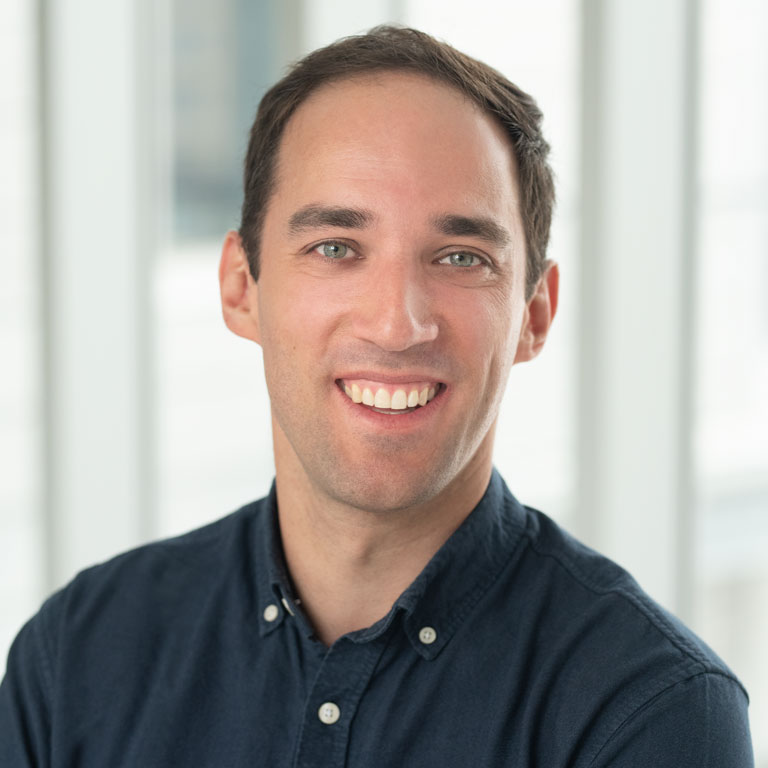
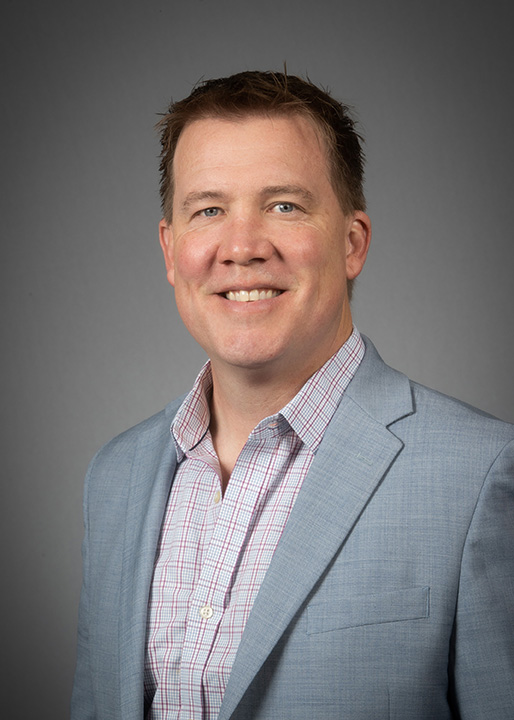
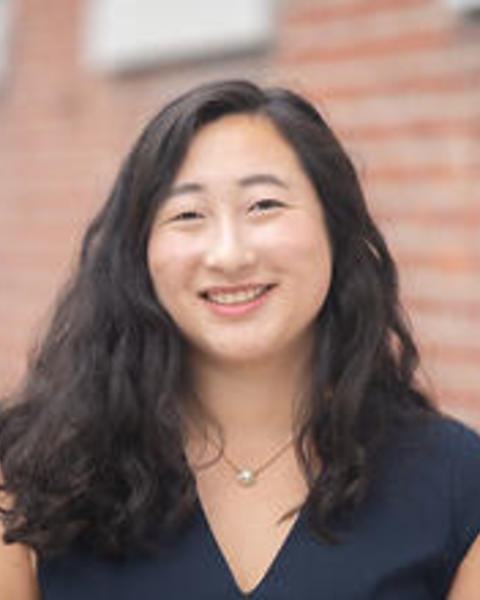
Laurent Charlin is an Associate Professor at HEC Montréal and holds an adjunct appointment in Computer Science at Université de Montréal. His research focuses on machine learning for decision-making with applications in recommender systems, reinforcement learning, and optimization.
Dr. Beth A. Sanders serves as Professor and Chair of the Department of Human Services within Bowling Green State University's College of Health & Human Services. She joined BGSU in 2018 after prior academic appointments at Kent State University and public health experience at Cincinnati Children's Hospital. Her leadership oversees the Criminal Justice program, Police Integrity Research Group, and departmental operations from the Health and Human Services Building. Her educational foundation includes a Ph.D. from the University of Cincinnati. Prior professional roles encompass: Academic position at Kent State University Public health research at Cincinnati Children's Hospital Child Health Statistics Center Dr. Sanders' research centers on police officer selection methodologies and performance evaluation systems , critically examining organizational constraints in identifying quality officers. Her work on public opinion toward the death penalty explores gender disparities and sociological determinants. Through extensive consulting with police departments on selection protocols, performance metrics, and community relations, she bridges academic theory with practical law enforcement challenges. Her program evaluations for adult probation and juvenile treatment systems demonstrate applied criminological expertise. Analysis of her 25+ publications reveals sustained focus on policing integrity across three decades, with recent work expanding into social policy impacts on traffic safety. Her scholarship consistently employs rigorous quantitative methods in journals like Policing: An International Journal , Journal of Criminal Justice Education , and Deviant Behavior , addressing core tensions between organizational realities and ideal policing standards. As Department Chair and Professor, Dr. Sanders mentors students in Criminal Justice programs while leading the Police Integrity Research Group. Her consulting engagements with multiple police departments indicate active knowledge transfer between academia and law enforcement practice, though specific grant details remain unreported in available materials. The department's operational framework includes: Police Integrity Research Group examining ethical policing challenges Criminal Justice Career Fair facilitating student-practitioner connections Interprofessional Education initiatives across health disciplines
Lu Yang is an Assistant Professor in the Department of Statistics at the University of Minnesota Twin Cities. Their research focuses on advanced statistical methodologies for non-continuous outcomes, particularly in insurance and healthcare domains. University: University of Minnesota Twin Cities Academic Rank: Assistant Professor Key research areas include: Copula modeling for complex dependencies Regression diagnostics for semi-continuous and discrete outcomes Dynamic prediction frameworks with terminal events Experience rating in insurance contexts Nonparametric estimation techniques Vine copula structures for longitudinal data Recent publications analyze copula-based inference for mixed insurance claims data (2022), D-vine copula models (2022), and probability integral transform residuals (2024). Their work bridges theoretical statistics with practical applications in risk assessment and healthcare analytics. Current research activity (2022-2024) shows consistent contributions to statistical methodology and insurance applications. They received NSF funding (2022-2026) for regression model assessment with non-continuous outcomes.
Andrew S Zieffler is a Teaching Professor in the Department of Educational Psychology at the University of Minnesota . His professional focus lies at the intersection of statistics education , data science pedagogy , and experiential learning , with a strong emphasis on improving how statistics and data science are taught at the post-secondary level. His research spans over nearly two decades, with 31 research outputs from 2007 to 2025. His work is deeply collaborative, often involving interdisciplinary teams and community partnerships. His research fingerprint includes key terms such as Introductory Statistics , Statistical Reasoning , Teaching-learning , and Data Science . Andrew has led or co-led several major NSF-funded initiatives, including: The Data Science WAV Project (2019–2023): Focused on experiential learning with local community organizations. CATALYS Project (2008–2012): Aimed at developing change agents for teaching and learning statistics. Statistics Taught Using Resampling and Randomization (2010–2011): Explored innovative teaching methods in statistics. His publications reflect a consistent theme of improving statistical literacy and data science competencies among students and educators. He has contributed to journals such as Statistics Education Research Journal , Journal of Statistics and Data Science Education , and Teaching Statistics . Though no specific students are named in the provided materials, his collaborative work suggests active engagement in mentoring and advising within the educational psychology and statistics education communities.
Victor Chernozhukov is a Professor at the Department of Economics and Center for Statistics at the Massachusetts Institute of Technology (MIT) . He also holds international fellowships at the University College London's CEMMAP and is a Professor by Courtesy at the New Economic School in Russia. His research spans econometrics, high-dimensional statistics, quantile regression, and causal inference. Education: Ph.D. in Economics from Stanford University (2000), M.S. in Statistics from University of Illinois at Urbana-Champaign (1997) His work focuses on developing statistical methods for high-dimensional data, including central limit theorems , post-selection inference , and quantile regression . He has contributed to partial identification , Bayesian inference , and extreme value analysis , with applications to economic policy evaluation. Recent publications emphasize high-dimensional causal inference , adaptive confidence bands , and set estimation . His research has been supported by the National Science Foundation and recognized with the Alfred P. Sloan Research Fellowship . Scientific Awards: Alfred P. Sloan Research Fellowship (2005-2007) Castle-Krob Career Development Chair (2004-2007) Grants include long-term support from the National Science Foundation since 2001 and software development collaborations for Stata and MATLAB implementations.
Hervé Cardot is a Professor of Statistics and team leader of the Statistics, Probability, Optimization and Control (SPOC) group at the Institut de Mathématiques de Bourgogne (IMB) , University of Burgundy. His research spans functional data analysis, stochastic algorithms for robust estimation, survey sampling methodology, and applied statistics across diverse fields. Research Interests : Functional data analysis, online principal component analysis, zero-inflated regression, survey sampling, nonparametric estimation Key Applications : Agriculture, climatology, energy consumption, food science, remote sensing, medical imaging Recent Work includes: Developing statistical frameworks for analyzing categorical trajectories using multivariate functional PCA (2025) Advancing bias-robust estimation for functional data in survey sampling (2020) Creating online stochastic algorithms for high-dimensional robust estimation (2017) Applying semi-Markov models to sensory analysis (2018) Teaching at the University of Burgundy includes courses on statistical modeling, big data analysis, and applied statistics for economics and psychology. He supervises PhD students in statistics and co-edits Statistics and Probability Letters .
Robert Chavez is an Associate Professor at the Center for Translational Neuroscience within the College of Arts and Sciences at the University of Oregon . His research bridges cognitive neuroscience , social psychology , and data science to investigate neural mechanisms underlying self-perception and social cognition. Key research themes include: Neural representations of self and others Role of white matter connectivity in personality and social behavior Integration of computational methods with fMRI and diffusion MRI Implications for mental health and internalizing symptoms Recent publications emphasize social relationship dynamics , self-esteem regulation, and distributed brain markers of personality. No scientific awards or honors were explicitly mentioned. Dr. Chavez actively accepts doctoral students and collaborates within the Computational Social Neuroscience Lab .
Prof. Dr. Yarema Okhrin serves as Full Professor at the Department of Statistics and Data Science within the Faculty of Economics at the University of Augsburg. He leads the Chair of Statistics and Data Science, which is part of the Business Analytics & Operations and Finance, Accounting, Controlling & Taxation clusters. His research group includes Dr. Sebastian Heiden, Dr. Rui Ren, and several research assistants working on advanced statistical methods and their applications in business and economics. Professor Okhrin's research spans mathematical and statistical models for data-driven problems in business and economics, with particular expertise in statistics, data science, and machine learning. His work focuses on developing methodologies for time series analysis, portfolio optimization, risk management, and statistical process control. Recent research has expanded into high-dimensional statistics, image analysis, and network monitoring applications. Analysis of his recent publications (2023-2025) reveals a strong trend toward interdisciplinary applications of statistical methods, particularly in finance and process monitoring. His work demonstrates increasing integration of machine learning techniques with traditional statistical approaches, especially in portfolio optimization and risk assessment. A notable pattern is the development of specialized statistical methods for high-dimensional data analysis across multiple domains. Professor Okhrin supervises bachelor's and master's theses at the Department of Statistics, with research topics including data mining, time series modeling, forecasting methods, regression analysis, and statistical data analysis. His department offers thesis opportunities in specialized areas such as asymmetric dependencies in financial markets, forecasting, investor sentiment analysis, medical statistics, volatility modeling, multivariate distributions, sustainable investing, and portfolio optimization. The Chair of Statistics maintains active research collaborations and offers academic consulting on statistical issues and data analysis. The department hosts regular research seminars to facilitate exchange of ongoing research projects and maintains connections with industry partners for practical applications of statistical methods.
Sergios Dimitriadis serves as Professor in the Department of Marketing and Communication at Athens University of Economics and Business (AUEB), where he has taught since 2000 following ten years of academic and consulting experience in France. His instructional portfolio includes Digital and Omni-channel Marketing, Customer Experience Management, and Digital Content courses. His educational credentials feature a foundational degree from Athens University of Economics and Business and a doctoral degree from France's University of Aix-Marseille. Professor Dimitriadis specializes in digital consumer behavior with emphases on social media brand dynamics, 3D virtual retail environments, and relational value frameworks. His research investigates how technological interfaces shape consumer-brand interactions, particularly examining perceived value constructs in Facebook ecosystems and spatial navigation in immersive online stores. Analysis of his 15 most recent publications reveals consistent focus on relational benefit-cost dynamics across digital contexts, with methodological strengths in experimental design and multivariate analysis. Key thematic trajectories include green brand relationship metrics (2018-2019), social media brand page typologies (2018), and trust-based segmentation in financial technology (2011). No scientific awards were documented in source materials. As scientific director of AUEB's Center for Training and Lifelong Learning educational programs, he bridges academic and professional spheres through European/national research program consultancy and organizational training initiatives, demonstrating commitment to applied knowledge transfer despite absence of specific grant details.
Caleb D. Phillips is an Associate Professor in the Department of Biological Sciences at Texas Tech University, where he also serves as Interim Assistant Director and Curator of Genetic Resources at the Natural Science Research Laboratory (Museum of TTU). His research integrates genomics, metagenomics, and statistical modeling to study host-microbe interactions, with applications in chronic wound healing and wildlife conservation. Education: Ph.D. Genetics, Purdue University (2009) M.S. Biology, Tarleton State University (2006) B.S. Biology, Tarleton State University (2003) Research Focus: Dr. Phillips investigates how genomic and metagenomic mechanisms drive adaptations in mammals. Key areas include: (1) Determinants of microbiome assembly in bats and humans, (2) Host-genetic influences on chronic wound microbiomes, (3) Post-transcriptional regulation in craniofacial development, and (4) Conservation genomics of Texas mammals. His lab employs structural equation modeling, next-generation sequencing, and community ecology approaches. Publication Trends: Recent work (2024-2025) emphasizes chronic wound microbiome dynamics, structural equation modeling for clinical predictions, wildlife genomics (bats, bighorn sheep), and metagenomic pipeline development. Studies consistently link host genetics to microbial communities and leverage large-scale clinical datasets. Student Advising: Mentors five graduate students: Craig Tipton (host genetics/wound microbiomes) Hendra Sihaloho (bat gut microbiomes) Rebecca Gabrilska (host-microbe interactions in wounds) Jacob Ancira (microbiome-healing time modeling) Khalid Omeir (genomic determinants of infection) Collaborations & Collections: Partners with the Southwest Regional Wound Care Center and maintains the Wolcott Wound Care Research Collection for microbiome studies.
Lily An serves as an Assistant Professor of Quantitative Methodology within the Educational Policy Studies department at Georgia State University's College of Education & Human Development. She completed her Ph.D. in Education Policy and Program Evaluation at Harvard University in 2025, where she was affiliated with the Center for Education Policy Research as a PIER Fellow. Her academic credentials include: Ph.D. in Education Policy and Program Evaluation, Harvard University (2025) Ed.M. in Education Policy and Management, Harvard Graduate School of Education B.A. in Statistics, Williams College Dr. An's research focuses on advancing educational measurement techniques, developing rigorous program evaluation frameworks, and analyzing school accountability policies. She employs causal inference methods—including quasi-experimental designs—and specializes in meta-analyses of educational interventions. Her work frequently addresses summer learning programs' impacts on student outcomes, with particular attention to sociodemographic disparities in enrichment access and mathematics achievement gaps among low-income populations. She integrates psychometric tools to assess standardized testing validity within policy contexts. Analysis of her publication record (2019-2025) reveals a consistent trajectory in methodological innovation for education policy research. She has pioneered applications of Gaussian process regression in multidimensional regression discontinuity designs to overcome limitations of traditional analytic approaches, while her extensive meta-analytic work establishes evidence bases for summer learning interventions across cognitive, non-cognitive, and behavioral domains. Her scholarship bridges educational measurement, quantitative methodology, and K-12 policy implementation. Her professional recognitions include: PIER (Partnering in Education Research) Fellow, Center for Education Policy Research Equity and Inclusion Fellow, Harvard Graduate School of Education Summer Institute for Computational Social Science participant Just Education Policy Institute for Developing Scholars participant Dr. An has collaborated with state education agencies including the Massachusetts Department of Elementary and Secondary Education during her tenure as a research analyst at Brown University. Her current work continues this practice-oriented focus through quantitative analysis of policy effects on student outcomes, though specific grant funding details and advising activities were not documented in available sources.
Paula Diehr is a Professor of Biostatistics and Health Services at the University of Washington's School of Public Health and Community Medicine. With a distinguished career spanning several decades, Dr. Diehr has established herself as a leading expert in biostatistics and health services research. Dr. Diehr's research focuses on critical methodological issues in public health, including small area statistics, health care utilization analysis, and statistical methods for population health research. Her work on the Diehr Rule for diagnosing pneumonia represents an important clinical decision tool, while her more recent work on the Healthy Life Calculator has contributed significantly to aging and longevity research. Her publications demonstrate consistent contributions to methodological advancements in public health research, particularly in statistical approaches for analyzing health care data and evaluating community-based interventions. Dr. Diehr has published extensively in top public health journals including Annual Review of Public Health, American Journal of Public Health, and Medical Care. UCLA Alumni Hall of Fame recipient Dr. Diehr has been instrumental in developing statistical methodologies that address real-world challenges in health services research, with particular emphasis on the proper application of statistical assumptions in large public health datasets and innovative approaches to analyzing health care utilization patterns. Her work bridges theoretical statistical methods with practical public health applications.
Auxiliadora Sarmiento Vega is a full professor at the University of Seville 's School of Engineering within the Department of Signal Theory and Communications . With over two decades of research experience, her work bridges audio signal processing and biomedical applications, focusing on blind source separation, entropy-based methods, and machine learning for healthcare diagnostics. Research Pillars : Audio source separation, biomedical signal/image analysis, and virtual reality integration Key Projects : ACACIA (Signal Analysis), NEUBIAS (Bioimage Analysts Network), and multiple NIH-funded biomedical imaging initiatives Academic Contributions span 15+ years, with groundbreaking work in: Alpha-Beta divergence clustering algorithms EEG processing for motor imagery BCI systems Automated breast cancer grading from histological images Glaucoma and diabetic retinopathy diagnostics via retinal image analysis Virtual reality platforms for emotion analysis research She actively collaborates with institutions like the IEEE Women in Engineering (Spanish section secretary) and NEUBIAS network , while mentoring through outreach programs like g4g Day that empower young women in STEM.
Paul Boniol is a researcher at Inria, affiliated with the VALDA project-team—a collaboration between Inria Paris, École Normale Supérieure, and CNRS. His work focuses on time series analytics, anomaly detection, and machine learning applications. Ph.D. in Computer Science and Applied Mathematics (University of Paris, EDF R&D) Visiting Ph.D. at University of Chicago Education: Grenoble INP ENSIMAG Engineering School Research interests span: Unsupervised anomaly detection in large time series Time series management systems Machine learning for predictive maintenance Graph-based time series analysis Explainable AI for temporal data Recent publications emphasize advancements in: Weakly supervised anomaly localization Graph embedding techniques Model selection frameworks Interactive visualization tools Smart meter data analysis Scientific recognition: Paul Caseau Thesis Prize 2022 Lambdamu Congress Research-Industry Prize 2022 BDA & INFORSID Ph.D. Prizes 2022
Dajiang Liu is a Distinguished Professor and Vice Chair for Research at Penn State College of Medicine. He holds appointments in the Department of Public Health Sciences (Biostatistics and Bioinformatics division), Department of Molecular and Precision Medicine, and contributes to the Institute for Personalized Medicine and Penn State Cancer Institute. His work intersects genetics, computational biology, and public health. Research Focus: Statistical genetics method development, complex trait analysis, functional genomics, and integrative approaches to autoimmune disease research. Methodological Contributions: Creator of widely-used tools RAREMETAL and RVTESTS for genetic association studies. Key Research Applications: Lipid biology, cardiovascular disease, substance addiction, lupus, and X chromosome inactivation studies. His lab combines high-throughput sequencing with computational methods to address these complex traits. Scientific Awards: Basic Science Career Mentor Award (2021) Outstanding Champion of Diversity in Research (2019) Outstanding Early-Stage Investigator Prize (2016) Current Projects: Multi-omic COPD analysis in females, integrative autoimmune disease modeling, geospatial GWAS interpretation, and trans-ancestry lupus etiology studies. His work leverages biobanks, insurance claims, and genomic data.