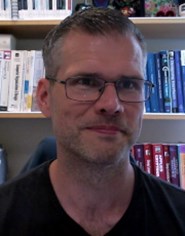
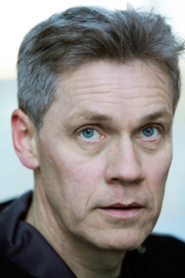
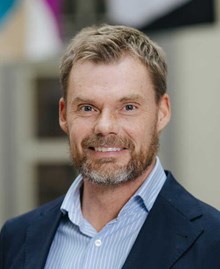
Thamani Freedom Gondo is affiliated with the Lund University Centre for Analysis and Synthesis , focusing on Food Science and Bioactive Compounds . Their work emphasizes analytical techniques for plant-based and marine food resources, particularly using supercritical fluid extraction . Key affiliations: Lund University, FORMAS-funded projects Research themes: Bioactive compound analysis, polyphenol characterization, sustainable food processing Recent publications highlight advancements in phlorotannin analysis from brown seaweeds and Lactiplantibacillus plantarum applications in non-dairy fermentation. Their 2023 work on ternary solvent systems demonstrated high selectivity in seaweed extraction.
Sara Hägg is a Senior Lecturer at the Karolinska Institutet , affiliated with the Department of Medical Epidemiology and Biostatistics . She is also a Docent in molecular epidemiology. PhD in Computational Biology (Linköping University, 2009) MSc in Molecular Biology (Stockholm University, 2003) BSc in Computer Science (Stockholm University, 2003) Her research focuses on human biological aging , including measurement of aging markers (telomere length, epigenetic clocks, frailty index), causal pathway analysis, and identification of geroprotectors for age-related diseases. She utilizes longitudinal twin studies (SATSA, GENDER, HARMONY), UK Biobank, and Swedish cohorts with methods like Mendelian randomization and genome-wide analyses . Recent articles demonstrate trends in epidemiological aging research , with emphasis on cardiovascular aging , neurological disease interactions , metabolic profiling , and epigenetic clocks . Her work often involves multivariable modeling and cross-cohort validation . Leadership roles include Director of LifeGene Core Facility (2024-) and Founding Board Member of the Nordic Aging Society (2023-). She serves on expert groups for the Swedish Twin Registry and Strategic Research Area in Epidemiology and Biostatistics .
Anders Karlström is a Professor at KTH Royal Institute of Technology, specializing in Transport Modelling and Economics. His research focuses on sustainable transportation systems, emissions reduction, and energy efficiency. Key interests include activity-based modelling, dynamic discrete choice frameworks, and policy analysis for urban mobility. He has contributed to studies on travel behavior, infrastructure planning, and environmental impacts of transport systems across multiple international cities. His work integrates advanced methodologies such as recursive logit models, spatial regression, and machine learning for predictive analytics. Notable research areas involve evaluating weather variability effects on travel patterns, optimizing traffic state estimation with sensor data, and developing scenario-based models for future employment growth. Karlström collaborates with industries to enhance the competitiveness of sustainable transport solutions globally.
Patrik Hilber is a Professor at KTH Royal Institute of Technology, working in the Division of Electromagnetic Engineering and Fusion Science within the School of Electrical Engineering and Computer Science (EECS). He serves as Deputy Director of First and Second Cycle Education at EECS and heads the QED AM research group. He is also a board member of YH-electrical engineering. Research Interests: His research focuses on reliability engineering, asset management, maintenance optimization, and smart grid technologies in electric power systems. Key areas include transmission and distribution systems, dynamic line and transformer rating, wind power integration, multiobjective optimization, condition monitoring, and data quality in power systems. He applies advanced modeling and data-driven approaches to improve power system planning, operation, and resilience. The recent trends in his publications (2020–2025) highlight a strong emphasis on dynamic rating technologies (DLR and DTR), data quality and machine learning applications in outage analysis, reliability-centered planning for wind farms and distribution systems, and the integration of renewable energy and electric vehicles. His work bridges theoretical modeling with practical utility applications. Teaching and Academic Leadership: He is examiner and course responsible for several degree projects in electrical engineering, power systems, and energy innovation. He also teaches courses on reliability evaluation, asset management, and innovation in electric power engineering. Publications and Books: He has authored a book titled Reliability Analysis and Asset Management Applied to Power Distribution (2014) and a book chapter on cable segment replacement optimization. His scholarly output includes numerous peer-reviewed articles in leading journals such as IEEE Transactions on Power Systems , Reliability Engineering & System Safety , and Applied Energy . Education: He holds a Ph.D. (2008), a Licentiate degree (2005), and an M.Sc. (2000), all from KTH. He became a Docent (Associate Professor) in 2014.
Tommy Löfstedt is an Associate Professor at Umeå University , affiliated with the Department of Computing Science and the Department of Mathematics and Mathematical Statistics. His research focuses on machine learning , computer vision , and medical image analysis , with applications in life sciences, radiation therapy, and biomedical imaging. He leads multiple research projects, including AI-driven delineation in radiation therapy, quantitative MRI for radiotherapy, and machine learning for plant nutrient uptake. Current research emphasizes structured regularization methods to improve model interpretability and robustness. Key applications include medical image segmentation , Alzheimer's classification , and uncertainty estimation in MRI . Recent publications highlight his work on morphological regularization , adversarial attack mitigation , and multi-task learning in medical imaging contexts. His projects span 2022–2026 with funding for pediatric oncology automation and gynecological cancer staging. Affiliated with both computing and mathematical departments, he bridges algorithm development with applied mathematical frameworks in medical and life science domains.
Jonas Strandberg is an Associate Professor at KTH Royal Institute of Technology's Department of Physics, part of the School of Engineering Sciences. His research focuses on particle physics, particularly within the ATLAS Collaboration at the Large Hadron Collider (LHC). He contributed to the Higgs boson discovery and currently studies its properties. Strandberg has been involved in detector development, including the HGTD timing detector for the LHC upgrade. He holds a PhD from Stockholm University (2006) and worked as a postdoc at the University of Michigan (2006-2011) before joining KTH. His teaching responsibilities include courses on experimental particle physics, statistical methods, and engineering skills. Research interests span high-energy physics, collider technology, and detector systems. Research Highlights: Member of the ATLAS Collaboration since 2011 Key contributor to Higgs boson measurements Developed timing detector systems for LHC upgrades Published extensively on particle physics and accelerator technology Teaching & Supervision: Course responsible for Experimental Particle Physics (SH2203) Teaching roles in Applied Modern Physics (SH1015), Embedded Systems Design (IL2232), and more Professional Activities: ATLAS Data Preparation Coordinator (2015-2017) Member of the Particle and Astroparticle Physics Group at AlbaNova University Centre
Karin Wendin is a Professor in Food and Meal Science at the Department of Food and Meal Science, Faculty of Natural Science, Kristianstad University. She also maintains an Associate Professor position at the University of Copenhagen since 2012. Her research is centered within the Food and Meals in Everyday Life (MEAL) research group and she plays a key role in the Centre for Food, Health and Retail at Kristianstad University (FOHRK). Dr. Wendin earned her PhD in 'Sensory Dynamics in Emulsion Products Differing in Fat Content' from Chalmers University of Technology in 2001. Her academic career spans over two decades with significant contributions to sensory science and food research. She has collaborated extensively with research institutes including RISE and has held visiting researcher positions at the University of Copenhagen. Wendin's primary research focus is sensory science, defined as 'the discipline that evoke, measure, analyze and interpret reactions to characteristics of food and other materials perceived by the human senses.' Her work investigates how chemical and physical food properties influence human sensory perception through sight, smell, taste, touch and hearing. A substantial portion of her research addresses health, wellbeing, and sustainability challenges, particularly in developing food products with reduced fat, salt, and sugar while maintaining sensory appeal, and exploring alternative protein sources including insect-based foods. She has specialized in adapting food products for specific demographic groups including the elderly, children, teenagers, and individuals with weight concerns. Her research methodology incorporates both objective and subjective sensory assessments using various statistical approaches from classic to multivariate methodologies. Analysis of her recent publications reveals a strong emphasis on sustainable food systems, novel food sources, historical grains in modern contexts, and sensory evaluation methods for high-value products. Her work consistently bridges scientific analysis with practical food industry applications, with many projects involving direct collaboration between academia and industry partners. The research demonstrates increasing focus on UN Sustainable Development Goals related to sustainable consumption, health, and responsible production. Professor Wendin has extensive supervisory experience across multiple institutions including University of Copenhagen, University of Borås, Linköping University, Chalmers University of Technology, Örebro University, and Lund University of Technology. She has served on examination committees for PhD defenses at institutions across Scandinavia and internationally. Her research has been funded by major organizations including Formas, Vinnova, and the Family Kamprad Foundation, as well as through contract research with industry partners where results often remain confidential. She currently leads multiple significant projects including 'Food and Drinks for Seniors' (2024-2026), 'Ending food waste from plant to plate' (2023-2026), 'Nutritious, tasty and health-promoting novel wheat products' (2022-2025), and research on prediction methods for sensory properties of high-value sustainable products. These projects reflect her commitment to addressing contemporary food challenges through interdisciplinary research that combines sensory science with sustainability and health considerations.
Christer Malm is a Professor at Umeå University's Department of Community Medicine and Rehabilitation, Section of Sports Medicine. His research spans molecular muscle adaptation, anti-doping technologies, and physical performance optimization for firefighters and athletes. Primary Affiliation: Umeå University, Sweden Key Focus Areas: Exercise physiology, proteomics, anti-doping, muscle disease mechanisms Research Interests: Muscle Adaptation: Revisiting the damage-repair hypothesis using proteomic screening to study cytoskeletal remodeling. Anti-Doping: Developing proteomic methods to detect autologous blood doping and investigate erythrocyte breakdown mechanisms. Work Capacity: Establishing physiological benchmarks for Swedish firefighters through extensive testing. Musculoskeletal Diseases: Comparative proteomic analysis of trapezius, vastus lateralis, and extraocular muscles to uncover disease resistance mechanisms. Exercise Impact: Exploring how physical activity modulates immunity in health and disease contexts. Scientific Contributions: Over 20 years of publications in Journal of Sports Sciences , PLOS ONE , and Scandinavian Journal of Medicine & Science in Sports , including studies on anabolic steroid effects and cold climate physiology. Ongoing Projects: PhD studies on blood doping detection, firefighter performance limits, and cross-country skiing physiology. Contact: christer.malm@umu.se
Rickard Sandberg is an **Associate Professor** and **Center Director** at the **Department of Entrepreneurship, Innovation and Technology** at the **Stockholm School of Economics (SSE)**. His work bridges econometrics, statistics, and business analytics with a focus on time series analysis, machine learning applications, and sustainability measurement. **Research Interests**: Machine Learning, Deep Learning, Data Analytics, Predictive Analytics, Forecasting, Nonlinear Time Series Modelling, Structural Economic Modelling, Econometrics, and Measuring Sustainability. His research emphasizes theoretical advancements in statistical methods and their practical application in economic and business contexts. **Key Contributions**: His publications explore unit root testing in nonlinear models, ESG rating challenges, and the impact of energy policies. Notable works include analyzing Scandinavian unemployment trends, cartel damage calculations, and Nordic companies' data-driven transformations. His 2023 paper on ESG ratings proposes solutions for consistency in ambiguous evaluation systems. **Teaching & Outreach**: Teaches advanced econometric time series courses (e.g., MSc 5314) and actively engages in international academic collaborations through presentations in Japan and Brazil. His work on AI for sustainability highlights interdisciplinary outreach efforts. **Labs/Teams**: Leads research initiatives within SSE’s Department, focusing on entrepreneurship and innovation through data and economic modeling frameworks.
Mattias Villani is Professor of Statistics at Stockholm University, specializing in Bayesian statistics and machine learning. He obtained his PhD in Statistics from Stockholm University in 2000 and has held positions at Sveriges Riksbank and Linköping University. Villani develops computationally efficient Bayesian methods for inference, prediction and decision-making with flexible probabilistic models. Research Interests: His work spans Bayesian computation (MCMC, HMC, variational inference), machine learning (Gaussian processes, mixture models), and applications in neuroimaging, transportation, and econometrics. Research focuses on scalable Bayesian methods for large datasets and complex models. Publication Focus: Recent articles concentrate on Bayesian neuroimaging analysis, transportation network modeling, and efficient MCMC algorithms. Methodological innovations in subsampling techniques for large-scale Bayesian computation represent a significant research trend. Student Advising: Supervises PhD students in statistical methodology development and applications. Current research groups focus on spatiotemporal modeling, locally stationary processes, and neuroimaging statistics.
Nikolaos Kourentzes is a Professor of Informatics at the University of Skövde , specializing in forecasting and operations research. His work bridges theoretical advancements in time series analysis with practical applications in supply chain management, tourism demand, and renewable energy forecasting. Academic Rank: Professor Department: Department of Information Technology Research Interests: His research focuses on hierarchical and temporal forecasting methodologies, integrating macroeconomic indicators into demand planning, inventory optimization, and machine learning applications. He explores forecast reconciliation, shrinkage estimators, and the role of expert judgment in predictive analytics. Recent Publications: Highlights include advances in hierarchical forecasting with leading indicators, probabilistic forecasts during crises like the pandemic, and complex smoothing techniques. His work spans journals such as Omega , International Journal of Forecasting , and European Journal of Operational Research . Collaborations: Kourentzes collaborates with researchers globally, including George Athanasopoulos, Rob Hyndman, and Robert Fildes, across domains like tourism analytics, tire industry forecasting, and public health modeling.
Giovanni Forchini is a Professor at the Umeå School of Business, Economics and Statistics (USBE), Umeå University, Sweden. His research focuses on econometrics, panel data analysis, and their applications in health economics and epidemiological modeling. He holds the title of Docent, a Swedish academic qualification reflecting advanced expertise. His work bridges theoretical econometrics with practical policy analysis, particularly in pandemic preparedness and healthcare optimization. Research Themes: Econometric methodologies for panel data and structural equation models Quantifying pandemic impacts on healthcare systems and economies Optimization of resource allocation during public health crises Key Contributions: Developed the DAEDALUS model for integrated economic-epidemiological policy simulations Analyzed SARS-CoV-2 transmission dynamics and vaccine impact in multiple countries Pioneered statistical methods for handling multifactor structures in panel data Awards & Grants: USBSE Pedagogical Prize 2020 Funding from Forte (Swedish Research Council for Health, Working Life and Welfare) and Handelsbanken Teaching & Mentorship: Coordinates Master’s theses in Economics at USBSE Teaches advanced courses like Econometrics 1 & 2 and Analysis of Financial Data
Claudia Teutschbein is a Senior Lecturer/Associate Professor in Hydrology at Uppsala University's Department of Earth Sciences, where she leads research in the Program for Air, Water and Landscape Sciences. She also serves as a researcher at Uppsala University's Conflicting Objectives Research Nexus (UUniCORN). With over 15 years of teaching and research experience, she has established herself as a leading expert in hydrological processes in changing climates. Her educational background includes: 2022: Docent in Hydrology, Uppsala University 2013: Ph.D. in Physical Geography, Stockholm University, Sweden 2010: Ph.Lic. in Physical Geography, Stockholm University, Sweden 2008: M.Sc. in Soil Science, SLU Uppsala, Sweden 2006: B.Sc. in Water Management, TU Dresden, Germany Dr. Teutschbein's research spans interdisciplinary hydrology with a focus on understanding hydrological processes in changing climates and their connections to meteorological, topographic, and anthropogenic drivers. Her work addresses critical issues of water quantity (including floods and droughts) and water quality across various spatial and temporal scales, with attention to socio-economic consequences. She employs advanced hydrological modeling techniques to assess climate change impacts and develops solutions for sustainable water resource management. Her recent publications demonstrate a strong focus on drought risk assessment, water-energy-food-ecosystem nexus approaches, and hydroclimatic modeling in Nordic and global contexts. She has made significant contributions to understanding drought propagation in high-latitude catchments, stakeholder perceptions of drought hazards, and the integration of data-driven approaches in nexus modeling. Her CAMELS-SE dataset has become an important resource for hydrological research and education across Sweden. Dr. Teutschbein leads and contributes to numerous research projects addressing critical water challenges: 2025-2028: REACTION: Navigating the Risks of Hydroclimatic Extremes for Freshwater Ecosystem Services in Forest Landscapes (PI) 2023-2026: PredPeat: Predicting the effects of peatland rewetting on water retention and water quality (co-applicant, WP-lead) 2022-2026: SWEFE-NEXT: the Swedish Water-Energy-Food-Ecosystem Nexus and its response to hydroclimatic EXTreme events (PI) 2021-2025: NEXOGENESIS: Facilitating the next generation of water-related policies using AI and reinforcement learning (co-applicant, WP lead) 2019-2023: Impacts of recent El-Niño Southern Oscillation (ENSO) on the Water-Food-Energy Nexus in South Asia (PI) Her research bridges academic inquiry with practical applications for sustainable water management, with particular emphasis on climate change adaptation strategies and integrated resource management approaches.
Pär Olsson is a Professor in the Department of Nuclear Science & Engineering at KTH Royal Institute of Technology. His research focuses on computational and experimental studies of radiation damage in nuclear materials, with particular emphasis on understanding defect dynamics, microstructural evolution under irradiation, and the behavior of advanced nuclear fuels. He leads courses such as Multiscale Modeling of Nuclear Materials and Radiation Damage Physics, emphasizing both theoretical and practical aspects of materials science in nuclear contexts. His research interests include the development of advanced accident-tolerant fuels (e.g., UN-UO2 composites), the computational modeling of radiation effects in metals like Fe and W, and the interplay between solute atoms and defects in irradiated materials. His work combines first-principles calculations, kinetic Monte Carlo simulations, and experimental validation to address challenges in nuclear energy systems. Notable contributions include studies on fission product solubility in nuclear fuels, oxygen’s role in tungsten defect evolution, and the thermal performance of UN-based composites. His team’s projects, such as the M4F initiative (Multiscale Modelling for Fusion and Fission Materials), aim to bridge atomistic and continuum-scale models for material design. Pär Olsson collaborates extensively with international institutions and contributes to nuclear materials education through course coordination and supervision of graduate studies in physics and materials science.
Marko Laaksonen is a Professor at the Department of Health Sciences (HOV) at Mid Sweden University, specializing in winter sports biomechanics and performance analysis. He is affiliated with the Swedish Winter Sports Research Centre, focusing on biathlon and cross-country skiing. His research examines physiological responses to training, rifle carriage effects on skiing mechanics, and performance indicators in biathlon. Key areas include exercise intensity distribution, shooting precision, and muscle metabolism during endurance activities. Recent publications analyze biathlon shooting performance under varying conditions, training load measurement, and equipment impacts on athlete efficiency. Over 15 articles demonstrate expertise in winter sports analytics and physiological monitoring.