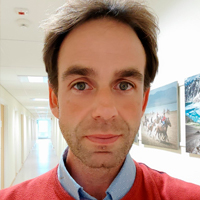
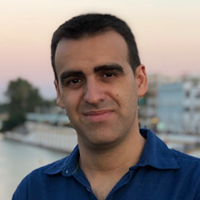
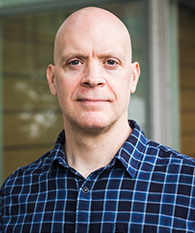
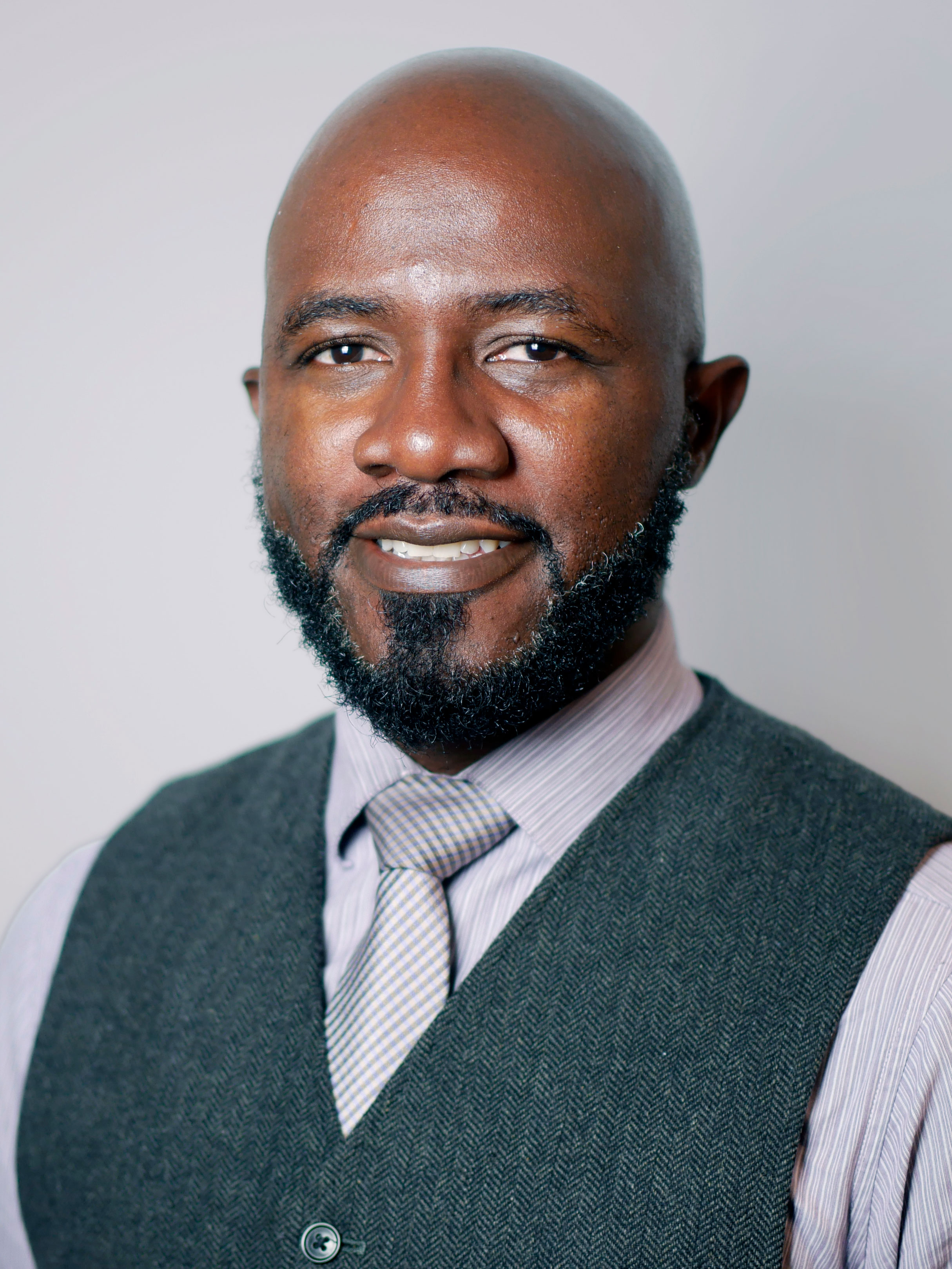
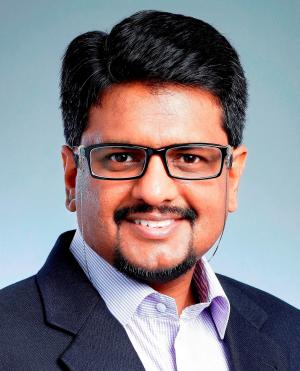
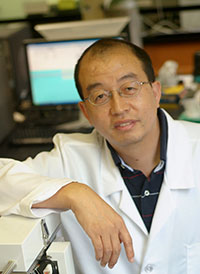
Francisco Martínez Álvarez is a Full Professor in the Computer Science Division at Universidad Pablo de Olavide's School of Engineering. He received his PhD in Computer Science in 2010, honored with the extraordinary doctoral prize. He has completed research stays at Université de Lyon, New York University, and Universidad de Chile. His research focuses on: Big data time series analysis Deep learning for forecasting Seismicity pattern recognition Explainable AI systems Recent publications cover applications in energy forecasting, environmental monitoring, and quantum machine learning. He has supervised 10 doctoral theses and co-founded the Data Science & Big Data Lab. Recognized among the world's top 2% scientists by Stanford University, he has led multiple national and European projects on big data streaming and sustainable AI.
Gualberto Asencio Cortés is Associate Professor in Computer Science at Universidad Pablo de Olavide. He holds Ph.D. in Computer Science from UPO (2013) and Executive Master in Innovation from EOI (2016). Research focuses on developing advanced algorithms for: Time series forecasting in energy, agriculture, and environmental domains Feature selection methods for deep learning Explainable AI for predictive modeling Big data stream processing Developed innovative tools like FS-Studio for feature selection experimentation. Recent publications demonstrate strong focus on agricultural applications (pest forecasting, phenology prediction) and energy consumption modeling using hybrid deep learning approaches.
Petar M. Ristivojević is a Research Fellow in Analytical Chemistry at the Faculty of Chemistry, University of Belgrade. His work focuses on advanced analytical techniques including planar chromatography, chemometrics, and green chemistry approaches. University of Belgrade (PhD in Chemistry, 2004-2014) Research interests center on planar chromatography , green analytical chemistry , and food chemistry , with recent publications examining propolis authentication, beer profiling, and algal antioxidants. His 15 most recent articles demonstrate expertise in chemometric modeling and effect-directed analysis for natural product characterization. Notable awards include the 2014 HPTLC Symposium Poster Prize, 2015 DAAD Postdoc Grant, and 2020 COIMBRA Group Fellowship. He leads projects like the 2024-2027 EU-funded MOBILES initiative on pollutant detection. As Editor-in-Chief of the Journal of Planar Chromatography and member of the Serbian Chemical Society, he maintains significant international collaborations, including research stays in Germany (2011, 2015-2016), South Korea (2017), and Austria (2018-2019). His lab in Belgrade (room 553) develops sustainable analytical methods for food and environmental samples.
Dragana Četojević-Simin is a Full Professor of Biology at Singidunum University (since 2021) and holds a Full Research Professorship in Biotechnical Sciences (since 2016). She holds a Ph.D. in Biology from the University of Novi Sad and completed specialized training in Medical Genetics. Her research focuses on bioactivity of natural products, synthetic compounds, and xenobiotics, with over 70 international publications and a Hirsch index of 28. Education: B.Sc. Biology, University of Novi Sad (1989–1993) M.Sc. Microbiology, University of Novi Sad (1996–1998) Ph.D. Biology, University of Novi Sad (2006–2009) Residency in Medical Genetics, University of Novi Sad (2004–2007) Research Interests: Dr. Četojević-Simin’s work spans in vitro antitumor activity, photocatalytic degradation of pollutants, and bioactive compound extraction. She emphasizes applications in environmental sustainability, pharmaceuticals, and food science. Publications: Her articles frequently address natural product chemistry, environmental toxicology, and biomedical applications. Recent work includes studies on pomegranate bioactivity, photocatalytic pollutant removal, and honey-derived antimicrobials. Awards: She has received academic excellence awards during studies and held scholarships from the University of Novi Sad. Her editorial roles include Editor-in-Chief of Archive of Oncology (2017–2022) and Associate Editor at Frontiers in Pharmacology . Leadership: She leads Singidunum’s Environment and Sustainable Development Studies program and has coordinated large-scale projects like the EU-funded iPAAC Joint Action (2018–2021).
Anders Malmendal is an Associate Professor at Roskilde University's Department of Science and Environment, affiliated with the Centre for Frustrated Molecular Interactions and the Centre for Mathematical Modeling - Human Health and Disease . His research focuses on unraveling complex biological systems using NMR spectroscopy and multivariate analysis. Key areas include biophysical chemistry, structural biology of proteins, protein aggregation in neurodegenerative diseases, and metabolomics applications in Drosophila models and biotechnology. His recent work explores urinary biomarkers for prostate cancer, enzymatic degradation of plastics, and cold hardening mechanisms in insects. Research Interests: Protein aggregation and neurodegenerative disorders Metabolomics for disease biomarker discovery Environmental nanotoxicology (e.g., nanoparticle effects on aquatic organisms) Structural biology of proteins using advanced NMR techniques Publications Trends: Recent articles highlight advancements in prostate cancer diagnostics via metabolomics, enzymatic PET degradation mechanisms, and protein-membrane interactions. Collaborative projects bridge fundamental biophysics with applied environmental and clinical research. Labs/Teams: Active within interdisciplinary teams at Roskilde University, emphasizing cross-cutting approaches between chemistry, biology, and mathematical modeling.
Dr. Igna Bonfrer is an Associate Professor of Global Health Economics at the Erasmus School of Health Policy & Management, Erasmus University Rotterdam. As Director of the Rotterdam Global Health Initiative (RIGH), she leads a multidisciplinary network of 250+ members addressing global health challenges in low- and middle-income countries (LMICs). Her research focuses on healthcare financing reforms, socioeconomic disparities, and improving healthcare systems in LMICs, with a particular emphasis on maternal health, non-communicable diseases, and patient-reported outcomes. She coordinates undergraduate and graduate courses including 'Global Challenges in Health & Behaviour' (BSc) and 'Global Health Economics' (MSc), emphasizing causal evaluation of healthcare policies, decolonizing global health practices, and career development. Bonfrer has held postdoctoral positions at Harvard University and the University of Oxford, and her work has been funded by organizations such as the Dutch Research Council, WHO, and the EU's Marie Curie CoFund. Key contributions include studies on socioeconomic inequalities in cardiovascular disease risk across 57 LMICs, the impact of performance-based financing on healthcare utilization, and digital interventions to improve maternal health outcomes in India. She has received the 'Best PhD Supervisor Award 2024' and serves as Academic Editor for PLOS Global Public Health . Her grants include the Rubicon Fellowship and Prof. H.W. Lambers Prize, alongside contributions to WHO advisory work and NGO collaborations. Bonfrer’s research also explores clinician use of electronic patient-reported outcomes and systemic support for healthcare professional well-being.
Dr. Prasanna Egodawatta is an Associate Professor in the School of Civil & Environmental Engineering at Queensland University of Technology (QUT). He specializes in Water/Environmental Engineering with over 15 years of industry and academic experience. His research focuses on urban hydrology, stormwater management, water quality modelling, and resilience in water systems. Education: PhD from QUT. Teaching areas include Engineering Hydraulics, Advanced Water Engineering, and Civil Engineering Thesis Projects. He has co-supervised over 15 doctoral/master’s students and contributed to teaching innovation projects funded by QUT and the Office for Learning and Teaching (OLT). Research interests span stormwater pollution, treatment technologies, water-sensitive urban design, and risk-based water management. Key projects include ARC Linkage grants on climate change adaptation of WSUD, and collaborations with Gold Coast City Council, Port of Brisbane Corporation, and industry partners like Holcim and SPEL Environmental. He has published over 75% of his work in Q1 journals (SCIMago) and secured >$600k in research funding. His work emphasizes statistical methods for environmental data analysis and multivariate techniques for pollutant source identification. Past roles include Higher Degree Research Director (2015–2017) and RDC committee member (2015–2017). He actively reviews for journals like Water Research and Environmental Modelling & Software . Notable contributions include advancing stormwater quality models, assessing health risks of PAHs, and developing methodologies for heavy metal prediction in urban catchments. His lab focuses on bridging environmental engineering with sustainable urban systems.
Professor Huan Feng is a coastal environmental geochemist at Montclair State University, specializing in toxic metal contamination, radionuclide tracers, and synchrotron-based technology. He holds a BS from Xiamen University, an MS from Florida Tech, and a PhD from SUNY Stony Brook. His research focuses on riverine/estuarine/marine pollution, radionuclide transport, and coastal sustainability. He has led over 200 publications and received awards including the ACS Fellowship and Sokol Fellow distinction. His roles include Acting Chair of Earth & Environmental Studies and Graduate Program Coordinator. Key projects include Yangtze River sediment studies, bioremediation of urban brownfields, and predictive coastal models. Collaborations span international scholars in China and the US, addressing contaminant fate and transport.
John Hughes is an Associate Professor and Chair of the Department of Biostatistics and Health Data Science at Lehigh University's College of Health. He holds a PhD in Statistics from Penn State University and has over 29 years of experience in academia, with previous appointments at institutions like the University of Minnesota and the University of Colorado. His research focuses on methodological advancements in statistical modeling for dependent data, Bayesian methods, and statistical computing. His interdisciplinary work spans environmental health, bioimaging, magnetic resonance safety, and vaccine hesitancy. He has developed numerous software packages for R and Perl, including copCAR and batchmeans. Education: PhD in Statistics, Penn State University MS in Statistics, Penn State University MS in Applied Computer Science, Frostburg State University BS in Mathematics and Computer Science, Frostburg State University Teaching: Courses include Advanced R Programming, Biostatistics, Population Health Data Science, and Computational methods. His research interests emphasize spatial and spatiotemporal data analysis, with applications to public health and medical imaging. He has consulted for organizations such as the Minnesota Center for Chemical and Mental Health and Temple University. His software contributions include packages like krippendorffsalpha for agreement measurement and copCAR for spatial regression modeling. Recent work focuses on improving statistical inference methods, analyzing vaccination refusal patterns, and developing frameworks for copula-based agreement coefficients. His articles highlight innovations in Bayesian computation, spatial epidemiology, and nonparametric statistics. Dr. Hughes leads academic initiatives in biostatistics and health data science, fostering interdisciplinary collaborations and advancing statistical methodologies for real-world applications.
Emilio MARENGO is a Professor at the Department of Science and Technological Innovation, Università degli Studi del Piemonte Orientale 'Amedeo Avogadro'. His research focuses on analytical chemistry, environmental science, and proteomics, with a strong emphasis on chemometric methodologies and their applications in food safety, environmental monitoring, and biomedical analysis. Key research interests include: Development of advanced analytical techniques (e.g., UHPLC-HRMS, LC-MS/MS) Contaminant detection in environmental and biological matrices Food authenticity verification using spectroscopic methods Proteomic profiling for disease biomarker discovery He leads projects funded by the European Commission, Italian Ministry of Health, and Ministry of Universities and Research, including initiatives on PFAS pollution control, sustainable aquaculture systems, and chemometric traceability of agro-food products. Recent publications highlight innovations in perfluorinated substance analysis, veterinary drug residue detection, and biogas optimization from organic waste. Collaborations span environmental engineering, food technology, and virology, reflecting interdisciplinary strengths in addressing global challenges like pollution control and food safety. No scientific awards are explicitly listed, though his extensive publication record indicates impactful contributions.
Jabed Tomal is an Associate Professor in Statistics and Data Science at Thompson Rivers University (TRU), Canada. Previously, he held positions as an Assistant Professor at TRU (2018–2023) and the University of Toronto Scarborough (2014–2018), and a Postdoctoral Fellow at the University of British Columbia (2014). He earned a Ph.D. in Statistics (2013) from UBC, specializing in statistical machine learning, and dual M.Sc. degrees in Statistics (University of Windsor, 2007) and Biostatistics (University of Dhaka, Bangladesh). His research focuses on ensemble methods, Bayesian inference, and statistical ecology, with applications in drug discovery, protein homology, and environmental modeling. Key research interests include developing ensemble models for high-dimensional data, Bayesian methods for breakpoints detection in housing markets and ecological systems, and statistical approaches in healthcare. Notable contributions include work on QSAR studies, Bayesian hierarchical modeling of pandemic impacts, and ecological threshold detection. Tomal has secured grants such as the NSERC Discovery Grant ($102,500) and TRU internal funds for projects in big data and environmental thresholds. He has advised numerous graduate and undergraduate students on topics ranging from machine learning in healthcare to single-cell RNA sequencing analysis. His teaching spans courses like Bayesian Machine Learning, Multivariate Statistics, and Theoretical Machine Learning at the graduate level, alongside foundational statistics and calculus courses at TRU and the University of Dhaka. Administrative roles include Chair of the Award and Scholarship Committee for TRU’s Master of Data Science program and membership in Senate Research Committee. Education: Ph.D., Statistics (2013), UBC Vancouver M.Sc., Statistics (2007), University of Windsor M.Sc., Biostatistics (2005), University of Dhaka Awards: NSERC Discovery Grant (2021–2026) Research Training Recognition Fund (TRU,多次) SSC 2013 Talk Honourable Mention Labs/Teams: Active in interdisciplinary projects at TRU’s Department of Mathematics and Statistics, focusing on data science applications in ecology, healthcare, and genetics.
Damilola Daramola is an Assistant Professor at Northeastern University, jointly appointed in the Departments of Chemical Engineering and Chemistry & Chemical Biology within the College of Engineering. His research focuses on Electrochemical Engineering, Resource Recovery (particularly phosphorus and nitrogen), Wastewater Remediation, and Sustainable Materials such as Thermosetting Composites and Polymer Upcycling. He leads the REPRODUCE Laboratory , which aims to reverse human impacts on Earth’s natural cycles via innovative Food-Energy-Water Nexus approaches. Education: BS (2004) and PhD (2011) in Chemical Engineering from Ohio University. Honors include the 2024 Scialog Fellowship for Sustainable Materials and 2023 Ohio University White Research Award. He actively mentors undergraduates through PEAK Experiences Awards and collaborates on projects like electrified nutrient recovery from wastewater and carbon-negative product development. Research projects include electrochemical phosphorus recovery systems, CO2 mineralization using natural brines, and composite materials from coal waste. His work bridges computational modeling (e.g., process simulations) with experimental methods (e.g., rheological analyses of struvite composites). Key awards highlight his contributions to sustainable resource management: Scialog Fellow (2024), Ohio University White Award (2023), ORAU Ralph E. Powe Award (2022). He is affiliated with the Electrochemical Society and American Institute of Chemical Engineers. Lab activities emphasize holistic chemical engineering principles, integrating environmental sustainability with industrial processes. Recent grants support projects like municipal wastewater treatment integration and carbon-negative product development.
Dr. Roberto Quinlan is an Associate Professor in the Department of Biology at York University, part of the Faculty of Science. His primary research focuses on paleoecological analyses of aquatic ecosystems, particularly using subfossil midge remains to assess historical environmental changes. He specializes in limnology, Arctic lake systems, and the impacts of climate change and anthropogenic stressors on freshwater ecosystems. His work spans from the Laurentian Great Lakes to the Canadian Arctic, emphasizing long-term ecological datasets to understand ecosystem dynamics. Dr. Quinlan’s research integrates paleolimnological methods with modern ecological monitoring, addressing questions about baseline environmental conditions, natural variability, and human-induced changes. He has advised numerous graduate students and supervised honors theses, focusing on topics like Arctic lake biodiversity, hypolimnetic oxygen dynamics, and the effects of contaminants. His lab (Quinlan Lab) is active in field studies across diverse aquatic environments. Key research areas include: Climate-driven shifts in Arctic and boreal lake ecosystems Quantitative inference models for hypolimnetic oxygen and trophic states Subfossil chironomid and Chaoborus as paleoindicators Assessment of anthropogenic impacts (eutrophication, pollution, land use) Recent publications highlight studies on Arctic delta lakes, boreal forest lake responses to climate change, and global lake phosphorus-chlorophyll relationships. His teaching includes courses on limnology, aquatic ecology, biostatistics, and conservation biology at both undergraduate and graduate levels. Dr. Quinlan currently holds office in the Lumbers Building at York University and is reachable via rquinlan@yorku.ca.
Saumyadipta Pyne is an Adjunct Professor at the University of California, Santa Barbara (UCSB), affiliated with the Department of Statistics and Applied Probability. His research focuses on computational statistics, machine learning, and data fusion with applications in biomedical informatics, public health, and environmental science. Pyne has held significant roles, including PC Mahalanobis Chair Professor and Head of Bioinformatics at the CR Rao Advanced Institute, and served as Scientific Director of the Public Health Dynamics Lab at the University of Pittsburgh. He leads the HEED-lab within the Health Analytics Network and has extensive international collaborations in Australia, Canada, India, the UK, and beyond. Pyne's work emphasizes modeling population heterogeneity, spatial complexity, and rare event prediction in domains like environmental health, disease surveillance, and public policy. His recent publications (2021–2022) highlight interdisciplinary contributions in pandemic forecasting (e.g., AICov framework for COVID-19), environmental extreme event analysis, and precision medicine applications. He holds prestigious awards including the Ramalingaswami Fellowship and NIH Senior Research Fellowship. Editorial roles include the International Journal of Environmental Research and Public Health, Japanese Journal of Statistics and Data Science, and Statistics and Applications. His research bridges statistical theory with real-world challenges in health, environment, and policy.
Dr. Hongcai Zhou is a Professor of Chemistry and Materials Science and Engineering at Texas A&M University, holding the Robert A. Welch Chair in Chemistry. He specializes in the synthesis and application of porous materials such as Metal-Organic Frameworks (MOFs), Porous Polymer Networks (PPNs), and Coordination Cages. His research focuses on advancing gas storage, catalysis, drug delivery, and environmental remediation technologies. Education: Ph.D., Texas A&M University (2000) Postdoctoral Fellow, Harvard University (2000–2002) Research Interests: Dr. Zhou’s work integrates chemistry, biochemistry, and materials science to engineer porous materials with tailored properties. Key areas include MOF stability, photocatalysis, and biomedical applications like targeted drug delivery using nanocages. His group has pioneered strategies for hierarchical MOF synthesis and functionalization. Publications: Recent work spans light-responsive MOFs for energy transfer, MOF-derived carbon materials, and enzyme immobilization frameworks. These studies highlight advancements in sustainable materials for energy and healthcare. Awards & Honors: AAAS, ACS, and RSC Fellowships (2016) Highly Cited Researcher (2014–2018) Humboldt Foundation’s Carl Friedrich Von Siemens Award (2022) Grants & Collaborations: His lab has secured NSF, DOE, and industry funding for projects on PFAS adsorption, carbon capture, and biomaterials. Collaborations span academia and industry, including founding the company Framergy to commercialize MOF storage technologies. Labs & Teams: The Zhou Group includes ~20 researchers, emphasizing interdisciplinary training. Current efforts focus on MOF-based nanomedicine, scalable MOF synthesis, and environmental applications like PFAS degradation.