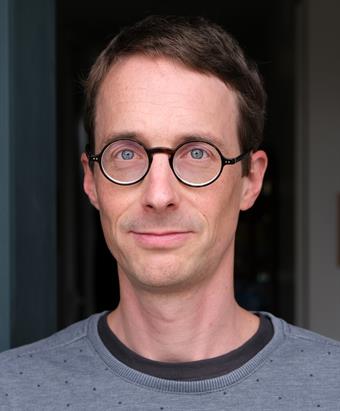
Eirik Myrvoll-Nilsenمشاهده پروفایل
پژوهشگر ارشد
Eirik Myrvoll-Nilsen serves as a Postdoctoral Fellow at the Department of Mathematics and Statistics, UiT The Arctic University of Norway, where he bridges statistical methodology with climate science and environmental monitoring. Based in Tromsø, he actively contributes to interdisciplinary research through collaborations within UiT's Complex Systems Modeling, Statistics and Data Analysis, and Machine Learning research groups, focusing on computationally intensive approaches to earth system challenges. His research expertise spans Climate Statistics, Statistical Climatology, Bayesian Inference, Long-range Dependence, Machine Learning for Environmental Science, and Paleoclimatology. He develops advanced statistical models for climate data analysis—including ice core chronology and global temperature response systems—while pioneering deep learning applications for automated classification of microfossils and marine fauna detection in underwater imagery, emphasizing methodological rigor and practical environmental solutions. Analysis of his recent publications reveals a cohesive research trajectory centered on uncertainty quantification in paleoclimate reconstructions and machine learning for environmental monitoring. Key methodological themes include Bayesian modeling of long-memory climate processes, statistical synchronization of ice core records, and deep learning frameworks for foraminifera classification—all demonstrating innovative integration of computational statistics with domain-specific climate and marine science challenges. Scientific awards: No scientific awards or honors were documented in the provided information. Advising and grants: The available text contains no details regarding doctoral/master's students supervised by Dr. Myrvoll-Nilsen or specific research grants secured. Labs and teams: He is an active member of UiT's Complex Systems Modeling (CoSMo), Statistics and Data Analysis, and Machine Learning research groups. Additionally, he contributes to the project 'Transforming ocean surveying by the power of DL and statistical methods,' which develops deep learning pipelines for automated analysis of marine environmental video data from Norwegian fjords and coastal waters.