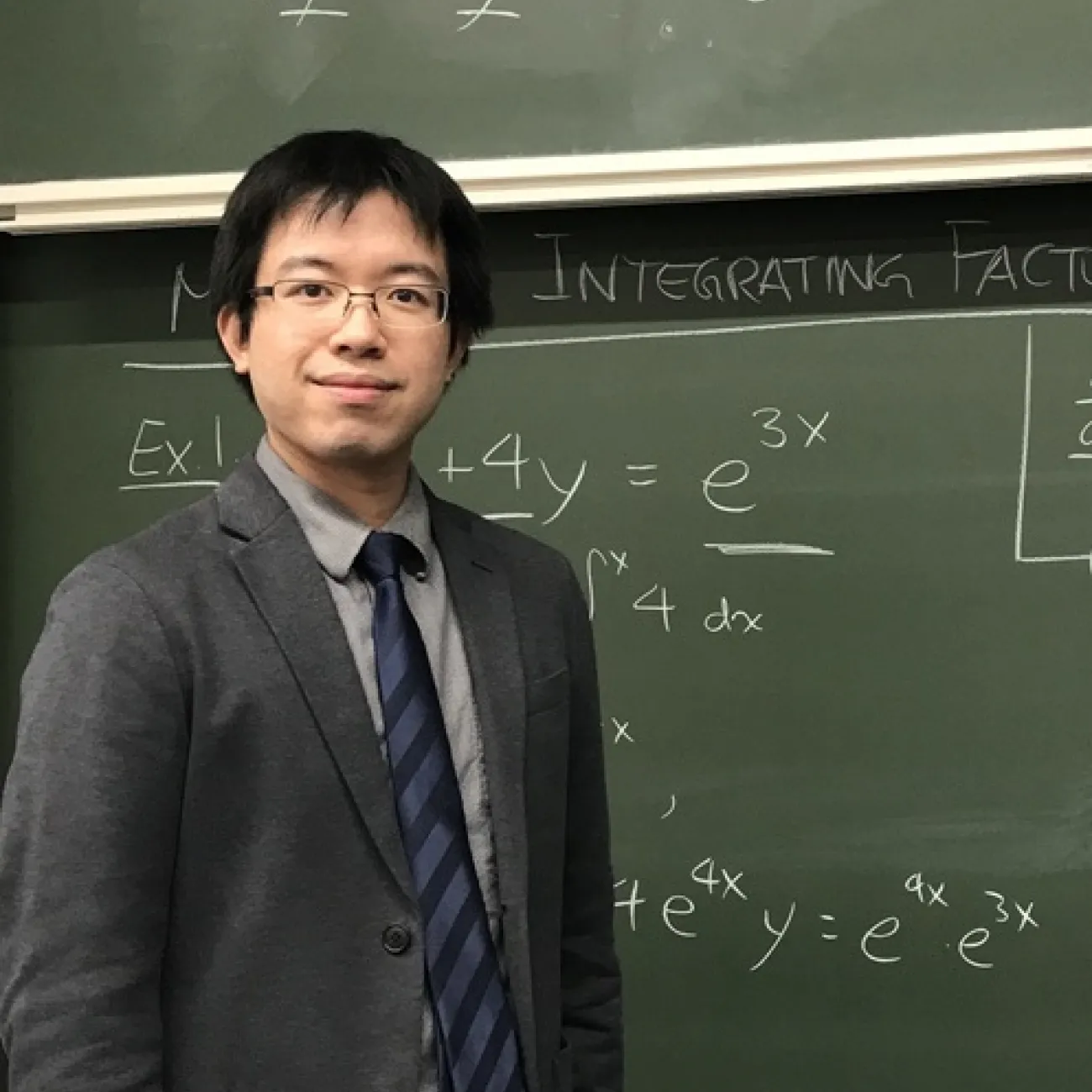
Richard J. Vaccaro is a Professor in the Department of Electrical, Computer and Biomedical Engineering at the University of Rhode Island. His research focuses on subspace estimation in sensor array signal processing, statistical modeling of inertial sensors, and control system design. Education : Ph.D., Electrical Engineering, Princeton University, 1983 M.S., Electrical Engineering, Drexel University, 1979 B.S., Electrical Engineering, Drexel University, 1979 Research Interests include array signal processing, direction-of-arrival (DOA) estimation, inertial sensor modeling, and control theory. His work explores subspace perturbation expansions, sensor fusion for drift reduction, and robust underwater acoustic localization. Recent Publications highlight advancements in subspace-based parameter estimation, optimal sensor array design, and geometric approaches to signal processing. Key trends involve applications in radar, underwater acoustics, and mobile robotics. Grants include collaborations with MIT (2023) and funding from the Office of Naval Research (2021). His patented technologies address sensor array calibration and noise reduction in inertial measurement units.
Anton Westveld is a Senior Lecturer in the Department of Statistics at the Australian National University (ANU), within the Research School of Finance, Actuarial Studies & Statistics (RSFAS). He also serves as an Affiliate Associate Professor at Virginia Commonwealth University since August 2023. His research focuses on Bayesian methodology, network analysis, game theoretic data, and statistical causality, with notable contributions to ecological modeling and agent-based stochastic simulations. Westveld holds a Bachelor’s in Economics and Political Science from the University of Michigan (Ann Arbor), a Master’s in Applied Economics and Statistics from the same institution, and a PhD in Statistics from the University of Washington. His work has been published in prestigious journals like the Annals of Applied Statistics and Proceedings of the National Academy of Sciences . His research interests span Bayesian inference, relational data analysis, and causal modeling, with applications in ecological and health sciences. Recent work includes developing Bayesian methods for ecological drivers in marine viral communities and latent socioeconomic health indices for policy evaluation. Notable articles include analyses of menstrual disorder surveys using Gaussian copulas, ecological metagenomics studies, and Bayesian-optimized bootstrap techniques for uncertainty quantification. His interdisciplinary collaborations bridge statistics with environmental science, public health, and economics.
Giancarlo Manzi is an Associate Professor of Statistics at the Department of Methods and Models for Economics, Territory, and Finance, University of Rome La Sapienza. He holds a PhD from the University of Milan-Bicocca and conducted thesis research at the University of Toronto. His career includes roles at the Medical Research Council Biostatistics Unit in Cambridge and the University of Milan. University of Rome La Sapienza (Current) Medical Research Council Biostatistics Unit (Former Researcher) University of Milan (Former Researcher and Associate Professor) University of Milan-Bicocca (PhD) University of Toronto (Thesis collaboration) His research spans Machine Learning , Bayesian Statistics , and Smart Mobility , with a focus on Covid-19 analytics , data visualization , and epidemiological modeling . He integrates Multivariate Statistics with Public Health to address complex challenges in health systems and urban environments. The 15 most recent publications highlight expertise in quantile regression , Bayesian networks , time-series analysis , and smart mobility optimization . His methodological contributions include wavelet analysis, cross-correlation models, and SIRD modeling frameworks applied to pandemic dynamics and bike-sharing systems. Scientific awards and honors are not explicitly mentioned in the provided texts. Giancarlo Manzi has taught at the University of Verona, Catholic University of the Sacred Heart, and Universidad Carlos III in Madrid, maintaining strong ties with Italy's academic institutions.
Javier Cabrera is a Professor in the Department of Statistics at Rutgers University with a joint affiliation at the Cardiovascular Institute. He holds a Ph.D. from Princeton University and is recognized as a Fulbright Scholar. His office is located at Hill Center 471, 110 Frelinghuysen Road, Piscataway, NJ. His research focuses on: Biostatistics and clinical trial methodology Data mining for functional genomics and DNA/protein arrays Statistical computing, machine vision, and high-dimensional data analysis Cardiovascular health applications using statistical modeling Recent publications (2022-2025) demonstrate strong emphasis on: Novel statistical methods for medical/biological data Machine learning applications in diagnostics and genomics Clinical risk modeling and epidemiological studies Big data reduction techniques and computational efficiency He frequently publishes in interdisciplinary collaborations at the intersection of statistics, biomedicine, and computational science. Awards: Fulbright Scholar He collaborates extensively with the Cardiovascular Institute, contributing statistical expertise to research on cardiovascular outcomes, disease risk modeling, and clinical data analysis.
Alain Ptito, PhD is a Professor at the Department of Neurology and Neurosurgery, Faculty of Medicine and Health Sciences, McGill University. He serves as an Associate Investigator at the Research Institute of the McGill University Health Centre (RI-MUHC) and Montreal Neurological Institute and Hospital. Academic Affiliation: McGill University Institutional Roles: RI-MUHC, Montreal Neurological Institute Research Focus: Dr. Ptito investigates motor recovery mechanisms in stroke and neural substrates of residual vision in blindsight patients post-hemispherectomy using functional MRI (fMRI) . His work extends to diagnosing traumatic Brain Injury (TBI) in soldiers, athletes, accident victims, and children through neuroimaging. Key findings include abnormal activation patterns as TBI severity indicators and fMRI's role in recovery assessment. Recent innovations involve repetitive transcranial magnetic stimulation (rTMS) for treating post-concussive symptoms like depression and cognitive impairment, alongside pioneering translingual neurostimulation with physical therapy for gait/balance restoration post-TBI. His research bridges clinical neuroscience, neurorehabilitation, and advanced neuroimaging techniques. Publication Trends: 2019-2025 outputs show consistent exploration of TBI pathophysiology, oculomotor dysfunction biomarkers, and neurostimulation interventions. Collaborations span neuroimaging, computational modeling, and clinical epidemiology. Neuroscience Leadership: Active in multidisciplinary research at the intersection of traumatic brain injury, visual neuroscience, and neuroplasticity, Dr. Ptito contributes to institutional research programs including the Brain Repair and Integrative Neuroscience (BRaIN) initiative.
Professor Hoai Phuong Ha is affiliated with UiT The Arctic University of Norway's Department of Computer Science. A leading expert in green computing and cyber-physical systems, they contribute to Arctic research through the Distributed Arctic Observatory (DAO) and Arctic Green Computing (AGC) group. Founded ARC (Arctic Center for Sustainable Energy) PI in EU FP7 EXCESS and H2020 TAILOR projects WP-leader in EEA POLNOR HAPADS and RCN PREAPP projects Their research focuses on energy-efficient computing, including IoT systems, edge computing, and parallel algorithms. Recent work addresses wireless charging trajectories (eU2U, 2025), smart grid networks (GridWatch, 2024), and pollution monitoring (2024). Publications span cyber-physical observatories, sensor calibration, and distributed systems optimization. Key trends in their 15 most recent articles (2017-2025) include: energy-aware data structures, Arctic-adapted IoT deployments, and sustainable computing methods. Collaborations span EU and Norwegian grants with applications in smart grids, environmental sensing, and high-performance computing. Co-founder of Arctic Center for Sustainable Energy (2017) Active in EEA POLNOR (2019-2023) and RCN eX3 infrastructure project Their lab (Realfagbygget A237) develops systems for Arctic tundra monitoring, including UAV-powered networks and energy-harvesting protocols. Students include researchers from multiple international collaborations.
Mathias Nilsson is a Professor of Physical Chemistry at the School of Chemistry, University of Manchester. He holds a BSc in Food Chemistry from Linneaus University (1993) and a PhD in Food Science from the Swedish University of Agricultural Sciences (1999). He has held postdoctoral positions in Aveiro, Portugal (2002–2003) and Manchester (2004–2007), followed by an EPSRC Advanced Research Fellowship. His research focuses on developing novel methods in liquids NMR spectroscopy, particularly in analyzing complex mixtures using diffusion-ordered spectroscopy (DOSY) and pure shift techniques. He leads the Mathias Nilsson Research Group, which collaborates globally and contributes to the Manchester NMR Methodology Group. His work addresses challenges in mixture analysis, spectral overlap resolution, and multidimensional NMR methodologies. Education: BSc in Food Chemistry, Linneaus University (1993) PhD in Food Science, Swedish University of Agricultural Sciences (1999) Research Interests: His group specializes in advancing NMR spectroscopy for mixture analysis, including DOSY, pure shift techniques, and multivariate data analysis. Key areas include reducing spectral overlap via pure shift DOSY, 3D DOSY methods, and covariance-based signal processing. Applications span pharmaceuticals, materials science, and food chemistry. The group also develops software tools like the DOSY Toolbox for diffusion data processing. Key Achievements: EPSRC Advanced Research Fellowship (2007) Contributions to economic and technological impacts via DOSY and pure shift NMR methodologies Development of the DOSY Toolbox software Advising & Grants: Supervised multiple PhD students and postdocs, including those working on pure shift NMR, matrix-assisted DOSY, and diffusion-based mixture analysis. His research aligns with UN Sustainable Development Goals through innovations in analytical chemistry. Labs & Teams: Part of the Manchester NMR Methodology Group and collaborates with international researchers in spectroscopy and analytical chemistry.
Dr. Stig Hellebust is a Lecturer in Physical Chemistry at the School of Chemistry, University College Cork (UCC), Ireland. Based in Room 206B of the Kane Building, he can be contacted at s.hellebust@ucc.ie or +353 214902680. His research focuses on atmospheric chemistry, environmental monitoring, and advanced data analysis techniques for understanding air quality and pollution sources across Ireland. Dr. Hellebust's research interests span several key areas of environmental chemistry and data science: Atmospheric observational data analysis, particularly high-dimensional datasets collected over extended time periods Application of multivariate statistical methods and machine learning for environmental data interpretation Source apportionment of atmospheric pollutants using receptor modeling techniques Development of algorithms for processing large environmental datasets Application of clustering and classification techniques to identify pollution sources Fourier-transform infrared spectroscopy data analysis His extensive publication record demonstrates expertise in air quality monitoring, particularly focusing on PM2.5 sources, urban pollution dynamics, and health impacts. He frequently employs advanced statistical methods including principal component analysis (PCA), positive matrix factorization (PMF), and various machine learning approaches to extract meaningful information from complex environmental datasets. His work bridges atmospheric science, public health, and data analytics, with significant contributions to understanding Ireland's air quality challenges. Dr. Hellebust has secured substantial research funding from multiple sources including the Environmental Protection Agency (EPA), Health Research Board, Science Foundation Ireland, and European Union programs. His current major projects include "Sources of PM2.5 in the Air of Irish Towns" (2024-2027, €233,796.00) and "Impact of Agricultural Emissions on Rural and Urban Air Quality" (2022-2025, €119,700.00), demonstrating his leadership in addressing critical environmental challenges. He currently supervises doctoral student Rósín Eileen Byrne and has previously supervised Eimear Heffernan who completed her PhD in 2022 on "Spatial and temporal variation of ambient carbonaceous aerosol in Ireland and strategies for effective monitoring of source contributions." His mentorship extends to interdisciplinary research connecting chemistry, environmental science, and public health. Dr. Hellebust is an active member of UCC's Atmospheric and Environmental Chemistry research group, collaborating with colleagues across Ireland and internationally on air quality monitoring and pollution source identification projects. His work has significant policy implications for urban planning, public health interventions, and environmental regulation in Ireland and beyond.
Dr. Lu Heng Sunny Yu is a Teaching Fellow and Outreach and Schools Liaison for Mathematical Sciences at the University of Southampton. He holds a PhD in Theoretical Physics from the University of California, Irvine, and has extensive experience in teaching and research across institutions, including roles as a Lecturer, Teaching Associate, and Teaching Assistant at UC Irvine. His research focuses on quantum gravity, quantum field theory, and cosmology, alongside pedagogical innovations in mathematics and physics education. He actively contributes to educational outreach and explores technology-enhanced learning strategies. Education: PhD in Theoretical Physics, University of California, Irvine MS in Physics, University of California, Irvine Master of Mathematics (Part III) in Applied Mathematics and Theoretical Physics, University of Cambridge BSc in Mathematics and Physics, University College London (UCL) Research Interests: Sunny’s theoretical physics research emphasizes nonperturbative quantum gravity methods and their cosmological implications. In education, he focuses on making mathematics and physics accessible through innovative teaching methods and technology integration. Recent work includes developing tools for grading efficiency and active learning practices. Teaching: Current Courses: Mathematical Methods for Physical Scientists, Mathematics for Electronics & Electrical Engineering, and Mathematics Projects Previous Courses: General Relativity, Quantum Field Theory, and Multivariable Calculus Labs/Teams: He is part of the Mathematics Outreach Team and contributes to the Southampton Theory Astrophysics and Gravity (STAG) Research Centre.
Kristan Foster Reed is an Assistant Professor of Animal Science at Cornell University's College of Agriculture and Life Sciences. His expertise centers on animal nutrition systems modeling, environmental impacts of dairy production, and ruminant protein nutrition. He holds a PhD from the University of California, Davis (2016) and a BS from Cornell University (2007). Reed's research focuses on improving nitrogen use efficiency in dairy systems, quantifying environmental impacts, and developing decision tools that account for uncertainty. His work integrates metabolic modeling with farm-scale systems approaches to address challenges like methane emissions and nutrient management. Recent projects include evaluating methane reduction strategies using climate-controlled respiration stalls and modeling dairy cow metabolism under varying dietary inputs. Key research themes include optimizing nutrient cycling, reducing greenhouse gas emissions from livestock, and enhancing dairy production sustainability. His publications emphasize methodological advancements in Bayesian modeling and interdisciplinary solutions for agroecosystem challenges. Reed collaborates with industry partners and governmental agencies to translate research into practical tools for farmers. His work has been highlighted in Cornell news for innovations in methane measurement and dairy systems sustainability.
Professor Mark Strong is the Dean of the School of Medicine and Population Health at the University of Sheffield, where he also holds the title of Professor of Public Health. He maintains an honorary clinical consultant role with the Office for Health Improvement and Disparities at the Department of Health and Social Care. His research focuses on Uncertainty Quantification in health economic models, particularly methods for computing Expected Value of Sample Information (EVSI) and Partial Expected Value of Perfect Information (EVPI) . Key Contributions : Developed the SAVI web calculator for efficient value-of-information calculations Co-investigator on NIH-funded SIPHER Consortium projects Expertise : Bayesian statistical methods Model discrepancy analysis Health policy decision modeling Systems science applications in public health Research Trends Analysis of his 20+ recent publications reveals concentrated activity in: Health Economic Evaluation (8 articles) Uncertainty Quantification (6 articles) Public Health Policy (7 articles) Systems Science Applications (4 articles) Alcohol Consumption Modeling (3 articles) Clinical Decision Support (5 articles)
Lance Manuel is a Professor of Engineering at The University of Texas at Austin. His research focuses on uncertainty quantification in engineered systems, particularly wind energy and offshore structures. He has led projects related to wind turbine fatigue analysis, hurricane risk assessment, and climate change adaptation. Ph.D., Civil Engineering (Stanford University) M.S., Civil Engineering and Applied Mechanics (University of Virginia) B.Tech., Civil Engineering (Indian Institute of Technology, Bombay) His work bridges civil infrastructure with climate resilience, emphasizing probabilistic methods for structural reliability. Key areas include extreme climate modeling , floating offshore wind turbines , and fatigue damage prediction under non-stationary conditions. Recent publications highlight interdisciplinary trends in renewable energy systems and climate hazard quantification . He advises graduate students like Taemin Heo and Ding Peng Liu, whose work spans stochastic processes and offshore structural reuse.
Zoltan Nagy is the Arvind Varma Professor of Chemical Engineering at Purdue University's Davidson School of Chemical Engineering. He joined Purdue in 2012 and holds a B.S. (1994) and Ph.D. (2001) from Babeș-Bolyai University, Romania. His research focuses on process systems engineering for pharmaceutical, biotechnology, and agrochemical industries, emphasizing crystallization systems, control engineering, and process analytical technologies. Research highlights include developing model-based control approaches for crystallization systems, integrating PAT technologies, and advancing continuous manufacturing processes. His work aims to optimize product quality (e.g., crystal size/shape, purity) while reducing costs and variability. Collaborations include the University of Loughborough and the UK's Innovative Manufacturing Research Center. Awards: IChemE Innovator of the Year (2011/2010), EFChE Membership (2010), Tudor Tanasescu Award (2008), and multiple journal best paper awards. Editorial Roles: Associate Editor of Journal of Process Control (2011–), Control Engineering Practice (2008–), and Asia-Pacific Journal of Chemical Engineering (2012–). His research group includes postdocs, visiting scholars, and 13 graduate students (listed in full description). Key projects involve intelligent manufacturing systems, real-time process monitoring, and decision support tools like the Crystallization Process Informatics System (CryPRINS).
Yan Zhao is an Associate Professor in the Department of Computer Science at Aalborg University, Denmark, affiliated with The Technical Faculty of IT and Design. His research focuses on data engineering, science, and systems, with a particular emphasis on anomaly detection, machine learning, and spatio-temporal data analysis. He holds a Ph.D. in Computer Science (specific education details not explicitly provided). Research Interests: Dr. Zhao's work spans anomaly detection, autoencoders, attention mechanisms, preference learning, multivariate time series, and computational efficiency. His research often integrates machine learning with real-world applications in spatial crowdsourcing, trajectory analysis, and data privacy. Publications: With 72+ publications, his recent work emphasizes spatio-temporal prediction frameworks, federated learning, and efficient time series analysis. Notable contributions include frameworks for continuous learning on streaming data and privacy-preserving clustering in spatial crowdsourcing. Grants & Supervision: He has supervised one Ph.D. student and actively contributes to research grants focusing on data engineering and smart systems. His work bridges theoretical advancements with practical applications in transportation, social networks, and IoT.
Daniel Peralta Cámara is a Postdoctoral Researcher at Ghent University's Faculty of Engineering and Architecture, Department of Information Technology (EA05). His work spans Machine Learning , Bioinformatics , High Performance Computing , and Biometrics , with a focus on Single-Cell Data Analysis , Image Cytometry , and Missing Value Handling . Affiliation: Ghent University Academic Rank: Researcher Research Disciplines: Data Mining, Parallel Computing, Bioinformatics, High Performance Computing His research designs scalable machine learning frameworks for biological and engineering applications, including SCIP for morphological profiling and MSDeepAMR for antimicrobial resistance prediction. He explores advanced techniques like Polar Encoding for missing data and Fuzzy Rough Sets for classification uncertainty, contributing to one-class classification and novelty detection through Python libraries like Fuzzy-rough-learn 0.2 . Key Trends: Hybrid CNN-LSTM for sports analytics Time-series feature selection in healthcare UWB/IMU wearable integration for animal monitoring Dr. Peralta supervises PhD candidates like Maxim Lippeveld (2025) and Oliver Urs Lenz (2023). His collaborations span Ghent University researchers including Eli De Poorter , Chris Cornelis , and Yvan Saeys . Applications: Badminton strategy analysis Goat activity classification White blood cell identification