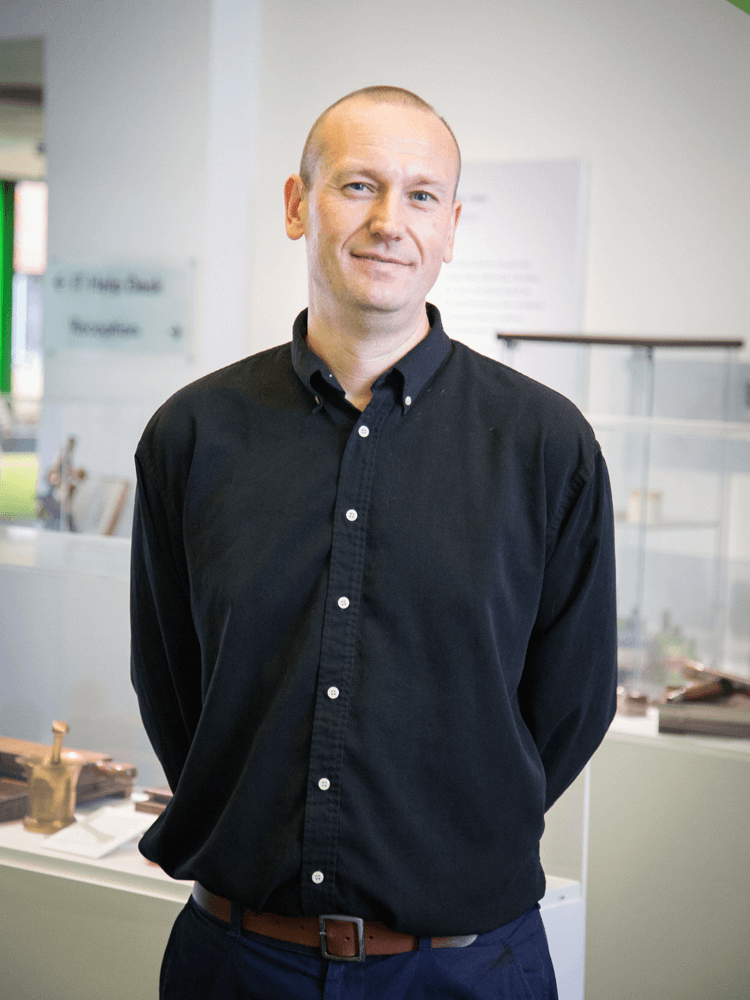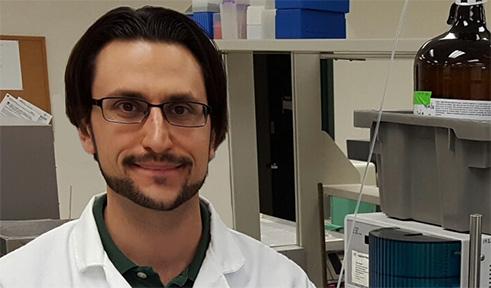
Justin M. Holub is an Associate Professor in the Department of Chemistry and Biochemistry at Ohio University's College of Arts and Sciences, where he also serves as the Online Graduate Recruitment Chair. His laboratory, the Holub Laboratory of Chemical Biology, is located in Clippinger Laboratories and is actively engaged in interdisciplinary research at the intersection of chemistry, biochemistry, and molecular biology. Education: B.S., Rider University Ph.D., New York University Post-doctoral training, Yale University Dr. Holub's research focuses on developing chemical tools to study and manipulate protein-protein interactions (PPIs), with applications in cancer, neurodegenerative diseases, and endocrine disorders. His lab employs multidisciplinary methods including organic synthesis, peptide engineering, protein expression, and fluorescence-based assays. Key research themes include re-engineering miniature proteins (e.g., scyllatoxin-based BH3 mimetics), surveying protein dynamics using bisarsenical dyes (e.g., FlAsH-EDT2), and developing therapeutic peptides targeting the human growth hormone receptor and tau phosphorylation pathways. His recent publications span high-impact journals such as Journal of Biological Chemistry , Organic & Biomolecular Chemistry , and Analytical Chemistry , reflecting a strong trend in chemical biology, protein engineering, and translational therapeutic development. His work frequently involves collaborations with other laboratories and institutions, including the Kopchick Laboratory and Leipzig University. Scientific Awards and Honors: Associate Professor with tenure, Ohio University (2019) NIH R21 grant recipient (2023) NSF MRI Grant recipient (2020) Ohio University Baker Fund grant (2021) Global Travel Fund Award (2018) Multiple PACE and internal funding awards (2018–2025) Dr. Holub actively mentors graduate and undergraduate researchers, many of whom have presented at national conferences and received university-level awards. He leads a dynamic research group with ongoing projects supported by external and internal grants. He has advised numerous students through Ph.D. and M.S. programs and has successfully placed alumni in academia, biotechnology, and professional programs. His laboratory has also contributed to instrumentation acquisition at Ohio University, notably the Bruker AutoFlex Max MALDI-TOF mass spectrometer. Laboratory and Collaborative Efforts: The Holub Laboratory is a vibrant research environment fostering innovation in chemical biology. It collaborates with the Kopchick Laboratory on growth hormone receptor antagonists and with the Chertok Laboratory on metabolite analysis. The lab has secured funding from NIH, NSF, Ohio University internal funds, and industry partners like Immunomic Therapeutics, Inc. It maintains active participation in professional societies such as ACS and ASBMB and regularly presents findings at regional and national meetings.