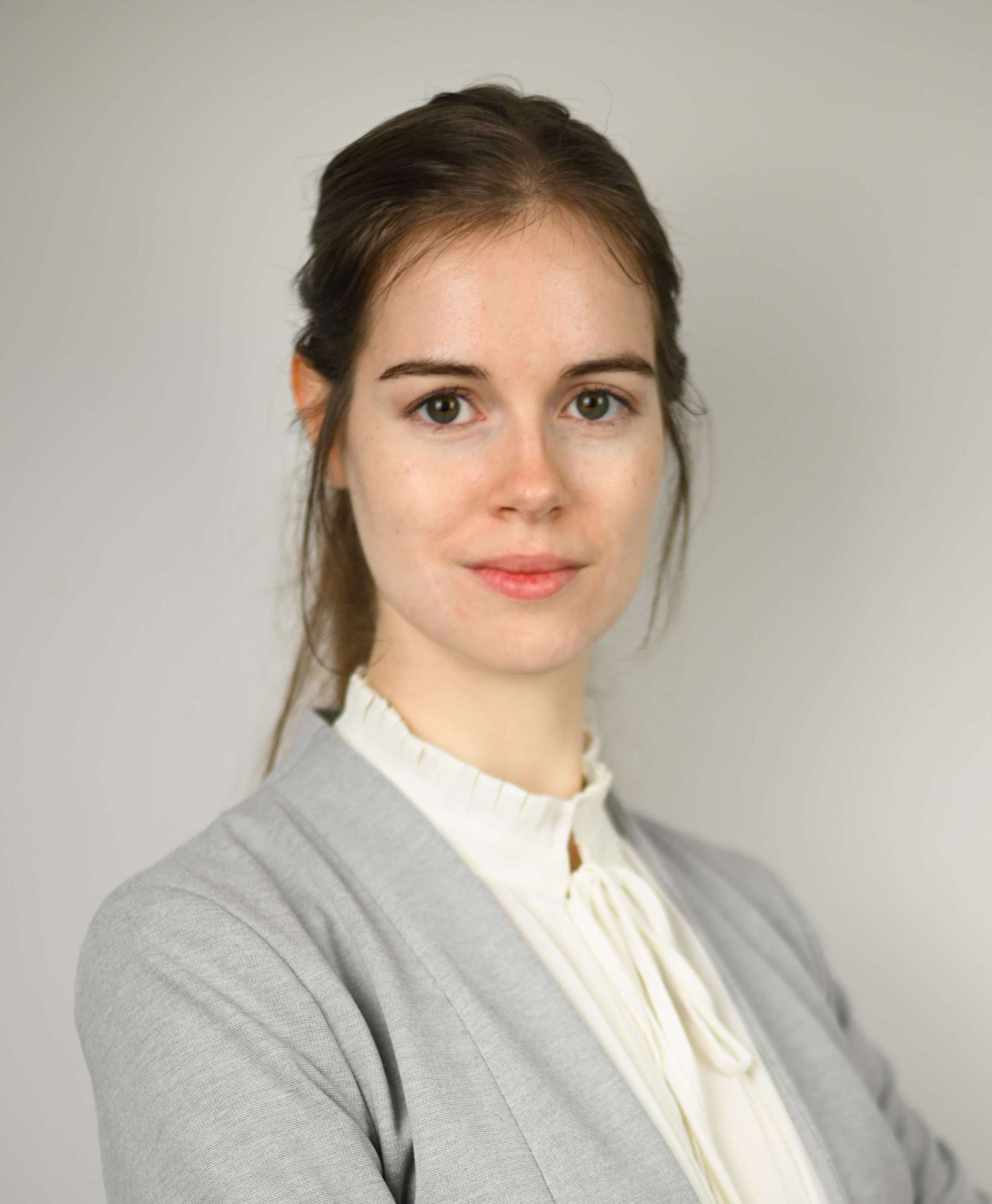
Olga Volckaert-Legrier is a Lecturer in Psychology at the University of Toulouse Jean Jaurès, affiliated with the Cognition, Languages, Language, Ergonomics (CLLE) research unit. Her work bridges Developmental Psychology and Digital Communication , focusing on how adolescents' use of SMS and electronic communication impacts language acquisition, spelling skills, and learning processes. She has conducted extensive longitudinal studies on text messaging patterns and their implications for educational technology . Her research themes include: Adolescent digital writing practices Effects of SMS on cognitive production Learning disabilities and technology Comparative analysis across regions (e.g., French Guiana vs. Metropolitan France) Key publication trends highlight her expertise in language registers , textism usage , and the pragmatic functions of SMS . She has collaborated with institutions like the École Pratique des Hautes Études and participated in projects such as sms4science and ANR AdEN . Her work informs policies on digital educational tools and supports initiatives like the CREM ELN thematic groups .
Ashley Blackwell, Ph.D. is an Assistant Professor in the Department of Psychology at the University of Nevada, Las Vegas (UNLV), where she leads research in the Behavioural Research and Integrative Neuroscience (BRaIN) Laboratory. Affiliated with UNLV's Interdisciplinary Neuroscience Program, her work bridges sensorimotor control, cognitive neuroscience, and translational disease modeling. Her research focuses on the neural basis of naturally occurring behaviors like reach-to-grasp movements and spatial navigation, analyzing how these processes are disrupted by space flight stressors (deep space radiation, sleep fragmentation), aging, and neuropathologies (stroke, Alzheimer's, alcohol exposure). Using behavioral assays, electrophysiology, histology, and computational modeling in both rodent and human studies, she develops sensitive translational assessments for early disease detection and treatment optimization. Analysis of her publications reveals key expertise in Galactic Cosmic Radiation (GCR) effects on cognition, fine motor control in disease models, sex-specific neurobiology , and stressor-induced deficits . Her NASA-funded work on spaceflight stressors in rodent models directly informs astronaut health risks during Mars missions. Scientific Awards: NASA Funding for Space Radiation Research Dr. Blackwell's lab emphasizes inclusion and diversity in neuroscience education while developing interventions against radiation-induced neurodegeneration. Her team's work on string-pulling tasks as behavioral assays has become central to understanding sensorimotor-cognitive interactions under extreme conditions.
Elizabeth Wiemers is an Assistant Professor in the Psychology Department at Bradley University's College of Liberal Arts & Sciences. Her research focuses on cognitive psychology with a particular emphasis on working memory, attentional control, and executive function. Her recent publications demonstrate expertise in areas like: Cognitive training mechanisms and transfer effects Proactive and reactive cognitive control dynamics Individual differences in attentional capacity Mind wandering and task engagement Neuropsychological assessment in clinical populations Cognitive load management in multitasking Contact: ewiemers@bradley.edu
Pedro Dias is an Associate Professor in the Department of Psychology at the University of the Azores and a Researcher at the Research Center for Human Development (CEDH). His work bridges clinical, developmental, and educational psychology with a focus on mental health and psychometric tools. PhD in Psychology (University of Minho, 2007), specializing in attachment and autonomic regulation in eating disorders Active contributor to Sustainable Development Goals (SDGs) through mental health literacy and educational inclusion projects Key research areas include Developmental Psychopathology , Attachment Theory , and Music Performance Anxiety , with recent emphasis on validating psychological scales and universal well-being screening for adolescents. His publications span Psychometrics (100% of projects), Mental Health (87%), and Adolescence (100%). Major projects: MUS-A (CoPI) - Music performance anxiety in children LETS CARE (PI) - Building inclusive school environments CAPSULE (Investigador) - Media impact on body image His work involves extensive collaboration with international researchers and institutional partnerships, with recent presentations on school-based well-being initiatives and music psychology. No formal awards are documented, but his 98 activities and 97 scientific productions demonstrate sustained academic engagement.
Eva Kemps is Professor of Psychology at Flinders University, holding appointments in the College of Education, Psychology and Social Work and as a Full Member of the Flinders University Institute for Mental Health and Wellbeing. She serves as Flinders Node Leader of the Australian Research Council Centre of Excellence Plants for Space and previously held the significant leadership role of Associate Dean (Research) in the Faculty of Social and Behavioural Sciences (2012-2017). Professor Kemps completed her undergraduate and postgraduate studies in psychology at Ghent University, Belgium, earning a B.Psych. & Ed., M.Psych., and Ph.D. She has established an internationally recognized research program applying experimental cognitive psychology to the food and eating domain. Her work spans two major areas: managing psychological impulses to consume soft drinks and subtly changing food environments to promote healthier eating through nudging techniques. Her recent publications demonstrate a strong focus on eating behavior, cognitive psychology, and public health interventions. She has published extensively on topics including food cravings, attentional biases, digital health applications, social media influences on body image, and systematic reviews of visual cues for promoting healthier consumption behaviors. Her research often employs experimental cognitive approaches to understand and modify eating behaviors across diverse populations. Dean's Recognition of Teaching Award (2023) Student Led Teaching Award for Most Supportive Supervisor (2021) Vice-Chancellor's Award for Early Career Researchers (2010) Vice-Chancellor's Award for Excellence in Teaching (2005) Professor Kemps has secured approximately $40 million in research funding, including major grants from the Australian Research Council. She has supervised numerous doctoral students, including Naomi Kakoschke (Vice-Chancellor's Prize for Doctoral Thesis Excellence, 2018) and Phoebe Wu (Best Higher Degree by Research Student Publication Prize, 2023). She serves as Associate Editor of the Journal of Behavior Therapy and Experimental Psychiatry and sits on multiple editorial boards. She is actively involved in research networks including the Australasian Forum on Emerging Research in Cognition and Emotion, which she co-founded in 2015.
Associate Professor Maarten Immink is a faculty member at the College of Nursing and Health Sciences and an associate member of the Medical Device Research Institute at the University of South Australia . His work bridges neurocognitive processes in skilled movement acquisition with applications in industry, defense, sports , and clinical rehabilitation . His research focuses on optimizing skill training environments and enhancing learning capacity through mindfulness , exercise cognitive training , and non-invasive brain stimulation . Key contributions include systematic reviews and experimental studies on motor sequence learning , cognitive control , and mindfulness effects in athletes and stroke survivors. Recent publications highlight trends in movement-based mindfulness interventions for stroke rehabilitation , executive function in youth via motor learning, and neurophysiological dynamics during meditation and motor tasks. His work aligns with SDGs related to health and education . Supervisory Roles: Edward O’Connor (PhD, 2023) on Mindfulness-based cognitive training for athlete wellbeing Russell Weili Chan (PhD, 2018) on Meditation-based enhancement of motor sequence learning Chloe Dziego (PhD, 2024) on Cognitive training in defense settings James Brown (Masters, 2022) on Motor memory consolidation
Sybil Derrible is a Professor of Urban Engineering at the University of Illinois Chicago's College of Engineering, with dual appointments as a Research Professor at the Institute for Environmental Science and Policy and a Courtesy Professor in the Department of Computer Science. He directs the Complex and Sustainable Urban Networks (CSUN) Laboratory, focusing on integrated urban infrastructure systems. His research spans urban infrastructure as interconnected systems, including transportation, water, energy, and waste management. Derrible applies complexity science, urban metabolism, and data science to develop sustainable and resilient urban solutions. His work emphasizes environmental justice, smart city technologies, and infrastructure system interdependencies. Derrible's recent publications reveal strong focus on applying machine learning to urban challenges, with significant work on environmental justice metrics, infrastructure burden forecasting, and pandemic-related mobility shifts. His research increasingly integrates AI with traditional engineering approaches to address complex urban problems. Fellow of American Society of Civil Engineers (ASCE) Lead Author on United Nations Environmental Program Seventh Global Environment Outlook Chair of Critical Transportation Infrastructure Protection Committee at Transportation Research Board NSF CAREER Award recipient As an educator, Derrible advises multiple PhD students through the CSUN Laboratory while maintaining active research collaborations. His editorial roles with Scientific Reports and ASCE Journal of Infrastructure Systems demonstrate his standing in the academic community. His forthcoming book "The Infrastructure Book" aims to make complex urban systems accessible to general audiences.
Insa Schaffernak is a Research Associate at Augsburg University of Applied Sciences within the Faculty of Humanities and Natural Sciences, concurrently pursuing her PhD at the DigiTech PhD Center. She holds an M.Sc. in Cognitive Psychology from Albert-Ludwigs-University Freiburg and has international academic experience at the University of Innsbruck and University of Wisconsin-Madison. Her research examines cognitive psychology, AI in healthcare, and human-computer interaction, with specialization in task-switching behaviors and multitasking strategies. She contributes to the PSY-A-EYE project investigating augmented reality applications. Her 2021 publication analyzes self-reported task-selection methodologies in experimental psychology.
Modupe Akinola is the Barbara and David Zalaznick Professor of Business at Columbia Business School and serves as Faculty Director of the Sanford C. Bernstein & Co. Center for Leadership and Ethics. Prior to her academic career, she worked in professional services at Bain & Company and Merrill Lynch. She holds a Ph.D. in Organizational Behavior and Social Psychology from Harvard University (2009). Dr. Akinola's research focuses on how organizational environments characterized by deadlines, multitasking, and low status generate stress and how this stress affects performance. She employs a multimethod approach incorporating behavioral observation, implicit and reaction time measures, and physiological responses (hormonal and cardiovascular) to examine cognitive outcomes under stress. Her work also investigates workforce diversity, exploring organizational strategies to increase talent pool diversity and biases affecting minority recruitment and retention. Her research portfolio reveals consistent themes across organizational behavior, stress physiology, and diversity studies. The publications demonstrate a progression from examining basic stress mechanisms to developing practical interventions that optimize performance under pressure. Her work increasingly integrates biological markers with social psychological frameworks, creating a unique interdisciplinary approach to understanding workplace behavior. Recent publications show growing emphasis on practical applications in healthcare, education, and organizational settings. Dr. Akinola teaches courses including Advanced Micro Seminar in Social Interactions in Groups and Organizations, Executive Ethics (focusing on Stereotyping and Discrimination in Organizations), Global Immersion: Lessons from Rwanda on Conflict, Leadership, Change, and Business Opportunities, Lead: People, Teams, Organizations, and Success, Satisfaction and Sustainability. Her media presence includes interviews with major outlets and appearances alongside figures like Chris Hemsworth and Melinda French Gates discussing stress management and diversity topics.
Christopher Terry is an Associate Professor of Psychology in the Division of Social & Behavioral Sciences at Elmira College, where he has taught since 2009. His instructional focus spans cognitive and physiological psychology, adult development and aging, health psychology, research methods, and specialized topics including sleep, memory, and aging in America. His academic background includes: Ph.D. in Experimental Psychology, Syracuse University (2009) M.S. in Experimental Psychology, Syracuse University (2005) B.S. in Psychology, Towson University (2003) Dr. Terry's research centers on multitasking and divided attention, specifically examining how individuals develop task-management strategies over time, the motivational factors influencing strategy selection, and mechanisms supporting effective multitasking in daily contexts. His work bridges cognitive aging, health psychology, and technology's impact on professional environments. His scholarly output demonstrates consistent focus on cognitive processes in real-world applications, with recent work addressing disinformation navigation and digital communication in medical settings. Dr. Terry has received significant recognition: Joseph Stein Faculty Award (2015) Malcolm and Virginia Marsden Endowed Fund Award (2019) As co-advisor for Elmira College's Psi Chi chapter since 2010, he mentors high-achieving psychology students through induction ceremonies and research presentations, including collaborative work at the Eastern Psychological Association meeting where undergraduate researchers presented findings under his guidance. He maintains active research collaborations with faculty like Dr. Ping Zheng and undergraduate students, focusing on experimental psychology applications in contemporary cognitive challenges.
Timothy Ricker is an Associate Professor in the Department of Psychology at the University of South Dakota, where he conducts research on working memory, cognition, attention, and perception. His work combines behavioral experimentation, mathematical process modeling, and Bayesian estimation to investigate how visual sensations transform into robust working memories and the mechanisms of forgetting during multitasking. He teaches courses related to cognition and statistics, framing the brain as a computer and life as probabilistic events. Education: Ph D, Psychology, University of Missouri, 2013 MA, Psychology, University of Missouri, 2009 BA, Psychology, Michigan State University, 2006 Ricker's research focuses on short-term consolidation in working memory, examining how fleeting sensory representations become durable memories. His lab investigates boundary conditions for cognitive load effects, the relationship between working memory and multitasking, and how memory representations change across different tasks. Using computational models, his team differentiates fine-detail and categorical-gist memory representations, with recent work challenging traditional views that multitasking causes forgetting—instead proposing it prevents standard memory creation processes. His publication record shows a clear trajectory toward understanding memory consolidation mechanisms, with increasing emphasis on computational modeling approaches like drift diffusion modeling. Recent work explores the relationship between working memory and long-term memory, the impact of mind-wandering on cognitive performance, and translating laboratory findings to everyday cognitive functioning. Scientific Awards: Arts & Sciences Faculty Travel Grant, College of Arts & Sciences, University of South Dakota (2022) Arts & Sciences Faculty Travel Grant, College of Arts & Sciences, University of South Dakota (2023) Arts & Sciences Faculty Travel Grant, College of Arts & Sciences, University of South Dakota (2024) Ricker has secured substantial grant funding including a $1.5M award from the National Institute of Neurological Disorders and Stroke (2025-2030) for his Bayesian Neurocomputational Model of Cognitive Change in Multiple Sclerosis. His research program is supported by diverse funding sources including the Swiss National Science Foundation and the Center for Brain and Behavior Research at USD. He directs the Memory & Attention Laboratory at USD, which employs behavioral experiments, eye tracking, pupillometry, and computational modeling to study fundamental memory and attention processes. The lab has developed a distinctive focus on translating laboratory findings to everyday cognitive functioning and understanding suboptimal cognitive performance in daily life contexts, moving beyond traditional ideal observer models.
Dr. Nancy Cheever is a Professor and Journalism Program Coordinator in the Department of Communications at California State University, Dominguez Hills (CSUDH), within the College of Arts & Humanities. She serves as founding mentor of the George Marsh Applied Cognition Laboratory and president of a non-profit organization supporting homeless youth in Orange County, CA. Education: Ph.D. in Media Psychology, Fielding Graduate University M.A. in Media Psychology, Fielding Graduate University M.A. in Journalism, California State University, Fullerton B.A. in Journalism, California State University, Dominguez Hills Dr. Cheever's research investigates the psychological consequences of digital technology adoption, with empirical studies on mobile device anxiety, technology-induced sleep disorders, online dating behaviors, and multitasking cognition. Her work bridges journalism education and psychological science, emphasizing media literacy in the digital age through her co-authored books and public commentary. Scientific Awards: 2018 Presidential Outstanding Professor Award 2018 CSU Faculty Innovation and Leadership Award As Journalism Program Coordinator, Dr. Cheever mentors students in media production and research methodology while leading the George Marsh Applied Cognition Laboratory. Her extensive media appearances demonstrate effective knowledge translation from academic research to public discourse, enhancing the visibility of CSUDH's communications programs. The laboratory's interdisciplinary approach with psychology faculty creates unique research opportunities for students studying technology's cognitive impacts. The George Marsh Applied Cognition Laboratory serves as Dr. Cheever's primary research hub, where she collaborates with Psychology Professors Dr. L. Mark Carrier and Dr. Larry Rosen on longitudinal studies examining digital behavior patterns and psychological outcomes. This facility supports her empirical research program investigating the intersection of media consumption, cognitive processes, and mental health indicators.