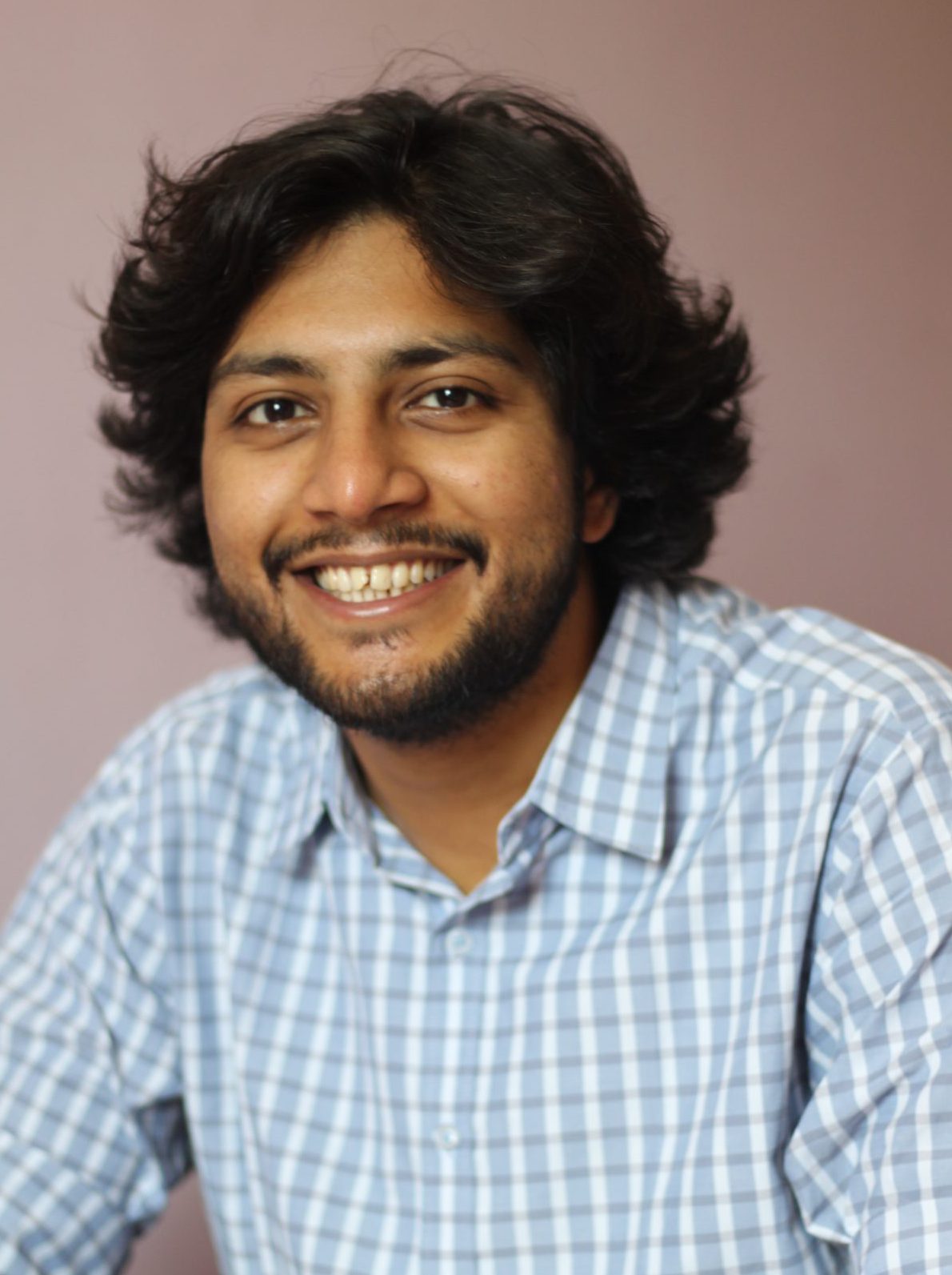
Miriam Waltz is an Assistant Professor in gender justice and health technologies at Leiden University, with a joint appointment between the Institute for Cultural Anthropology and Development Sociology and the African Studies Centre. Her research focuses on interdisciplinary health technologies in Africa, pesticide use in Western Kenya, and perinatal healthcare in South Africa. Education: BA in Anthropology and Development Studies, University College Utrecht (2012) Honours and MA in Social Anthropology, University of Cape Town (2013–2015) Joint PhD in Anthropology (Aarhus University & University of Oslo, 2022) Research Interests: Examines pesticide use among smallholder farmers in Kenya, exploring socio-ecological dynamics and non-human entanglements. Investigates perinatal health care navigation and technological interventions in Cape Town. Explores multispecies ethnography and science-policy interfaces in African contexts.
Dr Alison Powell is an Associate Professor in the Department of Media and Communications at the London School of Economics and Political Science (LSE), serving as Programme Director for the MSc Media and Communications (Data and Society). Her research focuses on technology design, public sector technology, and digital futures. She is known for her book Undoing Optimization: Civic Action in Smart Cities (2021) and her participatory research method, data walking. From 2019–2023, she directed the JUST AI network, supported by the Ada Lovelace Institute and UKRI, advancing AI ethics research. Her work integrates critical theory, participatory methods, and interdisciplinary collaboration. Education: PhD in Communication from Concordia University (Canada), MA in Media Studies from Toronto Metropolitan University, and postdoctoral research at the Oxford Internet Institute. Prior to academia, she worked in the film and TV industry. Research interests include civic engagement in data-driven governance, ethical AI, and participatory urbanism. She has advised projects like Africa Just AI and Operationalising Ethics for AI, funded by Horizon Europe, AHRC, and the Open Society Foundations. Her articles address topics such as AI governance, urban light ecology, feminist research praxis, and the ethical implications of technology for marginalized communities. She contributes to blogs like Media@LSE and leads initiatives at Polis and the LSE’s Digital Futures for Children project. Grants and collaborations include work with Projects by IF, Open Rights Group, and the Human Data Interactions Network (EPSRC). She explores intersections of technology, justice, and sustainability, emphasizing equitable and inclusive innovation.
Alenda Y. Chang serves as an Assistant Professor in Film and Media Studies at the University of California, Santa Barbara. With a multidisciplinary background spanning biology, literature, and film, she integrates ecocritical theory with contemporary media analysis. Her scholarly work appears in journals including Interdisciplinary Studies in Literature and Environment , Qui Parle , and electronic book review , focusing on sustainable media practices and ecological frameworks for digital engagement. Her educational background includes: M.A. and Ph.D. in Rhetoric from the University of California, Berkeley M.A. in English Language and Literature from the University of Maryland Chang specializes in environmental media and game studies, developing theoretical frameworks for ecological game design. Her research examines how digital games model environmental systems and foster player engagement with climate change through concepts like "slow violence" and "rambunctious play." She advocates for sustainable design patterns that address gaming's carbon footprint while creating immersive ecological narratives. Analysis of her 15 most recent publications reveals a consistent trajectory from foundational ecological game theory (2013-2018) to current work on thermal contexts of play and sustainable infrastructure (2022-2024). Her scholarship increasingly bridges data-driven activism with critical game design, emphasizing multispecies entanglements and infrastructural play as tools for environmental awareness. As co-founder of Wireframe—a collaborative media studio at UCSB—Chang cultivates critical game design practices through initiatives like growinggames.net . The studio supports data-driven global media art, environmental activism, and experimental pedagogy, serving as a hub for translating ecological theory into tangible digital interventions that challenge anthropocentric perspectives in gaming.
Marisol De La Cadena is a Professor in the Department of Anthropology at the University of California, Davis, with affiliations in Science and Technology Studies (STS). Her work bridges anthropology, political theory, and environmental thought, focusing on ontological divergence and multispecies relations in Latin America, particularly in Peru and Colombia. Department: Department of Anthropology School: College of Letters and Science University: University of California, Davis Email: mdelac@ucdavis.edu Office: Young Hall 315 Her research centers on the intersection of modern politics and non-modern or ahistorical ontologies, especially through what she calls "ontological openings." Drawing from deep ethnographic engagement with Quechua-speaking interlocutors in the Andes, she explores how earth-beings, humans, and nonhumans co-constitute worlds that exceed Western categories. Her theoretical contributions challenge conventional boundaries between nature and culture, history and timelessness, and politics and cosmology. Her recent fieldwork in Colombia examines human-cow relations on cattle ranches and in veterinary schools, situating these practices within broader ecological crises and post-conflict transitions. Her publications reveal a consistent interest in how ethnographic concepts function as both empirical observations and theoretical tools. The body of her work, including key articles like "Uncommoning Nature" and "Runa: Human but not only," reflects a deep commitment to rethinking anthropological method and theory. Her research trends emphasize ontological politics, multispecies ethnography, and the decolonization of knowledge, contributing significantly to contemporary debates in STS and anthropology. Her scientific honors include: John Simon Guggenheim Memorial Foundation Fellow (2008) Lewis H. Morgan Lecture Series Invited Speaker, University of Rochester (2011) Invited Researcher, Center for Advanced Studies, Norwegian Academy of Sciences (2015) Guest Speaker, Mellon-Sawyer Seminar, University of Cape Town (2010) She has been principal investigator on several major grants, including the John E. Sawyer Mellon-Sawyer Seminar on the Comparative Study of Cultures (2012–2016), a Wenner-Gren Conference Support Grant (2009–2010), and multiple research fellowships from the Guggenheim, Wenner-Gren, and American Philosophical Societies. These grants have enabled collaborative, transdisciplinary research on cosmopolitics, indigeneity, and the anthropology of worlds. She is affiliated with research initiatives such as the Sawyer Seminar on the Comparative Study of Cultures and contributes to global academic networks in anthropology and STS. Her work fosters dialogue between indigenous thought, continental philosophy, and ethnographic practice, creating spaces for alternative modes of knowing and being.
Kati Rahikainen is a Junior Researcher and Doctoral Researcher affiliated with the Faculty of Social Sciences at the University of Lapland. She is part of the Multidimensional Tourism Institute and the Sustainable Naturecultures and Multispecies Future (SuMu) research groups, as well as the Discipline-specific doctoral programme. Her work focuses on tourism research, particularly the intersection of sharing economy, value creation, and legal frameworks. Key projects include the 'Jaava' initiative (2020–2022), funded by Business Finland, which explored responsibility and value creation in the sharing economy within Finnish Lapland's tourism sector. Her research integrates institutionalist perspectives and legal analyses to address challenges in short-term rental (STR) regulation and corporate social responsibility. Research Interests: Tourism policy, sharing economy dynamics, legal dimensions of STR, business models, and digital platforms in service economies. Her conference presentations and publications highlight trends in balancing legal frameworks with responsible business practices in tourism. She has contributed to discussions on institutional responsibilities and ethical dilemmas in emerging sharing economy landscapes.
Eric V. Mazumdar is an Assistant Professor at the California Institute of Technology (Caltech), jointly appointed in the departments of Computing and Mathematical Sciences and Economics. He holds a B.S. from MIT (2015) and a Ph.D. from UC Berkeley (2021), co-advised by Michael Jordan and Shankar Sastry. His research bridges machine learning and economics, focusing on deploying algorithms into societal systems through theoretical and practical lenses. Key areas include strategic classification, multi-agent reinforcement learning, and distributionally robust optimization, with applications in healthcare, online markets, and intelligent infrastructure. Education: B.S., Electrical Engineering and Computer Science, Massachusetts Institute of Technology, 2015 Ph.D., Electrical Engineering and Computer Science, University of California, Berkeley, 2021 Research Interests: Mazumdar’s work emphasizes understanding learning algorithms in strategic environments, including min-max optimization, game theory, and multi-agent systems. He explores how algorithms interact with human and algorithmic agents in dynamic systems, with practical applications in healthcare delivery, e-commerce, and autonomous systems testing. Awards: NSF CAREER Award (2023) Simons Institute Research Fellowship in Learning in Games Grants & Funding: Supported by NSF, DARPA, Amazon, and other organizations. His NSF CAREER grant focuses on strategic interactions in societal-scale systems. Teaching: Courses include Networks: Structure & Economics (CMS/CS/EE/IDS 144) and Topics in Learning and Games (CMS/Ec 248). At UC Berkeley, he contributed to courses like Data, Inference, and Decisions (DS 102). Students & Postdocs: Current students: Lauren Conger, Tinashe Handina, Yizhou Zhang Postdocs: Zaiwei Chen, Laixi Shi, Kishan Panaganti (co-advised with Adam Wierman)
Maan Barua is a University Lecturer in Human Geography at the University of Cambridge's Department of Geography, affiliated with the Vital Geographies and Infrastructural Geographies research groups. His research focuses on urban ecologies, postcolonial environments, and the intersections of political economy with posthumanist thought. He leads the ERC Horizon 2020-funded 'Urban Ecologies' project (£1.23 million, 2018-2024) and has authored influential works like Lively Cities (2023) and Plantation Worlds (2024). Prior to Cambridge, Barua held a British Academy Postdoctoral Fellowship at the University of Oxford. His grants include major support from the Wellcome Trust, Leverhulme Trust, and British Academy. He collaborates internationally with institutions like SciencesPo (Paris) and Freie Universität Berlin, and serves as adjunct faculty at India's National Institute of Advanced Studies (NIAS). Research areas include urban metabolism, biocapital, and postcolonial environmental theory. Current projects examine urban wetlands, amphibious urbanism, and metabolic politics. His work bridges anthropology, ecology, and policy, including contributions to IUCN's Asian Elephant Specialist Group.
Prof. Knut Drescher is an Associate Professor at the Biozentrum, University of Basel , leading a research group focused on bacterial biofilms , swarming , and microbial multicellularity . Previously, he served as a Professor of Biophysics and Max Planck Research Group Leader at Philipps-Universität Marburg (2015-2021) and conducted postdoctoral research at Princeton University. Research Interests: Physical and biological mechanisms of biofilm formation Cell-cell interactions in microbial communities Antibiotic resistance in biofilms Hydrodynamics of bacterial swarms Evolution of cooperation in multispecies biofilms Development of bioimaging software (BiofilmQ, BacStalk) Scientific Awards: 2023: SNSF Consolidator Grant 2019: Heinz Maier-Leibnitz Prize (DFG), VAAM Research Prize, IUPAP Young Scientist Prize 2016: ERC Starting Grant Advising & Grants: Advises PhD and Master's students in microbiology, biophysics, and bioinformatics Secured major grants from ERC , HFSP , and DFG
Michael R. Dove is the Margaret K. Musser Professor of Social Ecology and Professor of Anthropology at Yale University, where he also serves as Curator of Anthropology at the Peabody Museum and Co-Coordinator of the Combined YSE/Anthropology Doctoral Program. With over forty years of research experience, his work focuses on environmental anthropology, particularly the environmental relations of local communities in South and Southeast Asia. Dove earned his B.A. from Northwestern University and his M.A. and Ph.D. from Stanford University. His academic journey has spanned decades of field research in Asia, including more than a dozen years conducting long-term studies on human ecology in Borneo and Java, developing government research capacity in Indonesia, and advising the Pakistan Forest Service on social forestry policies. Professor Dove's research interests encompass the anthropology of climate change, cultural and political aspects of natural hazards and disasters, indigenous environmental knowledge and practice, environmental institutions and movements, history of environment-related sciences, and multispecies ethnography. His work often examines how local environmental systems interact with national and global markets, politics, and ideologies, with a focus on problematizing orthodox approaches to conservation and development. He has made significant contributions to understanding human-environment relations through both theoretical frameworks and practical applications. Dove's recent scholarly output demonstrates a progression toward more integrated approaches to environmental challenges, blending historical perspectives with contemporary issues. His publications increasingly focus on the intersections of climate change, social justice, and indigenous knowledge systems, while maintaining his longstanding interest in Southeast Asian environmental relations. The work shows a growing emphasis on post-humanist approaches and multispecies ethnography, reflecting broader trends in environmental anthropology while maintaining his distinctive focus on political ecology and institutional analysis. As an educator, Professor Dove has supervised numerous doctoral and master's students, many of whom have gone on to win research awards and secure prestigious positions. He organizes separate research labs for doctoral students from Yale School of the Environment and other departments, as well as for joint YSE/Anthropology doctoral students. His advisees typically conduct international research and have excellent records of obtaining research support both within and beyond Yale. The Dove Lab at Yale School of the Environment serves as a hub for environmental anthropology research, focusing on topics including natural resource management, property rights, power struggles, household energy transitions, and human-wildlife interactions. The lab fosters a collaborative environment with 30-50 students working on related issues each year, characterized by supportive peer dynamics rather than competition. It also contributes to policy and social change through its research and the work of its alumni.
Tracy Charlotte Young is a Senior Lecturer at the Faculty of Education, Southern Cross University (SCU), serving as Course Coordinator for Early Childhood Programs at the Melbourne Campus. With over 30 years of experience as an environmental educator, early childhood teacher, and tertiary educator in Initial Teacher Education, her career bridges research, pedagogy, and advocacy. Education: PhD (2019), Master of Education (2010), Bachelor of Education (1998), Graduate Diploma of Child Development (1991). Research: Focuses on child-animal relations, multispecies education, and environmental education through critical posthuman and post-qualitative lenses. Teaching: Covers philosophy (ecological ethics, Indigenous perspectives), ecology (sustainability pedagogies), and leadership in early childhood education. Supervision: Available for Masters and Doctoral projects in early childhood education, multispecies inquiry, and posthuman theories. Contact: Located at 108 Lonsdale Street, Melbourne 3000; email tracy.young@scu.edu.au. Research Impact: Her work integrates early childhood education with multispecies interactions, challenging traditional human-centric pedagogies and expanding ecological ethics in educational frameworks.
Stefan Helmreich is the Elting E. Morison Professor of Anthropology at MIT, where his research examines how scientists conceptualize fundamental phenomena—especially waves—across oceanography, biology, acoustics, and computing. His interdisciplinary work bridges anthropology, science studies, and media theory. Core research themes include: Cultural and scientific constructions of ocean waves Marine microbial ecologies and alien oceans Sound studies and transduction theories Multispecies ethnography Scientific visualization practices Helmreich's publications demonstrate consistent engagement with wave phenomena as both physical forces and cultural symbols, exploring how scientific representations of waves shape environmental understanding. His award-winning books trace connections between marine science, cosmology, and media technologies. He has received numerous prestigious awards including a Guggenheim Fellowship and multiple book prizes from anthropological associations. Helmreich maintains creative collaborations through projects like 'Wave Count'—a musical exploration of wave representations across genres.
Utathya Chattopadhyaya is an Assistant Professor in the Department of History at the University of California, Santa Barbara, specializing in Modern South Asian and British Imperial History with intersecting interests in the Indian Ocean World, Global History, and Commodity History. His research combines critical materialist and anti-imperial frameworks to analyze colonial agrarian frontiers, intoxicant commodities, and social dynamics of caste, class, and gender. He teaches undergraduate and graduate courses including commodity histories, South Asian public culture, and historical methods. Ph.D., University of Illinois, Urbana-Champaign (2018) His recent publications focus on cannabis regulation, colonial political economy, and multispecies entanglements in imperial contexts. He has received prestigious fellowships from the American Council of Learned Societies, UC Humanities Division, and the Mellon Foundation. Chattopadhyaya co-teaches interdisciplinary courses on topics such as race, colonialism, and cannabis history, contributing to emerging scholarship in Science, Technology, and Society (STS) and decolonial studies. Chattopadhyaya's research clusters around British imperialism's material impacts, particularly in eastern Bengal's agrarian transformations and intoxicant commodity systems. His work synthesizes historical methods with critical plant studies and gender analysis, producing innovative insights into colonial governance and resistance. He actively engages with graduate students in comparative history and Indian Ocean World studies. "Ganja and the Godhead" (2024) - Colonial cosmologies and cannabis "Colonial Capitalism" (2024) - Economic structures of empire "Bodies that Cohere" (2023) - Gender analysis in colonial contexts Key awards include the Margaret T. Getman Service to Students Award (2024), Regents Humanities Fellowship (2022-23), and ACLS Fellowship (2021-22). His scholarly activities intersect with research clusters in Science, Technology and Society; Race, Blackness and Abolition; and Global Antiquity.
Jakob Klein is a faculty member in the Department of Anthropology and Sociology at SOAS University of London. His research focuses on the anthropology of food, with emphasis on Chinese and Asian culinary cultures, ethical consumption, heritage politics, and the interplay between state policies and market forces in shaping food systems. Klein's work explores themes such as: Culinary modernity and identity in China State-led food security initiatives (e.g., potato promotion) Heritage commodification of regional foods Buddhist vegetarianism and changing meat consumption Alternative food movements in postsocialist contexts His publications demonstrate consistent focus on: Cultural adaptation of global food trends Political economy of dietary change Ethnographic analysis of food practices across urban/rural divides He has supervised doctoral research on food tourism in Istria, gastronomic reinvention in Bulgaria, and cultural capital in Chinese leisure industries.
Adam Marcus is an Associate Professor of Architecture at Tulane University School of Architecture and serves as Research Director of the Center on Climate Change and Urbanism. He directs Variable Projects, an award-winning design and research studio operating at the intersection of architecture, computation, and fabrication, and is a partner in Futures North, a public art collaborative dedicated to exploring data aesthetics. His educational background includes: Master of Architecture from Columbia University Bachelor of Arts from Brown University Adam's research focuses on critical approaches to design computation, digital fabrication, and robotics, exploring how these technologies enable new modes of ecological, material, and public engagement. His work particularly emphasizes climate adaptation, buoyant ecologies for sea level rise, computational representation, and multispecies architecture. He integrates these interests through practical design-build projects that address ecological challenges while advancing architectural representation and fabrication techniques. His recent publications demonstrate a strong emphasis on computational approaches to architectural representation and ecological design. The works consistently explore the intersection of digital technologies with ecological imperatives, particularly focusing on climate adaptation strategies, multispecies collaborations, and innovative drawing protocols that bridge analog and computational paradigms. His book 'Drawing Codes' represents a significant contribution to rethinking architectural drawing in the computational age. Notable awards include: Selected as one of the '30 Most Admired Educators' by Design Intelligence (2013) Recipient of the New Faculty Teaching Award from the Association of Collegiate Schools of Architecture (2016) Adam has served on ACADIA's Board of Directors from 2015 to 2021 and currently serves on the editorial board of the International Journal of Architectural Computing. His teaching at Tulane includes design studios and courses in computational design and digital fabrication with ecological applications, building on his decade of experience at California College of the Arts where he co-founded the Architectural Ecologies Lab. He leads research initiatives through Tulane's Center on Climate Change and Urbanism, developing practical design solutions for ecological challenges, particularly those related to climate change and sea level rise. His Buoyant Ecologies Float Lab project exemplifies this approach, creating 'optimized upside-down benthos for sea level rise adaptation' that has received attention from major media outlets including Smithsonian Magazine and Architectural Record.
Eva Meijer is a Lecturer in the Knowledge Technology and Innovation group at Wageningen University & Research. Her work focuses on ethical and social dimensions of human-animal coexistence, particularly in the Anthropocene era. Fingerprint Highlights: Anthropocene (100%), Stray Cat (100%), Social Interaction (33%) Research areas span animal ethics, interspecies care, and societal responses to stray animal populations. She explores how urban environments shape human-animal relationships through projects like Anthropocene Ethics: Taking Animal Agency Seriously (2018-2023), which examined wild/domestic animal dynamics and environmental impacts. Recent publications analyze: Amsterdam stray cat communities (2021) - combining care ethics and urban ecology Educational frameworks for multispecies coexistence (2023) - integrating animal agency into pedagogy Her work demonstrates cross-disciplinary engagement with environmental ethics, animal studies, and social interaction theories.