Gunnar Blohm is an Assistant Professor in the Department of Biomedical and Molecular Sciences at Queen's University, affiliated with the School of Medicine and Faculty of Health Sciences. His research focuses on sensorimotor neuroscience, particularly 3D sensorimotor control, eye-hand coordination, and computational modeling of neural processes. He holds a Ph.D. from Université Catholique de Louvain and has held postdoctoral positions at York University and his alma mater. Cross-appointed to the School of Computing, Department of Psychology, and Department of Mathematics and Statistics, he is also Vice-Director of the Connected Minds initiative. His research integrates behavioral experiments, brain imaging (MEG/EEG), and patient studies to understand how sensory information is transformed into goal-directed actions. Key areas include visuomotor transformations, multisensory integration, and Bayesian processes in neural computations. Blohm leads the Computational Sensorimotor Neuroscience Lab, emphasizing collaborative projects like Neuromatch Academy and contributions to open science initiatives. Affiliated with Queen's Centre for Neuroscience Studies and Ingenuity Labs, his work bridges computational approaches with clinical applications, aiming to develop frameworks for understanding brain dysfunction and clinical tools. His recent articles explore topics like saccade dynamics, pupil responses, and generative adversarial collaborations in scientific discourse.
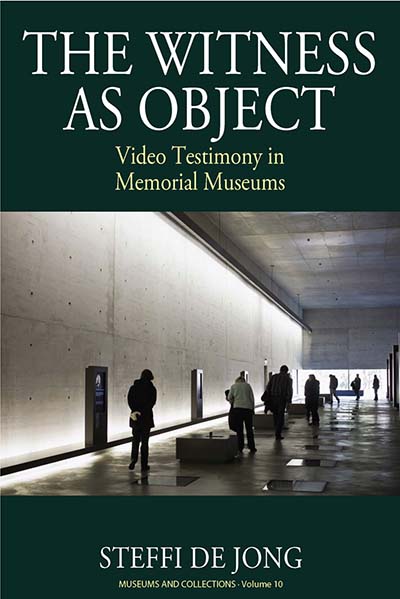
Steffi de Jong is Associate Professor of Public History and History Didactics at NTNU's Department of Historical and Classical Studies. She holds a PhD from NTNU and previously held positions at Maastricht University and University of Cologne. Research encompasses: Museum representation of historical testimony Digital memory of the Holocaust Re-enactment as historical practice Sensory dimensions of public history Virtual reality in memorial culture Her publications critically examine how technologies like VR transform Holocaust commemoration, arguing that simulated experiences create new forms of 'post-witnessing'. Recent projects include Gerda Henkel Foundation-funded research on historical re-enactment origins and analyses of digital Holocaust memory. Monographs include 'The Witness as Object' (Berghahn, 2018), which analyzes video testimony in memorial museums, and edited volumes on choreomusicology and women's musical leadership.
Nicolas Davidenko is an Associate Professor in the Department of Psychology at the University of California, Santa Cruz (UCSC). He leads the High Level Perception Lab, focusing on behavioral and computational studies of human perception, particularly face recognition, spatial orientation, and visual ambiguity. His work emphasizes 'top-down' processes like attention and expectations. Davidenko holds a Ph.D. in Psychology from Stanford University (2006), an M.S. in Statistics from Stanford (2004), and an A.B. in Mathematics from Harvard (1998). His research explores how humans perceive and interpret complex visual information, including studies on illusions, virtual reality, and misophonia. He has developed parametric models of faces to study memory encoding and drawing accuracy. Notable achievements include a Top-10 Finalist placement in the 2015 Best Illusion of the Year Contest for his 'Mind-controlled motion' research. He teaches courses such as PSYC 121 (Perception), PSYC 139K (Face Recognition), and advanced cognitive research seminars. Davidenko also runs the CSASS Matlab Workshops, training researchers in statistical tools. His lab includes graduate students and postdocs, with alumni like Jennifer Day (Ph.D. ’19) and Pat Samermit (Ph.D. ’18). Recent projects include investigations into vection in VR environments, cross-sensory modulation of aversive sounds, and time perception in virtual reality. His work bridges cognitive psychology, neuroscience, and computational modeling, contributing to understanding how perception shapes human interaction with the environment.
Prof. Helen Blank is a Professor leading the Multisensory Perception Group and the Prediction in Communication Lab at the Institute for Systems Neuroscience, University Medical Center Hamburg-Eppendorf. Her work focuses on understanding how sensory information is integrated and predicted in contexts like speech perception and face recognition. She holds a Marie Curie Fellowship for her research on prior information's role in human communication. Fluent in German, English, and French, she contributes to experimental medicine and systems neuroscience. Her research spans predictive coding, neuroimaging, and clinical applications in Parkinson’s and developmental disorders. Education: Not explicitly stated in text, inferred as advanced degrees in neuroscience or related fields. Her research interests emphasize multisensory integration, predictive processing in speech and vision, and the neural bases of perception. Recent articles explore topics such as pupil responses to auditory surprise, face expectation hierarchies, and audio-visual speech processing. Awards include the Marie Curie Fellowship supporting her predictive communication work. She leads interdisciplinary teams within the Center for Experimental Medicine, advancing knowledge on perceptual mechanisms and their clinical implications.
Ana Serrano is an Associate Professor at Universidad de Zaragoza, Spain, where she is affiliated with the Graphics & Imaging Lab in the EINA (Edificio Ada Byron) school. She earned her PhD at the same institution under the supervision of Prof. Diego Gutierrez and Prof. Belen Masia, and completed a postdoctoral fellowship at the Max-Planck-Institute for Informatics under Prof. Karol Myszkowski. Her research focuses on visual computing , particularly in computational imaging , material appearance perception and editing , and virtual reality . She is especially interested in developing perceptually-driven methods that leverage knowledge of the human perceptual system to enhance user experiences and assist content creation in immersive environments. Her recent publications (2023–2025) span top-tier venues such as SIGGRAPH, CVPR, IEEE TVCG, and Eurographics. These works explore topics like saliency prediction in 3D and 360° video, crossmodal perception in VR, gloss modeling, radiance fields, and perceptual evaluation of immersive content. The research demonstrates a strong integration of machine learning, human perception, and computer graphics to solve real-world problems in visual computing. She has received several prestigious awards, including: Eurographics 2023 Young Researcher Award VGTC VR 2024 Significant New Researcher Award Eurographics 2020 PhD Award Adobe Research Fellowship (honorable mention, 2017) NVIDIA Graduate Fellowship (2018) Ana Serrano actively supervises PhD and Master’s students and has taught courses such as Virtual Reality, Computational Imaging, and Deep Learning applications. She serves as an Associate Editor for Computer Graphics Forum , ACM Transactions on Applied Perception , and Computers and Graphics , and has held leadership roles in major conferences including Eurographics (Tutorials co-chair, 2023), ACM SAP (Program co-chair, 2022), and CEIG (Program co-chair, 2022). Her professional service includes extensive program committee and reviewer roles for SIGGRAPH, IEEE VR, ISMAR, and others. She leads a vibrant research group focused on human perception in virtual environments, with current projects on computational models of attention and perception, integrated with physiological signals. Her lab, the Graphics & Imaging Lab, fosters interdisciplinary collaboration and innovation in visual computing.
Wesley Willett is an Associate Professor in the Department of Computer Science at the University of Calgary, holding the NSERC CRC II Chair in Visual Analytics. His primary research focuses on information visualization, human-computer interaction, and new media applications. He leads the Data Experience Lab and Interactions Lab, exploring innovative methods for data representation and interaction in augmented/virtual reality environments. Education includes a B.S. in Computer Science from the University of Colorado (2006) and a Ph.D. in Computer Science from UC Berkeley (2012). His work bridges technical innovation with user-centered design principles, emphasizing ethical considerations in data visualization and inclusive representation. Key research contributions include: spatial visualization techniques for large environments, gesture-based interfaces for AR/VR, and physical data representations through projects like Cetonia (swarm robotics visualization) and Data Embroidery. His work has been recognized with Best Paper awards at CHI 2015 and Pervasive 2010. Current research emphasizes immersive analytics, wearable visualization systems, and demographically diverse anthropographics. He collaborates with urban designers, neurologists, and environmental scientists to apply visualization in diverse domains like epilepsy surgery planning and air quality monitoring.
Dr. David Sewell is a Senior Lecturer and Deputy Head of School (Teaching & Learning) at the School of Psychology, The University of Queensland. His research focuses on attention, learning, memory, and decision-making, with a strong emphasis on formal mathematical models of human cognition. He is affiliated with the Centre for Perception and Cognitive Neuroscience within the Faculty of Health, Medicine and Behavioural Sciences. Education: Bachelor (Honours) of Arts and Doctor of Philosophy, both from the University of Western Australia. David's research explores the intersection of cognitive psychology and computational modeling. Key areas include perceptual decision-making, attentional mechanisms, and the application of diffusion models to understand cognitive processes. His work also extends to sustainability and collective self-regulation through cognitive frameworks. The 15 most recent articles highlight his contributions to modeling decision thresholds in memory prioritization, analyzing gaze cueing effects, and investigating neural correlates of confidence in multisensory decisions. Collaborative projects frequently involve interdisciplinary approaches, combining neuroscience, psychology, and computational methods. He has supervised multiple PhD candidates, serving as Principal or Associate Advisor, with research topics ranging from visual categorization to metacognition in children. Current and past funding includes ARC Discovery Projects on collective self-regulation and category learning constraints.
Susanne M. Jaeggi is a Professor of Psychology at Northeastern University, with additional affiliations in the Bouve College of Health Sciences and the College of Arts, Media, and Design. Her research focuses on cognitive training, executive functions, and individual differences in cognition across the lifespan. She holds PhDs in Cognitive Psychology and Neuroscience from the University of Bern (Switzerland), and completed postdoctoral work in Cognitive Neuroscience at the University of Michigan. Her work has been funded by NIH, NSF, IES, ONR, and the Advanced Education Research and Development Fund (AERDF). She leads the Working Memory & Plasticity Lab , which develops interventions to improve working memory and executive functions, and co-leads the Brain Game Center for Mental Fitness and Well-Being , creating evidence-based brain fitness tools. Jaeggi’s research emphasizes understanding mechanisms of cognitive improvement through training, including neuroplasticity and individual variability. Key areas include cognitive aging interventions, gamification, sensory-cognitive interactions, and the impact of socioeconomic factors on academic achievement. Her work integrates behavioral experiments, neuroimaging, and digital health technologies to address real-world challenges in education and healthcare. Recent studies explore music/art-based interventions, brain stimulation (e.g., tDCS), and scalable cognitive assessments. Collaborations span disciplines, with publications addressing topics like neural correlates of training, motivational features in interventions, and cross-modal perception. Her labs emphasize translating findings into public-facing tools, such as freely accessible brain fitness apps. Current projects include optimizing interventions for ADHD populations and leveraging digital platforms for global mental fitness.
Dr. Jonathan Cant is an Associate Professor at the Department of Psychology, University of Toronto Scarborough (UTSC). His research focuses on cognitive neuroscience, particularly visual perception and cognition using fMRI and behavioral techniques. Born in Hamilton, Ontario, educated at Western University (Psychology) and Harvard University (postdoctoral) Expertise: Object perception, ensemble processing, texture/shape perception, scene recognition The Cant Lab investigates high-level human visual cortex organization, with a focus on the ventral stream's role in perception. Key research includes dissociating shape and surface property processing, material properties in cognition, and object-scene interactions in neural systems. Recent publications highlight ensemble encoding of facial expressions (2025), cross-modal ensemble coding (2024), and texture-shape relationships in ventral cortex (2015). His work bridges modular/distributed cortical organization theories and explores neural substrates for 3D shape vs. material compliance. Teaching includes PSY5222 (Visual Cognitive Representation), PSYC75 (Cognitive Psychology Laboratory), and PSYC51 (Cognitive Neuroscience of Vision). The lab welcomes motivated students and researchers through direct email applications.
Jasmine Begeske serves as Clinical Assistant Professor of Special Education in Purdue University's Department of Educational Studies within the College of Education. She co-founded and directs CREATE: Center for Research and Equipment for Assistive Technology in Education, an AT library and makerspace providing hands-on opportunities for pre-service teachers to develop individualized solutions for students with disabilities using 3D printers, Cricut, and Glowforge equipment. Her educational background includes: PhD in Special Education with Cognate in Art Education from Purdue University MFA in Photography and Related Media from Purdue University MS in Secondary Education (Special Education specialization) from Indiana University Northwest BFA in Photography with Art History minor from Indiana University Dr. Begeske's research program examines inclusive access to arts education through program evaluation and creative assistive technology development. Her experimental printmaking practice integrates individuals with disabilities as co-creators , while her scholarly work validates instruments measuring preschool arts accessibility and develops multisensory adaptations for students with visual impairments. She bridges art education and special education through evidence-based AT interventions . Analysis of her publication history reveals consistent focus on arts/special education intersections with increasing emphasis on empirical validation of accessibility instruments and multisensory adaptations. Her 2023 work on teacher education in art classrooms and multisensory adaptations demonstrates practical applications of her CREATE center's mission, while her 2022 instrument validation study establishes methodological rigor in measuring arts accessibility. Her scientific recognition includes: 2023 USSEA Outstanding Dissertation Award 2023 Purdue Focus Award for equity initiatives 2022 AEAI President's Award for EDI service Multiple Purdue University teaching and discovery awards (2020-2023) With 15+ years of teacher preparation experience spanning 100+ course sections, Dr. Begeske mentors doctoral students while securing grant funding including $100K from Purdue's Instructional Equipment Grant for CREATE. Her professional service encompasses state-level program reviews, academic standards committees, and leadership roles in Indiana Division of Early Childhood and CEC-DARTS. The CREATE center operates as a dual-space AT innovation hub with fixed location in Beering Hall and mobile carts supporting field experiences. It empowers pre-service teachers to prototype solutions addressing specific student needs while advancing Dr. Begeske's mission of making education universally accessible through technology and creativity.
Dr. Lauren Emberson (she/her/hers) is an Associate Professor in the Department of Psychology at the University of British Columbia, Faculty of Arts. She directs the Baby Learning Lab, which is part of UBC's Early Development Research Group, a consortium focused on infant and child development. Prior to her position at UBC, Dr. Emberson was an Assistant Professor at Princeton University where she co-founded and co-directed the Princeton Baby and Princeton Kid Labs. Education: Postdoctoral Associate, University of Rochester (PI Aslin) Ph.D, Cornell University (PIs Amso, Goldstein, Spivey) B.Sc, University of British Columbia Dr. Emberson's research focuses on learning, perception (audition, vision, crossmodal or multisensory), language development, face/object perception, and attention in infants. She investigates these capacities using behavioral and neuroimaging techniques, particularly fNIRS (functional near infrared spectroscopy), working primarily with very young infants (birth through 1 year) and preterm/premature infants. Her work examines how infants' learning capacities contribute to rapid development of perception in ecological contexts, with implications for understanding how early life experiences affect later outcomes. Analysis of Dr. Emberson's recent publications reveals a consistent focus on infant perception, learning mechanisms, and neuroimaging methodology. Her work increasingly incorporates advanced fNIRS techniques while maintaining focus on fundamental questions about how infants learn from their environment. There's a growing emphasis on individual differences, cross-cultural comparisons, and applications to infants facing developmental challenges. Dr. Emberson serves on the editorial board of Infancy (journal of the International Congress of Infancy Studies) and is a consulting editor for the Journal of Cognitive Neuroscience . Her research has been published in top journals including PNAS, Current Biology, Psychological Science, Cognition, Developmental Science, and the Journal of Neuroscience. Dr. Emberson has secured significant research funding from prestigious organizations including the Bill and Melinda Gates Foundation, James S. McDonnell Foundation, Natural Sciences and Engineering Research Council (NSERC), Canadian Institutes of Health Research (CIHR), and the National Institutes of Health (NIH). She collaborates with clinicians at BC Women's and Children's Hospitals to understand how different early life experiences impact learning and brain development. Dr. Emberson is currently accepting graduate students into her research program. The Baby Learning Lab, under Dr. Emberson's direction, is part of UBC's Early Developmental Research Group and collaborates with multiple institutions. The lab strives to provide interactive research experiences for infants and families while advancing scientific understanding of early cognitive development. The lab acknowledges that it operates on the traditional, ancestral, and unceded territory of the xʷməθkʷəy̓əm (Musqueam) people.
Dr. Ava Fatah gen. Schieck is a Professor of Media Architecture and Urban Digital Interaction at The Bartlett School of Architecture, University College London (UCL) , where she has been affiliated since 2001. She teaches in the MSc Architectural Computation program, focusing on embodied interactions and urban digital experiences. Education: ATQ03 - Recognised by the HEA as a Fellow (UCL, 2008) Certificate in Learning and Teaching (UCL, 2007) Master of Science (UCL, 2001) Her research explores the intersection of architecture, digital media, and urban spaces. Key themes include: Mediated spatial experiences in museums and public environments Embodied interactions through dance, movement, and performative design Urban screens and community-centered digital installations Smart city critiques focusing on marginalized communities Pervasive computing's impact on social dynamics Her publication corpus (149+ outputs) predominantly addresses media architecture, HCI, museum technology, and sensory interactions , with recent work emphasizing olfactory interfaces, pandemic urbanism, and heritage digitization. Awards & Honors: Fellow of the Royal Society of Arts (FRSA, 2023) Projects & Grants: As Principal Investigator for the EPSRC-funded 'Screens in the Wild' , she examines networked urban screens for community engagement. She previously led the 'SCREAM' project (UrbanBuzz program) and contributed to EPSRC's 'Urban Design and Pervasive Systems'. She reviews grants for EPSRC, UKRI, SNSF, and other international bodies. She directs research through UCL's Space Research Group and VR Centre for the Built Environment , collaborating globally. As program chair for the Media Architecture Biennale (2012-2020), she fosters interdisciplinary dialogue across architecture, HCI, and interaction design.
Prof. Dr. Harald Reiterer is a leading researcher in Human-Computer Interaction at the University of Konstanz, where he has served as Professor since 2009. His academic journey includes a Ph.D. (1991) and habilitation (1995) from the University of Vienna, followed by roles including Senior Researcher at Fraunhofer FIT and Associate Professor at Konstanz. He currently holds multiple leadership roles: Dean of the Faculty of Sciences , Senator of Section 1 , and Consulting Dean . Ph.D. in Computer Science (University of Vienna, 1991) Venia Legendi (Habilitation) in HCI (University of Vienna, 1995) His research focuses on: Interaction Design for mixed reality environments Information Visualization in immersive contexts Hybrid User Interfaces combining physical and virtual elements 3D Object Manipulation in handheld AR Behavioral Analytics through mHealth interventions Recent work explores: Avatar representation in Augmented Reality (2024) Node selection efficiency in Virtual Reality (2024) Peripheral vision toolkits for Head-Mounted Displays (2023) Hybrid interface optimization for Mixed Reality (2023) Smartphone AR extensions for Spatial Memory (2023) Key scientific contributions: Landeslehrpreis 2021 for interdisciplinary exhibition design Development of Colibri cross-reality toolkit (2023) Foundational work on Re-locations for remote collaboration (2022) He leads numerous projects including: SMARTACT (Smart Mobility, 2015-2023) SFB TRR 161 (2009-2027) on XR interface measurement Blended Library (2011-2015) for future library design
Jayne Wallace is a Professor of Craft, Digital Creativity, and Wellbeing at Northumbria University's School of Design. She leads the CoCreate research community, focusing on design, technology, and participation in human contexts. Her work includes EPSRC-funded projects like Enabling Ongoingness and the EU Marie Curie OpenDoTT initiative. Wallace co-founded the Journal of Jewellery Research and the Research Through Design conference series, emphasizing craft ethos and IoT ethics. Her research spans digital creativity, wellbeing, and participatory design, addressing dementia care, citizenship, and technology's societal impact. Education: PhD in Design Studies (2007). Notable collaborations include work with Beamish Museum on pottery and wellbeing, and projects like Centring and Connected Craft. She actively organizes workshops on ethical internet practices and co-creation methods. Research interests emphasize craft's role in digital innovation, mental health, and intergenerational dialogue. Awards include Best Paper Awards (2020) and an Honourable Mention (2018). Grants include EPSRC, AHRC, and EU funding. Her lab, CoCreate, involves over 50 researchers exploring design's societal applications.
Peter Fino is an Assistant Professor in the Department of Health, Kinesiology, and Recreation within the College of Health at the University of Utah. He directs the Neuromechanics and Applied Locomotion Lab, which is situated within the Cognitive and Motor Neuroscience research theme. His research focuses on understanding and improving mobility in individuals with neurological dysfunction, particularly those with brain injuries, using core concepts from biomechanics and motor control to develop better diagnostic tools and rehabilitation approaches. Dr. Fino's research explores how humans maintain stability during everyday activities that require complex motor control. His primary areas of investigation include: Foot placement control during walking and turning on uneven surfaces Balance recovery mechanisms following perturbations Effects of neurological conditions like concussion and Parkinson's disease on gait Development and application of inertial sensor technology for clinical assessment Neuroanatomical correlates of motor dysfunction after brain injury Nonlinear dynamics approaches to understanding human movement His lab employs a multidisciplinary approach, collaborating with engineers, clinicians, physical therapists, and neuroscientists to translate research findings into practical applications that improve people's lives. Current projects examine mobility in populations with traumatic brain injury, Parkinson's disease, and other neurological conditions, with particular focus on turning gait, dual-task performance, and objective measurement of balance recovery using wearable sensor technology. Dr. Fino actively mentors a diverse research team comprising PhD students, MS students, research coordinators, and undergraduate researchers. His lab has produced numerous graduates who have gone on to academic positions, clinical research roles, and healthcare professions. He maintains strong collaborative relationships across the University of Utah and with external institutions including Oregon Health & Science University, University of Nebraska Omaha, and US Army-Baylor Physical Therapy. The lab participates in outreach through National Biomechanics Day and partnerships with high school programs to introduce students to biomechanics and neuroscience.