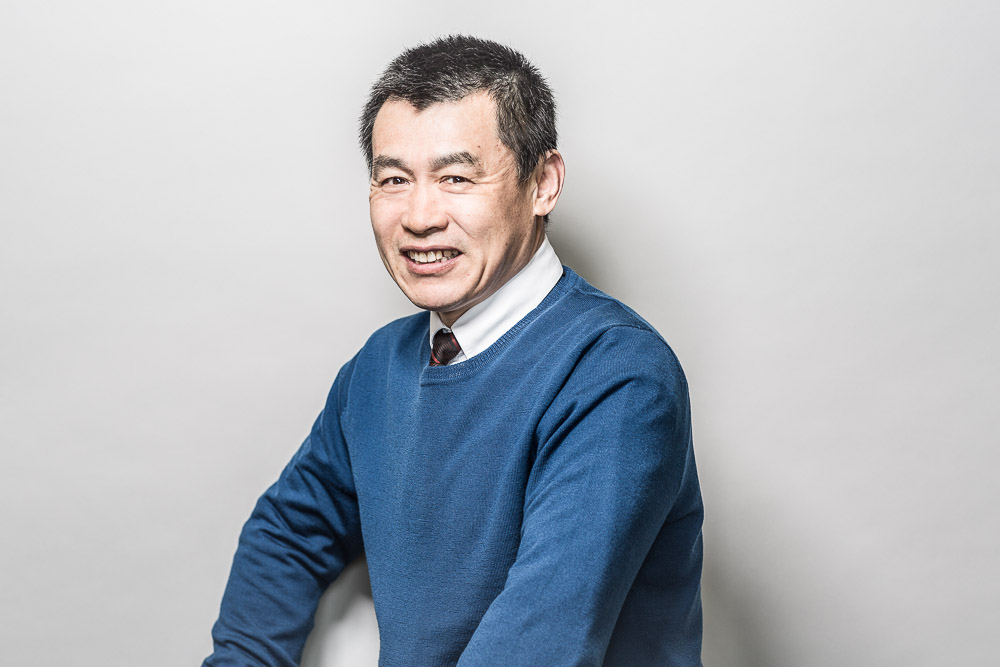
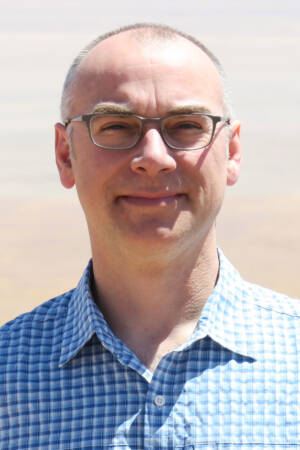
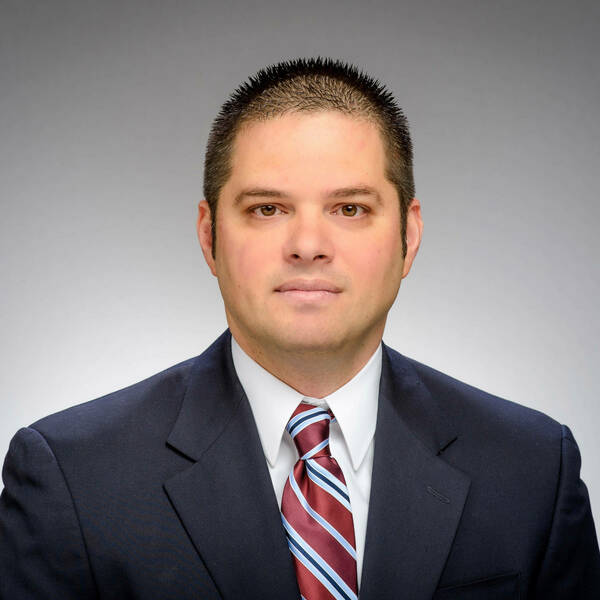
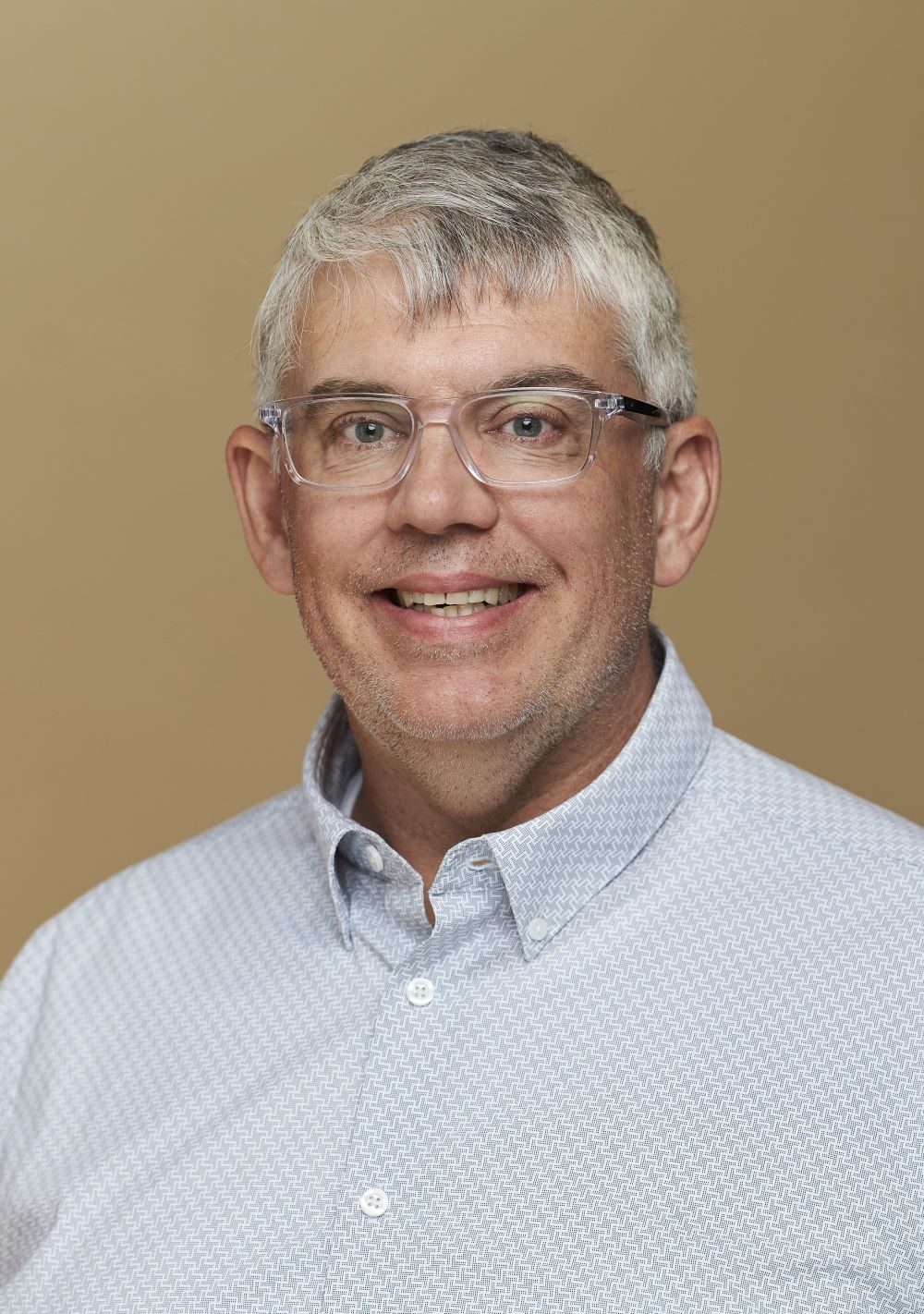
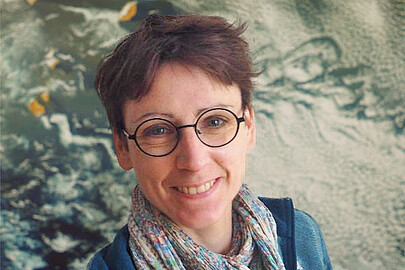
Pieter van Goor is a Research Fellow at the Australian National University (ANU), affiliated with the School of Engineering and the Systems Theory and Robotics (STR) group. He holds a PhD in Control Theory (completed 2022) and dual bachelor's degrees (BEng/BSc, 2018). His research focuses on equivariant systems theory, state estimation, and robotics applications. Key contributions include equivariant observer design, Lie group-based control, and geometric data fusion. Education: Bachelor of Engineering (Research & Development) (Honours) in Mechatronics (ANU, 2018) Bachelor of Science in Mathematics (ANU, 2018) PhD in Control Theory (ANU, 2022) Research Interests: Equivariant systems theory, nonlinear control, robotics applications, state estimation on Lie groups, sensor fusion, and geometric control methods. His work emphasizes symmetry exploitation in filter design and observer construction for systems with inherent geometric structures. Grants & Collaborations: Active collaborations include work with Robert Mahony and institutions like the IEEE. Research spans theoretical frameworks (e.g., equivariant filters) and applied systems (e.g., ArduPilot autopilot, event cameras). Labs/Teams: Member of the Systems Theory and Robotics (STR) group at ANU, focusing on advanced control theory and robotics.
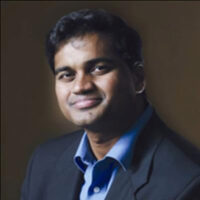
Dr. Abdullah Bal is a researcher at Georgia State University's College of Arts & Sciences, Department of Computer Science, with over 25 years of academic experience. He holds a Ph.D. in Electrical Engineering from Yildiz Technical University (2002) and has taught graduate and undergraduate courses in algorithms, machine learning, and optical pattern recognition. B.Sc., Electronics and Communication Engineering, Istanbul Technical University (1993) M.Sc., Electrical Engineering, Yildiz Technical University (1997) Ph.D., Electrical Engineering, Yildiz Technical University (2002) His research focuses on data science, machine learning, and hyperspectral imaging applications in fields ranging from forensic analysis to historical structure preservation. He has led projects funded by the U.S. Army Research Office and the Scientific and Technological Research Council of Turkey, including real-time target detection systems and digital imaging for historical structures. Recent publications demonstrate his expertise in kernel-based transforms, ensemble learning, and hyperspectral data analysis. His work spans food safety inspection, infrared target tracking, and biometric verification systems. Faculty Outstanding Research Publication Award (2006) Turkish Air Force Academy Science Competition Winner (2009) Best Paper Award at ICFCT (2016) Previously, he chaired YTU's Informatics Department (2009-2016) and participated in academic governance through the Electrical and Electronics College Executive Committee (2012-2015). You can contact him at abal@gsu.edu in room 739, 25 Park Place.
Dr. Jianguo Wang is a Professor in the Department of Earth and Space Science Engineering at York University's Lassonde School of Engineering. He has been a faculty member since 2006 and is a founding member of the Lassonde School. With over 35 years of academic and industrial experience, he specializes in multisensor integration, GNSS technology, and precision engineering surveying. He holds a Dr.-Ing. in Geomatics Engineering from Universität der Bundeswehr München, Germany, alongside Bachelor’s and Master’s degrees from Wuhan Technical University of Surveying and Mapping (WTUSM). His research focuses on advanced data processing methodologies, including Kalman filtering, error analysis, and LiDAR systems. He has authored/co-authored over 60 publications, including textbooks like Error Theory and Foundation of Surveying Adjustment and Foundation of Geodesy . He is a Fellow of Engineers Canada and licensed as a Professional Engineer in Ontario. Education: Dr.-Ing., Geomatics Engineering, Universität der Bundeswehr München (Germany) M.Sc., Surveying Engineering, Wuhan Technical University of Surveying and Mapping B.Sc., Surveying Engineering, Wuhan Technical University of Surveying and Mapping Dr. Wang teaches courses such as Advanced Optimization and Applications , GNSS , and Global Geophysics and Geodesy . He leads the Earth Observation Laboratory (PSE 432), focusing on multisensor integration for navigation and positioning. His work explores innovative solutions for sensor calibration, data fusion, and geospatial applications. Grants & Labs: Active in lab-based research with collaborators like Baoxin Hu, his laboratory integrates GNSS, IMUs, LiDAR, and cameras for precision navigation. His recent work addresses challenges in sensor error calibration, LiDAR point cloud accuracy, and Kalman filter enhancements.
Dr. Kaibo Liu is the Grainger STAR Professor in the Department of Industrial and Systems Engineering at the University of Wisconsin-Madison and serves as Associate Director of the UW-Madison IoT Systems Research Center. He earned his B.S. from the Hong Kong University of Science and Technology (2009), and M.S. and Ph.D. from Georgia Tech (2011/2013). His research focuses on system informatics, big data analytics, and data fusion for process modeling, monitoring, and decision-making. He has been funded by NSF, ONR, DOE, and industry partners. Notable awards include the 2024 Hromi Medal (ASQ), 2021 IISE Technical Innovation Award, and multiple early-career recognitions. Recent work emphasizes real-time cyber-physical security, reinforcement learning for data streams, and Bayesian methods for prognosis. He edits IEEE Transactions on Automation Science and Engineering and IISE Transactions on Data Science.
Dr. Mahendra Bhandari is an Assistant Professor at Texas A&M AgriLife Research and Extension Center in Corpus Christi, affiliated with the Texas A&M College of Agriculture and Life Sciences. He holds a B.S. in Agriculture from Tribhuvan University (2011), an M.S. in Plant, Soil and Environmental Science from West Texas A&M University (2016), and a Ph.D. in Agronomy from Texas A&M University (2020). Affiliations: Texas A&M AgriLife Research, Texas A&M College of Agriculture and Life Sciences Roles: Lead researcher in Digital Agriculture, UAS-based phenotyping, and precision agriculture His research focuses on integrating remote sensing (UAS, satellite, ground sensors), big data analytics, and machine learning to improve crop management and breeding. Key areas include high-throughput phenotyping for cotton, corn, and sorghum; UAS data integration for crop yield prediction; and digital twin frameworks for in-season management. Collaborators include Dr. Juan Landivar-Bowles and Dr. Jinha Jung. Publications emphasize UAS applications in crop monitoring, yield estimation, and disease detection. His work bridges agronomic principles with emerging technologies to enhance agricultural resilience. Key Projects: UAS-based HTP system development Satellite-UAV data fusion for precision irrigation Mechanistic models for cotton yield forecasting Labs/Teams: Leads the Digital Agriculture research team at Texas A&M AgriLife, focusing on UAS innovation and AI-driven agricultural solutions.
David Wettergreen is a Research Professor at the Robotics Institute within Carnegie Mellon University's School of Computer Science , where he has been a faculty member since 2000. He directs the PhD Program in Robotics and holds a courtesy appointment in Mechanical Engineering. His research focuses on robotic exploration systems for extreme environments, spanning planetary surfaces, underwater caves, and terrestrial deserts. Key areas include autonomous navigation , science autonomy , multi-modal perception , and resource-cognizant planning . Field validation drives his work, with deployments in the Atacama Desert, Antarctic volcanoes, and lunar analog sites. Co-founder of Mesh Robotics LLC for off-road autonomy Former Research Fellow at Australian National University Former National Research Council Research Associate at NASA Ames Research Center His 15 most recent publications (2023-2025) demonstrate expertise in autonomous path planning , machine learning applications , terrain modeling , and science-driven exploration . Collaborations span planetary science, environmental monitoring, and space systems engineering. He has advised 17 PhD and 33 MS students , many of whom now work in space exploration or field robotics, and teaches courses in Robotics Systems Engineering . Current projects include the MoonRanger lunar micro-rover and technologies for autonomous resource mapping .
Jonathan Hauenstein is the Robert and Sara Lumpkins Collegiate Professor in the Department of Applied and Computational Mathematics and Statistics at the University of Notre Dame, serving as Department Chair. He holds a Ph.D. from Notre Dame (2009) and M.S. from Miami University (2005). His research focuses on numerical algebraic geometry and computational methods for solving nonlinear equations, implemented in the Bertini software package. Applications span engineering, ecology, sports science, and machine learning. Education: Ph.D., Applied and Computational Mathematics, University of Notre Dame (2009) M.S., Mathematics, Miami University (2005) Research Interests: Development of numerical algorithms for polynomial systems, real algebraic geometry, and scientific computing. Key areas include homotopy continuation methods, parameter space decomposition, and applications in mechanism design, ecological modeling, and sports biomechanics. His work bridges theoretical mathematics with practical computational tools. Awards: Sloan Research Fellowship DARPA Young Faculty Award Army Research Office Young Investigator Award Office of Naval Research Young Investigator Award College of Science Research Award Advising & Grants: Advised numerous undergraduates, graduate students, and postdoctoral researchers. Active in securing grants for computational mathematics projects, including NSF-funded initiatives. His work emphasizes interdisciplinary collaboration between mathematics and engineering. Labs/Teams: Leads computational algebraic geometry research groups at Notre Dame, focusing on software development (e.g., Bertini) and numerical methods innovation.
Christopher Storie is a Professor of Geography at the University of Winnipeg, specializing in GIS, Remote Sensing, and Urban Geography. He holds an office in Lockhart Hall (5L03) and teaches courses such as Introduction to GIS, Remote Sensing, and Urbanization in the Developing World. His research focuses on Deep Learning applications for automated land use/land cover mapping, informal settlement mapping, and urban-rural fringe detection. Key research interests include leveraging neural networks for geospatial analysis, urban dynamics in regions like Mexico City, and collaborative international fieldwork. He has contributed to over 20 peer-reviewed articles since 2000, emphasizing satellite imagery analysis and environmental monitoring. His work bridges technical geospatial methods with socio-environmental challenges in urban and developing regions.
Dr. Guangliang Cheng is an Associate Professor in the Department of Computer Science at the University of Liverpool. His research focuses on deep learning, computer vision, and perception algorithms with applications in remote sensing, medical imaging, and autonomous systems. Prior to his current role, he served as a vice research director in the Autonomous Driving Group at SenseTime and completed postdoctoral research at the Aerospace Information Research Institute, Chinese Academy of Sciences. Ph.D. in Pattern Recognition from the National Laboratory of Pattern Recognition (NLPR), Institute of Automation, Chinese Academy of Sciences (CASIA) Postdoctoral Researcher at Aerospace Information Research Institute, Chinese Academy of Sciences (2017–2019) Dr. Cheng’s research integrates computer vision and deep learning to address challenges in semantic segmentation, domain adaptation, and robust detection. Recent work explores wavelet-based multimodal fusion for remote sensing and attention-guided architectures for medical imaging. His 2025 publications span journals like GIScience & Remote Sensing and Knowledge-Based Systems , emphasizing scalable solutions for geospatial and biomedical applications. In 2025, Dr. Cheng’s article trends highlight remote sensing semantic segmentation, cross-domain medical imaging, and drone-based fire detection. His collaborations span institutions such as SenseTime, Chinese Academy of Sciences, and University of Liverpool teams, focusing on frequency-domain fusion, attention mechanisms, and GPU optimization. As a supervisor, Dr. Cheng seeks highly motivated PhD students to join projects supported by scholarships including the Centres for Doctoral Training (CDT) and Duncan Norman Scholarship. He serves as Module Co-ordinator for COMP338: Computer Vision (2024–2025) and actively reviews for top-tier journals and conferences.
Dr. Raimon Tolosana Delgado is a Research Fellow at the Helmholtz-Zentrum Dresden-Rossendorf (HZDR), affiliated with the Helmholtz Institute Freiberg for Resource Technology. He leads research in predictive geometallurgy and statistical analysis of mineral resources, focusing on translating geological data into processing insights. His research integrates geostatistics , compositional data analysis (CoDa) , and machine learning to model ore behavior and resource potential. Key areas include: Predictive geometallurgy for forecasting ore/waste behavior Bayesian statistics for parameter estimation and uncertainty analysis Development of R-based tools (e.g., compositions and gmGeostats packages) for mineral data analysis Particle-based process modelling for mineral separation optimization Recent publications emphasize machine learning integration (e.g., neural networks for geophysical tensor fields), tailings reprocessing (3D geostatistical assessment of resource potential), and advanced statistical methods for compositional data. A consistent trend involves enhancing predictive accuracy in mineral processing through multi-source data fusion. Dr. Tolosana Delgado coordinates the development of technology platforms for geometallurgical data analysis, including databases and interfaces for industrial applications. His work bridges ore geology, mineral processing, and metallurgy to optimize resource efficiency.
Prof. Dr. Oliver Paul is a Full Professor at the Department of Microsystems Engineering (IMTEK), University of Freiburg, since 1998. He previously held roles such as Dean of Studies (1999–2002), Director of IMTEK (2006–2008), and Dean of the Faculty of Engineering (2016–2018). His research focuses on Microsystems for biomedical applications, MEMS technology, sensor systems, and advanced fabrication techniques. Key projects include the Excellence Cluster BrainLinks-BrainTools (2012–2017) and the Institute for Brain-Machine Interfacing Technology (IMBIT, 2015–present). Paul’s education includes a Diploma in Physics (1986, ETH Zurich) and a PhD in Solid-State Physics (1990, ETH Zurich). He has supervised numerous PhD students and postdocs, contributing to topics like neural probes, energy harvesting, and sensor calibration. His teaching spans courses in MEMS, semiconductors, and quantum mechanics. He co-founded Sensirion (1998) and Atlas Neuroengineering (2012), and holds editorial roles in journals like Sensors and Actuators A and IOP Journal of Micromechanics and Microengineering. His research interests include multisensory system calibration, biohybrid microsystems, and MEMS-based tools for neuroscience. Notable contributions include silicon neural probes, advanced microneedles, and telemetric smart orthodontic brackets. He has led large collaborative projects involving academia and industry, emphasizing interdisciplinary innovation in microsystems and biomedical engineering.
Dr. Gaël Kermarrec is a researcher at the Boundary Layer Meteorology Group , part of the Institute of Meteorology and Climatology within the Faculty of Mathematics and Physics at Leibniz University Hannover . His work focuses on atmospheric turbulence, GNSS applications, and remote sensing for environmental monitoring. Boundary layer meteorology Turbulence theory GNSS signal processing Terrestrial laser scanning Climate change impacts Geodetic time series analysis His research integrates advanced mathematical models like LR B-splines and Matérn covariance with large eddy simulations to study: Atmospheric turbulence effects on optical/GNSS signals Hydrospheric mass loading Deformation analysis of terrain/port infrastructure Climatic sea-level changes Machine learning for remote sensing The 15 most recent articles (2025-2023) demonstrate his focus on: GNSS-based turbulence detection AI-enhanced climate mapping Advanced surface approximation techniques Multi-sensor data fusion Stochastic modeling of geodetic observations Environmental impacts on optical measurements He has developed tools like the Klimascanner QGIS plugin for urban climate resilience and contributes to: Understanding atmospheric scale lengths Improving TLS/GNSS deformation monitoring Analyzing hydrospheric changes Wavefront modeling Ionospheric corrections
Dr. Thia Kirubarajan is a Professor and Distinguished Engineering Professor in the Electrical and Computer Engineering Department at McMaster University. He holds the NSERC/General Dynamics Mission Systems-Canada Industrial Research Chair in Target Tracking and Information Fusion. His expertise spans Estimation Theory, Multisensor-Multitarget Tracking, Information Fusion, and Signal Processing. He has led the Estimation, Tracking and Fusion Research Laboratory (ETFLab) with over 50 students and researchers, including PhD candidates and postdoctoral fellows. His academic journey includes degrees from Cambridge University (B.A., M.A.) and the University of Connecticut (M.S., Ph.D.). Education: B.A./M.A. (Cambridge, UK), M.S./Ph.D. (University of Connecticut, USA) Research Interests: Multisensor tracking, sensor fusion, fault diagnosis, and autonomous systems Dr. Kirubarajan has received notable awards including the Barry Carlton Award and Ontario Premier's Research Excellence Award. He teaches advanced courses like Algorithms for Parameter and State Estimation (ECE 771) and has advised numerous students across PhD, M.A.Sc., and undergraduate levels. His research lab collaborates internationally, hosting visiting scholars and fostering innovation in smart systems and transportation.
Dr. Barry Cardiff is an Assistant Professor in the School of Electrical and Electronic Engineering at University College Dublin (UCD), where he has been a member of academic staff since September 2013. His career spans both industry and academia, with significant experience at Nokia Mobile Phone (UK) Ltd and Silicon & Software Systems (S3 group) before returning to complete his PhD at UCD. Education: B.Eng (1992), M.Eng.Sc. (1995), PhD (2011) from University College Dublin Professional Experience: Design Engineer at Nokia (1993-2001), Systems Architect at S3 group (2001-2007, 2011-2013) Current Position: Assistant Professor at UCD School of Electrical and Electronic Engineering Dr. Cardiff's research focuses on Digital Signal Processing applications in communication systems, with particular emphasis on theoretical analysis and practical implementation. His work bridges traditional communication theory with emerging biomedical applications, especially in wearable IoT sensors. He has made significant contributions to power/complexity reduction techniques in circuit design, specifically DSP algorithms for digitally assisted analog circuits. His research program addresses critical challenges in biomedical signal processing, sensor fusion, and efficient data transmission for healthcare applications. His recent publications demonstrate a strong trend toward biomedical applications of signal processing techniques, with a focus on ECG analysis, atrial fibrillation detection, and respiratory rate estimation using multimodal sensor fusion. The research shows a clear progression from traditional communication systems toward healthcare applications, with an emphasis on edge computing solutions that reduce power consumption in wearable devices. IEEE BioCas best paper award (2024) IEEE senior member since 2019 Active reviewer for multiple IEEE journals including Transactions on Biomedical Circuits and Systems, Circuits and Systems, and VLSI Systems Dr. Cardiff has supervised numerous research projects and has been instrumental in developing curriculum for digital communications, signal processing, and wireless systems. His teaching philosophy emphasizes open, friendly, and hands-on approaches that encourage independent thinking. He coordinates multiple modules including Communication Theory, Digital Electronics, DSP Technology, and Wireless Systems, demonstrating his commitment to both theoretical foundations and practical applications of electrical engineering principles. His research group works at the intersection of signal processing, machine learning, and biomedical engineering, developing innovative solutions for wearable healthcare monitoring. Current projects focus on event-driven processing architectures, decentralized classification systems, and signal quality-aware fusion techniques that enable robust performance in noisy real-world environments.
Johannes Balling is a Postdoc researcher at the Laboratory of Geo-information Science and Remote Sensing, Wageningen University. His work focuses on tropical forest monitoring using satellite remote sensing, particularly integrating Synthetic Aperture Radar (SAR) and optical data to detect forest disturbances. He has contributed to projects analyzing deforestation patterns in regions like Indonesia and the Amazon, leveraging tools like Google Earth Engine for large-scale data analysis. Research Interests: Tropical forest dynamics, SAR applications, deforestation detection, multi-source satellite data fusion. Recent work emphasizes timeliness and accuracy in disturbance mapping through innovative combinations of radar and optical sensors. Collaborations include projects with researchers like Herold and Reiche, focusing on fire-related forest changes and real-time monitoring systems. His PhD thesis (2024) explored temporally-dense satellite remote sensing for tropical forest monitoring. He has published widely on SAR-based methods and their application to environmental challenges.