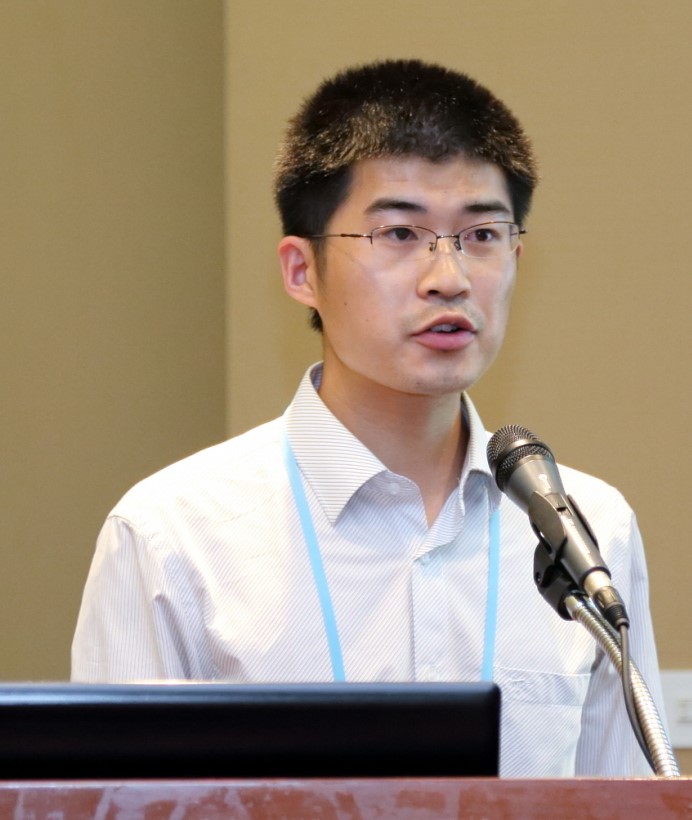
Ziqi Wang is a postdoctoral researcher at Eindhoven University of Technology's Department of Applied Physics and Science Education, affiliated with the Computational Multiscale Transport Phenomena group led by Professor Toschi. Their work bridges fluid dynamics and computational physics, with a focus on turbulence-particle interactions and nonlinear wave phenomena. Research interests include: Turbulent Flow Analysis Transport Phenomena Nonlinear Wave Dynamics Phase Change Processes Computational Fluid Dynamics Their recent publications demonstrate expertise in turbulent particle dispersion, vortex structures, and wave instability mechanisms. Active projects involve: Shaping turbulence with smart particles HTCrowd platform for human crowd monitoring
Kerstin Lux-Gottschalk is an Assistant Professor at the Department of Mathematics and Computer Science , Eindhoven University of Technology, affiliated with the Centre for Analysis, Scientific Computing and Applications (CASA) . She specializes in uncertainty quantification, stochastic differential equations, and optimal control, with applications to climate science, epidemiology, and ecology. Education : B.Sc. and M.Sc. from University of Mannheim, Germany; semester abroad at Université Nice Sophia Antipolis, France; Ph.D. from University of Mannheim (2020) under Prof. Dr. Simone Göttlich. Postdoctoral Research : Technical University of Munich (2020–2023) in Multiscale and Stochastic Dynamics group. Her research focuses on quantifying uncertainty in tipping points of complex systems, including: Analysis of random ordinary differential equations Climate modeling of Atlantic meridional overturning circulation Non-Markovian bifurcation detection Reinforcement learning for control systems Recent publications explore uncertainty quantification of tipping thresholds, stochastic control in transport systems, and numerical methods for SDEs. She contributes to UN Sustainable Development Goals related to climate action and sustainable infrastructure.
Dr. Christopher From is a Research Associate (Multiscale Modeling) in the Academic & Research department. His work focuses on computational fluid dynamics, viscoelastic fluid mechanics, and lattice Boltzmann methods. Key research interests include elastic turbulence, non-ideal fluid mixtures, and numerical modeling of complex fluids. His contributions span studies on viscoelastic instabilities in elongational flows, polymer feedback coupling in simulations, and the application of high-order lattice Boltzmann models. Collaborations involve investigations into porous media flow, microfluidic systems, and rheological phenomena. Dr. From has published 15 peer-reviewed articles since 2017, with recent work addressing jamming in elastoviscoplastic fluids and plasticity effects in viscoelastic systems. His research emphasizes bridging experimental and computational approaches to understand multiscale fluid behavior.
Dr. Dongda Zhang is a University Lecturer in Process Systems Engineering and Machine Learning at the University of Manchester's Department of Chemical Engineering, with an Honorary Research Fellow position at Imperial College London. His research focuses on Digital Chemical Engineering, combining Process Systems Engineering, Machine Learning, Reaction Engineering, and Industrial Data Analytics. Key areas include hybrid model-based bioprocess predictive modeling, machine learning for quality control, and interpretable AI frameworks for reaction engineering. Education: BSc (Tianjin University, 2011), MSc (Imperial College London, 2013), PhD (University of Cambridge, 2016). Awards include the Leverhulme Early Career Fellowship and Honorary Research Fellow recognition. He holds editorial roles for Digital Chemical Engineering and Biochemical Engineering Journal , and serves on the BBSRC Pool of Experts and CPACT Industrial Management Board. Research emphasizes multidisciplinary approaches, including kinetic modeling of catalytic systems, real-time process monitoring, and data-driven strategies for biomanufacturing. His work contributes to UN Sustainable Development Goals related to affordable and clean energy and industry innovation. The group welcomes PhD students and interns, with fully sponsored programs.
Olivier Desjardins is a Professor in the Sibley School of Mechanical and Aerospace Engineering at Cornell University, where he has been a faculty member since July 2011. He previously served on the Mechanical Engineering faculty at the University of Colorado at Boulder. His research is centered on high-fidelity computational modeling of turbulent, reacting, and multiphase flows with applications in energy, propulsion, and combustion systems. Ph.D., Mechanical Engineering, Stanford University, 2008 M.Sc., Aeronautics & Astronautics, SUPAERO (ENSAE), Toulouse, 2003 M.Sc., Mechanical Engineering, Stanford University, 2003 Dr. Desjardins’ research focuses on developing and applying advanced numerical methods such as large-eddy simulation (LES) and direct numerical simulation (DNS) to study complex fluid dynamics involving liquid-gas interfaces, atomization, and interfacial instabilities. His work spans fundamental fluid mechanics and practical applications in combustors and biomass reactors. Key areas include turbulence modeling, surface tension effects, and multiscale simulations of spray formation and breakup. His recent publications (2021–2025) demonstrate a strong emphasis on improving the accuracy and efficiency of volume-of-fluid (VOF) methods, including interface reconstruction, subgrid-scale modeling, and machine learning-enhanced simulations. There is a clear trend toward integrating physics-informed models, adjoint-based control, and rigorous experimental validation, especially in air-blast atomization and droplet dynamics. His group also contributes to open-source frameworks like OpenFOAM. NSF CAREER Award (2014) Junior Award, International Conference on Multiphase Flow (2016) Distinguished Paper Award, 33rd International Symposium on Combustion (2010) Research Excellence Award, Cornell College of Engineering (2020) Robert '55 and Vanne '57 Cowie Teaching Award, Cornell (2016) Outstanding Graduate Education Award, University of Colorado (2008) Dr. Desjardins has led multiple federally funded research projects, including those supported by the National Science Foundation. His work often involves collaboration with experimentalists and validation against physical data, including radiography and shadowgraph imaging. He has advised graduate students in mechanical engineering and computational science, contributing to advancements in multiphase flow modeling. His research group develops open, reproducible methodologies for simulating complex interfacial flows. His lab focuses on computational modeling of multiphase systems, particularly through the development of high-fidelity simulation frameworks. The team works on algorithm development for interface tracking, turbulence modeling, and multiscale coupling, with applications in energy systems and aerospace engineering. Projects include microgravity droplet dynamics (ISS-related), spray control, and catalytic biomass conversion.
Dr. Jian-Xun Wang is an Associate Professor at the Sibley School of Mechanical and Aerospace Engineering at Cornell University (starting 2025). Previously, he held positions at the University of Notre Dame as Robert W. Huether Collegiate Associate Professor. He earned his Ph.D. in Aerospace Engineering from Virginia Tech in 2017, followed by postdoctoral training at UC Berkeley. His research focuses on computational mechanics and scientific AI, integrating advanced machine learning with physics-based models. Key areas include Scientific Machine Learning, Bayesian Data Assimilation, and Uncertainty Quantification, with applications in aerodynamics, biomedical engineering, and advanced manufacturing. He directs the Computational Mechanics & Scientific AI Lab (CoMSAIL), funded by NSF, NIH, and others. Education: M.S. (Ocean Engineering, Virginia Tech, 2016), Ph.D. (Aerospace Engineering, Virginia Tech, 2017), Postdoc (Bioengineering, UC Berkeley, 2018) Research Lab: CoMSAIL (Cornell) Key Awards: ONR YIP (2023), NSF CAREER (2021) Teaching interests span Computational Fluid Dynamics, Numerical Methods, and Bayesian Learning. His work bridges AI and computational physics to address complex multiscale problems in fluid dynamics, solid mechanics, and biomedical systems.
Prof. Christian Stemmer is a Professor of High-Speed Aerodynamics at the Technical University of Munich (TUM), affiliated with the TUM School of Engineering and Design and the Department of Aerodynamics and Fluid Mechanics. His research focuses on hypersonic flows, boundary layer transition, thermal and chemical nonequilibrium phenomena, and research data management. Stemmer holds a Dr.-Ing. habil. and has extensive international experience, including postdoctoral work at Stanford University and NASA Ames. Career highlights: Appointment as extraordinary professor in 2019, leadership roles in the Collaborative Research Center TRR40 (SFB/TRR40), and membership in editorial boards such as Advances in Aerodynamics . Awards: 2020 NATO AVT Panel Excellence Award for contributions to hypersonic flow research. Key projects: Investigation of hypersonic boundary layer transition under high-enthalpy conditions, development of numerical models for rocket combustion chambers, and leadership in national and international research consortia. His work bridges fundamental fluid mechanics with aerospace engineering applications, emphasizing high-performance computing and data-driven methodologies. Recent contributions include studies on roughness-induced instabilities, shock-wave interactions, and metadata extraction frameworks for HPC workflows.
Maximilian Engel is an Assistant Professor (UD1, tenured) at the KdV Institute, University of Amsterdam, and Head of the Junior Research Group at the Department of Mathematics and Computer Science, Freie Universität Berlin. His research focuses on random and multiscale dynamical systems, with applications in mathematical physics, neuroscience, and climate dynamics. He leads the MATH+ Research Group on 'Random and Multiscale Dynamical Systems' and collaborates on projects like the Vidi Project on Transient Random Dynamics and Metastability in Multi-Agent Systems. Engel's academic career includes roles as a member of the Early Career Editorial Board for Physica D: Nonlinear Phenomena and organizer of the One World Dynamics Seminar Series . His work bridges theoretical analysis (e.g., bifurcation theory, stochastic processes) with practical applications in machine learning and fluid dynamics. Upcoming activities include a mini-course at the 2025 Summer School on Random Dynamical Systems and the 2026 International Conference on Random Dynamical Systems and Related Fields in Brazil. Research highlights include studies on fast-slow PDEs, noise-induced instabilities, and synchronization in biochemical oscillators. His interdisciplinary approach integrates geometric analysis, numerical methods, and data-driven techniques to understand complex systems' behavior.
Dr. Alfonso Caiazzo is a researcher at the Weierstrass Institute for Applied Analysis and Stochastics (WIAS) in Berlin, leading the Numerical Mathematics and Scientific Computing group. Since 2010, he has held a postdoctoral researcher position at WIAS, focusing on computational methods for biomedical and engineering applications. His work integrates mathematical modeling, numerical analysis, and scientific computing to address challenges in fluid dynamics, tissue mechanics, and multiscale systems. Caiazzo holds a joint PhD from Scuola Normale Superiore di Pisa and TU Kaiserslautern (2006-2007), with prior postdoctoral experiences at institutions including the University of Trento, INRIA, and the University of Amsterdam. His research interests span mathematical modeling of biological flows, finite element methods, agent-based modeling, and lattice Boltzmann techniques. He has contributed to projects such as the MATH+ initiative (Berlin Mathematics Research Center) and the EuroHPC-funded dealii-X framework, focusing on exascale computing for biomedical applications. Key collaborations include work with Prof. D. Peterseim (University of Augsburg) on poroelasticity and multiscale methods, and Prof. I. Sack on magnetic resonance elastography. Caiazzo has taught courses at Freie Universität Berlin, including Linear Algebra for Physicists and Mathematics for Geosciences. His funded projects emphasize data-driven reduced-order models, computational hemodynamics, and cancer growth modeling. Current research includes inverse estimation in poroelastic tissues, multiscale coupling of vascularized tissues, and exascale framework development for digital twins of the human body.
Dr. YAN Wentao is an Associate Professor at the Department of Mechanical Engineering, National University of Singapore (NUS), where he joined in August 2018. He holds a PhD from Tsinghua University (2017) and a Bachelor's degree from the same institution (2012). Prior to NUS, he was a postdoctoral fellow at Northwestern University and a guest researcher at the National Institute of Standards and Technology. His research focuses on Additive Manufacturing and Computational Mechanics , specifically developing multi-scale models for process-structure-property relationships in metal 3D printing. His work integrates experimental validation with high-fidelity simulations to optimize manufacturing processes. Analysis of his 15 most recent publications (2016-2021) reveals a strong emphasis on: Powder dynamics and defect mechanisms in laser/electron beam processes Multi-physics modeling of melt pool behavior and microstructure evolution Data-driven approaches for process optimization and quality control Novel applications in functional materials and composites Awards include: 9 awards in the 2022 AM-Bench Simulation Challenges Materials Research Letters Impact Award (2022) He has supervised doctoral students to graduation, including Dr. Chen Fan. Leads the Yan Research Group at NUS, which collaborates internationally and has hosted visiting scholars like Dr. Shinji Sakane.
Quanling Deng is a Lecturer in the School of Computing at the Australian National University (ANU), where he focuses on applied mathematics, computational methods, and machine learning. Previously, he held positions as a Van Vleck Visiting Assistant Professor at the University of Wisconsin-Madison (2020–2022) and a Research Associate at Curtin University (2016–2020). He earned his Ph.D. in Mathematics from the University of Wyoming in 2016 and has conducted visiting research at institutions including INRIA (Paris), AGH University (Krakow), and École des Ponts ParisTech. Education: Ph.D. in Mathematics, University of Wyoming, 2016 Moved to the USA in 2011 to pursue studies in mathematics His research interests span Applied Mathematics (e.g., sea ice dynamics, ocean/atmosphere systems), Computational Mathematics (finite element methods, isogeometric analysis), and Machine Learning (feature interaction, deep neural networks). He also investigates Data Assimilation techniques, including stochastic models and Lagrangian-Eulerian frameworks. Research Trends: His recent work emphasizes multiscale modeling (e.g., sea ice floes), eigenvalue problem solutions using advanced finite element techniques, and explainable machine learning. He explores applications of physics-informed neural networks and parallel computing for high-performance simulations. Grants & Projects: Leading the project "Advancing Numerical Computation for Schrödinger Eigenvalue Problems" (2023) Affiliations: Previously affiliated with Curtin Institute for Computation and Curtin TIGeR. Collaborates internationally on computational mathematics and climate modeling.
Johnathan Tune, PhD, is a Professor and Chairman of Physiology & Anatomy at the College of Biomedical and Translational Sciences, University of North Texas Health Science Center. His research focuses on mechanisms of coronary blood flow regulation in health and disease, particularly in obesity and diabetes. He leads projects funded by the National Heart, Lung, and Blood Institute and the American Heart Association, investigating myocardial oxygen delivery and ischemic injury. Key interests include metabolic syndrome's effects on coronary function and translational studies using large animal models. Over 119 publications span coronary vasodilation, ion channel physiology, and therapeutic interventions for cardiac dysfunction. Notable projects address heart failure with preserved ejection fraction and post-partum myocardial oxygen imbalances. His work integrates experimental and computational approaches to unravel complex cardiovascular mechanisms. Education: BA in Biology from University of North Texas, PhD in Physiology from University of North Texas Health Science Center. Research emphasizes integrative physiology, combining in vivo/ex vivo models to study coronary circulation. Active collaborations include multi-scale modeling of myocardial perfusion and investigating SGLT2 inhibitors' cardioprotective roles. Current grants explore post-partum coronary dysfunction and HFpEF mechanisms. Lab activities focus on ion channels, metabolic signaling, and vascular dysfunction in metabolic disorders.
Gabriel Barrenechea is a Reader in the Department of Mathematics and Statistics at the University of Strathclyde, Faculty of Science. His academic work centers on the development and analysis of finite element methods with strong theoretical foundations, particularly applied to fluid mechanics and partial differential equations. His research interests lie at the intersection of numerical analysis and computational mathematics, with a focus on ensuring stability, accuracy, and physical consistency in simulations. Key areas include discrete maximum principles, bound-preserving schemes, stabilization techniques for convection-dominated flows, and multiscale methods. His work often addresses challenges in non-Newtonian fluids and high-Weissenberg number problems. The recent publications reflect a sustained focus on finite element discretizations that preserve physical bounds and mathematical monotonicity. These works span elliptic, parabolic, and fluid flow problems, employing hybrid, nodal, and implicit-explicit formulations. The trend shows increasing sophistication in handling nonlinearities, variable coefficients, and complex physical constraints through mathematically rigorous approaches. Best paper award Sociedad Espanola de Matematica Aplicada (SEMA) 2018 Gabriel Barrenechea has been actively involved in research leadership and student training. He has served as Principal Investigator on multiple EPSRC-funded and institutional projects, including doctoral training partnerships. He supervises postgraduate research and contributes to academic development frameworks. His professional activities include organizing major conferences such as the Biennial Conference on Numerical Analysis and the Scottish PDE Colloquium. He is a key organizer of academic events including the Impact Case Studies in Maths & Stats workshop and the Early Career Network in Mathematics and Statistics. His collaborations span the UK and international institutions, reflected in co-authored works and joint projects.
Victorita Dolean Maini is a Visiting Professor in the Department of Mathematics and Statistics at the University of Strathclyde, Faculty of Science. She is actively engaged in research and supervision, with a focus on computational science and numerical methods for partial differential equations. Her work bridges applied mathematics, high-performance computing, and interdisciplinary applications in geophysics, biomedical engineering, and pharmaceutical modeling. University: University of Strathclyde School: Faculty of Science Department: Mathematics and Statistics Academic Rank: Visiting Professor Her research interests center on computational science, particularly in developing mathematical models and algorithms for complex physical systems governed by partial differential equations. She specializes in domain decomposition methods, iterative solvers, and high-performance computing, with recent extensions into scientific machine learning and physics-informed neural networks. Her work emphasizes rigorous analysis and validation of numerical results. The most recent publications highlight a strong trend in robust and scalable numerical methods for multiscale and multiphysics problems. Topics include domain decomposition with GenEO coarse spaces, optimized transmission conditions for diffusion, wave propagation in anisotropic media, and computational epidemiology. These works span disciplines such as applied mathematics, computational physics, geophysics, and biomedical modeling, reflecting a highly interdisciplinary approach. There is a clear emphasis on industrial and real-world applications, including seismic imaging, crystallization processes, and hemodynamic simulations. Scientific awards include: Fellow (awarded 7 September 2020) Prix Bull-Joseph Fourier 2015 (awarded 12 April 2016) She has been a co-investigator and principal investigator on multiple research grants, including projects like PharmaCrystNet, Fast solvers for frequency domain wave-scattering, and Blood flow dynamics in pulmonary hypertension. She actively supervises PhD students and collaborates internationally. She has organized key seminars and workshops, particularly in scientific machine learning and physics-informed learning, contributing significantly to academic community building. She leads and participates in research teams focused on computational modeling, numerical linear algebra, and interdisciplinary applications. Her group collaborates with institutions in physics, engineering, and life sciences, leveraging high-performance computing for large-scale simulations. She is also involved in promoting diversity through initiatives like the Women in Data Science and Mathematics Seminar Series.
Harikrishnan Charuvil Asokan is a researcher at the Laboratory of Fluid Mechanics and Acoustics (LMFA - UMR 5509) affiliated with Claude Bernard University Lyon 1 and École Normale Supérieure de Lyon. He is a member of the EM³ team (Ecoulements Multi-physiques Multi-phasiques & Multi-échelles) which focuses on multi-physical, multi-phase and multi-scale flows. His research interests include fluid dynamics, multiphase flows, multiscale modeling, computational fluid dynamics, and turbulent flows. The EM³ team investigates complex flow phenomena across various scales and physical conditions, with applications in engineering and environmental systems. The EM³ team is part of the broader Laboratory of Fluid Mechanics and Acoustics which conducts research in acoustics, environmental flows, turbulence, instabilities, and turbomachinery. The laboratory is a joint research unit involving multiple prestigious French institutions including INSA Lyon, École Centrale de Lyon, Claude Bernard University Lyon 1, and École Normale Supérieure de Lyon.