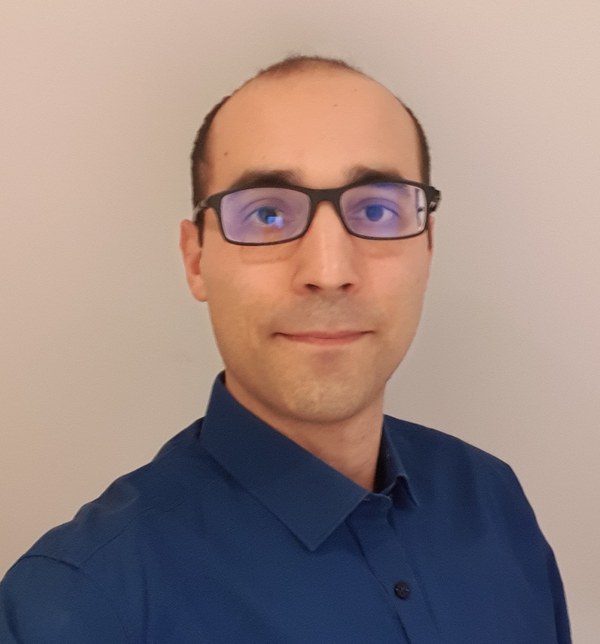
Dr. Davide Mandelli is a Researcher at the Research Center Jülich's Institute of Neuroscience and Medicine (INM-9), specializing in Computational Biomedicine. His work focuses on advancing computational methods for drug design, molecular dynamics simulations, and material science. Key areas include the development of QM/MM algorithms, exascale computing frameworks, and enhanced sampling techniques to study ligand-receptor interactions and material behavior at atomic scales. He contributes to high-performance computing projects like the JUWELS Booster supercomputer, optimizing algorithms for distributed systems. His research bridges computational chemistry, bioinformatics, and engineering, addressing challenges in pharmaceutical applications and nanotechnology. Notable projects include the MiMiC toolkit for multiscale simulations and studies on superlubricity in layered materials. Mandelli's work spans from fundamental physics to applied drug discovery, emphasizing interdisciplinary collaboration. His publications highlight innovations in parallel computing, free energy calculations, and the integration of machine learning into molecular simulations.
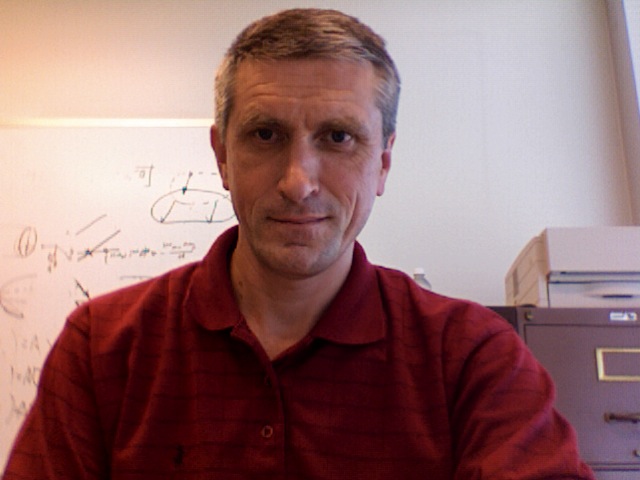
İlker Temizer is a Professor and Chair of Mechanical Engineering at Bilkent University, where he leads the Computational Multiscale Mechanics Laboratory (CMML). His research focuses on computational mechanics, multiscale-multiphysics modeling of heterogeneous materials, and interface behaviors. Research interests include computational homogenization techniques for materials and interfaces, thermomechanical contact problems, and isogeometric analysis. His work bridges theoretical mechanics with applied engineering solutions. Recent publications emphasize multiscale modeling in density functional theory, hydrodynamic lubrication texture optimization, and smart material design, demonstrating consistent innovation in computational mechanics methodologies.
Peter D. Minev is a Professor in the Department of Mathematical and Statistical Sciences at the University of Alberta, Canada. His research specializes in computational fluid dynamics, numerical methods for partial differential equations (PDEs), and large-scale simulations for scientific and engineering problems. He develops advanced algorithms for incompressible Navier-Stokes equations, fluid-structure interaction, multiphase flows, and magnetohydrodynamics (MHD). Education: MSc and PhD from Sofia University, Bulgaria. Research Focus: Minev's work spans: High-order time-stepping schemes and splitting methods for complex PDEs Fictitious domain approaches for fluid-structure interaction Parallel algorithms for supercomputing applications Modeling of multiphysics phenomena (e.g., porous media flows, phase-field equations) He has created benchmark results for 3D lid-driven cavity flows and simulations of particle sedimentation/bubble dynamics. Publications: His recent articles (2014–2021) focus on: Efficient splitting schemes for stress/vorticity formulations High-order adaptive time integration Algorithms for spherical/heterogeneous geometries Applications in fuel cells, geophysics, and biomechanics A consistent theme is minimizing computational complexity while maintaining accuracy.
Nicholas J. Zabaras is a Professor in the College of Engineering at the University of Notre Dame and serves as director of the Warwick Centre for Predictive Modelling at the University of Warwick. He holds a Hans Fischer Senior Fellowship at the Technical University of Munich Institute for Advanced Study (TUM-IAS) since 2014. His academic journey began with a diploma in Mechanical Engineering from the National Technical University of Athens (1982), followed by an M.Sc in Material Science and Engineering from the University of Rochester (1983), and a PhD in Theoretical and Applied Mechanics from Cornell University (1987). His research spans computational mathematics, computational statistics, and scientific computing with focus on predictive modeling of complex multiscale and multiphysics materials systems. Key research themes include Bayesian uncertainty quantification, high-dimensional problem modeling, information-theoretic coarse graining, stochastic model reduction, and optimization under uncertainty. His work has significant applications in materials science, particularly in uncertainty propagation from ab initio to continuum simulations and modeling of random microstructures. His recent publications demonstrate strong activity in Bayesian coarse-graining techniques, deep Gaussian processes, and uncertainty quantification for multiscale materials systems. The research shows consistent focus on developing computationally efficient methods for high-dimensional problems with applications across materials science and engineering disciplines. Major Awards and Recognitions: Royal Society Wolfson Research Merit Award (2014) Research Fellow, Isaac Newton School of Mathematical Sciences, University of Cambridge (2011) Michael Tien'72 College of Engineering Teaching Award, Cornell University (2009) Fellow, American Society of Mechanical Engineers (2006) Presidential Young Investigator Award (1991) Zabaras leads the Scientific Computing and Artificial Intelligence (SCAI) Laboratory and the Computational Science and Engineering (CSE) Laboratory at Notre Dame, where his team develops innovative mathematical and statistical approaches addressing unique challenges in predictive modeling. His research integrates computational mathematics, machine learning, and multiscale/multiphysics modeling to address problems in materials physics, geological sciences, and climate modeling.
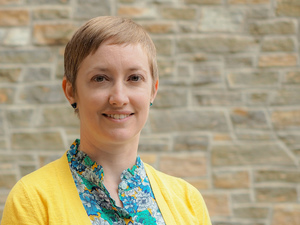
Faezeh Shalchy is an Assistant Professor at the School of Engineering & Physical Sciences at Heriot-Watt University , and an Honorary Professor at the University of Birmingham . Her research integrates materials chemistry , polymer/metal additive manufacturing , and computational modeling to create advanced biomedical devices with bioinspired designs. Education & Previous Roles: PhD in Engineering and Physical Sciences from University of Southampton (Marie Curie Fellowship) Postdoctoral Researcher at University of Cambridge (mechanics of multi-material lattices) Research Fellow at University of Birmingham (metal additive manufacturing of Ti alloys) Research Expertise: Bioinspired material design (e.g., nacre-inspired structures) Mechanics of metamaterials and lattice systems AI-driven defect control in 3D printing processes Multiscale material characterization from nano to macro scales Integration of experimental and theoretical mechanics Scientific Awards: Pathway into Academia Award (Princeton University, USA) Marie Curie Fellowship Advising & Grants: She actively supervises research projects and accepts applications from prospective PhD/Master’s students and postdocs. Her funding history includes Marie Curie Fellowship support during her PhD, and she continues to secure grants for her current work on learning manufacturing systems. She emphasizes hands-on mentorship to inspire curiosity-driven research. Labs & Teams: Affiliated with the Institute of Mechanical, Process & Energy Engineering at Heriot-Watt University, collaborating on interdisciplinary projects. Her work aligns with UN Sustainable Development Goals, particularly advancing healthcare technologies and sustainable engineering solutions.
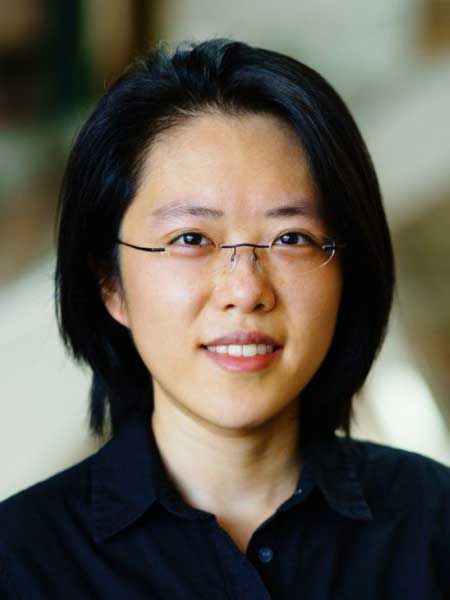
Clare McCabe is a Bicentennial Professor at Heriot-Watt University and a Professor at Vanderbilt University's Department of Chemical & Biomolecular Engineering and Chemistry. She holds dual positions across institutions, reflecting her extensive academic leadership and research contributions. Her work focuses on molecular modeling tools to study thermodynamic properties of complex fluids, nanomaterials, and biological systems, with applications in skin health and sustainable materials development. Research interests include advanced simulations (molecular dynamics, Monte Carlo) and theoretical approaches to predict material behavior. Key contributions include the Molecular Simulation Design Framework (MoSDeF) for reproducible simulations and collaborative studies on skin lipid phase behavior. She has been recognized with prestigious fellowships from the American Association for the Advancement of Science, American Institute of Chemical Engineers, and Royal Society of Chemistry. McCabe’s articles span computational methodologies, membrane design, and biological systems, emphasizing interdisciplinary applications like sustainable solvents and skin barrier function. She actively contributes to editorial roles (e.g., Molecular Physics, Chemical Thermodynamics) and organizes workshops promoting FAIR data practices in soft matter simulations.
Magnus Langseth is a Professor at the Department of Structural Engineering at NTNU and Director of the SFI CASA Centre for Research-based Innovation (2015–2023). His research focuses on impact engineering, crashworthiness of aluminum and high-strength steel structures, and lightweight ballistic protection. He holds editorial roles in journals like the International Journal of Impact Engineering and has received prestigious awards such as the Médaille Albert Portevin and an Honorary Doctorate from Université de Valenciennes. Langseth earned his doctorate from NTNU in 1988 and previously directed SFI SIMLab (2007–2014), focusing on crashworthy structures. His research integrates laboratory testing, material modeling, and numerical analysis to address practical engineering challenges. Key areas include aluminum extrusions, self-piercing rivets, and energy-absorbing components under dynamic loads. Recent work includes studies on blast-loaded structures, polymer-coated pipelines, and neural network modeling of mechanical joints. His contributions span over 100 publications, emphasizing multiscale testing and industrial applications. Langseth is a member of the Royal Norwegian Society of Sciences and Letters and the Norwegian Academy of Technical Sciences.
Megan Olsen is a Professor of Computer Science at Loyola University Maryland and serves as Director of the Hyman Science Scholars Program and Camp BaltiCode. She holds a Ph.D., M.S., and B.S. in Computer Science from the University of Massachusetts Amherst and Virginia Polytechnic Institute. Education: Ph.D., Computer Science, University of Massachusetts Amherst, 2011 M.S., Computer Science, University of Massachusetts Amherst, 2009 B.S., Computer Science, Virginia Polytechnic Institute & State University, 2005 Research Interests: Her work focuses on complex systems, computational biology, and simulation validation. Recent efforts include improving agent-based model validation, parameter exploration, and tumor angiogenesis modeling. She develops methods to enhance simulation credibility through metamorphic testing and combinatorial approaches. Advising & Leadership: PhD Committee Member for Youssaf Menacer (University of Houston, 2024) Former Department Chair (2020–2023) Member of the Data Science Advisory Board (2020–present) Labs & Teams: Leads the Validation Lab, advancing simulation validation techniques. Collaborates on projects like the Hyman Scholars Program and Camp BaltiCode to promote STEM education.
Charles-Edouard Bréhier is a Professor at the University of Pau and the Pays de l'Adour, specializing in numerical methods for stochastic systems. His research spans stochastic PDEs, multiscale modeling, metastable processes, and geometric numerical integration. He leads investigations into error analysis and computational efficiency for complex stochastic systems. Bréhier's work develops advanced numerical schemes for high-dimensional problems, including splitting integrators, Galerkin approximations, and structure-preserving algorithms. His recent publications focus on error bounds for SPDE discretizations, turbulence modeling, and stochastic geometric mechanics. Articles consistently demonstrate rigorous mathematical foundations for computational methods, with applications spanning fluid dynamics, plasma physics, and optimization. The research provides tools for simulating complex systems with inherent randomness across multiple temporal and spatial scales.
Sijia Dong is an Assistant Professor in Chemistry and Chemical Biology at Northeastern University, affiliated with Chemical Engineering, Physics, and multiple research institutes including the Institute for Chemical Imaging of Living Systems and the Quantum Materials and Sensing Institute. Her research focuses on developing computational methods to study chemical systems, with applications in renewable energy and biomedicine. She holds a PhD from Caltech and a B.Sc. from the University of Hong Kong. Education: Ph.D. in Chemistry, Caltech (2017) B.Sc., First Class Honours, The University of Hong Kong (2010) Research Interests: Her lab develops physics-based and data-driven computational methods to study multiscale chemical processes. Key areas include quantum phenomena in biological systems, light-driven chemical transformations, and computational design of materials for energy and medicine. Techniques include electronic structure theory, machine learning, and quantum computing. Awards: NIH MIRA Award (2024) Excellence in Mentorship Award (2024) Scialog Fellowship (2024) DOE and NSF Funding (2023-2025) Lab and Teams: Her lab, the Dong Theoretical and Computational Chemistry Lab, includes PhD students, postdocs, and undergraduates. Collaborations involve institutions like MITRE and Iowa State University. Current projects include quantum algorithm development for electronic structure simulations and photoenzyme design.
Res.Asst.Dr. Bahar Ayhan is affiliated with the Department of Civil Engineering at Istanbul Technical University (ITU). Her research focuses on structural mechanics, solid body mechanics, and fracture mechanics. She holds a Ph.D. from École Normale Supérieure de Cachan (2009–2013) and completed a postdoctoral fellowship at Johns Hopkins University (2015–2016). She has been a Research Assistant at ITU since 2007 and has contributed to advanced computational models for material behavior, including damage-plasticity coupling and fracture analysis. Her work spans multiscale analysis, constitutive modeling, and structural failure mechanisms. Educational Background: Ph.D., École Normale Supérieure de Cachan (2013) Master's in Structural Engineering, Istanbul Technical University (2013) Bachelor's in Civil Engineering, Istanbul Technical University (2003) Research Highlights: Her publications address topics such as gradient-enhanced damage models, strain rate effects on concrete, and finite element analysis of composite structures. She collaborates internationally and has presented at conferences like the World Congress on Computational Mechanics (WCCM).
Jonathan Emery is an Associate Professor of Instruction in the Department of Materials Science and Engineering at Northwestern University. His research focuses on materials education, including undergraduate and graduate instruction, computational modeling for education, and outreach initiatives. He also investigates X-ray characterization techniques and atomic layer deposition (ALD) applications. His work bridges educational innovation with advanced materials science, emphasizing hands-on learning through tools like the Polysketch Pen and computational modeling platforms. His research spans diverse topics such as meteoritic alloy mechanics for space engineering, electrochemical catalysts via ALD, and nanomaterial characterization. He collaborates extensively on interdisciplinary projects, including studies on borophene polymorphs and tungsten oxide nanostructures. Despite his prolific publications, no formal scientific awards or grants are explicitly noted in the provided information. He advises no listed students and maintains an active presence in materials education through his teaching and outreach efforts. Key research themes include: Materials education and pedagogical tools Atomic layer deposition for functional materials Space materials and extraterrestrial engineering Nanostructure characterization via X-ray techniques Publications highlight a focus on both educational advancements and cutting-edge materials research, with recent work emphasizing ALD innovations and computational modeling in STEM education.
Stefano Piccardo is a Research Fellow at RMIT Europe in Barcelona, Spain, as part of the ALCOAT Project. His affiliation with RMIT Europe highlights his role in advancing computational and mathematical research within the institution. While biographical details are limited, his work centers on multiscale modeling, fluid dynamics, and numerical methods such as hybridizable discontinuous Galerkin (HDG) approaches and NURBS-based geometries. Research Interests: Multiscale Modeling Fluid Dynamics Numerical Analysis Scientific Computing Computational Mathematics Advection-Diffusion-Reaction Systems His recent publications (2023–2025) focus on developing high-order numerical methods to address complex fluid flow problems, including two-fluid Stokes dynamics and advection-diffusion-reaction phenomena. These studies emphasize computational efficiency and accuracy in handling intricate geometries using NURBS and unfitted mesh techniques. No scientific awards or formal grants are explicitly mentioned in the provided texts. Stefano collaborates closely with researchers like Conni G, Perotto S, Giacomini M, and Huerta A, contributing to advancements in hybrid high-order methods and level-set schemes for multiphase flow simulations. He is affiliated with RMIT Europe’s research group, working on projects like ALCOAT that bridge theoretical and applied computational science.
Michael Salins is an Associate Professor in the Department of Mathematics at Boston University and serves as Director of Graduate Admissions for Statistics. He is affiliated with the Applied Mathematics and Probability and Statistics research groups. His work focuses on stochastic partial differential equations, reaction-diffusion systems, and large deviations principles. His research explores topics such as global solutions to stochastic heat equations, non-explosion criteria for superlinear systems, and rare event simulation techniques. He has contributed to understanding the interplay between multiplicative noise, nonlinear dynamics, and spatial dimensions in stochastic models. Salins' recent publications emphasize the analysis of stochastic reaction-diffusion equations under various conditions, including superlinear terms and non-Lipschitz coefficients. His work often addresses existence, uniqueness, and regularity of solutions in both bounded and unbounded domains. No scientific awards are explicitly listed. His advising and grant activities are not detailed in the provided materials. He maintains an active research program in stochastic analysis and its applications to complex systems.
Leili Shahriyari is an Associate Professor in the Department of Mathematics and Statistics at the University of Massachusetts Amherst . Her research focuses on developing computational frameworks that integrate machine learning, mathematical modeling, and statistical methods to advance personalized cancer therapies. Key initiatives include: Digital Twin Platforms: Creating patient-specific models like My Virtual Cancer to predict treatment responses for breast cancer and rare cancers like uveal melanoma. QSP Modeling: Enhancing quantitative systems pharmacology (QSP) approaches to personalize treatments using patient-specific data rather than generic datasets. TumorDecon Software: A Python package for deconvolving tumor cell composition, supported by NIH-NCI funding. Education: Ph.D. in Mathematics, Johns Hopkins University (2013) M.S.E. in Computer Science, Johns Hopkins University (2012) Research Themes: Computational and Mathematical Biology Data-Driven Oncology Cancer Microenvironment Modeling Collaborations: Her work intersects interdisciplinary teams in computational biology, bioinformatics, and clinical oncology to advance translational cancer research.