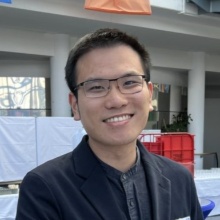
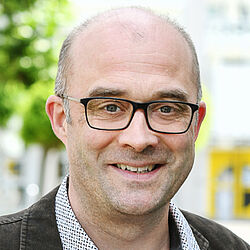
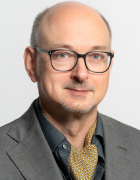
Patricio Farrell is an applied mathematician and Research Group Leader at the Weierstrass Institute Berlin (WIAS), focusing on numerical analysis, scientific computing, and mathematical modeling for semiconductor devices. His work bridges applied analysis and practical applications, particularly through structure-preserving numerical methods for drift-diffusion systems and nonlinear PDEs. Key applications include next-generation semiconductors, perovskite photovoltaics, and neuromorphic computing. He actively collaborates with institutions like Inria Lille, the University of Oxford, and the Helmholtz Zentrum Berlin. Vice Chair of KOMSO (Committee for Mathematical Modeling, Simulation and Optimization) Editor of Open Mathematics Scientific Ambassador for Brain City Berlin Developed ChargeTransport.jl , an open-source Julia tool for semiconductor simulations used in academia and industry His research interests span numerical analysis, nonlinear PDEs, finite volume methods, and meshfree techniques, with applications in perovskites, nanowires, memristors, quantum wells, and laser design. He has secured ~€1.5M in third-party funding from organizations like the Leibniz Association and MATH+. Scientific Awards: Capital's Top 40 under 40
Prof. Dr. Gert Lube is a faculty member at the Institute for Numerical and Applied Mathematics (NAM) within the Faculty of Mathematics and Computer Science at Georg-August-University Göttingen. His research focuses on numerical methods for partial differential equations , with emphasis on stabilized finite element methods , turbulence modeling , and magnetohydrodynamics (MHD) . Workshops Organized : Calibration of Viscosity Models for Turbulent Flows (2010), Variational Multiscale Methods (2008), Local Projection Stabilization (2008), BAIL Conferences. His academic contributions include 15+ publications since 2010 on topics like Navier-Stokes simulations , LES/VMS methods , stabilized FEM , and FEM-BEM coupling . Collaborations span institutions like TU Graz, Saarbruecken University, and DLR Göttingen. Key Research Areas : Finite Element Methods, Turbulence Modeling, MHD, Incompressible Flows, Singularly Perturbed Problems, Parallel Computing. Advisees include PhD candidates working on topics such as non-isothermal flows , mass conservation , hybrid RANS/LES , and domain decomposition .
Tomas Dohnal is a Professor at the Institute of Mathematics of Martin Luther University Halle-Wittenberg , Germany, since 2018. His research focuses on Nonlinear Partial Differential Equations (PDEs) , Dispersive Waves , Bifurcation Theory , and Wave Propagation in Periodic Structures . He has held academic positions at Technical University Dortmund, Karlsruhe Institute of Technology, ETH Zurich, and University of New Mexico. Research Interests : Nonlinear PDEs, Surface Plasmon Polaritons, Gap Solitons in Photonic Crystals, Spectral Problems, Rigorous Asymptotics, Numerical Analysis Grants : DFG grants on nonlinear wavepacket asymptotics and moving gap solitons in periodic media Students : Supervised PhD students including Maximilian Hanisch, Matthias Ionescu-Tira, and Daniel Tietz; Master students at multiple institutions Software : Co-developer of the PDE2PATH MATLAB package for bifurcation analysis Publications span topics in Maxwell equations with interfaces, PT-symmetric problems, homogenization of periodic media, and nonlinear wave dynamics. His work often bridges rigorous mathematical analysis with numerical methods. Teaching includes courses on Dispersive PDEs, Asymptotic Methods, Nonlinear Analysis, and Wave Propagation. He has taught at TU Dortmund, Karlsruhe Institute of Technology, and Martin Luther University.
Prof. Dr. Tobias Preußer is a Professor of Mathematical Modelling of Medical Processes at the School of Computer Science and Engineering, Constructor University Bremen gGmbH. His research focuses on mathematical modeling in biomedical processes, numerical analysis, image processing, and scientific visualization. He holds a PhD in Mathematics from the University of Duisburg-Essen (2001-2003), a Diploma in Mathematics from the University of Bonn (1994-1999), and completed an exchange semester in applied mathematics at New York University. His academic roles include Deputy Institute Director and Head of Modeling and Simulation at Fraunhofer MEVIS, General Manager at TechsoMed GmbH, and Visiting Assistant Professor at the University of Bremen. His work emphasizes interdisciplinary collaboration, particularly in systems biology and medical imaging applications. Key research interests include partial differential equations, bio-medical process simulation, anisotropic diffusion techniques, and multiscale methods. He has contributed to advancements in radiofrequency ablation modeling, liver pharmacokinetics simulations, and uncertainty quantification in medical visualization. His publications span computational biology, medical physics, and visualization techniques, with notable contributions to virtual liver modeling and stochastic collocation methods for optimal control problems. He has led collaborative projects involving academic and industrial partners, advancing both theoretical and applied aspects of mathematical modeling in healthcare.
Dr. Pawan Goyal is a Senior AI Engineer/Researcher at appliedAI Initiative GmbH, focusing on generative AI and physics-informed machine learning. Previously, he led the Physics-Enhanced Machine Learning team at the Max Planck Institute for Dynamics of Complex Technical Systems, where he developed surrogate modeling techniques integrating physics into AI. His research spans dynamical systems, model reduction, and materials science, emphasizing stability and interpretability of models. Education: PhD in Applied Mathematics (Max Planck Institute, 2018), M.Tech and B.Tech in Engineering Design (IIT Madras). His work bridges computational science and AI, addressing challenges in engineering design and materials discovery. Key interests include generative AI for design, physics-informed neural networks, and reduced-order modeling for complex systems. Awards: Dr.-Klaus-Körper Prize (GAMM, 2019), Best Ph.D. Thesis (Otto-von-Guericke University, 2018).
Wotao Yin is a Professor of Mathematics at the University of California, Los Angeles, with a distinguished research career spanning over two decades in optimization theory and its applications. His work bridges theoretical mathematics with practical applications in machine learning, image processing, and signal analysis. As a leading researcher in optimization algorithms, he has made significant contributions to the development of methods like ADMM (Alternating Direction Method of Multipliers), proximal algorithms, and decentralized optimization techniques. Department: Department of Mathematics School: College of Letters and Science University: University of California, Los Angeles Yin's research focuses on developing efficient algorithms for large-scale optimization problems, with particular expertise in convex and nonconvex optimization, distributed and decentralized optimization, and mathematical foundations of machine learning. His work has profound implications for image reconstruction, signal processing, and modern machine learning systems. He has pioneered methods for handling sparse data, non-smooth objectives, and constrained optimization problems that arise in real-world applications. An analysis of his recent publications reveals a strong trend toward addressing optimization challenges in machine learning, particularly in federated learning, attention mechanisms, and nonconvex problem structures. His work demonstrates a consistent pattern of bridging theoretical optimization with practical machine learning applications, developing algorithms that balance computational efficiency with theoretical guarantees. Recent papers show increasing focus on heterogeneous data settings, large language model optimization, and fundamental limitations of optimization methods in complex learning scenarios. Throughout his career, Professor Yin has mentored numerous PhD students and postdoctoral researchers who have gone on to successful careers in academia and industry. His collaborative network spans multiple institutions worldwide, with particularly strong connections to researchers in China and across the United States. His work has been supported by various funding agencies recognizing the fundamental importance of optimization theory for advancing computational science. Professor Yin leads a vibrant research group focused on mathematical optimization and its applications, where students and collaborators work on cutting-edge problems at the intersection of mathematics, computer science, and engineering. The group maintains strong connections with both theoretical and applied research communities, participating in major conferences across optimization, machine learning, and computational mathematics.
Nicholas J. Zabaras is a Professor in the College of Engineering at the University of Notre Dame and serves as director of the Warwick Centre for Predictive Modelling at the University of Warwick. He holds a Hans Fischer Senior Fellowship at the Technical University of Munich Institute for Advanced Study (TUM-IAS) since 2014. His academic journey began with a diploma in Mechanical Engineering from the National Technical University of Athens (1982), followed by an M.Sc in Material Science and Engineering from the University of Rochester (1983), and a PhD in Theoretical and Applied Mechanics from Cornell University (1987). His research spans computational mathematics, computational statistics, and scientific computing with focus on predictive modeling of complex multiscale and multiphysics materials systems. Key research themes include Bayesian uncertainty quantification, high-dimensional problem modeling, information-theoretic coarse graining, stochastic model reduction, and optimization under uncertainty. His work has significant applications in materials science, particularly in uncertainty propagation from ab initio to continuum simulations and modeling of random microstructures. His recent publications demonstrate strong activity in Bayesian coarse-graining techniques, deep Gaussian processes, and uncertainty quantification for multiscale materials systems. The research shows consistent focus on developing computationally efficient methods for high-dimensional problems with applications across materials science and engineering disciplines. Major Awards and Recognitions: Royal Society Wolfson Research Merit Award (2014) Research Fellow, Isaac Newton School of Mathematical Sciences, University of Cambridge (2011) Michael Tien'72 College of Engineering Teaching Award, Cornell University (2009) Fellow, American Society of Mechanical Engineers (2006) Presidential Young Investigator Award (1991) Zabaras leads the Scientific Computing and Artificial Intelligence (SCAI) Laboratory and the Computational Science and Engineering (CSE) Laboratory at Notre Dame, where his team develops innovative mathematical and statistical approaches addressing unique challenges in predictive modeling. His research integrates computational mathematics, machine learning, and multiscale/multiphysics modeling to address problems in materials physics, geological sciences, and climate modeling.
Prof. Haye Hinrichsen holds a C3 professorship at the University of Würzburg within the Chair of Theoretical Physics III . His academic journey includes roles as Acting Professor at the University of Wuppertal (2001), Senior Assistant at Duisburg-Essen (2000), and postdoctoral research at institutions like the Weizmann Institute of Science (1995–1997). He earned his PhD in 1993 from the University of Bonn under Prof. V. Rittenberg, focusing on quantum groups. His research interests span quantum information theory , exactly solvable systems , statistical physics far from equilibrium , reaction-diffusion processes , and non-equilibrium phase transitions . Notable achievements include the 2007 Award for Good Teaching and contributions to understanding entropy-based tuning systems in music. His recent work explores topics like causal set propagators in anti-de Sitter spacetime, eigenmodes on hyperbolic lattices, and renormalization techniques in quantum field theories. He has also applied physics principles to music acoustics, developing adaptive tuning schemes using entropy maximization. Key Research Themes: Quantum gravity, non-equilibrium dynamics, topological complexity, and interdisciplinary applications in music. Teaching: Courses include Theoretical Physics I, Computational Physics, and General Relativity. Lab/Affiliation: Chair of Theoretical Physics III at Hubland South, Building M1.
Prof. Dr. Johannes Kraus is a faculty member at the University of Duisburg-Essen , affiliated with the Faculty of Mathematics . His research focuses on advanced numerical methods for partial differential equations and their applications across multiple disciplines. University: University of Duisburg-Essen Faculty: Faculty of Mathematics Contact: Thea-Leymann-Str. 9, 45127 Essen, Germany Dr. Kraus specializes in numerical solution of partial differential equations , discretization techniques (including finite element and isogeometric analysis), numerical linear algebra , and subspace correction methods like domain decomposition and multigrid. His work extends to high-performance computing and machine learning applications in medicine, engineering, and sciences. Recent publications highlight collaborations on nonlinear poroelasticity , space-time finite element methods , and preconditioning techniques for complex systems. Articles span domains such as biomechanics , biomolecular electrostatics , and multiscale modeling , demonstrating interdisciplinary impact. Teaching responsibilities include Numerical Mathematics II (Summer 2025) and Numerical Mathematics I , with seminars on multiphysics finite element software . He leads the Numerical Mathematics group and has secured third-party funding from DFG and FWF grants.
Prof. Dr. Daniel Peterseim is the Chair of Computational Mathematics at the University of Augsburg, with a focus on numerical methods for partial differential equations and multiscale problems. He leads a research team including collaborators like Robert Altmann, Moritz Hauck, and Hannah Mohr. 2017–present: Chair of Computational Mathematics, University of Augsburg 2013–2017: Professor for Numerical Simulation, University of Bonn 2009–2013: Head of Junior Research Group, DFG Research Center Matheon & Humboldt University Berlin His research centers on computational multiscale methods, eigenvalue problems, and wave phenomena, with applications in mechanics, physics, and medicine. Recent work includes numerical stochastic homogenization and quantum computing applications of finite element methods. He has received the ERC Consolidator Grant for his research. Scientific awards: ERC Consolidator Grant He has advised numerous PhD and Master’s students, including Moritz Hauck, Fabian Kröpfl, and Barbara Verfürth. His team collaborates on projects like metamaterial simulations and microstructure reconstruction using neural networks.
Peter Oswald is a Professor and holds a Bonn Research Chair at the Hausdorff Center for Mathematics, affiliated with the Institute for Numerical Simulation at the University of Bonn. His research lies at the intersection of approximation theory, function spaces, and numerical methods for partial differential equations, with a focus on wavelets, splines, and multiscale computational techniques. University: University of Bonn School: Hausdorff Center for Mathematics Department: Institute for Numerical Simulation Email: oswald@ins.uni-bonn.de His research interests include Approximation Theory, Function Spaces and Applied Harmonic Analysis, Multiscale Methods in Scientific Computing, Numerical Methods for PDEs, Finite Elements, Splines, Wavelets, and Mathematical Modelling. These areas reflect a deep commitment to both theoretical foundations and computational applications in modern applied mathematics. The analysis of his recent publications reveals a consistent focus on iterative and subspace correction methods, preconditioning in sparse grid contexts, function space theory (especially Besov and Hilbert spaces), and the mathematical underpinnings of finite element and wavelet-based discretizations. His work often bridges pure and computational mathematics, with increasing exploration of stochastic and randomized algorithms in numerical linear algebra and high-dimensional problems. Peter Oswald has not been mentioned as having formal advisees in the provided texts, and no scientific awards are listed. However, his extensive collaboration with Michael Griebel and publication in prestigious journals and book series (e.g., Springer Series in Computational Mathematics) underscores his active and influential role in the mathematical community. He is involved in advanced research on space splittings, iterative solvers, and high-dimensional function approximation, contributing to both theoretical developments and practical computational frameworks. His work supports broader efforts in scientific computing, uncertainty quantification, and the numerical solution of complex physical models.
Elissa Eggenweiler holds the position of Researcher at the University of Stuttgart, affiliated with the Institute of Applied Analysis and Numerical Simulation under the Chair of Applied Mathematics. She specializes in multiscale problems, particularly in homogenization, boundary layer theory, and the coupling of free-flow and porous-medium systems. Her work bridges theoretical analysis and numerical simulation techniques. Her research focuses on interface conditions for fluid-porous medium interactions, with applications in Stokes-Darcy systems and uncertainty quantification. Notable contributions include modifications to classical boundary conditions (e.g., Beavers-Joseph) and Bayesian validation frameworks for coupled flow systems. Eggenweiler’s publications (2020–2023) emphasize rigorous mathematical analysis and computational methods for multiscale phenomena. While no explicit awards are listed, her involvement in projects like the validation of pore-scale resolved models highlights her collaborative and applied research ethos. Currently, she contributes to the development of effective coupling conditions and numerical frameworks at the Institute, with a focus on advancing porous-medium and free-flow system modeling.
Linheng Ruan is a Researcher at the Institute of Applied Analysis and Numerical Simulation , part of the Chair of Applied Mathematics at the University of Stuttgart. His work focuses on advanced numerical methods for fluid dynamics and porous media systems. He is affiliated with Faculty 08 of the university. Research Interests: Lattice Boltzmann methods for porous media flows Coupling free flow and porous media flow Dimensionally reduced models Efficient numerical algorithms for multiscale problems Ruan is actively involved in associated research projects and participates in conferences/workshops. He contributes to the TEAM PAGE of the institute for collaborative research.
Prof. Dr.-Ing. habil. Herbert Baaser is a Professor of Engineering Mechanics at TU Darmstadt and Managing Director of the German Rubber Society (DKG). He holds a PhD (1999) and Habilitation (2004) from TU Darmstadt. His research focuses on continuum mechanics, elastomer behavior, FEM simulation, and material modeling. He has served as Vice President for Studies & Teaching (2020–2024) and led projects like the DAEdalon FEM software and the Elastomer Laboratory. His work integrates industrial applications, with contributions to polymer aging, stress softening, and multiscale modeling. Education: Mechanical Engineering & Mechanics, TU Darmstadt (1990–1995) Key Roles: Professor since 2015, DKG Managing Director since 2024 Research Interests: Hyperelasticity, damage mechanics, FEM pre/post-processing, and material durability. His work bridges theoretical mechanics with industrial applications in automotive and polymer sectors. Awards: None explicitly mentioned. Grants & Projects: DAEdalon (FEM software), H2 Decomp (2023–2024), and Industry 4.0 initiatives. He advises on mechanical engineering curricula and has collaborated with institutions like TH Bingen's Hermann Hoepke Institute.
Prof. Dr. Folkmar Bornemann is a full Professor at the Technical University of Munich (TUM) within the School of Computation, Information and Technology. He leads the Chair of Scientific Computing and has been active in numerical mathematics and computational methods since 1998. Numerics of Multiscale Problems Interplay between algorithms and mathematical analysis Applications in medical technology, natural sciences, and digital image processing His research focuses on Scientific Computing and Numerical Mathematics , particularly addressing challenging problems through computational methods. He has contributed to areas including: Random matrix theory Image processing algorithms Homogenization of mechanical systems Fredholm determinants computation Scientific awards include: 100-Digit Challenge (SIAM, 2002) Ernst Reuter Prize (FU Berlin, 1992) Joachim Tiburtius Prize (Berlin, 1990) He has held leadership roles such as Dean of Mathematics Faculty (2018-2022) and serves on the German Council of Science and Humanities since 2024.