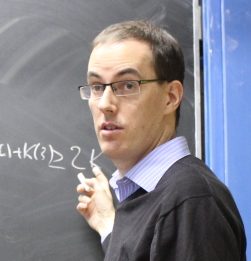
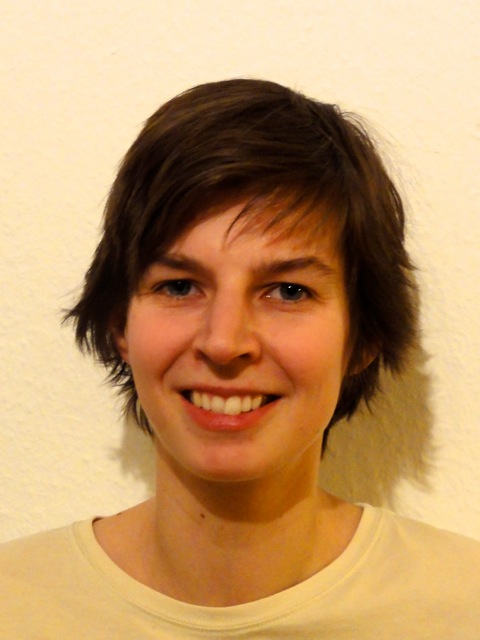
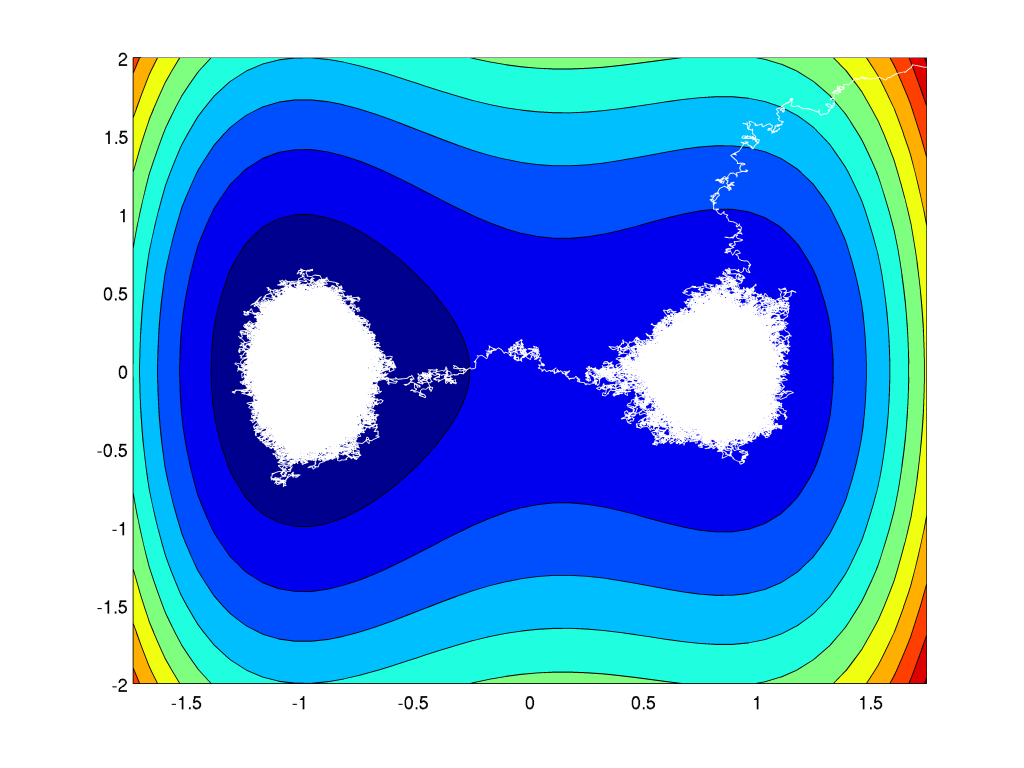
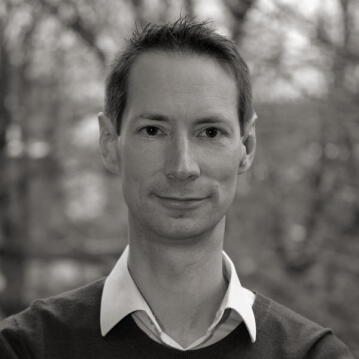
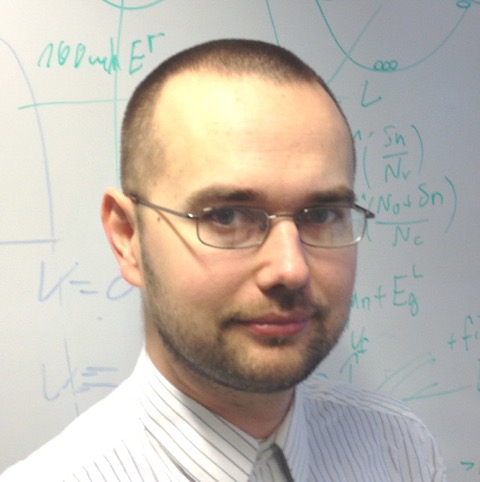
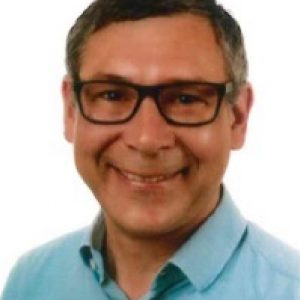
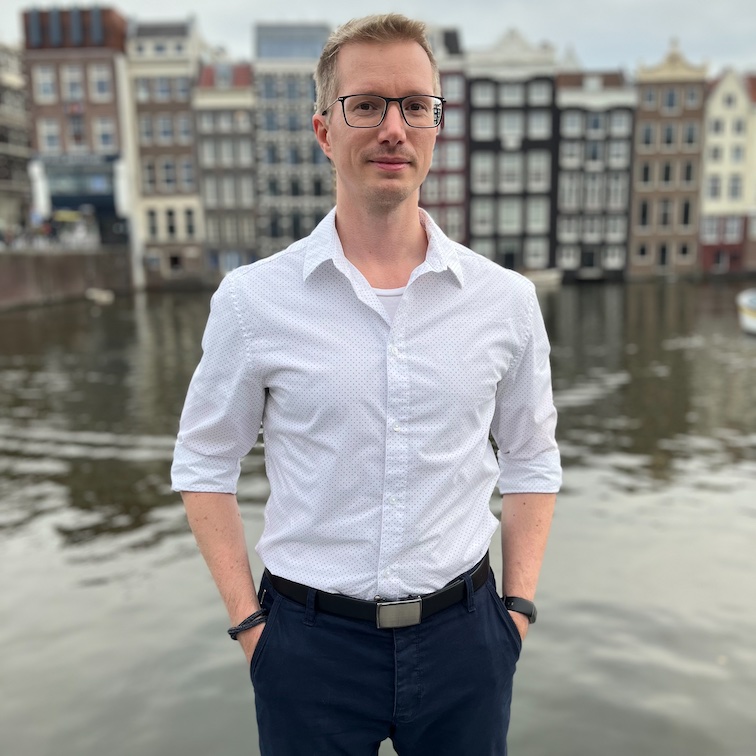
Lars Grasedyck is a Professor of Numerical Analysis at RWTH Aachen University. His research focuses on hierarchical matrices, tensor approximation, and numerical methods for partial differential equations and matrix equations. He has contributed to applications in biomedical engineering, particularly EEG/MEG inverse problems, and is involved in software development (HLIB, HLIB-pro). Education: Diploma and Ph.D. in Mathematics at Christian-Albrechts-Universität zu Kiel (1998, 2001), Postdoctoral work at Max Planck Institute, Leipzig (2002-2010). Research: Specializes in high-dimensional numerical methods, low-rank matrices, and tensors with applications in PDEs, uncertainty quantification, and biomedical modeling. Projects: Leads DFG-funded initiatives on adaptive tensor networks for parametric PDEs and tumor progression modeling. Advising: Supervises doctoral students including Thong Le, Maren Klever, and Dieter Moser. Software: Developed HLib and HLib-pro for hierarchical matrix computations. Conferences: Active in GAMM Fachausschuss Numerische Analysis, organizing workshops and symposia globally.
Dr. Thomas Eiter is a Young Investigator in the Collaborative Research Centre CRC 1114 at Freie Universität Berlin and a member of the Partial Differential Equations research group at the Weierstrass Institute of Applied Analysis and Stochastics (WIAS). He holds a PhD from Technical University of Darmstadt (2020), focusing on existence and spatial decay of periodic Navier-Stokes flows in exterior domains. His research emphasizes mathematical analysis of PDEs motivated by fluid mechanics, including existence of solutions, time-periodicity, unbounded domains, and asymptotic behavior. Teaching highlights include courses such as 'Introduction to Mathematical Modeling with PDEs' at Freie Universität Berlin and 'Harmonic Analysis' at University of Kassel. He has organized workshops like the 2025 'Mathematical Analysis of Fluid Flows by Variational Methods' at WIAS. Current projects include the SPP 2410 initiative on energy-variational solutions for hyperbolic conservation laws. His work bridges theoretical PDE analysis with applications in continuum mechanics, with contributions to viscous flow dynamics, Navier-Stokes equations, and material models. He actively participates in academic leadership through seminar organization and conference minisymposia on fluid mechanics and nonlinear analysis.
Prof. Dr. Karoline Disser is a Professor of Analysis at the Institute of Mathematics, Universität Kassel, within Faculty 10: Mathematics and Natural Sciences. Her research focuses on applied analysis and partial differential equations, particularly in fluid dynamics, fluid-structure interaction, and complex flow systems. She holds a PhD from TU Darmstadt (2009) and habilitation from Humboldt-Universität zu Berlin (2017). Her teaching includes advanced courses in calculus of variations, function spaces, and mathematical fluid dynamics, spanning institutions like TU Darmstadt, HHU Düsseldorf, and TU Berlin. Research interests encompass reaction-diffusion systems, elliptic/parabolic regularity, and variational methods for evolution equations. Recent publications (2016–2022) address fluid-structure interaction, semiconductor equations, and multiscale chemical reaction modeling. Her work emphasizes rigorous mathematical analysis with applications in engineering and geophysical systems. No awards are listed, but her contributions reflect interdisciplinary engagement in applied mathematics and continuum mechanics.
Professor Siegfried Müller is a full professor at the Institute for Geometry and Practical Mathematics within the Faculty of Mathematics, Computer Science and Natural Sciences at RWTH Aachen University. His research focuses on developing advanced numerical methods for solving complex fluid dynamics problems, with particular expertise in conservation laws, adaptive multiscale techniques, and multiphase flow modeling. He maintains an active research program with numerous publications in leading computational mathematics journals and collaborates extensively with researchers across multiple institutions. Professor Müller's research interests span a wide range of computational mathematics topics including Conservation Laws, Finite Volume Schemes, Discontinuous Galerkin Methods, Adaptive Multiscale Techniques, and specialized applications in Fluid Dynamics. His work demonstrates particular strength in developing numerical methods for two-phase flow systems, transpiration cooling applications, and surface lubrication phenomena. His research bridges theoretical mathematical analysis with practical engineering applications, particularly in aerospace and mechanical engineering contexts. His recent publications reveal a strong focus on advancing numerical techniques for hyperbolic conservation laws, with increasing emphasis on stochastic methods, multilevel approaches, and coupled system modeling. His work spans both theoretical developments in numerical analysis and practical applications in fluid dynamics, with particular attention to multiphase flow systems and cooling technologies. The publications show a clear progression toward more complex, high-dimensional problems and increasingly sophisticated numerical techniques to address computational challenges. Professor Müller has led and participated in numerous research projects funded by German research organizations including DFG Priority Programmes, BMBF projects, and DFG Research Training Groups. His projects have focused on hyperbolic balance laws, adaptive numerical methods, transpiration cooling, and textured surface lubrication. He has organized multiple workshops on multiresolution methods and active drag reduction, demonstrating leadership in his research community. Professor Müller's research group at RWTH Aachen collaborates closely with engineering departments and industry partners to apply advanced numerical methods to practical engineering challenges. His team has developed specialized computational tools for simulating complex fluid phenomena, particularly in aerospace applications where cooling technologies and fluid-structure interactions are critical. The group maintains strong connections with international research communities in computational mathematics and fluid dynamics.
André Schlichting is a Full Professor of Applied Analysis at the University of Ulm, leading the Institute of Applied Analysis since October 2024. Previously, he served as an Associate Professor for Applied Mathematics at the University of Münster (2020–2024) and held postdoctoral and visiting professor roles at institutions including the University of Bonn and RWTH Aachen. His research focuses on the qualitative analysis of complex systems, combining methods from partial differential equations, stochastic analysis, and numerical analysis. Key interests include metastability in statistical mechanics, phase transitions, variational methods, and the longtime behavior of dissipative systems. Education: Habilitation (Facultas Docendi), University of Bonn, 2020 (Phase Transitions in Interacting Systems) PhD in Mathematics, Universität Leipzig, 2012 Diploma in Mathematics, TU Freiberg, 2008 Studies in Mathematics at University of Pavia (Italy) and TU Freiberg Research Interests: His work bridges applied mathematics and theoretical physics, addressing problems in statistical mechanics, stochastic processes, and machine learning. Key areas include: Metastability in molecular and statistical mechanics systems Coarsening and nucleation phenomena in interacting particle systems Variational methods for dissipative evolution equations Entropy methods and functional inequalities (spectral gap, log-Sobolev) Gradient flows and their limits in continuum and discrete settings Discrete and nonlocal dynamics on graphs and data sets Recent Article Trends: His recent work emphasizes gradient flow structures, discretization schemes for PDEs, and metastability in stochastic systems. Notable contributions include analysis of the exchange-driven growth model, McKean-Vlasov equations on manifolds, and covariance-modulated optimal transport. These studies highlight interdisciplinary approaches to bridging discrete and continuum dynamics. Labs/Teams: He leads the Applied Analysis group at Ulm University, focusing on collaborative research in PDEs, stochastic processes, and numerical methods. Active participation in initiatives like the Hausdorff Trimester Program (Bonn) underscores his role in fostering interdisciplinary research networks.
Felix Schindler is a Researcher at the Institute for Analysis and Numerical Analysis , part of the Department of Mathematics and Computer Science at the University of Münster . His work bridges numerical analysis, machine learning, and scientific computing, with a focus on model reduction for partial differential equations (PDEs), adaptive algorithms, and computational efficiency. Research Interests include: Numerical analysis of parametric and multiscale PDEs Localized reduced basis methods (LRBM) and adaptive enrichment Integration of model order reduction (MOR) with machine learning (ML) Conservative flux reconstruction techniques Development of software libraries like dune-xt and pyMOR Recent Publications highlight trends in applying deep kernel models for surrogate modeling, localized training strategies for PDE-constrained optimization, and hybrid full/reduced-order pipelines for reactive flow prediction. His work emphasizes certified error control, hierarchical adaptivity, and cross-disciplinary computational frameworks. Collaborations span institutions such as AIMS Senegal, Springer Nature, and DUNE project teams. He actively contributes to conferences like GAMM, ENUMATH, and Algoritmy.
Dr. Dirk Peschka is a researcher at the Weierstrass Institute for Applied Analysis and Stochastics (WIAS) in Berlin, Germany, where he contributes to the Partial Differential Equations Research Group (FG1) . He is affiliated with the Berlin Mathematics Research Center MATH+ , the Society for Applied Mathematics and Mechanics (GAMM) , and the German Physical Society (DPG) . Research Interests Mathematical modeling of fluid dynamics and materials science using partial differential equations (PDEs). Applications in thin film dynamics, semiconductor devices, and reactive multiphase flows. Development of gradient flow frameworks and thermomechanical models via GENERIC formalism. Analysis of contact line behavior, dewetting processes, and fluid-structure interaction. Numerical methods for semiconductor simulations and geoscience applications. Publications Trends His recent work (2022–2025) emphasizes energy-based modeling of thin films, reactive flows, and semiconductor degradation. Key themes include contact line dynamics, gradient flows, and multiscale analysis of materials and fluid systems. Memberships Weierstrass Institute for Applied Analysis and Stochastics (WIAS) Berlin Mathematics Research Center MATH+ Society for Applied Mathematics and Mechanics (GAMM) German Physical Society (DPG)
Dr. Andreas Englert is a Senior Scientist at the Department of Applied Geology , Martin Luther University of Halle-Wittenberg, and a Lecturer at the University of Cologne. His work bridges hydrogeology and hydrogeophysics.
Ioannis Kouroudis is a Researcher at the Technical University of Munich (TUM), affiliated with the TUM School of Computation, Information and Technology . He works under the Associate Professorship of Simulation of Nanosystems for Energy Conversion led by Prof. Alessio Gagliardi , focusing on computational methods for energy materials. Research Interests : Machine Learning, Perovskite Solar Cells, Multiscale Modelling, Materials Optimization, Optoelectronics, and Catalyst Modeling. Education : Holds an M.Sc. degree, though specific institutions are not detailed in the text. His recent publications highlight trends in applying Machine Learning and AI-driven optimization to problems in materials discovery and perovskite solar cell stability . Collaborative work spans computational modeling , experimental automation , and optoelectronic characterization . No scientific awards are explicitly mentioned. In teaching, he assists in courses like Computational Materials Design and Python for Engineering Data Analysis , and contributes to seminars on quantum engineering and machine learning. He participates in active research projects such as the DFG e-Conversion Cluster III and TUM Innovation Network ARTEMIS , focusing on energy conversion interfaces and machine learning integration.
Prof. Dr. Dietmar Gallistl is a faculty member at Friedrich-Schiller-Universität Jena, holding the Professorship for Numerical Mathematics within the Faculty of Mathematics and Computer Science. His research focuses on numerical methods for partial differential equations, including mixed finite elements, multiscale methods, adaptive algorithms, and computational homogenization. He teaches courses such as Theory and Numerics of Partial Differential Equations and Iterative Solvers for Partial Differential Equations . His research interests span various areas including discretization techniques for nonlinear PDEs, error analysis, and computational methods for wave propagation. He has contributed to software tools for finite element mesh refinement and numerical simulations. Recent work includes publications on the Gross-Pitaevskii eigenvalue problem, Monge-Ampère equations, and time-harmonic Maxwell equations. Prof. Gallistl's academic work emphasizes rigorous mathematical analysis alongside practical numerical implementation. His teaching materials include lecture notes on computational PDEs and finite element methods available on his university webpage.
Tianbai Xiao is a Researcher at the Karlsruhe Institute of Technology (KIT) within the Department of Mathematics and Steinbuch Centre for Computing. His work spans mesoscopic science , uncertainty quantification , and scientific machine learning , focusing on multi-scale, multi-physics problems in flow transport. His research in kinetic theory addresses nonlinear partial differential equations, hyperbolic conservation laws, and the unified modeling of continuum/rarefied flows. He develops high-performance numerical algorithms like the Unified Gas-Kinetic Scheme (UGKS) and Kinetic.jl (a finite volume toolbox for scientific computing). Current projects include mesoscopic science , stochastic data science , and physics-informed neural networks . He contributes to open-source tools including FluxReconstruction.jl for advection-diffusion methods and Langevin.jl for stochastic kinetic modeling. Publications cover Journal of Computational Physics , Engineering Fracture Mechanics , and Entropy , with preprints on arXiv in 2025 addressing force-driven flows and hybrid peridynamics. Teaching activities include the Introduction to Kinetic Theory lecture at KIT, and mentoring in the CAMMP (Computational and Mathematical Modeling Program) to develop problem-solving skills through real-world modeling tasks. He advocates for problem-based learning where students translate non-mathematical problems into mathematical language.
Gábor Závodszky is an Assistant Professor at the Computational Science Lab of the University of Amsterdam. His research focuses on interdisciplinary applications of high-performance computing (HPC) in biomedical contexts, particularly through Digital Twins in Healthcare , Energy Efficient HPC Simulations , and Multi-Scale Modeling . Keywords: Digital Twins in Healthcare, High-Performance Computing, Energy Efficient HPC Simulations His work integrates HPC techniques with fundamental biomedicine and clinical applications to address complex problems in platelet aggregation, hemodynamics, and vascular physiology. Recent projects include ThromboRisk (EU MSCA, 2025), Vascular Immunology (Co-PI, 2025), and GEMINI (EU Horizon, Co-PI, 2024). The majority of his publications focus on platelet mechanics , hemodynamic simulations , and HPC optimization in biomedical contexts. Key subfields include computational fluid dynamics , cellular modeling , medical implant simulations , and vascular pathology . Dr. Závodszky's lab has recently expanded with funded projects totaling over 7.4M EUR, including a Marie Skłodowska-Curie doctoral network and a Vascular Immunology consortium. His team includes PhD candidates Vera Zut and Giulia Pederzani, and he has supervised the successful defense of Dr. Yue Hao's thesis. Recent Grants: EU MSCA (2025), MMD Impulse Grant (2024), EU Horizon (2024)
Dr. Leonard Kreutz is a Researcher at the Department of Mathematics , Technical University of Munich (TUM), leading an Emmy Noether Junior Research Group since 2023. He has held postdoctoral positions at Carnegie Mellon University, WWU Münster, and Universität Wien, and was an acting professor at TUM in 2019. Education: PhD (2018) from Gran Sasso Science Institute, Honors Master (2014) and Bachelor (2013) in Mathematics at TUM. Research Interests: His work focuses on the Calculus of Variations , Multiscale Methods , and Discrete-to-Continuum Limits , particularly in modeling crystallization, elastic materials with voids, and topological singularities in spin systems. He explores free-discontinuity problems and geometric rigidity in variable domains. Publications span 2023–2017, emphasizing atomistic models , nonlinear elasticity , and homogenization across mathematics, materials science, and physics. Collaborative projects with leading experts like M. Cicalese and A. Braides dominate his output. Scientific Award: Emmy Noether Junior Research Group Grant (2023–present). Collaborations include institutions such as Carnegie Mellon University, WWU Münster, and the University of Vienna. His research intersects with groups focused on Mathematical Finance , Numerical Analysis , and Quantum Information Theory at TUM.
Sebastian Reich is a Professor of Numerical Analysis at the University of Potsdam and holds an honorary Visiting Professorship at Imperial College London . He leads the Chair of Numerical Mathematics and serves as Editor-in-Chief of the SIAM/ASA Journal on Uncertainty Quantification since 2021. Research Interests Numerical methods for Hamiltonian systems Data assimilation in geoscience Stochastic particle filters Bayesian inference algorithms Molecular dynamics simulation Multi-scale modeling Collaborative Projects : Principal Investigator and former Speaker (2017-2024) of SFB 1294 Data Assimilation , a DFG-funded Collaborative Research Center Active participant in SFB 1114 Scaling Cascades in Complex Systems at Freie Universität Berlin Books Authored : Probabilistic Forecasting and Bayesian Data Assimilation (Cambridge UP, 2015) Simulating Hamiltonian Mechanics (Cambridge UP, 2005) Technical Contributions : Development of symplectic integration methods Innovations in ensemble Kalman filtering Regularization approaches for geophysical models Stochastic algorithms for molecular simulations
Patricio Farrell is an applied mathematician and Research Group Leader at the Weierstrass Institute Berlin (WIAS), focusing on numerical analysis, scientific computing, and mathematical modeling for semiconductor devices. His work bridges applied analysis and practical applications, particularly through structure-preserving numerical methods for drift-diffusion systems and nonlinear PDEs. Key applications include next-generation semiconductors, perovskite photovoltaics, and neuromorphic computing. He actively collaborates with institutions like Inria Lille, the University of Oxford, and the Helmholtz Zentrum Berlin. Vice Chair of KOMSO (Committee for Mathematical Modeling, Simulation and Optimization) Editor of Open Mathematics Scientific Ambassador for Brain City Berlin Developed ChargeTransport.jl , an open-source Julia tool for semiconductor simulations used in academia and industry His research interests span numerical analysis, nonlinear PDEs, finite volume methods, and meshfree techniques, with applications in perovskites, nanowires, memristors, quantum wells, and laser design. He has secured ~€1.5M in third-party funding from organizations like the Leibniz Association and MATH+. Scientific Awards: Capital's Top 40 under 40