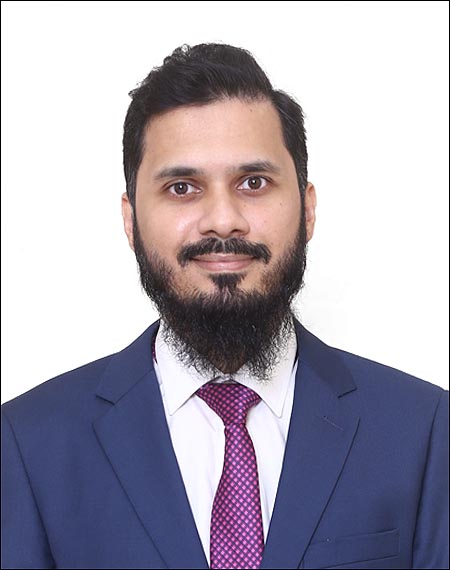
Adèle Garnier is an Associate Professor at the Department of Geography, Université Laval's Faculty of Forestry, Geography and Geomatics. She serves as Director of undergraduate geography programs and the certificate in sustainable tourism. Her research focuses on political geography, migration dynamics, and humanitarian governance, particularly examining refugee labor market participation, temporary migration policies, and technological impacts on immigration systems. Education : PhD in Political Science (Macquarie University/Universität Leipzig, 2012), MA in Political Science (Universität Leipzig, 2006), Diploma in Political Science (Paris, 2002) Her research integrates political geography , migration studies , and geographies of inequality , analyzing power structures in migration governance. Recent work explores Canada's digitalization of immigration, multiscalar impacts of refugee policies, and settler-colonial migration frameworks. Current research trends focus on technological governance of migration , refugee resettlement , and marketization of humanitarian services , with interdisciplinary approaches bridging political science and geography. Research Units : Graduate School of International Studies (ESEI), Immigration Research Team (ERIQA), Cultures-Arts-Societies Center (CELAT) Collaborations : Study Group on Ethnic Relations (Flers), Center for Refugee Studies (York University), Peace Research Institute Oslo She supervises graduate students in geography and co-leads multiple funded projects, including Liberating Migrant Labour (2023-2030) and digital migration governance research (2023-2028).
Dr. Karin A. King is an LSE Fellow in the Department of Management at the London School of Economics and Political Science (LSE). Her expertise spans global talent management, leadership development, and strategic human resource management. She teaches in LSE's Master's programs, focusing on organisational behaviour, negotiations, and strategic rewards. With over two decades of experience in corporate HR and consulting, Dr. King advises leaders on evidence-based talent management practices aligned with business priorities. Her research explores global talent systems, leadership succession, and diversity in organisational contexts. Dr. King has been recognized with multiple awards, including the LSE Teaching Award (2023), Top Ten Best Lecturer (2022), and repeated Teaching Excellence Awards (2015–2022). She holds professional certifications in HR, management consulting, and is a Fellow of the Higher Education Academy. Her work bridges academic research and practice, with publications in leading journals like BRQ Business Research Quarterly and Journal of Global Mobility . Recent research emphasizes macro-contingent talent strategies and the role of line managers in global talent initiatives.
Professor Beatrice Heuser is a distinguished academic in the Department of Politics within the School of Social & Political Sciences at the University of Glasgow. Her career spans multiple prestigious institutions across Europe, including King's College London, University of Reading, and visiting professorships at Sciences Po Paris, Bundeswehr University Munich, and MGIMO. She maintains significant affiliations with major strategic research institutes including Chatham House, RUSI, IFRI, and IRSEM. Education: BA from Bedford College London, MA from LSE, DPhil from Oxford (St Antony's/St John's), Habilitation from University of Marburg Professional Experience: Former Director of Studies at German Bundeswehr's military history research office, NATO Headquarters consultant, and extensive teaching across European institutions Her research centers on strategic studies with particular focus on the cultural dimensions of warfare, nuclear strategy, and the historical evolution of strategic thought. Key research areas include strategic culture, military exercises as political instruments, laws of war development, and European defense policy. Her work bridges historical analysis with contemporary security challenges, examining how cultural narratives shape strategic decision-making from antiquity to the nuclear age. Professor Heuser's recent publications demonstrate consistent scholarly output across strategic theory, military history, and contemporary security issues. Her work shows particular emphasis on the conceptual foundations of strategic culture, historical analysis of warfare evolution, and practical applications to modern security challenges including nuclear deterrence and asymmetric warfare. The interdisciplinary nature of her research connects political theory, historical analysis, and security studies. She actively supervises graduate students in strategic theory, nuclear strategy, insurgency studies, and defense policy-making within NATO/EU contexts. Her teaching portfolio includes War and International Relations, Defense Policy, and Strategic Theory courses.
Witold J. Henisz serves as Vice Dean and Faculty Director of the Impact, Value, and Sustainable Business Initiative at The Wharton School, University of Pennsylvania, holding the Deloitte & Touche Professorship in Management. His research centers on political and social risk identification, ESG impact materiality, and corporate diplomacy frameworks that transform stakeholder relationships into strategic assets. His educational background includes a Ph.D. in Business and Public Policy from UC Berkeley's Haas School and an M.A. in International Relations from Johns Hopkins SAIS. Henisz has served as Departmental Editor at Journal of International Business Studies and Associate Editor at Strategic Management Journal , reflecting his scholarly influence. Research interests converge on geopolitical risk quantification, stakeholder engagement optimization, and sustainable business model innovation. His work demonstrates how political hazards materially impact firm valuation and how corporate diplomacy can mitigate conflict through strategic stakeholder alignment. Recent publications leverage massive media datasets (4+ billion articles) to model populism dynamics, indigenous land conflicts, and ESG-credit risk linkages. Award highlights include the Aspen Institute Ideas Worth Teaching Award (2020), Iron Prof recognition (2019), and Academy of International Business Fellowship. His geostrategy framework Geostrategy by Design (2024) provides executives with actionable methods for navigating geopolitical volatility. Aspen Institute Ideas Worth Teaching Award (2020) Iron Prof recognition (2019) Academy of International Business Fellow (2014-present) Multiple Wharton Excellence in Teaching Awards (2006-2021) Industry Studies Association Best Paper Award (2019) Henisz consults through PRIMA LLC for multinational firms (Rio Tinto, Shell), financial institutions (Eaton Vance, World Bank), and NGOs. His executive education programs train leaders in ESG integration and geopolitical risk management, while his KEROVKA crisis simulation develops real-time strategic response capabilities. Media frequently cites his expertise on ESG controversies, with 50+ major publications featuring his analysis since 2022 including Financial Times , Bloomberg , and Wall Street Journal .
Dr. IKM Mokhtarul Wadud is a Senior Lecturer in the Department of Economics at The University of Sydney, Australia. Previously, he held roles as Senior Lecturer at Deakin University, Lecturer at Monash University Malaysia, and Assistant Professor at the University of Rajshahi, Bangladesh. He earned his PhD in Economics from the University of Wollongong in 2001. His research focuses on productivity analysis, macroeconomic policy, energy economics, and applied econometric modeling. Notable contributions include co-authoring the Asia Pacific edition of Introductory Econometrics (Cengage Learning) and publishing in journals like Economic Modelling and Energy Policy . His recent work addresses financial sustainability strategies in higher education during the pandemic and the impact of economic policy uncertainty on property prices in Australia. Dr. Wadud has presented at international conferences and served as a reviewer for multiple journals. His research spans diverse regions, including Australia, Thailand, Malaysia, and Bangladesh, with analyses of oil price volatility, monetary policy effects, and industrial competitiveness.
Christopher S. Tang is a UCLA Distinguished Professor and Edward W. Carter Chair in Business Administration at the Anderson School of Management , where he researches global supply chain management with a focus on social innovation in developing countries . He also serves as Senior Associate Dean for Global Initiatives and Faculty Director of the Center for Global Management . Education: Ph.D. in Management Science (1985, Yale University) M.Phil. in Administrative Science (1983, Yale University) M.A. in Statistics (1983, Yale University) B.Sc. in Mathematics (First Class Honors, 1981, King’s College, University of London) His research explores the intersection of corporate responsibility and supply chain innovation , addressing topics like microfinancing , mobile platforms for developing economies , direct agricultural procurement , and disaster response logistics . He emphasizes visibility, integrity, and agility in uncertain environments. Recent work highlights AI adoption benefits for supply chains , strategies to reduce forced labor risks , and policy impacts on ride-sharing platforms . His research bridges operations management and social justice , advocating for environmental stewardship alongside business growth. Scientific Awards: Salzberg Medallion (2017) Lifetime Fellow, INFORMS (2011) Responsible Research in Management Award (2017) Teaching Excellence Award (multiple years, UCLA-NUS) Dean’s Excellent Service Award (2014) As an influential adviser and consultant , Tang has worked with Amazon, HP, IBM, Nestlé, GKN , and Accenture . He has taught at Stanford University, UC Berkeley, Hong Kong University of Science and Technology , and served as visiting professor at Cambridge University and the Institute of Advanced Study at HKUST .
Arman Eshraghi is a Professor of Finance and Investment at Cardiff Business School , with 15 years of academic and industry experience. He founded the Cardiff Fintech Research Group , leads the Digital Transformation Innovation Institute 's fintech theme, and co-directs the Behavioral Finance Working Group . He serves as Editor-in-Chief of International Review of Economics and Finance and Senior Editor in multiple journals. Key academic appointments: Cardiff University (2018–present), University of Edinburgh (2013–18) International fellowships: Development Bank of Japan, University of Canterbury (New Zealand), UCL Industry engagement: Federal Reserve Bank (NY), Alan Turing Institute, CFA Society UK, CityUK Research Focus: Behavioral finance, corporate finance, financial technology, and interdisciplinary accounting. His work examines retail investor psychology, fund manager behavior, CEO decision-making, and fintech impacts on financial markets. He has published in Review of Financial Studies , Harvard Business Review , and Financial Times . Scientific Contributions: EFMD Global, Emerald Literati, and European Financial Group awards Keynote speaker at global conferences (New York, London, Mumbai, Frankfurt) Media citations in Financial Times , BBC , Forbes , and Bloomberg Teaching & Leadership: Delivers award-winning MSc/MBA/PhD courses in UK, Europe, and Asia. Holds a Postgraduate Certificate in Academic Practice and Fellow of AdvanceHE. Designed executive programs for firms including Aetna CVS Health and Scottish Widows. Research Leadership: Co-organizes international conferences like the Cardiff Financial Technology Conference and European Financial Management Association Meeting . Supervises PhD students on topics spanning fintech, behavioral finance, and CEO lifestyle impacts.
Benjamin Andrew Toll is a Professor in the Department of Public Health Sciences and Psychiatry at the Medical University of South Carolina (MUSC) College of Medicine. He serves as Associate Director of Education and Training for the Hollings Cancer Center, Vice Chair of Research in the Department of Public Health Sciences, Co-Director of the Lung Cancer Screening Program, and Director of the Tobacco Treatment Program at MUSC. Dr. Toll received his BA from Cornell University (1996), MS and PhD from Nova Southeastern University (1999, 2002), and completed his Postdoctoral Fellowship and Internship at Yale University. Dr. Toll is a leading researcher in tobacco cessation, with over 20 years of experience conducting clinical trials focused on developing novel therapeutics for tobacco and nicotine use. His work primarily centers on preventing cancer through tobacco treatment interventions, with particular emphasis on lung cancer screening patients and cancer surgery patients. He has expertise in nicotine replacement therapy, contingency management approaches, gain-framed messaging, and digital health interventions for smoking cessation across diverse populations including older adults and young adults. His recent publications demonstrate a strong focus on implementation science for tobacco treatment programs across various healthcare settings including hospitals, oncology clinics, and primary care. His research examines barriers to treatment, optimal delivery methods (including telehealth and EHR-integrated tools), and effectiveness of various pharmacological and behavioral interventions for smoking cessation. National Cancer Institute funding (R01CA235697, R01CA207229, P50CA196530) National Institute on Drug Abuse funding (P50DA036151, K12DA000167) Continuous funding for over 15 years for tobacco cessation research As a mentor and leader, Dr. Toll oversees the Education and Training program at the Hollings Cancer Center, guiding the development of future cancer researchers. His Tobacco Treatment Program serves as a model for integrating tobacco cessation into comprehensive cancer care, and he has successfully implemented 'opt-out' tobacco treatment programs across multiple hospital systems in South Carolina. Dr. Toll leads a multidisciplinary research team focused on tobacco treatment, including psychologists, pharmacists, physicians, and implementation scientists working together to develop and test innovative approaches to smoking cessation for high-risk populations.
Susana Mourato is Professor of Environmental Economics at the Department of Geography and Environment at the London School of Economics and Political Science (LSE). She joined LSE in 2008 after ten years at Imperial College London. In 2021, she became the Vice President and Pro-Vice Chancellor (Research) at LSE. She also holds positions as Visiting Reader at Imperial College London and Honorary Senior Fellow at CSERGE (University of East Anglia). Professor Mourato is an expert in environmental economics and the application of economic valuation techniques to measure environmental change and social value. Professor Mourato's research focuses on valuing natural wealth and creating markets for ecosystem services, perceptions and preferences for low-carbon energy technologies, environmental valuation methods and applications, and the relationship between life satisfaction and the environment. Her work spans the fields of environmental economics, wellbeing economics, and behavioral environmental economics. She has conducted extensive research on ecosystem services, wildlife conservation, air and water pollution, chemicals, climate change, low carbon technologies, and cultural heritage, testing and applying economic valuation techniques to these diverse areas. Her recent publications show a strong trend toward integrating behavioral economics with traditional environmental valuation techniques. She has published extensively on the links between subjective wellbeing and environmental quality, as well as the application of economic valuation methods to inform environmental policy. Her work often involves interdisciplinary collaborations across economics, ecology, and social sciences, with significant policy impact through government advisory roles and international organizations. Member of Culture & Heritage Capital Advisory Board (UK Department for Digital, Culture, Media & Sport) Associate of the Grantham Research Institute on Climate Change and the Environment Former Academic Director of LSE Summer School Former Head of Department (2017-2020) Professor Mourato has worked on more than 45 research projects and consultancies for research councils, government, industry, charities, and international organizations. She currently leads projects for the OECD evaluating the impact of chemicals on IQ, for LSE Middle East Centre estimating preferences for climate change policies in the Gulf Region, and for water conservation in Kuwait. Her research has informed policy development in multiple countries and international contexts.
Saras D. Sarasvathy is the Paul M. Hammaker Professor at the Darden Graduate School of Business, University of Virginia, where she is a member of the Strategy, Entrepreneurship and Ethics area. A leading researcher in entrepreneurship, she advises entrepreneurship programs globally across Europe, Asia, and Africa, while serving on boards of companies including Lending Tree (Nasdaq: TREE) and Upekkha, a SaaS accelerator in Bangalore, India. Her research focuses on the cognitive basis of high-performance entrepreneurship, particularly her groundbreaking work on effectuation theory. Sarasvathy's scholarship examines how expert entrepreneurs think and act under uncertainty, challenging traditional predictive approaches to business strategy. She has developed frameworks showing how entrepreneurs create markets and opportunities through action-oriented, non-predictive methods that leverage available means rather than predetermined goals. Sarasvathy's award-winning research has generated significant scholarly attention and practical applications worldwide. Her work has spawned over a hundred scholars involved in the effectuation research program, with publications available through www.effectuation.org. Her influential book Effectuation: Elements of Entrepreneurial Expertise and co-authored textbook Effectual Entrepreneurship (winner of the 2012 Axiom Business Book Awards Gold Medal) have shaped entrepreneurship education globally. Among her numerous accolades are the 2022 Global Award for Entrepreneurship Research (the highest recognition in the field), the Academy of Management's 2019 Foundational Work Award, and recognition as one of Fortune Small Business Magazine's top 18 entrepreneurship professors. She has received honorary doctorates from multiple universities in Europe and Asia and has been named a Visiting Professor at institutions worldwide. Before academia, Sarasvathy founded and ran five successful businesses across three countries. Her doctoral research at Carnegie Mellon University was supervised by Herbert Simon, the 1978 Nobel Laureate in Economics, with whom she collaborated to discover the essential elements of entrepreneurial know-how. She holds a B.Com. from the University of Bombay, India, and an MSIA and Ph.D. from Carnegie Mellon University.
Dr. Anas Iftikhar is an International Lecturer (Assistant Professor) in Logistics and Supply Chain Management at Lancaster University's Management School, United Kingdom. He is affiliated with the Centre for Productivity and Efficiency and contributes to the Supply Chain Management department with research focusing on contemporary supply chain challenges. Dr. Iftikhar completed his Ph.D. in Economics, Management, and Quantitative Methods from the University of Salento, Italy in May 2021. During his doctoral studies, he held visiting researcher positions at Ghent University (Belgium) and Cardiff Business School at Cardiff University (UK), gaining valuable international research experience. Prior to his academic career, he accumulated industry experience in inventory planning and operations management. Dr. Iftikhar's research primarily investigates how supply chain capabilities enhance resilience in disruptive and complex environments. His work explores the intersection of supply chain complexity, digital technologies, and resilience strategies. He employs methodological approaches including systematic literature reviews, meta-analysis, and structural equation modeling. His research has significant implications for organizations navigating geopolitical uncertainties, digital transformation, and supply chain disruptions. His publication portfolio demonstrates a clear evolution from foundational work on network trust and ripple effects to more sophisticated examinations of digital transformation's role in supply chain resilience. Recent publications increasingly focus on the synergistic effects of multiple capabilities (network capability, innovation ambidexterity) in addressing complex challenges like geopolitical turmoil. The research trajectory shows a progression from single-factor analyses to more complex, integrated models that better reflect real-world supply chain dynamics. Dr. Iftikhar actively participates in the academic community through presentations at major conferences including the European Operations Management Association (EUROMA) annual conference, IFAC Conference on Manufacturing Modelling, Management & Control, and Industrial Engineering Operations Management (IEOM) society events. He has also delivered invited talks such as 'Contemporary Issues in Logistics Management' at Bukhara State University. As an educator, Dr. Iftikhar is willing to supervise PhD students in supply chain resilience, disruption management, supply chain complexity, and innovative technologies in supply chain management. His industry experience enriches his teaching approach, bridging theoretical concepts with practical applications. His research outputs have been published in leading Operations and Supply Chain Management journals including International Journal of Production Research, Production Planning and Control, Annals of Operations Research, and Journal of Business Research.
Marc Sachon is a Full Professor and Director of the Department of Operations, Information, and Technology at IESE Business School, University of Navarra . He serves as Academic Director for Advanced Management Programs (AMP) and specialized courses like Successful Change Management and Industry 4.0 . His leadership extends to the annual IESE Automotive Industry Conference (since 1986) and consulting engagements with global firms such as BMW Group , Phoenix Group , and Traton Group . PhD in Industrial Engineering and Engineering Management from Stanford University MBA from IESE Business School Master's in Aerospace Technology from University of Stuttgart His research focuses on operations strategy , particularly in the automotive industry , and the impact of Industry 4.0 on manufacturing and logistics. He explores how digital transformation reshapes value chains, emphasizing human-machine collaboration and supply chain resilience. His work spans academic journals like IEEE Transactions and business publications like IESE Insight , with case studies on companies such as Porsche and Netflix . Professor Sachon has received multiple teaching awards and maintains an active consulting practice across industries including airlines , pharmaceuticals , and logistics . He previously worked at Airbus and IBM , and currently advises a mobility startup board. His recent publications highlight trends in electric mobility , 3D printing , and supply chain sustainability .
Rachel Pottinger is a Professor in the Department of Computer Science at the University of British Columbia within the Faculty of Science. She has been at UBC since 2004, progressing from Assistant Professor to Associate Professor in 2012 and to full Professor in 2021. She is affiliated with research centers including CAIDA (Centre for Artificial Intelligence Decision-making and Action) and DFP (Designing for People), and is part of ICICS (Institute for Computing, Information and Cognitive Systems). Her research focuses on data management, particularly semantic data integration, metadata management, and making data more accessible and understandable to users. She leads the Data Management and Mining Lab and has supervised numerous doctoral and master's students. Her work addresses three main areas: helping people understand and explore their data, managing data not well supported by databases, and coordinating data across multiple databases. Her recent publications demonstrate strong trends in database usability, data provenance visualization, query recommendation systems, and building information modeling integration. Her work bridges theoretical database concepts with practical human-centered applications, particularly in making complex data systems more accessible to non-expert users. UBC Computer Science Department Faculty Teaching Award 2013 Computer Science Department Teaching Award 2010 CS Department Teaching Award Denice Denton Emerging Leader Award 2007 Pottinger has supervised numerous PhD and Master's students, with research focusing on data provenance, database usability, and data coordination. She has been involved in significant research projects related to data lakes, open data navigation, and query recommendation systems. Her current research explores table annotation and discovery in data lakes, query refinement for aggregation queries, and query prediction based on past user behavior. She is actively involved in the academic community, serving as Secretary-Treasurer for SIGMOD, on the VLDB Journal editorial board, and as a member of the Computing Research Association's Board of Directors. She previously served as General Co-Chair of SIGMOD 2020 and as Associate Head for the Undergraduate Program of the Department of Computer Science from 2018-2020.
Christopher John O'Donnell is a distinguished Professor at the School of Economics, University of Queensland, Australia, where he holds a dual affiliation (50% each) with both the main School of Economics and the Centre for Efficiency and Productivity Analysis (CEPA). His research primarily focuses on efficiency and productivity analysis across various sectors including agriculture, fisheries, public services, and healthcare. As a leading scholar in his field, he has published extensively in top-tier economics and operations research journals and is recognized as being among the top 5% of authors globally according to multiple citation metrics. O'Donnell's research interests span several interconnected domains: efficiency analysis, productivity measurement, agricultural economics, econometrics, state-contingent production frontiers, and metafrontier analysis. His work often bridges theoretical methodology with practical applications, particularly in estimating efficiency and productivity changes under various constraints and uncertainties. He has developed innovative approaches for measuring productivity in public service providers, agricultural sectors, and healthcare institutions, with particular attention to how weather, climate change, and demand uncertainty affect performance metrics. His research output demonstrates consistent productivity, with publications spanning from the 1990s to the present, including significant contributions in the last five years. O'Donnell frequently collaborates with researchers internationally, particularly with scholars from Australia, Europe, and Asia, reflecting the global relevance of his work. His publications appear in leading journals such as the American Journal of Agricultural Economics, Journal of Productivity Analysis, European Journal of Operational Research, and Agricultural and Applied Economics journals. Ranked among top 5% authors by citation metrics (Number of Citations) Ranked among top 5% authors by citation metrics (Number of Citations, Discounted by Citation Age) Ranked among top 5% authors by citation metrics (Number of Citations, Weighted by Number of Authors) Ranked among top 5% authors by citation metrics (Number of Citations, Weighted by Number of Authors, Discounted by Citation Age) Ranked among top 5% authors by citation metrics (Euclidian citation score) O'Donnell has supervised numerous graduate students, as evidenced by his 'Record of graduates' noted in his RePEc profile. His research has been supported by various institutions, particularly focusing on agricultural productivity, public sector efficiency, and resource economics. He has contributed significantly to methodological developments in productivity measurement, including nonparametric approaches and metafrontier frameworks that allow for cross-technology comparisons. As a core member of the Centre for Efficiency and Productivity Analysis (CEPA) at the University of Queensland, O'Donnell contributes to one of the world's leading research centers in efficiency and productivity analysis. His work has practical applications for policymakers in agriculture, fisheries management, healthcare, and public service delivery, helping organizations measure and improve their performance in increasingly complex economic environments.
John Harry Evans is the III Katz Alumni Professor of Accounting at the Department of Accounting, Katz School of Business, University of Pittsburgh. His research focuses on economic perspectives of accounting phenomena, analytical models of incentives, experimental studies in managerial and tax reporting, and empirical investigations of healthcare incentives. He teaches courses in Financial Accounting, Financial Statement Analysis, Managerial Accounting, and Strategic Cost Management. Research spans incentive design, corporate governance, healthcare accounting, and empirical methodologies. Recent publications address CEO turnover, physician compensation, tax reporting ethics, and organizational incentive structures. Awarded multiple honors including the Outstanding Management Accounting Paper Award (2012), Provost Award for Excellence in Mentoring (2011), and multiple Best Paper Awards across journals. Active in professional service as a financial consultant to the Department of Defense and expert witness in legal cases. Designed financial analysis training programs for healthcare managers at University of Pittsburgh Physicians and Highmark Insurance Company.