Jun (Brandon) Choi is an Associate Professor in the Department of Electrical Engineering at the University at Buffalo, State University of New York . Previously, he taught at Syracuse University and co-advised students at Nazarbayev University and INSA Strasbourg . Education: PhD, Electrical Engineering, University of California, Los Angeles (2014) MS, Electrical Engineering, University of California, Los Angeles (2007) BS, Electrical Engineering, University of California, Irvine (2003) His research focuses on Microwave Circuits and Systems , Antennas and Antenna Arrays , Composite Right/Left-Handed (CRLH) Transmission Lines , and Metamaterials . Key areas include tunable/reflectarray antennas, liquid metal-based flexible devices, high-power microwave systems, and frequency scanning arrays. Recent publications highlight advancements in liquid-metal-tuned metamaterials , CRLH leaky-wave antennas , and plasma-based absorbers . His work intersects Microwave Engineering with Flexible Electronics and High-Power Applications . Award: Highlight Paper in IEEE Trans. Plasma Sci. (2018). Students include current and former graduate researchers at University at Buffalo and Syracuse University , such as Kevin Xu, Nathan Chordas-Ewell, Zhi Li, and Komlan Payne. He also mentors summer visiting students from Nazarbayev University and INSA Strasbourg . He leads the University at Buffalo Microwave Lab , which explores metamaterials , reconfigurable antenna systems , and microwave fabrication techniques .
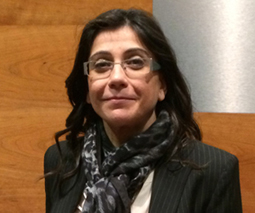
Rabia Djellouli is a Professor in the Department of Mathematics at California State University Northridge (CSUN), where she has been since 2003. Previously, she held academic positions at institutions including the University of Colorado Boulder (1996–2003) and Tunisian universities such as Ecole Supérieure des Télécommunications de Tunisie (1995–1996). She earned her Ph.D. in Mathematics from the University of Paris-XI and École Polytechnique (France) in 1988, following degrees from the University of Paris-Sud and University of Algiers. Research Interests focus on wave propagation phenomena, inverse problems, computational mechanics, and biomedical engineering. Her work spans mathematical physics, numerical analysis, and bio-mathematics, with applications in optical fibers, fluid-structure interactions, and medical imaging. Her publications emphasize solutions to acoustic and elastoacoustic scattering problems, numerical methods for partial differential equations, and applications in biomedical engineering such as fibrous capsule growth modeling. She has secured grants from NSF and industry partners like Medtronic, supporting research in computational methods and medical device innovation. Service & Mentoring includes roles as Department Graduate Committee Chair, organizer of student research symposia, and mentor for over 20 undergraduate and graduate students. She has led NSF-funded programs like PUMP (Preparing Undergraduates through Mentoring toward Ph.D.s), fostering student research in mathematics. Affiliations include the College of Science and Mathematics at CSUN, and collaborations with institutions like INRIA (France) through international research initiatives.
Sophia Haussener is an Associate Professor at the Laboratory of Renewable Energy Science and Engineering (LRESE) within the School of Engineering at École polytechnique fédérale de Lausanne (EPFL). She contributes to research in Renewable Energy , Electrochemistry , and Materials Science , with a focus on solar energy conversion and CO2 reduction technologies. Her leadership extends to academic committees such as the Commission des prix de la recherche and Academic Strategy Committee . Her research group explores Multiphysics Modeling , CO2 Electrolysis , and Photoelectrochemical Systems , emphasizing scalability and industrial integration. Recent publications highlight advancements in Gas Diffusion Electrodes , Photostability , and Membrane Engineering , reflecting her interdisciplinary approach to renewable energy solutions. Scientific Awards Yellott Award (2024): ASME Solar Energy Division Cell Press’s 50 Scientists that Inspire (2024) Raymond Viskanta Award (2019): Elsevier & Journal of Quantitative Spectroscopy ABB Forschungspreis (2012) ETH Medal (2011) Dimitris N. Chorafas Prize (2011) PhD Students Agarwal Venu Gopal Delgado Díaz William Orlando Lorenzutti Francesca Mora-Monteros Jérémy Raphaël van Rooij Sarah and 21 others Article Trends Focus on CO2 Electrolysis , Photoelectrochemical Systems , and Multiphysics Modeling Key themes: Gas Diffusion , Membrane Technology , Photostability , and Industrial Integration
Dr. Vasanthan Devaraj is a PostDoc Group Leader at the Institute for Photonic Quantum Systems (PhoQS) in the University of Paderborn , leading the Ultrafast Nanophotonics group. His research focuses on plasmonics, 3D printing of nanostructured materials, biosensor development, and quantum emitter engineering. He specializes in self-assembly techniques, metallic nanostructure fabrication, and biohybrid systems. Research Interests : Plasmonic nanostructures and their optical properties 3D printing of metallic and biomaterial nanoarchitectures Smart biosensors for healthcare, environment, and agriculture Quantum dots and photonic devices Bio-inspired self-assembly using M13 bacteriophage Energy-efficient nanomaterials for solar cells Notable Contributions : Pioneered 3D printing of multi-material plasmonic nanostructures with sub-100 nm resolution. Developed biosensors for lung cancer detection, environmental pollutants, and fruit freshness analysis. Optimized plasmonic nanocavities with sub-5 nm gaps for enhanced light-matter interactions. Recent Work Trends : His articles emphasize plasmonic dimer assembly , 3D-printed metallic nanostructures , and biohybrid systems . Key themes include self-assembly optimization, plasmonic field enhancement, and biomaterial integration for diverse applications. Labs & Teams : Leads the Ultrafast Nanophotonics Group , collaborating on projects involving photonics, quantum materials, and bio-inspired engineering.
Leo Lukasse is a researcher at Wageningen University & Research , specializing in Post Harvest Technology . With over 108 research outputs and 7 activities documented, his work focuses on optimizing refrigerated transport systems for perishable goods.
Prof. Dr. Britta Nestler serves as a Research Unit Chair at the Institute of Nanotechnology (INT) within the Karlsruhe Institute of Technology (KIT), Germany. Leading the Microstructure Simulations research group (INT-MSS), she focuses on computational modeling of mechanical and microstructural properties in materials, with significant contributions to phase-field methodologies for microstructure evolution and materials design. Her research spans computational materials science, phase-field modeling, and multiphysics simulations for energy storage systems. Key interests include chemo-mechanical coupling in multiphase systems, solid-state dewetting phenomena, battery electrode optimization, and microstructure-property relationships in polycrystalline materials. She integrates machine learning and data management frameworks to advance virtual materials design, particularly for post-lithium battery technologies. Recent publications reveal a strong emphasis on phase-field applications for energy materials, with 15+ 2025 articles addressing battery electrode design, structural optimization of porous materials, and multiphysics coupling in electro-chemo-mechanical systems. Her work bridges fundamental thermodynamics with industrial applications, notably in the POLiS Cluster of Excellence for post-lithium storage. Prof. Nestler actively shapes the field through leadership in the GAMM Workshop on phase-field modeling and the Materials/Microstructure Modeling conference. As part of KIT's Institute of Nanotechnology, her INT-MSS group collaborates on virtual materials design initiatives within the MaTeLiS Focus Field and NFDI4Ing research data infrastructure, driving digitalization in engineering sciences.
Antonio Calà Lesina is a Full Professor in Computational Photonics at the Leibniz University Hannover , leading research at the Hannover Centre for Optical Technologies . His academic journey includes a PhD in Information and Communication Technology from the University of Trento (2013), followed by postdoctoral and associate professor roles at the University of Ottawa (2013–2020). His research spans Nanophotonics , Metamaterials , and Plasmonics , focusing on inverse design, topology optimization, and dynamic control of optical systems via multiphysics simulations. Education : PhD (University of Trento, 2013); MSc in Telecommunications Engineering (University of Catania); BSc in Electronics Engineering (University of Catania) Current Position : Full Professor (Leibniz University Hannover, 2020–2025) His work explores Light-Matter Interactions and Nanostructures , with recent publications on anapole states , multiresonant metasurfaces , and hyperbolic metamaterials . He employs Finite-Difference Time-Domain (FDTD) simulations and deep learning for inverse design in nanophotonics. Collaborations include institutions like the University of Ottawa and research centers in Europe, aligning with the EULiST alliance . Despite no explicit awards mentioned, his contributions to optical beam steering , nonlinear metasurfaces , and machine learning integration highlight his impact in the field.
Kaiyan Yu is an Associate Professor in the Mechanical Engineering Department at Binghamton University. She holds a BS from Nankai University (2010) and a PhD from Rutgers University (2017). Her research focuses on autonomous robotic systems, mechatronics, and motion control with applications to nano/micro-particle manipulation, biomedical systems, and Lab-on-a-Chip technologies. She leads the Automated Control Systems and Robotics Lab and has been recognized with an NSF CAREER Award for her work in nanobot research. Education: BS in Intelligent Science and Technology, Nankai University (2010) PhD in Mechanical and Aerospace Engineering, Rutgers University (2017) Research Interests: Autonomous robotic systems Electrophoresis-based micro/nano manipulation Dynamic systems and control Motion planning and control Biomedical engineering applications Her publications emphasize nanowire control in fluid suspensions, adaptive control strategies, and robotic systems for civil infrastructure. Recent work includes physics-informed neural networks for vehicle dynamics and ensemble control for nanomanipulation. She actively collaborates on NSF-funded projects and has pioneered techniques for 3D pose identification of micro/nanoparticles under bright-field microscopy. Awards: NSF CAREER Award (2024) Her lab develops advanced control systems for biomedical and industrial applications, focusing on precision manipulation at micro/nano scales. Current projects involve autonomous crack-filling robots for infrastructure maintenance and novel electrophoresis-based microfluidic platforms.
Dr. Yeong Shiong Chiew is a Senior Lecturer at Monash University Malaysia's Malaysia School of Engineering. He holds a PhD in Mechanical Engineering from the University of Canterbury (New Zealand), specializing in model-based mechanical ventilation for respiratory failure patients. His research focuses on biomedical engineering, physiological modeling, and clinical trial design, with a strong emphasis on AI applications in healthcare and mechanical system control. He also serves as an Adjunct Senior Fellow at the University of Canterbury's Mechanical Engineering Department and holds leadership roles in global engineering organizations like the International Federation of Automatic Control (IFAC). Education: PhD in Mechanical Engineering, University of Canterbury (2013) MEng in Mechanical Engineering, Universiti Teknologi Malaysia (2010) BEng in Mechanical-Automotive Engineering, Universiti Teknologi Malaysia (2007) Research Interests: Model-based mechanical ventilation protocols AI-driven healthcare solutions Respiratory mechanics modeling Clinical decision support systems Medical device development Virtual reality in healthcare Recent Projects: Clinical Application of Respiratory Models (CARE Study) – evaluating ventilator-patient interaction AI-enhanced breast cancer risk modeling Real-time palm fruit ripeness detection via UAV High-resolution single-pixel imaging using GANs Awards: RINENG Young Investigator Award (2023) MUPA Supervisor of the Year (2020) PVC Excellence in Education Award (2019 Team) ITEX Gold Medal (2021) Grants & Supervision: Accepting PhD students in mechanical ventilation modeling, AI healthcare, and physiological systems Principal investigator on multiple interdisciplinary grants totaling over MYR 5M Supervised projects in ICU monitoring systems and medical device prototyping Labs & Teams: Leading the Model-Based Clinical Ventilation Research Group at Monash Malaysia Collaborator with the University of Liege's Biomedical Engineering Lab Part of the IFAC Technical Committee on Biological & Medical Systems
Yeoh Chin Vern is a Lecturer at the Malaysia School of Engineering, Monash University. He holds a PhD in Mechanical Engineering (2022) focusing on Direct Numerical Simulation, Study, and Quantification of Fractal Grid-Generated Turbulent Flows . His research expertise spans Computational Fluid Dynamics (CFD), Lattice Boltzmann methods, turbulent flows, and multiphysical modeling. He has contributed to projects on graphene-enhanced electronics cooling and ion-exchange membrane dynamics. His research interests include turbulence modeling, nonlinear dynamics, and applications in microfluidics and heat transfer. Notable work involves fractal grid-generated turbulence optimization, pressure wave dynamics in CFD, and surface roughness effects in microchannel flows. Recent publications (2020–2025) highlight advancements in lattice Boltzmann simulations, Reynolds stress modeling, and fractal grid configurations. He collaborates on interdisciplinary projects addressing sustainable cooling solutions and ion partitioning mechanisms. Yeoh has been a Chief Investigator (CI) on two research projects: Graphene Enhanced Devices for Electronics Cooling (2024–2026) and Decoding the Role of Valency in Multi-valent Ion Partitioning through Ion-Exchange Membranes (2023–2026).
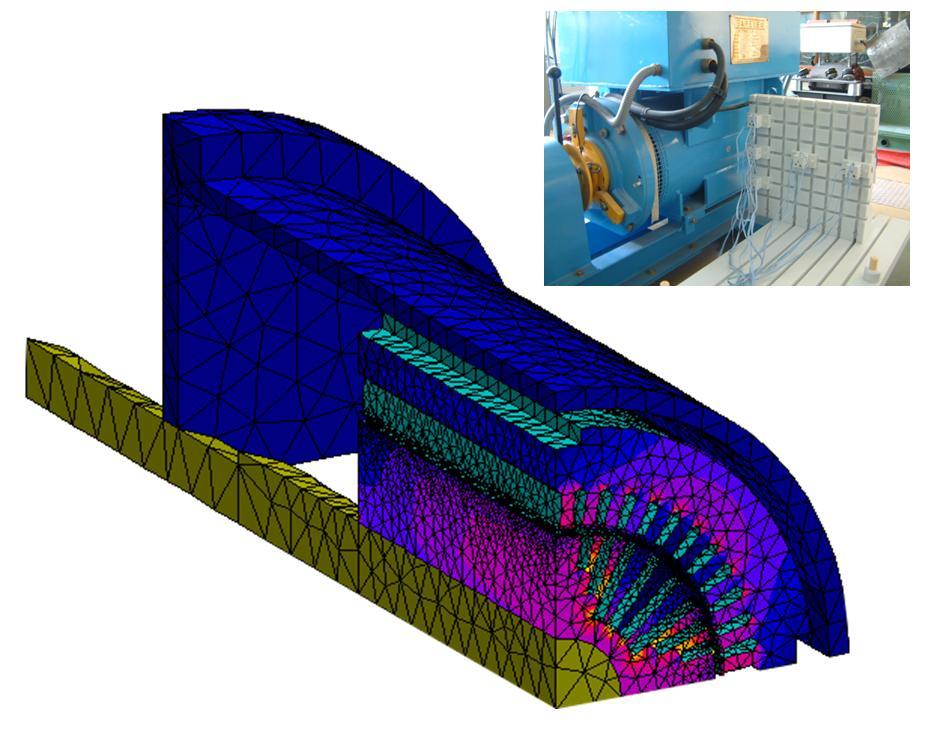
Olivier Chadebec is a CNRS Research Director at G2Elab, the power electrical engineering research department of Université Grenoble Alpes in France. He leads the 'Models, Methods and Methodologies Applied to Electrical Engineering' research team (MAGE group) and the ERT-CMF (Low Magnetic Fields Technological Research Group) at G2Elab. He was involved in creating the International Laboratory 'James Clerk Maxwell' in collaboration with the University of Lyon and Brazilian universities. Chadebec received his engineer and Ph.D. degrees in Electrical Engineering from the Grenoble Institute of Technology in 1997 and 2001. After a post-doctorate with Schneider Electric, he joined CNRS in 2003 as a Research Associate. He received his 'Habilitation à Diriger les Recherches' in 2011 and became a Research Director in 2015. He also spent a year in 2012 as a research associate at the Federal University of Santa Catarina in Brazil. His research focuses on computational electromagnetics applied to electrical energy conversion, developing numerical models, algorithms, and simulation tools for electromagnetic device analysis. His key research areas include finite element methods, integral methods, inverse problems, and low magnetic field metrology. He actively contributes to the development of the MIPSE platform commercialized by Altair Engineering via Flux software. His recent publications (2023-2025) show a strong focus on advanced computational methods for electromagnetic problems, including multiscale modeling, tensor compression techniques, FEM-BEM coupling for magnetoelectric effects, and optimization algorithms for electrical machine design and fuel cell diagnostics. His work demonstrates a consistent progression toward more efficient computational approaches for complex electromagnetic problems. Chadebec has supervised over 30 PhD students since 2006, with thesis topics spanning computational electromagnetics, inverse problems, fuel cell diagnostics, and submarine magnetic signature analysis. His research has significant applications in electrical machine design, fuel cell technology, submarine degaussing, and electromagnetic compatibility. He leads the MAGE research team and the ERT-CMF (Low Magnetic Fields Technological Research Group) at G2Elab, and has been instrumental in developing the MIPSE simulation platform used in industry through collaboration with Altair Engineering.
Yu-Chao (Joe) Shih is a Research Fellow at the Materials Processing and Applications Development (MPAD) Center, University of Alabama at Birmingham (UAB). He works under Dr. Selvum Pillay and Dr. Haibin Ning in the advanced composites group, focusing on high-performance fiber-reinforced plastic (FRP) composites and additive manufacturing. His research emphasizes validating novel electromechanical designs under multiphysics interactions using analytical and numerical methods. Research interests include composite materials, additive manufacturing techniques, mechanical testing, finite element analysis, and biomedical applications. His work bridges material science with engineering challenges in infrastructure protection and medical devices. Notable articles highlight advancements in composite mechanical behaviors, additive manufacturing applications, and biomedical tools like portable MRI phantoms. While no formal awards are listed, his contributions to composites and regenerative medicine demonstrate impactful research trends. Shih collaborates within the MPAD Center, contributing to interdisciplinary projects. No advising roles or grants are explicitly mentioned, though his technical expertise aligns with cutting-edge material and biomedical innovations.
John Anthony Salvatore is an Associate Professor in the Department of Molecular Sciences and Nanosystems at Ca' Foscari University of Venice. He holds a PhD in Electrical Engineering from École Polytechnique Fédérale de Lausanne (2011) and a Master's in Micro and Nanotechnology from Polytechnic of Turin (2006). His research focuses on flexible and biodegradable electronics, multiphysics simulations for power modules, and energy-efficient semiconductor systems. He has contributed to over 60 publications and actively participates in editorial roles for journals like Frontiers in Electronics and Micro and Nanosystems . His current grants include projects on biodegradable packaging and energy-efficient wide-bandgap semiconductors. Research interests include biodegradable electronics, stretchable sensor systems, and power electronics packaging. His work bridges material science, semiconductor engineering, and biomedical applications. Notable contributions include the development of flexible perovskite LEDs and sweat-based clinical biomarkers. He leads the RDRL laboratory, emphasizing interdisciplinary collaboration between molecular sciences and nanosystems. Professional experience includes roles as Senior Scientist at ABB Corporate Research (2017-2021), Postdoctoral Fellow at the University of Illinois (2013-2015), and Team Leader at ETH Zurich (2011-2017). He is fluent in Italian, English, and basic French.
Peter H. Aaen is a Reader in Microwave Semiconductor Device Modeling at the University of Surrey, with expertise in RF and microwave device modeling and characterization. His work focuses on developing advanced methodologies for high-power and high-frequency electronic devices, with applications in telecommunications and quantum technologies. Dr. Aaen received his B.A.Sc. in Engineering Science and M.A.Sc. in Electrical Engineering from the University of Toronto, Canada, and his Ph.D. in Electrical Engineering from Arizona State University, USA, in 1995, 1997, and 2005 respectively. Prior to joining the University of Surrey, he was the manager of the RF Modeling and Measurement Technology team at Freescale Semiconductor Inc (formerly Motorola Inc.), bringing significant industry experience to his academic work. Dr. Aaen's research spans several critical areas in microwave engineering, with a particular emphasis on developing multi-physics based modeling methodologies for high-power and high-frequency electronic devices. His expertise includes calibration techniques for microwave measurements, package modeling, development of compact models for microwave power transistors and RFICs, and efficient electromagnetic simulation methodologies for complex packaged environments. He has made significant contributions to understanding frequency dispersion in RF LDMOS transistors, electro-thermal modeling, and the development of measurement techniques for extreme impedance devices. His publication record demonstrates a clear progression from fundamental device modeling to advanced measurement techniques and applications in next-generation communications systems. Recent work has focused on multiphysics measurements, electro-optic field imaging, and the application of nanowire technologies to microwave switches, reflecting the evolving challenges in 5G and beyond communications infrastructure. Dr. Aaen is a Senior Member of the IEEE and active in several technical committees including the IEEE Technical Committee (MTT-1) on Computer-Aided Design, the technical program committee of the IEEE Conference on Electrical Performance of Electronic Packaging and Systems (EPEPS), and the executive committee of the Automatic RF Techniques Group (ARFTG). Dr. Aaen has supervised numerous PhD students whose research has advanced the field of microwave engineering, particularly in areas related to measurement uncertainty, multiphysics characterization of high-power transistors, and nanoscale device integration. His collaborative work spans multiple institutions and has resulted in significant advancements in understanding device behavior under complex operating conditions. His laboratory work focuses on developing novel measurement techniques that combine electro-optic systems with nonlinear vector network analyzers and load-pull measurement systems, enabling unprecedented visualization of electromagnetic field distributions within operating transistors. This work has led to breakthroughs in understanding oscillation mechanisms and thermal behavior in high-power devices.
Estefanía Peña is a Full Professor (Catedrática de Universidad) at the University of Zaragoza's School of Engineering and Architecture, Department of Mechanical Engineering. She leads research in computational biomechanics with a focus on vascular tissues and medical device interactions. Key roles include coordination of the Mechanical, Naval and Aerospace Engineering Subarea for Spain's Ministry of Science (2022–present) and Deputy Director of the Aragón Institute of Engineering Research (I3A, 2015–2019). Educational Background: Ph.D. Mechanical Engineering, University of Zaragoza (2004) M.Sc. Mechanical Engineering, University of Zaragoza (2000) Research Interests: Computational mechanics of soft biological tissues, multiscale modeling of inelastic effects, atherosclerosis progression, drug delivery systems, and experimental biomechanics. Her work bridges computational models with clinical applications, particularly in cardiovascular diseases and medical devices. Notable Achievements: Recipient of major awards including the Spanish ECCOMAS Best PhD Thesis Award (2005) and Young Research Medal from the Royal Society of Engineering (2015). Supervised over 25 PhD and M.Eng. students, focusing on atherosclerosis mechanics, drug-eluting stents, and fascia biomechanics. Grants & Collaborations: Active in EU and national projects, collaborating with institutions like TU Dortmund, Stanford University, and KTH Royal Institute of Technology. Research emphasizes translational medicine and computational modeling. Labs/Teams: Leads the Biomedical Engineering Division at I3A, part of CIBER-BBN (Spanish Biomedical Engineering Network). Her lab integrates experimental and numerical methods to study vascular mechanics and tissue engineering.