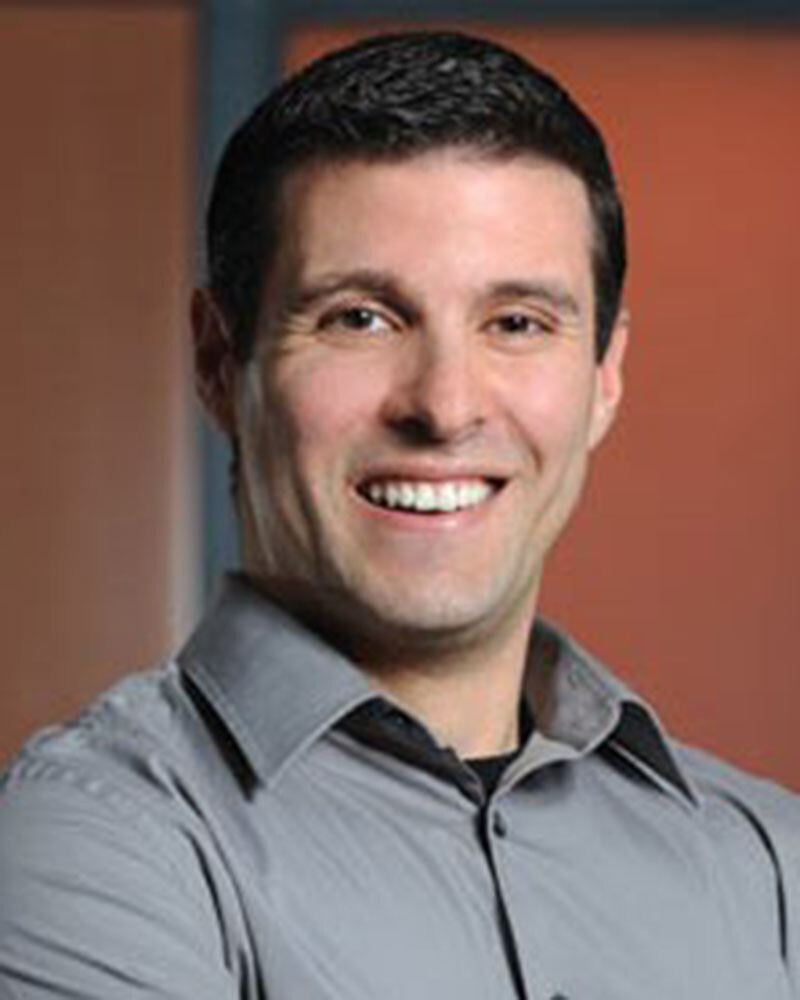
Dr. Igor V. Pivkin is a Full Professor at the Institute of Computing within the Faculty of Informatics at the Università della Svizzera italiana (USI) in Lugano, Switzerland. His academic journey includes degrees from Novosibirsk State University (B.Sc./M.Sc. Mathematics), Brown University (M.Sc. Computer Science and Ph.D. Applied Mathematics), and postdoctoral research at MIT's Department of Materials Science and Engineering. His research focuses on multiscale/multiphysics modeling , numerical methods , and large-scale simulations of biological and physical systems. Key areas include biophysics, cellular/molecular biomechanics, stochastic modeling, and coarse-grained molecular simulations. He leverages high-performance computing (HPC) and particle-based methods to address complex biological phenomena. His work spans diverse applications, from understanding cellular mechanosensitivity and biofilm engineering to modeling cancer cell behavior and red blood cell dynamics in the spleen. His contributions bridge computational science, biotechnology, and biomedical research. He has published extensively in top-tier journals, with recent work advancing automated biofilm analysis, deep learning for microbial classification, and systems biology approaches to metal bioleaching. His lab collaborates on interdisciplinary projects, emphasizing computational innovation for real-world biological challenges.
Hyosang Lee is an Assistant Professor in the Robotics Section of the Mechanical Engineering Department at Eindhoven University of Technology (TU/e). He holds a PhD from KAIST and has held research positions at the Max Planck Institute and University of Stuttgart. His work focuses on tactile sensing technologies, including artificial skin development, soft robotics, and integration of sensory systems with AI. Bachelor's: Mechanical Engineering, Korea University Master's: Robotics and Mechanical Engineering (double major) PhD: Mechanical Engineering, KAIST (2017) Research interests span tactile sensor design, electrical impedance tomography (EIT), and human-robot interaction. His group emphasizes creating scalable, flexible tactile systems for robots. Recent work includes air pressure sensing for force estimation and biomimetic skin materials. Publications highlight innovations in multi-directional force sensing, soft component technologies, and haptic interfaces for autism therapy. He teaches 'Dynamics and Control of Robotic Systems' and serves on the editorial board of npj Robotics . No formal student advisees are listed, though his lab, the Tactile Sensing and Robotic Skin Group , likely involves graduate researchers. His research contributes to UN Sustainable Development Goals related to health and technology.
Yan Delaure is Associate Professor of Fluid Mechanics at Dublin City University's School of Mechanical and Manufacturing Engineering and Deputy Director of the DCU Water Institute. His research focuses on multiphase flows, environmental hydraulics, and computational fluid dynamics applications in wastewater treatment and marine systems. Research includes microbubble dynamics for aeration, fluid-structure interactions in deformable systems, and biomimetic antifouling solutions. Recent publications explore advanced simulation methods for turbulent flows and additive manufacturing process optimization.
Professor Andrew Jackson of Newcastle University is a leading researcher in neuroscience and neuroengineering, focusing on neural interfaces, optogenetics, and epilepsy. His work spans brain-computer interfaces, spinal cord stimulation, and sleep-dependent memory processes. Key research areas: closed-loop optogenetic systems, motor cortex dynamics, cerebellar-neocortical communication, and seizure pathway analysis. Collaborations with experts like Dr. Boubker Zaaimi, Professor Yujiang Wang, and Dr. Wei Xu. Develops implantable low-power platforms for real-time neural monitoring and stimulation. His recent publications highlight advancements in neuroprosthetics for motor recovery post-stroke/spinal injury, cortical chloride homeostasis in epilepsy, and mechanisms of brain self-regulation during movement and sleep. Technologies pioneered include flexible neural electrodes, temperature self-monitoring optoelectronics, and wearable bioelectrical signal systems. His work integrates computational neuroscience with clinical applications in motor disorders and epilepsy.
Dr. Michael Stevens is a Senior Lecturer at University of New South Wales (UNSW) Canberra , where he focuses on advanced manufacturing and biomedical device control systems . His work bridges digital manufacturing for SMEs with smart artificial heart technologies , emphasizing industry collaboration and translational research. Specializes in physiological control systems for rotary blood pumps Develops unobtrusive fall detection systems for dementia patients Leads international projects on total artificial heart development Education : B.Eng (Medical - First Class Honours), Queensland University of Technology (2010) PhD in Physiological Control for Biventricular Assist Devices, University of Queensland (2014) Research Trends show consistent focus on: Machine learning for biomedical diagnostics (2018–2025) mmWave radar and thermal sensors in patient monitoring (2021–2024) Computational fluid dynamics in artificial heart modeling (2016–2024) Physiological control algorithms for rotary blood pumps (2011–2025) Scientific Awards : UNSW Scientia Education Award (2021) for contextual teaching Heart Foundation Runner-up for "Smart Artificial Hearts" pitch (2021) ARC PGC Supervisor Award (2017) for mentoring Grants & Supervision : Holds over $6 million in competitive funding including MRFF and ARC grants. Currently supervises 4 PhD students while maintaining industry partnerships with VitalCare and BiVACOR. Labs & Facilities : Works across UNSW Engineering labs and Graduate School of Biomedical Engineering platforms, including mock circulation loops and high-performance computing clusters for CFD simulations.
Pooya Davari is a Professor and Head of the Section for Applied Power Electronic Systems at Aalborg University , Denmark. He leads the EMI/EMC in Power Electronics Research Group and serves as Vice Chair of the Energy Efficiency Mission. His research focuses on electromagnetic interference (EMI) and harmonic mitigation in power electronic systems, with over 200 publications and significant contributions to renewable energy integration. Education: B.Sc. and M.Sc. in Electronic Engineering (2004, 2008), Ph.D. in Power Electronics from Queensland University of Technology (2013) Prior Roles: Lecturer at QUT (2013–2014), Postdoc at AAU (2014) Research Interests: Harmonic and EMI analysis in grid-tied converters High power density converter design Signal processing for converter modeling Reliability of power electronic systems Article Trends: Recent work emphasizes EMI/EMC in renewable energy systems, wide bandgap semiconductors (SiC/GaN), and reliability modeling for EVs and hydrogen production via electrolysis. Sub-fields include converter topologies, grid integration challenges, and AI-driven diagnostics. Scientific Awards: Equinor 2022 Prize (Denmark’s oldest engineering award) IEEE EMC Society Young Professional Award (2020) World’s Top 2% Highly Cited Scientist (Stanford, 2021–2025) Multiple best paper awards (IEEE, Applied Sciences, etc.) Grants & Editorial Roles: Recipient of grants from Innovation Fund Denmark (Supra-EMC project), Horizon Europe (SOLARIS), and industry partnerships. Serves as Area Editor for IEEE Transactions on Transportation Electrification , Associate Editor for IEEE Transactions on Power Electronics , and Editor-in-Chief of Circuit World Journal (2020–2025). Labs & Standards: Coordinator of the EMC Laboratory at Aalborg University. Member of IEC standardization Working Groups 6 and 8 (TC77A), focusing on EMC strategies for power grids.
Thijs Defraeye is a Senior Scientist at Empa (Swiss Federal Laboratories for Materials Science and Technology) and Adjunct Professor at Dalhousie University. He holds a PhD in Building Physics from KU Leuven (2011) and a Master's in Civil Engineering (2006). His work focuses on optimizing food supply chains through multiphysics simulations and digital twins, addressing challenges in refrigerated transport, postharvest quality preservation, and energy-efficient food processing. He leads the SimBioSys group, developing solutions for perishable goods logistics and electrohydrodynamic technologies. Research interests include: Biophysics of food systems Digital twin applications in agriculture Electrohydrodynamic drying Thermal management in cold chains Sustainable food technologies Recent work emphasizes reducing food loss through physics-based modeling of refrigerated containers, ventilated packaging optimization, and scalable evaporative cooling systems. His studies bridge engineering principles with biological processes, aiming to enhance global food security and environmental sustainability.
Christopher Bailey is a Professor of Advanced Semiconductor Packaging and Director of the Centre for Advanced Semiconductor Packaging at Arizona State University (ASU). He previously served as Professor of Computational Mechanics & Reliability and Associate Dean for Research at the University of Greenwich, UK. At ASU, he leads research on advanced semiconductor packaging, including roles as Principal Investigator (PI) and Co-Investigator (Co-I) on major projects such as the SRC-funded Thermo-Mechanical Modelling and US Chips Act initiatives (e.g., SWAP-Hub, SHIELD, ITSI). His research focuses on semiconductor packaging reliability, thermal management, co-design methodologies, and multiphysics modeling. Education: MBA (Technology Management), Open University, UK PhD, Thames Polytechnic, UK Research Interests: Advanced Semiconductor Packaging Thermal Management Solutions Co-Design and Multiphysics Modeling Reliability of Electronic Components His work integrates computational mechanics, materials science, and engineering to address challenges in high-reliability electronics. Recent projects emphasize predictive modeling for semiconductor packaging failures under thermal-mechanical stress. Awards: IEEE Region 8 Europe Award (2024) IEEE David Feldman Award (2022) Visiting Professorships at IIT Kharagpur (2018/2022) and Hong Kong (2018) Service & Leadership: Former President of IEEE Electronics Packaging Society (2020–2021) Associate Editor for IEEE Transactions on Components, Packaging, and Manufacturing Technology Conference Leadership (e.g., Program Chair for IEEE PAINE 2024) He has secured over $40M in research funding and authored 400+ archival papers, with expertise spanning industry collaborations (e.g., BAe Systems, Rolls Royce) and government advisory roles (EPSRC Peer Review College, UK Research Excellence Framework).
Rainald Loehner is a Distinguished Professor of Fluid Dynamics at George Mason University's Center for Computational Fluid Dynamics. Since 2003, he has led the Center for Computational Fluid Dynamics at George Mason University. He is currently a Hans Fischer Senior Fellow at the Technical University of Munich's Institute for Advanced Study (TUM-IAS) for 2023, hosted by Professors Kai-Uwe Bletzinger and Roland Wüchner in the 'Adjoint-Based System Identification of Large-Scale Structures' Focus Group. Loehner received his Diplom Ingenieur (Maschinenbau) degree from the Technical University of Braunschweig, and his PhD and a DSc in civil engineering from the University College of Swansea, Wales. After teaching at Swansea for a year, he worked at the Naval Research Laboratory in Washington, DC, followed by a research professorship at George Washington University. He joined George Mason University as an associate professor and was promoted to full professor in 1995 and distinguished professor in 2004. With over 35 years of experience, Professor Loehner's research spans the complete pipeline of numerical solvers and simulation tools. His expertise includes pre-processing, grid generation, numerical methods, field solvers, parallel computing, adaptive mesh refinement, fluid-structure interaction, shape optimization, system identification, and computational crowd dynamics. His current work focuses on developing advanced field solvers for compressible and incompressible flows, acoustics, electromagnetic wave propagation, heat and mass transfer, structural mechanics, and fluid-structure interaction. Key application areas include blast mitigation, ship hydrodynamics, blood flow, contaminant transport, and pedestrian safety. Loehner's recent research output (2020-2024) shows a strong trend toward digital twin technology and adjoint-based methods for structural analysis and optimization. His publications focus on high-fidelity digital twins for detecting structural weaknesses, risk assessment in engineering systems, and optimization of sensor placement. His work bridges computational mechanics with machine learning approaches, particularly in system identification and inverse problems, demonstrating how computational methods can solve complex real-world engineering challenges. 2020: Ranked #15119 in the Stanford List of Most Influential Scientists of the World; #8 in Aerospace and Aeronautics 2010: Distinguished International Career Award, Argentine Association of Computational Mechanics 2008: Fellow, International Association for Computational Mechanics 2006: Associate Fellow, AIAA 2005: Honorary Professor, University of Wales Swansea 2005: Advisory Professor, Shanghai Jiao Tong University 2004: Distinguished Professor of Fluid Dynamics, George Mason University 1999: Computational Mechanics Achievements Award, Japan Society of Mechanical Engineering 1993: Doctor of Science in Civil Engineering, University College of Swansea 1979-1983: Studienstiftung des Deutschen Volkes (Top 1% of German Students) Professor Loehner has mentored numerous students through his work at George Mason University and has supervised research in computational fluid dynamics, structural mechanics, and related fields. His research has been supported by various grants from government agencies and industry partners, enabling the development of advanced simulation tools applied in aerodynamics, hydrodynamics, shock-structure interaction, and medical applications. His codes and methods have been widely adopted in industry and academia for applications ranging from aircraft and ship design to medical simulations and urban pathogen transmission modeling. Loehner leads the Center for Computational Fluid Dynamics at George Mason University, which focuses on developing cutting-edge computational methods for fluid dynamics and related multiphysics problems. The center works on strategic application areas including blast mitigation, ship hydrodynamics, blood flow simulation, and pedestrian movement modeling. As a TUM-IAS Fellow, he collaborates with the Chair of Computational Modeling and Simulation at TUM on adjoint-based system identification of large-scale structures, bringing together expertise in computational mechanics and digital twin technology to address complex engineering challenges.
Dr. Srishti Banerji is an Assistant Professor in the Department of Civil and Environmental Engineering at Utah State University and Director of the Systems, Materials, and Structural Health (SMASH) Lab. She leads research on advanced construction materials, structural resilience under extreme loads (particularly fire), sustainable infrastructure, and structural health monitoring. Her group focuses on experimental testing, numerical simulations, and developing design solutions for civil infrastructure. Education: PhD in Civil (Structural) Engineering, Michigan State University (2021) MS in Civil (Structural) Engineering, Concordia University (2016) BS in Civil Engineering, National Institute of Technology Silchar (2013) Research Focus: Her work spans: 1) Characterization of high-performance/sustainable materials (e.g., UHPC, recycled glass pozzolan), 2) Structural behavior under fire exposure, 3) Integration of electric charging systems in concrete pavements, 4) Non-destructive testing and structural health monitoring, and 5) Retrofitting techniques for infrastructure strengthening. She employs machine learning, thermo-mechanical modeling, and full-scale experimentation. Publication Trends: Her 13+ journal articles primarily analyze fire resistance of concrete/timber structures, UHPC material properties at high temperatures, sensor-based infrastructure monitoring, and sustainable material development. Recent works increasingly incorporate machine learning and electrification concepts. Awards & Honors: Teacher of the Year (USU, 2025) ASCE ExCEEd Faculty Teaching Fellowship (2023) Top Cited Article Award, Fire and Materials Journal (2023) SHMII-11 Early Career Grant (2022) NSERC Scholarship (2015) Best Conference Paper (SEC 2016) Current Projects & Teams: She leads 5+ funded projects including fire performance of polymer concrete, self-healing concrete for bridges, and Utah-sourced UHPC development. Mentees include 3 PhD students (Abdullah Al Sarfin, Mehrnoosh Nazari, Mahmoud Ali) and alumni working on sustainable materials and additive manufacturing.
Gregory J. Wagner is an Associate Professor of Mechanical Engineering and Director of Graduate Studies at Northwestern University's McCormick School of Engineering. His research focuses on developing computational methods for multi-scale and multi-physics problems in additive manufacturing, fluid dynamics, and heat transfer. He leads the Wagner Research Group, which specializes in high-performance computing tools for complex engineering simulations. Education includes a Ph.D., M.S., and B.S. in Mechanical Engineering from Northwestern University and Boston University. His work integrates machine learning with traditional computational methods to model material behavior, microstructure evolution, and process-structure-property relationships in advanced manufacturing. Notable contributions include the GO-MELT framework for thermal simulations and the C-HiDeNN neural network approach for large-scale systems. Research interests span additive manufacturing process modeling, multiphysics coupling, and data-driven approaches for material design. Awards include the Bette and Neison Harris Chair in Teaching Excellence. Publications emphasize thermal modeling, phase change phenomena, and computational fluid dynamics innovations. His lab's work bridges mesoscopic and multiscale modeling, with applications in energy systems, biomedical devices, and environmental engineering. Collaborations focus on experimental validation and industrial-scale simulation challenges.
Annick Hubin is a Professor in the Department of Sustainable Materials Engineering at the Faculty of Engineering, Vrije Universiteit Brussel. She serves in additional leadership roles including R&D Central management and as Head of a Research Group. Her work focuses on electrochemical processes with applications in materials engineering, corrosion science, and sustainable technologies. Her research interests span electrochemical kinetics, thermodynamics of aqueous solutions, electrode processes, electroreduction of metals and alloys (plating, extraction, refining, recycling), and environmental electrochemistry. She specializes in investigating basic electrochemical reactions using techniques such as potentiometric titrations, voltammetry, chronoamperometry, chronopotentiometry, and impedance measurements. Her work also examines mass transport in electrochemical processes and the action of organic inhibitors for metal deposition or dissolution reactions. Her recent publications reveal a strong focus on corrosion science, battery technologies, and electrochemical materials. There is a clear trend toward applying advanced characterization techniques and machine learning to solve complex problems in electrochemistry and materials science. Her research increasingly addresses sustainability challenges, particularly in battery technology and low-carbon solutions. Professor Hubin actively supervises doctoral students and participates in numerous research projects, demonstrating her commitment to mentoring the next generation of scientists and engineers. She has secured substantial research funding for projects spanning fundamental and applied research in materials engineering. She leads or participates in several significant research initiatives including DESTINY (Low-carbon solutions network), fundamental research on sulfide-based all-solid-state batteries, and projects focused on atmospheric corrosion prediction using machine learning. Her laboratory appears to specialize in electrochemical characterization and materials development for energy applications.
Kristen Donnell is an Associate Professor in the Department of Electrical and Computer Engineering at Missouri University of Science and Technology (Missouri S&T) . She also serves as the Interim Director of the Center for Infrastructure Engineering Studies (CIES) and Director of the Microwave Sensing (mSense) Laboratory . She is recognized as the Woodard Associate Professor of Excellence . Education: Ph.D. in Electrical Engineering, Missouri University of Science and Technology (2010) M.S.E.E., University of Missouri-Rolla (2003) B.S.E.E., Colorado State University (2001) Research Interests: Dr. Donnell's research lies at the intersection of microwave engineering and nondestructive evaluation. Her work focuses on microwave and millimeter-wave nondestructive testing , active microwave thermography , frequency selective surfaces (FSS) , and materials characterization . She has developed novel techniques for structural health monitoring of infrastructure, particularly in carbon fiber reinforced composites and cement-based materials . Her lab explores embedded sensing , 3D-printed microwave structures , and real-time defect detection using advanced microwave imaging. Scientific Awards & Honors: Woodard Associate Professor of Excellence Senior Member of IEEE Member, IEEE Instrumentation and Measurement Society Administrative Committee Laboratory & Leadership: She leads the Microwave Sensing (mSense) Laboratory at Missouri S&T, which focuses on cutting-edge research in microwave sensing and imaging. Under her leadership, the lab has contributed significantly to nondestructive evaluation techniques using microwave and millimeter-wave technologies. She also oversees the Center for Infrastructure Engineering Studies (CIES) as interim director, guiding interdisciplinary research in infrastructure health monitoring. Professional Affiliations: IEEE Instrumentation and Measurement Society – Administrative Committee member since 2007 IEEE – Senior Member
Mahmoud Karimi is a Senior Lecturer at the School of Mechanical and Mechatronic Engineering , University of Technology Sydney (UTS), leading the Vibroacoustics Research Group within the Centre for Audio, Acoustics and Vibration. He holds a PhD in Mechanical Engineering from UNSW with specialization in vibration and acoustics, and has conducted visiting research at University of Cambridge, Technical University of Munich, and INSA Lyon. His research focuses on computational hydroacoustics, vibroacoustics, and uncertainty quantification in noise/vibration problems. Academic Leadership : Editor-in-Chief of Acoustics Australia since 2025 Research Income : Attracted $6M in competitive grants ($2M as Chief Investigator) since 2017 Technical Expertise : Specializes in acoustic black hole structures, flow-induced vibration modeling, and leak detection in buried pipelines Scientific Awards : Recipient of ARC DECRA Fellowship (DE190101412) 2019-2022 Research Trends : His 91+ publications demonstrate expertise in hybrid acoustic modeling techniques, sustainable hempcrete development, and vibration energy harvesting solutions with applications in mining, rail systems, and water infrastructure. International Collaborations: University of Cambridge (UK), Technical University of Munich (Germany), INSA Lyon (France) Teaching Portfolio: Advanced numerical methods, dynamics & control, and computational modeling at UTS
Caglar Oskay is the Cornelius Vanderbilt Professor of Engineering and Chair of the Department of Civil and Environmental Engineering at Vanderbilt University. He is also a Professor of Mechanical Engineering. His research focuses on multiscale computational modeling of material and structural systems under extreme conditions, with expertise in composite materials, failure mechanisms, and computational mechanics. Dr. Oskay earned his Ph.D. in Civil Engineering from Rensselaer Polytechnic Institute (2003) and has held academic roles there before joining Vanderbilt in 2006. He was honored as an ASME Fellow in 2017 and as a Chancellor Faculty Fellow in 2016. Key research areas include multiscale failure modeling, life prediction of heterogeneous materials, and computational methods for composites and multiphysics systems. His work integrates advanced simulation techniques with experimental validation, addressing challenges in infrastructure resilience, additive manufacturing defects, and quantum computing applications in engineering. Education: Ph.D., Civil Engineering, Rensselaer Polytechnic Institute (2003) M.S., Civil Engineering, Rensselaer Polytechnic Institute M.S., Applied Mathematics, Rensselaer Polytechnic Institute B.S., Civil Engineering, Middle East Technical University Recent research highlights include stochastic modeling of geotechnical infrastructure failures, quantum-enhanced finite element methods, and predictive analytics for additive manufacturing defects. He leads interdisciplinary efforts on backward erosion piping in flood protection systems and has secured grants for multiscale modeling of titanium alloys and composites. Awards: ASME Fellow (2017) Chancellor Faculty Fellow (2016) Advising and grants: Dr. Oskay’s grants include NSF-funded studies on backward erosion piping and quantum computing applications. His research group collaborates with industry partners on materials for aerospace and energy sectors, emphasizing computational tools for failure prediction and material design. His work bridges computational mechanics with practical engineering challenges, advancing methods for infrastructure resilience, advanced materials, and sustainable design through multiscale modeling innovations.