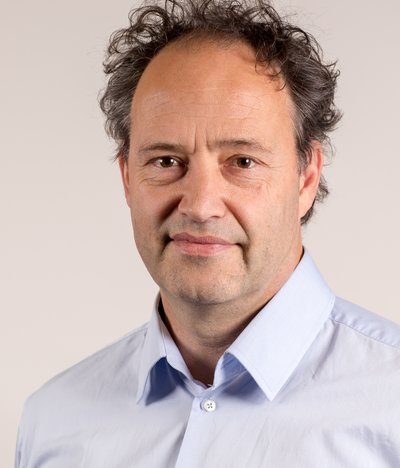
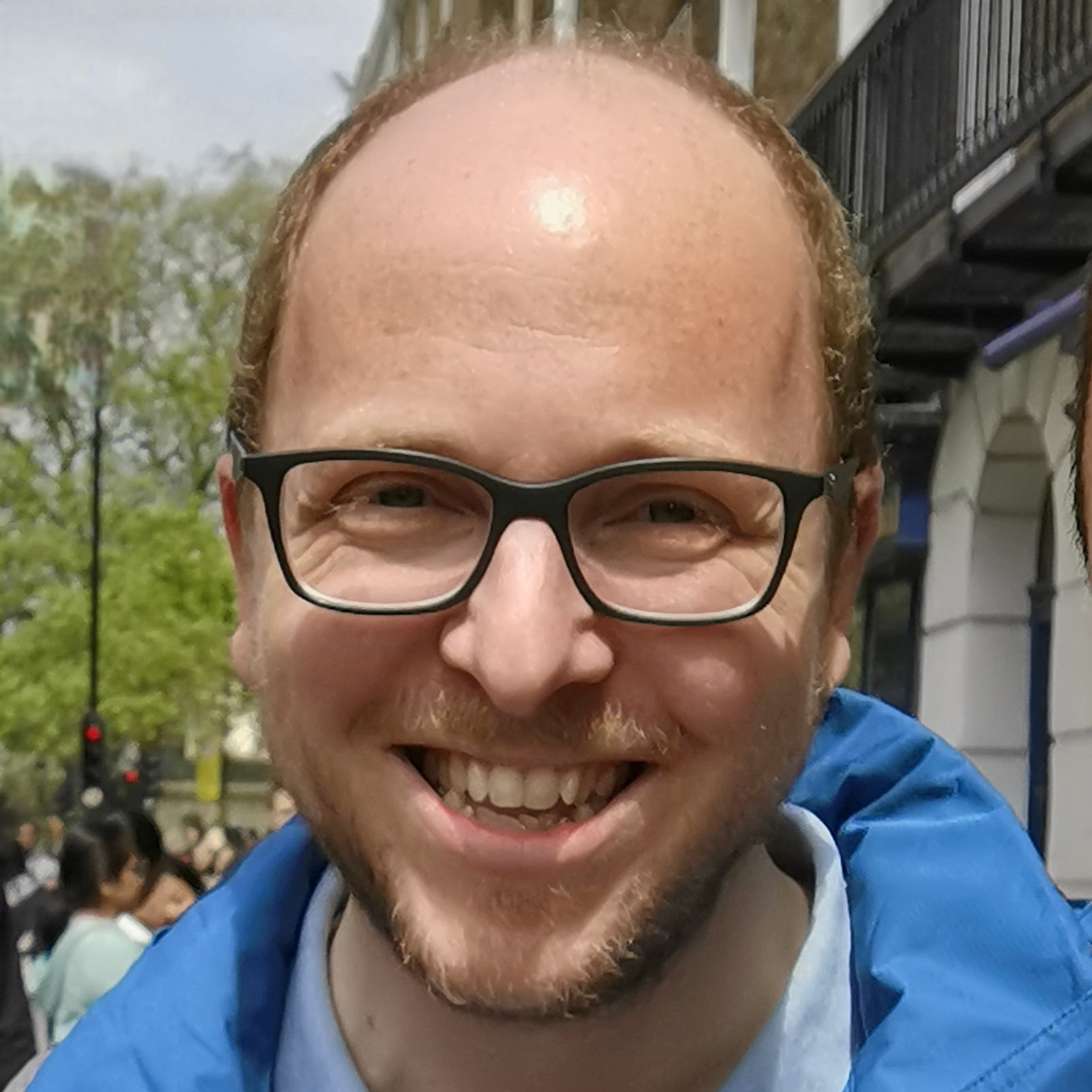
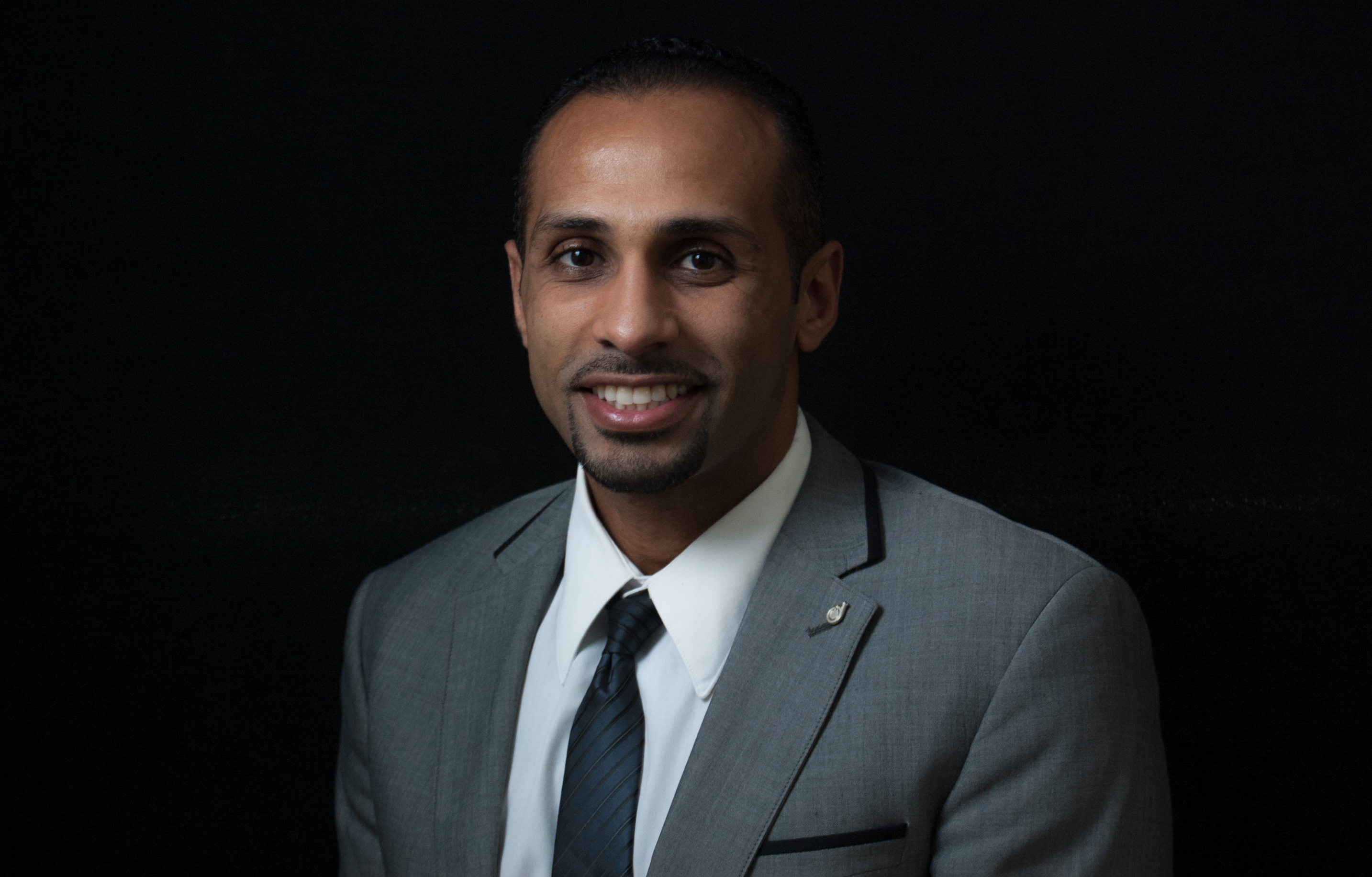
Leonardo Chamorro is a Professor in the Department of Mechanical Science and Engineering at the University of Illinois at Urbana-Champaign (UIUC), with affiliations in Earth Science and Environmental Change, Aerospace Engineering, and Civil and Environmental Engineering. His research focuses on fluid dynamics, renewable energy systems, and turbulence modeling. He holds a Ph.D. in Civil Engineering from the University of Minnesota (2010) and has held academic positions at UIUC since 2013, advancing to Full Professor in 2024. Chamorro's work spans experimental and theoretical investigations of wind and hydrokinetic energy, geophysical flows, and particle dynamics. His research group, the Renewable Energy & Turbulent Environment Group (RE-TE-G), explores topics like tidal flow multifractality, vortex dynamics, and bio-inspired robotics. Key achievements include Nature and Lab on a Chip cover articles, and contributions to turbulence modeling for tidal energy systems. He has received awards such as the Best Paper Award in Energies (2018) and recognition for pandemic-related research (2021). His editorial roles include associate editorships at journals like Journal of Renewable and Sustainable Energy and Frontiers in Energy Research . Chamorro has supervised numerous graduate students and postdocs, contributing to over 150 peer-reviewed publications since 2009.
Ali Mani is an Associate Professor of Mechanical Engineering at Stanford University and a faculty affiliate at the Institute for Computational and Mathematical Engineering. He earned his PhD in Mechanical Engineering from Stanford in 2009, following an M.S. (2004) and B.S. (2002) from Stanford and Sharif University of Technology, respectively. His research focuses on fluid mechanics, turbulence, and numerical simulations, with applications in multiphase flows, electrokinetic systems, and applied mathematics. His group develops high-fidelity simulation tools and reduced-order models to understand transport processes in turbulent and chaotic systems. Research interests include turbulence modeling, two-phase flow dynamics, and electrochemical transport. Recent work explores eddy viscosity operators, nonlocal transport phenomena, and computational methods for multiphase systems. The group's studies often bridge experimental validation and numerical analysis to improve predictive engineering models. Key contributions span electrokinetic transport in porous media, superhydrophobic surface slip effects, and phase field modeling. His lab’s work is supported by grants focusing on fluid dynamics, renewable energy systems, and advanced simulation frameworks.
Yuri Bazilevs is the E. Paul Sorensen Professor of Engineering at Brown University's School of Engineering and Co-Director of the Mechanics of Undersea Science and Engineering Center. His research focuses on computational mechanics, isogeometric analysis, fluid-structure interaction, and high-performance computing. Prior to Brown, he held positions at UC San Diego, where he advanced to Full Professor in 2014 after a rapid tenure. He earned his PhD in 2006 and postdoc training in computational engineering at UT Austin's ICES. Research interests span computational fluid dynamics, solid mechanics, and advanced discretization methods like isogeometric analysis (IGA) and meshfree approaches. He has developed novel formulations for complex phenomena such as underwater explosions, composite material failure, and hypersonic flow dynamics. His work integrates cutting-edge numerical methods with practical engineering applications in aerospace, energy, and biomedical systems. Recent publications highlight advancements in IGA for architected materials, RKPM-based crack modeling, and stabilized formulations for compressible flows. His contributions bridge theoretical mechanics with computational innovation, addressing challenges in multiphysics coupling and large-scale simulations. Collaborations span academia and industry, emphasizing practical validation and real-world impact. Bazilevs' expertise includes variational multiscale methods, peridynamics for fracture mechanics, and immersive particle methods for fluid-structure interaction. His work has been applied to wind turbine aerodynamics, gas turbine optimization, and cardiovascular flow analysis. He actively contributes to computational infrastructure development, such as the tIGAr software framework for IGA automation.
Prof. Annalisa Manera is a Full Professor at ETH Zurich's Department of Mechanical and Process Engineering since July 2021, specializing in nuclear systems and multiphase flows. Previously, she held a professorship at the University of Michigan's Nuclear Engineering Department from 2011 to 2021. Her research focuses on advanced experimental techniques for single-phase and multiphase flows, high-resolution CFD validation, and computational tools for nuclear systems. She co-directs the Experimental and Computational Multiphase Flow (ECMF) Lab and the High Resolution Imaging Lab. Education: M.Sc. in Nuclear Engineering (University of Pisa, summa cum laude) and Ph.D. in Nuclear Engineering (Delft University of Technology). Awards include the ANS Bal-Raj Sehgal Memorial Award (2022) and the US DOE CASL Director’s Award (2016), alongside being an American Nuclear Society Fellow. Her work bridges nuclear safety, thermal-hydraulics, and computational modeling, with contributions to polaron physics, electron-phonon interactions, and material simulations. Courses taught include Nuclear Energy Conversion and Beyond-Design-Basis Safety.
Prof. Dr. Stefan Luther is a Max Planck Research Group leader (W2, tenured since 2013) at the Max Planck Institute for Dynamics and Self-Organization, Göttingen, and an Honorarprofessor at the Faculty of Physics, University of Göttingen. He holds adjunct roles as Adjunct Associate Professor at Cornell University (2009–2012) and Northeastern University (2016–2018), and serves as DZHK-Professor at the Institute of Pharmacology and Toxicology, University Medical Center Göttingen. His research focuses on nonlinear spatiotemporal dynamics in excitable biological media, particularly cardiac arrhythmias. He pioneered 4D imaging of heart function and developed algorithms for optogenetic and electrical control of arrhythmias. Translational efforts span basic research to preclinical and clinical studies. Education includes a Diplom in Physics (1997) and PhD (2000) from Georg-August-University, Göttingen. Postdoctoral training followed at the University of Twente (2001–2004) and Cornell University’s LASSP (2004–2006). His lab, the Biomedical Physics group, explores electromechanical coupling in cardiac systems and develops novel therapeutic approaches. Collaborations include work on computational modeling, uncertainty quantification in dynamical systems, and fluid dynamics of multiphase flows.
Fabian Fritz holds an M.Sc. degree and works at the Technical University of Munich (TUM) within the Chair of Aerodynamics and Fluid Mechanics . His research focuses on computational fluid dynamics (CFD) and numerical simulation of multiphase flows, particularly using Smoothed Particle Hydrodynamics (SPH) . He collaborates on projects like PBF-LB/M (additive manufacturing) and contributes to Lagrangian fluid mechanics benchmarking frameworks. Research Trends: His publications emphasize numerical methods (SPH, level-set, finite-volume), multiphase flow modeling , heat transfer , and thermoacoustic stability . Recent work includes hardware-agnostic code optimization and adaptive mesh refinement techniques. Education: Completed a master’s thesis on Diffusive-Interface Modeling of Multiphase Flows with Surface-Tension Effects , supervised by P.D. Dr.-Ing. habil. Stefan Adami.
Dr. Zheng Yuan is an Associate Professor (Senior Lecturer) in the School of Computer Science at the University of Sheffield. Previously, they held roles as an Assistant Professor at King's College London and a Research Associate at the University of Cambridge's Department of Computer Science and Technology. Their primary research focuses on machine learning and deep learning applications in natural language processing (NLP), particularly in educational technology, healthcare, creativity, and multilingual contexts. Key projects include computer-assisted language learning (CALL), human-centered NLP in education, computational code-switching, and creative AI. Education includes a PhD and MPhil in Natural Language Processing from the University of Cambridge, and a BSc(Eng) from Queen Mary University of London. They hold affiliated positions at the University of Cambridge, King's College London, and are a Fellow of Trinity College, Cambridge. They contribute to The Alan Turing Institute's Data-Centric Engineering Programme and hold FHEA status (2024-). Research interests span educational NLP, multilingual systems, transfer learning, and explainable AI. They actively organize workshops and serve on editorial boards (e.g., PeerJ Computer Science) and conference committees (ACL/EMNLP). Recent activities include co-organizing NLP workshops at ACL 2025 and NAACL 2024, alongside roles in professional societies like the ACL Professional Conduct Committee. Awards include Fellowship of the Higher Education Academy (2024-) and ASEFClassNet18 Faculty Collaboration (2025-). They welcome PhD applications in NLP and machine learning, emphasizing interdisciplinary applications.
Inga Berre is a Professor at the Department of Mathematics, University of Bergen, and serves as Director of the Center for Modeling of Coupled Subsurface Dynamics (CSD). She leads the Porous Media Research Group and was appointed Argyris Visiting Professor at the University of Stuttgart's SimTech Cluster of Excellence in 2023. Research Interests: Mathematical modeling, partial differential equations, numerical methods for coupled thermo-hydro-mechanical-chemical processes in subsurface systems, and fault reactivation induced by injection/production. Scientific Leadership: Member of SIAM Council (2022-2027), Chair of SIAM GS activity group (2021-2022), Co-Chair of SET-Plan Deep Geothermal Implementation Working Group (2019-2021), and Chair of the Joint Program Geothermal, European Energy Research Alliance (2018-2021). Awards: 2011 Meltzer Award for Young Researchers. Advisory Roles: Member of Scientific Advisory Boards for GFZ (2024-2027) and SFB1313 (2018-), among others. Teaching: Developed courses on calculus, functional analysis, mathematical modeling, and numerical methods at the Bergen Summer Research School.
Filip Johnsson is a Full Professor in Energy Technology at Chalmers University of Technology, where he leads research on measures to reduce the climate impact of the energy system. His work addresses both technical issues regarding electricity and heat production and how the entire energy system can be transformed by 2050 through technical-economic studies. Professor Johnsson's research spans multiple critical areas in the transition to sustainable energy systems: Energy Systems Analysis: Comprehensive modeling of energy systems to identify cost-effective pathways for decarbonization Industrial Decarbonization: Electrification of energy-intensive industries and carbon capture technologies Renewable Energy Integration: Grid stability, storage needs, and system flexibility with high shares of variable renewables Transportation Electrification: Real-world EV usage patterns and infrastructure requirements Fluidized Bed Technology: Advanced combustion and carbon capture processes Energy Policy: Critical analysis of Swedish and European climate policies and implementation strategies Johnsson's extensive publication record demonstrates a consistent focus on practical, implementable solutions for deep decarbonization across multiple sectors. His recent work shows increasing emphasis on industrial decarbonization pathways, grid integration challenges with high renewable shares, and critical evaluation of policy mechanisms. The research often employs technical-economic modeling approaches, combining engineering analysis with economic evaluation to identify cost-optimal pathways for climate mitigation. Professor Johnsson actively engages with Swedish energy policy debates, contributing to public discourse through newspaper articles and government reports. His work frequently addresses the practical implementation challenges of Sweden's ambitious climate goals, particularly regarding industrial decarbonization and grid infrastructure requirements.
Bart Somers is an Associate Professor at Eindhoven University of Technology , affiliated with the Department of Mechanical Engineering . His primary affiliations include the Power & Flow Group and his own research group, Group Somers , alongside cross-cutting roles in EAISI (Eindhoven Artificial Intelligence Systems Institute) and EIRES (Eindhoven Research on Innovation and Sustainability in Energy Systems). He focuses on advancing combustion science , sustainable fuels , and engine efficiency , leveraging computational fluid dynamics (CFD) and experimental methods. His research interests span alternative fuels (hydrogen, bio-oils, biofuels), high-pressure spray combustion , and low-emission engine design . He investigates combustion optimization through CFD tools like large-eddy simulation (LES) and flamelet-generated manifolds (FGM), emphasizing fuel stratification , ignition dynamics , and emission control . His work bridges experimental diagnostics (e.g., spray visualization, OH* chemiluminescence) and numerical modeling. Academically, he teaches courses such as Thermodynamics , Clean Engines and Future Fuels , and Sustainable Vehicles , integrating practical projects into curricula. His educational activities emphasize interdisciplinary sustainability and innovation, including honors programs focused on professional development. Recent publications highlight his contributions to hydrogen injection strategies, biofuel applications in genset engines, and optimization of diesel-biofuel blends. His work aligns with global sustainability goals, addressing energy transition challenges through advanced combustion technologies.
Dr. Nicola Mingotti is a Research Associate in the Department of Earth Sciences at the University of Cambridge, affiliated with the Institute for Energy & Environmental Flows (IEEF). His experimental research focuses on fluid mechanics in the context of energy transition, particularly carbon sequestration and underground hydrogen storage, while also addressing oceanic microplastics dispersion and atmospheric volcanic ash transport. Research Associate, University of Cambridge IEEF Flow Laboratory His work on multiphase flows spans volcanic eruptions, oceanic microplastics separation, and contaminant dispersion in hospital environments. Recent studies include Journal of Fluid Mechanics publications on bubble plumes (2023) and sediment-laden oceanic plumes (2022), alongside Communications Earth & Environment articles on CO2 storage (2024) and volcanic dynamics (2021). Scientific awards and honors: None explicitly mentioned in the text. As an engineering researcher, he led investigations on droplet transport in ventilation systems (Royal Papworth Hospital, 2021) and historical surgical environment design (2021). His publications demonstrate interdisciplinary expertise across environmental fluid mechanics, geological engineering, and public health.
Kareem Ahmed is a Professor in the Department of Mechanical and Aerospace Engineering at the University of Central Florida (UCF) and a faculty member of the Center for Advanced Turbomachinery and Energy Research. He leads research in advanced propulsion and energy systems, focusing on high-speed turbulent combustion, detonations, and hypersonic technologies. His work includes groundbreaking projects in detonation-based propulsion for hypersonic flight and power generation, supported by over $17 million in grants from NASA, AFOSR, and DOE. Education: Ph.D. and M.S. in Mechanical Engineering, University at Buffalo (SUNY) B.S. in Mechanical Engineering, New York State College of Ceramics at Alfred University Research Interests: Ahmed’s expertise spans detonation dynamics, supersonic reacting flows, flow-flame control, and advanced laser diagnostics . His team explores innovations like rotating detonation engines (RDEs) and scramjet combustion systems, with applications in aerospace defense and space exploration. Awards and Recognition: AIAA Associate Fellow American Chemical Society Doctoral New Investigator Award AFOSR Summer Faculty Fellowship UCF Trustee Chair (2025–2030) Grants & Advising: PI of over $17M in research funding; mentors 145+ doctoral, master’s, and undergraduate students. Collaborates with industry leaders like GE, Aerojet Rocketdyne, and Pratt & Whitney. Labs & Teams: Director of UCF’s Center of Excellence in Hypersonic and Space Propulsion, advancing technologies for 15-minute transcontinental flight and clean rocket fuels.
Peter Schroeder is the Shaler Arthur Hanisch Professor of Computer Science and Applied and Computational Mathematics at the California Institute of Technology (Caltech). He holds a B.S. from the Technical University of Berlin (1987), M.S. from MIT (1990), M.A. and Ph.D. from Princeton University (1992–1994). His academic roles at Caltech include Assistant Professor (1995–1998), Associate Professor (1998–2001), Professor (2001–2013), and Hanisch Professor since 2013. He served as Division Deputy Chair (2012–2015) and Acting Director of the Center for Advanced Computing Research (2013–2014). Schroeder’s research focuses on numerical algorithms for computer graphics, geometric modeling, and physical simulation. His work emphasizes Discrete Differential Geometry, rebuilding classical differential geometry for computational applications. Key areas include cloth deformation, fluid dynamics, and vortex simulations. Notable contributions include 'Schrödinger’s smoke' and fluid visualization techniques using Clebsch maps. His publications span ACM Transactions on Graphics and address topics like constrained Willmore surfaces, filament-based plasma models, and shape reconstruction from metrics. He has received the ACM Fellowship and Best Paper in Geometry Processing Award. His research often bridges computational mathematics with artistic and engineering challenges, such as simulating ink chandeliers and solar flares. Schroeder’s academic leadership includes co-founding the ACM SIGGRAPH Academy and mentoring students like James R. McLaughlin and Yanke Song, both recipients of the Henry Ford II Scholar Award.
Pascale Biron is a Professor in the Department of Geography, Urban Planning and Environment at Concordia University, Montreal. She holds a Ph.D. in Geography from Université de Montréal (1995) and has been with Concordia since 1998. Her research focuses on river dynamics, stream restoration for fish habitat, flood modeling, and climate change impacts. She specializes in hydrogeomorphology, river management in agricultural watersheds, and numerical modeling of fluvial processes. Research Interests: Her work includes river restoration strategies, flood risk assessment using LiDAR technology, and the 'river freedom' concept promoting ecosystem resilience. She collaborates closely with government agencies to translate research into practical river management policies. Professional Affiliations: Canadian Geomorphology Research Group, Canadian Association of Geographers, American Geophysical Union, GRIL (Limnology Research Group), and RIISQ (Quebec Flood Risk Network). Publications & Research: Recent studies address global salmonid biomass patterns, fluvial hazard detection via machine learning, and large-scale flood modeling. She supervises 19 graduate students in Ph.D./M.Sc. programs in Geography and Environmental Studies, focusing on topics like river confluence hydraulics and agricultural stream restoration. Grants & Funding: Active projects include river dynamics in fish habitats, flood modeling for road infrastructure vulnerability, and computational fluid dynamics simulations of river flows. She also leads research on societal dimensions of river restoration and policy frameworks for flood resilience.
Professor Manolis Gavaises is a leading academic in the field of mechanical engineering and computational fluid dynamics at City St George's, University of London, where he holds the position of Professor in the School of Engineering and Mathematical Sciences. He earned his PhD from Imperial College London and has been a faculty member since 2001, progressing to full Professor in 2009. His research is centered on advanced modeling of multi-phase flows, cavitation, and fuel injection systems, with extensive collaborations across Europe and industry partners such as Delphi, Caterpillar, and BP. Education: DIC, Mechanical Engineering, Computational Fluid Dynamics, Imperial College London, 1997 PhD, Mechanical Engineering, Computational Fluid Dynamics, Imperial College London, 1997 Diploma (5 years), Mechanical Engineering, National Technical University of Athens, 1992 His research interests span computational fluid dynamics, cavitation, fuel injection, atomization, high-pressure and supercritical flows, and alternative fuels . He has developed advanced numerical models and experimental techniques, including X-ray phase contrast imaging and high-pressure test rigs. His work integrates fundamental DNS and LES simulations with industrial applications in automotive, marine, aerospace, and medical devices such as heart valves. The recent publications reflect a strong trend toward real-fluid thermodynamic modeling (e.g., PC-SAFT), multi-component fuel behavior, cavitation erosion, and advanced diagnostics . His research increasingly incorporates machine learning and high-fidelity imaging to understand complex flow phenomena across energy, transportation, and biomedical domains. Scientific Awards and Recognitions: Richard Way Prize (1998) Arch T. Collwell Merit Award (1998) Best Oral Paper, SAE World Congress (2006) PE Publication Award, IMechE (2007) Best Presentation Award, Engine Combustion Processes (2009) Fellow, IMechE (2013) Fellow, IMA (2015) As a dedicated mentor, Professor Gavaises has supervised 13 PhDs to completion and currently guides 23 doctoral students. He has secured over €16 million in EU and UK funding, including multiple Horizon 2020 Marie Skłodowska-Curie ITN projects (CAFÉ, HAOS, IPPAD), which support 46 early-career researchers globally. He has created academic opportunities for post-docs and junior faculty, significantly advancing the research profile of his institution. He leads the International Institute of Cavitation Research (IICR), co-founded in 2011 with partners from Loughborough University, TU Delft, and Imperial College, supported by The Lloyd’s Register Foundation. His lab maintains strong experimental capabilities, including a 2000bar pressure flow rig with micro-transparent nozzles and collaborations with Argonne National Laboratory for X-ray imaging.