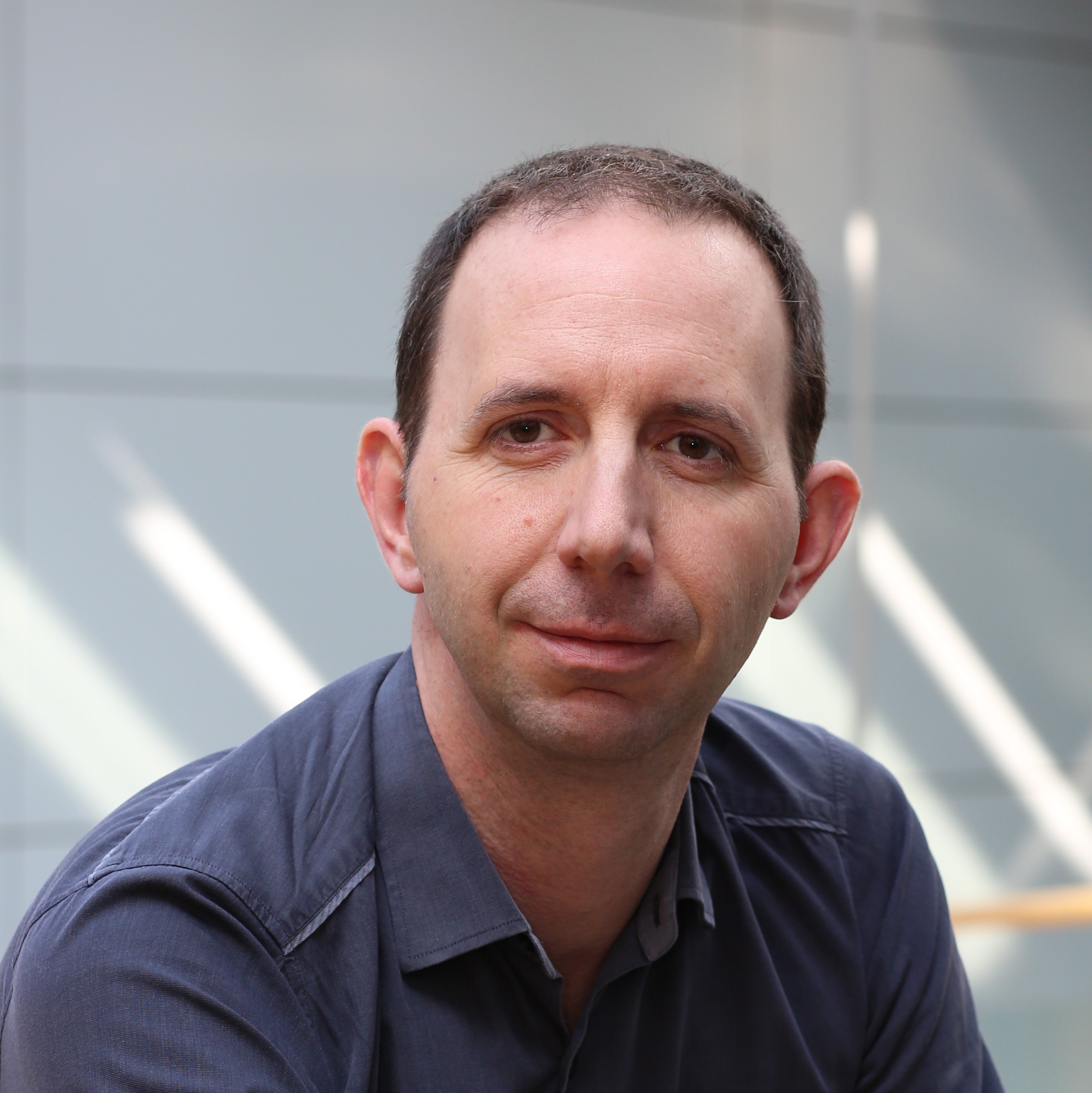
Yan Delaure is Associate Professor of Fluid Mechanics at Dublin City University's School of Mechanical and Manufacturing Engineering and Deputy Director of the DCU Water Institute. His research focuses on multiphase flows, environmental hydraulics, and computational fluid dynamics applications in wastewater treatment and marine systems. Research includes microbubble dynamics for aeration, fluid-structure interactions in deformable systems, and biomimetic antifouling solutions. Recent publications explore advanced simulation methods for turbulent flows and additive manufacturing process optimization.
Dr. Budi Zhao is a Lecturer/Assistant Professor in the School of Civil Engineering at University College Dublin since August 2020. He holds a PhD from City University of Hong Kong (2017) and has held academic positions at Imperial College London (Research Associate, 2019–2020) and King Abdullah University of Science and Technology (Postdoctoral Fellow, 2017–2019). His research focuses on multi-physics processes in soil and rock, employing advanced techniques like X-ray micro-tomography (μCT), microfluidics, and numerical modeling (e.g., DEM and CFD-DEM). Key areas include crushable sands, desiccation cracking, fines migration, and energy geotechnics. He serves on ISSMGE committees TC105 and TC308, and is a member of the editorial board of the Journal of Rock Mechanics and Geotechnical Engineering . His research outputs span topics such as 3D printed composites, microplastic transport, and internal erosion mechanisms. Notable projects include grants on multi-scale analysis of clays and salt precipitation effects. Dr. Zhao coordinates modules like Geotechnical Engineering and Soil Mechanics at UCD, emphasizing innovative teaching methods like flipped classrooms. His work bridges fundamental science and engineering applications, with a focus on sustainable geotechnical solutions. Education: PhD (City University of Hong Kong, 2017), B.Eng (Chongqing University), Professional Certificate in University Teaching (UCD). Grants: Includes funding for offshore wind energy anchors and carbon geological storage projects. Advising: Supervises multiple PhD students in geomechanics and energy geotechnics. Labs/Teams: Leads research using state-of-the-art facilities for μCT imaging and microfluidics.
Prof. Vivek Ranade is a Bernal Chair Professor of Process Engineering at the Bernal Institute, University of Limerick, and a Professor of Chemical Engineering at Queen's University Belfast. He leads research in multiphase reactors, process intensification, and sustainable energy/water technologies. His work spans applications in energy, water, and fine chemicals sectors, with contributions to industrial flow modeling, CFD, and digital twins. Education: B.Tech in Chemical Engineering (1983) and PhD (1988) from the Institute of Chemical Technology, Mumbai. Postdoctoral research at ETH Zurich (1988–1990). Served as Deputy Director at CSIR-National Chemical Laboratory (NCL) until 2016. Holds adjunct roles at the Institute of Chemical Technology and Academy of Scientific and Innovative Research. Research Interests: Multiphase flow dynamics, reactor engineering, process intensification, hydrodynamic cavitation, and sustainable technologies. Co-founded Tridiagonal Solutions and VIVIRA Process Technologies to commercialize innovations. Awards: Shanti Swarup Bhatnagar Prize (2004), Swarnajayanti Fellowship, Fellowships from IChemE, Indian National Science Academy, and multiple academies. Advising: Guided over 20 PhD students; involved in industrial collaborations and start-ups. Labs/Teams: Leads the Multiphase Reactors group at UL and QUB, and collaborates on projects like the MAGIC initiative for specialty chemicals.
Dr. Yan Delauré is an Associate Professor in Fluid Mechanics at Dublin City University's School of Mechanical and Manufacturing Engineering. He holds a PhD from University College Cork (2001), a Diplôme d’Ingénieur in Aeronautical Engineering from ESTACA, France, and an M.Sc. in Marine Resources Development and Protection from Heriot Watt University, Scotland. Prior to DCU, he worked at the Hydraulics and Maritime Research Centre in Cork for five years and held a post-doctoral position at Trinity College Dublin. His educational background includes: PhD from University College Cork (2001) Diplôme d’Ingénieur in Aeronautical Engineering from ESTACA, France M.Sc. in Marine Resources Development and Protection from Heriot Watt University, Scotland Dr. Delauré's primary research focuses on multiphase flows for applications in process aeration and pumping of incompressible single-phase and solid-laden flows. He has developed in-house flow simulation codes and utilized commercial and open-source solvers for high-performance computations. His experimental work involves non-invasive laser-based visualization techniques including three-component planar PIV, Shadow Sizing, and Digital Image Correlation, alongside hydraulic flow rigs for pumping and mixing studies. Dr. Delauré has secured funding from Science Foundation Ireland, the Irish Research Council, Enterprise Ireland, and EU FP7 and Horizon 2020 programmes. He currently leads an Enterprise Ireland co-funded industrial project and serves as Workpackage leader and DCU principal investigator on an EU Horizon 2020 Research Innovation Action, having established a dedicated research group for multiphase flow characterization. He has developed specialized experimental facilities including laser diagnostics systems and hydraulic flow rigs to support dual computational and experimental research in fluid mechanics.
Dr. Vanessa Egan is an Associate Professor at the University of Limerick, affiliated with the School of Engineering and the Bernal Institute. Her research focuses on heat transfer and fluid mechanics in two-phase/multiphase flows, aircraft compartment cooling, and thermal management of electronics. She employs advanced experimental techniques like Particle Image Velocimetry (PIV) and IR thermography. Her work has been supported by industry partnerships and competitive grants, resulting in over 80 publications, including 25 peer-reviewed journal articles and book chapters. Research Interests: Two-phase flow analysis in microfluidics Aircraft compartment heat transfer Low-profile cooling solutions for electronics Optical measurement techniques for fluid dynamics Nanofluids thermal performance Recent Research Trends: Her recent articles emphasize heat pipe optimization, liquid-liquid Taylor flow dynamics, and thermal management systems for aerospace and electric vehicles. Collaborations have explored novel methodologies for non-destructive analysis of heat pipes and real-time flow characterization. Advising & Grants: Dr. Egan has supervised four PhD students to completion and secured funding from industrial and competitive grant sources. Her work contributes to UN Sustainable Development Goals related to affordable and clean energy (SDG 7) and industry innovation (SDG 9). Labs & Teams: Active within the Bernal Institute, her research integrates interdisciplinary approaches to thermal and fluid systems, with applications in aerospace, electronics, and energy storage.
Patrick Walsh is an Associate Professor at the University of Limerick, affiliated with the School of Engineering, Bernal Institute, and Centre for Battery and Energy Materials Research. He holds additional roles as Lecturer in Sustainable Energy at Cork Institute of Technology and Senior Research Fellow at the University of Limerick. His expertise spans fluid dynamics, aerodynamics, heat transfer, sustainable energy technologies, and biofluidics. Walsh earned a PhD in Engineering in 2006 and a Bachelor of Engineering in 2002. His research focuses on experimental and applied studies in multiphase flow, microfluidics, and sustainable energy systems. Recent work includes investigations into liquid-liquid Taylor flows, capillary flow models, and high-frequency flow measurement techniques. Awards: Advanced Scholars Award (2002), Sir Bernard Crossland Award (2004) Grants/Advising: Supervised 80+ research outputs, active in industry-academia collaborations. He contributes to UN Sustainable Development Goals related to affordable and clean energy (SDG 7) and industry innovation (SDG 9). His research teams are based at the Bernal Institute and collaborate with institutions globally.
Eugene Benilov is a Professor in the Department of Mathematics and Statistics at the University of Limerick, Ireland. He is a member of the Centre for Research Training in Foundations of Data Science and the Mathematics Applications Consortium for Science and Industry (MACSI). With a PhD in Oceanology from the P.P. Shirshov Institute (Moscow) and an MSc/BSc from Moscow Institute of Physics and Technology, his career spans institutions including the University of Warwick, University of Tasmania, and University of New South Wales. Research Interests: Benilov specializes in fluid dynamics, focusing on phase transitions, evaporation, kinetic theory, liquid films, jets, geophysical vortices, and magnetized plasmas. His work extends to nonlinear waves and integrable systems. 2023: Stability of oblique liquid curtains 2022: Capillary condensation in corners 2021: Paradoxical swirling jet predictions Notable Awards: Nominated for the Russian Booker Prize (1998) for his novel The Man Who Wanted to Understand Everything
Dr. Abdulaleem Albadawi is an Assistant Lecturer at the Department of Engineering Technology, School of Engineering, South East Technological University, Waterford. He holds a PhD from Dublin City University (2014), an M.Sc. from Trinity College Dublin, and a Double Diploma in Engineering from INSA Lyon. With 10 years of industrial experience in hydraulic design of turbomachinery equipment, he has contributed to patented hydraulic solutions. His research focuses on numerical and experimental studies of fluid systems, particularly multiphase flows and fluid-structure interaction. Dr. Albadawi specializes in hydraulic design optimization for improved energy efficiency and reduced carbon emissions. He has developed in-house numerical models (VOF, LS, CLSVOF) using both commercial (ANSYS) and open-source (OpenFOAM) software, and has designed experimental flow rigs with advanced measurement systems including Particle Image Velocimetry.
Gode Amol Shailendra is a researcher in the Department of Chemical Sciences at the University of Limerick's College of Engineering and Informatics. His work focuses on advanced chemical engineering technologies for process intensification. Affiliation: University of Limerick Department: Chemical Sciences Key Research Areas: Emulsification technology, vortex cavitation reactors, energy efficiency optimization Research Trends: Recent publications analyze vortex-based reactor designs and compare emulsification devices, emphasizing geometric parameters, hydrodynamic behavior, and energy consumption metrics. His work combines experimental analysis with reactor design innovations. Publications: Two peer-reviewed articles in Chemical Engineering and Processing: Process Intensification and Ultrasonics Sonochemistry demonstrate his focus on scalable, energy-efficient chemical processes.
Dr. Vannessa Egan is a Lecturer in Mechanical Engineering at the University of Limerick and a Funded Investigator at the CONNECT Centre. She conducts research at Stokes Laboratories within the Bernal Institute, focusing on experimental thermo-fluid dynamics for advanced engineering applications. Her research explores droplet microfluidic flows , thermal management solutions for 5G technologies, and multiphase transport phenomena. Key applications include liquid cooling systems, nanoparticle synthesis, and biomedical engineering (drug delivery, cell encapsulation). She maintains active collaborations with academics in the UK, USA, and Canada. With over 60 peer-reviewed publications, Dr. Egan's work advances fluidic system design through fundamental characterization of flow regimes across industrial and biomedical domains.
Dr. Roderick Jones is an Assistant Professor in the School of Chemical and Bioprocess Engineering at University College Dublin (UCD). He holds a PhD in Chemistry from the University of Tasmania and has held research positions including Senior Research Fellow (SSPC, UCD) and Irish Research Council Postdoctoral Fellow. His research focuses on interdisciplinary challenges at the interface of chemistry, engineering, and technology development, with emphasis on multiphasic chemistry, sustainable pharmaceutical synthesis using biomass-derived solvents, medicine-on-demand systems, and advanced drug delivery technologies. He leads projects integrating continuous manufacturing processes, including flow chemistry and 3D-printed modular reactors. Education: PhD in Chemistry, University of Tasmania (synthesis, catalysis, flow chemistry) Professional Certificate in University Teaching and Learning, UCD Research interests span: - Enabling multiphasic chemistry in continuous processes - Green reaction media and catalyst technologies - 4D printing for drug delivery - Personalized medicine systems - Scalable hydrogenation platforms using polymer monoliths Grants include the EMPOWER Fellowship (IRC), Commercial Feasibility Grant (EI), and OBRSS Research Support. He teaches modules in biochemical engineering labs and pharmaceutical process engineering, coordinating courses such as Chem & Bioprocess Eng Lab 1/2 and Downstream Processing - Biologic Drug Delivery . Collaboration interests include academic/industrial partnerships for joint research in sustainable chemistry, pharmaceutical engineering, and advanced manufacturing technologies.
Professor Harry Van Den Akker is a Professor of Fluid Mechanics at the University of Limerick (UL), affiliated with the School of Engineering, Bernal Institute, and SSPC – the SFI Research Centre for Pharmaceuticals. He previously held roles as a Professor in Transport Phenomena at Delft University of Technology and a research engineer at Shell Research in Amsterdam. His academic career includes visiting appointments at Princeton University and King’s College London. Professor Van Den Akker has supervised 35 PhD students and mentored 7 assistant professors, with over 177 peer-reviewed publications and an h-index of 34. His research focuses on multiphase flow dynamics, leveraging Lattice Boltzmann methods for meso-scale simulations and computational fluid dynamics (CFD) applications in bioreactors, stirred tanks, and turbulent flow systems. His work addresses challenges in energy dissipation, particle agglomeration, and equipment design, bridging theoretical models with industrial-scale processes. Key contributions include advancements in porous-crust drying models, solids suspension theory, and CFD-driven process optimization. His research aligns with UN Sustainable Development Goals, particularly in sustainable industrial processes and resource efficiency. Professional highlights include a 12-year tenure as Scientific Director of the Netherlands Research School in Process Technology and a 6-year presidency of the Dutch Physical Society. His publications are frequently cited in top-tier journals like the American Institute of Chemical Engineering Journal and Chemical Engineering Science .
Dr Fatemeh Kavousi is a College Lecturer in the Department of Process and Chemical Engineering at University College Cork (UCC). She joined UCC in 2019 as the Eli Lilly lecturer in Biochemical/Biopharmaceutical Engineering. Previously, she held an Assistant Professor position at University College Dublin (UCD) in Chemical & Bioprocess Engineering. Her research focuses on fluid dynamics, membrane separation processes, and bioprocess optimization with applications in biochemical and biopharmaceutical systems. Dr Kavousi holds a BE (2007) and ME (2011) in Chemical Engineering from Iran University of Science and Technology (IUST), followed by a PhD from UCD (2012-2016) under Prof. Eoin Casey, funded by the IRC Embark Initiative Scholarship. Her work integrates computational fluid dynamics (CFD) with experimental analysis to advance bioreactor design, membrane technology, and sustainable bioproduction systems. Her research interests span bioreactor hydrodynamics, duckweed-based cultivation systems, and novel structural designs like kirigami/origami-inspired engineering solutions. Her recent studies explore multi-tiered duckweed cultivation systems and CFD modeling of stacked bioreactors, reflecting her interdisciplinary approach to biochemical engineering challenges. Dr Kavousi has been awarded the IRC Embark Initiative PhD Scholarship and has published extensively on topics ranging from hollow fiber membrane modules to vane demister optimization. Her academic contributions bridge engineering principles with biological systems, focusing on scalable and sustainable bioprocess solutions.
Professor Michael Vynnycky is a faculty member in the Department of Mathematics and Statistics at the University of Limerick , with affiliations to multiple research centers including the Centre for Battery and Energy Materials Research , Mathematics Applications Consortium for Science and Industry (MACSI) , and SSPC - The Research Ireland Centre for Pharmaceuticals . His research spans applied mathematics, electrochemistry, and industrial process modeling, with a focus on energy storage and metallurgical systems. Polymer electrolyte fuel cells Vanadium redox batteries Electrochemical pickling of steel Mpemba effect Continuous casting of metals Geophysical processes (mantle convection, magmatic ascent) Recent publications highlight his expertise in asymptotic analysis, Stefan problems, and numerical simulations applied to energy systems, chemical processes, and materials science. His work contributes to UN Sustainable Development Goals in clean energy and sustainable industry practices. Professor Vynnycky supervises PhD students and collaborates on interdisciplinary projects with computational and experimental components.
Dr. Javad Zeinali is an Assistant Professor of Digital Manufacturing at the University College Dublin (UCD), School of Mechanical and Materials Engineering. He serves as Programme Director for Digital Manufacturing at UCD's Advance Centre and leads the Laboratory for Advanced Manufacturing Simulation and Robotics (LAMS). His academic career includes roles at the University of Limerick as Lecturer and Research Fellow before joining UCD in 2023. Dr. Zeinali holds a PhD (2015) and MEng (2012) from Universiti Teknologi Malaysia (UTM), with postdoctoral training at Kyushu University (Japan). He has industry experience as Technical Manager at RS Co., Iran. Professional certifications include the U21 Mid-Career Researcher Programme and Universal Design in Teaching & Learning. Research Focus: His work integrates AI, predictive analytics, and CFD with advanced manufacturing. Key areas include digital twins, magneto-rheological devices, and AR/VR solutions for sustainable manufacturing. He leads projects like RTForm (robotic toolkits), ARIOS (AR operator support), and VRSafe (VR workplace safety training). Awards & Grants: Recipient of Bronze Medal (MTE 2014), Merit Thesis Award (2015), and Gold Medal (UTEMEX 2013). Active in EU funding, he coordinates grants including the €2.5M ARIOS project and leads initiatives at SSPC and DPTC dairy technology centers. Teaching: Teaches Industrial Data Analytics, Engineering Project Management, and Automation modules. Uses active learning and technology-enhanced methods. Coordinates courses like Industrial Data Analytics and Engineering Project Management at UCD. Collaborations: Serves on EU-NESA Agri-Food Sector Network and co-leads international projects. Supports Chinese PhD candidates via UCD-CSC funding schemes. Open to collaborations in AI-driven manufacturing and predictive analytics.