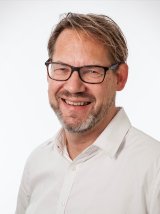
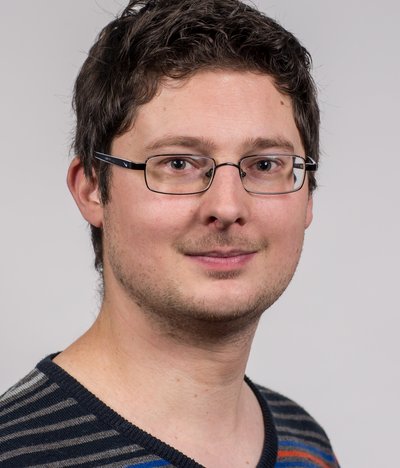
John van der Schaaf is a Full Professor at Eindhoven University of Technology (TU/e), affiliated with the School of Chemical Engineering and Chemistry , leading the Chemical Reactor Engineering department. His roles include chair of the Chemical Reactor Engineering group and Full Professor in Sustainable Process Engineering. He holds a PhD from TU Delft (1998) and has held postdoctoral positions at TU Delft and TU/e, focusing on fluid dynamics and glass technology. Research Interests : Development of high-gravity, high-shear reactors for multiphase chemical processes, emphasizing compact equipment for sustainable chemical production. Key areas include interphase mass transfer, heat transfer optimization, and reactor design for exothermic reactions. His work aligns with UN Sustainable Development Goals related to clean energy and industrial innovation. Grants & Projects : Led the High Gravity High Shear for Intensified Chemicals Production project (2016–2021), focusing on scalable, energy-efficient reactors. Current research explores reactor design optimization and industrial applications. Teaching : Instructs courses such as Advanced Chemical Reactor Engineering and Chemical Reactors . Supervised over 210 students, contributing to the next generation of chemical engineers. Labs & Teams : Head of the Chemical Reactor Engineering group at TU/e, collaborating on datasets like Impact of Electrode-Diaphragm Gap (2023) and Photochemical Spinning Disk Reactor (2024).
Dr. S. Vanapalli is an Associate Professor in the Energy Materials Systems department at the University of Twente, specializing in cryogenics, heat transfer, and microcooling technologies. With over 920 Scopus citations and a 16 h-index, their research focuses on cryogenic systems, phase change materials, and thermal management solutions for biomedical and industrial applications. Research Highlights: Developed cryogen-free snap-freezing devices for tissue preservation Innovated gas-gap heat switches for thermal control systems Investigated Leidenfrost dynamics in liquid nitrogen and dry ice systems Optimized microchannel cooling architectures with isotropically etched pillars Explored additive manufacturing applications in cryogenic components Scientific Impact: Vanapalli's recent work spans cryogenic cold chain logistics, direct-contact freeze concentration, and sublimation temperature modeling. Their research bridges fundamental thermodynamic studies with practical applications in pharmaceuticals and precision oncology, with recent emphasis on eliminating sacrificial cryogens in biomedical freezing protocols.
Niels Deen is a Full Professor and Chair of the Power & Flow group in the Department of Mechanical Engineering at Eindhoven University of Technology (TU/e). He also serves as Vice-Dean of the Department since 2024. His research focuses on multiphase reactors, computational fluid dynamics (CFD), and experimental fluid dynamics, with applications in sustainable processes like green steel production and hydrogen generation. **Education & Career**: Deen obtained his PhD from Aalborg University. He held roles as Assistant Professor at the University of Twente (2001–2010) and Associate Professor at TU/e (2010–2015). In 2010, he received an ERC Starting Grant for work on micro-structured bubble column reactors. He is a Principal Investigator at EIRES (Eindhoven Institute for Renewable Energy Systems) and part of the management team of the J.M. Burgerscentrum (JMBC). **Research & Awards**: His work bridges experimental and numerical techniques for multiphase systems. Notable contributions include studies on fluidized beds, bubble column dynamics, and multi-scale modeling. He has collaborated extensively with Dutch chemical industries and served as an editor for *Chemical Engineering Science* (2014–2022). **Awards**: Recipient of the European Research Council (ERC) Starting Grant (2010). **Roles & Activities**: Board member of Stichting Hoogewerff-Fonds and member of TU/e’s management teams for JMBC and EIRES. He teaches courses on CFD and transport phenomena.
Valeria Garbin is a Full Professor in the Department of Chemical Engineering at Delft University of Technology (TU Delft), Faculty of Applied Sciences. She heads the Transport Phenomena section and leads the Garbin Research Group, which focuses on microscale fluid dynamics, soft and biological materials, colloid and interface science, aiming to advance sustainable processes and products, including applications in drug delivery and bioprocessing. Institution: Delft University of Technology Faculty: Faculty of Applied Sciences Department: Department of Chemical Engineering Section: Transport Phenomena Position: Full Professor She obtained her MSc in Physics from the University of Padova (2003) and her PhD from the University of Trieste, Italy (2007). She was a Rubicon Fellow at the University of Twente (2007–2009), a postdoctoral researcher at the University of Pennsylvania (2009–2012), started her independent group at Imperial College London (2012), and joined TU Delft in 2019. Her research interests center on microscale transport phenomena in complex fluids, including droplets, particles, and biological systems. She integrates fluid dynamics with soft matter physics and colloid science to understand how microstructural changes affect macroscopic behavior in formulated products such as foods, personal care items, and pharmaceuticals. A major focus is on enabling sustainable innovation by replacing harmful ingredients through fundamental insights into flow and interfacial behavior. Valeria Garbin has secured several high-level research grants, including an ERC Starting Grant (2015), an ERC Proof of Concept Grant (2022), and an NWO Vici Grant (2022). She has been recognized with the McBain Medal (2018) and the Soft Matter Lectureship (2020). Her research group includes postdoctoral researchers and PhD students working on topics such as Pickering emulsions, microfiber filtration using acousto-fluidics, and electrohydrodynamic drying of biomass. Although no specific article list was provided in the source text, her work likely spans journals in soft matter, fluid mechanics, and chemical engineering, with emphasis on experimental, simulation, and modeling approaches to complex fluid systems. ERC Starting Grant (2015) ERC Proof of Concept Grant (2022) NWO Vici Grant (2022) McBain Medal (RSC/SCI, 2018) Soft Matter Lectureship (RSC, 2020) She advises multiple PhD students and postdocs, contributing to training the next generation of scientists in transport phenomena and sustainable technology. Her group collaborates across disciplines to bridge fundamental science with industrial applications. She teaches courses such as Fysische Transportverschijnselen (BSc), Advanced Interfacial Engineering (MSc), and Molecular Transport Phenomena (MSc), contributing significantly to chemical engineering education at TU Delft. The Garbin Research Group is actively involved in developing scalable, non-clogging filtration technologies, improving energy efficiency in drying processes, and designing tunable multiphase catalytic systems. Their approach combines precision experiments, particle-based simulations, and analytical modeling to link microscale dynamics to macroscopic performance.
Dr. Karl-Heinz Wolf is an Associate Professor in Petrophysics at the Department of Geoscience and Engineering, Faculty of Civil Engineering and Geosciences, Delft University of Technology. With a career spanning since 1985, he has focused on the intersection of geology, reservoir engineering, and geophysics for energy and environmental applications. BSc (1979) and MSc (1983) from Leiden and Utrecht Universities PhD (2006) in Applied Sciences from TU Delft His research integrates CO2 storage , enhanced geothermal systems , and clean coal technologies through large-scale experimental work and field applications. He pioneered an image analysis laboratory for rock texture characterization from outcrop to micro-CT scale. Recent publications highlight his work on CCUS technology integration with geothermal energy, foam mobility in reservoirs, and rock-fluid interactions under in-situ conditions. His projects include: SUCCEED : Synergetic CO2 storage with geothermal energy DIMOPREC : Intelligent geothermal system monitoring CIRCEXTIN : Circular economy education partnerships As Director of Geoscience and Engineering Laboratories (2011-2019) , he oversaw 14 technicians supporting research and education in geology, geophysics, and reservoir engineering. He has supervised 14 PhD and 26 MSc students.
Stan Looijmans is an Assistant Professor in the Processing & Performance of Materials group at Eindhoven University of Technology (TU/e), Department of Mechanical Engineering, and is affiliated with the Institute for Complex Molecular Systems (ICMS). His research focuses on bridging the gap between processing-induced structure formation and (micro)mechanical properties in semi-crystalline polymers. Dr. Looijmans obtained both his BSc and MSc degrees with great appreciation from the TU/e Department of Mechanical Engineering. His master's thesis, entitled "Contact mechanics of isotactic polypropylene," highlighted the importance of absolute control over processing history. He also spent time at Università degli studi di Genova studying semi-crystalline polymers. He became a doctoral candidate at TU/e in 2018 and defended his PhD thesis titled "Adhesion-modified polypropylene composites: a sticky situation" in 2023. Since July 2023, he has continued his work as an Assistant Professor. His research centers on the viscoelastic nature of polymer melts and how rich morphologies form in semi-crystalline systems during extrusion or injection molding. Key methodologies include quantification of structure at the nanoscale using synchrotron x-ray and infrared radiation, development of microscale mechanical testing methods, and numerical simulation of crystallization processes. Additional research interests encompass crystallization in additive manufacturing, structure formation under extreme conditions, micromechanical testing of fiber-reinforced composites, and contact mechanics. His work aims to predict local failure in semi-crystalline structures to improve polymeric product performance. Analysis of his recent publications reveals a consistent focus on structure-property relationships in polymeric materials, particularly polypropylene and polylactic acid systems. His research typically combines advanced characterization techniques like X-ray scattering with mechanical testing to understand how processing conditions affect material structure and performance. A notable trend is his investigation into how compatibilizers, fibers, and flow conditions influence crystallization kinetics and resulting mechanical properties. Dr. Looijmans' research has been supported by collaborations with major facilities including ALBA Synchrotron and the European Synchrotron Radiation Facility (ESRF) in Grenoble. His work forms part of the research program of DPI, Project #815 PROFIT, and has received assistance from various industry partners including Borealis and Total Energies. Within the Processing & Performance of Materials group, Dr. Looijmans contributes to both fundamental research on polymer crystallization mechanisms and applied studies addressing industrial challenges in polymer processing. His work with the Institute for Complex Molecular Systems (ICMS) provides additional interdisciplinary connections across the university. He teaches courses including Soft Materials Processing, Experimentation for Mechanical Engineering, Introduction to Mechanical Engineering, and Mechanical Characterization of Materials.
Anne Pluymakers is an Assistant Professor at the Applied Geophysics and Petrophysics department of Delft University of Technology (TU Delft) , with prior postdoctoral experience at both TU Delft (2018-2020) and the University of Oslo (2015-2017). Her research focuses on experimental rock mechanics and thermo-hydro-mechano-chemical (THMC) fluid-rock interaction , particularly investigating how mechanical and transport properties of rocks evolve under realistic subsurface conditions. Education: Doctorate (2015) in Frictional and sealing behaviour of simulated anhydrite fault gouge , Universiteit Utrecht Master's (2010) in Earth Sciences, Universiteit Utrecht Bachelor's (2008) in Earth Sciences, Universiteit Utrecht Her recent work spans CO2 storage , wellbore integrity , and microstructural analysis using neutron/X-ray imaging, with applications to geothermal energy and subsurface energy systems . Collaborative projects include Constraining uncertainties across scales and REFLECT , focusing on geoenergy transitions. Scientific Awards: Veni grant, Netherlands Organisation for Scientific Research (NWO), 2017 She actively contributes to public engagement , including media appearances on CO2 storage beneath the North Sea and educational initiatives like the Geo-resources for the future minor program.
Dr. Steffen Frey is an Assistant Professor in the Scientific Visualization and Computer Graphics group within the Bernoulli Institute at the University of Groningen's Faculty of Science and Engineering. He also maintains an affiliation with the Faculty of Medical Sciences/UMCG in the Robotics and image-guided minimally-invasive surgery (ROBOTICS) research group. His work bridges computer science with practical applications in medical and geoscientific domains. His research interests focus on scientific visualization, computer graphics, and interactive visualization techniques. Dr. Frey specializes in developing novel methods for flow estimation, temporal interpolation, parameter sensitivity analysis, and visualization of complex scientific data, particularly in porous media and fluid dynamics. His work often involves creating scalable solutions for big data visualization problems and applying visualization techniques to medical applications such as bone cement simulation. Analysis of his recent publications reveals a strong focus on machine learning approaches to scientific visualization, particularly in temporal interpolation and ensemble data analysis. His work combines traditional computer graphics techniques with modern deep learning methods to solve challenging visualization problems in scientific domains. The research demonstrates increasing sophistication in handling complex multi-dimensional datasets while maintaining interactive performance. 2019 IEEE Scientific Visualization Contest Winner Dr. Frey actively collaborates with researchers internationally, as evidenced by his co-authorship with scientists from various institutions worldwide. His work contributes to multiple Sustainable Development Goals, particularly those related to clean water and sanitation through his porous media flow research. He has supervised multiple students through research projects and thesis work, though specific names are not listed in the provided materials.
Cristina Garcia Llamas is a Research Fellow at Eindhoven University of Technology's Department of Chemical Engineering and Chemistry. Her research focuses on multiphase flows, non-Newtonian fluids, and computational modeling, particularly in droplet collisions, jet breakup, and spray drying efficiency. She completed her PhD at TU Eindhoven with a thesis on liquid-gas interface deformations in atomization. Education: PhD in Chemical Engineering (Eindhoven University of Technology) Her work combines numerical methods like the Local Front Reconstruction Method (LFRM) and Immersed Boundary Method to simulate complex fluid dynamics in industrial applications. Key research areas include non-Newtonian fluid behavior, droplet collision dynamics, and high-fidelity multiphase flow modeling. She contributed to the project Energy Efficient Milky Sprays (2019–2023), investigating droplet size and spray optimization. Her datasets and publications emphasize open-access sharing of numerical methods and validation with experimental data. Teaching includes the course Introduction to Chemistry & Chemical Technology since 2012.
Dr. Timo J.J.M. van Overveld is a University Researcher at the Applied Physics and Science Education department of Eindhoven University of Technology. His work focuses on fluid dynamics, computational modeling, and self-organization phenomena in environmental and turbulent flows. PhD in Applied Physics (2023, Eindhoven University of Technology) Master's thesis on nonlinear simulations of plasma density limits (2019, TU/e) Key research areas include: Hydrodynamic modeling of particle interactions Pattern formation in oscillating flows Stokes boundary layer dynamics Viscous fluid simulations Dipolar colloids and generalized particles His publications and datasets reveal expertise in numerical methods for fluid-particle systems, vortex dynamics, and turbulent flow analysis. Recent work explores self-organization from hydrodynamics to colloidal systems. Scientific Awards: Burgers Gallery 2023 Best Movie for fluid self-organization research He collaborates extensively with Prof. H.J.H. Clercx and Dr. M. Duran-Matute on oscillating flow studies and has contributed datasets to 4TU.Centre for Research Data.
J. Westerweel is a Professor in the Department of Fluid Mechanics at Delft University of Technology, School of Mechanical Engineering. His research focuses on experimental fluid dynamics, particularly in Particle Image Velocimetry (PIV) , turbulent flow , and microfluidic systems . He has contributed extensively to understanding coherent structures , drag forces , and flow measurement methodologies . Research Trends: Recent works emphasize 3D flow reconstruction , microbubble dynamics , programmable hydrodynamics , and industrial fluid applications such as gypsum slurry flow optimization. His studies span both fundamental turbulence analysis and applied techniques in rowing propulsion , compliant coatings , and cavitation mitigation . Editorial Contributions: He has served as an editor for Experiments in Fluids and Flow, Turbulence and Combustion , ensuring quality in experimental methods across fluid mechanics.
Prof. Sorin Pop is a Professor in the Department of Mathematics and Computer Science at Eindhoven University of Technology (TU/e). His research focuses on numerical analysis and computational methods for multiphase flow in porous media, with emphasis on two-phase flow dynamics, dynamic capillarity, and hysteresis effects. He has published extensively in journals like Computer Methods in Applied Mechanics and Engineering and Studies in Applied Mathematics . His work involves developing and analyzing numerical schemes for complex flow models, including domain decomposition methods and iterative solvers for nonlinear systems. Pop collaborates internationally on projects involving porous media applications in environmental and industrial contexts. He has supervised 21 academic works and contributed to over 117 research outputs since 2000.
Roberto Verzicco is a Full Professor at the University of Twente's MESA+ Institute, specializing in the Physics of Fluids. His research focuses on fluid dynamics, thermal convection, and computational fluid dynamics (CFD), with particular emphasis on non-Newtonian fluids and turbulence. He has contributed to advancing numerical methods for simulating complex fluid systems, including porous media flows and phoretic particle dynamics. Key research areas include direct numerical simulation (DNS), heat and momentum transport, and rheological modeling. His work integrates computational approaches with experimental insights, addressing challenges in melting phenomena, multiphase flows, and parameter identifiability in fluid models. Collaborations with researchers like Detlef Lohse and Roberto Stevens highlight his engagement in international networks. His datasets and presentations underscore contributions to understanding rotating Rayleigh-Bénard convection and confined thermal systems. Supervision of 15 works reflects his academic mentorship.
Patrick D. Anderson is a full Professor and Dean of the Department of Mechanical Engineering at Eindhoven University of Technology (TU/e). His research focuses on structure and rheology of complex fluids, with expertise in polymer processing, interfacial phenomena, and additive manufacturing. He has led projects on computational methods for flow analysis and interface behavior, contributing to fields like microfluidics and polymer blend modeling. Anderson holds editorial roles in journals like Macromolecular Materials Engineering and chairs the Dutch Society of Rheology. Education: PhD in Mechanical Engineering (TU/e, 1999), MSc in Applied Mathematics (TU/e). Professional experience includes roles at Océ Technologies and visiting professorships at UCSB, Stanford, and ETHZ. Research Interests: Development of predictive models for polymer processing, interfacial rheology, and additive manufacturing. Key topics include structure formation during flow, computational methods for multiphase systems, and EMI shielding materials. Article Trends: Recent work emphasizes EMI shielding via polymer nanocomposites, PLA crystal formation under shear, and fiber orientation in polymer composites. Articles bridge computational modeling with experimental validation in rheology and materials science. Awards: Repeated Best Teacher awards (2006, 2013, 2019, 2021) and the 2017 Walters Prize (2018) for fluid mechanics contributions. Grants & Partnerships: Collaborations with industry partners like DSM, BASF, and Philips. Currently leads projects on EMBOlization materials and rheology modeling funded through the National Growth Fund. Labs/Tech: Active in soft materials processing and 3D printing research, with facilities for in-situ X-ray imaging and rheological testing.
Clemens Verhoosel is an Associate Professor in Computational Methods for Model- and Data-Driven Engineering at Eindhoven University of Technology (TU/e), specializing in the Department of Mechanical Engineering. His research focuses on numerical methods for engineering applications, including isogeometric analysis, immersed methods for complex geometries, and uncertainty quantification. He holds a prestigious NWO Veni Grant (2011) and has contributed to open-source tools like the Nutils toolkit. Education: MSc (with honors) in Aerospace Engineering from TU Delft (2005) PhD in Computational Mechanics from TU Delft (2009, cum laude) Postdoctoral research at the University of Texas at Austin (2009-2010) Research Interests: Scan-based immersed isogeometric analysis Uncertainty quantification and Bayesian inference Fluid-structure interaction Multiphase flow and fracture mechanics Teaching: Courses include Advanced Discretization Techniques (Isogeometric Analysis) and Scientific Computing for Mechanical Engineering. Awards: NWO Veni Award (2011): "Efficient modelling of bone fractures" Labs/Teams: Leads the Group Verhoosel and contributes to EAISI Foundational and Energy Technology research groups.