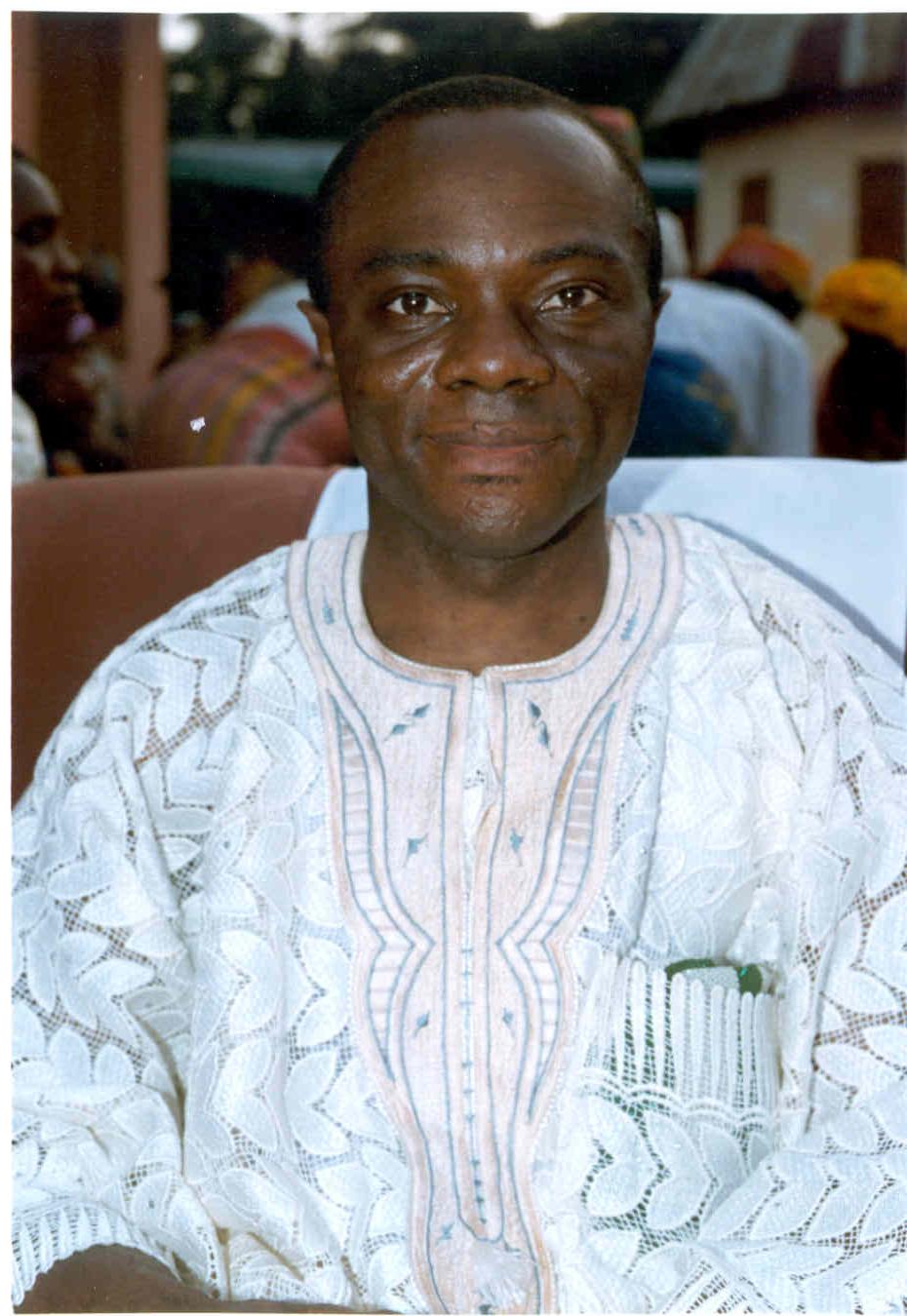
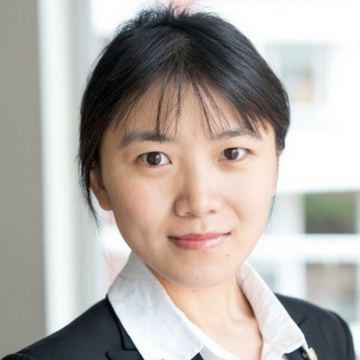
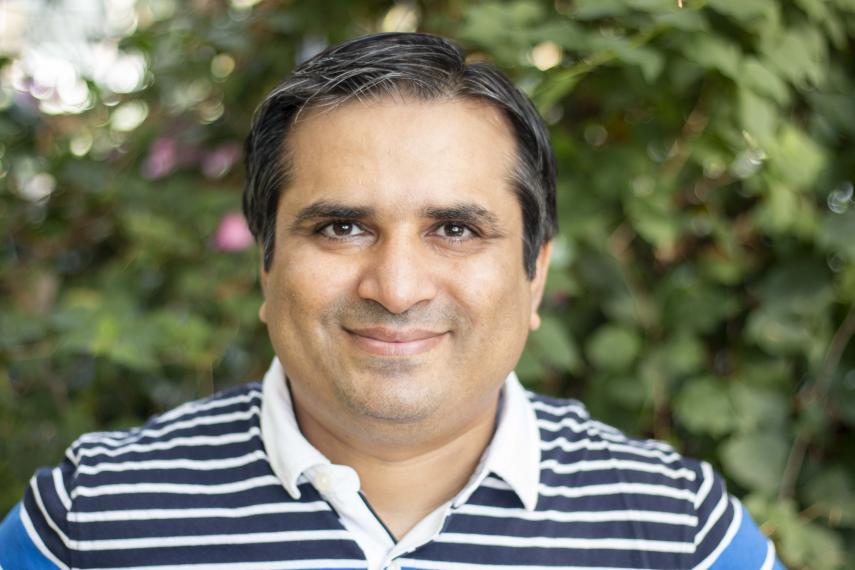
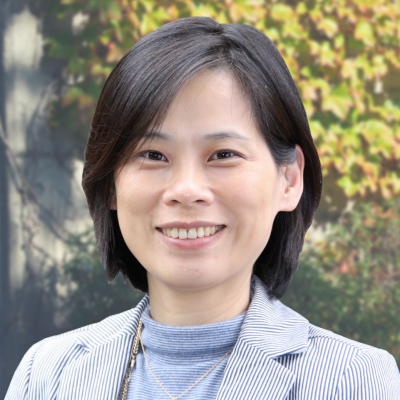
Alwell Julius Oyet is a Professor of Statistics in the Department of Mathematics and Statistics at Memorial University of Newfoundland. He earned his B.Sc. (1986) and M.Sc. (1992) from the Federal University of Technology, Owerri, Nigeria, and his Ph.D. (1997) from the University of Alberta, Canada. His research focuses on longitudinal data analysis, spatial statistics, time series, statistical computing, multinomial data, and robust methods. He maintains active research collaborations in these areas. Oyet teaches undergraduate and graduate courses including Design of Experiments, Time Series Analysis, Multivariate Analysis, and Computational Statistics. He has extensive experience developing course materials and statistical computing resources.
Dr. Hosameldin Ahmed is a Research Fellow at Aston Digital Futures Institute , Aston University , with a focus on interdisciplinary applications of artificial intelligence (AI) , extended reality (XR) , and data analytics in healthcare, industrial systems, and cultural heritage preservation. His collaborative work includes partnerships with Imperial College London and Brunel University (CEPROQHA Project).
David Leslie is a Professor of Statistics and Director of Engagement in the Department of Mathematics and Statistics at Lancaster University. He specializes in statistical learning, decision-making algorithms, and game theory, with applications in real-time website optimization through bandit algorithms. Previously, he served as a Senior Lecturer at the University of Bristol and co-directed a cross-disciplinary decision-making research group. He has led significant projects such as the EPSRC/NERC-funded DSNE initiative and contributed to strategic partnerships like ALADDIN (with BAE Systems and EPSRC) and NG-CDI (with BT). His work emphasizes bridging theoretical research with practical industry solutions. Education details are not explicitly provided, but his career trajectory includes prior roles at prestigious institutions. Research interests focus on statistical methodologies, AI-driven decision systems, and environmental data science. He advises multiple PhD students in areas like Statistical AI and Extreme Value Theory. Notable projects include AI Hub, NABS+, and ProbAI, reflecting his engagement with cutting-edge technologies and interdisciplinary collaboration. David actively participates in research groups such as STOR-i Centre for Doctoral Training and the Statistical Artificial Intelligence group. His contact information includes an office at B73 in the PSC building and a direct email address. No specific scientific awards are listed, but his extensive project leadership and contributions to foundational AI research highlight his academic impact.
Mingli Chen is an Associate Professor of Economics at the University of Warwick’s Department of Economics. She holds affiliations including Turing Fellow at the Alan Turing Institute, External Fellow at the Centre for Panel Data Analysis (University of York), and Warwick-China Coordinator. Her research focuses on econometrics, machine learning, time series analysis, financial econometrics, and empirical industrial organization. She has served as an Associate Editor for the Journal of Econometrics since 2024 and organized workshops on data science and network analysis. Education: Ph.D. in Economics from Boston University (2015), B.A. in Information and Computing Science from Shanghai University (2009). She has held visiting positions at Stanford University, UC Berkeley, and the Federal Reserve Bank of Boston. Research Interests include high-dimensional econometrics, panel data models, social networks, quantile regression, and the integration of AI with econometrics. Key publications cover topics like quantile graphical models for systemic risk, latent panel quantile regression in asset pricing, and sparse β-models for network analysis. Awards include the International Partnerships Fund (2023), Turing PDRA Award (2020), and Co-Winner of the LABOUR Prize (2017). She advises Ph.D. students at Warwick and Cambridge, with placements at leading institutions like the University of Tokyo. Grants include leadership in UK-China partnerships and the Turing Institute. Teaching focuses on advanced econometrics at the Ph.D. level, including causal inference and machine learning. She co-organizes workshops and serves on conference committees, emphasizing data science and policy applications.
Miranda Reiter, Ph.D., CFP®, is an Assistant Professor of Personal Financial Planning in the School of Financial Planning (College of Human Sciences) at Texas Tech University. A former Fortune-500 financial planner and founder of the firm She & Money Financial Planning, she joined academia to advance research on diversity, race, and gender issues within financial planning and consumer finance. Education: Ph.D. in Personal Financial Planning – Kansas State University Research Interests: Dr. Reiter’s scholarship centres on how race, gender, and other diversity dimensions shape financial-planning access, advice-seeking behaviour, retirement preparedness, and policy outcomes. She employs large national datasets, experimental designs, and qualitative methods to illuminate disparities and test interventions. Her recent work explores retirement savings gaps, linguistic and ethnic barriers in survey design, and the intersectionality of race and gender in advisor selection. Studies also examine social-media investment advice, financial socialisation of students, and determinants of life-insurance adequacy across racial groups. Honours & Awards: 2024 Montgomery-Warschauer Award (FPA/JFP) Morningstar Best Research Paper Award – Academy of Financial Services 2023 See It, Be It Role Model Award – InvestmentNews 2022 Robert O. Herrmann Outstanding Dissertation Award – ACCI 2020 Omicron Nu Research Fellowship – Kappa Omicron Nu 2020 Center for Financial Security Junior Scholar – University of Wisconsin-Madison 2019 FPA Best Research Award 2019 40 Under 40 – InvestmentNews 2018 FPA Diversity & Inclusion Scholarship Professional Engagement: Dr. Reiter is active in the Financial Planning Association (FPA), Association for Financial Counseling & Planning Education (AFCPE), and American Council on Consumer Interests (ACCI). She frequently provides expert commentary to media outlets including BBC, USA Today, US News, and Forbes and published the 2023 Audible/Great Courses audiobook Six Steps to Manage Your Money .
Daniel L. McFadden is a renowned economist and Professor of the Graduate School at the University of California, Berkeley, Department of Economics. He also serves as the Presidential Professor of Health Policy and Economics at the University of Southern California. Born in 1937, McFadden holds a B.S. in Physics (University of Minnesota, 1957) and a Ph.D. in Economics (University of Minnesota, 1962). His academic career includes roles at the University of Pittsburgh, MIT (where he held the James R. Killian Chair), Yale University, and Caltech. Research Interests : McFadden is celebrated for his contributions to econometrics, particularly in discrete choice models. His work spans transportation demand analysis, health economics, environmental valuation, and welfare economics. He pioneered the use of conditional logit models and mixed logit models, revolutionizing how economists model individual decision-making. His research integrates behavioral insights with rigorous statistical methods. Notable Contributions : McFadden's work on the multinomial logit model and mixed logit models remains foundational in transportation and marketing. His Nobel Prize (2000) recognized his development of these models for analyzing individual choices. Recent work explores behavioral economics, Medicare policy, and subjective well-being measurement. Awards & Honors : McFadden is a member of the National Academy of Sciences and American Academy of Arts and Sciences. He received the John Bates Clark Medal (1975), Nemmers Prize (2000), and Frisch Medal (1986). He holds honorary doctorates from multiple institutions. Grants & Advising : McFadden has led major projects on transportation policy, energy demand, and health economics. He advised the U.S. government on Medicare Part D and contributed to modeling consumer behavior in healthcare markets. His work frequently bridges academia and policy, addressing real-world challenges. Labs & Teams : As Director of Berkeley's Econometrics Laboratory (1991–1995, 1996–present), he fostered interdisciplinary research. Collaborations with institutions like MIT and USC highlight his leadership in econometric innovation.
Joseph Romano is a Professor of Statistics and Economics at Stanford University, where he has served since 1986. He holds dual appointments in both the Department of Statistics and the Department of Economics. His research focuses on theoretical statistics, nonparametric methods, bootstrap techniques, multiple testing, and their applications in econometrics, climate science, genetics, and clinical trials. He has received numerous awards, including the LGBTQ+ Scientist of the Year (2021) and the Presidential Young Investigator Award (1989–1994). Education: Ph.D. in Statistics, University of California, Berkeley (1986) M.S. in Statistics, University of California, Berkeley (1983) B.A. in Statistics, Princeton University (1982), Summa Cum Laude Research interests include developing robust statistical methodologies for high-dimensional data, controlling errors in multiple testing, and applying resampling techniques to complex datasets. He has authored over 100 papers, focusing on topics like permutation tests, bootstrap methods, and econometric modeling. Notable works include advancements in fixed sequence testing and randomized inference for modern data challenges. Awards and Recognition: Fellow, Institute of Mathematical Statistics (2000) Fellow, International Association of Applied Econometrics (2020) Canadian Journal of Statistics Award (1989) Romano has advised numerous students, including doctoral candidates in statistics and economics. He has held administrative roles at Stanford, such as Associate Chair and member of faculty committees. His grants include NSF-funded projects on resampling methods, multiple testing, and econometric theory. He is a vocal advocate for LGBTQ+ visibility in academia and has contributed to initiatives like 500 Queer Scientists. Beyond academia, he enjoys music, tennis, cooking, and architecture.
Khurram Nadeem is an Associate Professor of Statistics at the University of Guelph, specializing in predictive modeling of ecological and environmental systems. His research focuses on leveraging big data analytics to address challenges in wildland fire prediction, agricultural sustainability, and statistical bioinformatics. He leads a lab offering graduate research opportunities in these areas and collaborates with organizations like the Canadian Interagency Forest Fire Centre (CIFFC). Education: PhD in Statistics, University of Alberta (2013) MSc in Statistics, University of Karachi (2005) BSc (Honours) in Statistics, University of Karachi (2003) Research Themes: Wildland Fire Prediction: Developing spatiotemporal models to forecast fire occurrences in British Columbia, aiding fire management strategies. Agro-Environmental Science: Integrating big data from precision agriculture and genomics to optimize sustainable farming practices under climate change. Statistical Bioinformatics: Analyzing microbiome data in livestock and crops to improve disease prevention and crop resilience. Media & Partnerships: Featured in University of Guelph news for wildfire research and Food from Thought initiatives. Seeks industry partnerships in forest fire analytics, environmetrics, and quantitative ecology. Advising & Grants: Supervises graduate students in Statistics and Bioinformatics programs. Offers postdoctoral positions in applied statistics for climate-agriculture linkages and microbiome modeling. Labs & Teams: Hosts a multidisciplinary lab focusing on environmental and agricultural data science. Collaborates with the Canadian Forest Service and agricultural stakeholders.
Max Goplerud is an Assistant Professor in the Department of Government at the University of Texas at Austin, where he teaches courses in political methodology and Bayesian statistics. He received his Ph.D. from Harvard University in 2020, where he was an affiliate of the Institute for Quantitative Social Science and the Minda de Gunzberg Center for European Studies. His educational background includes: Ph.D. in Government, Harvard University (2020) Goplerud's research spans two primary areas. First, he develops new statistical methods at the intersection of Bayesian statistics and machine learning to address limitations in existing approaches for political science research. His methodological work focuses on solving problems related to heterogeneous effects, hierarchical models, and ideal point estimation. Second, he applies text-as-data methods to study legislative behavior across different political contexts, including Europe, the United States, and Japan. His research combines advanced statistical techniques with substantive political questions, creating tools that enhance empirical analysis in political science. His publications reveal a strong focus on methodological innovation in political methodology. Goplerud frequently publishes in top political science and statistics journals, with recent work appearing in the American Political Science Review, American Journal of Political Science, Journal of Politics, Biometrika, Political Analysis, and Bayesian Analysis. His research bridges the gap between statistical methodology and political science applications, with particular emphasis on Bayesian approaches, variational inference, and machine learning techniques adapted for political science research questions. Goplerud has developed several R packages that implement his methodological contributions: vglmer - for estimating hierarchical models using variational inference FactorHet - for estimating heterogeneous effects in factorial and conjoint experiments gKRLS - for kernel regularized least squares estimation He teaches graduate courses including Bayesian Statistics and Statistical Analysis in Political Science, as well as undergraduate research methods courses. His teaching spans institutions including the University of Texas at Austin and the University of Pittsburgh, where he previously taught courses on measurement, Bayesian statistics, and social data visualization.
Miriam (Mimi) Brinberg is an Assistant Professor at The Ohio State University, focusing on interpersonal interactions in both face-to-face and digital contexts. Her research emphasizes understanding conversational dynamics, relational processes, and methodological innovations for studying human behavior. She applies techniques like intensive longitudinal data, ecological momentary assessments, and unobtrusive digital monitoring (e.g., screen capture analysis) to reveal how interaction patterns shape individual and relational outcomes. Brinberg’s work intersects with fields such as communication studies, psychology, and digital media. She co-founded the LHAMA initiative to disseminate longitudinal methods for analyzing interpersonal interactions. Key areas of exploration include screen use behaviors (e.g., 'screenertia'), digital dating abuse perceptions, and the impact of educational media on parent-child communication. Her recent publications (2021–2025) highlight methodological advancements (e.g., state space grids, sequence analysis) and applied topics like emotional well-being apps, relational turbulence in marriages, and campaign-induced communication. She advocates for rigorous, ecologically valid approaches to studying daily interactions, often leveraging smartphone data and screenome frameworks. Brinberg’s research bridges theoretical and applied domains, aiming to decode the 'black box' of everyday conversations and their societal implications. She collaborates on projects like the Human Screenome Project to analyze digital life experiences and their impacts on human behavior.
Gianvito Pio is an Associate Professor at the Department of Computer Science, University of Bari Aldo Moro, Italy. His research spans data mining, bioinformatics, social network analysis, multi-relational data mining, and big data analytics. He holds a PhD in Computer Science from the University of Bari (2015) and has taught courses such as Big Data Management and Analysis and Security in Blockchain Technology . As an expert in heterogeneous network analysis, he develops methods for anomaly detection in cryptocurrency trends, microbiome data interpretation, and legal judgment clustering. He leads the local research unit of the PRIN 2022 project COCOWEARS and contributes to journals like the Machine Learning Journal and Expert Systems with Applications as an associate editor. His recent work includes multi-view learning for risk identification in dynamic networks, spatially-aware models for energy forecasting, and biclustering algorithms for biological data. Collaborations with researchers such as Michelangelo Ceci and Antonio Pellicani highlight his interdisciplinary approach. Gianvito Pio also organizes academic events like the Discovery Science conference and contributes to open-source software tools including HOCCLUS2 and GENERE .
David Lovell is a Professor in the School of Computer Science at Queensland University of Technology (QUT). He previously served as Head of the School of Electrical Engineering and Computer Science (2014–2019) and Deputy Director of QUT’s Centre for Data Science (2020–2021). His research focuses on the intersection of humanity, science, and technology, particularly in data science and compositional data analysis (CoDA). Lovell holds a PhD in Electrical Engineering from the University of Queensland (1994) and a BEng (Honours 1) in Computer Systems (1989). Education Background: BEng(Hons 1)(Computer Systems), University of Queensland (1989) PhD, University of Queensland (1994) PGDipMgmt, Macquarie University Research Interests: David’s work emphasizes ethical and human-centric applications of data-driven decision-making systems. He advocates for CoDA in bioscience to ensure appropriate analysis of relative abundance data. His research spans bioinformatics, healthcare technology, and the societal implications of data science. Publications Overview: Lovell has contributed to over 50 peer-reviewed articles, including seminal work on proportional analysis in bioinformatics and applications of machine learning in healthcare. Recent trends include studies on Indigenous data literacy, AI in radiology training, and tumor microenvironment analysis. Awards & Recognition: While no specific awards are listed, his leadership roles and prolific publications highlight his significant contributions to the field. Advising & Grants: As Head of EECS and through interdisciplinary collaborations, Lovell fostered institutional growth. His supervision focuses on large-scale bioinformatics and information retrieval. Labs & Teams: Active in the Centre for Data Science and previously led the Statistical Bioinformatics-Agribusiness Group at CSIRO. Collaborates with organizations like EMBL Australia and Bioplatforms Australia.
Kuntal Bhattacharyya is an Associate Professor in the Department of Marketing and Operations at the Scott College of Business, Indiana State University. He has held significant administrative roles including Department Chairperson (2018–2021) and currently serves as Executive Director (2021–present). He also directs the Center for Supply Management Research (CSMR), fostering industry-academia collaboration. Education: Ph.D., Operations Management (Information Systems Minor), Kent State University, 2011 M.B.A., Management (Minor in Applied Statistics), The University of Akron, 2005 M.S., Electrical Engineering (Semiconductor Fabrication), The University of Texas at Arlington, 2003 B.S., Electrical & Electronics Engineering, BIET, 2000 His research spans Supply Chain Management , Sustainable Supply Chains , Supply Chain Risk Management , and Global Sourcing . He integrates quantitative modeling, blockchain, and Six Sigma methodologies to solve real-world operational challenges. His expertise is reflected in courses such as Global Sourcing (OSCM 455/555), Strategic Supply Chain Decisions (PMBA 612), and the capstone Global Supply Chain Management (OSCM 490). The 15 most recent publications reveal a strong focus on supplier performance modeling , blockchain in supply chains , conflict mineral tracking , and resilience through technology . These works span disciplines including operations research, sustainability, service quality, and humanitarian logistics, demonstrating interdisciplinary depth and practical relevance. Scientific Awards and Honors: Career Readiness Advocate (2020) Dean's Achievement Award (2018) Best Paper Award, Academy of Business Review (2016) Teaching Excellence Award (2015) Outstanding Academic Advisor Award (2017) Summer Research Grants and multiple internal funding awards Dr. Bhattacharyya has secured numerous grants from Indiana State University and external foundations like the Wabash Valley Community Foundation, supporting student research and center development. He actively mentors students through research projects and capstone courses. He has served on key university committees related to strategic planning, diversity, faculty governance, and community engagement. His consulting experience with firms like Toyota Material Handling and Masterbrand Cabinets further strengthens his applied perspective. He leads the Center for Supply Management Research (CSMR) , which serves as a hub for supply chain innovation, student experiential learning, and industry partnerships. The center has received continuous internal funding, reflecting its institutional importance.
Hammou Elbarmi is a Professor at the Paul H. Chook Department of Information Systems and Statistics within the Zicklin School of Business at Baruch College, CUNY. His academic journey includes a PhD in Statistics from the University of Iowa (1993), an MS in Statistics (1989), a DEA in Applied Mathematics from University Mohamed V, Morocco, and a BS in Applied Mathematics from the same institution. PhD, Statistics, University of Iowa (1993) MS, Statistics, University of Iowa (1989) DEA, Applied Mathematics, University Mohamed V, Morocco BS, Applied Mathematics, University Mohamed V, Morocco Elbarmi specializes in Order Restricted Inference , Survival Analysis , and Categorical Data Analysis . His research focuses on statistical methods for comparing survival and cumulative incidence functions under stochastic ordering constraints, with applications to competing risks and biased sampling. He has developed novel nonparametric estimation techniques for distributions with type I/II bias and pioneered empirical likelihood approaches for hypothesis testing under inequality constraints. His work spans over two decades of funded research projects from PSC-CUNY , including grants for "Nonparametric estimation under stochastic precedence" (2020-2022) and "Consistent estimation of survival functions under uniform stochastic ordering" (2023-2024). He has delivered over 30 presentations at institutions like Rice University, University of Iowa, and Joint Statistical Meetings. Elbarmi has received the Faculty Scholarship and Creative Achievement Award at Baruch College annually from 2003-2011 and served as a Co-Chair for the Seminar Series in Statistics & Operations Research. His editorial and peer-review roles include associate editorships for journals like Statistica Sinica and Journal of Nonparametric Statistics .
Amery Wu serves as Associate Professor and ECPS Graduate Advisor for Admissions and Scholarship at the University of British Columbia's Faculty of Education, specifically within the Department of Educational and Counselling Psychology, and Special Education. Based in Scarfe Library Block 287, Dr. Wu specializes in advanced quantitative methods for educational and psychological measurement. Dr. Wu's research focuses on applied statistical modeling in educational contexts, with particular expertise in test item performance analysis , globalization of testing through internet platforms , and longitudinal assessment methodologies . Their scholarly work bridges psychometrics with practical educational applications, examining how test design impacts diverse learner populations across international contexts. Key methodological contributions include innovations in mixed-effects modeling, differential item functioning analysis, and validation frameworks for complex assessment systems. Recent publications demonstrate a clear trajectory toward integrating response process data with performance outcomes , particularly through Bayesian modeling and advanced visualization techniques for online assessments. The research consistently addresses measurement challenges in high-stakes contexts including immigration language testing (CELPIP), health literacy instruments, and inclusive classroom models. Dr. Wu's work emphasizes the ecological validity of assessments within their sociocultural contexts. Teaching responsibilities include core methodology courses: EPSE 423 (Assessment of Classroom Learning), EPSE 481 (Introduction to Research in Education), EPSE 482 (Statistics for Educational Research), EPSE 483 (Reading Educational Research), and advanced graduate courses EPSE 592 (Experimental Designs) and EPSE 596 (Correlational Analysis). As Graduate Advisor for Admissions and Scholarship, Dr. Wu shapes the quantitative training of future educational researchers.