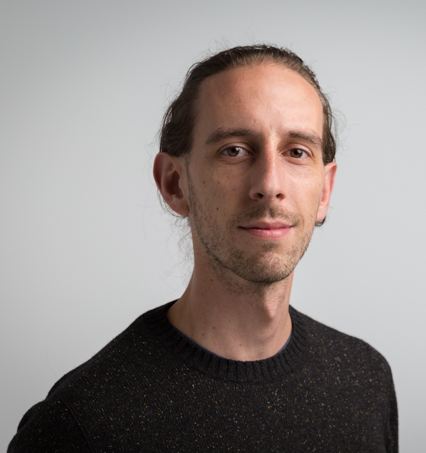
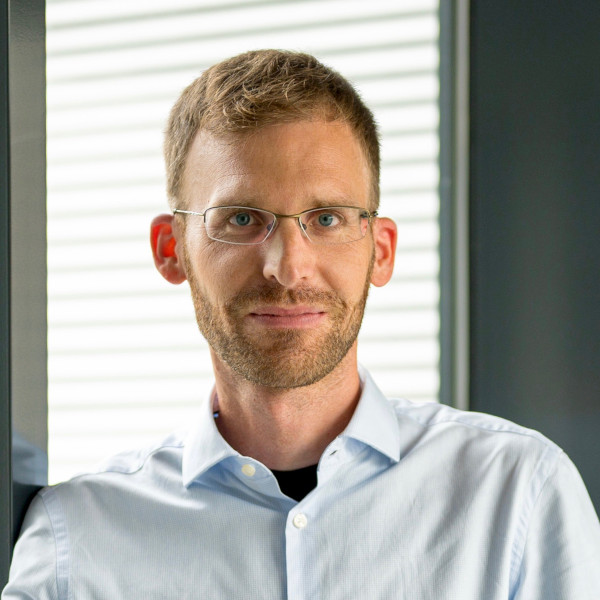
Dr. Jauwairia Nasir is a Research Fellow at the Chair of Human-Centered Artificial Intelligence, University of Augsburg, Germany. She holds a PhD in Human-Robot Interaction (HRI) from EPFL, Switzerland, and was a Marie Curie fellow in the ANIMATAS ITN program. Her research focuses on socially assistive robotics, multimodal behavioral analytics, and AI applications in education and healthcare. She teaches a Master's course on Human-Robot Interaction and has led workshops at international conferences such as RO-MAN and HRI. Education: PhD in HRI, Computer Science, EPFL (Switzerland), 2020 MSCA ITN Marie Curie Fellow, Sorbonne University (France), 2019 MSc Robotics & AI, KAIST (South Korea), 2015 BEng Electrical Engineering, NUST (Pakistan), 2012 Research Interests: Designing robots that adapt to diverse learning styles Modeling engagement through multimodal signals (speech, gesture, facial expressions) Ethical considerations in human-AI interaction AI-driven tools for personalized education and therapy Awards & Recognition: Rising Woman Star in Social Robotics (2025) RSJ Research Pioneering Award (2023) Best Paper Finalist at RO-MAN 2023 Special Recognition for Outstanding Reviews (HRI 2024) Lab Affiliations: Human-Centered AI Lab (University of Augsburg), CHILI Lab (EPFL), ANIMATAS Network.
Qiang Xie is a Professor in the Department of Electrical Engineering at Zhejiang University's College of Engineering. With an active research career spanning over two decades, Dr. Xie has established himself as a leading researcher in structural reliability engineering with significant contributions to power system resilience and seismic risk assessment. Dr. Xie's research interests center on structural reliability engineering with particular focus on power infrastructure resilience. His work bridges civil and electrical engineering domains, developing innovative frameworks for seismic risk analysis of electrical substations, post-earthquake power system restoration, and wind-related risk assessment for transmission systems. In recent years, he has expanded his research into medical imaging applications, particularly in gastrointestinal endoscopy assistance systems and ultrasound bone imaging. Analysis of Dr. Xie's recent publications (2021-2026) reveals a strategic expansion of research scope while maintaining core expertise in reliability engineering. The earliest works focused on wireless sensor networks and computer science applications, while the 2018-2021 period saw a strong emphasis on medical imaging and bioinformatics. Since 2022, there's been a pronounced return to power system resilience with increasingly sophisticated methodologies incorporating Bayesian networks, copula models, and multi-strategy frameworks. This evolution demonstrates both depth in core competencies and adaptability to emerging interdisciplinary opportunities. Multiple publications in Reliability Engineering & System Safety (6 papers 2022-2026) Contributions to medical imaging in IEEE Transactions and Frontiers journals Collaborative work with international researchers across engineering and medical domains Dr. Xie maintains active collaborations across multiple institutions, as evidenced by his diverse co-authorship patterns. His research demonstrates strong translational potential, particularly in critical infrastructure protection and medical diagnostic technologies. While specific grant information isn't available in the publication record, the consistent output and diverse funding sources implied by publication venues suggest sustained research support.
Prof. Dr. Sebastian Houben is a Professor of Robot Vision and Machine Learning at Bonn-Rhein-Sieg University of Applied Sciences (H-BRS). He holds roles as International Affairs Representative and Head of the Master's Examination Board for Autonomous Systems. His research focuses on AI-driven solutions for autonomous systems, environmental monitoring, and energy efficiency. Key projects include: INNERVATE : Enhancing driver maneuver evaluation via AI for automotive safety. DKZ.2R : Promoting data literacy and high-performance computing across disciplines. DigitalTwin-4-Multiphysics Lab : Urban and industrial digital twins for efficiency optimization. GARRULUS : AI-driven reforestation using drones and precision seeding. He leads the Institute for AI and Autonomous Systems (A2S) and collaborates with industry partners like GKN Driveline. His research spans robotics, computer vision, and sustainable energy systems. Prof. Houben is a member of the Promotionskolleg Nordrhein-Westfalen (Doctoral College North Rhine-Westphalia). His work emphasizes explainable AI (XAI), safety-critical systems, and interdisciplinary applications.
Prof. Jörn Hees is a Professor for Data Science at the Department of Computer Science, Hochschule Bonn-Rhein-Sieg (H-BRS), and serves as Chairman of the Computer Science Faculty Council. He is affiliated with the Institute for Artificial Intelligence and Autonomous Systems (A2S) and the Institute of Technology, Resource and Energy-efficient Engineering (TREE). His research focuses on Data & Graph Mining, Deep Learning, Anomaly Detection, Explainable AI, and AI-assisted education (e.g., automated grading systems). He teaches courses such as Stochastics, Data Analysis and Visualization, Artificial Intelligence (Bachelor level), and Deep Learning Foundations, Natural Language Processing (Master level). His work bridges theoretical advancements with practical applications in finance, remote sensing, and education. Notable projects include federated outlier detection systems (Fin-Fed-OD), the TreeSatAI benchmark dataset for tree species classification, and AI-driven grading solutions using LLMs. His publications emphasize anomaly detection techniques, multimodal fusion, and interpretable machine learning. Despite no explicit awards listed, his contributions to AI education and computational methods are evident through his extensive publication record. He coordinates research teams and advises on infrastructure for AI education and infrastructure monitoring via Earth observation data.
Florian Geiselhart is a Professor of Interaction Design at Hochschule für Gestaltung Schwäbisch Gmünd since October 2016. His research focuses on gesture-based interaction, depth camera systems, and virtual reality (VR) technologies. He leads projects such as ASSIST (gaze/gesture assistance for users with disabilities) and INTERACT (human-centered workplace assembly systems). Key contributions include pseudo-haptic feedback for VR, gaze interaction on head-mounted displays, and scalable motion tracking frameworks. His work bridges HCI principles with industrial applications, particularly in manufacturing and accessibility. Awards include the 2015 Best Industrial Paper Award for markerless tracking research. Teaching roles include leading 'Mensch-Computer-Interaktion I' and 'Research Trends in Media Informatics' courses. He advises students on thesis topics in gesture interaction and depth camera systems. Peer-reviewed venues include CHI, UIST, and IEEE VR. His tools like FusionKit and EyeVR demonstrate practical implementations of theoretical insights. Research trends span VR/haptic feedback, gaze-based interfaces, and sensor fusion. Articles analyze perceptual illusions (e.g., weight perception via tracking offsets) and 3D gaze reconstruction. Active in reviewing for top conferences (CHI, TEI, NIME), he contributes to advancing interactive systems' design and evaluation methodologies.
Prof. Dr. Jürgen Steimle is a full professor at Saarland University's Department of Computer Science and director of the Human-Computer Interaction and Interactive Technologies Lab. He previously served as Dean of the Faculty of Mathematics and Computer Science (2022–2024), and held roles at MIT (Visiting Assistant Professor, 2012–2014) and the Max Planck Institute for Informatics. His research focuses on embodied and embedded interfaces, including wearable computing, haptic interaction, and novel materials for interactive systems. Education: PhD in Computer Science from TU Darmstadt. Research Interests: On-body interaction, wearable computing, flexible sensors/displays, digital fabrication, and human-robot interaction. His work emphasizes merging technology with the human body and environment to enhance natural interaction. ERC Starting Grant recipient Best Paper Awards at ACM UIST, CHI, and IEEE ICALT Best Dissertation Award 2009 (GI/SI/OCG) Advising & Grants: Supervised over 15 PhD students. Secured grants including an ERC Starting Grant and Google Faculty Award. Current students include Yu Jiang and Arata Jingu. Labs/Teams: Leads the Human-Computer Interaction Lab at Saarland Informatics Campus, focusing on epidermal computing, soft materials, and tangible interfaces.
Hao Chen is a Professor at the University of Chinese Academy of Sciences, School of Artificial Intelligence, with significant contributions across multiple research domains. His work spans computer science, networking, and artificial intelligence with applications in transportation, healthcare, and industrial systems. His primary research interests include Federated Learning , Blockchain Technology , Internet of Vehicles , Satellite Networks , Resource Allocation , and UAV Systems . His research program focuses on developing novel algorithms and frameworks for distributed systems, edge computing, and intelligent networking solutions. Recent work demonstrates particular strength in privacy-preserving techniques, multi-agent systems, and real-world applications of AI in transportation and healthcare domains. Analysis of his recent publications (2024-2025) reveals a strong emphasis on practical applications of theoretical concepts, with particular attention to vehicular networks, satellite communications, and medical imaging. His work frequently combines deep learning with traditional optimization techniques to address complex real-world problems. The interdisciplinary nature of his research connects computer science with civil engineering, medical diagnostics, and transportation systems. His leadership in federated learning and blockchain applications for Internet of Vehicles has established him as a significant contributor to these emerging fields. Recent publications show increasing collaboration with both academic and industry partners across multiple continents.
Estefanía Serral is a prominent researcher affiliated with KU Leuven, Belgium, specializing in interdisciplinary areas at the intersection of Process Mining, Internet of Things (IoT), and Business Process Management. Her work focuses on integrating IoT data with business processes, enhancing process analytics through machine learning, and developing adaptive systems for smart environments. Research Contributions: Pioneered methods for IoT-enhanced process mining, including frameworks for data quality management and event log enrichment. Developed techniques for bridging IoT sensor data with traditional process models, enabling context-aware process analysis. Contributed to the design of adaptive business processes using context-aware Petri nets and decision-driven architectures. Publications: Her most recent works (2023-2025) emphasize digital twins of business processes, deep learning applications in agriculture, and systematic reviews on Industry 4.0 process mining. Early contributions include foundational work on context-adaptive systems and decision service architectures. Awards & Recognition: No explicit awards mentioned, but her extensive publication record in top venues (e.g., BPM, ER, CEUR Workshop Proceedings) reflects her scholarly impact. Technical Contributions: Co-developed the NICE IoT-centric event log model and SensorStream XES extension for process mining. Authored frameworks like Decision as a Service (DaaS) for decision integration in processes.
Ho-fung Leung is a Professor at the Department of Computer Science and Engineering, Faculty of Engineering, Chinese University of Hong Kong. With a prolific publication record spanning over three decades, his research has significantly contributed to the fields of artificial intelligence, multi-agent systems, and natural language processing. His educational background, though not explicitly stated in the provided text, likely includes advanced degrees in computer science or a related field, given his extensive research contributions and faculty position at a prestigious university. Professor Leung's research interests span multiple areas within artificial intelligence, with a particular focus on multi-agent systems, reinforcement learning, natural language processing, and human-computer interaction. His work often explores the intersection of theoretical foundations and practical applications, developing novel algorithms and frameworks that address real-world challenges in AI systems. He has made significant contributions to constraint satisfaction problems, trust and reputation systems in multi-agent environments, and more recently to deep learning applications in NLP and human activity recognition. His recent publications demonstrate a strong trend toward applying advanced machine learning techniques to complex problems in natural language understanding, knowledge representation, and human activity recognition. Many of his papers focus on improving the efficiency, robustness, and interpretability of AI systems through innovative architectural designs and learning paradigms. Key research themes include few-shot learning, knowledge-enhanced models, and theoretical analysis of reinforcement learning dynamics. Professor Leung has received recognition for his work through numerous publications in top-tier conferences and journals, though specific awards are not detailed in the provided information. He has supervised numerous students throughout his career, with many of his publications featuring junior researchers in first-author positions. His research group appears to focus on cutting-edge problems in AI, with current projects spanning reinforcement learning theory, knowledge graph applications, and multimodal learning systems. Collaborators include researchers from across CUHK and international institutions. Professor Leung is actively involved in multiple research projects, with recent work focusing on human activity recognition using wearable sensors, knowledge-enhanced language models, and theoretical aspects of reinforcement learning. His research continues to evolve while maintaining strong connections to foundational AI principles, demonstrating remarkable adaptability in a rapidly changing field.
Ying Liang is a multidisciplinary researcher with significant contributions across computer science, bioinformatics, and remote sensing. Their work spans AI-driven medical diagnostics, environmental monitoring, and computational biology, with recent focus on precision nutrition, skin lesion recognition, and urban heat island analysis. Research Interests : Machine learning for biomedical applications (e.g., skin cancer detection, pancreatic segmentation), remote sensing (landslide mapping, urban structure dynamics), and computational biology (RNA-protein interactions, microRNA regulation). Notable Article Trends : 2025 publications highlight self-supervised remote sensing classification, fractal reservoir modeling, and biomedical AI. 2024 works emphasize cross-domain gait recognition, panoptic segmentation, and health informatics via Wi-Fi sensing. Grants & Collaborations : Co-authored studies with institutions like Open University and Chinese universities, focusing on thermal cycling reliability, multi-omics data fusion, and wireless health monitoring. Labs & Teams : Collaborated on interdisciplinary projects involving neural network architectures, hybrid AI models for environmental and biomedical applications, and biomedical signal processing systems.
Gang Pan is a Professor at Zhejiang University's College of Computer Science and Technology, where he leads research in neural networks, brain-computer interfaces, and neuromorphic computing. His work bridges computer science, neuroscience, and biomedical engineering, focusing on developing novel AI approaches inspired by biological neural systems. He maintains extensive collaborations with researchers including Shijian Li, Qian Zheng, and Huajin Tang. Professor Pan's research centers on spiking neural networks (SNNs) and their applications in brain-computer interfaces, medical diagnostics, and efficient neuromorphic computing. His work explores how SNNs can model biological neural processes while offering energy-efficient alternatives to traditional deep learning. Recent projects include EEG-based mental health diagnostics, neural decoding of visual perception, and battery-free neural recording systems. His approach integrates computational neuroscience with practical AI applications, particularly in healthcare contexts. Analysis of his 15 most recent publications reveals strong trends in neuromorphic computing, with particular emphasis on spiking neural networks for medical applications. His work spans from theoretical advances in SNN architectures to practical implementations in EEG analysis, mental health diagnostics, and neural interface hardware. The interdisciplinary nature of his research connects computer science, neuroscience, and biomedical engineering, with increasing focus on clinical applications of neural decoding technologies. Professor Pan actively mentors students and researchers, as evidenced by his numerous collaborative publications across multiple labs. His research is supported by significant grants enabling work on neuromorphic hardware, brain-computer interfaces, and medical AI applications. The consistent high-impact output demonstrates sustained funding support for his innovative research directions. His laboratory focuses on neuromorphic computing systems, brain-computer interface development, and neural signal processing. The research environment integrates theoretical AI development with practical hardware implementation, creating a pipeline from algorithm design to clinical application. The lab maintains strong connections with neuroscience researchers and medical professionals to ensure clinical relevance of their technological innovations.
Xiaolong Li is a researcher affiliated with the University of California's Center for Pervasive Communications and Computing, with contributions across multiple disciplines including computer science, robotics, environmental engineering, and signal processing. His work spans diverse applications such as steganography , urban flooding prediction , and underwater glider navigation . Universities: University of California (2025), Beijing Jiaotong University, Wuhan University of Technology Research interests include deep learning , remote sensing , and multi-modal data analysis , reflected in publications on topics like hyperspectral image classification and smart electric vehicle charging systems . Recent articles highlight expertise in steganography (2025), remote sensing (2025), and robotics (2024-2025), with a focus on algorithm design and interdisciplinary applications.
Ning Zhang is a researcher affiliated with Tsinghua University , Department of Electronic Engineering, focusing on interdisciplinary applications of computer science and artificial intelligence in domains such as medical imaging, fault diagnosis, and multimodal systems. Their work bridges theoretical advancements with practical implementations in engineering, agriculture, and finance. Research Interests : Machine learning, signal processing, graph neural networks, and neuromorphic computing. Key Contributions : Recent publications highlight innovations in event-based tracking, digital twin systems, and reinforcement learning integration with vision-language models. Technological Focus : Applications include fault diagnosis in rotating machinery, medical image segmentation (CT-Net), and AI-driven urban risk assessment. The 2024-2025 publication trends reveal a strong emphasis on deep learning for remote sensing, reinforcement learning security, and stochastic control systems. Collaborations span institutions like the University of Manchester, Peking University, and Washington University in St. Louis.
Jie Luo is a researcher affiliated with Harvard Medical School's Radiology Department, Brigham and Women's Hospital, and collaborates with institutions like Colorado State University and Beihang University. Their work spans biomedical signal processing, machine learning, computer vision, and wireless communication. Key research interests include neuroscience applications such as epileptic zone localization, AI-driven medical imaging with transformers, and telecommunications advancements in hollow-core fiber transmission. Publications reflect interdisciplinary expertise in robot evolution , steganography , and 3D reconstruction . Recent articles focus on integrating high-frequency EEG analysis robust point cloud merging quantum-classical signal co-transmission lightweight AI for industrial quality control across 2025 journals like Biomedical Signal Processing and Control and IEEE Transactions . No awards or student advising data are currently available.
Xuefeng Liu is a Professor affiliated with Huazhong University of Science and Technology (School of Electronic Information and Communications) and Beihang University (School of Computer Science and Engineering). He holds former positions at Hong Kong Polytechnic University and completed his PhD at the University of Bristol in 2008. His research focuses on federated learning, mobile edge computing, wireless sensor networks, and medical imaging. Liu has authored over 160 publications in top venues such as IEEE Transactions and ACM conferences. Key research areas include improving federated learning efficiency, developing medical image analysis techniques using domain knowledge, and advancing mobile computing applications like driver safety systems. His work bridges theoretical machine learning advancements with practical implementations in healthcare, IoT, and edge computing environments. Notable recent contributions include SITOff (task offloading in mobile edge computing) and MARVEL (manga vectorization via reinforcement learning). His research often addresses challenges in data privacy (e.g., differential privacy for consumer behavior protection) and network optimization (e.g., efficient WSN scheduling). Publications span 2010-2025 with a strong focus on cross-domain learning, medical AI, and system-level optimizations. Collaborations frequently involve co-authors like Jianwei Niu and Shaojie Tang, emphasizing interdisciplinary approaches.